


What is the Latex Allergy Market Size and Growth Rate?
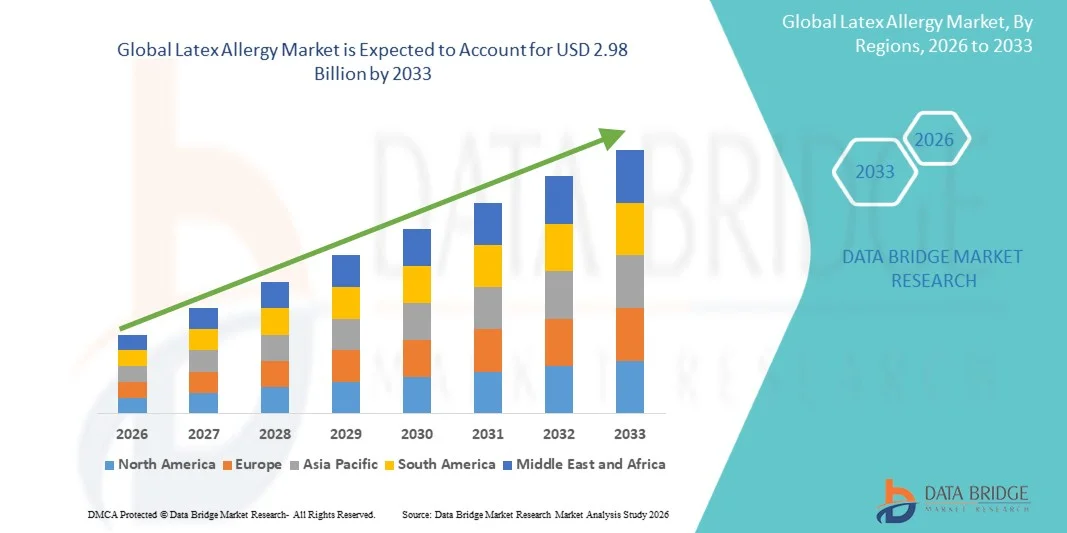
- As per Data Bridge Market Research Analysis the global latex allergy market size was valued at USD 1.92 billion in 2025 and is expected to reach USD 2.98 billion by 2033, at a CAGR of 5.65% during the forecast period
- The market growth is largely fueled by the rising prevalence of latex allergy among healthcare workers and patients, increasing awareness of allergic reactions, and growing adoption of latex-free medical products across hospitals, clinics, and laboratories
- Furthermore, increasing demand for safer, hypoallergenic alternatives in medical devices, surgical gloves, and consumer products is positioning latex allergy management solutions—such as diagnostic tests, preventive measures, and non-latex substitutes—as essential components of modern healthcare. These converging factors are accelerating the uptake of Latex Allergy solutions, thereby significantly boosting the industry’s growth
Market Size & Forecast
- Global Market Value (2025): USD 1.92 Billion
- Expected Market Value (2033): USD 2.98 Billion
- Forecast CAGR (2026–2033): 5.65%
What are the Major Takeaways of Latex Allergy Market?
- Latex allergy solutions—including diagnostic tests, preventive measures, and latex-free alternatives—are increasingly critical in healthcare and occupational settings due to the rising incidence of allergic reactions among healthcare workers, patients, and individuals with repeated latex exposure
- The escalating demand for latex-free medical gloves, catheters, wound care products, and consumer goods is primarily driven by stricter safety regulations, improved awareness of Type I and Type IV latex allergies, and a growing emphasis on patient and worker safety
- North America dominated the latex allergy market with the largest revenue share of 42.0% in 2025, supported by high awareness levels, well-established healthcare infrastructure, strict regulatory standards on latex use, and widespread adoption of latex-free products across hospitals and surgical centers. The U.S. continues to lead regional growth due to strong diagnostic capabilities and proactive occupational health policies
- Asia-Pacific is expected to be the fastest-growing region in the latex allergy market during the forecast period, with a CAGR driving it from 2026 to 2033, fueled by expanding healthcare infrastructure, increasing surgical procedures, rising awareness of allergic conditions, and gradual replacement of natural latex products with synthetic alternatives in emerging economies
- The skin test segment accounted for the largest market revenue share of 58.1% in 2025, owing to its high diagnostic accuracy, rapid results, and widespread adoption by allergists
Report Scope and Latex Allergy Market Segmentation
|
Attributes |
Latex Allergy Key Market Insights |
|
Segments Covered |
|
|
Countries Covered |
North America
Europe
Asia-Pacific
Middle East and Africa
South America
|
|
Key Market Players |
|
|
Market Opportunities |
|
|
Value Added Data Infosets |
In addition to the insights on market scenarios such as market value, growth rate, segmentation, geographical coverage, and major players, the market reports curated by the Data Bridge Market Research also include in-depth expert analysis, patient epidemiology, pipeline analysis, pricing analysis, and regulatory framework. |
What is the Key Trend in the Latex Allergy Market?
“Rising Awareness and Shift Toward Latex-Free Medical and Consumer Products”
- A significant and accelerating trend in the global Latex Allergy market is the increasing awareness of latex-induced allergic reactions and the growing shift toward latex-free alternatives across healthcare, industrial, and consumer product sectors
- Hospitals, clinics, and laboratories are progressively replacing natural rubber latex products with synthetic alternatives such as nitrile, vinyl, and neoprene to reduce allergy risks
- For instance, healthcare facilities worldwide are adopting latex-free gloves, catheters, and medical devices to protect both patients and healthcare workers from allergic reactions, thereby supporting market expansion
- Growing education initiatives and occupational health guidelines are improving early diagnosis and management of latex allergy, further increasing demand for diagnostic tests, treatment options, and preventive solutions
- In addition, manufacturers are investing in the development of hypoallergenic and latex-free materials to meet regulatory standards and address rising consumer safety concerns
- The expanding use of latex-free products in food handling, cosmetics, and household applications is also contributing to the sustained growth of the Latex Allergy market
- This shift toward safer, allergy-preventive materials is reshaping procurement practices across multiple industries
- Consequently, pharmaceutical and medical device companies are broadening their product portfolios to include latex-free and allergy-safe solutions
Latex Allergy Market Dynamics
Driver
“Increasing Prevalence of Latex Allergy and Occupational Exposure Risks”
- The rising prevalence of latex allergy, particularly among healthcare workers, patients undergoing frequent medical procedures, and individuals exposed to latex products in occupational settings, is a key driver of the Latex Allergy market
- For instance, increased glove usage in healthcare environments has heightened awareness of latex sensitivity, prompting hospitals to implement latex-free policies and screening protocols
- Growing recognition of symptoms such as contact dermatitis, respiratory reactions, and anaphylaxis has led to higher diagnosis rates and demand for effective management solutions
- In addition, regulatory recommendations and workplace safety standards aimed at minimizing latex exposure are driving the adoption of alternative materials and allergy diagnostic services
- Rising healthcare expenditure and improved access to allergy testing and treatment options are further supporting market growth globally
Restraint/Challenge
“Limited Awareness in Emerging Markets and Higher Cost of Latex-Free Alternatives”
- Limited awareness regarding latex allergy in certain developing and emerging regions remains a significant challenge to market growth, leading to underdiagnosis and continued use of latex-based products
- For instance, in cost-constrained healthcare settings, natural rubber latex products are still widely used due to their lower price compared to latex-free alternatives
- The higher manufacturing and procurement costs associated with synthetic, latex-free products can restrict adoption, particularly in small healthcare facilities and low-income regions
- In addition, inconsistent labeling standards and lack of standardized diagnostic protocols in some countries can hinder effective allergy management
- Addressing these challenges through increased awareness programs, regulatory support, cost-effective product development, and expanded access to diagnostic services will be critical for sustained growth in the global Latex Allergy market
How is the Latex Allergy Market Segmented?
The market is segmented on the basis of exposure, diagnosis, reaction, and treatment.
• By Exposure Type
On the basis of exposure type, the Global Latex Allergy market is segmented into Latex Gloves, Food Containing Latex Substances, and Others. The latex gloves segment dominated the largest market revenue share of 52.4% in 2025, primarily due to extensive usage in healthcare settings such as hospitals, clinics, and laboratories. High dependence on powdered and non-powdered latex gloves among healthcare professionals has increased exposure risk, leading to higher diagnosis rates. Regulatory mandates for occupational safety monitoring and glove usage during surgical procedures further support its dominance. Prevalence among nurses, surgeons, and dental workers drives consistent demand. Awareness campaigns about latex sensitivity have increased reporting rates. Institutional procurement patterns reinforce this segment’s leadership. Continuous glove use in emergency and laboratory procedures contributes to high exposure. The segment also benefits from widespread availability in both developed and emerging markets.
The food containing latex substances segment is expected to witness the fastest CAGR of 8.9% from 2026 to 2033, driven by rising awareness of latex-fruit syndrome linking latex allergy with foods such as bananas, avocados, and kiwis. Increasing diagnosis of cross-reactivity among allergic patients supports growth. Expansion of food allergy testing facilities accelerates detection. Growth in urban populations and dietary diversification further increase exposure. Rising pediatric allergy cases contribute significantly. Improved labeling regulations and allergy screening programs promote faster segment expansion. Research linking specific foods to latex sensitivity continues to drive awareness.
• By Diagnosis Type
On the basis of diagnosis type, the market is segmented into Skin Test and Allergy Test. The skin test segment accounted for the largest market revenue share of 58.1% in 2025, owing to its high diagnostic accuracy, rapid results, and widespread adoption by allergists. Skin prick testing is considered the gold standard for confirming latex sensitivity. Cost-effectiveness and minimal equipment requirements favor its use in both developed and emerging regions. Hospitals and specialty clinics prefer skin tests due to faster patient throughput. Increasing occupational allergies and chronic dermatitis cases support its dominance. Availability of standardized latex extracts strengthens reliability. Public awareness campaigns about occupational exposure contribute to higher adoption.
The allergy test segment is projected to grow at the fastest CAGR of 9.6% from 2026 to 2033, supported by advancements in in-vitro blood testing technologies. Rising preference for non-invasive diagnostics among pediatric and high-risk patients accelerates adoption. Expansion of diagnostic laboratories globally contributes to growth. Improved sensitivity of IgE-based tests increases physician confidence. Growth in preventive screening programs supports rapid expansion.
• By Reaction Type
On the basis of reaction type, the market is segmented into Systemic Reaction, Allergic Contact Dermatitis, and Others. The allergic contact dermatitis segment dominated the market with a revenue share of 46.7% in 2025, driven by high prevalence among healthcare workers and industrial users. Frequent skin contact with latex products leads to chronic dermatitis cases. Mild to moderate symptom presentation results in higher diagnosis volumes. Occupational health surveillance programs enhance reporting rates. Infection control initiatives and increased glove usage boost incidence. Outpatient treatment preference supports market size. Recurrence rates reinforce dominance. High awareness among dermatologists and allergists contributes to adoption.
The systemic reaction segment is anticipated to register the fastest CAGR of 10.2% from 2026 to 2033, due to rising awareness of life-threatening anaphylaxis linked to latex exposure. Improved emergency diagnosis and reporting mechanisms contribute to growth. Expansion of epinephrine prescription guidelines supports treatment demand. Increasing surgical procedures raise risk exposure. Growth in hospital emergency preparedness programs accelerates adoption. Rising awareness among patients and caregivers further drives the segment.
• By Treatment Type
On the basis of treatment type, the market is segmented into Epinephrine Injection and Allergy Medication. The allergy medication segment held the largest market revenue share of 55.3% in 2025, driven by widespread use of antihistamines and corticosteroids for mild to moderate reactions. Easy availability and affordability support dominance. High patient compliance favors oral medications. Chronic dermatitis cases require long-term pharmacological management. Prescription volume remains high across outpatient settings. Increased awareness of symptom control boosts utilization. Generic drug availability further strengthens market share.
The epinephrine injection segment is expected to witness the fastest CAGR of 11.4% from 2026 to 2033, driven by rising incidence of severe systemic reactions and anaphylaxis. Expanding emergency preparedness protocols accelerate adoption. Increased availability of auto-injectors improves accessibility. Strong regulatory support for stocking epinephrine in healthcare facilities supports growth. Growing patient education initiatives further contribute to rapid expansion. Rising awareness of life-saving interventions and physician training programs supports faster market adoption.
Which Region Holds the Largest Share of the Latex Allergy Market?
- North America dominated the latex allergy market with the largest revenue share of 42.0% in 2025
- Supported by high awareness levels, well-established healthcare infrastructure, strict regulatory standards on latex use, and widespread adoption of latex-free products across hospitals and surgical centers
- The market continues to lead regional growth due to strong diagnostic capabilities and proactive occupational health policies
U.S. Latex Allergy Market Insight
The U.S. latex allergy market captured the largest revenue share within North America, fueled by widespread awareness of latex-related risks, well-developed diagnostic facilities, and strict enforcement of safety and occupational guidelines. Hospitals and surgical centers are increasingly adopting latex-free gloves and devices, contributing to steady market expansion.
Europe Latex Allergy Market Insight
The Europe latex allergy market is projected to grow at a substantial CAGR during the forecast period, driven by stringent regulatory frameworks, increasing awareness of latex-related health risks, and the adoption of alternative synthetic products in healthcare and surgical settings. The market is witnessing significant demand in hospitals, clinics, and ambulatory surgical centers.
U.K. Latex Allergy Market Insight
The U.K. latex allergy market is expected to grow steadily, driven by regulatory mandates for latex-free medical devices, rising awareness among healthcare professionals, and the increasing prevalence of latex allergy among patients and staff. Adoption of alternative products in hospitals and specialty clinics supports market expansion.
Germany Latex Allergy Market Insight
Germany’s latex allergy market is anticipated to expand at a considerable CAGR, fueled by increasing awareness of allergic reactions, strong compliance with European safety standards, and the replacement of natural latex products with synthetic alternatives in healthcare and surgical applications.
Asia-Pacific Latex Allergy Market Insight
The Asia-Pacific latex allergy market is expected to be the fastest-growing region during the forecast period of 2026 to 2033, driven by expanding healthcare infrastructure, increasing number of surgical procedures, rising awareness of allergic conditions, and gradual replacement of natural latex products with synthetic alternatives across emerging economies such as China, India, and Japan.
Japan Latex Allergy Market Insight
The Japan latex allergy market is gaining momentum due to advanced healthcare infrastructure, high awareness of latex-related risks, and adoption of latex-free medical devices in hospitals and surgical centers. The country’s aging population and emphasis on patient safety further support market growth.
China Latex Allergy Market Insight
China latex allergy market accounted for the largest market revenue share in Asia-Pacific in 2025, owing to rapid urbanization, rising healthcare expenditure, increasing surgical procedures, and growing adoption of latex-free alternatives. Government initiatives promoting patient safety and healthcare modernization are key factors driving market expansion.
Which are the Top Companies in Latex Allergy Market?
The Latex Allergy industry is primarily led by well-established companies, including:
- Top Glove Corporation (Malaysia)
- Hartalega Holdings (Malaysia)
- Kossan Rubber Industries (Malaysia)
- Semperit AG (Austria)
- Supermax Corporation (Malaysia)
- Rubberex (Malaysia)
- Cardinal Health (U.S.)
- Medline Industries (U.S.)
- Dynarex Corporation (U.S.)
- Moen Latex-Free Products (U.S.)
- Halyard Health (U.S.)
- 3M Healthcare (U.S.)
- LatexCare Solutions (Germany)
- Bayer Healthcare (Germany)
- Kimberly-Clark Professional (U.S.)
- Sempermed (Austria)
What are Latest Developments in Latex Allergy Market?
- In April 2023, Ansell Ltd., a global leader in protective solutions, expanded its product portfolio by launching a new series of synthetic surgical gloves specifically designed to be fully latex‑free, aimed at protecting healthcare professionals and patients with latex sensitivities and reducing occupational allergic reactions in clinical settings. This launch supports ongoing demand for safer, hypoallergenic alternatives to traditional latex gloves in hospitals and clinics
- In March 2023, Johnson & Johnson introduced its latex‑free bandage line, a new product range developed to minimize allergic reactions among sensitive patients and healthcare users, particularly in environments where latex exposure is common. This development underlines the industry’s move toward latex‑free medical supplies across multiple care settings
- In July 2024, Siemens Healthineers entered partnerships with major hospital networks across Europe to implement comprehensive latex allergy screening programs, combining advanced diagnostics with digital health platforms to improve patient monitoring and optimize treatment strategies for those with suspected sensitivities. These initiatives reflect broader clinical efforts to integrate structured allergy screening into routine care
- In March 2024, Stallergenes Greer — a specialist in allergen immunotherapy — launched a new latex allergen extract standardization program working with regulatory authorities to improve consistency and accuracy of latex allergy diagnostic testing protocols globally. This effort aims to reduce variability in test results and improve confidence in clinical diagnosis
- In January 2024, HAL Allergy Group announced the completion of clinical trials for an innovative latex desensitization therapy, demonstrating promising outcomes for healthcare workers and others who require continued exposure to latex but suffer from hypersensitivity. This milestone may pave the way for novel treatment approaches beyond avoidance alone

- Interactive Data Analysis Dashboard
- Company Analysis Dashboard for high growth potential opportunities
- Research Analyst Access for customization & queries
- Competitor Analysis with Interactive dashboard
- Latest News, Updates & Trend analysis
- Harness the Power of Benchmark Analysis for Comprehensive Competitor Tracking
Data collection and base year analysis are done using data collection modules with large sample sizes. The stage includes obtaining market information or related data through various sources and strategies. It includes examining and planning all the data acquired from the past in advance. It likewise envelops the examination of information inconsistencies seen across different information sources. The market data is analysed and estimated using market statistical and coherent models. Also, market share analysis and key trend analysis are the major success factors in the market report. To know more, please request an analyst call or drop down your inquiry.
The key research methodology used by DBMR research team is data triangulation which involves data mining, analysis of the impact of data variables on the market and primary (industry expert) validation. Data models include Vendor Positioning Grid, Market Time Line Analysis, Market Overview and Guide, Company Positioning Grid, Patent Analysis, Pricing Analysis, Company Market Share Analysis, Standards of Measurement, Global versus Regional and Vendor Share Analysis. To know more about the research methodology, drop in an inquiry to speak to our industry experts.
Data Bridge Market Research is a leader in advanced formative research. We take pride in servicing our existing and new customers with data and analysis that match and suits their goal. The report can be customized to include price trend analysis of target brands understanding the market for additional countries (ask for the list of countries), clinical trial results data, literature review, refurbished market and product base analysis. Market analysis of target competitors can be analyzed from technology-based analysis to market portfolio strategies. We can add as many competitors that you require data about in the format and data style you are looking for. Our team of analysts can also provide you data in crude raw excel files pivot tables (Fact book) or can assist you in creating presentations from the data sets available in the report.













