


Leprosy Market Size
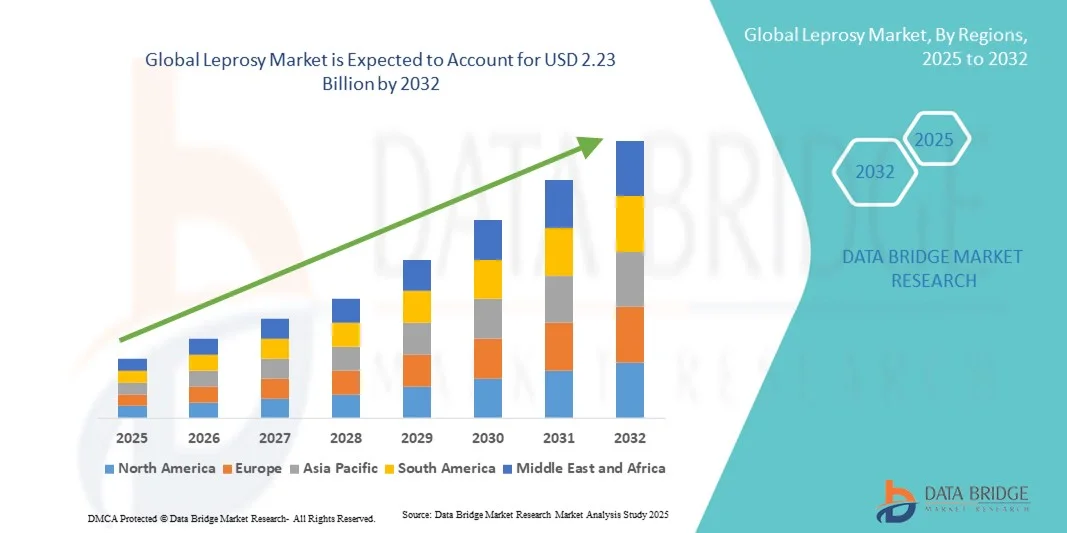
- The global leprosy market size was valued at USD 1.70 billion in 2024 and is expected to reach USD 2.23 billion by 2032, at a CAGR of 3.50% during the forecast period
- The market growth is largely fueled by increasing awareness about leprosy, advancements in medical treatments, and government-led initiatives for early diagnosis and disease management, leading to better treatment outcomes globally
- Furthermore, rising demand for effective, accessible, and affordable therapeutic solutions is driving adoption across endemic and non-endemic regions, positioning leprosy treatment as a critical component of public health initiatives. These converging factors are accelerating the uptake of leprosy treatments, thereby significantly boosting the industry's growth
Leprosy Market Analysis
- Leprosy, also known as Hansen’s disease, is a chronic infectious condition caused by Mycobacterium leprae, primarily affecting the skin, peripheral nerves, mucosa of the upper respiratory tract, and eyes. It can lead to permanent nerve damage, deformities, and disabilities if not diagnosed and treated early. Early detection and appropriate treatment are crucial to preventing complications, reducing transmission, and improving patient quality of life
- The escalating demand for leprosy treatments is primarily fueled by rising awareness of the disease, early diagnosis initiatives, and ongoing government and NGO-led programs to ensure timely access to therapy and reduce transmission rates
- North America dominated the leprosy market with the largest revenue share of 42.5% in 2024, characterized by early adoption of advanced healthcare solutions, well-established healthcare infrastructure, and strong government and private support programs, with the U.S. experiencing substantial growth in leprosy diagnosis and treatment due to increased screening, research initiatives, and innovations in therapeutic protocols
- Asia-Pacific is expected to be the fastest-growing region in the leprosy market during the forecast period due to rising healthcare outreach, expansion of diagnostic facilities, and increased funding for disease control in high-prevalence countries such as India and Indonesia
- Medication dominated the leprosy market in 2024 with a market share of 65.5%, driven by the widespread use of multidrug therapy (MDT) as the standard treatment for effective disease management
Report Scope and Leprosy Market Segmentation
|
Attributes |
Leprosy Key Market Insights |
|
Segments Covered |
|
|
Countries Covered |
North America
Europe
Asia-Pacific
Middle East and Africa
South America
|
|
Key Market Players |
|
|
Market Opportunities |
|
|
Value Added Data Infosets |
In addition to the insights on market scenarios such as market value, growth rate, segmentation, geographical coverage, and major players, the market reports curated by the Data Bridge Market Research also include in-depth expert analysis, pricing analysis, brand share analysis, consumer survey, demography analysis, supply chain analysis, value chain analysis, raw material/consumables overview, vendor selection criteria, PESTLE Analysis, Porter Analysis, and regulatory framework. |
Leprosy Market Trends
Enhanced Disease Management Through Early Diagnosis and Digital Tools
- A significant and accelerating trend in the global leprosy market is the adoption of early diagnostic technologies and digital health platforms, enabling faster identification and monitoring of the disease, thereby improving treatment outcomes
- For instance, digital skin imaging and AI-based diagnostic tools allow healthcare providers to detect leprosy lesions at earlier stages, improving patient prognosis and reducing complications
- AI integration in diagnostic platforms enables features such as pattern recognition for different leprosy types and predictive alerts for potential nerve damage, enhancing clinical decision-making. For instance, some mobile apps utilize AI to track disease progression and alert healthcare workers of unusual symptom patterns
- The integration of telemedicine and digital record-keeping allows centralized monitoring of patient treatment and adherence, enabling healthcare providers to manage therapy schedules and track outcomes effectively. Through a single platform, clinicians can manage multiple patients, review medication adherence, and coordinate follow-ups efficiently
- This trend towards more intelligent, accessible, and interconnected healthcare management systems is fundamentally reshaping patient care standards. Consequently, organizations such as WHO and PATH are developing AI-enabled monitoring tools and telemedicine platforms for early detection, treatment tracking, and patient education
- The adoption of digital and AI-assisted solutions in leprosy management is growing rapidly across both endemic and non-endemic regions, as healthcare systems increasingly prioritize accurate diagnosis, effective treatment, and improved patient monitoring
Leprosy Market Dynamics
Driver
Rising Need for Effective Disease Control and Treatment Access
- The increasing prevalence of leprosy in certain regions, coupled with growing awareness campaigns, is a significant driver for the heightened demand for early diagnosis and effective treatment solutions
- For instance, in 2024, the Indian Ministry of Health launched a nationwide campaign integrating AI-assisted screening tools for early leprosy detection, aimed at improving patient outcomes and reducing disease transmission
- As governments and NGOs expand outreach programs, patients gain better access to standardized multidrug therapy (MDT), educational resources, and follow-up care, providing a compelling case for increased treatment adoption
- Furthermore, international support and funding for leprosy eradication programs are enabling healthcare providers to implement integrated treatment and monitoring platforms, improving access to care in underserved areas
- The combination of rising patient awareness, improved screening capabilities, and wider availability of treatment solutions is propelling adoption across endemic regions. Initiatives such as mobile clinics and AI-assisted diagnostic tools further contribute to market growth
Restraint/Challenge
Delayed Diagnosis, Stigma, and Resource Limitations
- Social stigma, lack of awareness, and delayed diagnosis remain significant challenges to effective leprosy management, limiting early intervention and increasing the risk of complications and transmission
- For instance, reports of patients avoiding medical care due to fear of discrimination highlight the ongoing challenge of social barriers in disease management
- Limited healthcare infrastructure and insufficient trained personnel in endemic regions further constrain timely diagnosis and treatment, hindering market expansion. Organizations such as national health ministries and NGOs emphasize community education to address these gaps
- In addition, the high cost and logistical challenges of implementing AI-assisted diagnostic tools or telemedicine platforms in resource-limited areas can slow adoption, particularly in rural regions. While some mobile and low-cost screening solutions are emerging, advanced technologies remain inaccessible to many patients
- Overcoming these challenges through awareness campaigns, mobile outreach, training programs, and affordable diagnostic tools will be vital for sustained growth and improved patient outcomes in the global leprosy market
Leprosy Market Scope
The market is segmented on the basis of type, treatment, population, end-users, and distribution channel.
- By Type
On the basis of type, the leprosy market is segmented into borderline lepromatous leprosy, borderline tuberculoid leprosy, indeterminate leprosy, lepromatous leprosy, midborderline leprosy, tuberculoid leprosy, and others. The Borderline Lepromatous Leprosy segment dominated the market with the largest revenue share of 28% in 2024, driven by its high prevalence and critical need for disease management. Patients with this type often present with both skin lesions and nerve involvement, requiring structured treatment regimens and continuous monitoring. National health programs prioritize this type due to its potential for disability if untreated. Multidrug therapy (MDT) is widely used and supported by NGOs and government initiatives. The segment also benefits from awareness campaigns and early intervention programs that reduce long-term complications. Treatment adherence and regular follow-ups further strengthen its dominant position.
The Indeterminate Leprosy segment is anticipated to witness the fastest growth rate of 10.5% from 2025 to 2032, fueled by increasing awareness and improved diagnostic capabilities. Early-stage identification prevents progression to more severe forms, making this segment highly significant. AI-assisted skin imaging and mobile diagnostic tools are enabling early detection, even in remote regions. Screening campaigns in endemic areas contribute to a growing patient base. Government initiatives and NGO programs emphasize early intervention, which accelerates adoption. Telemedicine platforms also support monitoring and treatment adherence, driving rapid growth.
- By Treatment
On the basis of treatment, the leprosy market is segmented into diagnosis, medication, and others. The Medication segment dominated the market in 2024 with a market share of 65.5%, driven by the widespread adoption of multidrug therapy (MDT) as the standard of care. MDT effectively treats all types of leprosy, reduces transmission, and minimizes long-term complications such as nerve damage. National programs in countries such as India, Brazil, and Indonesia provide free MDT, ensuring wide accessibility. Continuous research improves drug formulations, enhancing adherence and patient outcomes. Hospitals and clinics rely on medication as the cornerstone of leprosy management. The segment’s dominance is further reinforced by public health campaigns promoting early and complete treatment courses.
The Diagnosis segment is expected to witness the fastest growth rate of 12.3% from 2025 to 2032, driven by technological advancements in early detection methods. AI-assisted skin lesion analysis, rapid molecular testing, and mobile diagnostic units enable accurate and timely identification of cases. Government and NGO initiatives are expanding diagnostic infrastructure in endemic regions. Early diagnosis prevents disease progression and associated disabilities. Telemedicine platforms facilitate remote consultations and treatment tracking. Rising patient awareness and community screening programs further contribute to segment growth.
- By Population
On the basis of population, the leprosy market is segmented into Children and Adults. The Adults segment dominated the market in 2024 due to higher disease prevalence in working-age populations and greater healthcare-seeking behavior. Adults often present with advanced symptoms requiring structured treatment programs. Public health initiatives targeting adult populations strengthen this segment. Treatment adherence, monitoring, and follow-up programs contribute to consistent demand. Awareness campaigns in workplaces and communities enhance detection and management. Government support programs ensure access to medications and diagnostic facilities for adults.
The Children segment is anticipated to witness the fastest growth from 2025 to 2032, fueled by school-based screening and pediatric health awareness initiatives. Early detection in children prevents lifelong disabilities and deformities. Pediatric leprosy programs integrated with national health systems support growth. Mobile diagnostic units and telemedicine platforms increase access in rural areas. Training of school health workers facilitates early intervention. NGOs and international agencies are increasingly funding pediatric care initiatives.
- By End-Users
On the basis of end-users, the leprosy market is segmented into hospitals, specialty clinics, home healthcare, and others. The Hospitals segment dominated the market in 2024 due to comprehensive infrastructure, trained personnel, and the ability to provide complete MDT and follow-up care. Hospitals serve as central hubs for diagnosis, treatment, and patient monitoring. Government programs often channel patients through hospitals, ensuring sustained demand. Hospitals also offer patient education and rehabilitation services. Access to diagnostic tools, telemedicine, and lab facilities strengthens the segment. Large-scale disease management programs are facilitated through hospital networks.
The Specialty Clinics segment is expected to witness the fastest growth from 2025 to 2032 due to the rising number of dedicated leprosy treatment centers. Specialty clinics provide focused care, faster diagnostics, and personalized treatment plans. Partnerships with NGOs and telemedicine initiatives enhance outreach. Urban and semi-urban populations increasingly prefer specialized care. Clinics often integrate counseling and community awareness programs. Growth is supported by government initiatives promoting early detection and treatment adherence.
- By Distribution Channel
On the basis of distribution channel, the leprosy market is segmented into direct tender, hospital pharmacy, retail pharmacy, online pharmacy, and others. The Direct Tender segment dominated the market in 2024, accounting for the largest share, due to government procurement of MDT and bulk distribution to public health programs. Centralized procurement ensures consistent medicine availability and reduces patient costs. Collaborations with NGOs and international organizations strengthen this channel. Large-scale disease eradication programs rely heavily on direct tender supply. Procurement strategies ensure rapid and reliable access in endemic regions. This channel is critical for national and regional leprosy control initiatives.
The Online Pharmacy segment is expected to witness the fastest growth from 2025 to 2032, driven by digitalization, telemedicine adoption, and convenience for patients in remote areas. Online platforms provide home delivery, adherence tracking, and easier access to medications. Rising internet penetration supports this growth. Patients increasingly prefer digital solutions for privacy and convenience. Mobile apps integrate consultations and medication reminders. Expansion of e-pharmacy regulations and logistics in developing regions further accelerates adoption.
Leprosy Market Regional Analysis
- North America dominated the leprosy market with the largest revenue share of 42.5% in 2024, characterized by early adoption of advanced healthcare solutions, well-established healthcare infrastructure, and strong government and private support programs
- Patients and healthcare providers in the region highly value access to standardized multidrug therapy (MDT), comprehensive diagnostic tools, and structured follow-up care, which together improve treatment outcomes and reduce complications
- This widespread adoption is further supported by well-established public health programs, a technologically advanced healthcare system, and active NGO initiatives promoting early detection and awareness, establishing North America as a key region for leprosy management and monitoring programs
U.S. Leprosy Market Insight
The U.S. leprosy market captured the largest revenue share of 81% in 2024 within North America, fueled by the presence of advanced healthcare infrastructure, early diagnostic programs, and widespread access to multidrug therapy (MDT). Patients and healthcare providers increasingly prioritize timely treatment and monitoring to prevent complications such as nerve damage and disability. The growing emphasis on public health initiatives, combined with government and NGO-led awareness campaigns, further propels the leprosy market. Moreover, the integration of telemedicine and digital health tools for disease tracking is significantly contributing to improved treatment adherence and market expansion.
Europe Leprosy Market Insight
The Europe leprosy market is projected to expand at a substantial CAGR throughout the forecast period, primarily driven by rising awareness of rare disease management and improved healthcare infrastructure. The increase in urbanization, coupled with enhanced diagnostic capabilities, is fostering early detection and treatment adoption. European healthcare providers are focusing on comprehensive patient care and rehabilitation programs. The market is also benefiting from initiatives to integrate leprosy care into broader public health and infectious disease frameworks. In addition, patient education and community outreach programs are supporting market growth across the region.
U.K. Leprosy Market Insight
The U.K. leprosy market is anticipated to grow at a noteworthy CAGR during the forecast period, driven by improved disease surveillance, early screening programs, and the adoption of standardized multidrug therapy (MDT). Concerns regarding social stigma and the prevention of disability are encouraging patients and healthcare organizations to actively pursue treatment solutions. The U.K.’s well-established healthcare system and strong NGO presence are expected to continue stimulating market growth. Telemedicine initiatives and mobile health campaigns further enhance early detection and follow-up care.
Germany Leprosy Market Insight
The Germany leprosy market is expected to expand at a considerable CAGR during the forecast period, fueled by increasing awareness of rare diseases and the availability of advanced diagnostic and therapeutic solutions. Germany’s well-developed healthcare infrastructure and emphasis on preventive care promote the adoption of comprehensive leprosy management programs. Integration with telemedicine platforms and community health initiatives is also becoming increasingly prevalent. There is a strong focus on patient education and rehabilitation, aligning with local expectations for quality and accessible healthcare.
Asia-Pacific Leprosy Market Insight
The Asia-Pacific leprosy market is poised to grow at the fastest CAGR during the forecast period of 2025 to 2032, driven by high disease prevalence, increasing urbanization, and expansion of healthcare services in countries such as India, Indonesia, and China. Government-led eradication programs, coupled with NGO initiatives, are improving early detection and access to multidrug therapy (MDT). Technological advancements in diagnostics and telemedicine are supporting growth in both urban and rural areas. Moreover, rising public awareness and community health campaigns are increasing treatment adoption and compliance across the region.
Japan Leprosy Market Insight
The Japan leprosy market is gaining momentum due to advanced healthcare infrastructure, increasing awareness of early diagnosis, and the adoption of structured treatment programs. Japanese healthcare providers emphasize monitoring and rehabilitation to prevent long-term disabilities. The integration of digital health platforms and patient tracking systems is fueling growth. In addition, Japan’s aging population drives demand for accessible and well-monitored treatment solutions in both residential and clinical settings. Focused awareness campaigns further encourage timely diagnosis and adherence to therapy.
India Leprosy Market Insight
The India leprosy market accounted for the largest market revenue share in Asia-Pacific in 2024, attributed to high disease prevalence, strong government eradication programs, and expanding healthcare access. India remains a key focus for public health initiatives, with multidrug therapy (MDT) widely available and supported by NGOs. Rapid urbanization and increasing awareness campaigns are driving early diagnosis and treatment adoption. The push towards national health programs and integration of telemedicine solutions are also key factors propelling market growth in India. Community health workers and mobile clinics further support outreach to underserved populations.
Leprosy Market Share
The Leprosy industry is primarily led by well-established companies, including:
- Novartis AG (Switzerland)
- GSK plc (U.K.)
- Pfizer Inc. (U.S.)
- Cadila Pharmaceuticals (India)
- Johnson & Johnson and its affiliates. (U.S.)
- Teva Pharmaceutical Industries Ltd. (Israel)
- Bayer AG (Germany)
- Galderma S.A. (Switzerland)
- Sun Pharmaceutical Industries Limited (India)
- Perrigo Company plc (Ireland)
- AstraZeneca (U.K.)
- Sanofi (France)
- Medicines Development for Global Health (Australia)
- Damien Foundation (Belgium)
- Anandaban Hospital (Nepal)
- Leprosy Mission Australia (Australia)
What are the Recent Developments in Global Leprosy Market?
- In April 2025, Medicines Development for Global Health (MDGH) announced that the U.S. Food and Drug Administration (FDA) cleared its Investigational New Drug (IND) Application for dovramilast to begin a global Phase 2 clinical trial for treating leprosy type 2 reaction (Erythema Nodosum Leprosum). Dovramilast is a phosphodiesterase type 4 (PDE4) inhibitor
- In January 2025, a study published in NEJM Journal Watch revealed that four weeks of bedaquiline monotherapy cleared Mycobacterium leprae in skin lesion samples from patients with previously untreated multibacillary leprosy. This marks a significant advancement in leprosy treatment, potentially reducing the duration of therapy and improving patient outcomes
- In October 2024, the Oswaldo Cruz Institute (Fiocruz) in Brazil initiated the first clinical trial of LepVax, the world's first leprosy-specific vaccine. This Phase 1b trial aims to assess the vaccine's safety and immune response in healthy individuals in a leprosy-endemic area, marking a significant step toward preventive leprosy care
- In July 2023, the World Health Organization (WHO) finalized and disseminated the Target Product Profiles for leprosy diagnostics. These profiles aim to guide the development of new diagnostic tools that are rapid, accurate, and suitable for use in endemic settings, thereby improving early detection and treatment outcomes
- In January 2021, Novartis renewed its partnership agreement with the WHO to continue donating the full multidrug therapy (MDT) treatment for leprosy. This continuation ensures the free global supply of the standard treatment a combination of dapsone, rifampicin, and clofazimine which has been critical to leprosy control since 2000. This ongoing commitment is a fundamental stability factor in the global leprosy treatment landscape

- Interactive Data Analysis Dashboard
- Company Analysis Dashboard for high growth potential opportunities
- Research Analyst Access for customization & queries
- Competitor Analysis with Interactive dashboard
- Latest News, Updates & Trend analysis
- Harness the Power of Benchmark Analysis for Comprehensive Competitor Tracking
Data collection and base year analysis are done using data collection modules with large sample sizes. The stage includes obtaining market information or related data through various sources and strategies. It includes examining and planning all the data acquired from the past in advance. It likewise envelops the examination of information inconsistencies seen across different information sources. The market data is analysed and estimated using market statistical and coherent models. Also, market share analysis and key trend analysis are the major success factors in the market report. To know more, please request an analyst call or drop down your inquiry.
The key research methodology used by DBMR research team is data triangulation which involves data mining, analysis of the impact of data variables on the market and primary (industry expert) validation. Data models include Vendor Positioning Grid, Market Time Line Analysis, Market Overview and Guide, Company Positioning Grid, Patent Analysis, Pricing Analysis, Company Market Share Analysis, Standards of Measurement, Global versus Regional and Vendor Share Analysis. To know more about the research methodology, drop in an inquiry to speak to our industry experts.
Data Bridge Market Research is a leader in advanced formative research. We take pride in servicing our existing and new customers with data and analysis that match and suits their goal. The report can be customized to include price trend analysis of target brands understanding the market for additional countries (ask for the list of countries), clinical trial results data, literature review, refurbished market and product base analysis. Market analysis of target competitors can be analyzed from technology-based analysis to market portfolio strategies. We can add as many competitors that you require data about in the format and data style you are looking for. Our team of analysts can also provide you data in crude raw excel files pivot tables (Fact book) or can assist you in creating presentations from the data sets available in the report.












