


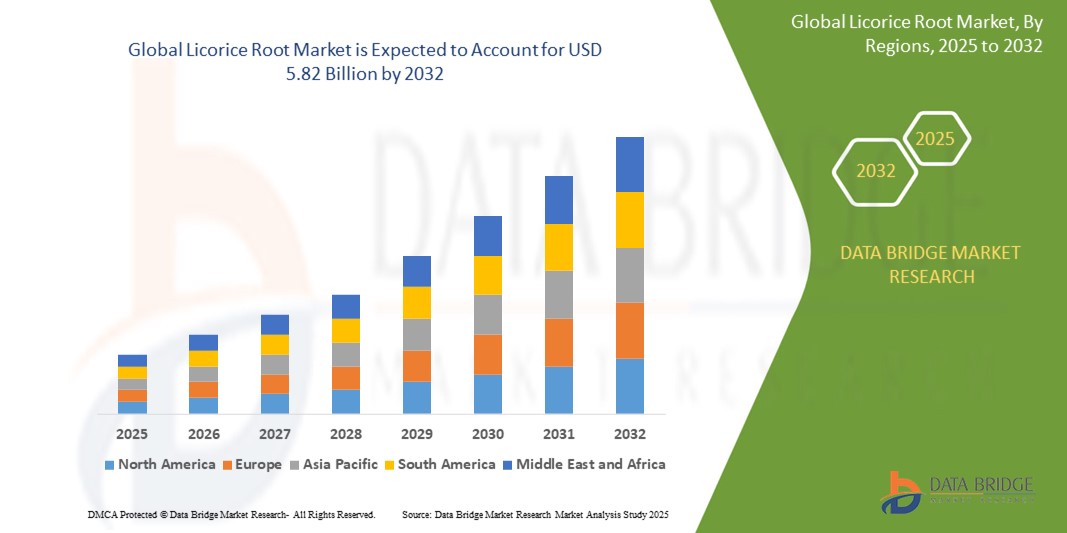
What is the Global Licorice Root Market Size and Growth Rate?
- The global Licorice Root market size was valued at USD 4.35 billion in 2024 and is expected to reach USD 5.82 billion by 2032, at a CAGR of 3.70% during the forecast period
- In the pharmaceutical industry, licorice root serves as a valuable ingredient in various formulations due to its rich medicinal properties. Extracts from licorice root contain compounds such as glycyrrhizin, glycyrrhetinic acid, and flavonoids, which exhibit anti-inflammatory, antiviral, and antimicrobial effects
- These properties make licorice root extracts beneficial for treating respiratory conditions such as coughs and sore throats, as well as digestive issues and skin ailments
What are the Major Takeaways of Licorice Root Market?
- Consumers are increasingly seeking products derived from natural sources due to concerns about synthetic additives and chemicals in their food, beverages, and personal care items. licorice root, known for its medicinal properties and historical use in traditional medicine systems, aligns with this consumer preference for natural remedies. Its perceived health benefits, including anti-inflammatory and digestive support, make it a sought-after ingredient in pharmaceuticals, herbal supplements, and skincare products
- This growing demand for natural ingredients propels the expansion of the licorice root market as it continues to be integrated into a wide range of consumer goods worldwide
- North America dominated the licorice root market with the largest revenue share of 41.3% in 2024, driven by rising demand for natural ingredients, increased awareness of herbal remedies, and robust applications in the food, pharmaceutical, and cosmetic industries
- Asia-Pacific licorice root market is projected to grow at the fastest CAGR of 15.6% from 2025 to 2032, fueled by rapid urbanization, expanding middle-class population, and growing awareness of herbal and natural remedies
- The Extracts segment dominated the market with the largest revenue share of 58.4% in 2024, driven by their widespread use in the food, pharmaceutical, and cosmetic industries due to ease of formulation and consistent active ingredient concentration
Report Scope and Licorice Root Market Segmentation
|
Attributes |
Licorice Root Key Market Insights |
|
Segments Covered |
|
|
Countries Covered |
North America
Europe
Asia-Pacific
Middle East and Africa
South America
|
|
Key Market Players |
|
|
Market Opportunities |
|
|
Value Added Data Infosets |
In addition to the insights on market scenarios such as market value, growth rate, segmentation, geographical coverage, and major players, the market reports curated by the Data Bridge Market Research also include in-depth expert analysis, pricing analysis, brand share analysis, consumer survey, demography analysis, supply chain analysis, value chain analysis, raw material/consumables overview, vendor selection criteria, PESTLE Analysis, Porter Analysis, and regulatory framework. |
What is the Key Trend in the Licorice Root Market?
“Rising Demand for Natural and Sustainable Ingredients”
- A key trend shaping the global licorice root market is the increasing preference for natural, plant-based ingredients, driven by rising health awareness, clean-label trends, and demand for sustainable sourcing
- Licorice Root, known for its medicinal, cosmetic, and food applications, is gaining traction as consumers and industries shift toward herbal and chemical-free alternatives
- For instance, food and beverage manufacturers are increasingly incorporating licorice root extracts into products as a natural sweetener and flavor enhancer, especially in functional beverages and health supplements
- In the pharmaceutical sector, demand for Licorice Root is rising due to its anti-inflammatory, antioxidant, and antiviral properties, aligning with the global surge in herbal medicine consumption
- Additionally, the cosmetic industry is utilizing licorice root for skin brightening, anti-aging, and soothing formulations, responding to consumer demand for natural skincare solutions
- This trend toward natural, sustainable, and multifunctional plant-based ingredients is expected to significantly strengthen the market outlook for licorice root across industries
What are the Key Drivers of Licorice Root Market?
- Growing awareness of the health benefits of licorice root, including its anti-inflammatory, digestive, and immune-boosting properties, is a primary driver for market expansion
- For instance, in March 2024, Nutra Green Biotechnology (China) announced the development of enhanced licorice root extracts with higher glycyrrhizin content to meet rising demand from nutraceutical manufacturers
- The increasing demand for natural sweeteners as an alternative to synthetic additives in food and beverages is accelerating licorice root consumption, particularly in herbal teas, candies, and throat lozenges
- Additionally, the rise of traditional medicine systems, including Ayurveda and Traditional Chinese Medicine (TCM), is fueling the incorporation of licorice root in herbal formulations worldwide
- The global clean-label movement and regulatory push for plant-based, eco-friendly ingredients further strengthen the market for licorice root across food, pharmaceutical, and cosmetic sectors
Which Factor is challenging the Growth of the Licorice Root Market?
- Supply chain fluctuations, including raw material shortages due to climate change, overharvesting, and geopolitical instability, pose a significant challenge to consistent Licorice Root supply
- For instance, prolonged droughts and stricter harvesting regulations in key producing countries such as China and Iran have led to price volatility and constrained availability of high-quality licorice root
- Additionally, concerns regarding excessive glycyrrhizin intake, which can lead to side effects such as hypertension and electrolyte imbalance, restrict the use of Licorice Root in certain food and healthcare applications
- Regulatory barriers and stringent quality standards in export markets can also hinder small-scale producers from participating in the global licorice root trade
- Overcoming these challenges requires improved cultivation practices, sustainable sourcing initiatives, and increased investment in quality control and supply chain transparency to ensure market stability and long-term growth
How is the Licorice Root Market Segmented?
The market is segmented on the basis of type, communication protocol, unlocking mechanism, and application.
• By Product Form
On the basis of product form, the licorice root market is segmented into Roots and Extracts. The Extracts segment dominated the market with the largest revenue share of 58.4% in 2024, driven by their widespread use in the food, pharmaceutical, and cosmetic industries due to ease of formulation and consistent active ingredient concentration. The demand for Licorice Root extracts is rising as manufacturers seek convenient, high-potency solutions for flavoring, medicinal, and wellness applications.
The Roots segment is anticipated to witness the fastest CAGR from 2025 to 2032, fueled by increasing demand for traditional herbal remedies and natural products. Consumers and health supplement manufacturers are showing growing interest in whole licorice roots for tea infusions, decoctions, and direct consumption, reflecting a preference for minimally processed ingredients.
• By Product Type
On the basis of product type, the licorice root market is segmented into Essential Oils, Liquid Malt Extract, Oleoresins, Herbs and Spices Dry Malt Extract, and Malt Flour. The Liquid Malt Extract segment accounted for the largest market revenue share of 36.7% in 2024, supported by its versatile applications in the food and beverage industry, particularly in confectionery, bakery, and alcoholic beverages. Its concentrated sweetness and functional benefits make it a preferred choice for formulators.
The Essential Oils segment is expected to witness the fastest growth rate from 2025 to 2032, driven by the growing demand for natural, plant-based essential oils in aromatherapy, personal care, and pharmaceuticals, where licorice root oil is valued for its soothing, anti-inflammatory, and flavoring properties.
• By Function Type
On the basis of function type, the licorice root market is segmented into Performance Enhancers and Palatability Enhancers. The Palatability Enhancers segment dominated the market with the largest revenue share of 62.3% in 2024, owing to the significant role of Licorice Root in enhancing flavor profiles, masking bitterness, and improving the sensory appeal of food, beverages, and pharmaceutical products.
The Performance Enhancers segment is projected to grow at the fastest CAGR from 2025 to 2032, fueled by increasing use of licorice root for its health-promoting properties, including its immune-boosting, anti-inflammatory, and adaptogenic effects in dietary supplements and functional foods.
• By Grade Type
On the basis of grade type, the licorice root market is segmented into Standard Malt, Caramelized Malt, and Roasted Malt. The Standard Malt segment held the largest revenue share of 48.5% in 2024, supported by its broad application in brewing, baking, and food processing industries where consistent quality and versatility are essential.
The Caramelized Malt segment is expected to register the fastest CAGR from 2025 to 2032, driven by rising demand for rich color, unique flavor, and premium appeal in craft beverages, specialty foods, and artisanal products.
• By Material Type
On the basis of material type, the licorice root market is segmented into Maize, Barley, Wheat, Rice, Rye, and Oat. The Barley segment dominated the market with the largest revenue share of 40.2% in 2024, owing to its traditional role in malt production and wide acceptance in food, beverage, and health product formulations.
The Oat segment is projected to witness the fastest growth rate from 2025 to 2032, driven by increasing consumer preference for gluten-free, fiber-rich, and plant-based ingredients in functional foods and wellness products.
• By Ingredient Type
On the basis of ingredient type, the licorice root market is segmented into Lipids, Protein, Polysaccharide, and Others. The Polysaccharide segment accounted for the largest market revenue share of 53.9% in 2024, attributed to the health benefits, bioactive compounds, and functional properties of Licorice Root polysaccharides, which enhance immunity, digestion, and product texture across applications.
The Lipids segment is anticipated to grow at the fastest CAGR from 2025 to 2032, as demand rises for plant-based lipids in health supplements, cosmetics, and food formulations where licorice root-derived lipids provide added nutritional and functional value.
• By End User
On the basis of end user, the licorice root market is segmented into Food and Beverage Industry, Tobacco Industry, Pharmaceutical Industry, Cosmetic Industry, and Dietary Supplement. The Pharmaceutical Industry segment dominated the market with the largest revenue share of 39.6% in 2024, driven by the rising use of licorice root extracts in cough syrups, digestive aids, and anti-inflammatory formulations, owing to its proven therapeutic benefits.
The Dietary Supplement segment is expected to witness the fastest CAGR from 2025 to 2032, fueled by growing consumer awareness of natural health remedies, adaptogenic herbs, and botanical supplements, positioning licorice root as a favored ingredient for wellness and immunity enhancement.
Which Region Holds the Largest Share of the Licorice Root Market?
- North America dominated the licorice root market with the largest revenue share of 41.3% in 2024, driven by rising demand for natural ingredients, increased awareness of herbal remedies, and robust applications in the food, pharmaceutical, and cosmetic industries
- The growing popularity of plant-based supplements, coupled with supportive regulatory frameworks for botanical ingredients, is propelling the demand for Licorice Root across the region
- Additionally, well-established distribution networks, high consumer spending on wellness products, and the increasing preference for traditional herbal formulations have positioned licorice root as a favored ingredient in North America
U.S. Licorice Root Market Insight
The U.S. licorice root market accounted for the largest revenue share within North America in 2024, fueled by the country’s growing nutraceutical, pharmaceutical, and personal care sectors. The increasing popularity of herbal supplements, combined with rising demand for clean-label, natural ingredients, has accelerated licorice root consumption. Furthermore, health-conscious consumers are driving demand for functional foods and dietary supplements featuring Licorice Root for its anti-inflammatory, digestive, and immunity-boosting properties.
Europe Licorice Root Market Insight
The Europe licorice root market is expected to register steady growth during the forecast period, driven by heightened demand for botanical extracts in the pharmaceutical and dietary supplement sectors. Countries such as Germany, France, and Italy are key contributors, with increasing preference for natural remedies and regulatory emphasis on plant-based medicinal products. The food and beverage sector’s shift towards herbal flavorings and clean-label ingredients further supports market expansion.
U.K. Licorice Root Market Insight
The U.K. licorice root market is anticipated to grow steadily, driven by increasing health awareness, demand for organic and herbal products, and regulatory support for plant-based ingredients. The market benefits from growing consumer preference for natural skincare, dietary supplements, and herbal beverages incorporating Licorice Root for its wellness attributes. Furthermore, the expanding trend of functional foods and herbal teas boosts product adoption.
Germany Licorice Root Market Insight
The Germany licorice root market is poised for moderate growth, supported by the country’s strong herbal medicine industry, consumer preference for natural health products, and regulatory acceptance of traditional botanical ingredients. Germany’s established pharmaceutical and nutraceutical sectors are leveraging Licorice Root for its therapeutic properties, while the rising popularity of organic food and beverage products further enhances market opportunities.
Which Region is the Fastest Growing Region in the Licorice Root Market?
Asia-Pacific licorice root market is projected to grow at the fastest CAGR of 15.6% from 2025 to 2032, fueled by rapid urbanization, expanding middle-class population, and growing awareness of herbal and natural remedies. Countries like China, India, and Japan are witnessing increased demand for Licorice Root in traditional medicine, pharmaceuticals, and dietary supplements. Government initiatives promoting the use of traditional herbal medicine and increasing investment in natural ingredient production further support the market' robust growth trajectory.
Japan Licorice Root Market Insight
The Japan licorice root market is experiencing steady expansion due to the country’s strong cultural acceptance of herbal medicine and the growing incorporation of Licorice Root in pharmaceuticals and functional foods. Rising health awareness, an aging population, and emphasis on preventive healthcare are key factors driving demand. Additionally, product innovation in herbal teas, supplements, and skincare enhances market prospects.
China Licorice Root Market Insight
The China licorice root market held the largest revenue share in Asia-Pacific in 2024, driven by the country’s well-established traditional Chinese medicine (TCM) sector and widespread use of Licorice Root in pharmaceuticals, food, and wellness products. With increasing disposable incomes, urbanization, and consumer preference for plant-based solutions, Licorice Root demand continues to grow. The government's support for TCM development and the presence of major domestic producers further accelerate market expansion.
Which are the Top Companies in Licorice Root Market?
The licorice root industry is primarily led by well-established companies, including:
- Norevo (Germany)
- Hepner & Eschenbrenner GmbH & Co. KG (Germany)
- MARUZEN PHARMACEUTICALS CO., LTD. (Japan)
- Nutra Green Biotechnology Co., Ltd. (China)
- Harbin Pharmaceutical (China)
- Kanehide Bio America (U.S.)
- The Lebermuth Company (U.S.)
- Kalsec (U.S.)
- Sweet Green Fields (U.S.)
- Martin Bauer (Germany)
- Raiz Invest (Australia)
- Phytopharm Kloud (Germany)
- Wilhelm Werner (Germany)
- Starwest Botanicals (U.S.)
- Euromed (Spain)
- Indena (Italy)
- Alkem Labs (India)
- Givaudan (Switzerland)
What are the Recent Developments in Global Licorice Root Market?
- In May 2024, Norevo GmbH introduced a new portfolio of organic licorice extracts to promote sustainable sourcing practices and meet the growing demand for clean-label solutions in the food and pharmaceutical industries. This development is expected to enhance Norevo's competitiveness in natural ingredient markets and support global sustainability efforts
- In March 2024, MAFCO Worldwide LLC invested in upgrading its extraction equipment to deliver higher-purity licorice extracts and comply with stringent pharmaceutical quality standards. This technological advancement will strengthen the company’s ability to meet evolving regulatory requirements and boost its presence in health-focused markets
- In January 2024, Zagros Licorice Co. entered a strategic partnership with an international confectionery manufacturer to supply tailored licorice extract solutions, consolidating its domestic market position. This partnership is likely to accelerate product innovation and increase Zagros Licorice Co.'s global market access in the confectionery segment.

- Interactive Data Analysis Dashboard
- Company Analysis Dashboard for high growth potential opportunities
- Research Analyst Access for customization & queries
- Competitor Analysis with Interactive dashboard
- Latest News, Updates & Trend analysis
- Harness the Power of Benchmark Analysis for Comprehensive Competitor Tracking
Global Licorice Root Market, Supply Chain Analysis and Ecosystem Framework
To support market growth and help clients navigate the impact of geopolitical shifts, DBMR has integrated in-depth supply chain analysis into its Global Licorice Root Market research reports. This addition empowers clients to respond effectively to global changes affecting their industries. The supply chain analysis section includes detailed insights such as Global Licorice Root Market consumption and production by country, price trend analysis, the impact of tariffs and geopolitical developments, and import and export trends by country and HSN code. It also highlights major suppliers with data on production capacity and company profiles, as well as key importers and exporters. In addition to research, DBMR offers specialized supply chain consulting services backed by over a decade of experience, providing solutions like supplier discovery, supplier risk assessment, price trend analysis, impact evaluation of inflation and trade route changes, and comprehensive market trend analysis.
Data collection and base year analysis are done using data collection modules with large sample sizes. The stage includes obtaining market information or related data through various sources and strategies. It includes examining and planning all the data acquired from the past in advance. It likewise envelops the examination of information inconsistencies seen across different information sources. The market data is analysed and estimated using market statistical and coherent models. Also, market share analysis and key trend analysis are the major success factors in the market report. To know more, please request an analyst call or drop down your inquiry.
The key research methodology used by DBMR research team is data triangulation which involves data mining, analysis of the impact of data variables on the market and primary (industry expert) validation. Data models include Vendor Positioning Grid, Market Time Line Analysis, Market Overview and Guide, Company Positioning Grid, Patent Analysis, Pricing Analysis, Company Market Share Analysis, Standards of Measurement, Global versus Regional and Vendor Share Analysis. To know more about the research methodology, drop in an inquiry to speak to our industry experts.
Data Bridge Market Research is a leader in advanced formative research. We take pride in servicing our existing and new customers with data and analysis that match and suits their goal. The report can be customized to include price trend analysis of target brands understanding the market for additional countries (ask for the list of countries), clinical trial results data, literature review, refurbished market and product base analysis. Market analysis of target competitors can be analyzed from technology-based analysis to market portfolio strategies. We can add as many competitors that you require data about in the format and data style you are looking for. Our team of analysts can also provide you data in crude raw excel files pivot tables (Fact book) or can assist you in creating presentations from the data sets available in the report.













