


Global Lipoid Proteinosis Drug Market Size
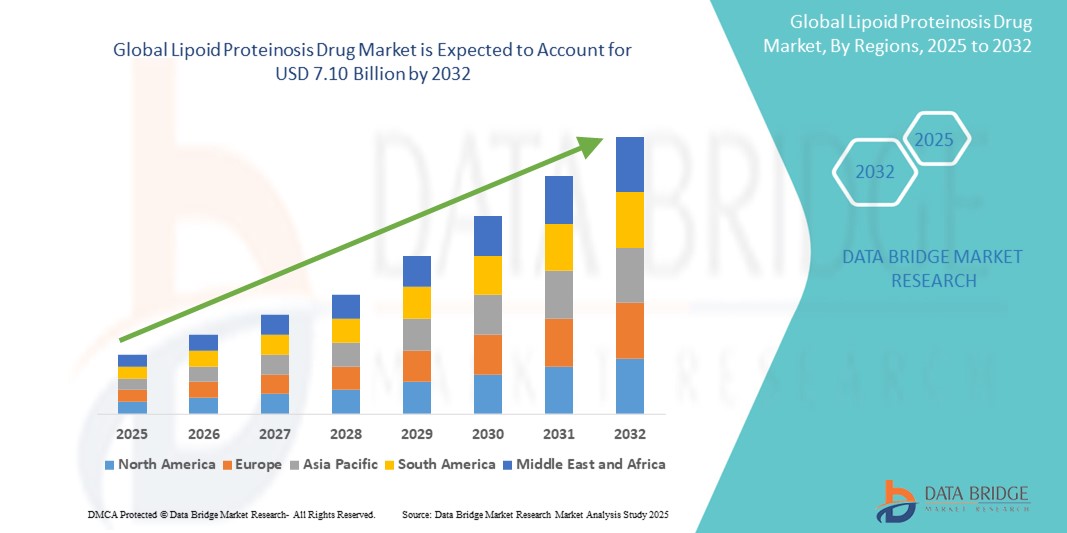
- The Global Lipoid Proteinosis Drug Market was valued at USD 3.87 billion in 2024 and is expected to reach USD 7.10 billion by 2032.
- During the forecast period of 2025 to 2032, the market is projected to grow at a CAGR of 7.9%, primarily driven by the rare genetic nature of the disease and increasing diagnosis rates supported by enhanced genetic testing technologies.
- This growth is further propelled by factors such as increased research into orphan diseases, growing availability of off-label drug use for symptom management, and expanding access to rare disease treatment programs in emerging healthcare markets.
Global Lipoid Proteinosis Drug Market Analysis
- The Global Lipoid Proteinosis Drug Market is poised for substantial growth through 2032, registering a CAGR of 7.9% from 2025 to 2032.
- The increasing need for effective therapeutic options to manage symptoms such as skin thickening, hoarseness, seizures, and neuropsychiatric complications is boosting demand for anticonvulsants, anti-inflammatory agents, and supportive therapies.
- The market benefits from ongoing clinical research focused on understanding the molecular pathways of ECM1 gene mutations, patient advocacy initiatives, and improved healthcare access for patients with rare dermatological and neurological conditions.
- Growth in rare disease registries, supportive orphan drug policies, and enhanced global awareness about Lipoid Proteinosis are expected to further drive market performance, particularly in North America, Europe, and selected parts of Asia-Pacific
Report Scope and Global Lipoid Proteinosis Drug Market Segmentation
|
Attributes |
Global Lipoid Proteinosis Drug Market Key Market Insights |
|
Segments Covered |
|
|
Countries Covered |
North America
Europe
Asia-Pacific
Middle East and Africa
South America
|
|
Key Market Players |
|
|
Market Opportunities |
|
|
Value Added Data Infosets |
In addition to the insights on market scenarios such as market value, growth rate, segmentation, geographical coverage, and major players, the market reports curated by the Data Bridge Market Research also include import export analysis, production capacity overview, production consumption analysis, price trend analysis, climate change scenario, supply chain analysis, value chain analysis, raw material/consumables overview, vendor selection criteria, PESTLE Analysis, Porter Analysis, and regulatory framework. |
Global Lipoid Proteinosis Drug Market Trends
“Shift Toward Targeted Genetic and Symptomatic Therapies”
• A key trend in the Global Lipoid Proteinosis Drug Market is the focus on therapies targeting ECM1 gene mutation pathways and downstream effects, such as skin thickening, hoarseness, and neurological symptoms.
• There is a growing preference for symptomatic treatments including corticosteroids, retinoids, and anticonvulsants to manage dermatological and neurological complications.
• For example, oral retinoids like acitretin are being explored to reduce skin lesions and enhance mucosal flexibility in affected patients.
• Novel therapeutic strategies, including gene therapy approaches and RNA-based treatments, are under development to correct the underlying genetic defect.
• The rarity of the disorder is prompting interest in orphan drug development and improved diagnostic techniques for earlier intervention.
Market Dynamics
Driver
“Increased Disease Awareness and Genetic Testing Adoption”
The rising availability of genetic counseling and molecular diagnostics is enabling earlier and more accurate identification of lipoid proteinosis.
Examples:
• With increasing access to next-generation sequencing, clinicians are better able to confirm ECM1 gene mutations in suspected cases.
• Patient advocacy groups and rare disease initiatives are improving visibility and research funding for rare skin and neurological conditions like lipoid proteinosis.
“Supportive Regulatory Frameworks for Rare Disease Therapies”
Government incentives for orphan drug development and rare disease research are boosting investment in potential treatments for lipoid proteinosis.
Examples:
• Orphan drug designations in the U.S. and EU provide market exclusivity, tax credits, and reduced development costs.
• Agencies like the NIH and EMA are funding rare disease databases and therapeutic pipelines for genetic disorders including LP.
Opportunity
“Development of ECM1-Targeted and Symptom-Modifying Therapies”
There is growing potential for therapies that directly address ECM1 deficiency or mitigate the downstream impact on the skin, mucosa, and brain.
Examples:
• Researchers are exploring ECM1 protein replacement and CRISPR-based gene correction.
• Investigational drugs targeting inflammation, calcification, and fibrosis are showing promise in early studies.
• Opportunities exist for managing chronic symptoms such as voice hoarseness, seizure prevention, and cutaneous thickening through long-term adjunctive care.
Restraint/Challenge
“Limited Approved Treatments and Low Disease Prevalence”
• There are no FDA- or EMA-approved drugs specifically indicated for lipoid proteinosis, making treatment symptomatic and inconsistent.
• The ultra-rare nature of the disease leads to delayed diagnosis, lack of physician familiarity, and insufficient clinical trial data.
• High development costs and small patient populations deter investment in targeted drug discovery.
• Challenges in enrolling diverse patient cohorts for clinical studies limit data generation and therapeutic validation.
Global Lipoid Proteinosis Drug Market Scope
The market is segmented on the basis of drug class, therapy class, end-users, and distribution channel
|
Segmentation |
Sub-Segmentation |
|
Drug Class |
|
|
Therepy type |
|
|
End-Users |
|
|
Distribution Channel |
|
Global Lipoid Proteinosis Drug Market Regional Analysis
“United States is the Dominant Region in the Global Lipoid Proteinosis Drug Market”
• Countries like the United States, Canada, and Germany dominate the market due to well-established rare disease registries, early diagnostic capabilities, and advanced genetic research infrastructure.
• Supportive government policies, orphan drug incentives, and high healthcare expenditure contribute significantly to market growth in these regions.
“Asia-Pacific and Latin America Show Promising Growth Potential”
• Increasing awareness about rare diseases, development of national rare disease plans, and access to genetic testing are key drivers.
• Countries like India and Brazil are emerging as crucial markets due to growing patient identification rates and increased government support for rare disease management.
• Cost-effective treatment strategies and growing presence of international collaborations are helping improve access in low-resource regions.
Global Lipoid Proteinosis Drug Market Share
The competitive landscape provides a comprehensive overview of the leading market players. This includes company profiles, financial performance, R&D activities, product pipelines, international presence, production capabilities, strategic developments, strengths, weaknesses, and contributions to rare disease therapeutics.
The Major Market Leaders Operating in the Market Include:
• Pfizer Inc.
• F. Hoffmann-La Roche Ltd
• Teva Pharmaceutical Industries Ltd.
• Novartis AG
• Johnson & Johnson Services, Inc.
• Sanofi S.A.
• Bayer AG
• Bristol-Myers Squibb Company
• Mallinckrodt Pharmaceuticals
• Takeda Pharmaceutical Company Limited
• Zydus Lifesciences Limited
• Dr. Reddy’s Laboratories Ltd.
• Sun Pharmaceutical Industries Ltd.
• Aurobindo Pharma
• Amneal Pharmaceuticals, Inc.
Latest Developments in Global Lipoid Proteinosis Drug Market
- In March 2023, Pfizer announced a preclinical study for a novel gene therapy candidate targeting ECM1 gene mutations associated with Lipoid Proteinosis.
- In July 2022, Roche partnered with a genomics institute to develop personalized diagnostics for early detection of rare skin and mucosal disorders.
- In 2024, South Korea’s health authority approved a new dermatologic formulation intended to reduce mucosal thickening in Lipoid Proteinosis patients.
- The report also highlights emerging trends such as CRISPR-based gene editing, AI in histopathologic image recognition, and integration of dermatological and neurological symptom management in rare disease therapy.

- Interactive Data Analysis Dashboard
- Company Analysis Dashboard for high growth potential opportunities
- Research Analyst Access for customization & queries
- Competitor Analysis with Interactive dashboard
- Latest News, Updates & Trend analysis
- Harness the Power of Benchmark Analysis for Comprehensive Competitor Tracking
Data collection and base year analysis are done using data collection modules with large sample sizes. The stage includes obtaining market information or related data through various sources and strategies. It includes examining and planning all the data acquired from the past in advance. It likewise envelops the examination of information inconsistencies seen across different information sources. The market data is analysed and estimated using market statistical and coherent models. Also, market share analysis and key trend analysis are the major success factors in the market report. To know more, please request an analyst call or drop down your inquiry.
The key research methodology used by DBMR research team is data triangulation which involves data mining, analysis of the impact of data variables on the market and primary (industry expert) validation. Data models include Vendor Positioning Grid, Market Time Line Analysis, Market Overview and Guide, Company Positioning Grid, Patent Analysis, Pricing Analysis, Company Market Share Analysis, Standards of Measurement, Global versus Regional and Vendor Share Analysis. To know more about the research methodology, drop in an inquiry to speak to our industry experts.
Data Bridge Market Research is a leader in advanced formative research. We take pride in servicing our existing and new customers with data and analysis that match and suits their goal. The report can be customized to include price trend analysis of target brands understanding the market for additional countries (ask for the list of countries), clinical trial results data, literature review, refurbished market and product base analysis. Market analysis of target competitors can be analyzed from technology-based analysis to market portfolio strategies. We can add as many competitors that you require data about in the format and data style you are looking for. Our team of analysts can also provide you data in crude raw excel files pivot tables (Fact book) or can assist you in creating presentations from the data sets available in the report.













