


What is the Lipoprotein(a)-Targeted RNA Therapeutics Market Size and Growth Rate?
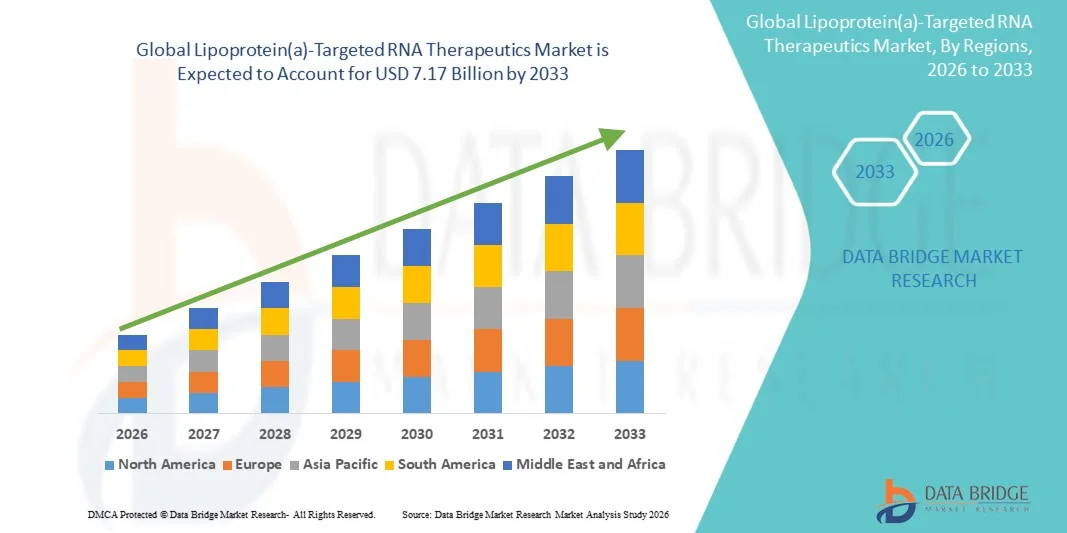
As per Data Bridge Market Research Analysis the Lipoprotein(a)-Targeted RNA Therapeutics Market was valued at USD 1.68 billion in 2025 and is projected to reach USD 7.17 billion by 2033, growing at a CAGR of 19.90% from 2026 to 2033. The market is witnessing strong growth driven by increasing prevalence of cardiovascular diseases linked to elevated lipoprotein(a) levels, rapid advancements in RNA-based drug technologies such as siRNA and antisense oligonucleotides, and a growing pipeline of late-stage clinical candidates targeting Lp(a) reduction.
Rising clinical awareness of lipoprotein(a) as an independent genetic risk factor for atherosclerotic cardiovascular disease, combined with unmet therapeutic needs in patients who remain at risk despite standard lipid-lowering therapies, is accelerating demand for targeted RNA therapeutics. Pharmaceutical companies and biotech innovators are increasingly investing in precision RNA-based approaches that can achieve sustained Lp(a) reduction, offering a potential breakthrough in preventive cardiology and long-term cardiovascular risk management.
Key Market Trends & Insights
- North America dominated the Lipoprotein(a)-Targeted RNA Therapeutics Market with the largest revenue share of 42.6% in 2025, supported by advanced clinical trial infrastructure, strong presence of RNA drug developers, and early adoption of novel cardiovascular therapies.
- The RNA interference (RNAi) therapies segment led the market with a 58.3% share in 2025, driven by its high potency in selectively silencing LPA gene expression and achieving substantial and sustained reductions in lipoprotein(a) levels.
- Asia-Pacific is expected to be the fastest-growing region from 2026 to 2033, registering a CAGR of 9.1%, driven by increasing cardiovascular disease prevalence, expanding biopharmaceutical investments, and rapid adoption of advanced RNA-based therapies across China, India, and Japan.
- Antisense oligonucleotide (ASO) therapies are the fastest-growing therapeutic type, projected to register a CAGR of 10.4%, reflecting the surge in clinical success of Lp(a)-lowering ASO candidates and expanding focus on precision lipid management.
- The siRNA segment dominated the drug molecule type category with a 60.1% revenue share in 2025, led by its proven ability to achieve deep and sustained suppression of LPA gene expression in hepatocytes.
- Atherosclerotic cardiovascular disease accounted for 46.8% of the market, preferred by the strong association between elevated lipoprotein(a) levels and residual cardiovascular risk despite standard lipid-lowering therapy.
- The aortic valve stenosis segment is the fastest-growing software category, with a CAGR of 11.6%, driven by emerging evidence linking elevated Lp(a) levels to calcific valve disease progression.
Market Size & Forecast
- Global Market Value (2025): USD 1.68 Billion
- Expected Market Value (2033): USD 7.17 Billion
- Forecast CAGR (2026–2033): 19.90%
- Leading Region in 2025: North America
- Fastest Growing Region: Asia Pacific
Report Scope and Lipoprotein(a)-Targeted RNA Therapeutics Market Segmentation
|
Attributes |
Lipoprotein(a)-Targeted RNA Therapeutics Key Market Insights |
|
Segments Covered |
|
|
Countries Covered |
North America · U.S. · Canada · Mexico Europe · Germany · France · U.K. · Netherlands · Switzerland · Belgium · Russia · Italy · Spain · Turkey · Rest of Europe Asia-Pacific · China · Japan · India · South Korea · Singapore · Malaysia · Australia · Thailand · Indonesia · Philippines · Rest of Asia-Pacific Middle East and Africa · Saudi Arabia · U.A.E. · South Africa · Egypt · Israel · Rest of Middle East and Africa South America · Brazil · Argentina · Rest of South America |
|
Key Market Players |
· Novartis AG (Switzerland) · Amgen Inc. (U.S.) · Eli Lilly and Company (U.S.) · Ionis Pharmaceuticals, Inc. (U.S.) · Alnylam Pharmaceuticals, Inc. (U.S.) · Arrowhead Pharmaceuticals, Inc. (U.S.) · Silence Therapeutics plc (U.K.) · Dicerna Pharmaceuticals (U.S.) · Roche Holding AG (Switzerland) · Sanofi (France) · Pfizer Inc. (U.S.) · AstraZeneca plc (U.K.) · Boehringer Ingelheim International GmbH (Germany) · Regeneron Pharmaceuticals, Inc. (U.S.) · Bayer AG (Germany) · Moderna, Inc. (U.S.) · AbbVie Inc. (U.S.) · GSK plc (U.K.) · Beam Therapeutics Inc. (U.S.) · Sarepta Therapeutics, Inc. (U.S.) |
|
Market Opportunities |
· High unmet clinical demand for targeted Lp(a)-lowering therapies · Rapid expansion of late-stage RNA drug pipelines · Growing adoption of precision medicine and genetic screening for elevated Lp(a) |
|
Value Added Data Infosets |
In addition to the insights on market scenarios such as market value, growth rate, segmentation, geographical coverage, and major players, the market reports curated by the Data Bridge Market Research also include in-depth expert analysis, patient epidemiology, pipeline analysis, pricing analysis, and regulatory framework. |
What is the Key Trend in the Lipoprotein(a)-Targeted RNA Therapeutics Market?
Trend: Expansion of RNA-Based Cardiovascular Precision Medicine
RNA-based therapies targeting lipoprotein(a) are increasingly being integrated into precision cardiovascular treatment strategies, enabling highly specific reduction of genetically driven cardiovascular risk. Advances in siRNA and antisense oligonucleotide platforms are improving durability, potency, and liver-targeted delivery, while large clinical trials are validating substantial Lp(a) lowering effects. Pharmaceutical companies are accelerating development of long-acting injectables and combination lipid-lowering regimens, supported by biomarker-driven patient stratification and earlier disease intervention approaches. For instance, late-stage clinical programs evaluating siRNA therapies have demonstrated sustained Lp(a) reduction exceeding 80% over extended dosing intervals.
Lipoprotein(a)-Targeted RNA Therapeutics Market Dynamics
Key Market Driver: Rising Burden of Genetic Cardiovascular Risk and Unmet Treatment Needs
The increasing recognition of lipoprotein(a) as an independent and genetically determined cardiovascular risk factor is driving strong demand for targeted RNA therapeutics. Patients with elevated Lp(a) often remain at residual risk despite optimal LDL-C lowering therapies, creating a significant unmet clinical need. Growing implementation of routine Lp(a) screening in cardiology practice and expanding awareness among clinicians are accelerating diagnosis rates and treatment eligibility. Pharmaceutical pipelines are rapidly advancing RNA-based agents capable of selectively silencing LPA gene expression, offering transformative prevention potential. For instance, population-level screening initiatives in cardiovascular research programs have identified high-risk cohorts eligible for investigational RNA therapies.
Key Restraint/Challenge: High Development Costs and Complex Clinical Validation Pathways
A major restraint in the global market is the high cost and complexity associated with developing RNA-based Lp(a)-targeted therapeutics, including long clinical timelines and stringent regulatory requirements. Manufacturing of oligonucleotide-based drugs requires advanced synthesis technologies, specialized delivery systems, and extensive stability testing, increasing overall development expenditure. In addition, proving long-term cardiovascular outcome benefits beyond biomarker reduction remains a key regulatory hurdle. Limited accessibility in low- and middle-income regions further constrains early commercialization and adoption. For instance, multi-phase cardiovascular outcome trials for RNA-based lipid therapies often span several years and require large patient cohorts, significantly increasing cost and development risk.
Key Market Opportunity: Expansion of Genetic Screening and Preventive Cardiovascular Therapeutics
The integration of genetic screening and biomarker-based cardiovascular risk assessment presents a major opportunity for RNA-based Lp(a) therapeutics. Increasing adoption of preventive cardiology frameworks is enabling early identification of individuals with elevated Lp(a) levels before clinical disease onset. This shift supports the expansion of preventive treatment models using long-acting RNA therapies that can provide sustained risk reduction with infrequent dosing. Partnerships between diagnostic companies and biopharma players are further strengthening early intervention ecosystems. For instance, emerging preventive cardiology programs incorporating routine Lp(a) testing are creating structured patient pathways for enrollment into RNA therapeutic treatment trials.
How is the Lipoprotein(a)-Targeted RNA Therapeutics Market Segmented?
The Lipoprotein(a)-Targeted RNA Therapeutics market is segmented on the basis of therapeutic type, drug molecule type, indication, and end user.
- By Therapeutic Type
On the basis of therapeutic type, the Lipoprotein(a)-Targeted RNA Therapeutics Market is segmented into RNA interference (RNAi) therapies, Antisense oligonucleotide (ASO) therapies, and Emerging RNA-based therapies. The RNA interference (RNAi) therapies segment dominated the market with a 58.3% share in 2025, owing to its high potency in selectively silencing LPA gene expression and achieving substantial and sustained reductions in lipoprotein(a) levels. These therapies have demonstrated strong clinical efficacy in late-stage trials, positioning them as the leading approach in RNA-based cardiovascular intervention. Increasing investment from major pharmaceutical companies and biotech firms is accelerating pipeline expansion. Their long dosing intervals and liver-targeted delivery systems further enhance clinical adoption. Continuous advancements in siRNA chemistry and conjugation technologies are strengthening their therapeutic durability. The segment benefits from strong clinical validation and rapid regulatory progress.
The Antisense oligonucleotide (ASO) therapies segment is projected to register the fastest growth at a CAGR of 10.4% from 2026 to 2033, driven by increasing clinical success of Lp(a)-lowering ASO candidates and expanding focus on precision lipid management. ASO platforms offer flexible design and strong target specificity, enabling efficient inhibition of apolipoprotein(a) synthesis. Growing adoption in late-stage clinical trials is supporting rapid commercialization potential. Improvements in ligand-conjugated delivery systems are enhancing efficacy and safety profiles. Expanding cardiovascular disease burden is further driving demand for long-acting lipid-lowering therapies. Rising partnerships between biotech innovators and large pharma companies are accelerating development pipelines.
- By Drug Molecule Type
conjugated RNA molecules. The siRNA segment dominated the market with a 60.1% share in 2025, driven by its proven ability to achieve deep and sustained suppression of LPA gene expression in hepatocytes. siRNA-based drugs benefit from advanced GalNAc conjugation technology, enabling highly efficient liver targeting and reduced systemic toxicity. Strong clinical outcomes demonstrating significant Lp(a) reduction have reinforced physician and investor confidence. Major pharmaceutical companies are prioritizing siRNA platforms in their cardiovascular RNA portfolios. Expanding clinical trial activity and regulatory advancements are further supporting dominance. The segment also benefits from long dosing intervals, improving patient adherence.
The conjugated RNA molecules segment is expected to witness the fastest growth at a CAGR of 11.2% from 2026 to 2033, driven by innovations in targeted delivery systems and improved stability of RNA therapeutics. These molecules enhance tissue-specific uptake and reduce off-target effects, improving safety and efficacy. Advancements in ligand conjugation chemistry are enabling next-generation precision therapies. Increasing research in multi-target lipid regulation is expanding application scope. Growing investment in RNA drug delivery platforms is accelerating commercialization potential. Rising demand for long-acting injectable therapies is further supporting segment growth.
- By Indication
On the basis of indication, the market is segmented into atherosclerotic cardiovascular disease, myocardial infarction prevention, stroke prevention, peripheral artery disease, and aortic valve stenosis. The atherosclerotic cardiovascular disease segment dominated the market with a 46.8% share in 2025, owing to the strong association between elevated lipoprotein(a) levels and residual cardiovascular risk despite standard lipid-lowering therapy. This segment benefits from widespread clinical screening and increasing awareness of Lp(a) as a key genetic risk factor. High prevalence of ASCVD globally is driving strong patient pool expansion. RNA therapeutics are being increasingly integrated into preventive cardiology protocols. Strong clinical trial focus on ASCVD outcomes is further reinforcing dominance. Healthcare systems are prioritizing early intervention strategies in high-risk patients.
The aortic valve stenosis segment is projected to register the fastest growth at a CAGR of 11.6% from 2026 to 2033, driven by emerging evidence linking elevated Lp(a) levels to calcific valve disease progression. Lack of effective pharmacological treatments currently creates significant unmet need in this indication. RNA-based therapies offer potential disease-modifying benefits beyond lipid lowering. Increasing research focus on structural heart disease is expanding clinical exploration. Rising adoption of genetic risk screening is improving early identification of at-risk patients. Expanding late-stage trials targeting valve calcification are further accelerating growth.
- By End User
On the basis of end user, the market is segmented into hospitals, cardiology clinics, specialty lipid clinics, research institutes, and academic medical centers. The hospitals segment dominated the market with a 44.2% share in 2025, driven by high patient inflow for cardiovascular disease diagnosis and treatment. Hospitals serve as primary hubs for administration of advanced RNA-based therapies and clinical trial participation. Availability of specialized cardiology departments supports widespread adoption. Increasing integration of precision medicine into hospital care pathways is further strengthening demand. Strong infrastructure for diagnostic screening and follow-up care enhances treatment continuity. Hospitals also play a key role in post-approval therapy administration.
The specialty lipid clinics segment is expected to witness the fastest growth at a CAGR of 10.9% from 2026 to 2033, driven by rising focus on personalized lipid management and genetic cardiovascular risk assessment. These clinics are increasingly adopting Lp(a) screening as part of routine lipid profiling. Growing patient awareness is driving demand for specialized treatment centers. RNA therapeutics requiring long-term monitoring are well suited to these clinical settings. Expanding physician expertise in lipid disorders is supporting adoption. Increasing collaboration with pharmaceutical companies for patient enrollment in clinical trials is further accelerating growth.
Which Region Holds the Largest Share of the Lipoprotein(a)-Targeted RNA Therapeutics Market?
North America dominated the Lipoprotein(a)-Targeted RNA Therapeutics Market with the largest revenue share of 42.6% in 2025, supported by advanced clinical trial infrastructure, strong presence of RNA drug developers, and early adoption of novel cardiovascular therapies. The region also benefits from high awareness of lipoprotein(a) as a genetic cardiovascular risk factor, extensive Lp(a) screening initiatives, and rapid advancement of siRNA and antisense oligonucleotide pipelines. Increasing investment in precision medicine, robust regulatory pathways for novel therapeutics, and strong focus on preventive cardiology continue to strengthen North America’s leadership position in the global market.
U.S. Lipoprotein(a)-Targeted RNA Therapeutics Market Insight
The U.S. Lipoprotein(a)-Targeted RNA Therapeutics market is witnessing strong growth due to rising cardiovascular disease burden, early adoption of RNA-based precision medicines, and robust clinical trial activity for siRNA and antisense oligonucleotide therapies. The country’s advanced biopharmaceutical ecosystem, presence of leading RNA drug developers, and strong investment in cardiovascular research are driving demand across hospitals, specialty clinics, and academic medical centers. In addition, increasing Lp(a) screening awareness and focus on preventive cardiology are accelerating patient identification and therapy adoption.
Europe Lipoprotein(a)-Targeted RNA Therapeutics Market Insight
The Europe Lipoprotein(a)-Targeted RNA Therapeutics market remains a major contributor to global revenue, driven by strong regulatory support for innovative RNA-based therapies, rising focus on cardiovascular risk reduction, and expanding clinical research networks. The region benefits from increasing adoption of precision medicine approaches and growing awareness of Lp(a) as an independent genetic risk factor. Pharmaceutical collaborations and public health initiatives supporting early diagnosis and prevention are further strengthening market expansion across key European countries.
U.K. Lipoprotein(a)-Targeted RNA Therapeutics Market Insight
The U.K. Lipoprotein(a)-Targeted RNA Therapeutics market is experiencing steady growth, supported by increasing participation in cardiovascular clinical trials, strong NHS-driven focus on preventive healthcare, and rising adoption of advanced lipid testing. Growing investment in biotechnology innovation and precision medicine is accelerating development and accessibility of RNA-based therapies. In addition, expanding collaboration between academic institutions and pharmaceutical companies is enhancing research output and clinical adoption in the country.
Germany Lipoprotein(a)-Targeted RNA Therapeutics Market Insight
The Germany Lipoprotein(a)-Targeted RNA Therapeutics market is expanding steadily due to strong pharmaceutical manufacturing capabilities, advanced clinical research infrastructure, and increasing focus on cardiovascular innovation. German hospitals and research institutes are actively involved in RNA therapeutic trials targeting Lp(a) reduction and atherosclerotic disease prevention. In addition, rising awareness of genetic cardiovascular risk and strong healthcare funding are supporting early adoption of next-generation RNA-based lipid-lowering therapies.
Asia-Pacific Lipoprotein(a)-Targeted RNA Therapeutics Market Insight
The Asia-Pacific Lipoprotein(a)-Targeted RNA Therapeutics market is expected to witness rapid growth, driven by rising cardiovascular disease prevalence, expanding biotechnology investments, and increasing adoption of advanced precision medicine approaches. Growing awareness of Lp(a)-related cardiovascular risk and improving diagnostic capabilities are supporting early patient identification across the region. In addition, increasing clinical trial activity and rising participation of global pharmaceutical companies are accelerating market expansion.
Japan Lipoprotein(a)-Targeted RNA Therapeutics Market Insight
The Japan Lipoprotein(a)-Targeted RNA Therapeutics market is witnessing consistent growth due to strong emphasis on advanced medical innovation, aging population-related cardiovascular burden, and increasing adoption of RNA-based therapies in clinical research. Japanese pharmaceutical companies and academic institutes are actively engaged in cardiovascular RNA drug development and precision lipid management studies. Moreover, integration of advanced diagnostic technologies is improving early detection and treatment planning.
China Lipoprotein(a)-Targeted RNA Therapeutics Market Insight
The China Lipoprotein(a)-Targeted RNA Therapeutics market is growing rapidly, driven by increasing cardiovascular disease prevalence, expanding biotechnology sector investments, and strong government support for innovative drug development. Rising participation in global clinical trials and growing focus on precision medicine are accelerating adoption of RNA-based lipid-lowering therapies. In addition, improvements in healthcare infrastructure and increasing awareness of genetic risk factors are positioning China as a key high-growth market globally.
Lipoprotein(a)-Targeted RNA Therapeutics Market Share
The Lipoprotein(a)-Targeted RNA Therapeutics industry is primarily led by well-established companies, including:
- Novartis AG (Switzerland)
- Amgen Inc. U.S.)
- Eli Lilly and Company (U.S.)
- Ionis Pharmaceuticals, Inc. (U.S.)
- Alnylam Pharmaceuticals, Inc. (U.S.)
- Arrowhead Pharmaceuticals, Inc. (U.S.)
- Silence Therapeutics plc (U.K.)
- Dicerna Pharmaceuticals (U.S.)
- Roche Holding AG (Switzerland)
- Sanofi (France)
- Pfizer Inc. (U.S.)
- AstraZeneca plc (U.K.)
- Boehringer Ingelheim International GmbH (Germany)
- Regeneron Pharmaceuticals, Inc. (U.S.)
- Bayer AG (Germany)
- Moderna, Inc. (U.S.)
- AbbVie Inc. (U.S.)
- GSK plc (U.K.)
- Beam Therapeutics Inc. (U.S.)
- Sarepta Therapeutics, Inc. (U.S.)
What are Latest Developments in Lipoprotein(a)-Targeted RNA Therapeutics Market?
- In March 2025, Eli Lilly reported Phase 2 clinical results from the ALPACA study evaluating lepodisiran, showing very large and sustained reductions in lipoprotein(a) levels with a single or limited dosing regimen. The results reinforced the therapeutic strength of siRNA-based approaches and intensified competition among RNA therapeutics targeting cardiovascular risk reduction. This milestone further accelerated late-stage development activity in the Lp(a)-targeted RNA pipeline
- In March 2023, Eli Lilly released Phase 1 clinical data for lepodisiran (LY3819469), an investigational siRNA therapy targeting Lp(a), demonstrating strong, dose-dependent, and long-duration suppression of lipoprotein(a) levels. The findings highlighted the potential for infrequent dosing schedules with sustained efficacy. This positioned lepodisiran as one of the most promising long-acting RNA-based cardiovascular therapies in development
- In November 2022, Novartis announced the initiation of the Phase III HORIZON outcomes trial evaluating pelacarsen, an antisense oligonucleotide targeting lipoprotein(a), designed to assess whether Lp(a) lowering can reduce major cardiovascular events in patients with established atherosclerotic cardiovascular disease. This marked a major shift in the market toward outcome-driven validation of RNA-based lipid therapies. The trial strengthened the clinical development pathway for antisense approaches in cardiovascular precision medicine
- In November 2022, Amgen and collaborators published Phase 2 results of olpasiran (OCEAN(a)-DOSE study) in the New England Journal of Medicine, demonstrating significant and sustained reductions in lipoprotein(a) levels using an siRNA mechanism targeting hepatic LPA mRNA. This study provided strong clinical validation for RNA interference as a highly effective modality for Lp(a) lowering. It also reinforced the potential of siRNA therapies in long-acting cardiovascular risk management
- In May 2022, Silence Therapeutics announced Phase 1 clinical data for SLN360, a siRNA-based therapy targeting apolipoprotein(a), showing strong and durable reductions in Lp(a) levels in high-risk patients. The results supported the feasibility of RNA interference as a long-term cardiovascular treatment strategy. This development further encouraged investment into next-generation RNA delivery and conjugation technologies

- Interactive Data Analysis Dashboard
- Company Analysis Dashboard for high growth potential opportunities
- Research Analyst Access for customization & queries
- Competitor Analysis with Interactive dashboard
- Latest News, Updates & Trend analysis
- Harness the Power of Benchmark Analysis for Comprehensive Competitor Tracking
Data collection and base year analysis are done using data collection modules with large sample sizes. The stage includes obtaining market information or related data through various sources and strategies. It includes examining and planning all the data acquired from the past in advance. It likewise envelops the examination of information inconsistencies seen across different information sources. The market data is analysed and estimated using market statistical and coherent models. Also, market share analysis and key trend analysis are the major success factors in the market report. To know more, please request an analyst call or drop down your inquiry.
The key research methodology used by DBMR research team is data triangulation which involves data mining, analysis of the impact of data variables on the market and primary (industry expert) validation. Data models include Vendor Positioning Grid, Market Time Line Analysis, Market Overview and Guide, Company Positioning Grid, Patent Analysis, Pricing Analysis, Company Market Share Analysis, Standards of Measurement, Global versus Regional and Vendor Share Analysis. To know more about the research methodology, drop in an inquiry to speak to our industry experts.
Data Bridge Market Research is a leader in advanced formative research. We take pride in servicing our existing and new customers with data and analysis that match and suits their goal. The report can be customized to include price trend analysis of target brands understanding the market for additional countries (ask for the list of countries), clinical trial results data, literature review, refurbished market and product base analysis. Market analysis of target competitors can be analyzed from technology-based analysis to market portfolio strategies. We can add as many competitors that you require data about in the format and data style you are looking for. Our team of analysts can also provide you data in crude raw excel files pivot tables (Fact book) or can assist you in creating presentations from the data sets available in the report.












