


Liposomal Chemotherapy Drug Market Size
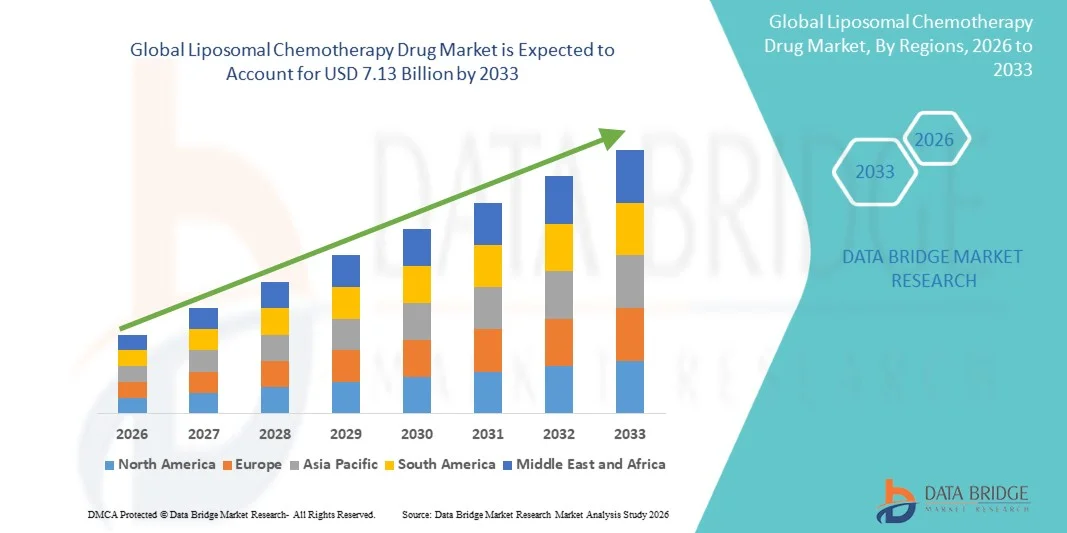
- The liposomal chemotherapy drug market size was valued at USD 3.69 billion in 2025 and is expected to reach USD 7.13 billion by 2033, at a CAGR of 8.60% during the forecast period
- The market growth is primarily driven by the increasing prevalence of cancer worldwide and the growing preference for advanced drug-delivery systems that enhance therapeutic efficacy while reducing systemic toxicity
- In addition, rising adoption of liposomal formulations due to their ability to improve drug bioavailability, reduce adverse effects, and enable targeted chemotherapy delivery is positioning liposomal chemotherapy drugs as a preferred treatment option, thereby significantly supporting overall market growth
Liposomal Chemotherapy Drug Market Analysis
- Liposomal chemotherapy drugs, which encapsulate anticancer agents within lipid-based vesicles, are increasingly critical in modern oncology treatment due to their ability to enhance targeted drug delivery, improve pharmacokinetics, and reduce systemic toxicity compared to conventional chemotherapy across both solid tumors and hematological malignancies
- The growing demand for liposomal chemotherapy drugs is primarily driven by the rising global cancer burden, increasing adoption of advanced drug-delivery technologies, and a strong clinical preference for therapies that offer improved safety, tolerability, and treatment outcomes
- North America dominated the liposomal chemotherapy drug market with the largest revenue share of 40.7% in 2025, supported by advanced healthcare infrastructure, high cancer diagnosis rates, early adoption of innovative oncology therapies, and a strong presence of leading pharmaceutical companies, particularly in the U.S., which continues to see significant uptake of liposomal formulations in standard treatment protocols
- Asia-Pacific is expected to be the fastest-growing region during the forecast period, driven by increasing cancer prevalence, expanding access to oncology care, rising healthcare expenditure, and growing awareness and adoption of novel chemotherapy delivery systems across emerging economies
- The liposomal doxorubicin segment dominated the market with a share of 35.9% in 2025, attributed to its widespread clinical use across multiple cancer indications and its proven ability to reduce cardiotoxicity compared to conventional doxorubicin, making it a preferred choice among oncologists
Report Scope and Liposomal Chemotherapy Drug Market Segmentation
|
Attributes |
Liposomal Chemotherapy Drug Key Market Insights |
|
Segments Covered |
|
|
Countries Covered |
North America
Europe
Asia-Pacific
Middle East and Africa
South America
|
|
Key Market Players |
|
|
Market Opportunities |
|
|
Value Added Data Infosets |
In addition to the insights on market scenarios such as market value, growth rate, segmentation, geographical coverage, and major players, the market reports curated by the Data Bridge Market Research also include in-depth expert analysis, patient epidemiology, pipeline analysis, pricing analysis, and regulatory framework |
Liposomal Chemotherapy Drug Market Trends
“Advancement in Targeted and Safer Chemotherapy Delivery”
- A prominent and accelerating trend in the liposomal chemotherapy drug market is the growing emphasis on advanced drug-delivery technologies that enhance tumor targeting while minimizing systemic toxicity, significantly improving patient tolerability and treatment adherence
- For instance, liposomal doxorubicin formulations such as Doxil and Caelyx have been widely adopted in clinical practice due to their ability to reduce cardiotoxicity compared to conventional doxorubicin while maintaining therapeutic efficacy
- Technological advancements in liposome engineering are enabling controlled drug release, prolonged circulation time, and improved accumulation of chemotherapeutic agents at tumor sites through enhanced permeability and retention (EPR) effects. For instance, PEGylated liposomes are increasingly used to evade immune clearance and extend drug half-life
- The integration of liposomal chemotherapy drugs into combination therapy regimens and personalized oncology approaches is further enhancing clinical outcomes. Through optimized delivery, these formulations support better synergy with immunotherapies, targeted therapies, and radiation treatment
- Increasing research focus on next-generation liposomal platforms, including stimuli-responsive and actively targeted liposomes, is emerging as a key trend to further enhance tumor specificity and therapeutic precision
- This shift toward safer, more effective, and patient-centric chemotherapy solutions is reshaping clinical oncology standards. Consequently, pharmaceutical companies such as Johnson & Johnson and Baxter are focusing on expanding and refining liposomal oncology portfolios with next-generation formulations
- The demand for liposomal chemotherapy drugs offering improved safety profiles and enhanced therapeutic performance is steadily increasing across hospitals and oncology centers, as clinicians and patients prioritize efficacy with reduced adverse effects
Liposomal Chemotherapy Drug Market Dynamics
Driver
“Rising Global Cancer Burden and Demand for Safer Chemotherapy Options”
- The increasing global prevalence of cancer, coupled with the growing demand for chemotherapy treatments that reduce toxicity and improve quality of life, is a major driver supporting the adoption of liposomal chemotherapy drugs
- For instance, in recent years, several regulatory approvals and label expansions for liposomal oncology drugs have reinforced their role in standard cancer treatment protocols, encouraging wider clinical use
- As oncologists seek alternatives to conventional chemotherapy with severe side effects, liposomal formulations offer targeted delivery, reduced off-target toxicity, and improved patient compliance, making them an attractive therapeutic option
- Furthermore, rising healthcare expenditure and expanding access to advanced oncology care in both developed and emerging markets are accelerating the adoption of innovative drug-delivery systems such as liposomal chemotherapy
- Growing awareness among patients and healthcare providers regarding the long-term adverse effects of conventional chemotherapy is accelerating the shift toward liposomal alternatives that offer reduced toxicity profiles
- In addition, increasing government and private funding for oncology research and nanomedicine development is supporting the clinical advancement and commercialization of liposomal chemotherapy drugs worldwide
- The growing focus on improving treatment outcomes, extending patient survival, and minimizing hospitalization associated with chemotherapy-related complications continues to propel demand for liposomal chemotherapy drugs across multiple cancer indications
Restraint/Challenge
“High Development Costs and Complex Regulatory Pathways”
- The high cost associated with the development, manufacturing, and quality control of liposomal chemotherapy drugs presents a significant challenge to market expansion, particularly when compared to conventional generic chemotherapy agents
- For instance, the complex formulation processes and stringent stability requirements of liposomal drugs increase production costs and can lead to supply constraints or pricing pressures
- Regulatory hurdles related to demonstrating bioequivalence, safety, and efficacy for liposomal formulations further complicate product approvals, especially for generic versions, slowing market entry and competition
- In addition, the need for specialized manufacturing infrastructure and advanced technical expertise limits the number of companies capable of producing high-quality liposomal chemotherapy drugs at scale
- Limited availability of standardized regulatory guidelines for complex liposomal drug formulations across different regions creates approval uncertainties and delays market entry
- Moreover, challenges related to large-scale manufacturing consistency and batch-to-batch reproducibility can impact supply reliability and increase operational risks for manufacturers
- Overcoming these challenges through manufacturing optimization, regulatory harmonization, and continued investment in formulation science will be critical for ensuring broader accessibility and sustained growth of the liposomal chemotherapy drug market
Liposomal Chemotherapy Drug Market Scope
The market is segmented on the basis of drug type, application, technology, and end user.
- By Drug Type
On the basis of drug type, the liposomal chemotherapy drug market is segmented into liposomal doxorubicin, liposomal paclitaxel, liposomal amphotericin B, and other liposomal chemotherapy drugs. The liposomal doxorubicin segment dominated the market in 2025 with a market share of 35.9%, driven by its widespread clinical acceptance and long-standing use across multiple cancer indications including breast cancer, ovarian cancer, Kaposi’s sarcoma, and multiple myeloma. Its proven ability to significantly reduce cardiotoxicity compared to conventional doxorubicin has made it a preferred option among oncologists. The availability of both branded and generic formulations has improved affordability and global access. Strong inclusion in treatment guidelines and favorable reimbursement policies further support its dominance. In addition, its established manufacturing processes and regulatory approvals reinforce sustained market leadership.
The liposomal paclitaxel segment is expected to witness the fastest growth during the forecast period, fueled by increasing demand for solvent-free chemotherapy options with improved safety profiles. Liposomal paclitaxel eliminates the need for toxic solvents, reducing hypersensitivity reactions and improving patient tolerability. Growing use in breast, lung, and ovarian cancer treatment is supporting rapid adoption. Ongoing clinical trials evaluating expanded indications are further accelerating growth. Rising preference for advanced taxane formulations in emerging oncology markets is also contributing to this segment’s expansion.
- By Application
On the basis of application, the market is segmented into cancer therapy and other therapeutic applications. The cancer therapy segment dominated the market in 2025, as liposomal chemotherapy drugs are primarily developed and prescribed for oncology-related treatments. The increasing global cancer burden and rising demand for safer and more effective chemotherapy solutions strongly support this segment. Liposomal formulations are widely used in both solid tumors and hematological malignancies due to their ability to enhance drug delivery while minimizing systemic toxicity. Their role in improving patient quality of life and reducing treatment-related complications further strengthens dominance. In addition, strong clinical evidence and regulatory support reinforce widespread adoption in cancer therapy.
The cancer therapy segment is also expected to grow at the fastest rate during the forecast period, driven by expanding oncology pipelines and increasing use of liposomal drugs in combination therapies. Advances in personalized medicine and precision oncology are increasing demand for targeted chemotherapy delivery systems. Rising cancer diagnosis rates and improved access to oncology care in emerging markets are further accelerating growth. The growing focus on improving treatment outcomes and survival rates continues to drive strong demand within this segment.
- By Technology
On the basis of technology, the market is segmented into stealth (PEGylated) liposome, non-PEGylated liposome, and advanced liposome technologies. The stealth (PEGylated) liposome segment dominated the market in 2025, supported by its ability to prolong circulation time and enhance drug accumulation at tumor sites. PEGylation helps liposomes evade immune system clearance, improving therapeutic efficacy through enhanced permeability and retention effects. Many commercially successful liposomal chemotherapy drugs are based on PEGylated technology, reinforcing dominance. Its established safety profile and regulatory acceptance further strengthen adoption. In addition, scalability and manufacturing reliability contribute to its leading market position.
The advanced liposome technologies segment is anticipated to witness the fastest growth during the forecast period, driven by innovation in targeted, stimuli-responsive, and controlled-release liposomal systems. These technologies aim to further improve tumor specificity and reduce off-target toxicity. Increasing investment in nanomedicine research and oncology drug innovation is accelerating development. Pharmaceutical companies are actively exploring next-generation liposomal platforms to enhance differentiation and clinical outcomes. As these technologies progress through clinical trials, rapid adoption is expected.
- By End User
On the basis of end user, the market is segmented into hospitals, homecare, specialty clinics, and others. The hospitals segment dominated the market in 2025, as liposomal chemotherapy drugs are predominantly administered in hospital oncology departments under professional supervision. Hospitals possess the necessary infrastructure, trained oncology staff, and monitoring systems required for intravenous chemotherapy administration. High patient volumes and access to reimbursement further support dominance. Hospitals also serve as primary centers for cancer diagnosis and advanced treatment initiation. In addition, inclusion of liposomal drugs in hospital formularies reinforces sustained demand.
The specialty clinics segment is expected to witness the fastest growth during the forecast period, driven by the increasing shift toward outpatient and day-care oncology services. Specialty clinics provide focused cancer care with reduced hospital stays and improved patient convenience. Growing private investment in oncology clinics and expanding cancer centers in emerging markets are supporting growth. The adoption of liposomal chemotherapy drugs in outpatient treatment protocols further accelerates this segment’s expansion.
Liposomal Chemotherapy Drug Market Regional Analysis
- North America dominated the liposomal chemotherapy drug market with the largest revenue share of 40.7% in 2025, supported by advanced healthcare infrastructure, high cancer diagnosis rates, early adoption of innovative oncology therapies
- Healthcare providers in the region place strong emphasis on treatment efficacy, patient safety, and reduced chemotherapy-related toxicity, leading to increased use of liposomal formulations over conventional chemotherapy drugs
- This widespread adoption is further supported by favorable reimbursement frameworks, significant oncology R&D investments, and the strong presence of leading pharmaceutical companies, establishing North America as the leading region for liposomal chemotherapy drug utilization across both hospital and specialty oncology settings
U.S. Liposomal Chemotherapy Drug Market Insight
The U.S. liposomal chemotherapy drug market captured the largest revenue share within North America in 2025, driven by a high incidence of cancer and strong adoption of advanced oncology therapies. Healthcare providers increasingly prioritize liposomal formulations due to their ability to reduce systemic toxicity while maintaining therapeutic efficacy. The widespread availability of specialized cancer centers, strong reimbursement coverage, and early adoption of innovative drug-delivery technologies further propel market growth. Moreover, the presence of leading pharmaceutical companies and ongoing clinical research activity continues to support the expansion of liposomal chemotherapy drug utilization across the country.
Europe Liposomal Chemotherapy Drug Market Insight
The Europe liposomal chemotherapy drug market is projected to expand at a notable CAGR during the forecast period, primarily driven by rising cancer prevalence and strong regulatory emphasis on patient safety and treatment quality. Increasing adoption of advanced drug-delivery systems and growing awareness of chemotherapy-related side effects are fostering demand for liposomal formulations. European healthcare systems are increasingly integrating innovative oncology therapies into standard treatment protocols. The market is witnessing steady growth across hospital and specialty oncology settings, supported by favorable reimbursement structures and expanding access to cancer care.
U.K. Liposomal Chemotherapy Drug Market Insight
The U.K. liposomal chemotherapy drug market is anticipated to grow at a steady CAGR during the forecast period, supported by increasing cancer incidence and a strong focus on improving treatment outcomes. Growing adoption of advanced chemotherapy delivery technologies and rising preference for therapies with improved safety profiles are driving demand. The country’s well-established healthcare infrastructure and emphasis on evidence-based oncology treatments further support market growth. In addition, ongoing investments in cancer research and expanding oncology services continue to stimulate adoption.
Germany Liposomal Chemotherapy Drug Market Insight
The Germany liposomal chemotherapy drug market is expected to expand at a considerable CAGR during the forecast period, driven by strong healthcare infrastructure and high awareness of advanced cancer therapies. Germany’s emphasis on innovation, precision medicine, and high-quality patient care promotes the adoption of liposomal drug formulations. Increasing demand for chemotherapy options that minimize adverse effects is accelerating market growth. The integration of liposomal chemotherapy drugs into hospital treatment protocols and specialty oncology centers further supports sustained expansion.
Asia-Pacific Liposomal Chemotherapy Drug Market Insight
The Asia-Pacific liposomal chemotherapy drug market is expected to grow at the fastest CAGR during the forecast period, driven by rising cancer prevalence, increasing healthcare expenditure, and improving access to advanced oncology treatments. Rapid urbanization, expanding middle-class populations, and growing awareness of modern cancer therapies are supporting adoption. Government initiatives to strengthen cancer care infrastructure and increase treatment accessibility are further boosting demand. In addition, the expansion of pharmaceutical manufacturing capabilities in the region is improving availability and affordability of liposomal chemotherapy drugs.
Japan Liposomal Chemotherapy Drug Market Insight
The Japan liposomal chemotherapy drug market is gaining traction due to the country’s aging population and rising incidence of cancer. Strong emphasis on treatment safety and quality is encouraging the adoption of liposomal formulations that reduce chemotherapy-related toxicity. Japan’s advanced healthcare system and focus on innovative drug-delivery technologies support steady market growth. Furthermore, increasing use of combination therapies and personalized oncology approaches is reinforcing demand for liposomal chemotherapy drugs in both hospital and specialty care settings.
India Liposomal Chemotherapy Drug Market Insight
The India liposomal chemotherapy drug market accounted for a significant share within Asia Pacific in 2025, driven by a rapidly growing cancer patient population and expanding access to oncology care. Rising healthcare awareness, improving diagnostic capabilities, and increasing adoption of advanced treatment options are supporting market growth. India’s growing pharmaceutical manufacturing base and availability of cost-effective liposomal formulations are improving affordability. In addition, government initiatives to strengthen cancer treatment infrastructure and rising investment in oncology services are key factors propelling market expansion.
Liposomal Chemotherapy Drug Market Share
The Liposomal Chemotherapy Drug industry is primarily led by well-established companies, including:
- Johnson & Johnson Services, Inc. (U.S.)
- Sun Pharmaceutical Industries Ltd. (India)
- Merck & Co., Inc. (U.S.)
- Pfizer Inc. (U.S.)
- Cipla Inc. (India)
- Teva Pharmaceutical Industries Ltd. (Israel)
- Lupin Limited (India)
- Cadila Pharmaceuticals Ltd. (India)
- SRS Life Sciences (India)
- Shanghai Fudan-Zhangjiang Bio-Pharmaceutical Co., Ltd. (China)
- CHEPLAPHARM Arzneimittel GmbH (Germany)
- Dr. Reddy’s Laboratories Ltd. (India)
- Hikma Pharmaceuticals PLC (U.K.)
- Zydus Lifesciences Ltd. (India)
- Gilead Sciences, Inc. (U.S.)
- Novartis AG (Switzerland)
- Sanofi (France)
- Takeda Pharmaceutical Company Limited (Japan)
- GSK plc (U.K.)
- Eli Lilly and Company (U.S.)
What are the Recent Developments in Liposomal chemotherapy drug market?
- In July 2025, researchers in South Korea reported the development of a next-generation nanobody-liposome combination therapy that significantly halts lung adenocarcinoma tumor growth by targeting the CD155 marker for enhanced, tumor-specific drug delivery, representing a potential breakthrough in safer and more effective liposomal chemotherapy strategies
- In June 2025, Alembic Pharmaceuticals Limited received final USFDA approval for Doxorubicin Hydrochloride Liposome Injection, a generic equivalent to Baxter’s Doxil, indicated for ovarian cancer, AIDS-related Kaposi’s sarcoma, and multiple myeloma, marking a key expansion in liposomal chemotherapy access in the U.S. market
- In October 2024, Lipella Pharmaceuticals announced that it received a U.S. patent allowance for its innovative liposomal drug delivery platform, covering key technological innovations for metastable liposomes that can precisely deliver therapeutic agents, strengthening intellectual property protection and supporting ongoing clinical assets in oncology and other therapeutic areas
- In January 2024, the CHEPLAPHARM Group acquired the commercial rights for Myocet® (non-pegylated liposomal doxorubicin) from Teva in Europe, strengthening its oncology portfolio and expanding liposomal chemotherapy product availability for metastatic breast cancer treatment
- In September 2022, the European Medicines Agency granted marketing authorization to Celdoxome pegylated liposomal (doxorubicin) for multiple cancer indications, including breast and ovarian cancer, but the authorization lapsed in 2025 due to no commercial launch

- Interactive Data Analysis Dashboard
- Company Analysis Dashboard for high growth potential opportunities
- Research Analyst Access for customization & queries
- Competitor Analysis with Interactive dashboard
- Latest News, Updates & Trend analysis
- Harness the Power of Benchmark Analysis for Comprehensive Competitor Tracking
Data collection and base year analysis are done using data collection modules with large sample sizes. The stage includes obtaining market information or related data through various sources and strategies. It includes examining and planning all the data acquired from the past in advance. It likewise envelops the examination of information inconsistencies seen across different information sources. The market data is analysed and estimated using market statistical and coherent models. Also, market share analysis and key trend analysis are the major success factors in the market report. To know more, please request an analyst call or drop down your inquiry.
The key research methodology used by DBMR research team is data triangulation which involves data mining, analysis of the impact of data variables on the market and primary (industry expert) validation. Data models include Vendor Positioning Grid, Market Time Line Analysis, Market Overview and Guide, Company Positioning Grid, Patent Analysis, Pricing Analysis, Company Market Share Analysis, Standards of Measurement, Global versus Regional and Vendor Share Analysis. To know more about the research methodology, drop in an inquiry to speak to our industry experts.
Data Bridge Market Research is a leader in advanced formative research. We take pride in servicing our existing and new customers with data and analysis that match and suits their goal. The report can be customized to include price trend analysis of target brands understanding the market for additional countries (ask for the list of countries), clinical trial results data, literature review, refurbished market and product base analysis. Market analysis of target competitors can be analyzed from technology-based analysis to market portfolio strategies. We can add as many competitors that you require data about in the format and data style you are looking for. Our team of analysts can also provide you data in crude raw excel files pivot tables (Fact book) or can assist you in creating presentations from the data sets available in the report.













