


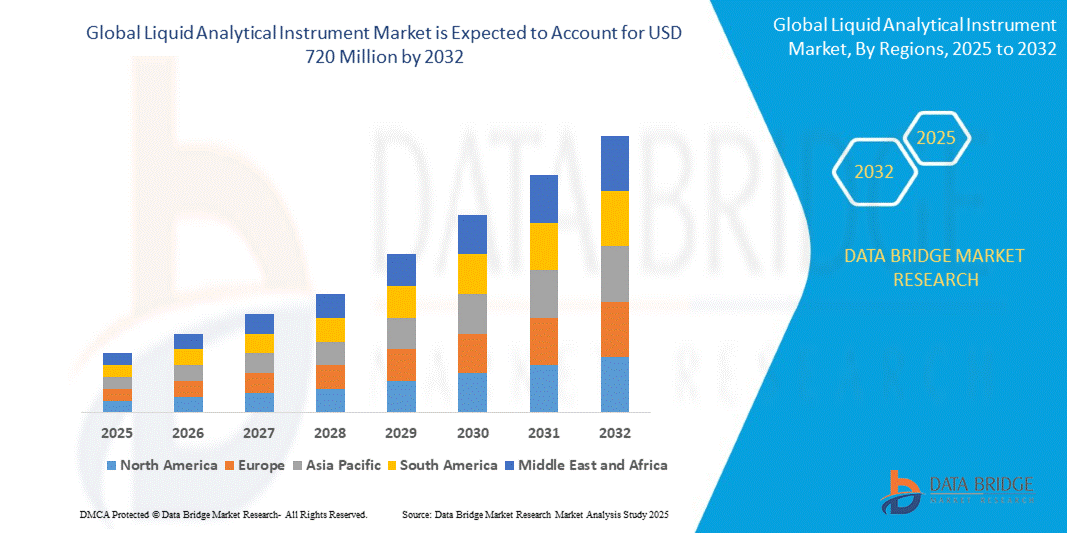
Liquid Analytical Instrument Market Size
- The Liquid Analytical Instrument Market was valued at USD 510 million in 2025 and is projected to reach USD 720 million by 2032, growing at a CAGR of 5% during the forecast period.
- Growth is driven by rising environmental compliance demands, expanding applications in water and wastewater treatment, and technological advancements such as real-time monitoring, IoT integration, and AI-based diagnostics. Industries such as pharmaceuticals, food & beverage, and chemicals are increasingly relying on precise, automated liquid analysis to ensure safety, quality, and regulatory adherence.
Liquid Analytical Instrument Market Analysis
- Liquid analytical instruments provide accurate, real-time measurement of chemical properties such as pH, conductivity, dissolved oxygen, and turbidity—essential for quality control, safety, and regulatory compliance in industrial processes.
- Cloud-connected and IoT-integrated analytical instruments are gaining traction, enabling remote monitoring, automated calibration, and predictive maintenance. These systems support seamless integration with SCADA, DCS, and enterprise-level control networks.
- The water & wastewater treatment and pharmaceutical industries dominate the application landscape due to the need for continuous monitoring and stringent quality standards. Food & beverage, chemicals, and energy sectors are also experiencing robust adoption.
- Advancements in sensor technologies, miniaturization, and edge analytics are enabling higher accuracy, faster response times, and field-deployable devices—especially beneficial for remote or hazardous environments.
- Modern analytical systems incorporate self-diagnostics, digital interfaces, and cybersecurity features, addressing growing industry needs for reliability, data integrity, and compliance with international standards like FDA, WHO, and EPA.
Report Scope and Liquid Analytical Instrument Market Segmentation
|
Attributes |
Liquid Analytical Instrument Market Insights |
|
Segments Covered |
|
|
Countries Covered |
North America
Europe
Asia-Pacific
Middle East and Africa
South America
|
|
Key Market Players |
|
|
Market Opportunities |
|
|
Value Added Data Infosets |
In addition to the insights on market scenarios such as market value, growth rate, segmentation, geographical coverage, and major players, the market reports curated by the Data Bridge Market Research also include import export analysis, production capacity overview, production consumption analysis, price trend analysis, climate change scenario, supply chain analysis, value chain analysis, raw material/consumables overview, vendor selection criteria, PESTLE Analysis, Porter Analysis, and regulatory framework. |
Liquid Analytical Instrument Market Trends
“Smart Sensors, Cloud Connectivity, and Real-Time Compliance Accelerating Industrial Transformation”
- A key and rapidly advancing trend in the Liquid Analytical Instrument Market is the shift toward cloud-connected, IoT-enabled instruments that support real-time monitoring, diagnostics, and automated reporting across industrial processes.
- AI and machine learning are being incorporated into liquid analyzers to enable predictive maintenance, early anomaly detection, and process optimization, especially in pharmaceuticals and water treatment sectors.
- The rise of portable and field-deployable analyzers is transforming field testing and remote site monitoring—offering greater flexibility, faster results, and reduced reliance on lab-based testing.
- Edge computing and wireless data transmission are reducing response time and ensuring continuous operation even in low-connectivity environments, supporting efficiency and resilience in critical infrastructure.
- Growing focus on regulatory compliance and sustainability is prompting industries to adopt instruments with traceable data logging, automated calibration, and environmental monitoring capabilities.
Liquid Analytical Instrument Market Dynamics
Driver
“AI Integration, Smart Home Expansion, and Cross-Device Interoperability Fueling Market Growth”
- The rapid integration of AI-driven virtual assistants into everyday consumer electronics is driving the widespread adoption of intelligent assistant embedded devices. As households and commercial spaces seek more automated, intuitive, and voice-activated experiences, embedded assistants offer hands-free operation, contextual responsiveness, and personalized control.
- For instance, smart home ecosystems across North America, Europe, and Asia-Pacific are increasingly adopting embedded assistants in devices such as thermostats, lighting systems, smart speakers, appliances, and entertainment consoles. These devices respond to voice commands, automate tasks, and learn user preferences over time—enhancing energy efficiency, comfort, and convenience.
- Tech giants and OEMs are integrating assistants with multi-device compatibility and interoperability, allowing users to control an entire ecosystem from a single voice command. Platforms like Amazon Alexa, Google Assistant, and Apple Siri now support third-party integrations and multi-room setups for seamless cross-device communication.
- Additionally, the growing adoption of voice AI in automotive infotainment systems is boosting the market. Consumers increasingly expect their in-vehicle experiences to mirror their smart home environments—with voice-activated navigation, entertainment, and diagnostics improving safety and reducing driver distraction.
- Governments and smart city initiatives are also encouraging the use of intelligent systems for residential automation, energy conservation, and elderly care—creating a regulatory and infrastructural push for connected, AI-embedded consumer products across regions.
Restraint/Challenge
“Real-Time Monitoring, Regulatory Compliance, and Industry 4.0 Adoption Fueling Market Growth”
- The increasing demand for real-time liquid analysis across industries such as water treatment, pharmaceuticals, and chemicals is driving widespread adoption of advanced analytical instruments.
- Regulatory bodies across regions are tightening standards for wastewater discharge, product purity, and environmental monitoring—prompting industries to invest in compliance-ready, automated instrumentation.
- The shift toward Industry 4.0 and smart manufacturing is accelerating integration of liquid analyzers with SCADA, PLC, and IoT ecosystems—enhancing operational visibility and reducing manual intervention.
- In sectors like pharmaceuticals and food & beverage, continuous process monitoring ensures product consistency, minimizes contamination risks, and supports global quality standards like FDA, WHO, and ISO.
- Additionally, government infrastructure investments in water quality, industrial safety, and clean energy are further boosting demand for robust, digitally connected liquid analysis solutions.
Liquid Analytical Instrument Market Scope
The market is segmented on the basis of component, deployment type, application, and end user.
|
Segmentation |
Sub-Segmentation |
|
By Instrument |
|
|
By Application |
|
|
By End User |
|
• By Instrument Type
Instrument types include Conductivity and Resistivity Analyzers, Infrared Analyzers, Oxygen Analyzers, pH/ORP Analyzers, Turbidity Analyzers, and Others.pH/ORP Analyzers account for the largest market share due to their critical role in water and chemical monitoring across municipal and industrial applications. Conductivity and Resistivity Analyzers are widely used in power plants and semiconductor manufacturing for ensuring fluid purity. Oxygen Analyzers are essential in biotechnology and pharmaceuticals for maintaining aerobic process conditions. Infrared Analyzers are valued in environmental monitoring and chemical analysis. Turbidity Analyzers find extensive use in water treatment plants for measuring particulate presence. Other instruments support niche or emerging liquid analysis needs.
• By Application
Applications include Liquid Chemistry Monitoring, Drug Discovery, Wastewater Management, Water Purification, and Others.Wastewater Management leads the application segment, driven by increasing global demand for water reuse and compliance with discharge regulations. Liquid Chemistry Monitoring supports continuous quality control across food, beverage, and industrial processes. Drug Discovery relies on precision liquid analysis for research accuracy and pharmaceutical safety. Water Purification benefits from real-time analyzers to maintain consistent water quality. Other applications include chemical blending, fermentation control, and research labs.
• By End User
End users include Chemicals, Energy, Food and Beverage, Healthcare and Biotechnology, Oil and Gas, Pharmaceuticals, and Others.Pharmaceuticals dominate market share due to stringent regulatory standards and the need for continuous, compliant monitoring. The Chemicals industry extensively uses analyzers for safety and batch consistency. Food and Beverage sectors apply liquid analysis for hygiene and product quality control. Healthcare and Biotechnology rely on dissolved oxygen and pH monitoring for bioprocessing and clinical testing. Oil and Gas require robust instrumentation for process optimization and environmental safety. Energy sectors utilize these instruments in power generation and boiler feedwater monitoring. Other end users include academic institutions and water utilities.
Liquid Analytical Instrument Market Regional Analysis
- North America dominates the Liquid Analytical Instrument Market with the largest revenue share in 2025, driven by stringent regulatory frameworks in water treatment, pharmaceuticals, and food safety. The region benefits from strong adoption of automation technologies, high investments in infrastructure modernization, and the presence of key players like Emerson, Hach, and Thermo Fisher.
- In the United States, demand is fueled by strict EPA and FDA compliance requirements, widespread industrial automation, and early integration of smart instrumentation in sectors like biotech, power generation, and wastewater management.
United States Liquid Analytical Instrument Market Insight
The U.S. Liquid Analytical Instrument Market captured the largest revenue share within North America in 2025, driven by regulatory enforcement, strong industrial infrastructure, and growing demand for real-time monitoring. Applications in pharmaceuticals, energy, and municipal water treatment are pushing the adoption of smart, connected analyzers.
Europe Liquid Analytical Instrument Market Insight
The Europe Liquid Analytical Instrument Market is projected to grow steadily through 2032. Growth is driven by sustainability regulations (e.g., EU Water Framework Directive), digitization of manufacturing processes, and demand for eco-friendly, precise monitoring tools across food, chemical, and energy industries.
Germany Liquid Analytical Instrument Market Insight
Germany is one of the key markets in Europe, supported by its leadership in engineering, process industries, and environmental compliance. The country’s push for Industry 4.0 adoption in sectors such as chemicals, automotive, and pharmaceuticals accelerates the deployment of real-time, networked analytical instruments.
France Liquid Analytical Instrument Market Insight
France’s market is growing due to advancements in smart water management systems and digitization across pharmaceuticals and food processing. Government-driven clean water initiatives and increased industrial monitoring needs are driving the uptake of liquid analyzers across public and private sectors.
Asia-Pacific Liquid Analytical Instrument Market Insight
The Asia-Pacific region is projected to grow at the fastest CAGR through 2032, driven by rapid industrialization, rising environmental regulations, and growing investment in infrastructure. Countries like China, India, and Japan are actively deploying liquid analyzers in energy, water, and manufacturing sectors.
Japan Liquid Analytical Instrument Market Insight
Japan’s market is defined by high technological standards, precision manufacturing, and environmental stewardship. The country is investing in advanced monitoring systems across water treatment, pharma, and electronics industries, with a strong emphasis on sensor accuracy and automation integration.
China Liquid Analytical Instrument Market Insight
China leads the Asia-Pacific market in revenue share as of 2025, driven by massive industrial output, aggressive expansion of wastewater treatment facilities, and national goals for pollution control. The adoption of automated analyzers is rapidly increasing in manufacturing, chemical, and power sectors.
Liquid Analytical Instrument Market Share
The Liquid Analytical Instrument Market is primarily led by global leaders in process automation, laboratory instrumentation, and environmental monitoring. Key players include:
- ABB
- Analytical Systems Keco
- Electro-Chemical Devices, Inc.
- Schneider Electric
- Emerson Electric Co.
- Endress-Hauser Management AG
- Honeywell International Inc.
- METTLER TOLEDO
- Teledyne Technologies Incorporated
- Yokogawa Electric Corporati
Latest Developments in Liquid Analytical Instrument Market
- In February 2025, Endress+Hauser unveiled its new Liquiline CA80 series with enhanced digital connectivity and automatic calibration functions for high-precision water and wastewater analysis.
- In January 2025, Emerson Electric Co. released the Rosemount 3900 Smart Sensor Suite, enabling predictive maintenance and real-time monitoring for pH and ORP measurement in chemical processing plants.
- In November 2024, Yokogawa Electric Corporation launched its next-generation FLXA402 modular analyzer platform, featuring AI-enabled diagnostics and faster sensor response times for multi-parameter measurements.
- In September 2024, Thermo Fisher Scientific introduced an upgrade to its AquaSensors DataStick line, integrating cloud-based analytics and mobile connectivity for enhanced usability in field and industrial applications.

- Interactive Data Analysis Dashboard
- Company Analysis Dashboard for high growth potential opportunities
- Research Analyst Access for customization & queries
- Competitor Analysis with Interactive dashboard
- Latest News, Updates & Trend analysis
- Harness the Power of Benchmark Analysis for Comprehensive Competitor Tracking
Global Liquid Analytical Instrument Market, Supply Chain Analysis and Ecosystem Framework
To support market growth and help clients navigate the impact of geopolitical shifts, DBMR has integrated in-depth supply chain analysis into its Global Liquid Analytical Instrument Market research reports. This addition empowers clients to respond effectively to global changes affecting their industries. The supply chain analysis section includes detailed insights such as Global Liquid Analytical Instrument Market consumption and production by country, price trend analysis, the impact of tariffs and geopolitical developments, and import and export trends by country and HSN code. It also highlights major suppliers with data on production capacity and company profiles, as well as key importers and exporters. In addition to research, DBMR offers specialized supply chain consulting services backed by over a decade of experience, providing solutions like supplier discovery, supplier risk assessment, price trend analysis, impact evaluation of inflation and trade route changes, and comprehensive market trend analysis.
Data collection and base year analysis are done using data collection modules with large sample sizes. The stage includes obtaining market information or related data through various sources and strategies. It includes examining and planning all the data acquired from the past in advance. It likewise envelops the examination of information inconsistencies seen across different information sources. The market data is analysed and estimated using market statistical and coherent models. Also, market share analysis and key trend analysis are the major success factors in the market report. To know more, please request an analyst call or drop down your inquiry.
The key research methodology used by DBMR research team is data triangulation which involves data mining, analysis of the impact of data variables on the market and primary (industry expert) validation. Data models include Vendor Positioning Grid, Market Time Line Analysis, Market Overview and Guide, Company Positioning Grid, Patent Analysis, Pricing Analysis, Company Market Share Analysis, Standards of Measurement, Global versus Regional and Vendor Share Analysis. To know more about the research methodology, drop in an inquiry to speak to our industry experts.
Data Bridge Market Research is a leader in advanced formative research. We take pride in servicing our existing and new customers with data and analysis that match and suits their goal. The report can be customized to include price trend analysis of target brands understanding the market for additional countries (ask for the list of countries), clinical trial results data, literature review, refurbished market and product base analysis. Market analysis of target competitors can be analyzed from technology-based analysis to market portfolio strategies. We can add as many competitors that you require data about in the format and data style you are looking for. Our team of analysts can also provide you data in crude raw excel files pivot tables (Fact book) or can assist you in creating presentations from the data sets available in the report.













