


Long-Acting Injectable Oncology Drug Market Size
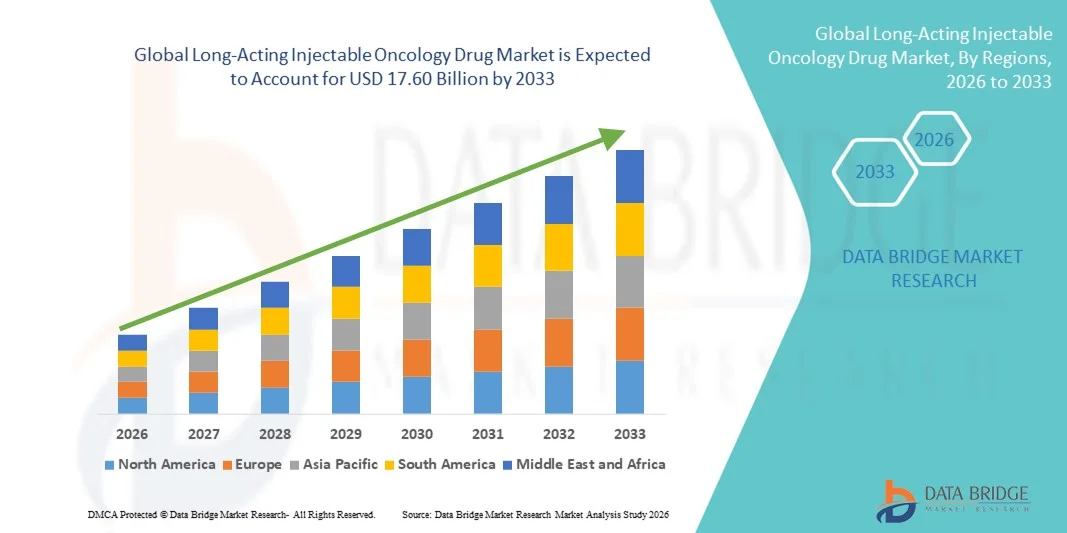
- The global long-acting injectable oncology drug market size was valued at USD 7.16 billion in 2025 and is expected to reach USD 17.60 billion by 2033, at a CAGR of 11.90% during the forecast period
- The market growth is largely fueled by the rising prevalence of cancer, increasing demand for targeted and sustained drug delivery, and advancements in long-acting injectable formulations that improve patient compliance and therapeutic outcomes
- Furthermore, growing awareness among healthcare providers and patients about the benefits of reduced dosing frequency, combined with innovations in drug delivery technologies, is accelerating the uptake of Long-Acting Injectable Oncology Drug solutions, thereby significantly boosting the industry's growth
Long-Acting Injectable Oncology Drug Market Analysis
- Long-acting injectable oncology drugs are increasingly vital in cancer treatment due to their ability to provide sustained drug release, improve patient adherence, and enhance therapeutic outcomes across multiple cancer types
- The escalating demand for these drugs is primarily fueled by the rising prevalence of cancer, increasing awareness of advanced treatment options, and growing preference for therapies that reduce frequent hospital visits and improve quality of life
- North America dominated the long-acting injectable oncology drug market with the largest revenue share of approximately 38.5% in 2025, driven by advanced healthcare infrastructure, strong oncology research, and widespread adoption of innovative drug delivery technologies
- Asia-Pacific is expected to be the fastest-growing region in the long-acting injectable oncology drug market, accounting for a projected CAGR of around 9.1% during the forecast period, supported by increasing government initiatives for cancer care, high investment in biologics, and growing patient awareness
- The chemotherapy segment dominated the largest market revenue share of 39.5% in 2025, driven by its long-standing role as a cornerstone treatment for multiple cancer types
Report Scope and Long-Acting Injectable Oncology Drug Market Segmentation
|
Attributes |
Long-Acting Injectable Oncology Drug Key Market Insights |
|
Segments Covered |
|
|
Countries Covered |
North America
Europe
Asia-Pacific
Middle East and Africa
South America
|
|
Key Market Players |
|
|
Market Opportunities |
|
|
Value Added Data Infosets |
In addition to the insights on market scenarios such as market value, growth rate, segmentation, geographical coverage, and major players, the market reports curated by the Data Bridge Market Research also include in-depth expert analysis, patient epidemiology, pipeline analysis, pricing analysis, and regulatory framework. |
Long-Acting Injectable Oncolog Drug Market Trends
Rising Adoption of Long-Acting Injectable Formulations for Cancer Treatment
- A significant trend in the global long-acting injectable oncology drug market is the growing adoption of long-acting injectable formulations designed to improve patient adherence, reduce dosing frequency, and enhance therapeutic efficacy in cancer management
- For instance, in March 2023, Bristol-Myers Squibb announced the FDA approval of its long-acting injectable version of Nivolumab for advanced melanoma and lung cancer, enabling patients to receive doses every four weeks instead of every two weeks, significantly improving convenience and compliance
- Long-acting injectables allow for sustained drug release, reducing hospital visits and improving quality of life for patients undergoing chronic cancer therapy
- Pharmaceutical companies are also developing combination injectable therapies that target multiple pathways simultaneously, providing more comprehensive oncological treatment
- The integration of advanced drug delivery technologies, such as nanoparticle carriers and biodegradable microspheres, is further enhancing the efficacy and stability of injectable oncology drugs
- Continuous investment in research and development is supporting the expansion of long-acting injectable pipelines for both solid tumors and hematologic cancers
Long-Acting Injectable Oncology Drug Market Dynamics
Driver
Growing Incidence of Cancer and Need for Improved Patient Compliance
- The rising prevalence of cancer globally, coupled with the challenges of patient adherence to frequent dosing schedules, is driving the increased adoption of long-acting injectable oncology therapies
- For instance, in June 2022, Novartis launched a long-acting formulation of Gleevec (Imatinib) in select European markets, aimed at chronic myeloid leukemia patients. Clinical studies reported improved adherence and reduced treatment interruptions compared with daily oral regimens, highlighting the demand for less frequent dosing
- The convenience of reduced hospital visits and fewer injections improves both patient outcomes and healthcare resource utilization
- Increasing awareness among oncologists and patients regarding the benefits of sustained-release formulations is expanding their uptake across both hospital and outpatient settings
- Government initiatives to improve oncology care, alongside insurance coverage for innovative therapies in developed regions, further support market growth
- Rising investments in oncology-focused research and patient support programs are encouraging the rapid introduction and acceptance of long-acting injectable treatments
Restraint/Challenge
High Development Costs and Stringent Regulatory Requirements
- Challenges in the market include the high cost of development for long-acting injectable oncology drugs, complex manufacturing processes, and rigorous regulatory requirements for safety, efficacy, and quality assurance
- For instance, in September 2021, Pfizer reported delays in its clinical trials for a long-acting injectable version of Palbociclib, citing additional regulatory scrutiny and the need for extended stability testing, which temporarily slowed the product launch
- The requirement for extensive pharmacokinetic and safety studies increases time-to-market and adds to the overall development cost
- High pricing for advanced long-acting formulations may limit access in developing countries, especially where healthcare reimbursement is limited
- Patient hesitancy regarding injection-based therapies versus oral medications can also reduce adoption in certain segments
- Overcoming these challenges through cost-effective formulation techniques, streamlined regulatory pathways, and patient education on treatment benefits will be key to sustained market growth
Long-Acting Injectable Oncology Drug Market Scope
The market is segmented on the basis of drug type and cancer type.
- By Drug Type
On the basis of drug type, the Long-Acting Injectable Oncology Drug market is segmented into hormonal therapy, chemotherapy, immunotherapy, targeted therapy, and combination therapy. The chemotherapy segment dominated the largest market revenue share of 39.5% in 2025, driven by its long-standing role as a cornerstone treatment for multiple cancer types. Chemotherapy injectables provide sustained drug release, enabling reduced dosing frequency and improved patient adherence, which is particularly valuable in outpatient settings. Hospitals and oncology clinics widely adopt these formulations due to their proven efficacy and ability to manage advanced-stage cancers. The segment benefits from increasing cancer incidence globally, strong clinical acceptance, and the development of novel delivery systems that reduce side effects. Moreover, combination formulations and supportive therapies enhance therapeutic outcomes, reinforcing chemotherapy’s market dominance. Rising awareness, expanding treatment infrastructure, and government initiatives for cancer care further support growth. The availability of generic long-acting chemotherapy injectables and improved supply chains in emerging markets also contribute to high market share.
The immunotherapy segment is expected to witness the fastest CAGR of 22.3% from 2026 to 2033, driven by rising adoption of checkpoint inhibitors, monoclonal antibodies, and CAR-T therapies in long-acting injectable formulations. Immunotherapy offers targeted mechanisms with fewer systemic side effects, improving patient quality of life. Hospitals, specialized oncology centers, and clinical trials increasingly adopt these therapies for hematologic and solid tumors. Continuous innovation in sustained-release immunotherapy formulations enhances convenience and efficacy. Rising awareness among patients and physicians, combined with favorable reimbursement policies, further accelerates growth. Expanding clinical research and approvals of novel immunotherapeutics contribute to rapid adoption. Increasing incidence of difficult-to-treat cancers, including lung, colorectal, and hematologic malignancies, drives the demand for long-acting immunotherapies. Improved patient compliance, shorter hospital visits, and integration with precision oncology initiatives further boost segment growth.
- By Cancer Type
On the basis of cancer type, the market is segmented into breast cancer, prostate cancer, lung cancer, colorectal cancer, hematologic cancers, and others. The breast cancer segment dominated the largest market revenue share of 36.8% in 2025, owing to high prevalence among women globally and widespread use of long-acting injectable therapies such as hormonal therapy, chemotherapy, and targeted agents. These therapies reduce dosing frequency, improve adherence, and enhance patient outcomes in early and advanced stages. Breast cancer clinics and oncology centers favor injectable formulations for sustained-release benefits. Advances in combination therapies and personalized treatment protocols further support adoption. Rising awareness, early screening programs, and supportive reimbursement policies contribute to market leadership. The segment also benefits from ongoing clinical trials, strong pipeline drugs, and growing acceptance of precision oncology approaches. Accessibility in both developed and emerging markets reinforces the dominance of breast cancer-targeted injectable therapies.
The hematologic cancers segment is expected to witness the fastest CAGR of 21.8% from 2026 to 2033, driven by increasing prevalence of leukemia, lymphoma, and myeloma, along with rising adoption of long-acting injectable chemotherapeutic and immunotherapeutic formulations. Hematologic cancers often require continuous management and sustained drug delivery, making long-acting injectables particularly suitable. Hospitals and specialized oncology clinics increasingly adopt these therapies to improve patient convenience and reduce hospital visits. Advancements in monoclonal antibodies, CAR-T therapy, and novel targeted formulations enhance efficacy and minimize toxicity. Growing awareness, better diagnostic techniques, and increased access to cancer care facilities support rapid adoption. Favorable regulatory approvals, reimbursement coverage, and expansion of treatment centers globally further accelerate market growth. Patient preference for reduced dosing frequency and minimally invasive therapies also drives the segment’s high CAGR.
Long-Acting Injectable Oncology Drug Market Regional Analysis
- North America dominated the long-acting injectable oncology drug market with the largest revenue share of approximately 38.5% in 2025, driven by advanced healthcare infrastructure, strong oncology research, and widespread adoption of innovative drug delivery technologies
- Consumers in the region highly value access to advanced oncology therapies, availability of long-acting injectable treatments, and the convenience of hospital and clinic-administered therapies
- This widespread adoption is further supported by high investment in R&D, robust clinical trial networks, and the presence of leading pharmaceutical companies, establishing North America as a key hub for oncology drug innovation
U.S. Long-Acting Injectable Oncology Drug Market Insight
The U.S long-acting injectable oncology drug market captured the largest revenue share in 2025 within North America, fueled by the increasing adoption of injectable oncology therapies, rising cancer prevalence, and strong government and private support for cancer research. The growing trend of biologics and targeted therapy injections, alongside the presence of advanced healthcare facilities and specialist oncology centers, further propels the market.
Europe Long-Acting Injectable Oncology Drug Market Insight
The Europe long-acting injectable oncology drug market is projected to expand at a substantial CAGR throughout the forecast period, primarily driven by well-developed healthcare systems, increasing prevalence of cancer, and growing adoption of advanced injectable therapies. The demand is rising across hospitals, cancer centers, and specialty clinics in countries such as Germany, France, and Italy, supporting market growth in both residential and commercial healthcare segments.
U.K. Long-Acting Injectable Oncology Drug Market Insight
The U.K. long-acting injectable oncology drug market is anticipated to grow at a noteworthy CAGR during the forecast period, driven by strong healthcare infrastructure, government initiatives to improve oncology care, and rising patient awareness regarding innovative injectable therapies. Increased access to specialized cancer centers and biologics is further contributing to market expansion.
Germany Long-Acting Injectable Oncology Drug Market Insight
The Germany long-acting injectable oncology drug market is expected to expand at a considerable CAGR during the forecast period, fueled by increasing investments in oncology research, advanced healthcare infrastructure, and rising adoption of long-acting injectable therapies in hospitals and cancer treatment centers.
Asia-Pacific Long-Acting Injectable Oncology Drug Market Insight
The Asia-Pacific long-acting injectable oncology drug market is poised to grow at the fastest CAGR of around 9.1% during the forecast period, driven by increasing government initiatives for cancer care, high investment in biologics, and growing patient awareness. Rising urbanization, expanding healthcare infrastructure, and adoption of innovative injectable oncology therapies in countries such as China, Japan, and India are supporting market growth.
Japan Long-Acting Injectable Oncology Drug Market Insight
The Japan long-acting injectable oncology drug market is gaining momentum due to the country’s high-tech healthcare systems, aging population, and increasing demand for advanced injectable oncology therapies. Rising cancer prevalence and adoption of biologics and targeted therapies are further fueling market growth.
China Long-Acting Injectable Oncology Drug Market Insight
The China long-acting injectable oncology drug market accounted for the largest market revenue share in Asia-Pacific in 2025, attributed to rapid urbanization, growing middle-class population, increasing cancer incidence, and strong adoption of biologics and long-acting injectable oncology therapies. Government initiatives to improve cancer care access and high pharmaceutical R&D investments are key factors driving market growth.
Long-Acting Injectable Oncology Drug Market Share
The Long-Acting Injectable Oncology Drug industry is primarily led by well-established companies, including:
- F. Hoffmann-La Roche AG (Switzerland)
- Novartis AG (Switzerland)
- Pfizer Inc. (U.S.)
- Bristol-Myers Squibb (U.S.)
- AstraZeneca plc (U.K.)
- Johnson & Johnson (U.S.)
- Eli Lilly and Company (U.S.)
- Merck & Co., Inc. (U.S.)
- Sanofi S.A. (France)
- Takeda Pharmaceutical Company Limited (Japan)
- Amgen Inc. (U.S.)
- Bayer AG (Germany)
- Seagen Inc. (U.S.)
- BeiGene, Ltd. (China)
- Zai Lab Limited (China)
- Spectrum Pharmaceuticals, Inc. (U.S.)
- Incyte Corporation (U.S.)
- Oncopeptides AB (Sweden)
- Fresenius Kabi AG (Germany)
- Celgene Corporation (U.S.)
Latest Developments in Global Long-Acting Injectable Oncology Drug Market
- In April 2024, Tisotumab Vedotin (an ADC for recurrent or metastatic cervical cancer) received routine FDA approval for its indication, and in March 2025 it received European Union authorization under the brand name Tivdak for the same indication, expanding access to this injectable oncology therapy globally
- In January 2025, the U.S. Food and Drug Administration (FDA) approved Datopotamab Deruxtecan‑dlnk (Datroway), a Trop‑2 directed antibody‑drug conjugate (ADC), for the treatment of adults with unresectable or metastatic hormone receptor‑positive, HER2‑negative breast cancer who have received prior endocrine therapy and chemotherapy, marking a significant advancement in injectable oncology therapies
- In May 2025, the FDA granted accelerated approval to Telisotuzumab Vedotin‑tllv (Emrelis™), an antibody‑drug conjugate targeting c‑MET, for adults with locally advanced or metastatic non‑squamous non‑small cell lung cancer (NSCLC) with high c‑MET protein overexpression, providing a new long‑acting injectable option for a patient population with limited treatments
- In March 2025, the FDA expanded the use of pembrolizumab (Keytruda) immunotherapy — while not strictly long‑acting injectable, it is an antibody therapy administered via injection — for combination use with trastuzumab and chemotherapy as frontline treatment for HER2‑positive gastric or gastroesophageal junction adenocarcinoma expressing PD‑L1, representing a major injectable immunotherapy shift
- In September 2025, Merck announced FDA approval and planned deployment of a new subcutaneous (long‑acting injectable) formulation of its cancer immunotherapy Keytruda, intended to significantly shorten administration time compared with the traditional intravenous infusion and improve patient convenience

- Interactive Data Analysis Dashboard
- Company Analysis Dashboard for high growth potential opportunities
- Research Analyst Access for customization & queries
- Competitor Analysis with Interactive dashboard
- Latest News, Updates & Trend analysis
- Harness the Power of Benchmark Analysis for Comprehensive Competitor Tracking
Data collection and base year analysis are done using data collection modules with large sample sizes. The stage includes obtaining market information or related data through various sources and strategies. It includes examining and planning all the data acquired from the past in advance. It likewise envelops the examination of information inconsistencies seen across different information sources. The market data is analysed and estimated using market statistical and coherent models. Also, market share analysis and key trend analysis are the major success factors in the market report. To know more, please request an analyst call or drop down your inquiry.
The key research methodology used by DBMR research team is data triangulation which involves data mining, analysis of the impact of data variables on the market and primary (industry expert) validation. Data models include Vendor Positioning Grid, Market Time Line Analysis, Market Overview and Guide, Company Positioning Grid, Patent Analysis, Pricing Analysis, Company Market Share Analysis, Standards of Measurement, Global versus Regional and Vendor Share Analysis. To know more about the research methodology, drop in an inquiry to speak to our industry experts.
Data Bridge Market Research is a leader in advanced formative research. We take pride in servicing our existing and new customers with data and analysis that match and suits their goal. The report can be customized to include price trend analysis of target brands understanding the market for additional countries (ask for the list of countries), clinical trial results data, literature review, refurbished market and product base analysis. Market analysis of target competitors can be analyzed from technology-based analysis to market portfolio strategies. We can add as many competitors that you require data about in the format and data style you are looking for. Our team of analysts can also provide you data in crude raw excel files pivot tables (Fact book) or can assist you in creating presentations from the data sets available in the report.












