Low Sodium Snack Market Size
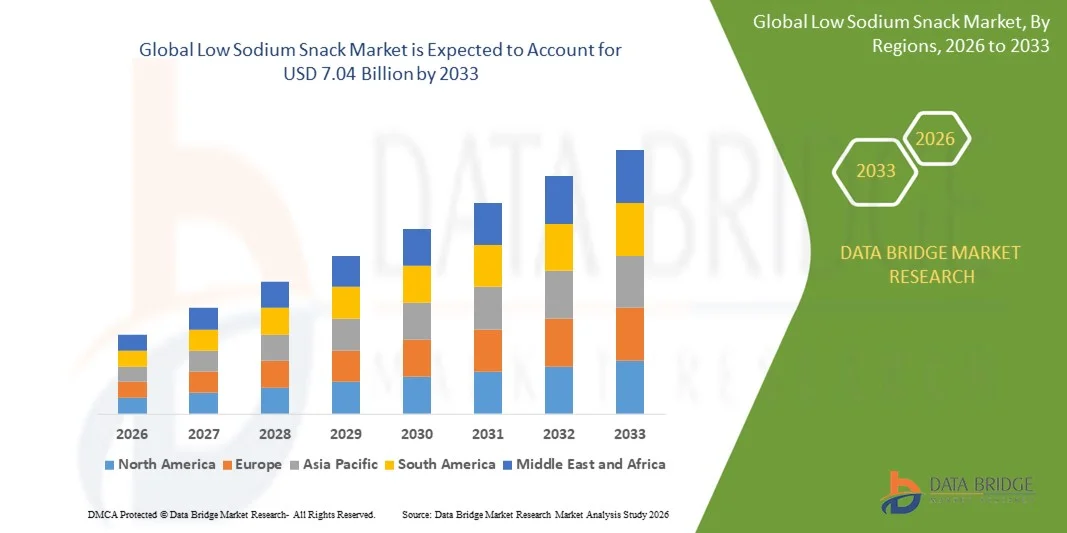
- The global low sodium snack market size was valued at USD 2.82 billion in 2025 and is expected to reach USD 7.04 billion by 2033, at a CAGR of 12.10% during the forecast period
- The market growth is largely driven by the increasing health consciousness among consumers, encouraging a shift toward low-sodium and reduced-salt snack options for better heart health and overall wellness
- Furthermore, rising consumer awareness of diet-related health issues, for instance, PepsiCo’s launch of low-sodium variants across its snack portfolio, is prompting manufacturers to innovate and reformulate products to meet these dietary preferences, thereby accelerating market expansion
Low Sodium Snack Market Analysis
- Low sodium snacks, offering reduced salt content without compromising taste, are becoming essential in modern diets due to their role in promoting cardiovascular health and supporting sodium intake regulations in various regions
- The growing demand for low sodium snacks is primarily fueled by increasing consumer health awareness, government dietary guidelines advocating lower sodium consumption, and a rising preference for nutritious yet convenient snacking options
- Asia-Pacific dominated the low sodium snack market with a share of 35.5% in 2025, due to rising health consciousness, growing demand for convenient and nutritious snacks, and a strong presence of snack manufacturing hubs
- North America is expected to be the fastest growing region in the low sodium snack market during the forecast period due to increasing health consciousness, demand for on-the-go nutritious snacks, and strong presence of leading snack manufacturers
- Sweet potato chips segment dominated the market with a market share of 39% in 2025, due to their widespread consumer acceptance and perceived health benefits as a natural, low-sodium snack option. Consumers increasingly prefer sweet potato chips for their high fiber content, rich nutrients, and naturally sweet flavor profile that aligns with clean-label and wellness-focused trends. The segment also benefits from growing availability across retail and online channels, as well as innovations in flavors and packaging that enhance convenience and shelf appeal. Brand loyalty and strong marketing initiatives further reinforce the dominance of sweet potato chips in the low sodium snack market
Report Scope and Low Sodium Snack Market Segmentation
|
Attributes |
Low Sodium Snack Key Market Insights |
|
Segments Covered |
|
|
Countries Covered |
North America
Europe
Asia-Pacific
Middle East and Africa
South America
|
|
Key Market Players |
|
|
Market Opportunities |
|
|
Value Added Data Infosets |
In addition to the insights on market scenarios such as market value, growth rate, segmentation, geographical coverage, and major players, the market reports curated by the Data Bridge Market Research also include in-depth expert analysis, pricing analysis, brand share analysis, consumer survey, demography analysis, supply chain analysis, value chain analysis, raw material/consumables overview, vendor selection criteria, PESTLE Analysis, Porter Analysis, and regulatory framework. |
Low Sodium Snack Market Trends
Rising Consumer Preference for Healthier and Low-Sodium Snack Options
- A prominent trend in the low sodium snack market is the increasing preference among consumers for healthier and diet-conscious alternatives, driven by growing awareness of cardiovascular health and reduced sodium intake benefits. This trend is encouraging manufacturers to innovate and expand their low-sodium offerings across multiple snack categories
- For instance, PepsiCo has introduced its “Smartfood” and “Lay’s Light” product lines with reduced sodium content, catering to consumers seeking healthier snack options without compromising taste. These products demonstrate a market shift toward nutrition-focused snacking and are influencing competitors to adopt similar formulations
- Retailers and foodservice providers are increasingly promoting low-sodium snacks through dedicated health sections and menu offerings, enhancing visibility and accessibility for health-conscious consumers. This is reinforcing the overall demand for snacks that support dietary restrictions and wellness goals
- The rise of online grocery platforms and direct-to-consumer delivery models is facilitating easier access to low-sodium snacks, allowing consumers to make informed choices based on nutritional labeling and reviews. This digital shift is enabling wider adoption and faster market penetration for innovative low-sodium products
- Consumer demand for functional ingredients in snacks, such as whole grains, seeds, and legumes, is growing alongside the low-sodium trend. This is positioning low-sodium snacks as part of a broader health-oriented lifestyle, combining reduced sodium with additional nutritional benefits
- The low sodium snack segment is witnessing expansion across diverse categories such as chips, crackers, nuts, and baked goods, reflecting evolving consumer preferences and increasing willingness to pay a premium for healthier options. This trend is establishing low-sodium snacks as a key growth area within the global snack industry
Low Sodium Snack Market Dynamics
Driver
Growing Health Consciousness and Demand for Diet-Friendly Snacks
- Rising awareness of health risks associated with high sodium intake, such as hypertension and cardiovascular diseases, is driving consumers toward low-sodium snack alternatives. This shift is encouraging manufacturers to develop nutritionally balanced snacks that align with wellness trends
- For instance, Kellogg’s offers low-sodium versions of its popular snack bars and cereals, addressing consumer demand for diet-friendly options while maintaining taste and convenience. Such initiatives are reinforcing the focus on health-oriented product development
- Government dietary guidelines and public health campaigns promoting reduced sodium consumption are influencing consumer behavior and increasing demand for low-sodium snacks. This regulatory and educational support is expanding market opportunities for companies investing in healthier formulations
- The growth of fitness culture and preventive healthcare practices is boosting consumption of snacks that complement balanced diets. Health-conscious consumers are actively seeking products that support weight management and cardiovascular wellness, reinforcing the segment’s growth
- Increasing interest in plant-based and minimally processed snack options is complementing the low-sodium trend. Consumers are increasingly selecting products with clean labels and reduced additives, which is shaping product innovation and market expansion
Restraint/Challenge
High Cost and Formulation Complexity of Low-Sodium Snack Products
- The low sodium snack market faces challenges due to the higher cost of alternative ingredients and the technical difficulties in maintaining taste and texture while reducing sodium content. These factors can increase production expenses and retail prices, affecting mass-market adoption
- For instance, Mondelez International has highlighted the challenges in reformulating its biscuit and cracker products to lower sodium without compromising flavor, demonstrating the complexity involved in balancing health and consumer satisfaction. Such challenges influence R&D investment and time-to-market for low-sodium innovations
- Developing low-sodium products often requires advanced flavor enhancement technologies and precise ingredient combinations to compensate for reduced salt, increasing operational and manufacturing complexity. These requirements can limit scalability and add to supply chain pressures
- Consumer perception and taste expectations remain a challenge, as some consumers may find low-sodium alternatives less flavorful. This necessitates additional research and marketing efforts to educate consumers and ensure market acceptance
- Manufacturers must also navigate regulatory requirements for sodium labeling and health claims, which can add administrative burdens and limit flexibility in product formulation. These combined factors present ongoing hurdles for widespread adoption and cost management in the low sodium snack segment
Low Sodium Snack Market Scope
The market is segmented on the basis of type and sales channel.
- By Type
On the basis of type, the Low Sodium Snack market is segmented into Sweet Potato Chips, Roasted Sweet and Salty Chickpeas, Olive Oil Popcorn, Granola Bars, Baked Beet Chips, and Zucchini Chips. The Sweet Potato Chips segment dominated the market with the largest revenue share of 39% in 2025, driven by their widespread consumer acceptance and perceived health benefits as a natural, low-sodium snack option. Consumers increasingly prefer sweet potato chips for their high fiber content, rich nutrients, and naturally sweet flavor profile that aligns with clean-label and wellness-focused trends. The segment also benefits from growing availability across retail and online channels, as well as innovations in flavors and packaging that enhance convenience and shelf appeal. Brand loyalty and strong marketing initiatives further reinforce the dominance of sweet potato chips in the low sodium snack market.
The Roasted Sweet and Salty Chickpeas segment is anticipated to witness the fastest growth rate from 2026 to 2033, fueled by rising demand for protein-rich and plant-based snacks among health-conscious consumers. For instance, companies such as Biena Snacks have successfully expanded their product offerings in global markets, highlighting the versatility of chickpeas in providing both savory and lightly sweet snacking options. The segment benefits from its suitability as an on-the-go snack and its compatibility with various dietary preferences, including vegan and gluten-free diets. Increased adoption in school lunch programs, corporate snacking, and fitness-oriented retail channels also contributes to rapid growth. The appeal of roasted chickpeas as a sustainable and nutrient-dense alternative to traditional chips further accelerates their market expansion.
- By Sales Channel
On the basis of sales channel, the Low Sodium Snack market is segmented into Hypermarket and Supermarket, Food Specialty Store, Convenience Store, Online, and Others. The Hypermarket and Supermarket segment dominated the market in 2025, driven by extensive shelf space, large consumer footfall, and the ability to stock a wide variety of low sodium snack options. These channels allow consumers to compare products, purchase in bulk, and take advantage of promotional offers, which reinforces buying patterns. Retailers in this segment also engage in in-store sampling and marketing campaigns to encourage trial and repeat purchases, further strengthening market share. Hypermarkets and supermarkets often collaborate with leading snack brands to ensure product availability and visibility, enhancing overall sales performance.
The Online segment is expected to witness the fastest CAGR from 2026 to 2033, driven by increasing consumer preference for e-commerce platforms and home delivery services. For instance, companies such as Amazon and Thrive Market have expanded their online snack categories to include low sodium options, providing convenience and subscription-based delivery to health-conscious consumers. The online channel also enables direct-to-consumer marketing, personalized recommendations, and access to niche and specialty brands that may not be available in physical stores. Growing smartphone penetration, digital promotions, and consumer comfort with online payments contribute to the rapid growth of this segment. The flexibility and convenience of online shopping are increasingly shaping consumer behavior in the low sodium snack market.
Low Sodium Snack Market Regional Analysis
- Asia-Pacific dominated the low sodium snack market with the largest revenue share of 35.5% in 2025, driven by rising health consciousness, growing demand for convenient and nutritious snacks, and a strong presence of snack manufacturing hubs
- The region’s cost-effective production landscape, increasing investments in food processing, and expanding organized retail networks are accelerating market expansion
- The availability of skilled labor, supportive government policies for food safety and nutrition, and rapid urbanization across developing economies are contributing to increased consumption of low sodium snacks
China Low Sodium Snack Market Insight
China held the largest share in the Asia-Pacific low sodium snack market in 2025, owing to its position as a global leader in snack production and growing health-focused consumer base. The country’s strong industrial base, favorable government policies promoting nutritious food products, and robust export capabilities are major growth drivers. Demand is further bolstered by ongoing product innovations in flavors, packaging, and functional snacks for both domestic and international consumers.
India Low Sodium Snack Market Insight
India is witnessing the fastest growth in the Asia-Pacific region, fueled by rising awareness about sodium intake, increasing adoption of healthy snacking habits, and expanding organized retail and e-commerce channels. Initiatives promoting wellness and nutrition, along with growing disposable incomes in urban areas, are strengthening the demand for low sodium snacks. In addition, rising production of plant-based and baked snack varieties is contributing to robust market expansion.
Europe Low Sodium Snack Market Insight
The Europe low sodium snack market is expanding steadily, supported by strong regulatory frameworks on health and nutrition, high demand for clean-label products, and growing investments in functional and fortified snacks. The region emphasizes quality, nutritional value, and sustainable production practices, particularly in packaged snacks and on-the-go options. Increasing consumer preference for low sodium alternatives in baked and savory snacks is further enhancing market growth.
Germany Low Sodium Snack Market Insight
Germany’s low sodium snack market is driven by a mature health-conscious consumer base, well-established food manufacturing sector, and strong focus on sustainable and nutritious snack production. The country’s extensive retail and distribution networks, coupled with innovation in snack flavors and formats, foster continuous market development. Demand is particularly strong for functional and convenient snack products in both urban and institutional channels.
U.K. Low Sodium Snack Market Insight
The U.K. market is supported by high consumer awareness regarding sodium intake, growing demand for healthier snacking options, and increasing availability of low sodium products across supermarkets and online platforms. With rising focus on nutrition, R&D in healthier formulations, and collaboration between food manufacturers and wellness initiatives, the U.K. continues to play a significant role in the European low sodium snack market.
North America Low Sodium Snack Market Insight
North America is projected to grow at the fastest CAGR from 2026 to 2033, driven by increasing health consciousness, demand for on-the-go nutritious snacks, and strong presence of leading snack manufacturers. Growing emphasis on reducing sodium in processed foods, coupled with expanding e-commerce penetration and retail innovation, is boosting demand. In addition, rising investments in functional and plant-based snacks are supporting market expansion.
U.S. Low Sodium Snack Market Insight
The U.S. accounted for the largest share in the North America market in 2025, underpinned by high consumer awareness of healthy eating, expansive snack manufacturing infrastructure, and strong R&D in low sodium formulations. The country’s focus on innovation, regulatory compliance, and health-oriented product development is encouraging the adoption of low sodium snacks. Presence of key players and a mature distribution network further solidify the U.S.’s leading position in the region.
Low Sodium Snack Market Share
The low sodium snack industry is primarily led by well-established companies, including:
- General Mills Inc (U.S.)
- Mondelez International (U.S.)
- PepsiCo (U.S.)
- Kind (U.S.)
- Select Harvests Limited (Australia)
- Nestle (Switzerland)
- B&G Foods (U.S.)
- Hain Celestial (U.S.)
- Calbee (Japan)
- Kellogg Co (U.S.)
- Conagra Brands Inc (U.S.)
- Campbell Soup Company (U.S.)
- Unilever PLC (U.K.)
- Hormel Foods Corporation (U.S.)
- Danone S.A. (France)
Latest Developments in Global Low Sodium Snack Market
- In December 2024, the South Korean government collaborated with the food industry to launch 19 reduced-sodium and sugar food and beverage products, aiming to achieve national health targets. This initiative is expected to drive widespread consumer awareness about sodium reduction, encourage healthier purchasing habits, and accelerate the adoption of low-sodium snacks in both retail and institutional channels. It also sets a regulatory and market precedent that is likely to inspire further innovation in reduced-sodium snack formulations across Asia-Pacific
- In December 2023, Rivalz introduced a range of nutritious low-sodium snacks in the salty category, emphasizing healthier flavor profiles, functional ingredients, and convenient packaging for on-the-go consumption. This launch strengthened Rivalz’s market positioning as a health-focused snack brand, expanded the product variety available to consumers, and reinforced the ongoing shift in the snacking industry toward low-sodium, nutrient-dense alternatives
- In July 2021, Food For Life launched three low-sodium products, including sprouted, flourless English muffins and crunchy cereal, targeting health-conscious consumers seeking functional and diet-friendly snacks. This introduction enhanced market diversity by providing innovative snack options that combine convenience, nutrition, and low sodium content. It also encouraged other brands to explore healthier formulations in breakfast and snack segments, contributing to overall market growth
- In March 2020, Campbell’s Soup Company expanded its portfolio with low-sodium soups and snack options, targeting consumers focused on heart health, blood pressure management, and reduced sodium intake. This development increased accessibility of low-sodium products across supermarkets and online retail channels, stimulated demand for healthier snack options, and reinforced the trend of large food manufacturers reformulating products to meet evolving health and wellness preferences

- Interactive Data Analysis Dashboard
- Company Analysis Dashboard for high growth potential opportunities
- Research Analyst Access for customization & queries
- Competitor Analysis with Interactive dashboard
- Latest News, Updates & Trend analysis
- Harness the Power of Benchmark Analysis for Comprehensive Competitor Tracking
Global Low Sodium Snack Market, Supply Chain Analysis and Ecosystem Framework
To support market growth and help clients navigate the impact of geopolitical shifts, DBMR has integrated in-depth supply chain analysis into its Global Low Sodium Snack Market research reports. This addition empowers clients to respond effectively to global changes affecting their industries. The supply chain analysis section includes detailed insights such as Global Low Sodium Snack Market consumption and production by country, price trend analysis, the impact of tariffs and geopolitical developments, and import and export trends by country and HSN code. It also highlights major suppliers with data on production capacity and company profiles, as well as key importers and exporters. In addition to research, DBMR offers specialized supply chain consulting services backed by over a decade of experience, providing solutions like supplier discovery, supplier risk assessment, price trend analysis, impact evaluation of inflation and trade route changes, and comprehensive market trend analysis.
Data collection and base year analysis are done using data collection modules with large sample sizes. The stage includes obtaining market information or related data through various sources and strategies. It includes examining and planning all the data acquired from the past in advance. It likewise envelops the examination of information inconsistencies seen across different information sources. The market data is analysed and estimated using market statistical and coherent models. Also, market share analysis and key trend analysis are the major success factors in the market report. To know more, please request an analyst call or drop down your inquiry.
The key research methodology used by DBMR research team is data triangulation which involves data mining, analysis of the impact of data variables on the market and primary (industry expert) validation. Data models include Vendor Positioning Grid, Market Time Line Analysis, Market Overview and Guide, Company Positioning Grid, Patent Analysis, Pricing Analysis, Company Market Share Analysis, Standards of Measurement, Global versus Regional and Vendor Share Analysis. To know more about the research methodology, drop in an inquiry to speak to our industry experts.
Data Bridge Market Research is a leader in advanced formative research. We take pride in servicing our existing and new customers with data and analysis that match and suits their goal. The report can be customized to include price trend analysis of target brands understanding the market for additional countries (ask for the list of countries), clinical trial results data, literature review, refurbished market and product base analysis. Market analysis of target competitors can be analyzed from technology-based analysis to market portfolio strategies. We can add as many competitors that you require data about in the format and data style you are looking for. Our team of analysts can also provide you data in crude raw excel files pivot tables (Fact book) or can assist you in creating presentations from the data sets available in the report.