


What is the Loxoscelism Treatment Market Size and Growth Rate?
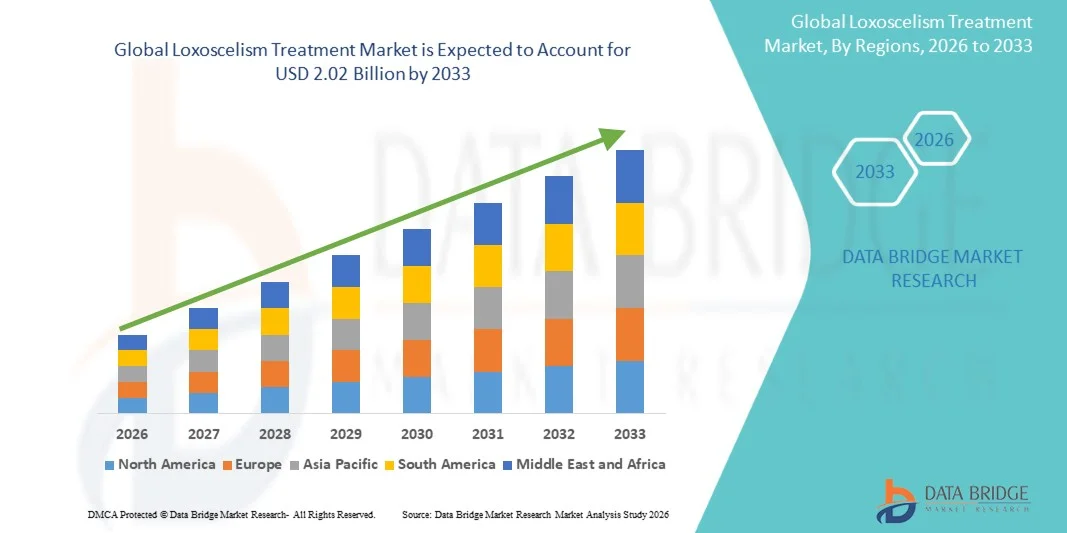
As per Data Bridge Market Research Analysis the global Loxoscelism Treatment market was valued at USD 1.31 billion in 2025 and is projected to reach USD 2.02 billion by 2033, growing at a CAGR of 5.57% from 2026 to 2033. The Loxoscelism Treatment market is experiencing consistent growth driven by rising incidence of venomous spider bites, increasing awareness regarding early diagnosis and emergency treatment, and expanding adoption of antivenom-based and supportive care therapies across hospitals and emergency care centers. The growing clinical focus on managing necrotic arachnidism cases, particularly caused by Loxosceles species (brown recluse spiders), is further supporting demand for rapid intervention treatments and improved wound management protocols.
The increasing burden of spider envenomation cases in tropical and subtropical regions, combined with improved reporting systems and stronger emergency healthcare infrastructure, is compelling hospitals, poison control centers, and emergency medical services to adopt standardized treatment pathways. Antivenom administration, corticosteroids, pain management therapies, and wound debridement procedures are increasingly being used in clinical settings, offering more effective and timely management of systemic and cutaneous complications associated with loxoscelism.
Market Size & Forecast
- Global Market Value (2025): USD 1.31 Billion
- Expected Market Value (2033): USD 2.02 Billion
- Forecast CAGR (2026–2033): 5.57%
- Leading Region in 2025: North America
- Fastest Growing Region: Asia-Pacific
What are the Major Takeaways of Loxoscelism Treatment Market?
- North America dominated the global Loxoscelism Treatment market with the largest revenue share of 36.12% in 2025, supported by advanced emergency care infrastructure, high awareness of spider envenomation cases, and strong availability of antivenom and critical care treatment facilities.
- The Corticosteroids segment led the drug class category with a 39.48% share in 2025, driven by its widespread use in reducing inflammatory responses, managing tissue damage, and supporting early-stage clinical intervention in Loxoscelism cases.
- Asia-Pacific is expected to be the fastest-growing region at a CAGR of 7.3% from 2026 to 2033, fueled by improving healthcare infrastructure, rising awareness of venomous arthropod bites, and expanding access to emergency treatment services across China, India, and Japan.
- The Antivenom Therapy segment is the fastest-growing treatment category, projected to register a CAGR of 7.1%, reflecting increasing clinical adoption for severe envenomation cases and rising demand for targeted toxin neutralization therapies.
- The Hospitals segment dominates the end-user category with a 42.85% revenue share in 2025, led by high patient inflow for emergency care, availability of specialized toxicology units, and strong adoption of advanced wound and venom management protocols.
- The Specialty Clinics segment is expected to witness the fastest growth at a CAGR of 6.9%, supported by increasing availability of outpatient toxin management services and growing preference for specialized dermatology and emergency care centers.
- The Hospital Pharmacy segment dominates the distribution channel with a 44.21% revenue share in 2025, driven by immediate drug availability in emergency settings and centralized procurement of corticosteroids, antibiotics, and antivenom therapies.
- The Drugs segment dominated the market with a share of 44.37% in 2025, due to its immediate availability, broad-spectrum symptomatic relief, and critical role in managing pain, inflammation, and allergic reactions following envenomation
Report Scope and Global Loxoscelism Treatment Market Segmentation
|
Attributes |
Loxoscelism Treatment Key Market Insights |
|
Segments Covered |
|
|
Countries Covered |
North America
Europe
Asia-Pacific
Middle East and Africa
South America
|
|
Key Market Players |
|
|
Market Opportunities |
|
|
Value Added Data Infosets |
In addition to the insights on market scenarios such as market value, growth rate, segmentation, geographical coverage, and major players, the market reports curated by the Data Bridge Market Research also include in-depth expert analysis, geographically represented company-wise production and capacity, network layouts of distributors and partners, detailed and updated price trend analysis and deficit analysis of supply chain and demand. |
What is the Key Trend in the Loxoscelism Treatment Market?
Trend: Rising Incidence of Spider Envenomation Cases and Strengthening Emergency Care Response
Healthcare providers are increasingly reporting cases of Loxoscelism, particularly in tropical and subtropical regions where Loxosceles spider species are more prevalent, driving stronger emergency care response systems and toxicology surveillance programs. Clinical reports indicate that brown recluse spider bites account for a significant proportion of necrotic skin lesions requiring hospital evaluation in certain endemic areas, highlighting the importance of early identification and intervention. Hospitals are adopting standardized wound assessment protocols and rapid toxic exposure screening tools to differentiate Loxoscelism from bacterial infections and other dermatological conditions. In addition, rising awareness among emergency physicians and public health agencies is improving early symptom recognition such as severe localized pain, blister formation, dermonecrosis, and systemic reactions, enabling faster clinical intervention and reducing complication risks such as hemolysis and organ involvement.
Global Loxoscelism Treatment Market Dynamics
Key Market Driver: Increasing Awareness and Advancements in Venom Toxicology and Emergency Therapeutics
The growing awareness of spider envenomation-related complications and advancements in venom toxicology research are significantly driving demand for improved Loxoscelism treatment solutions globally. Emergency departments are increasingly utilizing corticosteroids, antihistamines, and supportive wound management therapies to control inflammatory and necrotic progression, while antivenom research continues to expand in Latin America, where Loxosceles species prevalence is higher. For instance, clinical studies from Brazil and Peru highlight improved patient outcomes with early administration of supportive therapy and wound care protocols in suspected Loxoscelism cases. Pharmaceutical and biotechnology companies are also investing in toxin-neutralizing biologics and improved immunotherapy approaches aimed at reducing dermal necrosis severity and systemic complications. Expanding healthcare infrastructure, increasing access to emergency care services, and rising awareness of rare venomous bites are further accelerating market growth.
Key Restraint/Challenge: Diagnostic Ambiguity and Limited Availability of Specific Antivenom Therapies
A major challenge in the Loxoscelism treatment market is the difficulty in accurately diagnosing spider envenomation due to its similarity with bacterial skin infections, cellulitis, and other necrotic dermatological conditions. In many cases, lack of definitive laboratory confirmation leads to delayed or misdirected treatment, impacting patient outcomes. Additionally, the limited availability of specific antivenom in several regions, particularly outside Latin America, restricts effective treatment options for severe cases. Clinical management often relies on symptomatic and supportive care rather than targeted therapy, which can prolong recovery time. In low-resource healthcare settings, limited access to toxicology specialists and emergency dermatology services further complicates early diagnosis and intervention, hindering standardized treatment adoption globally.
Key Market Opportunity: Expansion of AI-Driven Emergency Diagnostics and Next-Generation Antivenom Development
The increasing integration of artificial intelligence in emergency medicine and toxicology presents a significant opportunity for the Loxoscelism treatment market. AI-powered diagnostic tools are being developed to assist clinicians in differentiating spider bites from other necrotic skin conditions through image recognition and clinical pattern analysis. Research institutions in the U.S., Europe, and South America are also focusing on predictive models to assess severity progression and systemic risk in envenomation cases. For example, AI-assisted dermatology platforms are being tested in hospital emergency departments to improve early identification of venom-induced lesions and reduce misdiagnosis rates. In addition, growing investment in recombinant antivenom development and toxin-specific monoclonal antibody research is expected to enhance treatment precision. Collaborations between biotech companies and academic toxicology centers are accelerating innovation, particularly in regions with high incidence of Loxosceles bites.
How is the Loxoscelism Treatment Market Segmented?
The Loxoscelism Treatment market is segmented on the basis of drug class, treatment, end-users, and distribution channel.
By Drug Class
On the basis of drug class, the global Loxoscelism Treatment market is segmented into corticosteroids, antihistamines, antibiotics, analgesics, dapsone, antipruritics, and others. The Corticosteroids segment dominated the market with a share of 38.92% in 2025, owing to its strong anti-inflammatory properties, rapid reduction of tissue swelling, and established role in standard emergency treatment protocols for spider envenomation cases. corticosteroids are widely used across hospitals and emergency departments as first-line supportive therapy due to their ability to suppress immune response and prevent progression of dermal and systemic complications. their broad clinical acceptance, low cost, and easy availability further strengthen their dominant position in both developed and emerging healthcare systems. additionally, consistent inclusion in toxicology treatment guidelines and strong physician preference continue to support high adoption across global markets.
The Dapsone segment is expected to register the fastest growth with a CAGR of 6.8% from 2026 to 2033, driven by increasing clinical evidence supporting its effectiveness in reducing neutrophil-mediated inflammation and preventing dermal necrosis caused by Loxosceles venom. dapsone is gaining traction as a targeted therapeutic option in cases involving severe skin damage and progressive lesion formation. rising awareness among clinicians regarding improved patient outcomes, along with expanding dermatological applications, is accelerating its adoption. furthermore, ongoing research in toxin-specific treatment strategies and improved diagnostic accuracy for spider bites are contributing to strong future growth potential for this segment globally.
By Treatment
On the basis of treatment, the global Loxoscelism Treatment market is segmented into drugs, antivenom therapy, tetanus immunization, and others. The Drugs segment dominated the market with a share of 44.37% in 2025, due to its immediate availability, broad-spectrum symptomatic relief, and critical role in managing pain, inflammation, and allergic reactions following envenomation. drug-based therapy remains the most commonly used treatment approach in emergency and outpatient settings because of its cost-effectiveness and ease of administration. hospitals and clinics heavily rely on pharmacological management as first-line intervention, especially in regions with limited access to specific antivenom. additionally, established treatment protocols and high physician dependency on supportive drug therapy further reinforce segment dominance across global healthcare systems.
The Antivenom Therapy segment is expected to register the fastest growth with a CAGR of 7.1% from 2026 to 2033, driven by increasing development and clinical adoption of species-specific antivenoms for severe Loxosceles envenomation cases. growing investment in venom research and toxinology studies is improving the efficacy and availability of targeted biologics. antivenom therapy is increasingly preferred in critical cases to reduce systemic toxicity and prevent long-term complications. additionally, rising awareness among healthcare professionals, improving emergency care infrastructure, and expanding access to advanced biologic treatments in developing regions are further supporting strong segment expansion globally.
By End-Users
On the basis of end-users, the global Loxoscelism Treatment market is segmented into hospitals, homecare, specialty clinics, and others. The Hospitals segment dominated the market with a share of 52.84% in 2025, due to the high volume of emergency admissions related to spider envenomation and the availability of advanced diagnostic and critical care infrastructure. hospitals are the primary point of care for moderate to severe cases requiring immediate medical intervention, intravenous drug administration, and continuous patient monitoring. the presence of trained toxicology specialists, emergency physicians, and intensive care units further strengthens hospital dominance. additionally, strong reimbursement systems and established treatment protocols ensure high patient inflow and continued reliance on hospital-based care globally.
The Specialty Clinics segment is expected to register the fastest growth with a CAGR of 6.9% from 2026 to 2033, driven by increasing demand for focused dermatological and toxicological care outside hospital environments. specialty clinics offer faster consultation, targeted treatment approaches, and improved patient follow-up for mild to moderate cases of envenomation. growing awareness about spider bite complications and expanding outpatient healthcare infrastructure are supporting adoption. additionally, rising preference for cost-efficient and time-saving treatment alternatives, along with increasing availability of trained specialists, is accelerating segment growth globally.
By Distribution Channel
On the basis of distribution channel, the global Loxoscelism Treatment market is segmented into hospital pharmacy, online pharmacy, and retail pharmacy. The Hospital Pharmacy segment dominated the market with a share of 46.18% in 2025, due to its direct integration with emergency care services and immediate drug availability during critical treatment situations. hospital pharmacies ensure rapid dispensing of corticosteroids, antibiotics, analgesics, and supportive medications required for acute envenomation management. centralized procurement systems, reliable supply chains, and strict regulatory compliance further strengthen their dominant position. additionally, strong coordination between physicians and hospital pharmacists ensures timely and accurate medication delivery, reinforcing segment leadership globally.
The Online Pharmacy segment is expected to register the fastest growth with a CAGR of 7.3% from 2026 to 2033, driven by increasing adoption of digital healthcare platforms and rising consumer preference for convenient medicine access. the expansion of telemedicine services and e-prescription systems is enabling patients to receive medications without physical hospital visits. growing internet penetration, improved logistics infrastructure, and supportive regulatory frameworks are further enhancing accessibility. additionally, the increasing trend of home-based care and follow-up treatment is significantly contributing to strong growth in the online pharmacy segment worldwide.
Global Loxoscelism Treatment Market Regional Analysis
The North America Loxoscelism Treatment market accounted for the largest revenue share of 36.12% in 2025, supported by advanced emergency care infrastructure, high clinical awareness of spider envenomation cases, and strong availability of antivenom and intensive care treatment facilities. The region benefits from well-established toxicology response protocols, rapid emergency response systems, and widespread access to hospital-based treatment for venomous arthropod bites. Increasing incidence reporting, improved diagnostic accuracy in emergency departments, and strong adoption of evidence-based treatment guidelines continue to reinforce North America’s leadership position in the global market.
U.S. Loxoscelism Treatment Market Insight
The U.S. Loxoscelism Treatment market is witnessing steady growth due to high awareness of brown recluse spider bites and strong presence of advanced trauma and emergency care hospitals. Healthcare providers widely use corticosteroids, antihistamines, and supportive wound care protocols for managing localized necrosis and systemic reactions. The presence of specialized poison control centers and strong CDC-supported surveillance systems further strengthens early diagnosis and treatment outcomes. In addition, increasing emergency department visits related to suspected envenomation cases continue to drive demand for standardized treatment pathways across hospitals.
Europe Loxoscelism Treatment Market Insight
The Europe Loxoscelism Treatment market remains an important regional contributor, driven by strong healthcare systems, increasing awareness of rare envenomation cases, and growing emphasis on rapid emergency response treatment protocols. Hospitals across the region are adopting standardized toxicology assessment frameworks to differentiate Loxosceles bites from other dermatological or infectious conditions. In addition, improved access to diagnostic imaging and supportive therapies is enhancing patient outcomes, while research collaborations in clinical toxicology continue to strengthen treatment efficiency across European healthcare systems.
U.K. Loxoscelism Treatment Market Insight
The U.K. Loxoscelism Treatment market is witnessing moderate but steady growth, supported by strong NHS emergency care capabilities and improved awareness of venomous spider bite management. Emergency departments are increasingly relying on clinical observation, wound assessment protocols, and symptomatic treatment approaches due to limited confirmed bite diagnostics. Rising training initiatives for emergency physicians and enhanced poison information services are improving early identification and management of suspected cases, contributing to overall market development.
Germany Loxoscelism Treatment Market Insight
The Germany Loxoscelism Treatment market is expanding gradually, driven by strong hospital infrastructure, advanced toxicology research capabilities, and increasing clinical awareness of rare envenomation cases. German healthcare facilities emphasize accurate differential diagnosis and supportive treatment approaches, including corticosteroid administration and wound management protocols. Continuous improvements in emergency medicine training and increasing collaboration between clinical research institutes and hospitals are further supporting market growth.
Asia-Pacific Loxoscelism Treatment Market Insight
The Asia-Pacific Loxoscelism Treatment market is expected to witness the fastest growth at a CAGR of 7.3% from 2026 to 2033, fueled by improving healthcare infrastructure, rising awareness of venomous arthropod bites, and expanding access to emergency treatment services across China, India, and Japan. Increasing investments in hospital modernization, growing penetration of emergency care networks, and rising public health awareness campaigns are driving early diagnosis and treatment adoption. In addition, expanding availability of critical care facilities in urban and semi-urban regions is significantly boosting regional market growth.
Japan Loxoscelism Treatment Market Insight
The Japan Loxoscelism Treatment market is witnessing steady growth due to strong healthcare infrastructure, high standards of emergency care, and increasing focus on rare disease management. Hospitals in Japan emphasize rapid diagnosis and supportive treatment strategies for envenomation cases, supported by advanced clinical protocols and trained emergency physicians. Growing awareness among healthcare professionals and continuous improvements in toxicology research are further enhancing treatment outcomes across the country.
China Loxoscelism Treatment Market Insight
The China Loxoscelism Treatment market is growing rapidly due to expanding healthcare infrastructure, increasing awareness of venomous spider bites, and rising investment in emergency care services. Hospitals are strengthening toxicology departments and improving access to critical care treatments, including antivenom support and symptomatic therapies. In addition, government initiatives to enhance rural healthcare access and improve emergency response systems are significantly contributing to market expansion across the country.
Which are the Top Companies in Loxoscelism Treatment Market?
The Loxoscelism Treatment industry is primarily led by well-established companies, including:
- Sanofi (France)
- Grifols S.A. (Spain)
- Pfizer Inc. (U.S.)
- Merck & Co., Inc. (U.S.)
- Johnson & Johnson (U.S.)
- Novartis AG (Switzerland)
- Bayer AG (Germany)
- AstraZeneca plc (U.K.)
- GSK plc (U.K.)
- Amgen Inc. (U.S.)
- Eli Lilly and Company (U.S.)
- Takeda Pharmaceutical Company Limited (Japan)
- Sun Pharmaceutical Industries Ltd. (India)
- Cipla Ltd. (India)
- Dr. Reddy’s Laboratories Ltd. (India)
- Biotest AG (Germany)
- Hikma Pharmaceuticals PLC (U.K.)
- Fresenius Kabi (Germany)
- Teva Pharmaceutical Industries Ltd. (Israel)
- Lupin Limited (India)
- Zydus Lifesciences Ltd. (India)
What are Latest Developments in Loxoscelism Treatment Market?
- In October 2021, medical literature in Medscape Emergency Medicine reported that no commercially approved antivenom for Loxoscelism was available in the United States, reinforcing a significant unmet medical need and driving ongoing research into experimental antivenom and antibody-based therapies. This update influenced continued investment in orphan drug development for venom-induced necrotic lesions
- In February 2023, an observational clinical study reported in a peer-reviewed medical journal indicated that early administration of brown recluse antivenom showed safety and potential effectiveness in reducing skin necrosis progression, provided it was given promptly after envenomation. This reinforced renewed clinical interest in early-stage antivenom intervention strategies for Loxosceles bites
- In June 2024, poison control clinical guidance updates emphasized that treatment of loxoscelism remains primarily supportive, with emphasis on wound care, pain control, and monitoring, while discouraging routine use of unproven topical agents. This reinforced standardized emergency protocols and reduced variability in clinical management approaches across hospitals
- In December 2025, a clinical epidemiology update on Loxosceles rufescens published in Advances in Anesthesia and Pain Medicine documented improved diagnostic awareness and evolving treatment protocols, including earlier identification of systemic loxoscelism and increased use of corticosteroid-based supportive regimens in hospital settings. This reflects ongoing refinement of treatment standards in modern toxicology practice

- Interactive Data Analysis Dashboard
- Company Analysis Dashboard for high growth potential opportunities
- Research Analyst Access for customization & queries
- Competitor Analysis with Interactive dashboard
- Latest News, Updates & Trend analysis
- Harness the Power of Benchmark Analysis for Comprehensive Competitor Tracking
Data collection and base year analysis are done using data collection modules with large sample sizes. The stage includes obtaining market information or related data through various sources and strategies. It includes examining and planning all the data acquired from the past in advance. It likewise envelops the examination of information inconsistencies seen across different information sources. The market data is analysed and estimated using market statistical and coherent models. Also, market share analysis and key trend analysis are the major success factors in the market report. To know more, please request an analyst call or drop down your inquiry.
The key research methodology used by DBMR research team is data triangulation which involves data mining, analysis of the impact of data variables on the market and primary (industry expert) validation. Data models include Vendor Positioning Grid, Market Time Line Analysis, Market Overview and Guide, Company Positioning Grid, Patent Analysis, Pricing Analysis, Company Market Share Analysis, Standards of Measurement, Global versus Regional and Vendor Share Analysis. To know more about the research methodology, drop in an inquiry to speak to our industry experts.
Data Bridge Market Research is a leader in advanced formative research. We take pride in servicing our existing and new customers with data and analysis that match and suits their goal. The report can be customized to include price trend analysis of target brands understanding the market for additional countries (ask for the list of countries), clinical trial results data, literature review, refurbished market and product base analysis. Market analysis of target competitors can be analyzed from technology-based analysis to market portfolio strategies. We can add as many competitors that you require data about in the format and data style you are looking for. Our team of analysts can also provide you data in crude raw excel files pivot tables (Fact book) or can assist you in creating presentations from the data sets available in the report.












