


Lujo Hemorrhagic Fever (LUHF) Treatment Market Overview
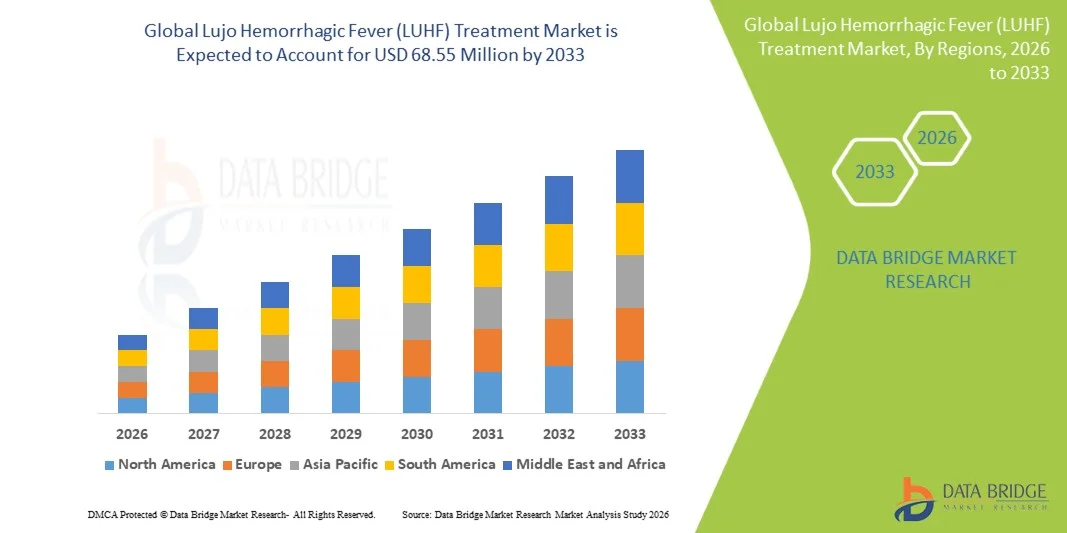
The Lujo Hemorrhagic Fever (LUHF) Treatment Market was valued at USD 40.50 million in 2025 and is projected to reach USD 68.55 million by 2033, growing at a CAGR of 6.80% from 2026 to 2033. The market is witnessing steady growth driven by increasing awareness of rare viral hemorrhagic fevers, ongoing investments in infectious disease research, and growing preparedness initiatives by governments and global health organizations to address emerging zoonotic disease threats.
The rising focus on outbreak surveillance, rapid diagnosis, and emergency response capabilities is encouraging healthcare systems and research institutions to strengthen their infectious disease treatment infrastructure. Although LUHF cases remain extremely rare, the high mortality risk associated with the disease has accelerated research into antiviral therapies, monoclonal antibodies, and supportive care protocols. Advancements in virology research, coupled with increased funding for rare and neglected infectious diseases, are supporting the development of novel therapeutic approaches and improving market prospects over the forecast period.
Key Market Trends & Insights
- North America dominated the Lujo Hemorrhagic Fever (LUHF) Treatment Market with the largest revenue share of 38.46% in 2025, supported by advanced infectious disease research capabilities, strong government funding, and the presence of leading biopharmaceutical companies engaged in antiviral development.
- The Maintenance of Hydration segment led the market with a 36.84% share in 2025, driven by its critical role in stabilizing patients suffering from severe dehydration, electrolyte imbalance, and fluid loss associated with viral hemorrhagic fevers.
- Asia-Pacific is expected to be the fastest-growing region at a CAGR of 7.5% from 2026 to 2033, fueled by increasing investments in healthcare infrastructure, expanding infectious disease surveillance programs, and growing preparedness for emerging viral outbreaks.
- Management of Shock are the fastest-growing treatment type, projected to register a CAGR of 7.4%, reflecting the surge in emphasis on advanced critical care management for severe LUHF cases.
- The Ribavirin-Based Treatments segment dominated the drug class category with a 39.27% revenue share in 2025, led by the historical use of ribavirin in managing certain viral hemorrhagic fevers and its role as one of the few antiviral options explored for arenavirus infections.
- Hospitals accounted for 52.14% of the market, preferred by the need for intensive monitoring, isolation facilities, and advanced supportive care during LUHF treatment.
- The Monoclonal Antibodies segment is the fastest-growing drug class category, with a CAGR of 7.8%, driven by advances in targeted immunotherapy and infectious disease research.
Market Size & Forecast
- Global Market Value (2025): USD 40.50 Million
- Expected Market Value (2033): USD 68.55 Million
- Forecast CAGR (2026–2033): 6.80%
- Leading Region in 2025: North America
- Fastest Growing Region: Asia Pacific
Report Scope and Lujo Hemorrhagic Fever (LUHF) Treatment Market Segmentation
|
Attributes |
Lujo Hemorrhagic Fever (LUHF) Treatment Key Market Insights |
|
Segments Covered |
|
|
Countries Covered |
North America · U.S. · Canada · Mexico Europe · Germany · France · U.K. · Netherlands · Switzerland · Belgium · Russia · Italy · Spain · Turkey · Rest of Europe Asia-Pacific · China · Japan · India · South Korea · Singapore · Malaysia · Australia · Thailand · Indonesia · Philippines · Rest of Asia-Pacific Middle East and Africa · Saudi Arabia · U.A.E. · South Africa · Egypt · Israel · Rest of Middle East and Africa South America · Brazil · Argentina · Rest of South America |
|
Key Market Players |
· Merck & Co., Inc. (U.S.) · Pfizer Inc. (U.S.) · Johnson & Johnson Services, Inc. (U.S.) · Gilead Sciences, Inc. (U.S.) · Moderna, Inc. (U.S.) · BioNTech SE (Germany) · AstraZeneca (U.K.) · GSK plc (U.K.) · Sanofi (France) · Roche Holding AG (Switzerland) · Novartis AG (Switzerland) · Takeda Pharmaceutical Company Limited (Japan) · Bayer AG (Germany) · CSL Limited (Australia) · Regeneron Pharmaceuticals, Inc. (U.S.) · Vir Biotechnology, Inc. (U.S.) · Inovio Pharmaceuticals, Inc. (U.S.) · Emergent BioSolutions Inc. (U.S.) · Chimerix, Inc. (U.S.) · SIGA Technologies, Inc. (U.S.) |
|
Market Opportunities |
· Expansion of broad-spectrum antiviral development programs · Growing government and global health investments in biodefense and outbreak preparedness · Advancements in monoclonal antibody and host-targeted therapeutic platforms |
|
Value Added Data Infosets |
In addition to the insights on market scenarios such as market value, growth rate, segmentation, geographical coverage, and major players, the market reports curated by the Data Bridge Market Research also include in-depth expert analysis, patient epidemiology, pipeline analysis, pricing analysis, and regulatory framework. |
Lujo Hemorrhagic Fever (LUHF) Treatment Market Trends
Trend: Increasing Focus on Broad-Spectrum Antiviral and Immunotherapy Research
Healthcare organizations, research institutes, and pharmaceutical companies are increasingly prioritizing the development of broad-spectrum antiviral drugs and immunotherapies capable of treating multiple viral hemorrhagic fevers, including LUHF. Advances in monoclonal antibody technologies, host-targeted therapies, and rapid drug repurposing strategies are accelerating the identification of potential treatment candidates. Growing international collaboration among public health agencies and academic institutions is further supporting the creation of scalable therapeutic platforms designed to address future outbreaks of rare but highly lethal viral diseases. For instance, the ongoing expansion of antiviral research programs supported by global health agencies for arenavirus and hemorrhagic fever countermeasures reflects the increasing emphasis on developing versatile treatment solutions for emerging infectious diseases.
Lujo Hemorrhagic Fever (LUHF) Treatment Market Dynamics
Key Market Driver: Rising Investments in Emerging Infectious Disease Preparedness
The increasing threat of emerging and re-emerging infectious diseases has prompted governments, public health agencies, and biopharmaceutical companies to invest heavily in outbreak preparedness and therapeutic development. Because LUHF is associated with high mortality rates and limited treatment options, healthcare stakeholders are prioritizing research into antiviral agents, supportive care innovations, and rapid-response medical countermeasures. These investments are strengthening clinical research capabilities, expanding treatment pipelines, and improving readiness for future viral hemorrhagic fever outbreaks. For instance, funding initiatives led by organizations such as the Coalition for Epidemic Preparedness Innovations and the World Health Organization continue to support the development of medical countermeasures for high-priority emerging pathogens.
Key Restraint/Challenge: Limited Patient Population and Clinical Data Availability
A significant restraint in the global LUHF treatment market is the extremely limited number of documented cases, which restricts opportunities for large-scale clinical trials and robust efficacy assessments. The rarity of the disease creates challenges in patient recruitment, regulatory evaluation, and commercial viability for pharmaceutical developers. In addition, limited epidemiological data and infrequent outbreaks make it difficult to establish standardized treatment protocols and long-term investment strategies, slowing the pace of therapeutic innovation and market expansion. For instance, the exceptionally small number of confirmed LUHF cases reported since the disease was first identified has constrained the generation of clinical evidence required for the advancement of targeted treatment programs.
Key Market Opportunity: Expansion of Biodefense and Rare Disease Therapeutics Programs
The growing focus on biodefense preparedness and neglected infectious disease management presents a significant market opportunity. Governments and international health organizations are increasingly supporting the development and stockpiling of therapeutics for rare, high-consequence pathogens that could pose future public health threats. Advances in antiviral discovery platforms, monoclonal antibody engineering, and accelerated regulatory pathways are creating favorable conditions for innovation. The expansion of public-private partnerships is further improving access to funding and research infrastructure for rare disease treatment development. For instance, national biodefense strategies and emerging pathogen preparedness programs in North America and Europe are expanding support for the development of therapies targeting rare viral hemorrhagic fevers and other high-risk infectious diseases.
Lujo Hemorrhagic Fever (LUHF) Treatment Market Scope
The Lujo Hemorrhagic Fever (LUHF) treatment market is segmented on the basis of treatment, drug class, end user, distribution channel
- By Treatment
On the basis of treatment, the Lujo Hemorrhagic Fever (LUHF) Treatment Market is segmented into maintenance of hydration, management of shock, anesthetics, analgesics, and others. The Maintenance of Hydration segment dominated the market with an estimated 36.84% share in 2025 due to its critical role in stabilizing patients suffering from severe dehydration, electrolyte imbalance, and fluid loss associated with viral hemorrhagic fevers. Hydration therapy remains a frontline intervention because no widely approved LUHF-specific treatment currently exists. Healthcare providers rely on intravenous fluid administration to prevent organ failure and improve survival outcomes. The treatment is routinely incorporated into emergency and intensive care protocols. Its broad applicability across all stages of supportive care further strengthens demand. Growing investments in critical care infrastructure are reinforcing the segment’s leading position.
The Management of Shock segment is expected to witness the fastest growth at a CAGR of 7.4% from 2026 to 2033, driven by increasing emphasis on advanced critical care management for severe LUHF cases. Patients frequently develop circulatory collapse and multi-organ dysfunction, making shock management essential for survival. Improvements in intensive care technologies and monitoring systems are enhancing treatment effectiveness. Healthcare facilities are expanding access to specialized critical care units capable of managing severe viral infections. Rising preparedness initiatives for high-fatality infectious diseases are supporting greater adoption of advanced shock management protocols. Increased awareness among healthcare professionals regarding early intervention is further accelerating segment growth.
- By Drug Class
On the basis of drug class, the global LUHF treatment market is segmented into ribavirin-based treatments, monoclonal antibodies, broad-spectrum antivirals, and others. The Ribavirin-Based Treatments segment led the market with an estimated 39.27% share in 2025 due to the historical use of ribavirin in managing certain viral hemorrhagic fevers and its role as one of the few antiviral options explored for arenavirus infections. Physicians and researchers continue to evaluate ribavirin because of its established clinical experience in related viral diseases. The therapy is often considered during emergency treatment situations where specific approved therapies are unavailable. Existing stockpiles and familiarity among healthcare providers contribute to its widespread use. Continued research into dosing strategies and treatment outcomes supports market demand. Its accessibility compared to newer therapies further strengthens segment dominance.
The Monoclonal Antibodies segment is anticipated to register the fastest growth at a CAGR of 7.8% during the forecast period, driven by advances in targeted immunotherapy and infectious disease research. Monoclonal antibodies offer the potential for highly specific neutralization of viral pathogens while minimizing damage to healthy tissues. Increased investments in biologics development are accelerating the discovery of novel therapeutic candidates for rare viral diseases. Regulatory agencies are also encouraging innovation for neglected and emerging infectious diseases. Expanding collaborations between biotechnology firms and public health organizations are supporting pipeline growth. As clinical evidence continues to improve, monoclonal antibodies are expected to gain significant traction in the LUHF treatment landscape.
- By End Users
On the basis of end users, the global LUHF treatment market is segmented into hospitals, homecare, speciality centres, and others. The Hospitals segment accounted for the largest market share of 52.14% in 2025 owing to the need for intensive monitoring, isolation facilities, and advanced supportive care during LUHF treatment. Most patients require hospitalization because of the severe and rapidly progressing nature of the disease. Hospitals provide access to critical care units, intravenous therapies, ventilatory support, and multidisciplinary medical teams. They also serve as the primary centers for outbreak response and infectious disease management. Government investments in emergency preparedness and healthcare infrastructure further support segment growth. The availability of specialized equipment and trained personnel continues to strengthen hospital dominance.
The Speciality Centres segment is projected to be the fastest-growing end-user category at a CAGR of 7.2% from 2026 to 2033. Growth is being driven by increasing demand for specialized infectious disease management and advanced therapeutic interventions. These centers offer focused expertise in rare and high-risk viral infections, enabling improved patient outcomes. Expanding research activities and clinical trials for hemorrhagic fever treatments are also supporting demand. Healthcare systems are increasingly establishing dedicated infectious disease units to enhance outbreak preparedness. Growing collaboration between research institutions and specialty treatment centers is further accelerating market expansion. The segment benefits from rising investments in precision medicine and advanced diagnostics.
- By Distribution Channel
On the basis of distribution channel, the global LUHF treatment market is segmented into hospital pharmacy, online pharmacy, and retail pharmacy. The Hospital Pharmacy segment dominated the market with a 61.37% share in 2025 due to the highly specialized nature of LUHF treatment and the need for controlled administration of therapeutics. Most medications used in treatment protocols are dispensed directly within hospital settings to ensure proper monitoring and dosage management. Hospital pharmacies play a critical role in emergency preparedness and outbreak response initiatives. They maintain access to critical care medicines, antiviral therapies, and supportive treatment supplies. Strict regulatory oversight and limited availability of specialized drugs further reinforce hospital pharmacy dominance. The concentration of severe cases within healthcare facilities also supports strong demand.
The Online Pharmacy segment is expected to witness the fastest growth at a CAGR of 7.0% over the forecast period, supported by the ongoing digital transformation of healthcare delivery systems. Increasing adoption of telemedicine and digital health platforms is improving access to pharmaceutical products across remote and underserved regions. Online pharmacies offer enhanced convenience, streamlined procurement processes, and improved supply chain efficiency. Healthcare providers and institutions are increasingly leveraging digital distribution channels for inventory management and medication sourcing. Advances in e-commerce infrastructure and pharmaceutical logistics are further driving growth. The segment is also benefiting from broader healthcare digitization trends worldwide.
Lujo Hemorrhagic Fever (LUHF) Treatment Market Regional Analysis
North America dominated the Lujo Hemorrhagic Fever (LUHF) Treatment Market with the largest revenue share of 38.46% in 2025, supported by advanced infectious disease research capabilities, strong government funding, and the presence of leading biopharmaceutical companies engaged in antiviral development. The region also benefits from advanced hospital care systems, robust outbreak surveillance networks, and rapid access to critical care and emergency response facilities. Increasing investment in rare disease research, growing emphasis on pandemic preparedness, and continuous development of broad-spectrum antiviral platforms continue to strengthen North America’s leadership position in the global LUHF treatment market.
U.S. Lujo Hemorrhagic Fever (LUHF) Treatment Market Insight
The U.S. LUHF treatment market is witnessing steady development due to strong investments in infectious disease preparedness, advanced biopharmaceutical research capabilities, and robust government funding for biodefense programs. The country’s highly developed healthcare infrastructure, along with the presence of leading pharmaceutical and biotechnology companies, is driving progress in antiviral drug development and monoclonal antibody research. Increasing focus on rare disease management, expansion of high-containment research laboratories, and growing emphasis on rapid outbreak response are further supporting market growth across clinical and research applications.
Europe Lujo Hemorrhagic Fever (LUHF) Treatment Market Insight
The Europe LUHF treatment market remains a key contributor to global research efforts, driven by strong regulatory frameworks, collaborative public health initiatives, and increasing investment in emerging infectious disease therapeutics. The region benefits from well-established healthcare systems, advanced clinical research networks, and active participation in global epidemic preparedness programs. Growing funding for antiviral development, expansion of specialty infectious disease centers, and rising focus on early diagnosis and containment strategies are further strengthening market development across Europe.
U.K. Lujo Hemorrhagic Fever (LUHF) Treatment Market Insight
The U.K. LUHF treatment market is experiencing gradual growth, supported by strong academic research institutions, government-backed infectious disease programs, and increasing investment in pandemic preparedness infrastructure. The country’s focus on advanced clinical trials and translational medicine is accelerating research into antiviral and immunotherapy solutions. In addition, collaborations between public health agencies and biotechnology firms, along with expanding capabilities in high-security laboratories, are enhancing the U.K.’s role in rare viral hemorrhagic fever treatment research.
Germany Lujo Hemorrhagic Fever (LUHF) Treatment Market Insight
The Germany LUHF treatment market is expanding due to strong pharmaceutical manufacturing capabilities, advanced biomedical research infrastructure, and increasing government focus on infectious disease control. Research institutions and biotech companies are actively engaged in antiviral drug discovery and immunotherapy development for rare viral infections. Growing investments in life sciences innovation, along with robust healthcare systems and participation in European disease surveillance networks, are further supporting market growth in Germany.
Asia-Pacific Lujo Hemorrhagic Fever (LUHF) Treatment Market Insight
The Asia-Pacific LUHF treatment market is expected to witness steady growth, driven by increasing healthcare investments, expanding infectious disease surveillance systems, and rising focus on epidemic preparedness across emerging economies. Countries such as China, India, and Japan are enhancing their biomedical research capabilities and strengthening public health infrastructure. Growing awareness of rare viral diseases, coupled with increasing adoption of advanced diagnostic and therapeutic technologies, is supporting regional market expansion.
Japan Lujo Hemorrhagic Fever (LUHF) Treatment Market Insight
The Japan LUHF treatment market is witnessing consistent advancement due to strong biomedical research capabilities, advanced healthcare infrastructure, and a high focus on infectious disease control. The country’s pharmaceutical sector is actively engaged in antiviral research and development of novel biologics for rare diseases. Increasing investment in high-containment research facilities and integration of cutting-edge biotechnology platforms are further supporting market progress in Japan.
China Lujo Hemorrhagic Fever (LUHF) Treatment Market Insight
The China LUHF treatment market is growing gradually, driven by rising government investment in public health preparedness, expanding biotechnology sector, and increasing focus on emerging infectious diseases. Strengthening pharmaceutical research capabilities, growing clinical trial activity, and improved disease surveillance systems are supporting market development. In addition, increased funding for antiviral innovation and expanding collaboration with global health organizations are positioning China as an emerging contributor in LUHF treatment research.
Lujo Hemorrhagic Fever (LUHF) Treatment Market Share
The Lujo Hemorrhagic Fever (LUHF) treatment industry is primarily led by well-established companies, including:
- Merck & Co., Inc. (U.S.)
- Pfizer Inc. (U.S.)
- Johnson & Johnson Services, Inc. (U.S.)
- Gilead Sciences, Inc. (U.S.)
- Moderna, Inc. (U.S.)
- BioNTech SE (Germany)
- AstraZeneca (U.K.)
- GSK plc (U.K.)
- Sanofi (France)
- Roche Holding AG (Switzerland)
- Novartis AG (Switzerland)
- Takeda Pharmaceutical Company Limited (Japan)
- Bayer AG (Germany)
- CSL Limited (Australia)
- Regeneron Pharmaceuticals, Inc. (U.S.)
- Vir Biotechnology, Inc. (U.S.)
- Inovio Pharmaceuticals, Inc. (U.S.)
- Emergent BioSolutions Inc. (U.S.)
- Chimerix, Inc. (U.S.)
- SIGA Technologies, Inc. (U.S.)
Latest Developments in Lujo Hemorrhagic Fever (LUHF) Treatment Market
- In June 2025, global infectious disease research initiatives expanded funding for broad-spectrum antiviral programs targeting high-risk RNA viruses, including arenavirus families linked to LUHF, focusing on repurposed drug libraries and pan-viral inhibitors. These programs aim to accelerate emergency therapeutics for outbreak scenarios. They include screening of existing antivirals for cross-viral efficacy. The initiative improves readiness for rare diseases with limited commercial incentives. It also promotes collaboration between governments, academia, and biotech firms
- In October 2024, the U.S. Centers for Disease Control and Prevention (CDC) reinforced LUHF clinical guidance, confirming that no approved antiviral or vaccine exists and that treatment remains strictly supportive care, including fluid management and intensive monitoring. The update highlights the extreme rarity of LUHF and the absence of standardized therapeutic protocols. It also emphasizes strict biosafety Level 4 containment requirements for suspected cases. This reinforces the urgent need for experimental drug development in hemorrhagic fever research
- In March 2023, researchers published updated preclinical findings on monoclonal antibody therapies targeting arenavirus glycoproteins in leading infectious disease journals, demonstrating strong neutralization potential in experimental models. These studies highlight progress in designing targeted biologics against hemorrhagic fever viruses. The research is especially relevant to LUHF due to shared viral family mechanisms. It shows improved survival outcomes in animal models treated with antibody candidates
- In September 2022, the World Health Organization (WHO) expanded its R&D Blueprint priority pathogen list and reinforced focus on arenaviruses, including Lassa and related hemorrhagic fever viruses, emphasizing accelerated development of diagnostics, therapeutics, and vaccines. This update strengthened global coordination for research funding and clinical trial readiness. It supports LUHF indirectly by prioritizing medical countermeasure development for high-fatality viral hemorrhagic fevers. The initiative encourages cross-border collaboration among pharmaceutical companies and public health agencies
- In October 2021, INOVIO Pharmaceuticals, in collaboration with global health partners, completed Phase 1B enrollment for its DNA vaccine candidate INO-4500 targeting Lassa fever, supported by CEPI funding to strengthen preparedness against viral hemorrhagic fevers. The program focuses on evaluating safety and immune response in endemic populations, advancing platform technologies relevant to arenaviruses. This development is significant for LUHF as it strengthens the broader pipeline of vaccines targeting genetically related hemorrhagic fever viruses

- Interactive Data Analysis Dashboard
- Company Analysis Dashboard for high growth potential opportunities
- Research Analyst Access for customization & queries
- Competitor Analysis with Interactive dashboard
- Latest News, Updates & Trend analysis
- Harness the Power of Benchmark Analysis for Comprehensive Competitor Tracking
Data collection and base year analysis are done using data collection modules with large sample sizes. The stage includes obtaining market information or related data through various sources and strategies. It includes examining and planning all the data acquired from the past in advance. It likewise envelops the examination of information inconsistencies seen across different information sources. The market data is analysed and estimated using market statistical and coherent models. Also, market share analysis and key trend analysis are the major success factors in the market report. To know more, please request an analyst call or drop down your inquiry.
The key research methodology used by DBMR research team is data triangulation which involves data mining, analysis of the impact of data variables on the market and primary (industry expert) validation. Data models include Vendor Positioning Grid, Market Time Line Analysis, Market Overview and Guide, Company Positioning Grid, Patent Analysis, Pricing Analysis, Company Market Share Analysis, Standards of Measurement, Global versus Regional and Vendor Share Analysis. To know more about the research methodology, drop in an inquiry to speak to our industry experts.
Data Bridge Market Research is a leader in advanced formative research. We take pride in servicing our existing and new customers with data and analysis that match and suits their goal. The report can be customized to include price trend analysis of target brands understanding the market for additional countries (ask for the list of countries), clinical trial results data, literature review, refurbished market and product base analysis. Market analysis of target competitors can be analyzed from technology-based analysis to market portfolio strategies. We can add as many competitors that you require data about in the format and data style you are looking for. Our team of analysts can also provide you data in crude raw excel files pivot tables (Fact book) or can assist you in creating presentations from the data sets available in the report.












