


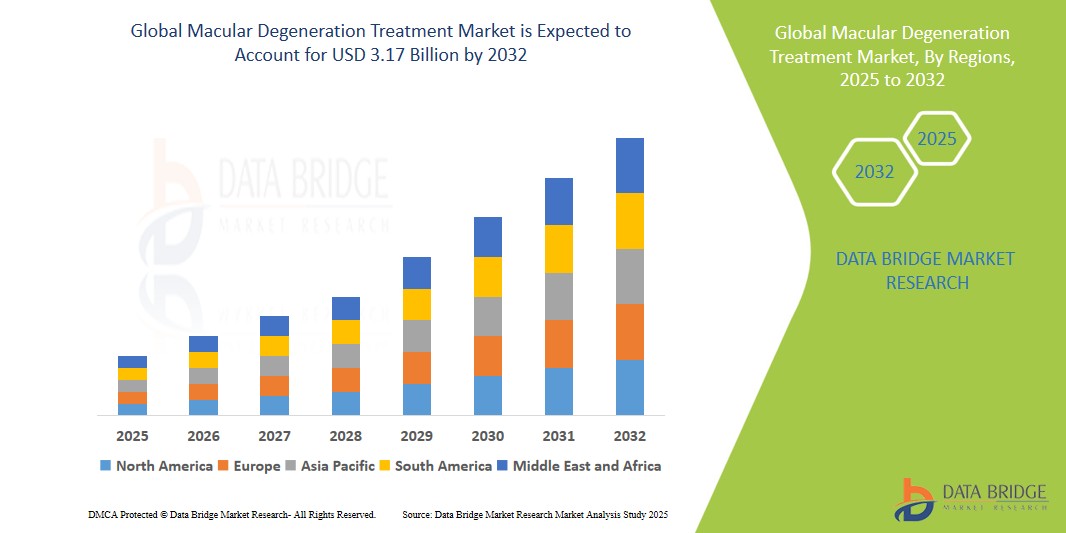
Macular Degeneration Treatment Market Size
- The Global Macular Degeneration Treatment Market size was valued at USD 1.86 Billion in 2024 and is expected to reach USD 3.17 Billion by 2032, at a CAGR of 6.90 %during the forecast period
- The growth of the Global Macular Degeneration Treatment Market is primarily driven by ongoing advancements in ophthalmic biotechnology and therapeutic innovation, which are enhancing the clinical application of treatments for both dry and wet forms of age-related macular degeneration (AMD).
- Additionally, increasing awareness of vision-related disorders, rising investments from public and private healthcare sectors, and supportive regulatory pathways are positioning macular degeneration therapies as essential tools in preserving vision among aging populations. These factors are accelerating research, clinical trials, and the development of next-generation therapies, thereby fueling the overall expansion of the market.
Macular Degeneration Treatment Market Analysis
- Macular degeneration treatment therapies, particularly those involving anti-VEGF agents, stem cell therapy, and gene-based approaches, are becoming increasingly critical in ophthalmology due to their ability to slow disease progression and preserve vision in aging populations. These treatments are gaining traction in both clinical and research settings as healthcare systems prioritize age-related vision loss.
- The rising demand for macular degeneration treatments is largely driven by the increasing global prevalence of age-related macular degeneration (AMD), growing geriatric populations, and continued innovation in ophthalmic drug delivery systems. Government initiatives and public-private partnerships are also playing a key role in boosting access to advanced therapies.
- North America is expected to dominate the Global Macular Degeneration Treatment Market in 2025, accounting for the largest revenue share, supported by a robust R&D infrastructure, favorable reimbursement frameworks, and the presence of key pharmaceutical companies, especially in the United States.
- Asia-Pacific is projected to be the fastest-growing region in the macular degeneration market during the forecast period. Growth is fueled by a rising elderly population, increasing awareness of eye health, improving healthcare infrastructure, and higher regional investment in ophthalmology research.
- The wet AMD segment is anticipated to lead the market with a substantial share in 2025, driven by the widespread use of anti-VEGF therapies such as ranibizumab and aflibercept. Strong clinical trial activity, growing adoption of long-acting delivery systems, and the need for effective, long-term treatment solutions are key factors contributing to this segment’s dominance in the macular degeneration treatment landscape.
Report Scope and Macular Degeneration Treatment Market Segmentation
|
Attributes |
Macular Degeneration Treatment Key Market Insights |
|
Segments Covered |
|
|
Countries Covered |
North America
Europe
Asia-Pacific
Middle East and Africa
South America
|
|
Key Market Players |
|
|
Market Opportunities |
|
|
Value Added Data Infosets |
In addition to the insights on market scenarios such as market value, growth rate, segmentation, geographical coverage, and major players, the market reports curated by the Data Bridge Market Research also include in-depth expert analysis, pricing analysis, brand share analysis, consumer survey, demography analysis, supply chain analysis, value chain analysis, raw material/consumables overview, vendor selection criteria, PESTLE Analysis, Porter Analysis, and regulatory framework. |
Macular Degeneration Treatment Market Trends
“Growing Adoption of Long-Acting Drug Delivery Systems in Macular Degeneration Treatment”
- A significant trend in the Global Macular Degeneration Treatment Market is the growing adoption of long-acting drug delivery systems designed to extend treatment duration and reduce the frequency of intravitreal injections. These systems aim to improve patient adherence and quality of life by maintaining therapeutic drug levels over extended periods, thus minimizing the treatment burden commonly associated with age-related macular degeneration (AMD).
- For instance, Genentech (a member of the Roche Group) has developed the Susvimo™ (ranibizumab injection) Port Delivery System, an implantable, refillable device that continuously delivers ranibizumab to the eye for up to six months. This innovation offers a significant advancement over monthly injections, reducing treatment fatigue and improving real-world outcomes in patients with wet AMD.
- These next-generation delivery methods, including ocular implants, sustained-release injectables, and hydrogel-based systems, provide targeted and consistent drug release. By maintaining stable intraocular drug levels, they enhance treatment efficacy and reduce the risk of undertreatment or disease progression between doses.
- Moreover, the integration of biologics like anti-VEGF agents with long-acting delivery technologies is reshaping the standard of care. Such combinations not only ensure precise action at the disease site but also support individualized treatment intervals based on patient needs and disease activity.
- This trend toward long-acting delivery systems reflects a broader shift in macular degeneration care—toward more patient-friendly, outcome-driven therapies. As companies continue investing in sustained-release innovations, these technologies are expected to play a pivotal role in expanding treatment accessibility, optimizing clinical outcomes, and driving long-term growth in the Global Macular Degeneration Treatment Market.
Macular Degeneration Treatment Market Dynamics
Driver
“Rising Prevalence of Age-Related Macular Degeneration Driving Demand for Effective Therapies”
- The rising prevalence of age-related macular degeneration (AMD) is a key driver fueling the growth of the Global Macular Degeneration Treatment Market. As the global population ages, the number of individuals affected by AMD—particularly the wet form—continues to increase, leading to a higher demand for effective and long-term treatment solutions to preserve vision and improve quality of life.
- For instance, according to the BrightFocus Foundation, approximately 196 million people globally were affected by AMD in 2020, and this number is expected to rise to 288 million by 2040. This sharp increase is placing significant pressure on healthcare systems and accelerating demand for advanced therapies, including anti-VEGF injections, sustained-release treatments, and emerging gene and cell therapies.
- This growing patient population is driving innovation among pharmaceutical companies and research institutions, with a strong focus on developing more effective, less invasive, and longer-acting treatment options to meet the evolving needs of AMD patients. In parallel, the burden of disease is prompting governments and healthcare providers to invest in early diagnosis and intervention programs.
- Additionally, increased awareness campaigns and routine screening programs are enabling earlier detection of AMD, allowing for timely therapeutic intervention and better long-term outcomes, further reinforcing the need for innovative treatment solutions.
- This driver underscores the urgent and expanding need for macular degeneration therapies on a global scale. As prevalence continues to rise, the market is expected to see accelerated development and adoption of cutting-edge treatments aimed at addressing the complex challenges associated with age-related vision loss.
Restraint/Challenge
“High Treatment Costs and Accessibility Challenges Limiting Market Growth”
- High treatment costs and accessibility challenges pose significant restraints on the growth of the Global Macular Degeneration Treatment Market. Despite the availability of advanced therapies, the high cost of treatments like anti-VEGF injections, gene therapies, and long-acting biologics limits patient access, especially in low- and middle-income regions. The cost of these treatments, along with the need for frequent visits and specialized care, creates barriers for many patients who may not have adequate insurance coverage or access to ophthalmologic services.
- For instance, while treatments such as Lucentis (ranibizumab) and Eylea (aflibercept) have proven effective for wet AMD, their high cost—often exceeding $2,000 per injection—can place a substantial financial burden on patients. In some countries, the cost of these therapies, combined with repeated treatments throughout a patient’s life, can be unaffordable, limiting the ability to manage the disease effectively.
- This financial barrier is further exacerbated by accessibility challenges, as not all healthcare systems have the infrastructure to provide regular injections or monitor patients' progress consistently, particularly in rural or underserved areas. For example, some parts of Sub-Saharan Africa and Southeast Asia may have limited access to these cutting-edge therapies due to both high costs and a lack of specialized treatment centers.
- Addressing these challenges requires innovative solutions, including cost-reduction strategies, government subsidies, and partnerships with pharmaceutical companies to make treatments more affordable. Additionally, expanding access to specialized healthcare centers and improving healthcare insurance coverage will be vital for enabling widespread adoption of these therapies.
- Overcoming the high cost and accessibility barriers will be critical in ensuring that more patients can benefit from advancements in macular degeneration treatment and that the market continues to expand and evolve.
Macular Degeneration Treatment Market Scope
The market is segmented on the basis of type, treatment, route of administration, end-users and distribution channel.
- By type
On the basis of type, the Global Macular Degeneration Treatment Market is segmented into wet macular degeneration and dry macular degeneration. The wet macular degeneration segment is expected to dominate the market, with the largest revenue share of 43.2% in 2025. This dominance is attributed to the increasing use of advanced therapies, such as anti-VEGF (vascular endothelial growth factor) treatments, which have proven highly effective in slowing disease progression and improving vision in patients with wet macular degeneration. These therapies, which are often utilized in clinical practice, have led to significant improvements in patient outcomes and are a key driver in the growth of this segment.
The wet macular degeneration segment is also anticipated to witness the fastest growth rate of 21.7% from 2025 to 2032. The rising adoption of cutting-edge biologics and gene therapies, along with continuous advancements in retinal disease research, is expected to propel this growth. These therapies, which aim to target the underlying causes of wet macular degeneration, offer more precise and long-lasting solutions compared to traditional treatments, further driving the segment's expansion in the global market.
- By Treatment
On the basis of treatment, the Global Macular Degeneration Treatment Market is segmented into drugs and surgery. The drugs segment is expected to hold the largest market revenue share in 2025, driven by the increasing prevalence of age-related macular degeneration (AMD), a major contributor to vision loss globally, as well as advancements in pharmaceutical treatments. Stem cell-based therapies are being increasingly explored within the drugs segment for their potential to repair retinal damage and slow the progression of macular degeneration, providing promising alternatives for patients who do not respond well to traditional therapies.
The drugs segment is expected to experience the fastest growth rate of 21.7% from 2025 to 2032. Stem cell therapies targeting retinal diseases and offering potential neuroprotective benefits are gaining significant momentum. This is attributed to the growing number of clinical trials and innovations in induced pluripotent stem cell (iPSC)-derived therapies, which are showing promise in regenerating retinal tissue and improving visual function. Additionally, heightened research funding, enhanced regulatory support, and the increasing recognition of stem cell treatments for complex ocular diseases are further propelling the rapid growth of this segment.
- By Route of Admininstration
On the basis of route of administration, the Global Macular Degeneration Treatment Market is segmented into oral, injectable and others. The Oral segment is expected to hold the largest market revenue share in 2025, driven by the increasing adoption of personalized medicine and the reduced risk of immune rejection when utilizing a patient’s own cells. These therapies are particularly favored in regenerative medicine for treating cardiovascular diseases, where the use of the patient’s own cells promotes tissue regeneration and recovery.
The Oral segment is anticipated to witness the fastest CAGR from 2025 to 2032. Mesenchymal stem cells (MSCs), known for their versatility and regenerative potential, are gaining significant traction in the treatment of cardiovascular, musculoskeletal, and neurological diseases. MSCs can be sourced from a variety of tissues, such as bone marrow, adipose tissue, and umbilical cord blood. Their ability to differentiate into multiple cell Disease types, reduce inflammation, and promote tissue repair is fueling their rapid growth in the market, particularly in both autologous and allogeneic therapeutic applications. This is driving further advancements and adoption in the treatment of complex diseases like cardiovascular conditions.
- By End User
On the basis of end users, the Global Macular Degeneration Treatment Market is segmented into hospitals, homecare, specialty clinics, ophthalmic clinics, and others. The hospitals segment is expected to hold the largest market revenue share in 2025, driven by the increasing demand for advanced treatments in regenerative medicine and the rising prevalence of age-related macular degeneration (AMD) and other chronic eye conditions. Macular Degeneration Treatment therapies, particularly those utilizing stem cells, are gaining traction for their potential to repair retinal damage and improve vision, making them a critical part of modern healthcare. Hospitals are increasingly adopting these therapies due to their ability to offer personalized and effective treatment options, improving long-term visual outcomes for patients.
The hospitals segment is anticipated to experience the fastest compound annual growth rate (CAGR) from 2025 to 2032. Hospitals are progressively integrating advanced treatments for macular degeneration, fueled by the growing demand for regenerative therapies and the need to address complex ocular diseases. With the adoption of innovative therapies such as stem cell-based treatments, hospitals are becoming central hubs for providing personalized care for conditions like macular degeneration and other degenerative eye diseases.
Macular Degeneration Treatment Market Regional Analysis
- North America is expected to lead the Global Macular Degeneration Treatment Market, holding the largest revenue share of 40.01% in 2025. This dominance is driven by significant advancements in regenerative medicine, a robust healthcare infrastructure, and increasing demand for personalized, targeted treatments.
- Consumers in the region place a high priority on the effectiveness, safety, and long-term benefits of Macular Degeneration Treatment therapies, especially for chronic and degenerative conditions. The rising prevalence of diseases such as cardiovascular disorders, musculoskeletal conditions, and neurological diseases is further fueling the demand for innovative therapeutic solutions.
- The market growth is also supported by North America’s well-established healthcare system, considerable investments in stem cell research, and strong government support for biotechnology innovations. These factors position the region as a leader in the development, clinical application, and commercialization of Macular Degeneration Treatment therapies, with a continuous focus on personalized medicine and cutting-edge cell-based technologies.
U.S. Macular Degeneration Treatment Market Insight
The U.S. is expected to capture the largest revenue share of 81% within North America in the Global Macular Degeneration Treatment Market by 2025. This market dominance is driven by rapid advancements in regenerative medicine, coupled with the widespread adoption of innovative healthcare technologies. The growing focus on personalized treatments for chronic and degenerative conditions, such as macular degeneration, cardiovascular diseases, musculoskeletal disorders, and neurological diseases, is playing a crucial role in driving market growth. Furthermore, the U.S. benefits from a robust healthcare infrastructure, substantial investments in biotechnology, and a thriving research ecosystem, all of which accelerate the development and commercialization of Macular Degeneration Treatment therapies.
Europe Macular Degeneration Treatment Market Insight
The European Macular Degeneration Treatment Market is expected to experience substantial growth during the forecast period, driven by the rising demand for advanced regenerative therapies and the increasing prevalence of chronic and degenerative diseases. The growing need for effective treatments in areas such as macular degeneration, cardiovascular diseases, musculoskeletal conditions, and neurological disorders is accelerating the adoption of Macular Degeneration Treatment therapies. Additionally, the region’s heightened focus on personalized medicine, coupled with significant investments in stem cell research, is further driving market expansion. European consumers and healthcare providers are increasingly attracted to the potential of these therapies to improve patient outcomes, reduce healthcare costs, and enhance quality of life. Notably, growth is being seen across hospitals, research institutions, and pharmaceutical companies, with Macular Degeneration Treatment therapies being integrated into clinical trials and established treatment protocols.
U.K. Macular Degeneration Treatment Market Insight
The U.K. Macular Degeneration Treatment Market is projected to experience significant growth, driven by the increasing adoption of advanced regenerative therapies and the rising prevalence of chronic conditions. The demand for effective treatments, particularly for musculoskeletal, cardiovascular, and neurological disorders, is fueling market expansion. The U.K.'s robust healthcare infrastructure, along with continued investments in stem cell research and personalized medicine, is expected to further accelerate market growth. Additionally, the growing emphasis on precision medicine and heightened awareness of the benefits of Macular Degeneration Treatment therapies in tissue regeneration and disease management are motivating both healthcare providers and patients to embrace these innovative solutions.
Germany Macular Degeneration Treatment Market Insight
The German Macular Degeneration Treatment Market is expected to experience substantial growth during the forecast period, driven by increasing awareness of regenerative medicine and the rising demand for advanced treatments for chronic and degenerative diseases. Germany’s strong healthcare system, combined with its commitment to innovation and research, is fostering the adoption of Macular Degeneration Treatment therapies, particularly for conditions like cardiovascular, musculoskeletal, and neurological disorders. The integration of these therapies into clinical practice and research institutions, along with a growing emphasis on personalized and precision medicine, further supports market expansion. Additionally, Germany’s focus on sustainability and cutting-edge medical technologies aligns with the increasing demand for regenerative treatments, contributing to the market's growth.
Asia-Pacific Macular Degeneration Treatment Market Insight
The Asia-Pacific Macular Degeneration Treatment Market is expected to grow at the fastest compound annual growth rate (CAGR) of over 24% in 2025, driven by rapid advancements in regenerative medicine, increasing healthcare demand, and rising investments in biotechnology, particularly in countries like China, Japan, and India. The region’s growing focus on personalized and precision medicine is fueling the demand for Macular Degeneration Treatment therapies, especially for chronic conditions such as cardiovascular, musculoskeletal, and neurological disorders. As Asia-Pacific becomes a hub for stem cell research and clinical applications, improved accessibility and affordability are broadening the reach of these therapies, allowing more patients to benefit from innovative treatment options.
Japan Macular Degeneration Treatment Market Insight
The Japan Macular Degeneration Treatment Market is expanding due to the country’s strong focus on advanced healthcare technologies, rising demand for personalized treatments, and the increasing prevalence of chronic diseases. Japan’s commitment to improving healthcare outcomes is driving the adoption of Macular Degeneration Treatment therapies, particularly for conditions like musculoskeletal, cardiovascular, and neurological disorders. The integration of these therapies into clinical settings, research institutions, and healthcare systems is fueling market growth. Furthermore, Japan’s aging population is expected to drive demand for regenerative treatments, improving quality of life and reducing the need for invasive procedures. Ongoing investments in biotechnology and precision medicine will further accelerate the adoption of these therapies.
China Macular Degeneration Treatment Market Insight
The China Macular Degeneration Treatment Market is expected to hold the largest market revenue share in the Asia-Pacific region by 2025, driven by rapid advancements in healthcare technologies, increasing investments in regenerative medicine, and the expanding middle class. China's growing healthcare sector and the rising demand for effective treatments for chronic and degenerative diseases are propelling the adoption of Macular Degeneration Treatment therapies. The country’s strong focus on healthcare innovation, government support for biotechnology research, and substantial investments in stem cell-based treatments are fueling market growth. Additionally, the increasing prevalence of cardiovascular and musculoskeletal disorders, along with the rising demand for personalized medicine, further accelerate the adoption of these therapies.
Macular Degeneration Treatment Market Share
The Macular Degeneration Treatment industry is primarily led by well-established companies, including:
- Adverum Biotechnologies Inc. (U.S.)
- Neurotech (U.S.)
- Gilead Sciences, Inc. (U.S.
- F. Hoffmann-La Roche Ltd (Switzerland)
- Allergan (U.S.)
- Regeneron Pharmaceuticals, Inc. (U.S.)
- STEMCELL Technologies Inc. (Canada)
- IVERIC bio, Inc. (U.S.)
- SANWA KAGAKU KENKYUSHO CO., LTD. (Japan)
- Bausch Health Companies Inc. (Canada)
- Alcon Vision LLC (Switzerland)
- Phio Therapeutics Corp. (U.S.)
- Kubota Pharmaceutical Holdings Co., Ltd. (Japan)
- Bayer AG (Germany)
- Novartis AG (Switzerland)
- Opthea (Australia)
- Santen Pharmaceutical Co., Ltd. (Japan)
- PanOptica, Inc. (U.S.)
- Resolvyx Pharmaceuticals, Inc. (U.S.)

- Interactive Data Analysis Dashboard
- Company Analysis Dashboard for high growth potential opportunities
- Research Analyst Access for customization & queries
- Competitor Analysis with Interactive dashboard
- Latest News, Updates & Trend analysis
- Harness the Power of Benchmark Analysis for Comprehensive Competitor Tracking
Data collection and base year analysis are done using data collection modules with large sample sizes. The stage includes obtaining market information or related data through various sources and strategies. It includes examining and planning all the data acquired from the past in advance. It likewise envelops the examination of information inconsistencies seen across different information sources. The market data is analysed and estimated using market statistical and coherent models. Also, market share analysis and key trend analysis are the major success factors in the market report. To know more, please request an analyst call or drop down your inquiry.
The key research methodology used by DBMR research team is data triangulation which involves data mining, analysis of the impact of data variables on the market and primary (industry expert) validation. Data models include Vendor Positioning Grid, Market Time Line Analysis, Market Overview and Guide, Company Positioning Grid, Patent Analysis, Pricing Analysis, Company Market Share Analysis, Standards of Measurement, Global versus Regional and Vendor Share Analysis. To know more about the research methodology, drop in an inquiry to speak to our industry experts.
Data Bridge Market Research is a leader in advanced formative research. We take pride in servicing our existing and new customers with data and analysis that match and suits their goal. The report can be customized to include price trend analysis of target brands understanding the market for additional countries (ask for the list of countries), clinical trial results data, literature review, refurbished market and product base analysis. Market analysis of target competitors can be analyzed from technology-based analysis to market portfolio strategies. We can add as many competitors that you require data about in the format and data style you are looking for. Our team of analysts can also provide you data in crude raw excel files pivot tables (Fact book) or can assist you in creating presentations from the data sets available in the report.












