


Marine-Derived Omega 3 Market Size
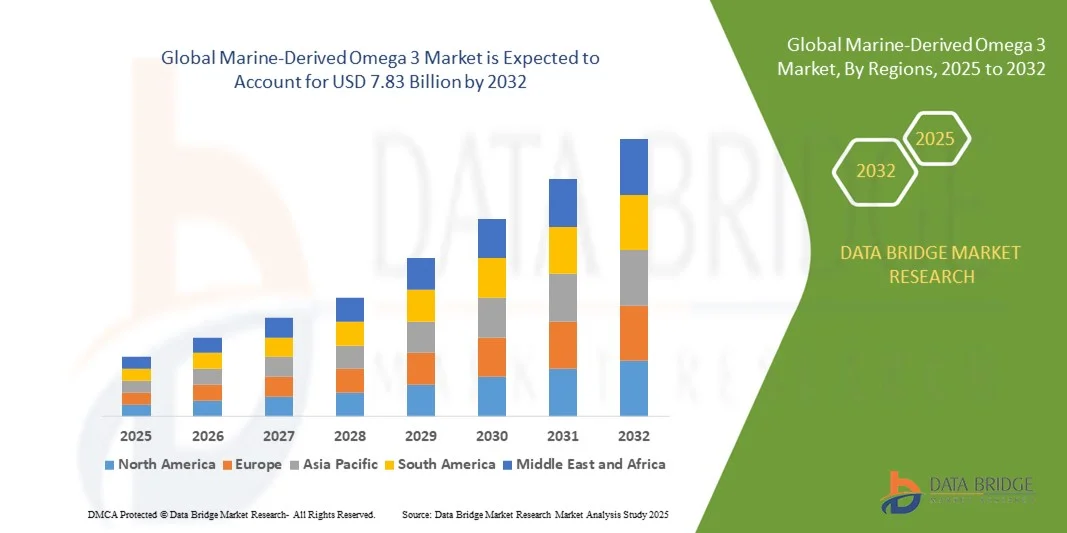
- The global marine-derived omega 3 market size was valued at USD 2.56 billion in 2024 and is expected to reach USD 7.83 billion by 2032, at a CAGR of 15.0% during the forecast period
- The market growth is largely fueled by increasing consumer awareness regarding the health benefits of omega-3 fatty acids, such as improved cardiovascular, cognitive, and joint health, coupled with the growing prevalence of lifestyle-related diseases. Rising demand for dietary supplements and functional foods enriched with omega-3 ingredients is strengthening overall market expansion across developed and emerging economies
- Furthermore, the growing shift toward sustainable and plant-based omega-3 sources derived from algae is creating significant opportunities for innovation and environmentally responsible production. These converging factors are enhancing product accessibility and driving broader adoption across dietary, pharmaceutical, and functional food sectors, thereby accelerating the market’s overall growth trajectory
Marine-Derived Omega 3 Market Analysis
- Marine-derived omega-3, comprising key fatty acids such as EPA and DHA, plays a crucial role in maintaining cardiovascular, neurological, and immune health, making it a vital component in dietary supplements, pharmaceuticals, and fortified foods. The market is witnessing rising consumer inclination toward preventive healthcare and nutrient-rich diets, which is fostering steady demand growth
- The escalating demand for marine-derived omega-3 products is driven by increasing health awareness, expanding nutraceutical consumption, and advancements in sustainable sourcing technologies, such as algae cultivation. With growing applications across functional foods, infant nutrition, and pharmaceuticals, the market continues to evolve toward innovation, purity, and sustainability
- Asia-Pacific dominated the marine-derived omega 3 market with a share of 45.9% in 2024, due to growing health awareness, rapid expansion of the dietary supplements industry, and rising consumption of omega-3-enriched foods and beverages across emerging economies
- North America is expected to be the fastest growing region in the marine-derived omega 3 market during the forecast period due to rising awareness of omega-3’s therapeutic benefits and growing use in pharmaceuticals, pet nutrition, and dietary supplements
- Fish oil segment dominated the market with a market share of 59.1% in 2024, due to its extensive availability and high concentration of EPA and DHA. Fish oil remains the most widely used source due to established extraction techniques, cost-effectiveness, and proven efficacy across dietary and pharmaceutical applications. Its presence in numerous supplement forms such as capsules, soft gels, and liquids further drives its dominance across diverse consumer groups
Report Scope and Marine-Derived Omega 3 Market Segmentation
|
Attributes |
Marine-Derived Omega 3 Key Market Insights |
|
Segments Covered |
|
|
Countries Covered |
North America
Europe
Asia-Pacific
Middle East and Africa
South America
|
|
Key Market Players |
|
|
Market Opportunities |
|
|
Value Added Data Infosets |
In addition to the insights on market scenarios such as market value, growth rate, segmentation, geographical coverage, and major players, the market reports curated by the Data Bridge Market Research also include in-depth expert analysis, pricing analysis, brand share analysis, consumer survey, demography analysis, supply chain analysis, value chain analysis, raw material/consumables overview, vendor selection criteria, PESTLE Analysis, Porter Analysis, and regulatory framework. |
Marine-Derived Omega 3 Market Trends
Growing Adoption of Algae-Based Omega-3 Formulations
- The marine-derived omega-3 market is undergoing a transformative shift toward algae-based formulations as sustainability and resource conservation become central priorities. Algae-derived omega-3s offer an environmentally friendly alternative to traditional fish oil sources while delivering comparable levels of eicosapentaenoic acid (EPA) and docosahexaenoic acid (DHA) essential for cardiovascular and brain health
- For instance, DSM-Firmenich has expanded its life’sOMEGA range using microalgae fermentation technology, providing a vegan and ocean-friendly source of omega-3 fatty acids. Such innovations address ecological challenges linked to overfishing and meet growing consumer demand for plant-based and sustainable nutrition alternatives
- Algae-based omega-3 formulations are also gaining traction due to their controlled cultivation environment, which ensures purity, consistent nutrient concentration, and the absence of ocean-borne contaminants such as mercury or microplastics. This makes them particularly appealing for infant nutrition, pharmaceuticals, and fortified food applications
- Manufacturers are investing heavily in biotechnology and closed-loop fermentation systems to improve production efficiency and reduce dependency on marine ecosystems. These systems allow scalable production of algae oils with tailored EPA-to-DHA ratios, catering to specific dietary and therapeutic requirements in the nutraceutical market
- Leading nutritional brands are incorporating algae-sourced omega-3 ingredients into dietary supplements, fortified beverages, and functional foods to appeal to ethically conscious and vegan consumers. For instance, Corbion and Veramaris are key players investing in expanding commercial-scale facilities focused exclusively on algae-based omega-3 production
- The growing preference for algae-derived omega-3 formulations marks a major milestone in the evolution of sustainable nutrition sourcing. As environmental, ethical, and quality considerations continue to influence consumer purchasing behavior, algae-based alternatives are expected to dominate future market growth within the marine-derived omega-3 sector
Marine-Derived Omega 3 Market Dynamics
Driver
Rising Consumer Focus on Preventive Healthcare and Nutrition
- The increasing awareness of lifestyle-related diseases and the importance of preventive healthcare are key drivers propelling the marine-derived omega-3 market. Consumers are seeking nutritional supplements rich in EPA and DHA to support heart health, cognitive function, and overall well-being as part of a balanced dietary routine
- For instance, BASF SE has launched its premium omega-3 line under the Newtrition brand, formulated to address cardiovascular, immune, and mental health benefits. This highlights the growing emphasis on functional nutrition solutions designed to prevent chronic conditions rather than merely treat them after onset
- Globally, rising disposable incomes and improved access to health information have expanded the consumer base adopting omega-3 supplements. Pharmaceutical and nutraceutical companies are developing innovative delivery formats such as gummies, capsules, emulsions, and fortified foods to enhance accessibility and consumer compliance
- The aging global population is further contributing to market expansion, as older adults increasingly incorporate marine-sourced omega-3 supplements to maintain mobility, eye health, and cognitive performance. In addition, preventive health awareness among younger demographics has fueled the inclusion of omega-3 in daily nutrition regimens
- As public health initiatives and dietary recommendations continue to endorse omega-3 for disease prevention, the market will benefit from expanding consumer acceptance and broader integration into global wellness trends. Preventive healthcare consciousness will remain one of the strongest long-term demand drivers for marine-derived omega-3 products
Restraint/Challenge
High Production Costs
- High production costs remain a significant challenge for the marine-derived omega-3 market, primarily due to resource-intensive extraction and refining processes. The purification of fish oils or microalgae extracts to meet pharmaceutical and food-grade standards requires specialized technology and stringent quality controls that raise overall operational expenses
- For instance, producers such as KD Pharma and Epax Norway face elevated costs associated with advanced molecular distillation and supercritical CO₂ extraction systems crucial for maintaining purity and concentration levels of EPA and DHA. These processes demand substantial capital investment and skilled labor to ensure compliance with safety and efficacy standards
- Fluctuating availability of raw materials, such as fish and krill, adds further cost pressure, especially with seasonal variations and sustainability regulations affecting catch volumes. Moreover, prices of marine oils can escalate due to environmental policies and certification requirements linked to ethical and traceable sourcing
- Scaling algae-based omega-3 production offers a sustainable alternative but currently involves high initial investment in fermentation infrastructure and yield optimization technologies. This limits large-scale adoption among small and medium enterprises attempting to enter the market
- To mitigate cost challenges, manufacturers are exploring production efficiency improvements through biotechnology, waste valorization, and co-product extraction strategies. Reducing energy consumption and optimizing resource utilization will be key to making marine-derived omega-3 production more cost-effective and sustainable in the long term
Marine-Derived Omega 3 Market Scope
The market is segmented on the basis of type, distribution channel, source, and application.
- By Type
On the basis of type, the marine-derived omega-3 market is segmented into Eicosapentaenoic Acid (EPA), Docosahexaenoic Acid (DHA), and Alpha-Linolenic Acid (ALA). The Docosahexaenoic Acid (DHA) segment dominated the market with the largest revenue share in 2024, attributed to its vital role in cognitive and visual development and widespread application in infant formulas and functional foods. DHA’s proven benefits in supporting brain health, memory, and cardiovascular wellness have driven strong consumer preference across all age groups. Furthermore, its growing inclusion in dietary supplements and fortified food products has enhanced its market penetration, especially among health-conscious consumers and aging populations.
The Eicosapentaenoic Acid (EPA) segment is projected to witness the fastest growth rate from 2025 to 2032, supported by its recognized anti-inflammatory and cardiovascular health benefits. EPA is increasingly adopted in pharmaceutical and nutraceutical formulations aimed at managing cholesterol levels and reducing inflammation-related disorders. Rising awareness regarding EPA’s role in supporting heart health and reducing triglycerides has expanded its demand, particularly among adults seeking preventive healthcare solutions.
- By Distribution Channel
Based on distribution channel, the market is segmented into pharmacies and drug stores, internet retailing, grocery retailers, and other distribution channels. The pharmacies and drug stores segment accounted for the largest revenue share in 2024 due to the growing consumer trust in certified and pharmacist-recommended products. Consumers prefer purchasing marine-derived omega-3 products from these outlets for their authenticity, professional guidance, and access to medically approved supplements. The segment benefits from strong partnerships between supplement manufacturers and retail pharmacy chains, ensuring widespread product availability.
The internet retailing segment is expected to grow at the fastest rate from 2025 to 2032, driven by the expansion of e-commerce platforms and increasing consumer inclination toward online shopping for health supplements. The convenience of doorstep delivery, access to a wide product range, and transparent customer reviews enhance online sales. In addition, global brands are investing in digital marketing and subscription models to attract repeat consumers, accelerating the adoption of omega-3 products through online channels.
- By Source
On the basis of source, the market is segmented into algal oil, fish oil, and krill oil. The fish oil segment dominated the market with a share of 59.1% in 2024, owing to its extensive availability and high concentration of EPA and DHA. Fish oil remains the most widely used source due to established extraction techniques, cost-effectiveness, and proven efficacy across dietary and pharmaceutical applications. Its presence in numerous supplement forms such as capsules, soft gels, and liquids further drives its dominance across diverse consumer groups.
The algal oil segment is anticipated to record the fastest growth from 2025 to 2032, propelled by increasing demand for plant-based and sustainable omega-3 sources. Algal oil serves as a vegetarian and vegan alternative to fish oil, offering comparable levels of DHA without marine exploitation. Its eco-friendly production and non-fishy taste appeal to environmentally conscious and vegetarian consumers. Growing adoption by infant nutrition and functional beverage manufacturers further supports the segment’s rapid expansion.
- By Application
Based on application, the marine-derived omega-3 market is segmented into sports nutrition, pharmaceuticals, pet food and feed, infant formula, functional foods and beverages, fish feed, and dietary supplements. The dietary supplements segment dominated the market in 2024 due to the growing trend of preventive healthcare and consumer awareness regarding the benefits of omega-3 in supporting heart, brain, and joint health. Rising aging populations and increased use of omega-3 supplements in daily wellness routines have contributed significantly to this segment’s growth.
The pharmaceuticals segment is projected to witness the fastest growth from 2025 to 2032, supported by increasing incorporation of EPA and DHA in prescription medications targeting cardiovascular and inflammatory diseases. Pharmaceutical companies are developing highly concentrated and purified omega-3 formulations for treating hypertriglyceridemia and other metabolic disorders. In addition, ongoing clinical research and regulatory approvals are expanding the therapeutic potential of marine-derived omega-3, driving rapid advancements in the pharmaceutical segment.
Marine-Derived Omega 3 Market Regional Analysis
- Asia-Pacific dominated the marine-derived omega 3 market with the largest revenue share of 45.9% in 2024, driven by growing health awareness, rapid expansion of the dietary supplements industry, and rising consumption of omega-3-enriched foods and beverages across emerging economies
- The increasing prevalence of lifestyle-related disorders, expanding aquaculture production for fish oil extraction, and rising investments in nutraceutical manufacturing are strengthening market growth in the region
- Favorable government initiatives promoting nutritional health, combined with a growing middle-class population adopting preventive healthcare products, continue to accelerate the demand for marine-derived omega-3 across the Asia-Pacific region
China Marine-Derived Omega-3 Market Insight
China held the largest share in the Asia-Pacific marine-derived omega-3 market in 2024, supported by strong fish oil production, expanding dietary supplement consumption, and the presence of major domestic manufacturers. The country’s robust aquaculture industry provides a steady raw material supply, while its large consumer base drives steady demand for functional foods and infant formulas containing DHA and EPA. Growing export activities and investments in advanced refining technologies further enhance China’s market dominance.
India Marine-Derived Omega-3 Market Insight
India is witnessing the fastest growth in the Asia-Pacific marine-derived omega-3 market, driven by rising health consciousness, increasing prevalence of cardiovascular diseases, and growing adoption of nutraceuticals. The rapid development of the pharmaceutical and dietary supplement sectors, along with government campaigns promoting nutrition and wellness, is spurring product demand. Furthermore, the expansion of online retailing channels and domestic fish oil refining capacities are contributing to India’s strong market momentum.
Europe Marine-Derived Omega-3 Market Insight
The Europe marine-derived omega-3 market is expanding steadily, backed by growing demand for sustainable and high-purity omega-3 products derived from fish and algal sources. Consumers in the region show a strong preference for eco-friendly and ethically sourced ingredients, fostering innovation in algae-based omega-3 formulations. Regulatory support for health claims related to cardiovascular and cognitive benefits, along with increasing penetration in functional food applications, is further propelling regional growth.
Germany Marine-Derived Omega-3 Market Insight
Germany’s marine-derived omega-3 market is driven by a well-established nutraceutical industry, strong consumer awareness of preventive healthcare, and a focus on high-quality, traceable sources of omega-3. The country’s stringent product quality standards and research-backed product innovation enhance its market position. The growing integration of omega-3 ingredients in fortified foods, pharmaceuticals, and sports nutrition products further supports steady market expansion.
U.K. Marine-Derived Omega-3 Market Insight
The U.K. market is supported by a growing focus on dietary wellness, an aging population adopting heart and brain health supplements, and expanding product offerings in the retail and e-commerce sectors. Increasing R&D efforts toward plant-based omega-3 alternatives and partnerships between supplement brands and healthcare providers are boosting demand. The country’s commitment to sustainability and clean-label nutrition continues to strengthen its marine-derived omega-3 market outlook.
North America Marine-Derived Omega-3 Market Insight
North America is projected to grow at the fastest CAGR from 2025 to 2032, supported by rising awareness of omega-3’s therapeutic benefits and growing use in pharmaceuticals, pet nutrition, and dietary supplements. The increasing prevalence of chronic diseases, coupled with strong demand for clean-label and scientifically validated health products, is driving regional growth. Expanding product innovations, clinical research investments, and advanced encapsulation technologies are further enhancing omega-3 adoption across North America.
U.S. Marine-Derived Omega-3 Market Insight
The U.S. accounted for the largest share in the North America market in 2024, driven by its strong dietary supplement industry, high consumer health awareness, and extensive presence of leading omega-3 manufacturers. Continuous product innovation, expansion in functional food applications, and growing integration of omega-3 in prescription therapeutics are boosting market growth. The presence of well-established distribution networks and supportive regulatory standards further solidify the U.S.’s leading position in the region.
Marine-Derived Omega 3 Market Share
The marine-derived omega 3 industry is primarily led by well-established companies, including:
- Cargill, Incorporated (U.S.)
- BASF SE (Germany)
- DSM (Netherlands)
- Croda International Plc (U.K.)
- Epax (Norway)
- Lonza (Switzerland)
- Orkla Health AS (Norway)
- Corbion (Netherlands)
- KD-PHARMA BEXBACH GMBH (Germany)
- GC Rieber (Norway)
- Nordic Naturals (U.S.)
- GOLDEN OMEGA (Chile)
- Biosearch Life (Spain)
- Pharma Marine AS (Norway)
- POLARIS (France)
- Sinomega Biotech Engineering Co., Ltd (China)
- Deyang HUATAI Biopharm Resource Co., Ltd (China)
- KinOmega Biopharm Inc (China)
- ALGISYS LLC (U.S.)
- Maruha Nichiro Corporation (Japan)
Latest Developments in Global Marine-Derived Omega 3 Market
- In October 2025, Arjuna Natural Extracts Ltd. launched a high-concentrate (90%) omega-3 PUFA ingredient designed for use in dietary supplements and functional foods and beverages. This development is expected to strengthen the company’s position in the premium omega-3 segment, addressing rising global demand for potent, high-purity formulations. The introduction of advanced concentration technology enhances product efficiency and bioavailability, supporting the growing consumer shift toward clinically proven and performance-oriented omega-3 products
- In July 2025, Corbion secured regulatory approvals in China to introduce its algae-based omega-3 DHA solutions for both human and animal nutrition markets. This milestone significantly expands Corbion’s market reach in Asia and supports the regional transition toward sustainable, non-fish-derived omega-3 sources. The approval aligns with China’s growing emphasis on eco-friendly and traceable nutritional ingredients, reinforcing Corbion’s leadership in algae innovation and sustainable health solutions
- In April 2025, Rasayanam launched its 100% plant-based omega-3 supplement extracted from marine algae, marking a major step in offering vegan-friendly alternatives to fish oil. This launch caters to the rising demand for clean-label, ethical, and plant-based nutrition among vegetarian and vegan consumers. The product’s rich EPA and DHA profile supports cardiovascular, brain, and joint health, thereby widening Rasayanam’s consumer base in the rapidly growing vegan nutraceuticals market
- In October 2023, DSM-Firmenich announced the North American launch of life’s®OMEGA O3020, the world’s first and only single-source algal omega-3 featuring the same EPA-to-DHA ratio as standard fish oil but with double the potency. This innovation marks a significant advancement in algal oil technology, offering consumers a sustainable, high-strength alternative to fish-based omega-3. The product strengthens DSM-Firmenich’s competitive position in the premium omega-3 segment and addresses growing consumer demand for potency and purity in nutritional supplements
- In April 2022, DSM initiated a global sustainability-focused campaign promoting the adoption of algae-derived omega-3 ingredients to reduce overfishing and protect marine biodiversity. This initiative underscores DSM’s commitment to environmental stewardship while driving awareness of sustainable alternatives in the omega-3 market. By educating consumers and manufacturers on the ecological advantages of algae-based sources, the campaign plays a pivotal role in accelerating the market shift toward eco-friendly and renewable omega-3 production

- Interactive Data Analysis Dashboard
- Company Analysis Dashboard for high growth potential opportunities
- Research Analyst Access for customization & queries
- Competitor Analysis with Interactive dashboard
- Latest News, Updates & Trend analysis
- Harness the Power of Benchmark Analysis for Comprehensive Competitor Tracking
Global Marine Derived Omega 3 Market, Supply Chain Analysis and Ecosystem Framework
To support market growth and help clients navigate the impact of geopolitical shifts, DBMR has integrated in-depth supply chain analysis into its Global Marine Derived Omega 3 Market research reports. This addition empowers clients to respond effectively to global changes affecting their industries. The supply chain analysis section includes detailed insights such as Global Marine Derived Omega 3 Market consumption and production by country, price trend analysis, the impact of tariffs and geopolitical developments, and import and export trends by country and HSN code. It also highlights major suppliers with data on production capacity and company profiles, as well as key importers and exporters. In addition to research, DBMR offers specialized supply chain consulting services backed by over a decade of experience, providing solutions like supplier discovery, supplier risk assessment, price trend analysis, impact evaluation of inflation and trade route changes, and comprehensive market trend analysis.
Data collection and base year analysis are done using data collection modules with large sample sizes. The stage includes obtaining market information or related data through various sources and strategies. It includes examining and planning all the data acquired from the past in advance. It likewise envelops the examination of information inconsistencies seen across different information sources. The market data is analysed and estimated using market statistical and coherent models. Also, market share analysis and key trend analysis are the major success factors in the market report. To know more, please request an analyst call or drop down your inquiry.
The key research methodology used by DBMR research team is data triangulation which involves data mining, analysis of the impact of data variables on the market and primary (industry expert) validation. Data models include Vendor Positioning Grid, Market Time Line Analysis, Market Overview and Guide, Company Positioning Grid, Patent Analysis, Pricing Analysis, Company Market Share Analysis, Standards of Measurement, Global versus Regional and Vendor Share Analysis. To know more about the research methodology, drop in an inquiry to speak to our industry experts.
Data Bridge Market Research is a leader in advanced formative research. We take pride in servicing our existing and new customers with data and analysis that match and suits their goal. The report can be customized to include price trend analysis of target brands understanding the market for additional countries (ask for the list of countries), clinical trial results data, literature review, refurbished market and product base analysis. Market analysis of target competitors can be analyzed from technology-based analysis to market portfolio strategies. We can add as many competitors that you require data about in the format and data style you are looking for. Our team of analysts can also provide you data in crude raw excel files pivot tables (Fact book) or can assist you in creating presentations from the data sets available in the report.













