


Mattress Ticking Fabric Market Size
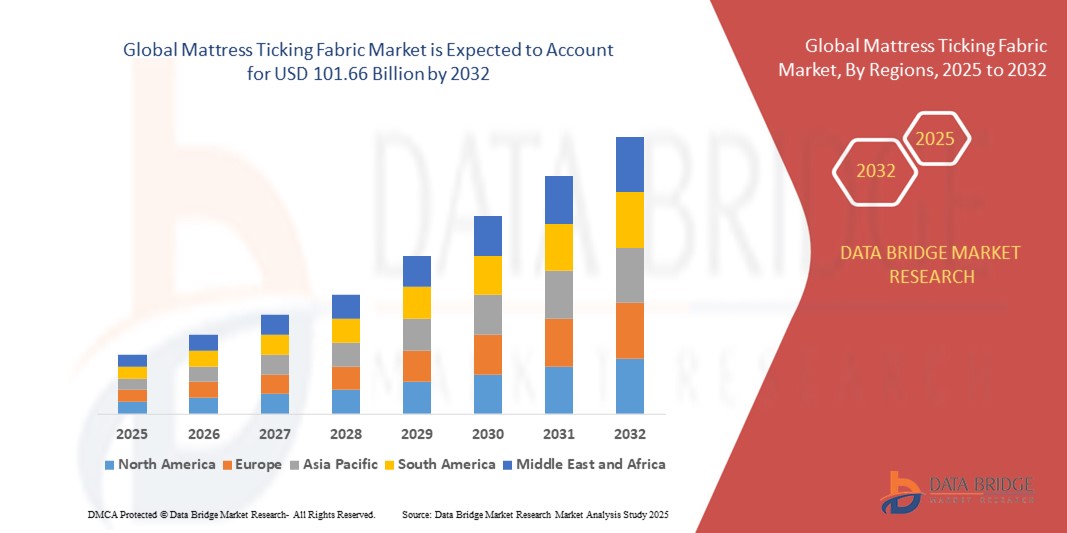
- The global mattress ticking fabric market size was valued at USD 51.02 billion in 2024 and is expected to reach USD 101.66 billion by 2032, at a CAGR of 9.00% during the forecast period
- The market growth is largely fueled by the increasing demand for durable, breathable, and aesthetically appealing fabrics in the bedding industry, driven by rising consumer awareness around sleep health and comfort. The proliferation of luxury and customized mattresses is leading to a higher uptake of advanced mattress ticking fabric solutions across both residential and commercial hospitality segments
- Furthermore, rising disposable incomes, expanding urbanization, and a shift toward premium home furnishings are accelerating the demand for high-performance mattress ticking fabrics. These fabrics enhance not only the visual appeal but also the functional attributes of mattresses, such as anti-microbial properties, moisture-wicking, and temperature regulation. These converging factors are significantly boosting the growth of the Mattress Ticking Fabric market globally
Mattress Ticking Fabric Market Analysis
- Mattress ticking fabric, known for its durability, moisture-wicking properties, and aesthetic appeal, is a critical component in the manufacture of mattresses for both residential and commercial applications. These fabrics contribute significantly to comfort, hygiene, and design customization, making them essential in modern sleep solutions
- The growing demand for mattress ticking fabric is primarily fueled by the rising consumer focus on sleep quality, increased spending on premium bedding products, and the continuous innovation in fabric technologies such as antimicrobial and hypoallergenic treatments. In addition, the growth of the hospitality sector and online mattress sales are accelerating demand
- North America dominated the mattress ticking fabric market with the largest revenue share of 37.4% in 2024, driven by consumer preference for high-end sleep products, strong presence of mattress manufacturers, and innovations in fabric aesthetics and functionality. The U.S. leads the regional growth due to its booming e-commerce mattress sector and increasing awareness about sleep wellness
- Asia-Pacific is expected to be the fastest growing region in the mattress ticking fabric market during the forecast period, projected to grow at a CAGR of 6.9% from 2025 to 2032. Factors such as rapid urbanization, rising disposable incomes, growing hospitality infrastructure, and evolving consumer lifestyles in countries like China and India are driving this growth
- The offline segment dominated the mattress ticking fabric market with a market share of 72.5% in 2024, owing to traditional fabric distribution networks and consumer preference for in-store evaluation of fabric texture and quality
Report Scope and Mattress Ticking Fabric Market Segmentation
|
Attributes |
Mattress Ticking Fabric Key Market Insights |
|
Segments Covered |
|
|
Countries Covered |
North America
Europe
Asia-Pacific
Middle East and Africa
South America
|
|
Key Market Players |
|
|
Market Opportunities |
|
|
Value Added Data Infosets |
In addition to the insights on market scenarios such as market value, growth rate, segmentation, geographical coverage, and major players, the market reports curated by the Data Bridge Market Research also include in-depth expert analysis, pricing analysis, brand share analysis, consumer survey, demography analysis, supply chain analysis, value chain analysis, raw material/consumables overview, vendor selection criteria, PESTLE Analysis, Porter Analysis, and regulatory framework. |
Mattress Ticking Fabric Market Trends
Growing Demand for Comfort, Hygiene, and Sustainability in Sleep Products
- A significant and accelerating trend in the global mattress ticking fabric market is the rising consumer preference for high-performance textiles that offer enhanced comfort, durability, and hygiene in both residential and commercial mattress applications
- For instance, many manufacturers are incorporating antimicrobial, hypoallergenic, and moisture-wicking treatments into ticking fabrics to address the growing demand for sleep wellness and allergy prevention. These advancements are particularly valued in healthcare and hospitality sectors, where cleanliness and comfort are critical
- Design aesthetics are also playing a major role, with ticking fabrics now available in a wide range of textures, colors, and patterns. Innovations in 3D knitting and jacquard weaving techniques allow for customized designs, helping mattress brands differentiate their offerings in a highly competitive market
- The integration of sustainable materials—such as organic cotton, bamboo fibers, recycled polyester fibers, and biodegradable yarns—is another defining trend. Consumers are increasingly seeking eco-conscious bedding solutions, pushing manufacturers to adopt greener production methods and materials
- Mattress ticking fabric is becoming a key differentiator in premium mattress lines, with many brands highlighting features like stretchability, breathability, and soft-touch surfaces to attract customers focused on luxury and ergonomic benefits
- This growing focus on functional, hygienic, and sustainable sleep solutions is reshaping expectations in the global mattress industry. As a result, textile manufacturers are investing heavily in R&D to deliver advanced ticking fabrics that meet both consumer preferences and regulatory standards
Mattress Ticking Fabric Market Dynamics
Driver
Growing Demand Due to Rising Health Awareness and Bedding Innovation
- The rising consumer focus on hygiene, sleep health, and comfort is a major driver fueling the growth of the mattress ticking fabric market globally. Mattress ticking fabrics—used as outer covers—are becoming critical in enhancing the aesthetic, protective, and functional aspects of mattresses
- For instance, in April 2024, BekaertDeslee, a leading ticking fabric manufacturer, launched a new range of sustainable and skin-friendly mattress fabrics infused with probiotics and anti-odor technology. These advancements are expected to drive innovation and consumer demand throughout the forecast period
- As awareness about allergens, dust mites, and sleep-related health issues grows, consumers are opting for ticking fabrics with anti-microbial, hypoallergenic, and moisture-wicking properties. This preference is particularly strong in the healthcare, hospitality, and premium residential segments
- Furthermore, the growing popularity of eco-friendly home products is propelling the use of organic cotton, bamboo-based fabrics, and recycled polyester in ticking fabric production. Manufacturers are increasingly showcasing their sustainability credentials to appeal to environmentally conscious buyers
- Enhanced designs, advanced weaving technologies, and customizable aesthetics are also supporting the adoption of high-end mattress ticking fabrics. These fabrics not only improve comfort but also contribute to branding and product differentiation for mattress makers
- The trend towards health-driven consumer behavior, coupled with the evolution of functional and sustainable fabrics, continues to reshape the mattress industry, making ticking fabric a vital component in both product innovation and consumer choice
Restraint/Challenge
Volatile Raw Material Costs and Industry Standardization Challenges
- Fluctuating prices of raw materials such as cotton, polyester, and specialty fibers pose a major challenge to profitability in the mattress ticking fabric market. The high dependency on global supply chains for raw textiles makes manufacturers vulnerable to price and availability shocks
- In addition, the lack of standardization in fabric performance metrics across countries can create regulatory complexities, especially for global players. Differing fire safety, antimicrobial efficacy, and textile certification standards can limit cross-border product scalability
- Consumers are also increasingly sensitive to pricing, especially in cost-driven economies. Premium ticking fabrics with specialized treatments can significantly raise overall mattress costs, thereby limiting their use in budget or mid-tier products
- To address these restraints, companies must invest in supply chain resilience, local sourcing, and R&D for cost-efficient innovations while aligning with global compliance and eco-labeling standards
Mattress Ticking Fabric Market Scope
The market is segmented on the basis of product, application, and sales channel.
- By Product
On the basis of product, the mattress ticking fabric market is segmented into weft knit mattress and warp knit mattress. The weft knit mattress segment dominated the market with the largest revenue share of 61.4% in 2024, driven by its softness, elasticity, and affordability. It is widely used in residential mattresses for its comfort and breathable properties.
The warp knit mattress segment is projected to grow at the fastest CAGR of 7.8% from 2025 to 2032, owing to its higher durability, wrinkle resistance, and strong structure, making it ideal for commercial and institutional applications.
- By Application
On the basis of application, the mattress ticking fabric market is segmented into commercial and households. The households segment accounted for the largest market share of 68.9% in 2024, supported by rising consumer demand for aesthetic, functional, and comfortable bedding materials in domestic settings.
The commercial segment is projected to grow at the highest CAGR of 8.3% during the forecast period, due to increasing adoption in the hospitality and healthcare industries that demand premium-grade, easy-to-clean, and long-lasting mattress covers.
- By Sales Channel
On the basis of sales channel, the Mattress Ticking Fabric market is segmented into online and offline. The offline segment held a market share of 72.5% in 2024, owing to traditional fabric distribution networks and consumer preference for in-store evaluation of fabric texture and quality.
The online segment is expected to register the fastest CAGR of 9.1% from 2025 to 2032, driven by the growing influence of e-commerce, convenience of direct-to-door delivery, availability of product comparisons, and promotional pricing strategies.
Mattress Ticking Fabric Market Regional Analysis
- North America dominated the mattress ticking fabric market with the largest revenue share of 37.4% in 2024, driven by increasing demand for premium bedding materials, rising consumer awareness about sleep quality, and widespread preference for sustainable and skin-friendly fabric solutions
- Consumers in the region highly value comfort, durability, and hypoallergenic properties in mattress ticking fabrics, contributing to greater adoption across residential, hospitality, and healthcare sectors
- This growth is further supported by high disposable incomes, a strong culture of home décor personalization, and innovations in textile technologies such as antimicrobial, cooling, and pressure-relieving fabric treatments
U.S. Mattress Ticking Fabric Market Insight
The U.S. mattress ticking fabric market captured the largest revenue share of 66% within North America in 2024, driven by growing awareness of healthy sleep, increasing demand for luxurious and organic fabric materials, and rapid growth in the memory foam and hybrid mattress categories. Consumers increasingly seek ticking fabrics with enhanced breathability, moisture management, and eco-certifications. In addition, leading mattress brands are partnering with textile innovators to integrate technologies like phase-change materials and sustainable blends, supporting domestic market expansion.
Europe Mattress Ticking Fabric Market Insight
The Europe mattress ticking fabric market is projected to expand at a substantial CAGR throughout the forecast period, fueled by strong sustainability regulations, growing demand for natural and recycled fabrics, and rising investments in green manufacturing. The European market is experiencing growth across premium bedding, hotel chains, and medical-grade mattresses. Countries such as Germany, France, and the U.K. are witnessing increased demand for certified organic cotton, TENCEL, and bamboo-based fabrics, driving innovation in fabric construction and functionality.
U.K. Mattress Ticking Fabric Market Insight
The U.K. mattress ticking fabric market is anticipated to grow at a noteworthy CAGR during the forecast period, driven by consumer preferences for anti-allergy and breathable materials. Increasing awareness of sleep-related health issues, combined with a shift toward sustainable home products, is fostering demand for mattress ticking fabrics that offer both comfort and environmental benefits. In addition, domestic textile brands are focusing on stylish, soft-touch fabrics that meet fire safety and durability standards.
Germany Mattress Ticking Fabric Market Insight
The Germany mattress ticking fabric market is expected to expand at a considerable CAGR, owing to the country’s leadership in textile innovation and its strong eco-conscious consumer base. With a focus on sustainable production, German manufacturers are developing high-performance ticking fabrics with properties such as antimicrobial coatings, anti-dust mite features, and thermal regulation. The rise in orthopedic and premium mattress sales is further driving fabric demand from both domestic producers and global suppliers.
Asia-Pacific Mattress Ticking Fabric Market Insight
The Asia-Pacific mattress ticking fabric market is poised to grow at the fastest CAGR of 6.9% during the forecast period of 2025 to 2032, driven by booming residential construction, rising disposable incomes, and expanding mattress production hubs across China, India, and Southeast Asia. Local manufacturers are increasingly investing in cost-effective yet high-quality ticking fabric options, while global brands are entering the region to meet demand for breathable, soft, and skin-friendly fabrics. The region’s focus on exports and OEM partnerships further accelerates growth.
Japan Mattress Ticking Fabric Market Insight
The Japan mattress ticking fabric market is gaining momentum due to its aging population, emphasis on wellness, and preference for minimalist, high-quality bedding materials. Japanese consumers are drawn to advanced ticking fabrics with moisture-wicking, antibacterial, and odor-control properties. With local mattress manufacturers focusing on ergonomics and space-efficient designs, the integration of functional and premium fabrics is becoming a key differentiator.
China Mattress Ticking Fabric Market Insight
The China mattress ticking fabric market accounted for the largest market revenue share in Asia-Pacific in 2024, supported by the country’s rapidly growing middle class, urbanization, and increasing consumer spending on comfort-oriented home products. China’s massive mattress manufacturing base drives demand for various ticking fabrics, from economical polyester blends to high-end jacquard knits and eco-friendly alternatives. The government’s push for cleaner textile production and digital manufacturing is also reshaping the competitive landscape.
Mattress Ticking Fabric Market Share
The mattress ticking fabric industry is primarily led by well-established companies, including:
- Jong Stit Co., Ltd. (Thailand)
- Georg Otto Friedrich (Germany)
- Zhejiang Chaoda Warp Knitting Co., Ltd. (China)
- ABHINANDAN KNITS PVT LTD. (India)
- Haining Jinmao Warp Knitting Co., Ltd. (China)
- Guilford (U.S.)
- Loyal Textile Mills Ltd. (India)
- TORAY INDUSTRIES, INC. (Japan)
- Pacific Textiles Holdings Limited (Hong Kong)
- Teejay Lanka PLC (Sri Lanka)
- American National Manufacturing, Inc. (U.S.)
- WENZEL Group (Germany)
- Exxel Outdoors, LLC. (U.S.)
- Al Mattress (U.S.)
- Newell Brands (U.S.)
- SERTA SIMMONS BEDDING, LLC (U.S.)
- SSM Industries (U.S.)
- Intex Development Co. Ltd (China)
Latest Developments in Global Mattress Ticking Fabric Market
- In February–March 2025, Precision Textiles (Fairfield, NJ, USA) partnered with Culp Home Fashions (Stokesdale, NC, USA) to launch the patented IQ Flame‑Resistant (FR) Inlay yarn, enabling the production of chemical‑free flame‑resistant ticking woven directly into mattress fabric, meeting or exceeding CFR 1633 standards without requiring lamination
- In June 2025, manufacturers worldwide began integrating the IQ FR Inlay into various ticking designs—smooth‑top, zippered, and foam‑based constructions—to enhance fire safety while maintaining aesthetics and breathability
- In May 2025 At Interzum Cologne, industry leaders including BekaertDeslee, CT Nassau, and others showcased sustainable, high-performance ticking innovations—from eco‑friendly plant‑based fabrics to cooling and circular textile designs, indicating growing momentum in mattress fabric innovation

- Interactive Data Analysis Dashboard
- Company Analysis Dashboard for high growth potential opportunities
- Research Analyst Access for customization & queries
- Competitor Analysis with Interactive dashboard
- Latest News, Updates & Trend analysis
- Harness the Power of Benchmark Analysis for Comprehensive Competitor Tracking
Global Mattress Ticking Fabric Market, Supply Chain Analysis and Ecosystem Framework
To support market growth and help clients navigate the impact of geopolitical shifts, DBMR has integrated in-depth supply chain analysis into its Global Mattress Ticking Fabric Market research reports. This addition empowers clients to respond effectively to global changes affecting their industries. The supply chain analysis section includes detailed insights such as Global Mattress Ticking Fabric Market consumption and production by country, price trend analysis, the impact of tariffs and geopolitical developments, and import and export trends by country and HSN code. It also highlights major suppliers with data on production capacity and company profiles, as well as key importers and exporters. In addition to research, DBMR offers specialized supply chain consulting services backed by over a decade of experience, providing solutions like supplier discovery, supplier risk assessment, price trend analysis, impact evaluation of inflation and trade route changes, and comprehensive market trend analysis.
Data collection and base year analysis are done using data collection modules with large sample sizes. The stage includes obtaining market information or related data through various sources and strategies. It includes examining and planning all the data acquired from the past in advance. It likewise envelops the examination of information inconsistencies seen across different information sources. The market data is analysed and estimated using market statistical and coherent models. Also, market share analysis and key trend analysis are the major success factors in the market report. To know more, please request an analyst call or drop down your inquiry.
The key research methodology used by DBMR research team is data triangulation which involves data mining, analysis of the impact of data variables on the market and primary (industry expert) validation. Data models include Vendor Positioning Grid, Market Time Line Analysis, Market Overview and Guide, Company Positioning Grid, Patent Analysis, Pricing Analysis, Company Market Share Analysis, Standards of Measurement, Global versus Regional and Vendor Share Analysis. To know more about the research methodology, drop in an inquiry to speak to our industry experts.
Data Bridge Market Research is a leader in advanced formative research. We take pride in servicing our existing and new customers with data and analysis that match and suits their goal. The report can be customized to include price trend analysis of target brands understanding the market for additional countries (ask for the list of countries), clinical trial results data, literature review, refurbished market and product base analysis. Market analysis of target competitors can be analyzed from technology-based analysis to market portfolio strategies. We can add as many competitors that you require data about in the format and data style you are looking for. Our team of analysts can also provide you data in crude raw excel files pivot tables (Fact book) or can assist you in creating presentations from the data sets available in the report.













