


What is the Mayonnaise Market Size and Growth Rate?
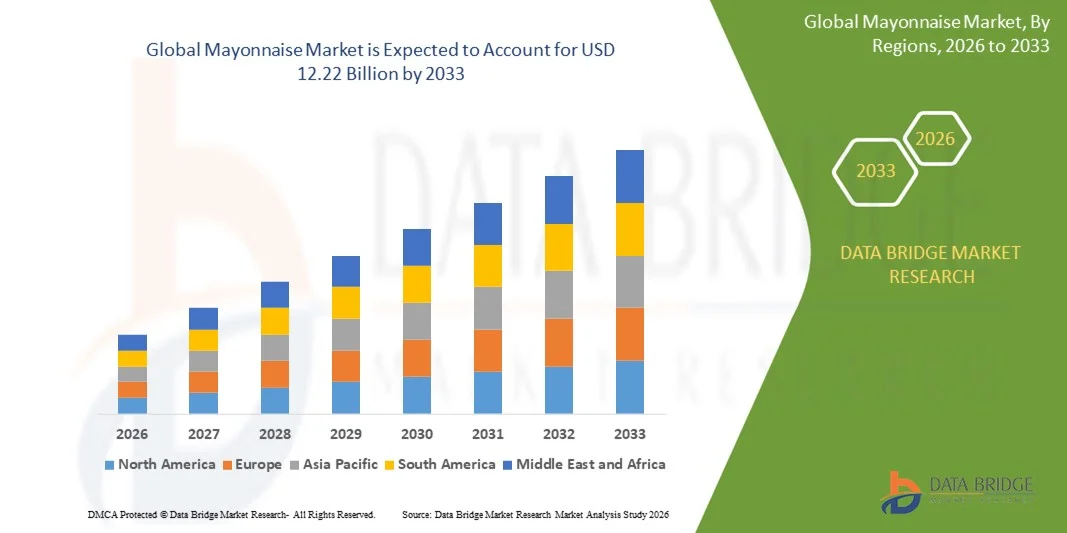
- As per Data Bridge Market Research Analysis the global mayonnaise market size was valued at USD 8.86 billion in 2025 and is expected to reach USD 12.22 billion by 2033, at a CAGR of 4.10% during the forecast period
- The market growth is largely fuelled by the increasing demand for convenience foods, rising popularity of sandwiches, burgers, and ready-to-eat meals, and the growing preference for flavored and low-fat mayonnaise variants
- Rising consumer awareness regarding taste, texture, and product quality, along with the expansion of the foodservice and quick-service restaurant sector, is further driving market adoption
Market Size & Forecast
- Global Market Value (2025): USD 8.86 billion
- Expected Market Value (2033): USD 12.22 billion
- Forecast CAGR (2026–2033): 4.10%
What are the Major Takeaways of Mayonnaise Market?
- The mayonnaise market is witnessing steady growth due to shifting consumer lifestyles toward quick and easy meal solutions, urbanization, and growing disposable incomes
- Product innovations, including flavored, reduced-fat, and fortified mayonnaise, are attracting health-conscious and gourmet consumers, boosting demand
- North America dominated the mayonnaise market with the largest revenue share of 32.5% in 2025, driven by rising consumer preference for convenience foods, ready-to-use condiments, and flavored variants
- Asia-Pacific region is expected to witness the highest growth rate in the global mayonnaise market, driven by expanding quick-service restaurant chains, rising awareness of flavored and health-oriented mayonnaise variants, and increasing adoption of convenience food products
- The flavoured segment held the largest market revenue share in 2025, driven by growing consumer preference for diverse tastes and enhanced meal experiences. Flavoured mayonnaise is increasingly used in sandwiches, salads, and ready-to-eat meals, making it a popular choice among households and foodservice operators
Report Scope and Mayonnaise Market Segmentation
|
Attributes |
Mayonnaise Key Market Insights |
|
Segments Covered |
|
|
Countries Covered |
North America
Europe
Asia-Pacific
Middle East and Africa
South America
|
|
Key Market Players |
|
|
Market Opportunities |
|
|
Value Added Data Infosets |
In addition to the insights on market scenarios such as market value, growth rate, segmentation, geographical coverage, and major players, the market reports curated by the Data Bridge Market Research also include in-depth expert analysis, pricing analysis, brand share analysis, consumer survey, demography analysis, supply chain analysis, value chain analysis, raw material/consumables overview, vendor selection criteria, PESTLE Analysis, Porter Analysis, and regulatory framework. |
What is the Key Trend in the Mayonnaise Market?
Rise of Convenience and Flavored Variants in Mayonnaise
- The growing demand for convenience foods is transforming the mayonnaise market by encouraging the adoption of ready-to-use, flavored, and low-fat variants. These products offer time-saving solutions for consumers while enhancing taste and versatility in meals, snacks, and ready-to-eat preparations. In addition, manufacturers are introducing single-serve and portion-controlled packaging, making it easier for on-the-go consumption and boosting household adoption. The shift toward convenience is further reinforced by rising dual-income households and busy lifestyles, creating sustained demand across global markets
- The rising popularity of sandwiches, burgers, salads, and fast-food consumption is accelerating the adoption of mayonnaise across households, quick-service restaurants, and catering services. The trend is further supported by increasing urbanization and changing lifestyles that favor easy-to-use condiments. Mayonnaise is increasingly being used as a base for new recipes and gourmet offerings, expanding its presence in both retail and foodservice sectors. Consumer experimentation with international flavors and specialty sauces is also driving diversified usage patterns
- Innovations in product formulations, such as organic, vegan, and fortified mayonnaise, are making these products attractive to health-conscious consumers, leading to wider acceptance and frequent use in daily diets. Manufacturers are investing in clean-label ingredients, allergen-free variants, and functional additives such as omega-3 or probiotics to appeal to a broader demographic. These advancements not only improve the nutritional profile but also increase consumer trust, loyalty, and repeat purchase behavior
- For instance, in 2023, several foodservice chains and packaged food brands reported increased customer satisfaction and repeat purchases after introducing flavored and reduced-fat mayonnaise variants, enhancing both taste and health value. Promotions through e-commerce platforms and retail campaigns further amplified visibility, encouraging first-time buyers to try innovative products. This adoption pattern has also driven manufacturers to continuously expand their flavor portfolios and adapt to regional taste preferences
- While convenience and flavor-driven innovations are strengthening market growth, long-term impact depends on continued product development, quality maintenance, and meeting evolving consumer preferences across multiple regions. Sustainability trends, such as eco-friendly packaging and plant-based ingredients, are also shaping future product strategies. Companies that successfully balance taste, health, and convenience are likely to capture larger market share and ensure enduring growth
Mayonnaise Market Dynamics
Driver
Rising Consumer Preference for Convenient and Health-Oriented Food Products
- The increasing demand for convenient, ready-to-use food products is pushing manufacturers to focus on mayonnaise as a versatile condiment suitable for home and commercial use. Consumers seek products that save time while enhancing flavor, driving market adoption. The expansion of frozen and ready-to-eat meals is further integrating mayonnaise into meal solutions, reinforcing its indispensability in modern kitchens and foodservice operations. Continuous marketing and recipe innovation are also stimulating consumer engagement
- Growing health awareness among consumers has led to the introduction of low-fat, organic, and fortified mayonnaise options. This shift is accelerating demand for healthier alternatives without compromising taste or texture. Nutritional labeling and transparency about ingredients are encouraging informed purchase decisions. In addition, manufacturers are exploring plant-based oils, egg-free formulations, and allergen-friendly variants to attract wider demographics, including vegans and lactose-intolerant consumers
- Expansion of the quick-service restaurant sector and rising popularity of fast food are further boosting mayonnaise consumption. Condiments play a critical role in flavor enhancement, contributing to consistent product demand. Partnerships between condiment manufacturers and restaurant chains have facilitated exclusive sauces and signature offerings, creating brand differentiation and driving volume sales. The rising trend of gourmet sandwiches and fusion cuisine is also fueling premium mayonnaise adoption
- For instance, in 2022, several major food brands launched new mayonnaise variants emphasizing reduced fat and natural ingredients, resulting in noticeable market growth and higher consumer acceptance. Social media campaigns and influencer marketing further increased product awareness and engagement. Regional flavor customization and localized launches have helped companies penetrate niche markets and enhance brand loyalty
- While convenience and health awareness are driving market growth, ensuring product quality, maintaining nutritional standards, and continuously innovating remain essential to sustain adoption. Companies must balance cost, flavor, and health attributes to stay competitive. Strategic partnerships with retailers, foodservice operators, and e-commerce platforms are critical to expanding reach and addressing evolving consumer demands
Restraint/Challenge
Price Sensitivity and Competition from Alternative Condiments
- The relatively higher price of premium, organic, or fortified mayonnaise compared to conventional alternatives limits adoption among price-sensitive consumers. Cost remains a significant barrier, especially in emerging markets. In addition, fluctuations in raw material costs, such as eggs and oils, can amplify price volatility, further affecting consumer purchasing decisions. Brand perception and value-for-money considerations play a pivotal role in driving repeat purchases
- Intense competition from alternative spreads, sauces, and dressings, such as ketchup, mustard, and salad dressings, reduces market penetration for mayonnaise. Consumers often switch between condiments based on taste preference and affordability. The proliferation of regional sauces, dips, and ethnic flavors also adds competitive pressure, challenging mayonnaise brands to differentiate through innovation, branding, and unique value propositions
- Market growth is also affected by supply chain fluctuations in raw materials such as eggs, oils, and stabilizers, which can impact production costs and pricing strategies. Seasonal variability, import-export restrictions, and geopolitical tensions may disrupt ingredient availability, forcing manufacturers to adopt cost-intensive sourcing strategies. Maintaining consistent quality while managing production costs remains a persistent challenge
- For instance, industry reports in 2023 indicated that rising egg and oil prices constrained the expansion of premium mayonnaise in certain regions, slowing sales growth. Smaller manufacturers were particularly affected, while larger brands leveraged supply chain efficiencies and strategic partnerships to mitigate impact. Retail pricing adjustments and promotional campaigns were used to retain consumer demand
- While product innovation continues, addressing price sensitivity, enhancing affordability, and differentiating from competing condiments remain critical to unlocking the full potential of the mayonnaise market. Companies that combine health benefits, flavor variety, and competitive pricing are more likely to capture and sustain consumer loyalty, driving long-term growth
How is the Mayonnaise Market Segmented?
The mayonnaise market is segmented on the basis of product type, end use, and distribution channels.
- By Product Type
On the basis of product type, the mayonnaise market is segmented into flavoured, unflavoured, high-calorie, and low-calorie variants. The flavoured segment held the largest market revenue share in 2025, driven by growing consumer preference for diverse tastes and enhanced meal experiences. Flavoured mayonnaise is increasingly used in sandwiches, salads, and ready-to-eat meals, making it a popular choice among households and foodservice operators.
The low-calorie segment is expected to witness the fastest growth rate from 2026 to 2033, driven by rising health consciousness and demand for reduced-fat or diet-friendly options. Low-calorie mayonnaise variants are appealing to fitness enthusiasts and health-conscious consumers seeking better nutrition without compromising taste. The segment’s growth is further supported by innovations in plant-based oils, egg-free formulations, and fortified ingredients.
- By End Use
On the basis of end use, the mayonnaise market is segmented into institutional, retail, manufacturers, consumers, and traders. The retail segment held the largest market revenue share in 2025, driven by wide availability in supermarkets, hypermarkets, and convenience stores, catering to household consumption. Retail consumers are increasingly adopting ready-to-use condiments for ease and convenience, making this segment a primary revenue contributor.
The institutional segment is expected to witness the fastest growth rate from 2026 to 2033, fueled by the rising demand from quick-service restaurants, hotels, and catering services. Institutional buyers prefer bulk purchases of mayonnaise for sandwiches, salads, and fast-food preparations. Growth in the hospitality and foodservice sectors is supporting consistent demand in this segment.
- By Distribution Channels
On the basis of distribution channels, the mayonnaise market is segmented into supermarkets, modern trade, convenience stores, e-retailers, and others. The supermarkets segment held the largest market revenue share in 2025, owing to extensive product variety, promotional campaigns, and accessibility for household consumers. Supermarkets remain a preferred shopping destination due to convenience and competitive pricing.
The e-retailers segment is expected to witness the fastest growth rate from 2026 to 2033, driven by increasing adoption of online grocery shopping, home delivery convenience, and rising digital penetration. E-retail platforms allow consumers to explore a wide range of mayonnaise variants, including premium, flavoured, and health-oriented options, fueling growth in this segment.
Which Region Holds the Largest Share of the Mayonnaise Market?
- North America dominated the mayonnaise market with the largest revenue share of 32.5% in 2025, driven by rising consumer preference for convenience foods, ready-to-use condiments, and flavored variants
- Consumers in the region highly value product versatility, enhanced taste, and health-oriented options such as low-fat and fortified mayonnaise
- This widespread adoption is further supported by high disposable incomes, busy lifestyles, and a strong presence of retail and foodservice channels, establishing mayonnaise as a staple condiment across households and commercial establishments
U.S. Mayonnaise Market Insight
The U.S. mayonnaise market captured the largest revenue share in 2025 within North America, fueled by growing demand for ready-to-use and flavored variants among households and foodservice operators. Consumers are increasingly seeking convenient condiments that enhance meal preparation and taste while providing healthier alternatives such as low-fat, organic, and fortified options. The expanding quick-service restaurant sector, combined with rising consumption of sandwiches, salads, and fast foods, further drives market growth. Moreover, innovation in product formulations, packaging, and retail availability is significantly contributing to the U.S. market expansion.
Europe Mayonnaise Market Insight
The Europe mayonnaise market is expected to witness the fastest growth rate from 2026 to 2033, primarily driven by changing consumer lifestyles, rising health awareness, and increasing preference for flavored and premium variants. Urbanization and the growing popularity of convenience foods are fostering higher adoption across households and institutional users. European consumers are also attracted to sustainable and organic mayonnaise options. The region is experiencing significant growth across retail, hospitality, and catering sectors, with manufacturers focusing on product differentiation and innovation.
U.K. Mayonnaise Market Insight
The U.K. mayonnaise market is expected to witness the fastest growth rate from 2026 to 2033, driven by increasing demand for convenience, ready-to-use products, and innovative flavors. Consumers are seeking products that combine taste, health benefits, and ease of use for daily meals and quick-service food preparations. The growing foodservice sector and expansion of retail channels, including supermarkets and e-retailers, are expected to continue supporting market growth.
Germany Mayonnaise Market Insight
The Germany mayonnaise market is expected to witness the fastest growth rate from 2026 to 2033, fueled by rising health consciousness, demand for premium and organic variants, and the popularity of convenience foods. Germany’s well-developed retail infrastructure, combined with innovation in product formulations and sustainable packaging, promotes higher adoption. Flavored and low-fat mayonnaise options are increasingly preferred in households, restaurants, and catering services, aligning with consumer expectations for taste, nutrition, and convenience.
Asia-Pacific Mayonnaise Market Insight
The Asia-Pacific mayonnaise market is expected to witness the fastest growth rate from 2026 to 2033, driven by urbanization, rising disposable incomes, and changing dietary habits in countries such as China, India, and Japan. Increasing consumption of sandwiches, salads, and fast foods is boosting demand for mayonnaise, while innovations in low-fat, organic, and flavored variants are attracting health-conscious consumers. The expansion of quick-service restaurants, supermarkets, and e-retail platforms is further supporting market growth.
Japan Mayonnaise Market Insight
The Japan mayonnaise market is expected to witness the fastest growth rate from 2026 to 2033 due to the country’s high demand for convenience foods, increasing preference for flavored variants, and rising health awareness. Consumers are seeking low-calorie and fortified mayonnaise options for everyday meals, ready-to-eat products, and foodservice use. Innovations in packaging, portion-controlled sachets, and premium flavors are further contributing to market expansion.
China Mayonnaise Market Insight
The China mayonnaise market accounted for the largest market revenue share in Asia-Pacific in 2025, attributed to the country’s growing middle class, urbanization, and rising adoption of convenience and flavored foods. Mayonnaise is increasingly used in households, restaurants, and fast-food outlets. The availability of diverse product variants, coupled with expansion of retail chains and e-commerce platforms, is fueling market growth. In addition, growing health awareness and innovation in low-fat, organic, and fortified mayonnaise are key factors driving the market in China.
Which are the Top Companies in Mayonnaise Market?
The Mayonnaise industry is primarily led by well-established companies, including:
- Dr. Oetker (Germany)
- Walden Farms (U.S.)
- Panos Brands (Greece)
- REILY FOODS COMPANY (U.S.)
- Unilever (U.K./Netherlands)
- KRAFT Foods (U.S.)
- McCormick & Company, Inc. (U.S.)
- Trader Joe’s (U.S.)
- Marina Foods, Inc. (U.S.)
- Ajinomoto (Japan)
- CERES ORGANICS (Australia)
What are Latest Developments in Mayonnaise Market?
- In August 2025, Kraft (U.S.) formed a strategic partnership with a leading plant-based ingredient supplier to develop a new line of mayonnaise alternatives. This initiative targets the growing demand for plant-based diets, enabling Kraft to attract health-conscious consumers seeking alternatives to traditional mayonnaise. The collaboration is expected to expand Kraft’s product portfolio, strengthen its presence in the condiment market, and capitalize on emerging trends in healthier, sustainable food options
- In September 2025, Hellmann's (U.S.) launched a marketing campaign for its organic mayonnaise made from sustainably sourced ingredients. The initiative emphasizes eco-friendly production and organic certification, aiming to appeal to environmentally conscious consumers. By highlighting sustainability, Hellmann’s seeks to differentiate itself in a competitive market, foster brand loyalty, and capture a segment of ethically minded buyers
- In July 2025, Kewpie (Japan) expanded its distribution through a strategic alliance with a major online grocery platform. This move enhances Kewpie’s e-commerce presence, allowing it to reach a wider audience and boost accessibility. The initiative reinforces Kewpie’s position as a premium mayonnaise brand and is expected to increase market share by tapping into the growing online food retail segment

- Interactive Data Analysis Dashboard
- Company Analysis Dashboard for high growth potential opportunities
- Research Analyst Access for customization & queries
- Competitor Analysis with Interactive dashboard
- Latest News, Updates & Trend analysis
- Harness the Power of Benchmark Analysis for Comprehensive Competitor Tracking
Global Mayonnaise Market, Supply Chain Analysis and Ecosystem Framework
To support market growth and help clients navigate the impact of geopolitical shifts, DBMR has integrated in-depth supply chain analysis into its Global Mayonnaise Market research reports. This addition empowers clients to respond effectively to global changes affecting their industries. The supply chain analysis section includes detailed insights such as Global Mayonnaise Market consumption and production by country, price trend analysis, the impact of tariffs and geopolitical developments, and import and export trends by country and HSN code. It also highlights major suppliers with data on production capacity and company profiles, as well as key importers and exporters. In addition to research, DBMR offers specialized supply chain consulting services backed by over a decade of experience, providing solutions like supplier discovery, supplier risk assessment, price trend analysis, impact evaluation of inflation and trade route changes, and comprehensive market trend analysis.
Data collection and base year analysis are done using data collection modules with large sample sizes. The stage includes obtaining market information or related data through various sources and strategies. It includes examining and planning all the data acquired from the past in advance. It likewise envelops the examination of information inconsistencies seen across different information sources. The market data is analysed and estimated using market statistical and coherent models. Also, market share analysis and key trend analysis are the major success factors in the market report. To know more, please request an analyst call or drop down your inquiry.
The key research methodology used by DBMR research team is data triangulation which involves data mining, analysis of the impact of data variables on the market and primary (industry expert) validation. Data models include Vendor Positioning Grid, Market Time Line Analysis, Market Overview and Guide, Company Positioning Grid, Patent Analysis, Pricing Analysis, Company Market Share Analysis, Standards of Measurement, Global versus Regional and Vendor Share Analysis. To know more about the research methodology, drop in an inquiry to speak to our industry experts.
Data Bridge Market Research is a leader in advanced formative research. We take pride in servicing our existing and new customers with data and analysis that match and suits their goal. The report can be customized to include price trend analysis of target brands understanding the market for additional countries (ask for the list of countries), clinical trial results data, literature review, refurbished market and product base analysis. Market analysis of target competitors can be analyzed from technology-based analysis to market portfolio strategies. We can add as many competitors that you require data about in the format and data style you are looking for. Our team of analysts can also provide you data in crude raw excel files pivot tables (Fact book) or can assist you in creating presentations from the data sets available in the report.













