


Meal Kit Delivery Service Market Size
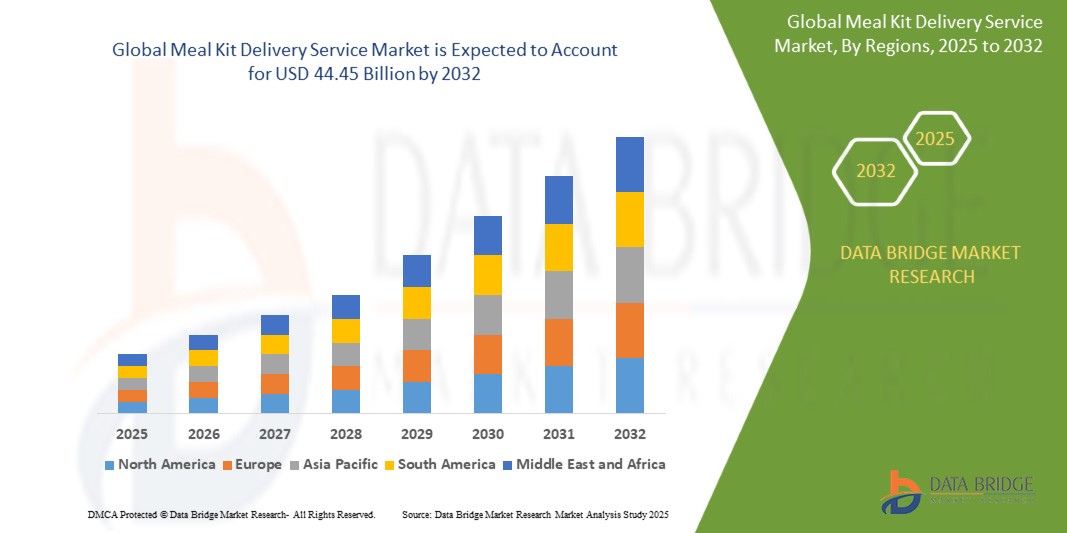
- The global meal kit delivery service market size was valued at USD 16.72 billion in 2024 and is expected to reach USD 44.45 billion by 2032, at a CAGR of 13.00% during the forecast period
- The market growth is largely fueled by the rising demand for convenient, time-saving meal solutions and the increasing adoption of digital food delivery platforms, particularly among urban consumers with busy lifestyles and health-conscious preferences
- Furthermore, the expanding base of tech-savvy and millennial consumers is driving demand for customizable, subscription-based meal services that offer portion control, dietary variety, and minimal food waste. These converging factors are accelerating the uptake of meal kit delivery services, thereby significantly boosting the industry's growth
Meal Kit Delivery Service Market Analysis
- Meal kit delivery services offer pre-portioned ingredients and step-by-step recipes or fully prepared meals delivered directly to consumers' homes, combining the benefits of home-cooked meals with convenience and time efficiency
- The growing market demand is driven by shifting dietary preferences, rising awareness of nutrition and sustainability, and the increasing popularity of plant-based, organic, and allergen-free options that align with evolving consumer lifestyles
- North America dominated the meal kit delivery service market with a share of 46.51% in 2024, due to busy lifestyles, growing health consciousness, and rising demand for convenient yet nutritious home meal solutions
- Asia-Pacific is expected to be the fastest growing region in the meal kit delivery service market during the forecast period due to rapid urbanization, growing middle-class income, and the rising popularity of home cooking
- Online segment dominated the market with a market share of 63.7% in 2024, due to the proliferation of e-commerce platforms and increasing smartphone and internet penetration. Consumers prefer online channels for their convenience, wider selection of meals, customizable subscription models, and access to customer reviews and nutritional information. The ability to pause, modify, or cancel orders through digital interfaces further enhances the appeal of online meal kit purchases
Report Scope and Meal Kit Delivery Service Market Segmentation
|
Attributes |
Meal Kit Delivery Service Key Market Insights |
|
Segments Covered |
|
|
Countries Covered |
North America
Europe
Asia-Pacific
Middle East and Africa
South America
|
|
Key Market Players |
|
|
Market Opportunities |
|
|
Value Added Data Infosets |
In addition to the insights on market scenarios such as market value, growth rate, segmentation, geographical coverage, and major players, the market reports curated by the Data Bridge Market Research also include in-depth expert analysis, pricing analysis, brand share analysis, consumer survey, demography analysis, supply chain analysis, value chain analysis, raw material/consumables overview, vendor selection criteria, PESTLE Analysis, Porter Analysis, and regulatory framework. |
Meal Kit Delivery Service Market Trends
Advancements in Technology
- The meal kit delivery market is advancing rapidly with innovative technologies that improve personalization, operational efficiency, and overall customer engagement
- For instance, companies such as HelloFresh and Blue Apron leverage AI and machine learning to analyze customer preferences and order history, enabling highly personalized meal recommendations and optimized delivery route planning that reduces food waste and enhances satisfaction
- Mobile apps now feature interactive cooking tutorials, real-time delivery tracking, nutritional information, and personalized meal planning, greatly enhancing user convenience and engagement
- Packaging innovations prioritize sustainability by incorporating recyclable, biodegradable, and temperature-controlled materials, ensuring ingredient freshness while addressing environmental concerns
- Robotics and automation in meal kit assembly and fulfillment centers increase scalability and speed of operations, allowing companies to meet rising demand while maintaining consistent quality
- Emerging technologies such as blockchain are employed in pilot projects to enhance supply chain transparency and ingredient traceability, reinforcing consumer trust and ensuring food safety compliance
Meal Kit Delivery Service Market Dynamics
Driver
Increasing Awareness of Healthy Meals
- There is a significant rise in global health consciousness, with consumers increasingly prioritizing nutritious, balanced meals that support wellness and prevent lifestyle diseases, thereby accelerating demand for meal kits that provide controlled ingredient portions and nutritional transparency
- For instance, health-centric providers such as Sun Basket specialize in meal kits featuring organic produce, gluten-free, keto-friendly, plant-based, and allergen-sensitive options that cater to diverse dietary needs and attract consumers seeking convenient health-conscious meal solutions
- The COVID-19 pandemic served as a wake-up call regarding food safety and nutrition, heightening consumers’ demand for trustworthy food sources, fresh ingredients, and immune-boosting meals, which meal kit services are strategically positioned to fulfill
- Urbanization, longer work hours, and increasingly busy lifestyles drive consumers toward time-saving food options such as pre-portioned meal kits that simplify cooking without compromising diet quality or home-cooked food experiences
- Strategic partnerships with registered dietitians, nutritionists, and culinary experts allow meal kit providers to curate nutritionally balanced menus that cater to varied health goals and demographics, thereby broadening their market appeal and customer base
Restraint/Challenge
Quality and Consistency of Ingredients
- A fundamental operational challenge lies in consistently sourcing and delivering fresh, premium-quality ingredients across extensive geographic regions, directly influencing the consumer’s perception of the brand and likelihood of repeat purchases
- For instance, providers such as Home Chef and Freshly manage complex multi-tiered supply chains and cold chain logistics to maintain ingredient freshness and safety, but seasonal fluctuations and regional sourcing limitations occasionally cause variability in product quality
- Supply chain disruptions, such as adverse weather or geopolitical tensions, coupled with variability in regional availability, can result in inconsistent ingredient quality or occasional substitutions that negatively affect customer satisfaction
- Packaging solutions must ensure that freshness, flavor, and nutritional content are preserved during delivery, requiring sophisticated insulating materials and tamper-evident designs, which increase cost and operational complexity
- Consumers expect gourmet-quality flavors and premium ingredients with precise portioning, which imposes rigorous standards on continuous supplier vetting, quality audits, and stringent fulfillment center controls—adding operational overhead and supply chain management challenges
Meal Kit Delivery Service Market Scope
The market is segmented on the basis of offering, service, and platform.
• By Offering
On the basis of offering, the meal kit delivery service market is segmented into heat and eat and cook and eat. The cook and eat segment dominated the largest market revenue share in 2024, driven by rising consumer interest in culinary experiences and the desire for home-cooked meals without the hassle of planning and shopping. This segment benefits from growing health consciousness and the preference for fresh, customizable ingredients that allow users to maintain control over their meal’s nutritional content. The appeal of experimenting with new cuisines and learning new cooking skills also plays a major role in its sustained popularity among young urban consumers.
The heat and eat segment is expected to witness the fastest CAGR from 2025 to 2032, fueled by the growing demand for convenience among busy professionals, students, and elderly consumers. These ready-to-heat meals cater to consumers seeking time-saving options without compromising on taste or quality. With improvements in packaging, preservation, and recipe variety, heat and eat kits are gaining traction as a reliable solution for quick, nutritious meals.
• By Service
On the basis of service, the market is segmented into single and multiple. The multiple meal kit service segment accounted for the largest market revenue share in 2024, driven by its suitability for families and health-conscious households looking for sustained meal planning solutions. These subscriptions often offer better value and convenience, allowing users to pre-plan their weekly diets and reduce food waste. The preference for balanced nutrition, portion control, and the ease of regular delivery schedules continue to drive adoption in this category.
The single meal kit service segment is anticipated to register the fastest growth from 2025 to 2032, supported by the growing number of single-person households and working individuals who seek fresh, portioned meals without long-term commitment. The flexibility, affordability, and trial-friendly nature of single-service options are particularly appealing to first-time users and those testing new dietary regimes.
• By Platform
On the basis of platform, the market is categorized into online and offline. The online segment dominated the largest share of 63.7% in 2024, spurred by the proliferation of e-commerce platforms and increasing smartphone and internet penetration. Consumers prefer online channels for their convenience, wider selection of meals, customizable subscription models, and access to customer reviews and nutritional information. The ability to pause, modify, or cancel orders through digital interfaces further enhances the appeal of online meal kit purchases.
The offline segment is projected to grow at the fastest rate from 2025 to 2032, driven by expanding retail partnerships and the presence of meal kits in supermarkets and specialty stores. In-store availability allows customers to explore products before purchase and appeals to impulse buyers or those less comfortable with subscription models. Offline platforms are also increasingly targeting health-conscious and time-pressed consumers with on-the-go meal solutions.
Meal Kit Delivery Service Market Regional Analysis
- North America dominated the meal kit delivery service market with the largest revenue share of 46.51% in 2024, driven by busy lifestyles, growing health consciousness, and rising demand for convenient yet nutritious home meal solutions
- Consumers in the region value the flexibility, time-saving attributes, and dietary customization offered by meal kits, which align well with modern work routines and wellness trends
- The widespread adoption is further supported by strong logistics infrastructure, high internet penetration, and increased preference for subscription-based services, establishing meal kits as a mainstream food delivery option
U.S. Meal Kit Delivery Service Market Insight
The U.S. meal kit delivery service market captured the largest revenue share in 2024 within North America, driven by growing demand for convenient meal planning, better portion control, and health-focused offerings. Rising adoption of online grocery platforms, combined with a strong culture of food experimentation and home cooking, fuels market growth. The presence of major players offering flexible subscription models, wide recipe options, and eco-conscious packaging also contributes to market expansion. Moreover, increasing dual-income households and a rising millennial customer base are key drivers of sustained growth.
Europe Meal Kit Delivery Service Market Insight
The Europe meal kit delivery service market is projected to grow at a substantial CAGR during the forecast period, driven by increasing health awareness and changing food consumption habits. The demand for fresh, organic, and locally sourced ingredients delivered to doorsteps is gaining popularity across urban regions. The growing focus on sustainability, reduction of food waste, and support for local farmers are also encouraging wider adoption of meal kits across the region.
U.K. Meal Kit Delivery Service Market Insight
The U.K. meal kit delivery service market is expected to grow at a notable CAGR during the forecast period, fueled by a strong shift toward home dining, interest in healthy eating, and a growing appetite for diverse cuisines. The market is benefitting from an expanding base of health-conscious consumers and a surge in digital grocery shopping. Flexible subscription options and increasing partnerships between meal kit brands and local producers are strengthening the market outlook.
Germany Meal Kit Delivery Service Market Insight
The Germany meal kit delivery service market is anticipated to expand at a steady CAGR, supported by high environmental awareness and preference for sustainable packaging and fresh ingredients. Consumers in Germany increasingly seek transparency in sourcing and nutritional content, making meal kits an attractive option. The market is further driven by the rise of vegetarian and vegan meal options, catering to a large demographic with specific dietary preferences.
Asia-Pacific Meal Kit Delivery Service Market Insight
The Asia-Pacific meal kit delivery service market is set to grow at the fastest CAGR during the forecast period of 2025 to 2032, supported by rapid urbanization, growing middle-class income, and the rising popularity of home cooking. Countries such as China, Japan, South Korea, and India are witnessing increased demand for convenient and hygienic food solutions, especially among young professionals and nuclear families. The growth of e-commerce and the presence of tech-savvy consumers are accelerating regional adoption.
Japan Meal Kit Delivery Service Market Insight
The Japan meal kit delivery service market is expanding due to a rising aging population, a strong inclination towards health and hygiene, and the preference for hassle-free cooking. Meal kits appeal to both working individuals and elderly consumers seeking portioned meals without the need for grocery shopping. The emphasis on seasonal, high-quality ingredients and the cultural appreciation for home-prepared meals are contributing to growing demand.
China Meal Kit Delivery Service Market Insight
The China meal kit delivery service market accounted for the largest revenue share in Asia-Pacific in 2024, supported by high smartphone penetration, growing demand for personalized food delivery, and a booming middle class. The urban population’s preference for convenient, ready-to-cook meal solutions is driving rapid market expansion. Strong domestic logistics, rising consumer spending, and growing interest in health-conscious eating further strengthen China’s position in the regional market.
Meal Kit Delivery Service Market Share
The meal kit delivery service industry is primarily led by well-established companies, including:
- Gousto (U.K.)
- Home Chef (U.S.)
- PeachDish (U.S.)
- Sun Basket (U.S.)
- ButcherBox (U.S.)
- Blue Apron LLC (U.S.)
- Purple Carrot (U.S.)
- MMM Consumer Brands Inc. (Germany)
- HelloFresh (Germany)
- MOONREEF INNOVATIONS LLP (U.S.)
- Freshly Inc. (U.S.)
- Relish Labs LLC (Home Chef) (U.S.)
- Gobble (U.S.)
- Fresh n' Lean (U.S.)
- Hungryroot (U.S.)
Latest Developments in Global Meal Kit Delivery Service Market
- In April 2023, Blue Apron and Dashmart by DoorDash announced an extension of their partnership, enabling the widespread delivery of Blue Apron's Heat & Eat meals in 11 markets, including New York City, through DashMart. This strategic move demonstrates the companies' commitment to expanding their customer base and enhancing product accessibility by leveraging DashMart's platform beyond the successful initial pilot program in Philadelphia
- In January 2022, Home Chef strategically partnered with renowned chef and Skinnytaste founder Gina Homolka to introduce fresh and nutritionally balanced meals to households across the nation. Throughout the collaboration, Home Chef seamlessly integrated three rotating Skinnytaste recipes into its weekly offerings, providing customers with a diverse selection of health-conscious and delectable choices. This aligns with their goal of catering to the demand for convenient and well-balanced meal options
- In December 2022, Home Chef partnered with celebrity chef Rachael Ray to launch a new line of meal kits featuring her signature recipes, delivering pre-portioned ingredients and easy-to-follow instructions. This collaboration significantly boosted Home Chef’s brand appeal by leveraging Rachael Ray’s wide popularity and culinary credibility, attracting a broader consumer base seeking both convenience and gourmet experiences at home. The release of new meal kits each week until March 2023 provided customers with variety and freshness, reinforcing Home Chef’s competitive position in the market alongside major players such as Blue Apron and HelloFresh. This move also highlighted the trend of celebrity-endorsed meal kits as a marketing strategy to drive engagement and differentiation in a crowded space
- In August 2021, Freshly Inc. launched its first dedicated plant-based prepared meals line, ‘Purely Plant’, in response to the growing consumer demand for clean-label, plant-forward diets. The introduction of six chef-crafted meals made with whole-food ingredients and plant-based proteins marked a strategic expansion into the fast-growing vegan and vegetarian segment. By offering heat-and-eat meals that require no preparation and are ready in under three minutes, Freshly addressed the increasing need for both health-conscious and convenience-oriented dining options. This product line diversified Freshly’s portfolio and also enhanced its appeal to environmentally and health-aware consumers, thereby strengthening its footprint in the competitive ready-to-eat meal delivery market
- In November 2020, HelloFresh acquired U.S.-based ready-to-eat meal delivery company Factor75, LLC for USD 277 million, signaling a major strategic move to expand its presence in the growing health-focused segment of the meal delivery industry. The acquisition enabled HelloFresh to enter the fully prepared meal market, which complements its core cook-and-eat offering. With Factor75’s specialization in diet-specific, nutritionally balanced meals, HelloFresh gained access to a new consumer base looking for keto, paleo, and high-protein options. This development significantly reinforced HelloFresh’s market share in the U.S., expanded its operational capabilities, and aligned with shifting consumer preferences toward healthy, on-the-go meals

- Interactive Data Analysis Dashboard
- Company Analysis Dashboard for high growth potential opportunities
- Research Analyst Access for customization & queries
- Competitor Analysis with Interactive dashboard
- Latest News, Updates & Trend analysis
- Harness the Power of Benchmark Analysis for Comprehensive Competitor Tracking
Global Meal Kit Delivery Service Market, Supply Chain Analysis and Ecosystem Framework
To support market growth and help clients navigate the impact of geopolitical shifts, DBMR has integrated in-depth supply chain analysis into its Global Meal Kit Delivery Service Market research reports. This addition empowers clients to respond effectively to global changes affecting their industries. The supply chain analysis section includes detailed insights such as Global Meal Kit Delivery Service Market consumption and production by country, price trend analysis, the impact of tariffs and geopolitical developments, and import and export trends by country and HSN code. It also highlights major suppliers with data on production capacity and company profiles, as well as key importers and exporters. In addition to research, DBMR offers specialized supply chain consulting services backed by over a decade of experience, providing solutions like supplier discovery, supplier risk assessment, price trend analysis, impact evaluation of inflation and trade route changes, and comprehensive market trend analysis.
Data collection and base year analysis are done using data collection modules with large sample sizes. The stage includes obtaining market information or related data through various sources and strategies. It includes examining and planning all the data acquired from the past in advance. It likewise envelops the examination of information inconsistencies seen across different information sources. The market data is analysed and estimated using market statistical and coherent models. Also, market share analysis and key trend analysis are the major success factors in the market report. To know more, please request an analyst call or drop down your inquiry.
The key research methodology used by DBMR research team is data triangulation which involves data mining, analysis of the impact of data variables on the market and primary (industry expert) validation. Data models include Vendor Positioning Grid, Market Time Line Analysis, Market Overview and Guide, Company Positioning Grid, Patent Analysis, Pricing Analysis, Company Market Share Analysis, Standards of Measurement, Global versus Regional and Vendor Share Analysis. To know more about the research methodology, drop in an inquiry to speak to our industry experts.
Data Bridge Market Research is a leader in advanced formative research. We take pride in servicing our existing and new customers with data and analysis that match and suits their goal. The report can be customized to include price trend analysis of target brands understanding the market for additional countries (ask for the list of countries), clinical trial results data, literature review, refurbished market and product base analysis. Market analysis of target competitors can be analyzed from technology-based analysis to market portfolio strategies. We can add as many competitors that you require data about in the format and data style you are looking for. Our team of analysts can also provide you data in crude raw excel files pivot tables (Fact book) or can assist you in creating presentations from the data sets available in the report.













