


Medical Device Ozone Sterilization Market Overview
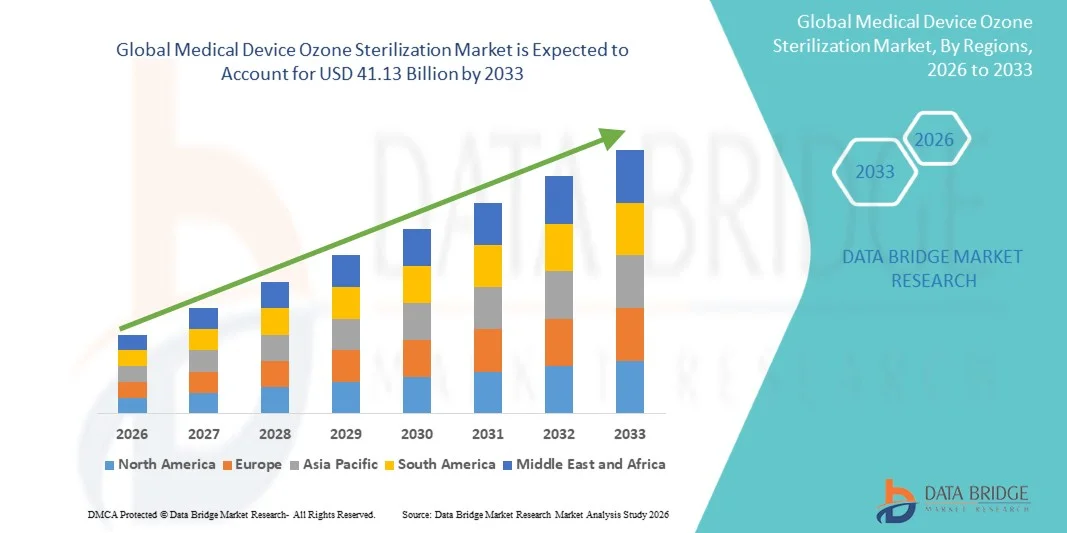
The Medical Device Ozone Sterilization Market was valued at USD 15.75 billion in 2025 and is projected to reach USD 41.13 billion by 2033, growing at a CAGR of 12.75% from 2026 to 2033. The market is experiencing consistent growth driven by rising demand for low-temperature sterilization solutions, increasing adoption of advanced infection prevention technologies, and expanding applications across hospitals, medical device manufacturing facilities, and healthcare institutions.
The growing incidence of healthcare-associated infections (HAIs) globally, combined with stricter regulatory requirements for medical device sterilization and patient safety, is compelling healthcare providers, contract sterilization companies, and medical device manufacturers to adopt advanced ozone sterilization technologies. Medical device ozone sterilization systems are increasingly being utilized as an alternative to traditional sterilization methods in many healthcare settings, offering effective microbial inactivation, compatibility with heat- and moisture-sensitive devices, reduced chemical residue generation, and environmentally sustainable sterilization processes for a wide range of reusable and complex medical instruments.
Key Market Trends & Insights
- North America dominated the Medical Device Ozone Sterilization Market with the largest revenue share of 37.46% in 2025, supported by stringent infection control regulations, widespread adoption of advanced sterilization technologies, increasing medical device manufacturing activities, and strong healthcare infrastructure. The region benefits from growing demand for low-temperature sterilization solutions for heat- and moisture-sensitive medical devices, along with rising emphasis on environmentally sustainable sterilization methods. Regulatory support for patient safety and healthcare-associated infection prevention continues to strengthen the adoption of ozone sterilization systems across hospitals, medical device companies, and healthcare facilities.
- The Water Treatment segment dominated the market with a revenue share of 27% in 2025 owing to the extensive utilization of ozone technology for water purification and sterilization applications in healthcare and pharmaceutical facilities.
- Asia-Pacific is expected to be the fastest-growing region at a CAGR of 8.4% from 2026 to 2033, fueled by expanding healthcare infrastructure, rising medical device manufacturing capacity, increasing healthcare expenditure, and growing awareness regarding infection prevention. Countries such as China, India, Japan, and South Korea are witnessing significant investments in sterilization technologies and hospital modernization programs. The region's expanding pharmaceutical and medical device sectors are also contributing to the rapid adoption of ozone sterilization solutions.
- The Water Treatment segment is the fastest-growing treatment category, projected to register a CAGR of 8.8% from 2026 to 2033, reflecting increasing adoption of ozone technology for sterilization of medical-grade water systems, dialysis water treatment, and healthcare facility water purification applications. Rising concerns regarding waterborne pathogens and growing requirements for contamination-free healthcare environments are driving demand. The ability of ozone to provide effective disinfection without chemical residues further supports segment growth.
- The Air Treatment segment dominates the treatment category with a 42.17% revenue share in 2025, led by growing deployment of ozone sterilization systems for hospital air purification, operating rooms, cleanrooms, and healthcare facilities. Increasing focus on airborne infection control, enhanced indoor air quality standards, and prevention of healthcare-associated infections is supporting widespread adoption. The effectiveness of ozone in eliminating bacteria, viruses, and fungal contaminants continues to strengthen demand across healthcare settings.
- Hospitals and Clinics accounted for 46.28% of the market in 2025, preferred due to high sterilization requirements for surgical instruments, reusable medical devices, patient care equipment, and infection prevention protocols. Increasing surgical volumes, growing hospital admissions, and stricter sterilization compliance requirements are driving adoption. Continuous investments in hospital infrastructure modernization and patient safety initiatives further reinforce the dominance of this segment.
- The Viruses Disinfectant segment is the fastest-growing application category, with a CAGR of 8.6% from 2026 to 2033, driven by heightened awareness of viral infection control, increasing emphasis on pandemic preparedness, and growing utilization of ozone-based sterilization technologies for healthcare and pharmaceutical environments. Rising demand for highly effective viral decontamination solutions, combined with advancements in ozone generation technologies and automated sterilization systems, is expected to accelerate segment growth throughout the forecast period.
Market Size & Forecast
- Global Market Value (2025): USD 15.75 Billion
- Expected Market Value (2033): USD 41.13 Billion
- Forecast CAGR (2026–2033): 12.75%
- Leading Region in 2025: North America
- Fastest Growing Region: Asia-Pacific
Report Scope and Medical Device Ozone Sterilization Market Segmentation
|
Attributes |
Medical Device Ozone Sterilization Key Market Insights |
|
Segments Covered |
|
|
Countries Covered |
North America · U.S. · Canada · Mexico Europe · Germany · France · U.K. · Netherlands · Switzerland · Belgium · Russia · Italy · Spain · Turkey · Rest of Europe Asia-Pacific · China · Japan · India · South Korea · Singapore · Malaysia · Australia · Thailand · Indonesia · Philippines · Rest of Asia-Pacific Middle East and Africa · Saudi Arabia · U.A.E. · South Africa · Egypt · Israel · Rest of Middle East and Africa South America · Brazil · Argentina · Rest of South America |
|
Key Market Players |
· STERIS plc (Ireland) · Sotera Health Company (Sterigenics) (U.S.) · E-BEAM Services, Inc. (U.S.) · Andersen Sterilizers, Inc. (U.S.) · Noxilizer, Inc. (U.S.) · Getinge AB (Sweden) · Stryker Corporation (U.S.) · 3M Health Care (now Solventum) (U.S.) · Matachana Group (Spain) · Tuttnauer Ltd. (Netherlands) · Belimed AG (Switzerland) · Advanced Sterilization Products (ASP) (U.S.) · Cantel Medical Corporation (U.S.) · MMM Group (Germany) · Shinva Medical Instrument Co., Ltd. (China) · Steelco S.p.A. (Italy) · Sakura Seiki Co., Ltd. (Japan) · Fedegari Group (Italy) · STERIACE Technologies Pvt. Ltd. (India) · Oxypharm SAS (France) · TOMI Environmental Solutions, Inc. (U.S.) · Bioquell (Ecolab) (U.K.) · Ecolab Inc. (U.S.) · Jiangsu Tailin Bioengineering Co., Ltd. (China) · MELAG Medizintechnik GmbH & Co. KG (Germany) · Celitron Medical Technologies (Hungary) · Revoxim Group (Canada) · STERILMED Medical Systems Pvt. Ltd. (India) · Panasonic Healthcare Holdings Co., Ltd. (Japan) · Mitsubishi Gas Chemical Company, Inc. (Japan) · BGS Beta-Gamma-Service GmbH & Co. KG (Germany) · STERIS AST (U.S.) · Prince Sterilization Services Pvt. Ltd. (India) · Nordion Inc. (Canada) |
|
Market Opportunities |
· Rising Demand for Low-Temperature Sterilization of Advanced Medical Devices · Expansion of Sustainable and Environmentally Friendly Sterilization Solutions · Growing Adoption Across Emerging Healthcare and Pharmaceutical Markets |
|
Value Added Data Infosets |
In addition to the insights on market scenarios such as market value, growth rate, segmentation, geographical coverage, and major players, the market reports curated by the Data Bridge Market Research also include in-depth expert analysis, geographically represented company-wise production and capacity, network layouts of distributors and partners, detailed and updated price trend analysis and deficit analysis of supply chain and demand. |
Medical Device Ozone Sterilization Market Trends
Trend: Growing Shift Toward Environmentally Sustainable Sterilization Technologies
Healthcare providers, medical device manufacturers, and pharmaceutical companies are increasingly adopting ozone-based sterilization technologies as a sustainable alternative to conventional sterilization methods. Ozone sterilization effectively eliminates bacteria, viruses, fungi, and spores while decomposing into oxygen after use, leaving no harmful chemical residues. Growing regulatory scrutiny surrounding ethylene oxide (EtO) emissions and workplace safety concerns is accelerating interest in ozone-based solutions. For instance, several healthcare facilities and medical device manufacturers are evaluating low-temperature ozone sterilization systems for heat-sensitive surgical instruments and reusable medical devices. In addition, rising emphasis on green healthcare initiatives and environmentally responsible sterilization practices is supporting the broader adoption of ozone sterilization technologies across developed and emerging healthcare markets.
Medical Device Ozone Sterilization Market Dynamics
Key Market Driver: Increasing Demand for Infection Prevention and Sterile Medical Devices
The growing focus on infection prevention and patient safety is a major driver of the Medical Device Ozone Sterilization market. Rising surgical procedure volumes, increasing hospital admissions, and growing concerns regarding healthcare-associated infections (HAIs) are creating strong demand for effective sterilization solutions. According to the World Health Organization (WHO), hundreds of millions of patients globally are affected by healthcare-associated infections each year, making sterilization a critical component of healthcare delivery. Ozone sterilization offers broad-spectrum antimicrobial activity and is highly effective against bacteria, viruses, fungi, and spores. Furthermore, the increasing production of minimally invasive surgical devices, diagnostic instruments, and reusable medical equipment is driving demand for advanced low-temperature sterilization technologies capable of maintaining device integrity while ensuring sterility. Growing investments in hospital infrastructure and infection control programs continue to support market expansion worldwide.
Key Restraint/Challenge: High Capital Investment and Limited Commercial Adoption
A significant challenge in the Medical Device Ozone Sterilization Market is the high capital investment required for specialized ozone sterilization equipment and supporting infrastructure. Ozone sterilization systems require advanced ozone generators, controlled sterilization chambers, environmental monitoring systems, and strict operational safety protocols. The overall cost of procurement, installation, validation, and maintenance can be substantial, particularly for smaller healthcare facilities and medical device manufacturers. In addition, traditional sterilization methods such as steam, gamma radiation, and ethylene oxide remain deeply established across global healthcare systems, creating barriers to widespread ozone technology adoption. Regulatory validation requirements for sterilization efficacy and medical device compatibility further increase implementation complexity. These factors continue to limit market penetration, particularly in cost-sensitive developing regions.
Key Market Opportunity: Expansion of Low-Temperature Sterilization for Advanced Medical Devices
The increasing use of sophisticated heat-sensitive medical devices presents a significant opportunity for the Medical Device Ozone Sterilization market. Modern medical technologies, including flexible endoscopes, catheters, implantable devices, robotic surgical instruments, and electronic diagnostic equipment, require sterilization methods that avoid high temperatures and harsh chemical exposure. Ozone sterilization provides an effective low-temperature alternative while maintaining device functionality and material integrity. In addition, growing demand for reusable medical devices and increasing healthcare sustainability initiatives are creating favorable conditions for ozone-based sterilization solutions. Advances in automated sterilization systems, real-time monitoring technologies, and integrated sterilization validation platforms are further enhancing adoption potential. As healthcare systems increasingly prioritize infection prevention, environmental sustainability, and operational efficiency, ozone sterilization is expected to gain broader acceptance across hospitals, pharmaceutical facilities, and medical device manufacturing operations worldwide.
Medical Device Ozone Sterilization Market Scope
The Medical Device Ozone Sterilization market is segmented on the basis of sterilization services, treatment, application, and end use.
- By Sterilization Services
On the basis of sterilization services, the Medical Device Ozone Sterilization Market is segmented into Ethylene Oxide Sterilization, Gamma Sterilization, E-Beam Sterilization, Steam Sterilization, and Others. The Ethylene Oxide Sterilization segment dominated the market with a revenue share of 36.84% in 2025 due to its widespread applicability in sterilizing heat-sensitive and moisture-sensitive medical devices. Ethylene oxide is extensively utilized for complex medical equipment, surgical instruments, catheters, and implantable devices that cannot withstand high-temperature sterilization processes. The technology offers excellent penetration capabilities, enabling effective sterilization of packaged and intricate products. Increasing production of disposable medical devices and stringent infection control regulations are supporting segment growth. Pharmaceutical and medical device manufacturers continue to rely on ethylene oxide due to its compatibility with diverse materials. Regulatory compliance requirements and growing healthcare expenditures are further reinforcing demand. The segment also benefits from established sterilization infrastructure across developed healthcare markets. Rising surgical procedures globally continue to increase the need for reliable sterilization services. Continuous technological improvements in gas monitoring and safety systems further strengthen market leadership.
The E-Beam Sterilization segment is expected to witness the fastest CAGR of 8.4% from 2026 to 2033. Growth is driven by increasing demand for rapid, environmentally friendly, and residue-free sterilization technologies. E-beam sterilization offers shorter processing times compared to conventional methods and eliminates the need for toxic chemicals. Healthcare facilities and device manufacturers are increasingly adopting the technology for single-use medical products and pharmaceutical packaging applications. Rising concerns regarding ethylene oxide emissions and stricter environmental regulations are accelerating the transition toward E-beam systems. Advancements in accelerator technologies are improving sterilization efficiency and throughput. The technology’s ability to support high-volume manufacturing environments further contributes to adoption. Growing investments in radiation sterilization infrastructure across North America and Asia-Pacific are expanding market opportunities. Increasing demand for sterile healthcare products and enhanced operational efficiency is expected to sustain strong segment growth throughout the forecast period.
- By Treatment
On the basis of treatment, the Medical Device Ozone Sterilization Market is segmented into Air, Water, and Food. The Water Treatment segment dominated the market with a revenue share of 44.27% in 2025 owing to the extensive utilization of ozone technology for water purification and sterilization applications in healthcare and pharmaceutical facilities. Ozone is highly effective in eliminating bacteria, viruses, fungi, and other harmful microorganisms from water systems. Hospitals, laboratories, and manufacturing facilities increasingly deploy ozone-based systems to ensure compliance with stringent water quality standards. The technology offers strong oxidation capabilities without leaving harmful chemical residues. Growing demand for purified water in pharmaceutical manufacturing further supports adoption. Rising healthcare infrastructure development globally is creating additional demand for advanced water treatment solutions. Increasing awareness regarding infection prevention and contamination control is reinforcing market expansion. Regulatory emphasis on safe water management practices also contributes significantly to segment dominance. Continuous technological advancements in ozone generation systems are further improving operational efficiency.
The Air Treatment segment is projected to register the fastest CAGR of 8.1% from 2026 to 2033. Growth is fueled by increasing concerns regarding airborne infections and healthcare-associated diseases. Hospitals, clinics, pharmaceutical facilities, and laboratories are investing in advanced air sterilization technologies to improve indoor air quality. Ozone-based air treatment systems effectively eliminate bacteria, viruses, mold spores, and volatile organic compounds. The COVID-19 pandemic significantly increased awareness regarding airborne pathogen control, supporting long-term adoption trends. Rising investments in healthcare infrastructure and cleanroom environments are further driving demand. Technological advancements are enhancing safety, automation, and monitoring capabilities of air treatment systems. Increasing adoption across pharmaceutical production facilities and research laboratories is expected to accelerate market growth. Growing regulatory focus on infection prevention and environmental hygiene continues to create favorable opportunities for the segment.
- By Application
On the basis of application, the Medical Device Ozone Sterilization Market is segmented into Germs Disinfectant, Viruses Disinfectant, and Microbes Disinfectant. The Germs Disinfectant segment dominated the market with a share of 39.76% in 2025 due to the widespread need for effective sterilization and disinfection across healthcare facilities, pharmaceutical manufacturing plants, and medical device production units. Ozone technology demonstrates strong efficacy against a broad spectrum of bacterial pathogens, making it a preferred solution for infection prevention. Growing concerns regarding hospital-acquired infections are increasing adoption globally. Healthcare providers are increasingly implementing advanced sterilization systems to maintain patient safety and regulatory compliance. Rising surgical volumes and healthcare facility expansion further support demand. Ozone sterilization offers rapid microbial reduction without chemical residues, enhancing its attractiveness. Regulatory agencies continue emphasizing stringent hygiene protocols, contributing to segment growth. Continuous innovation in ozone-based disinfection technologies is improving operational performance. Increasing demand for safe sterilization solutions across healthcare settings reinforces market leadership.
The Viruses Disinfectant segment is anticipated to witness the fastest CAGR of 8.6% from 2026 to 2033. Growth is driven by heightened awareness regarding viral infection control and pandemic preparedness. Ozone technology has demonstrated effectiveness against numerous viral pathogens, making it an attractive solution for healthcare institutions and public facilities. Increasing investments in infection prevention infrastructure are accelerating adoption. Healthcare providers are deploying ozone sterilization systems to enhance environmental hygiene and reduce viral transmission risks. Technological advancements are improving treatment efficiency and system reliability. Rising demand for non-chemical disinfection methods further supports growth. Expanding applications in hospitals, laboratories, pharmaceutical facilities, and transportation hubs are creating new opportunities. Regulatory focus on advanced disinfection practices and public health safety initiatives is expected to sustain strong market expansion during the forecast period.
- By End Use
On the basis of end use, the Medical Device Ozone Sterilization Market is segmented into Pharmaceutical Companies, Hospitals and Clinics, Food and Beverage Industry, and Others. The Hospitals and Clinics segment dominated the market with a revenue share of 42.18% in 2025 owing to the extensive requirement for sterilized medical devices, surgical instruments, and healthcare environments. Hospitals increasingly rely on ozone sterilization technologies to reduce healthcare-associated infections and maintain stringent hygiene standards. Rising patient admissions, surgical procedures, and healthcare infrastructure development are driving demand. Ozone sterilization provides efficient microbial elimination while minimizing chemical residues. Growing regulatory requirements for infection control and patient safety further support segment growth. Healthcare facilities are investing in advanced sterilization systems to improve operational efficiency and compliance. Increasing awareness regarding contamination prevention continues to reinforce adoption. Technological advancements in ozone generation and monitoring systems are enhancing effectiveness. The expanding global healthcare sector remains a major contributor to segment leadership.
The Pharmaceutical Companies segment is projected to register the fastest CAGR of 8.5% from 2026 to 2033. Growth is driven by increasing pharmaceutical manufacturing activities and rising demand for contamination-free production environments. Pharmaceutical companies are adopting ozone sterilization technologies for equipment sterilization, cleanroom disinfection, and water treatment applications. The technology supports stringent regulatory requirements while reducing dependence on chemical disinfectants. Growing investments in biologics, vaccines, and advanced therapeutics are creating significant opportunities. Expansion of pharmaceutical production capacities across emerging markets is accelerating adoption. Ozone sterilization offers effective microbial control while supporting sustainability objectives. Increasing focus on product quality, operational efficiency, and regulatory compliance further contributes to market growth. Continuous innovation in sterilization technologies is expected to strengthen the segment’s expansion throughout the forecast period.
Medical Device Ozone Sterilization Market Regional Analysis
North America dominated the Medical Device Ozone Sterilization market and accounted for the largest revenue share of 37.46% in 2025, supported by stringent infection control regulations, widespread adoption of advanced sterilization technologies, and the presence of a highly developed healthcare infrastructure. The region benefits from increasing medical device manufacturing activities, rising demand for low-temperature sterilization solutions, and growing utilization of ozone-based systems for heat- and moisture-sensitive medical devices. Strong regulatory oversight from healthcare authorities and increasing focus on reducing healthcare-associated infections are further driving market growth. In addition, growing investments in sustainable and environmentally friendly sterilization technologies continue to strengthen North America's leadership position in the global market.
U.S. Medical Device Ozone Sterilization Market Insight
The U.S. Medical Device Ozone Sterilization market is witnessing strong growth due to increasing demand for advanced sterilization solutions across hospitals, ambulatory surgical centers, and medical device manufacturing facilities. The country's large healthcare sector, significant medical device production capacity, and stringent patient safety requirements are driving adoption of ozone sterilization technologies. In addition, rising concerns regarding healthcare-associated infections and growing preference for low-temperature sterilization methods for complex medical instruments are supporting market expansion. Continuous investments in healthcare modernization and infection prevention programs are further accelerating market growth.
Europe Medical Device Ozone Sterilization Market Insight
The Europe Medical Device Ozone Sterilization market remains a major contributor to global revenue, driven by strong healthcare systems, strict sterilization standards, and increasing adoption of environmentally sustainable disinfection technologies. Healthcare providers across the region are increasingly investing in advanced sterilization solutions to improve patient safety and comply with evolving regulatory requirements. Growing demand for effective sterilization of reusable medical devices and expanding medical technology industries are supporting market growth. In addition, increasing focus on reducing chemical sterilant usage and enhancing healthcare sustainability continues to drive adoption of ozone sterilization systems throughout Europe.
U.K. Medical Device Ozone Sterilization Market Insight
The U.K. Medical Device Ozone Sterilization market is experiencing steady growth, supported by rising investments in hospital infrastructure, infection control programs, and healthcare modernization initiatives. Increasing emphasis on patient safety and stringent sterilization standards are encouraging healthcare facilities to adopt advanced ozone-based sterilization technologies. The growing use of minimally invasive surgical procedures and reusable medical devices is further contributing to demand. Moreover, ongoing efforts to reduce healthcare-associated infections and improve operational efficiency are positioning the U.K. as an important market for ozone sterilization solutions.
Germany Medical Device Ozone Sterilization Market Insight
The Germany Medical Device Ozone Sterilization market is expanding steadily due to the country’s strong medical device manufacturing sector, advanced healthcare infrastructure, and commitment to healthcare innovation. Hospitals, research institutions, and medical technology companies are increasingly utilizing ozone sterilization systems to ensure high standards of infection control and device safety. Rising investments in healthcare technology, combined with growing awareness regarding environmentally sustainable sterilization methods, are supporting market growth. Furthermore, strict regulatory compliance requirements and continuous advancements in sterilization technologies are driving adoption across Germany.
Asia-Pacific Medical Device Ozone Sterilization Market Insight
The Asia-Pacific Medical Device Ozone Sterilization market is expected to witness rapid growth and is projected to register the fastest CAGR of 8.4% from 2026 to 2033, driven by expanding healthcare infrastructure, rising medical device manufacturing activities, and increasing healthcare expenditure across countries such as China, India, Japan, and South Korea. Growing awareness regarding infection prevention and patient safety is encouraging healthcare providers to adopt advanced sterilization technologies. In addition, government initiatives supporting hospital modernization and healthcare quality improvement are contributing to market expansion. The rapid growth of pharmaceutical and medical device industries is further accelerating the adoption of ozone sterilization solutions across the region.
Japan Medical Device Ozone Sterilization Market Insight
The Japan Medical Device Ozone Sterilization market is witnessing consistent growth due to increasing demand for advanced healthcare technologies, stringent sterilization standards, and rising investments in medical device safety. Healthcare facilities and medical device manufacturers are increasingly adopting ozone sterilization systems to improve infection control and operational efficiency. The country’s aging population and growing healthcare needs are further supporting market expansion. Moreover, continuous technological advancements and emphasis on sustainable healthcare practices are contributing to the growing adoption of ozone sterilization solutions in Japan.
China Medical Device Ozone Sterilization Market Insight
The China Medical Device Ozone Sterilization market is growing rapidly, driven by expanding healthcare infrastructure, increasing medical device production, and rising government focus on healthcare quality and infection prevention. Growing investments in hospital construction, healthcare modernization, and pharmaceutical manufacturing are creating strong demand for advanced sterilization technologies. In addition, increasing awareness regarding healthcare-associated infections and regulatory emphasis on patient safety are accelerating adoption of ozone sterilization systems. Rapid industrial growth and continuous expansion of the healthcare sector are positioning China as one of the fastest-growing markets for Medical Device Ozone Sterilization globally.
Medical Device Ozone Sterilization Market Share
The Medical Device Ozone Sterilization industry is primarily led by well-established companies, including:
- STERIS plc (Ireland)
- Sotera Health Company (Sterigenics) (U.S.)
- E-BEAM Services, Inc. (U.S.)
- Andersen Sterilizers, Inc. (U.S.)
- Noxilizer, Inc. (U.S.)
- Getinge AB (Sweden)
- Stryker Corporation (U.S.)
- 3M Health Care (now Solventum) (U.S.)
- Matachana Group (Spain)
- Tuttnauer Ltd. (Netherlands)
- Belimed AG (Switzerland)
- Advanced Sterilization Products (ASP) (U.S.)
- Cantel Medical Corporation (U.S.)
- MMM Group (Germany)
- Shinva Medical Instrument Co., Ltd. (China)
- Steelco S.p.A. (Italy)
- Sakura Seiki Co., Ltd. (Japan)
- Fedegari Group (Italy)
- STERIACE Technologies Pvt. Ltd. (India)
- Oxypharm SAS (France)
- TOMI Environmental Solutions, Inc. (U.S.)
- Bioquell (Ecolab) (U.K.)
- Ecolab Inc. (U.S.)
- Jiangsu Tailin Bioengineering Co., Ltd. (China)
- MELAG Medizintechnik GmbH & Co. KG (Germany)
- Celitron Medical Technologies (Hungary)
- Revoxim Group (Canada)
- STERILMED Medical Systems Pvt. Ltd. (India)
- Panasonic Healthcare Holdings Co., Ltd. (Japan)
- Mitsubishi Gas Chemical Company, Inc. (Japan)
- BGS Beta-Gamma-Service GmbH & Co. KG (Germany)
- STERIS AST (U.S.)
- Prince Sterilization Services Pvt. Ltd. (India)
- Nordion Inc. (Canada)
Latest Developments in Medical Device Ozone Sterilization Market
- In January 2024, the U.S. Food and Drug Administration (FDA) updated its guidance on medical device sterilization and recognized Vaporized Hydrogen Peroxide (VHP) as an established Category A sterilization method. The update was part of the FDA’s broader initiative to diversify sterilization technologies and reduce dependence on ethylene oxide (EtO), creating favorable conditions for alternative low-temperature sterilization technologies, including ozone-based systems.
- In June 2024, the FDA conducted a Medical Device Sterilization Town Hall focused on emerging sterilization technologies and sterilization process modernization. The event highlighted the growing importance of alternative sterilization methods beyond traditional EtO, supporting innovation in low-temperature sterilization technologies used for heat- and moisture-sensitive medical devices.
- In October 2022, researchers from Djillali Liabes University presented a new ozone-based sterilization device utilizing dielectric barrier discharge technology for medical equipment sterilization. The system generated ozone concentrations exceeding 1,000 ppm within a sterilization chamber and demonstrated sterilization efficiency above 99.99% against Escherichia coli, highlighting the growing research interest in ozone-based sterilization technologies for healthcare applications
- In December 2022, researchers published the development of an advanced medical equipment sterilization box equipped with an ozone gas leak detection feature. The innovation was designed to improve operator safety while maintaining the effectiveness of ozone sterilization, reflecting ongoing technological advancements in ozone-based medical sterilization systems
- In March 2022, Acer introduced its Ozone Antibacterial Sanitizer utilizing instant ozone generation technology. Although designed primarily for sanitization applications, the launch demonstrated increasing commercial adoption of ozone-based disinfection technologies and growing confidence in ozone as an environmentally friendly antimicrobial solution

- Interactive Data Analysis Dashboard
- Company Analysis Dashboard for high growth potential opportunities
- Research Analyst Access for customization & queries
- Competitor Analysis with Interactive dashboard
- Latest News, Updates & Trend analysis
- Harness the Power of Benchmark Analysis for Comprehensive Competitor Tracking
Data collection and base year analysis are done using data collection modules with large sample sizes. The stage includes obtaining market information or related data through various sources and strategies. It includes examining and planning all the data acquired from the past in advance. It likewise envelops the examination of information inconsistencies seen across different information sources. The market data is analysed and estimated using market statistical and coherent models. Also, market share analysis and key trend analysis are the major success factors in the market report. To know more, please request an analyst call or drop down your inquiry.
The key research methodology used by DBMR research team is data triangulation which involves data mining, analysis of the impact of data variables on the market and primary (industry expert) validation. Data models include Vendor Positioning Grid, Market Time Line Analysis, Market Overview and Guide, Company Positioning Grid, Patent Analysis, Pricing Analysis, Company Market Share Analysis, Standards of Measurement, Global versus Regional and Vendor Share Analysis. To know more about the research methodology, drop in an inquiry to speak to our industry experts.
Data Bridge Market Research is a leader in advanced formative research. We take pride in servicing our existing and new customers with data and analysis that match and suits their goal. The report can be customized to include price trend analysis of target brands understanding the market for additional countries (ask for the list of countries), clinical trial results data, literature review, refurbished market and product base analysis. Market analysis of target competitors can be analyzed from technology-based analysis to market portfolio strategies. We can add as many competitors that you require data about in the format and data style you are looking for. Our team of analysts can also provide you data in crude raw excel files pivot tables (Fact book) or can assist you in creating presentations from the data sets available in the report.













