


Medulloblastoma Drug Market Overview
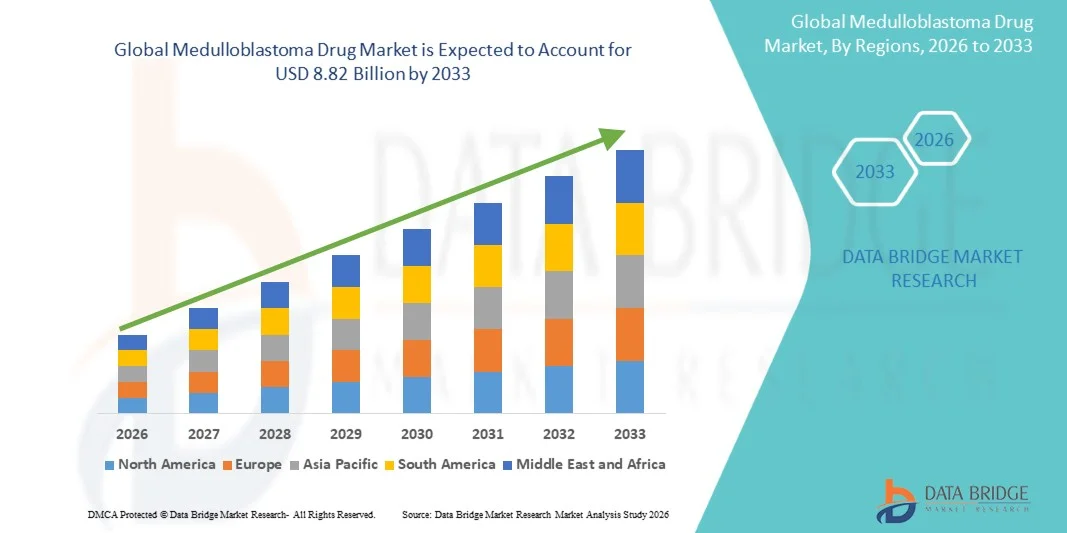
The Medulloblastoma Drug Market was valued at USD 4.83 billion in 2025 and is projected to reach USD 8.82 billion by 2033, growing at a CAGR of 7.82% from 2026 to 2033. The Medulloblastoma Drug Market is experiencing steady growth driven by the rising incidence of pediatric brain tumors, increasing advancements in targeted oncology therapies, and growing investments in neuro-oncology research. Expanding awareness regarding early diagnosis and improvements in treatment outcomes are further supporting market expansion across developed and emerging healthcare systems.
The increasing burden of medulloblastoma cases, particularly among children, combined with growing demand for more effective and less toxic treatment options, is encouraging pharmaceutical companies, research institutions, and healthcare providers to accelerate the development of novel therapeutics. Targeted therapies, immunotherapies, and precision medicine approaches are increasingly complementing conventional treatment modalities such as surgery, radiation therapy, and chemotherapy. In addition, ongoing clinical trials, advancements in molecular tumor profiling, and rising government and private-sector funding for pediatric cancer research are contributing to the growth of the Medulloblastoma Drug Market.
Key Market Trends & Insights
- North America dominated the Medulloblastoma Drug Market with the largest revenue share of 37.15% in 2025, supported by advanced oncology treatment infrastructure, strong pediatric cancer research funding, increasing adoption of targeted therapies, and the presence of leading pharmaceutical and biotechnology companies.
- The Parenteral segment dominated the market with a share of 61.47% in 2025 owing to the extensive administration of chemotherapy agents and supportive oncology drugs through intravenous routes in hospital settings.
- Asia-Pacific is expected to be the fastest-growing region at a CAGR of 7.4% from 2026 to 2033, fueled by improving healthcare infrastructure, growing pediatric cancer awareness, increasing healthcare expenditures, and expanding access to advanced oncology treatments across China, India, and Japan.
- The Parenteral route of administration segment dominated the market and accounted for a 56.84% revenue share in 2025, owing to the widespread use of injectable chemotherapy agents and supportive care medications in hospital settings.
- The Glucocorticoids segment is projected to be the fastest-growing drug category, registering a CAGR of 7.1% during the forecast period, driven by increasing use in managing cerebral edema and neurological complications associated with medulloblastoma treatment.
- The Hospitals segment dominated the end-user category with a 52.37% share in 2025, supported by the availability of multidisciplinary oncology teams, advanced diagnostic capabilities, specialized pediatric cancer units, and comprehensive treatment facilities.
- Hospital Pharmacy accounted for the largest distribution channel share of 61.24% in 2025, driven by high volumes of inpatient cancer treatment, specialized drug administration requirements, and strict handling protocols for oncology medications.
Market Size & Forecast
- Global Market Value (2025): USD 4.83 Billion
- Expected Market Value (2033): USD 8.82 Billion
- Forecast CAGR (2026–2033): 7.82%
- Leading Region in 2025: North America
- Fastest Growing Region: Asia-Pacific
Report Scope and Medulloblastoma Drug Market Segmentation
|
Attributes |
Medulloblastoma Drug Key Market Insights |
|
Segments Covered |
|
|
Countries Covered |
North America · U.S. · Canada · Mexico Europe · Germany · France · U.K. · Netherlands · Switzerland · Belgium · Russia · Italy · Spain · Turkey · Rest of Europe Asia-Pacific · China · Japan · India · South Korea · Singapore · Malaysia · Australia · Thailand · Indonesia · Philippines · Rest of Asia-Pacific Middle East and Africa · Saudi Arabia · U.A.E. · South Africa · Egypt · Israel · Rest of Middle East and Africa South America · Brazil · Argentina · Rest of South America |
|
Key Market Players |
• F. Hoffmann-La Roche Ltd. (Switzerland) |
|
Market Opportunities |
· Advancement of Targeted Therapies and Precision Medicine · Expansion of Pediatric Oncology Research and Clinical Trials · Emerging Opportunities in Immunotherapy Development |
|
Value Added Data Infosets |
In addition to the insights on market scenarios such as market value, growth rate, segmentation, geographical coverage, and major players, the market reports curated by the Data Bridge Market Research also include in-depth expert analysis, geographically represented company-wise production and capacity, network layouts of distributors and partners, detailed and updated price trend analysis and deficit analysis of supply chain and demand. |
Medulloblastoma Drug Market Trends
Trend: Growing Focus on Targeted Therapies and Precision Medicine for Pediatric Brain Tumors
The Medulloblastoma Drug Market is increasingly shifting toward targeted therapies and precision medicine approaches aimed at improving treatment outcomes while minimizing long-term side effects in pediatric patients. Advances in molecular profiling have enabled the classification of medulloblastoma into distinct molecular subgroups, including WNT, SHH, Group 3, and Group 4, allowing clinicians to adopt more personalized treatment strategies. Pharmaceutical companies and research institutions are actively developing targeted therapies against specific signaling pathways, particularly the Sonic Hedgehog (SHH) pathway. In addition, growing clinical research efforts focused on reducing treatment-related neurocognitive toxicity are driving demand for innovative therapeutics that offer improved efficacy and safety compared to conventional chemotherapy regimens.
Medulloblastoma Drug Market Dynamics
Key Market Driver: Rising Incidence of Pediatric Brain Tumors and Advancements in Molecular Diagnostics
The increasing diagnosis of pediatric central nervous system tumors, coupled with advancements in molecular diagnostic technologies, is a major driver of the Medulloblastoma Drug market. According to the World Health Organization and leading oncology research organizations, medulloblastoma remains the most common malignant brain tumor in children, accounting for approximately 20% of all pediatric brain tumors.
The growing adoption of genomic sequencing and molecular subgroup classification is enabling healthcare providers to identify patient-specific treatment pathways, improving clinical outcomes and supporting the use of targeted therapeutic agents. Furthermore, increasing investments by organizations such as the National Cancer Institute and major pediatric oncology research networks are accelerating the development of novel therapies for recurrent and high-risk medulloblastoma cases. The expansion of specialized pediatric oncology centers globally is also contributing to increased treatment accessibility and market growth.
Key Restraint/Challenge: High Treatment Costs and Limited Availability of Targeted Therapies
A significant challenge in the Medulloblastoma Drug Market is the high cost associated with advanced treatment regimens and the limited availability of targeted therapies. Current treatment approaches often involve a combination of surgery, radiotherapy, and chemotherapy, resulting in substantial healthcare expenditures and prolonged treatment durations.
Many emerging targeted therapies remain in clinical development or are available only through specialized treatment centers and clinical trials. In addition, long-term complications associated with intensive treatment—including neurocognitive impairment, endocrine dysfunction, and developmental challenges—continue to present clinical and economic burdens for patients and healthcare systems. Limited access to advanced molecular diagnostic testing in low- and middle-income countries further restricts the implementation of precision medicine approaches, creating disparities in treatment outcomes across regions. For instance, the high costs associated with genomic profiling, personalized treatment planning, and novel targeted agents can significantly impact affordability, particularly in healthcare systems with constrained oncology budgets. These factors continue to pose barriers to widespread market adoption.
Key Market Opportunity: Expansion of Targeted Drug Development and Precision Oncology Programs
The growing pipeline of targeted therapies and precision oncology initiatives presents a significant opportunity for the Medulloblastoma Drug market. Researchers are increasingly focusing on therapies targeting molecular pathways involved in tumor progression, particularly the Sonic Hedgehog (SHH) signaling pathway and other genetically defined tumor subgroups. Several biotechnology and pharmaceutical companies are evaluating next-generation targeted agents, immunotherapies, and combination treatment strategies in clinical trials for recurrent and treatment-resistant medulloblastoma. Increasing collaboration between academic institutions, pediatric oncology networks, and pharmaceutical manufacturers is accelerating drug development efforts and expanding the potential treatment landscape.
Medulloblastoma Drug Market Scope
The Medulloblastoma Drug market is segmented on the basis of drugs, route of administration, end-users, and distribution channel.
- By Drugs
On the basis of drugs, the Medulloblastoma Drug Market is segmented into Chemotherapy, Glucocorticoids, Osmotic Diuretics, and Others. The Chemotherapy segment dominated the market with a share of 52.84% in 2025 due to its long-established role as the standard treatment approach for medulloblastoma patients following surgical intervention. Chemotherapy drugs are widely used to eliminate residual tumor cells, reduce recurrence risk, and improve survival outcomes in both pediatric and adult patients. The segment benefits from extensive clinical evidence, broad physician familiarity, and inclusion in established treatment guidelines worldwide. Increasing incidence of pediatric brain tumors, growing access to oncology treatment facilities, and rising healthcare expenditure are supporting continued adoption. Furthermore, ongoing improvements in chemotherapy regimens, combination treatment protocols, and supportive care measures are enhancing treatment effectiveness and patient outcomes. The availability of generic chemotherapy drugs and strong reimbursement support in developed markets further reinforce the segment’s leading position globally.
The Glucocorticoids segment is expected to witness the fastest CAGR of 7.2% from 2026 to 2033. Growth is driven by their increasing use in managing tumor-associated cerebral edema, reducing intracranial pressure, and improving neurological symptoms in medulloblastoma patients. Rising adoption of supportive oncology care, increasing awareness regarding symptom management, and growing demand for improved quality of life during treatment are accelerating segment growth. Healthcare providers increasingly utilize glucocorticoids alongside surgery, radiation, and chemotherapy to optimize treatment outcomes. In addition, advancements in corticosteroid formulations, expanding neuro-oncology care services, and increasing treatment accessibility in emerging economies are expected to contribute significantly to the rapid expansion of this segment over the forecast period.
- By Route of Administration
On the basis of route of administration, the Medulloblastoma Drug Market is segmented into Oral, Parenteral, and Others. The Parenteral segment dominated the market with a share of 61.47% in 2025 owing to the extensive administration of chemotherapy agents and supportive oncology drugs through intravenous routes in hospital settings. Parenteral administration ensures rapid drug delivery, controlled dosing, and enhanced therapeutic efficacy, particularly for patients undergoing intensive cancer treatment protocols. The segment is supported by increasing hospitalization rates, advancements in infusion technologies, and growing adoption of combination therapies. Furthermore, healthcare providers prefer parenteral administration for critically ill patients due to improved bioavailability and treatment monitoring capabilities. The increasing number of specialized cancer treatment centers and expanding access to oncology care continue to strengthen the segment’s dominant market position.
The Oral segment is projected to register the fastest CAGR of 7.0% from 2026 to 2033. Growth is fueled by rising demand for convenient treatment options, increasing availability of oral supportive therapies, and growing preference for outpatient cancer management. Oral administration improves patient compliance, reduces hospital visits, and supports long-term treatment regimens. Advancements in oral oncology formulations, expanding homecare treatment models, and increasing adoption of patient-centric healthcare approaches are further contributing to segment growth. In addition, the development of targeted oral therapies and supportive medications is expected to enhance treatment accessibility and improve overall patient experience during the forecast period.
- By End-Users
On the basis of end-users, the Medulloblastoma Drug Market is segmented into Hospitals, Homecare, Specialty Centres, and Others. The Hospitals segment dominated the market with a share of 58.35% in 2025 due to the concentration of advanced oncology treatment infrastructure, multidisciplinary cancer care teams, and specialized neuro-oncology services. Hospitals remain the primary setting for surgical procedures, chemotherapy administration, radiation therapy, and comprehensive patient monitoring. Increasing incidence of brain tumors, rising healthcare expenditure, and growing investments in cancer treatment facilities continue to drive segment growth. Furthermore, the availability of advanced diagnostic technologies, intensive care services, and highly trained medical professionals supports the dominant position of hospitals within the market. Expanding oncology departments and improved access to specialized care are expected to further reinforce segment leadership.
The Specialty Centres segment is anticipated to witness the fastest CAGR of 7.4% from 2026 to 2033. Growth is driven by increasing demand for specialized neuro-oncology care, precision medicine approaches, and multidisciplinary treatment programs tailored to complex brain tumor cases. Specialty centres offer advanced diagnostic capabilities, access to clinical trials, and innovative treatment protocols that attract patients seeking specialized care. Rising investments in cancer research, growing adoption of targeted therapies, and increasing collaboration between academic institutions and healthcare providers are further supporting market expansion. In addition, the growing focus on personalized treatment strategies and improved patient outcomes is expected to accelerate the growth of this segment.
- By Distribution Channel
On the basis of distribution channel, the Medulloblastoma Drug Market is segmented into Hospital Pharmacy, Online Pharmacy, and Retail Pharmacy. The Hospital Pharmacy segment dominated the market with a share of 56.28% in 2025 due to its critical role in dispensing chemotherapy agents, supportive care medications, and specialized oncology drugs used in medulloblastoma treatment. Hospital pharmacies ensure timely access to high-cost therapies, maintain strict storage and handling requirements, and support physician-supervised treatment protocols. Increasing hospital admissions, rising cancer treatment volumes, and expanding oncology infrastructure continue to drive segment growth. Furthermore, strong integration with hospital-based treatment pathways and specialized pharmacy services reinforces the segment’s leading market position globally.
The Online Pharmacy segment is expected to witness the fastest CAGR of 7.6% from 2026 to 2033. Growth is driven by increasing digitalization of healthcare services, growing adoption of e-pharmacy platforms, and rising demand for convenient medication procurement. Online pharmacies provide improved accessibility, home delivery services, competitive pricing, and enhanced patient convenience. Expanding internet penetration, increasing use of telemedicine, and growing acceptance of digital healthcare solutions are accelerating adoption. In addition, supportive regulatory developments and the rising need for continuous access to supportive oncology medications are expected to contribute significantly to the rapid growth of the online pharmacy segment during the forecast period.
Medulloblastoma Drug Market Regional Analysis
North America dominated the Medulloblastoma Drug Market and accounted for the largest revenue share of 37.15% in 2025, supported by advanced oncology treatment infrastructure, substantial pediatric cancer research funding, increasing adoption of targeted therapies, and the presence of leading pharmaceutical and biotechnology companies. The region benefits from extensive clinical trial activity, strong reimbursement frameworks, and access to advanced molecular diagnostic technologies. Growing investments in precision oncology and pediatric neuro-oncology programs continue to strengthen North America's leadership position in the global market.
U.S. Medulloblastoma Drug Market Insight
The U.S. Medulloblastoma Drug market is witnessing strong growth due to rising investments in pediatric oncology research, increasing adoption of precision medicine, and expanding clinical development of targeted therapies. The country’s well-established cancer treatment ecosystem, supported by leading children's hospitals, research institutions, and pharmaceutical companies, is driving demand for advanced medulloblastoma treatment options. In addition, growing use of molecular profiling and personalized treatment approaches is improving patient outcomes and accelerating market expansion.
Europe Medulloblastoma Drug Market Insight
The Europe Medulloblastoma Drug market remains a major contributor to global revenue, driven by strong government support for cancer research, advanced healthcare systems, and increasing focus on rare pediatric cancers. The region benefits from active participation in international oncology research collaborations, expanding access to innovative therapies, and increasing adoption of precision medicine approaches. Growing investments in pediatric neuro-oncology programs and clinical trials continue to support market growth throughout Europe.
U.K. Medulloblastoma Drug Market Insight
The U.K. Medulloblastoma Drug market is experiencing steady growth, supported by increasing investments in pediatric cancer research, advanced diagnostic capabilities, and strong government initiatives focused on improving cancer care. The presence of leading academic research institutions and specialized oncology centers is contributing to the development and adoption of innovative treatment strategies. Furthermore, growing emphasis on personalized medicine and targeted therapies is enhancing treatment outcomes and driving market expansion.
Germany Medulloblastoma Drug Market Insight
The Germany Medulloblastoma Drug market is expanding steadily due to the country's advanced healthcare infrastructure, strong pharmaceutical industry presence, and increasing investment in oncology innovation. Hospitals, research institutions, and biotechnology companies are actively engaged in developing and evaluating novel therapeutic approaches for pediatric brain tumors. Continuous advancements in molecular diagnostics, targeted therapies, and precision oncology programs are further supporting market growth in Germany.
Asia-Pacific Medulloblastoma Drug Market Insight
The Asia-Pacific Medulloblastoma Drug market is expected to witness the fastest growth, registering a CAGR of 7.4% from 2026 to 2033, driven by improving healthcare infrastructure, growing pediatric cancer awareness, increasing healthcare expenditures, and expanding access to advanced oncology treatments across countries such as China, India, and Japan. Rising government initiatives aimed at strengthening cancer care services, coupled with increasing availability of specialized treatment centers, are supporting regional market expansion. In addition, growing investments in oncology research and improving diagnostic capabilities are creating significant growth opportunities across the region.
Japan Medulloblastoma Drug Market Insight
The Japan Medulloblastoma Drug market is witnessing consistent growth due to rising investments in cancer research, advanced healthcare technologies, and pediatric oncology treatment programs. The country's strong focus on medical innovation and precision medicine is supporting the adoption of molecular diagnostic tools and targeted therapeutic approaches. Moreover, increasing collaboration between pharmaceutical companies, academic institutions, and healthcare providers is contributing to market growth.
China Medulloblastoma Drug Market Insight
The China Medulloblastoma Drug market is growing rapidly, driven by expanding healthcare infrastructure, increasing cancer awareness, and rising government investments in oncology care. The country is actively strengthening pediatric cancer treatment capabilities through improvements in diagnostic services, hospital facilities, and access to innovative therapies. In addition, growing pharmaceutical research activities and increasing adoption of precision medicine approaches are positioning China as one of the fastest-growing markets for Medulloblastoma Drug treatments globally.
Medulloblastoma Drug Market Share
The Medulloblastoma Drug industry is primarily led by well-established companies, including:
- Moog Inc. (U.S.)
- Dallara (Italy)
- Exail (France)
- IPG Automotive GmbH (Germany)
- aiMotive (Hungary)
- VI‑grade GmbH (Germany)
- Cruden B.V. (Netherlands)
- Dynisma Ltd. (UK)
- Applied Intuition Inc. (U.S.)
- rFpro (rFpro Limited) (England)
- Siemens AG (Germany)
- Dassault Systèmes SE (France)
- MTS Systems Corporation (U.S.)
- CAE Inc. (Canada)
- NVIDIA Corporation (U.S.)
- AB Dynamics PLC (U.K.)
- Forum8 (Japan)
- Mitsubishi Precision Co., Ltd. (Japan)
- FAAC Incorporated (U.S.)
- DriveSafety (U.S.)
- Simtec Simulation Technology GmbH (Germany)
- MB Dynamics Inc. (U.S.)
- Sanlab Simulation (India)
- SimCraft (U.S.)
- CXC Simulations (U.S.)
- XPI Simulation (United Kingdom)
- Tecknotrove Simulator Systems Pvt. Ltd. (India)
- Zhejiang Kechi Intelligent Technology Co., Ltd. (China)
- Shenzhen Zhongzhi Simulation (China)
- Hindustan Simulators (India)
- DriveSimSolutions (U.S.)
- Teksim Technologies (India)
- iMVR Inc. (U.S.)
- SimXperience (U.S.)
Latest Developments in Medulloblastoma Drug Market
- In June 2021, researchers from the international SJMB12 clinical trial consortium reported progress in risk-adapted treatment strategies for newly diagnosed medulloblastoma patients. The study incorporated molecular subgrouping to tailor therapy intensity, representing a major step toward precision medicine in medulloblastoma treatment and reducing long-term treatment-related toxicity in pediatric patients
- In March 2023, the U.S. Food and Drug Administration (FDA) approved Tafinlar (dabrafenib) in combination with Mekinist (trametinib) for pediatric patients with BRAF V600E-mutated low-grade glioma requiring systemic therapy. While approved for low-grade glioma, the decision significantly strengthened the pediatric brain tumor treatment landscape and accelerated interest in targeted therapies for molecularly defined brain tumors, including medulloblastoma subgroups
- In June 2023, results from ongoing research into molecularly targeted therapies for pediatric brain tumors highlighted growing interest in precision oncology approaches. Investigators reported encouraging outcomes from therapies targeting specific genetic alterations in pediatric central nervous system tumors, supporting broader development efforts for molecularly stratified medulloblastoma treatments
- In April 2024, the FDA granted accelerated approval to Ojemda (tovorafenib) from Day One Biopharmaceuticals for pediatric patients with relapsed or refractory BRAF-altered low-grade glioma. The approval marked the first systemic therapy approved for pediatric gliomas with BRAF rearrangements and reinforced industry momentum toward targeted treatments for pediatric brain cancers, including ongoing medulloblastoma drug development programs
- In May 2024, the U.S. National Cancer Institute highlighted the clinical significance of tovorafenib's approval, emphasizing the increasing role of biomarker-driven therapies in pediatric neuro-oncology. The development underscored the growing adoption of molecular diagnostics and targeted treatment approaches that are also influencing medulloblastoma drug research and clinical trial design
- In August 2024, the FDA approved Voranigo (vorasidenib) for patients with IDH1- or IDH2-mutant grade 2 gliomas following surgery. Although indicated for glioma rather than medulloblastoma, the approval represented a major milestone in brain tumor therapeutics and further validated the commercial and clinical potential of precision oncology strategies across central nervous system cancers

- Interactive Data Analysis Dashboard
- Company Analysis Dashboard for high growth potential opportunities
- Research Analyst Access for customization & queries
- Competitor Analysis with Interactive dashboard
- Latest News, Updates & Trend analysis
- Harness the Power of Benchmark Analysis for Comprehensive Competitor Tracking
Data collection and base year analysis are done using data collection modules with large sample sizes. The stage includes obtaining market information or related data through various sources and strategies. It includes examining and planning all the data acquired from the past in advance. It likewise envelops the examination of information inconsistencies seen across different information sources. The market data is analysed and estimated using market statistical and coherent models. Also, market share analysis and key trend analysis are the major success factors in the market report. To know more, please request an analyst call or drop down your inquiry.
The key research methodology used by DBMR research team is data triangulation which involves data mining, analysis of the impact of data variables on the market and primary (industry expert) validation. Data models include Vendor Positioning Grid, Market Time Line Analysis, Market Overview and Guide, Company Positioning Grid, Patent Analysis, Pricing Analysis, Company Market Share Analysis, Standards of Measurement, Global versus Regional and Vendor Share Analysis. To know more about the research methodology, drop in an inquiry to speak to our industry experts.
Data Bridge Market Research is a leader in advanced formative research. We take pride in servicing our existing and new customers with data and analysis that match and suits their goal. The report can be customized to include price trend analysis of target brands understanding the market for additional countries (ask for the list of countries), clinical trial results data, literature review, refurbished market and product base analysis. Market analysis of target competitors can be analyzed from technology-based analysis to market portfolio strategies. We can add as many competitors that you require data about in the format and data style you are looking for. Our team of analysts can also provide you data in crude raw excel files pivot tables (Fact book) or can assist you in creating presentations from the data sets available in the report.












