


Melnickneedles Syndrome Market Size
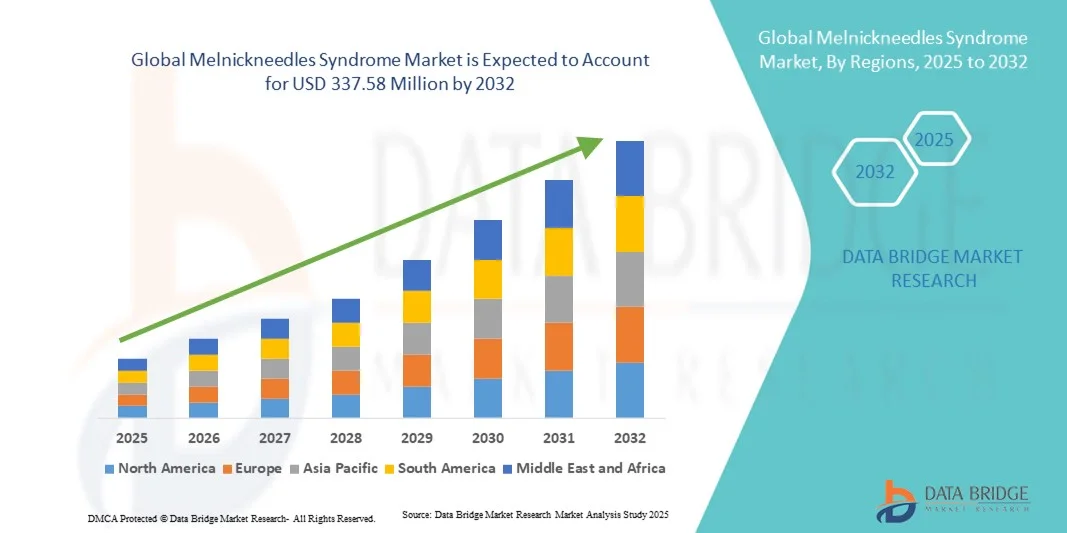
- The global Melnickneedles Syndrome market size was valued at USD 250.50 million in 2024 and is expected to reach USD 337.58 million by 2032, at a CAGR of 3.80% during the forecast period
- The market growth is primarily driven by increasing awareness and advancements in genetic testing and molecular diagnostics, enabling earlier and more accurate identification of rare skeletal dysplasias such as Melnick Needles Syndrome
- Moreover, the growing focus on precision medicine, improved access to specialized healthcare, and ongoing research into gene-based and symptomatic therapies are supporting market expansion by enhancing treatment outcomes and patient quality of life worldwide
Melnickneedles Syndrome Market Analysis
- Melnick–Needles Syndrome (MNS) is an X-linked congenital skeletal disorder characterized by abnormal bone formation, craniofacial deformities, and hearing impairments, with market growth driven by increasing awareness, improved access to genetic counseling, and advancements in molecular diagnostics
- The adoption of genetic testing and X-linked inheritance analysis has accelerated early and accurate diagnosis, enabling targeted management and enhancing the overall quality of patient care
- North America dominated the Melnick–Needles Syndrome market in 2024 with a revenue share of 38.9%, supported by advanced healthcare infrastructure, early adoption of next-generation sequencing technologies, and strong research initiatives in rare genetic disorders
- Asia-Pacific is projected to be the fastest-growing region during the forecast period, driven by rising healthcare investments, growing accessibility to genetic testing, and expanding rare disease awareness programs in countries such as China, Japan, and India
- Genetic testing under the diagnosis segment dominated the Melnick–Needles Syndrome market in 2024 with a market share of 42.8%, owing to its critical role in detecting FLNA gene mutations, confirming inheritance patterns, and guiding personalized treatment strategies
Report Scope and Melnickneedles Syndrome Market Segmentation
|
Attributes |
Melnickneedles Syndrome Key Market Insights |
|
Segments Covered |
|
|
Countries Covered |
North America
Europe
Asia-Pacific
Middle East and Africa
South America
|
|
Key Market Players |
|
|
Market Opportunities |
|
|
Value Added Data Infosets |
In addition to the insights on market scenarios such as market value, growth rate, segmentation, geographical coverage, and major players, the market reports curated by the Data Bridge Market Research also include in-depth expert analysis, patient epidemiology, pipeline analysis, pricing analysis, and regulatory framework |
Melnickneedles Syndrome Market Trends
Advancements in Genetic Testing and Precision Diagnostics
- A significant and accelerating trend in the global Melnick–Needles Syndrome market is the increasing adoption of next-generation sequencing (NGS) and molecular diagnostic technologies, enabling earlier, more accurate detection of FLNA gene mutations responsible for the disorder
- For instance, laboratories across North America and Europe are integrating whole-exome sequencing (WES) and targeted gene panels into rare disease testing protocols, significantly improving diagnostic accuracy and turnaround times
- Advances in precision diagnostics are allowing clinicians to better understand disease variability and inheritance patterns, leading to improved family counseling and personalized management plans for patients with Melnick–Needles Syndrome
- Furthermore, increasing collaborations between academic research centers and genetic testing companies are fostering innovation in diagnostic platforms and data interpretation tools for skeletal dysplasias
- The integration of bioinformatics and AI-based mutation analysis is enhancing the detection of rare variants, reducing diagnostic uncertainty, and promoting more effective treatment planning
- This trend toward technologically advanced and personalized diagnostic solutions is fundamentally transforming early disease detection, positioning genetic testing as the cornerstone of Melnick–Needles Syndrome management worldwide
Melnickneedles Syndrome Market Dynamics
Driver
Rising Awareness and Expansion of Rare Disease Research Programs
- The growing global focus on rare diseases and genetic disorders is a major driver for the Melnick–Needles Syndrome market, supported by increasing awareness, early diagnosis initiatives, and advancements in molecular medicine
- For instance, in March 2024, several international genetic research consortia launched new programs to enhance diagnostic access for ultra-rare disorders, including FLNA-related syndromes, fostering collaboration among hospitals and laboratories
- Government and non-profit initiatives aimed at funding rare disease research are boosting early detection and clinical understanding, creating favorable conditions for market growth
- Furthermore, the expansion of newborn screening programs and the growing availability of genetic counseling services are enabling early intervention and better patient management outcomes
- The rising prevalence of rare skeletal disorders and continuous innovation in gene-based research are attracting investment in diagnostic and therapeutic development for Melnick–Needles Syndrome
- The increasing collaboration among academic institutions, biotech firms, and healthcare providers is driving knowledge exchange and accelerating research translation into clinical practice
Restraint/Challenge
Limited Treatment Availability and Diagnostic Accessibility in Developing Regions
- The scarcity of targeted therapies and limited awareness in low-resource settings remain major challenges for the widespread management of Melnick–Needles Syndrome, restricting patient access to timely care
- For instance, many developing nations face shortages of specialized genetic testing facilities, leading to delays or misdiagnoses of complex skeletal dysplasias such as Melnick–Needles Syndrome
- The high cost of molecular testing and absence of reimbursement frameworks hinder diagnostic adoption, particularly in regions with underdeveloped healthcare infrastructure
- Furthermore, limited physician training and low awareness about the clinical presentation of rare skeletal disorders continue to impede early diagnosis and intervention
- Overcoming these barriers through capacity-building programs, government-funded testing initiatives, and global research collaborations will be crucial to ensuring equitable access to care and sustaining market growth
- Moreover, the lack of standardized clinical guidelines for the diagnosis and management of Melnick–Needles Syndrome further complicates patient care across different healthcare systems
- The shortage of specialized healthcare professionals trained in rare skeletal dysplasias continues to be a limiting factor in delivering accurate diagnosis and multidisciplinary treatment
Melnickneedles Syndrome Market Scope
The market is segmented on the basis of symptoms, characteristics, treatment, and diagnosis.
- By Symptoms
On the basis of symptoms, the Melnick–Needles Syndrome market is segmented into partial dislocation (subluxation) of certain joints, abnormal curvature of the spine (scoliosis), bowed limbs, underdeveloped or irregular ribs that can cause problems with breathing, and other abnormal or absent bones. The Abnormal Curvature of the Spine (Scoliosis) segment dominated the market in 2024 with the largest revenue share, owing to the high prevalence of spinal deformities among patients with Melnick–Needles Syndrome. This condition often requires continuous medical attention, imaging assessments, and surgical or orthopedic interventions, contributing significantly to healthcare expenditure. The need for long-term orthopedic management and physical therapy further supports market dominance. The prevalence of scoliosis as a defining feature of the disorder also makes it a key diagnostic criterion in clinical evaluations.
The Underdeveloped or Irregular Ribs That Can Cause Problems With Breathing segment is expected to witness the fastest growth during the forecast period. This is due to increasing awareness of respiratory complications associated with thoracic deformities and the rising use of advanced imaging techniques for early detection. Growing research into respiratory support technologies and surgical correction approaches in rare skeletal dysplasias further fuels this segment’s growth trajectory.
- By Characteristics
On the basis of characteristics, the market is categorized into bulging eyes (proptosis) with prominent brow ridges, excess hair growth on the forehead, round cheeks, a very small lower jaw and chin (micrognathia), and misaligned teeth. The A Very Small Lower Jaw and Chin (Micrognathia) segment dominated the market in 2024, primarily due to its frequent occurrence and significant impact on patient health and appearance. Micrognathia often requires orthodontic and surgical correction, driving demand for cosmetic and reconstructive procedures. In addition, associated complications such as feeding difficulties and airway obstruction necessitate ongoing medical monitoring and intervention, strengthening its revenue contribution. The integration of 3D craniofacial imaging and computer-assisted surgery has further enhanced treatment outcomes for patients with micrognathia.
The Bulging Eyes (Proptosis) With Prominent Brow Ridges segment is projected to grow at the fastest rate over the forecast period, driven by technological advancements in reconstructive surgery and cosmetic procedures. Increasing access to facial correction treatments and rising patient preference for aesthetic improvement are fueling demand in this category. Moreover, growing collaborations between maxillofacial surgeons and genetic specialists are supporting improved management of craniofacial deformities in rare genetic syndromes.
- By Treatment
On the basis of treatment, the market is segmented into hearing aids, cosmetic surgery, and orthopedic surgery. The Orthopedic Surgery segment dominated the market in 2024 with the largest share, owing to the widespread need for corrective skeletal procedures to manage limb deformities, scoliosis, and joint dislocations. Orthopedic interventions play a crucial role in improving patient mobility, posture, and quality of life, making this the most revenue-generating treatment category. The presence of advanced surgical techniques, including 3D-printed implants and minimally invasive bone correction methods, further boosts this segment’s growth.
The Cosmetic Surgery segment is expected to grow at the fastest rate from 2025 to 2032, propelled by advancements in reconstructive techniques and the increasing availability of skilled craniofacial surgeons. The rising psychological impact of facial deformities has led to higher adoption of cosmetic procedures for improving aesthetic appearance and self-esteem among patients. In addition, the integration of image-guided surgical systems and digital modeling technologies has enhanced precision in corrective surgeries for Melnick–Needles Syndrome.
- By Diagnosis
On the basis of diagnosis, the Melnick–Needles Syndrome market is divided into X-linked inheritance and genetic testing. The Genetic Testing segment dominated the market in 2024 with a major revenue share of 42.8%, driven by growing reliance on molecular diagnostics for accurate identification of FLNA gene mutations. The increased availability of next-generation sequencing (NGS) and chromosomal microarray analysis (CMA) has revolutionized early and precise detection of Melnick–Needles Syndrome. Furthermore, the inclusion of genetic testing in prenatal and family screening programs supports early intervention and improved clinical outcomes. Collaborations between diagnostic laboratories and research institutions are further strengthening this segment’s dominance.
The X-Linked Inheritance segment is projected to witness the fastest growth during the forecast period, as increased awareness of hereditary disease transmission patterns drives demand for genetic counseling and family-based testing. Growing public health initiatives promoting rare disease education and the inclusion of X-linked inheritance testing in clinical workflows are further accelerating this segment’s expansion. Integration of digital genealogy tools and genomic data interpretation software is also enhancing accuracy and accessibility in inheritance-based diagnostics.
Melnickneedles Syndrome Market Regional Analysis
- North America dominated the Melnick–Needles Syndrome market in 2024 with a revenue share of 38.9%, supported by advanced healthcare infrastructure, early adoption of next-generation sequencing technologies, and strong research initiatives in rare genetic disorders
- The region benefits from well-established healthcare systems, extensive research funding for genetic disorders, and active participation of academic institutions in rare disease registries and clinical trials
- The growing emphasis on precision medicine and integration of next-generation sequencing (NGS) into routine diagnostic workflows is accelerating early detection and management of Melnick–Needles Syndrome, enhancing patient outcomes and supporting sustained market leadership in North America
U.S. Melnickneedles Syndrome Market Insight
The U.S. Melnick–Needles Syndrome market captured the largest revenue share of 82% in 2024 within North America, driven by advanced healthcare infrastructure, strong research initiatives in rare genetic disorders, and wide access to genomic testing. Early diagnosis supported by next-generation sequencing (NGS) technologies and patient registries enhances disease identification and management. The presence of leading biotechnology firms, academic institutions, and government-backed rare disease programs accelerates therapeutic development. Increasing awareness among pediatricians and geneticists regarding X-linked skeletal dysplasias further supports market expansion, making the U.S. the epicenter for research, diagnosis, and innovation in Melnick–Needles Syndrome.
Europe Melnick–Needles Syndrome Market Insight
The Europe Melnick–Needles Syndrome market is projected to expand at a steady CAGR throughout the forecast period, fueled by rising investments in genetic research and the strengthening of rare disease frameworks by the European Medicines Agency (EMA). The growing collaboration between academic hospitals and biotechnology firms is facilitating better access to molecular diagnostics and personalized treatment approaches. Countries such as Germany, France, and the U.K. are leading in clinical studies and early detection programs. Increased patient awareness, genetic counseling services, and government reimbursement for diagnostic testing further enhance the market outlook across Europe.
U.K. Melnick–Needles Syndrome Market Insight
The U.K. Melnick–Needles Syndrome market is anticipated to grow at a noteworthy CAGR during the forecast period, supported by a robust healthcare system, expanding access to genomic medicine, and strong academic involvement in rare disease research. The National Health Service (NHS) Genomic Medicine Service enables early detection through comprehensive testing panels, driving diagnostic efficiency. Rising government funding for genetic studies and patient advocacy group initiatives also contribute to improved awareness. The U.K.’s commitment to precision medicine, along with technological advances in radiological and molecular diagnostics, is expected to sustain market growth.
Germany Melnick–Needles Syndrome Market Insight
The Germany Melnick–Needles Syndrome market is expected to expand at a considerable CAGR during the forecast period, driven by strong biomedical research infrastructure and early adoption of advanced genetic diagnostic tools. Germany’s leading clinical genetics centers and focus on translational research foster the development of novel diagnostic and therapeutic strategies. Increasing awareness about skeletal dysplasia and access to high-quality healthcare services strengthen the country’s position in the European market. Furthermore, public-private partnerships promoting rare disease databases and patient registries are expected to advance research and market growth.
Asia-Pacific Melnick–Needles Syndrome Market Insight
The Asia-Pacific Melnick–Needles Syndrome market is poised to grow at the fastest CAGR of 7.8% during 2025–2032, propelled by expanding healthcare infrastructure, increasing genetic testing awareness, and government efforts to improve rare disease diagnosis. Countries such as Japan, China, and India are witnessing growing clinical adoption of molecular diagnostics and rising collaboration with international research institutions. The development of cost-effective genomic testing solutions and improved patient screening programs are accelerating early diagnosis. Expanding access to healthcare and the emergence of regional research hubs are expected to drive substantial market growth across the region.
Japan Melnick–Needles Syndrome Market Insight
The Japan Melnick–Needles Syndrome market is gaining traction due to the nation’s high medical technology adoption rate and focus on genomic research. Strong government initiatives in rare disease management and well-organized patient registries are enhancing diagnostic precision. The integration of genetic testing into public health systems, combined with academic collaborations for mutation profiling, supports growth. Japan’s focus on advanced skeletal imaging technologies and molecular characterization for rare disorders is further driving innovation in disease management and early detection.
India Melnick–Needles Syndrome Market Insight
The India Melnick–Needles Syndrome market accounted for the largest market revenue share in Asia-Pacific in 2024, supported by rapid advancements in healthcare access, increasing genetic testing penetration, and growing awareness of rare congenital conditions. Government-led rare disease policies, combined with rising participation of private diagnostic centers, are improving early identification and treatment accessibility. India’s expanding biotechnology ecosystem, affordability of molecular testing, and growing academic research collaborations are creating new opportunities for diagnosis and care. Increasing patient advocacy and public awareness campaigns are further strengthening market growth potential.
Melnickneedles Syndrome Market Share
The Melnickneedles Syndrome industry is primarily led by well-established companies, including:
- Illumina, Inc. (U.S.)
- Thermo Fisher Scientific Inc. (U.S.)
- QIAGEN (Netherlands)
- BGI. (China)
- Natera, Inc. (U.S.)
- Invitae Corporation (U.S.)
- Fulgent Genetics (U.S.)
- Blueprint Genetics Oy (Finland)
- BioMarin (U.S.)
- GeneDx (U.S.)
- Baylor Genetics (U.S.)
- Mayo Clinic Laboratories (U.S.)
- Stryker (U.S.)
- Zimmer Biomet. (U.S.)
- Johnson & Johnson Services, Inc. (U.S.)
- Cochlear Limited (Australia)
- Sonova Holding AG (Switzerland)
- GN Store Nord A/S (Denmark)
- Starkey Hearing Technologies (U.S.)
What are the Recent Developments in Global Melnickneedles Syndrome Market?
- In May 2025, a clinically-applicable AI system (BLDS) for detection/classification of certain bone lesions completed retrospective validation and real-world assessment an instance of recent validated AI diagnostic systems that can be repurposed/extended to support rare skeletal-dysplasia workflows
- In June 2023, BioMarin published clinical-utility materials summarizing outcomes from the Discover Dysplasias® sponsored, no-charge testing program (results poster / program metrics), demonstrating real-world uptake and diagnostic yield for skeletal-dysplasia panels a concrete outcome of collaboration rather than a market report
- In December 2022, an AI-based image-analysis tool for diagnosis (hip dysplasia/related imaging tasks) was publicised representing the wave of computer-vision tools being deployed to speed detection of skeletal abnormalities and reduce specialist workload relevant technology for skeletal-dysplasia diagnostic workflows
- In October 2021, Blueprint Genetics and BioMarin launched the Discover Dysplasias® sponsored testing program to provide no-cost, focused genetic testing for individuals suspected of inherited skeletal dysplasias across Europe and the Middle East
- In August 2021, GeneDx published and made available its Prenatal Skeletal Dysplasia Panel (clinical test offering / product documentation) for evaluation of fetal ultrasound findings suggestive of skeletal dysplasia a direct diagnostic product used for early identification of many genetic skeletal disorders

- Interactive Data Analysis Dashboard
- Company Analysis Dashboard for high growth potential opportunities
- Research Analyst Access for customization & queries
- Competitor Analysis with Interactive dashboard
- Latest News, Updates & Trend analysis
- Harness the Power of Benchmark Analysis for Comprehensive Competitor Tracking
Data collection and base year analysis are done using data collection modules with large sample sizes. The stage includes obtaining market information or related data through various sources and strategies. It includes examining and planning all the data acquired from the past in advance. It likewise envelops the examination of information inconsistencies seen across different information sources. The market data is analysed and estimated using market statistical and coherent models. Also, market share analysis and key trend analysis are the major success factors in the market report. To know more, please request an analyst call or drop down your inquiry.
The key research methodology used by DBMR research team is data triangulation which involves data mining, analysis of the impact of data variables on the market and primary (industry expert) validation. Data models include Vendor Positioning Grid, Market Time Line Analysis, Market Overview and Guide, Company Positioning Grid, Patent Analysis, Pricing Analysis, Company Market Share Analysis, Standards of Measurement, Global versus Regional and Vendor Share Analysis. To know more about the research methodology, drop in an inquiry to speak to our industry experts.
Data Bridge Market Research is a leader in advanced formative research. We take pride in servicing our existing and new customers with data and analysis that match and suits their goal. The report can be customized to include price trend analysis of target brands understanding the market for additional countries (ask for the list of countries), clinical trial results data, literature review, refurbished market and product base analysis. Market analysis of target competitors can be analyzed from technology-based analysis to market portfolio strategies. We can add as many competitors that you require data about in the format and data style you are looking for. Our team of analysts can also provide you data in crude raw excel files pivot tables (Fact book) or can assist you in creating presentations from the data sets available in the report.












