What is the Men’s Personal Care Market Size and Growth Rate ?
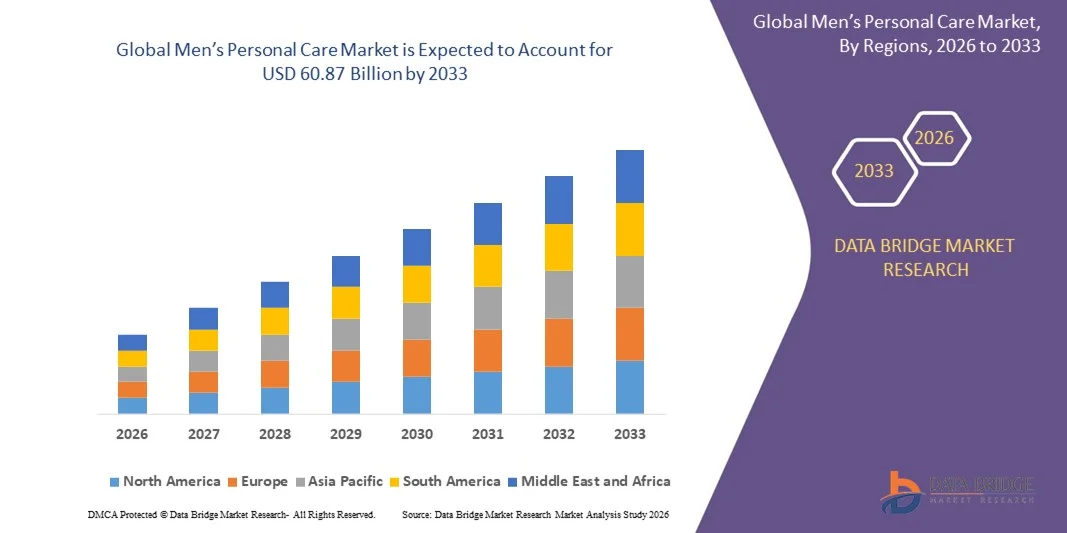
- As per Data Bridge Market Research Analysis the global men’s personal care market size was valued at USD 39.06 billion in 2025 and is expected to reach USD 60.87 billion by 2033, at a CAGR of 5.70% during the forecast period
- The market growth is largely fueled by the increasing awareness and adoption of personal grooming and skincare routines among men, driven by changing lifestyle patterns, urbanization, and rising disposable incomes
- Furthermore, growing consumer preference for premium, multifunctional, and technologically advanced grooming products is establishing men’s personal care as an essential category in daily wellness routines. These converging factors are accelerating product adoption, thereby significantly boosting the industry's growth
Market Size & Forecast
- Global Market Value (2025): USD 39.06 billion
- Expected Market Value (2033): USD 60.87 billion
- Forecast CAGR (2026–2033): 5.70%
What are the Major Takeaways of Men’s Personal Care Market ?
- Men’s personal care products, including skincare, shaving, hair care, and personal cleanliness items, are increasingly vital components of daily grooming routines due to their ability to address specific male skin and hair concerns, enhance appearance, and improve personal hygiene
- The escalating demand for men’s personal care products is primarily fueled by rising awareness of male grooming, social media influence, the emergence of celebrity-endorsed and lifestyle brands, and increasing availability of specialized and sustainable product offerings
- North America dominated men’s personal care market with a share of 34.5% in 2025, due to rising awareness of male grooming, increased disposable incomes, and growing preference for premium personal care products
- Asia-Pacific is expected to be the fastest growing region in the men’s personal care market during the forecast period due to rising disposable incomes, urbanization, and increasing awareness of male grooming in countries such as China, Japan, and India
- Skin care segment dominated the market with a market share of 46.1% in 2025, due to increasing interest in anti-aging, hydration, and sun protection products specifically formulated for men. For instance, companies such as L’Oréal Men Expert have launched specialized skin care lines targeting men’s unique skin concerns, driving adoption. Changing lifestyle patterns, urbanization, and higher disposable income levels are encouraging men to adopt comprehensive grooming routines. The segment also benefits from rising awareness about preventive skincare and the influence of celebrity endorsements. In addition, product innovation, including natural and organic formulations, is attracting a broader consumer base
Report Scope and Men’s Personal Care Market Segmentation
Attributes |
Men’s Personal Care Key Market Insights |
|
Segments Covered |
|
|
Countries Covered |
North America
Europe
Asia-Pacific
Middle East and Africa
South America
|
|
Key Market Players |
|
|
Market Opportunities |
|
|
Value Added Data Infosets |
In addition to the insights on market scenarios such as market value, growth rate, segmentation, geographical coverage, and major players, the market reports curated by the Data Bridge Market Research also include in-depth expert analysis, pricing analysis, brand share analysis, consumer survey, demography analysis, supply chain analysis, value chain analysis, raw material/consumables overview, vendor selection criteria, PESTLE Analysis, Porter Analysis, and regulatory framework. |
What is the Key Trend in the Men’s Personal Care Market ?
Rising Adoption of Premium and Multifunctional Men’s Grooming Products
- The global men’s personal care market is witnessing a significant trend towards premium and multifunctional grooming products that cater to diverse skincare, hair care, and shaving needs, driven by increasing consumer awareness, changing lifestyles, and desire for enhanced self-care routines
- For instance, L’Oréal Men Expert has launched multifunctional skincare and haircare products targeting specific male concerns, offering benefits such as anti-aging, hydration, and oil control in a single formulation, which is encouraging men to invest in comprehensive grooming solutions and creating stronger brand loyalty
- The popularity of multifunctional products reduces the complexity of daily routines, providing time-saving solutions for men with busy lifestyles, while also promoting experimentation across new grooming categories and increasing cross-category adoption
- Premiumization is shaping consumer preferences as men increasingly choose high-quality, branded products over basic alternatives, influenced by urbanization, social media exposure, aspirational marketing campaigns, and the growing importance of professional and personal appearance
- Men are also adopting grooming products that incorporate advanced ingredients, technological innovations, and sustainability features, reinforcing the market shift towards high-value, health-conscious, and eco-friendly products
- This trend is expected to continue driving the growth of the men’s personal care market as brands innovate to offer multifunctional, high-quality, and convenient solutions that meet evolving consumer expectations, creating sustained demand across skincare, haircare, shaving, and personal cleanliness categories
Men’s Personal Care Market Dynamics
Driver
Growing Awareness of Male Grooming and Personal Hygiene
- Rising awareness regarding male grooming, skincare, and overall personal hygiene is a key driver for the market, as consumers are increasingly conscious of appearance, health, and wellness in both personal and professional settings
- For instance, in March 2021, Lumin introduced a UV-defense moisturizing balm with SPF protection that is sustainable and free of harmful chemicals, targeting health-conscious men and stimulating adoption of daily skincare routines, thereby expanding awareness about sun protection and skin maintenance
- The influence of social media, celebrity endorsements, and lifestyle trends is motivating men to experiment with new grooming products, elevating demand for skincare, shaving, and haircare items while also encouraging cross-category purchases
- Urbanization, higher disposable incomes, and changing cultural perceptions about male grooming are further reinforcing market growth, as men increasingly see grooming as a lifestyle necessity and are willing to invest in quality products
- The growing recognition of the benefits of proper grooming for professional and social appearance continues to expand the men’s personal care market, with consumers showing preference for brands offering efficacy, innovation, and convenience, establishing grooming as a routine part of daily life
Restraint/Challenge
High Cost of Advanced and Branded Personal Care Products
- The relatively high prices of premium and technologically advanced men’s grooming products pose a significant challenge, potentially limiting adoption among price-sensitive consumers and slowing market penetration in certain regions
- For instance, products such as Gillette SkinGuard Sensitive razor and L’Oréal Men Expert anti-aging skincare range come at a premium, which may hinder uptake in developing markets or among budget-conscious buyers seeking affordable alternatives
- The perception of high cost compared to basic personal care options can deter first-time users from switching to branded or multifunctional grooming products, delaying market expansion in emerging segments
- Although some brands are introducing value packs, smaller packaging, and promotional discounts to improve accessibility, the overall cost barrier remains a restraint for widespread adoption across all consumer demographics
- Overcoming this challenge will require brands to balance product innovation with affordability, ensuring that advanced, multifunctional, and premium solutions are available to a broader audience while sustaining long-term market growth and consumer loyalty
How is the Men’s Personal Care Market Segmented ?
The market is segmented on the basis of product type and distribution channel.
- By Product Type
On the basis of product type, the men’s personal care market is segmented into skin care, shaving, oral care, hair care, personal cleanliness, and others. The skin care segment dominated the market with the largest market revenue share of 46.1% in 2025, driven by increasing interest in anti-aging, hydration, and sun protection products specifically formulated for men. For instance, companies such as L’Oréal Men Expert have launched specialized skin care lines targeting men’s unique skin concerns, driving adoption. Changing lifestyle patterns, urbanization, and higher disposable income levels are encouraging men to adopt comprehensive grooming routines. The segment also benefits from rising awareness about preventive skincare and the influence of celebrity endorsements. In addition, product innovation, including natural and organic formulations, is attracting a broader consumer base.
The shaving segment is anticipated to witness the fastest growth rate from 2026 to 2033, fueled by rising male grooming trends and increasing awareness of personal hygiene. Consumers often prioritize shaving products for their daily grooming routines and the perceived enhancement of professional and social appearance. The segment benefits from strong brand loyalty and the availability of technologically advanced shaving solutions such as electric razors and precision trimmers. Furthermore, shaving products often integrate additional features such as skin protection and moisturizing benefits, boosting their appeal. The rising influence of social media and grooming influencers also encourages men to invest in premium shaving products, reinforcing market dominance.
- By Distribution Channel
On the basis of distribution channel, the men’s personal care market is segmented into hypermarket and supermarket, pharmacy and drug stores, e-commerce, and others. The pharmacy and drug stores segment dominated the market with the largest revenue share in 2025, driven by consumer trust in professional recommendations and easy availability of both prescription and over-the-counter grooming products. These stores often offer personalized assistance, loyalty programs, and expert guidance, making them a preferred choice for purchasing skincare, shaving, and hair care products. The presence of branded and clinically tested products enhances consumer confidence, contributing to the segment’s strong market performance. Growing retail expansions and the availability of exclusive male grooming product lines further reinforce dominance. The segment’s integration with promotional campaigns and point-of-sale marketing strategies also boosts consumer engagement and repeat purchases.
The e-commerce segment is expected to witness the fastest growth rate from 2026 to 2033, driven by convenience, wide product selection, and attractive online discounts. For instance, platforms such as Amazon and Nykaa offer curated men’s personal care categories with subscription options and doorstep delivery, encouraging repeat purchases. Increased smartphone penetration and digital literacy are making online channels more accessible for urban and semi-urban consumers. The segment also benefits from targeted marketing through social media, influencer collaborations, and personalized recommendations. In addition, e-commerce allows emerging brands to reach a wider audience without extensive physical retail presence, accelerating growth.
Which Region Holds the Largest Share of the Men’s Personal Care Market ?
- North America dominated the men’s personal care market with the largest revenue share of 34.5% in 2025, driven by rising awareness of male grooming, increased disposable incomes, and growing preference for premium personal care products
- Consumers in the region highly value convenience, quality, and brand credibility, with an increasing inclination toward skincare, shaving, and hair care products tailored specifically for men
- This widespread adoption is further supported by the presence of well-established retail channels, strong e-commerce penetration, and aggressive marketing campaigns by leading personal care brands, establishing men’s grooming products as a preferred choice for daily use
U.S. Men’s Personal Care Market Insight
The U.S. men’s personal care market captured the largest revenue share in 2025 within North America, fueled by the growing adoption of grooming routines and the increasing influence of social media and celebrity endorsements. Consumers are prioritizing skincare and shaving products that offer convenience, advanced formulations, and multifunctional benefits. The growing preference for online and subscription-based purchases, combined with high disposable incomes, further propels market growth, while the rising demand for natural and organic products and innovative technologies significantly contributes to market expansion.
Europe Men’s Personal Care Market Insight
The Europe men’s personal care market is projected to expand at a substantial CAGR during the forecast period, driven by rising awareness of personal grooming, premiumization trends, and urbanization. The demand for products offering skincare, anti-aging, and hair care benefits is fostering market growth, and European consumers are attracted to high-quality, branded products with value-added formulations that provide visible results. Strong growth is observed across France, Germany, and Italy, supported by increasing retail penetration, e-commerce adoption, and promotional activities from leading personal care brands.
U.K. Men’s Personal Care Market Insight
The U.K. men’s personal care market is anticipated to grow at a noteworthy CAGR during the forecast period, driven by increased focus on personal grooming, professional appearance, and wellness. Concerns regarding personal hygiene and societal grooming standards are encouraging both men and younger consumers to adopt daily care routines. The U.K.’s robust e-commerce infrastructure, coupled with aggressive marketing campaigns and the availability of premium products, is expected to continue stimulating market growth across both skincare and shaving categories.
Germany Men’s Personal Care Market Insight
The Germany men’s personal care market is expected to expand at a considerable CAGR during the forecast period, fueled by high awareness of personal grooming, quality-focused purchasing behavior, and increasing urbanization. German consumers show a strong preference for functional and premium personal care products with proven efficacy, while retail expansions, professional grooming services, and the integration of sustainable and eco-conscious product offerings are further boosting market adoption and growth.
Asia-Pacific Men’s Personal Care Market Insight
The Asia-Pacific men’s personal care market is poised to grow at the fastest CAGR during the forecast period of 2026 to 2033, driven by rising disposable incomes, urbanization, and increasing awareness of male grooming in countries such as China, Japan, and India. The region’s growing youth population and influence of digital media are accelerating adoption of skincare, hair care, and shaving products, while government initiatives promoting wellness and the expansion of modern retail and e-commerce channels support market penetration. Rapid growth in countries such as China and India is driven by domestic brands offering affordable grooming solutions and international brands targeting premium consumers.
Japan Men’s Personal Care Market Insight
The Japan men’s personal care market is gaining momentum due to high consumer awareness, technologically advanced product offerings, and emphasis on personal appearance. The aging population is driving demand for anti-aging and skin-friendly grooming products, while integration of multifunctional and convenience-focused solutions is boosting adoption across urban and semi-urban regions, further expanding the market.
China Men’s Personal Care Market Insight
The China men’s personal care market accounted for the largest revenue share in Asia Pacific in 2025, attributed to increasing urbanization, a growing middle class, and rising awareness of male grooming. China represents one of the largest markets for skincare, shaving, and hair care products for men, driven by the popularity of e-commerce, social media marketing, and strong presence of domestic and international brands. Rising demand for premium, natural, and technologically enhanced products continues to propel the expansion of the men’s personal care segment.
Which are the Top Companies in Men’s Personal Care Market ?
The men’s personal care industry is primarily led by well-established companies, including:
- Procter & Gamble (U.S.)
- Unilever (U.K.)
- L’Oréal S.A. (France)
- The Estée Lauder Companies Inc. (U.S.)
- Kao Corporation (Japan)
- Johnson & Johnson Services, Inc. (U.S.)
- Beiersdorf AG (Germany)
- Revlon (U.S.)
- Coty Inc. (U.S.)
- Edgewell Personal Care (U.S.)
- Shiseido Company Limited (Japan)
- AVON Beauty Products India Pvt Ltd (India)
- Colgate-Palmolive Company (U.S.)
- Amway Corp. (U.S.)
- Mary Kay Inc. (U.S.)
- The Clorox Company (U.S.)
- Conair Corporation (U.S.)
- Godrej Industries Limited (India)
- COMBE (U.S.)
- GALLINÉE (U.K.)
What are Latest Developments in Men’s Personal Care Market ?
- In March 2024, The Shop — the men’s grooming line backed by LeBron James and The SpringHill Company — launched a new collection of skincare, hair care, and beard care products exclusively at Walmart. This development significantly expanded the men’s personal care market by offering a high-visibility, easily accessible grooming range targeting modern men who are increasingly embracing self-care. The launch also boosted mainstream acceptance of men’s grooming products and encouraged other celebrity-backed and lifestyle brands to enter the market, driving overall category growth
- In April 2022, NIVEA Men introduced a moisturizer formulated using recycled carbon dioxide, reflecting the rising consumer demand for sustainable and eco-conscious grooming solutions. This launch strengthened the men’s personal care market by positioning environmentally responsible products as desirable, encouraging brands to integrate sustainability into their product development. The product also attracted health-conscious consumers seeking safe formulations, further broadening the market base and influencing global trends toward green personal care
- In October 2021, Vedix, a customized ayurvedic beauty brand in India, announced its entry into the men’s skincare category with a grooming range of products including face wash, moisturizer, and overnight serum. This strategic move enhanced the regional men’s personal care market by offering personalized, natural solutions tailored specifically for Indian male consumers, increasing adoption of daily skincare routines. It also highlighted the growing importance of ayurvedic and plant-based formulations in the male grooming segment, creating new opportunities for niche and premium products
- In March 2021, Lumin, a manufacturer of men’s skincare products, introduced a UV-defense moisturizing balm with SPF protection that is sustainable and free of harmful chemicals. This product launch contributed to market expansion by addressing the rising demand for multifunctional, safe, and environmentally friendly skincare options for men. By combining sun protection, hydration, and sustainability, the product positioned itself as a premium solution and encouraged competitors to innovate in the same direction, strengthening overall market growth
- In March 2021, Procter & Gamble’s Gillette launched the first Gillette SkinGuard Sensitive razor as part of its luxurious GilletteLabs Heated Razor collection, specifically designed for men with sensitive skin. This innovation enhanced the shaving segment by offering highly specialized products that address unique consumer needs, increasing brand loyalty and reinforcing Gillette’s leadership in premium men’s grooming. The launch also contributed to the overall expansion of the male grooming market by demonstrating the potential of advanced technology and personalized solutions in driving adoption

- Interactive Data Analysis Dashboard
- Company Analysis Dashboard for high growth potential opportunities
- Research Analyst Access for customization & queries
- Competitor Analysis with Interactive dashboard
- Latest News, Updates & Trend analysis
- Harness the Power of Benchmark Analysis for Comprehensive Competitor Tracking
Data collection and base year analysis are done using data collection modules with large sample sizes. The stage includes obtaining market information or related data through various sources and strategies. It includes examining and planning all the data acquired from the past in advance. It likewise envelops the examination of information inconsistencies seen across different information sources. The market data is analysed and estimated using market statistical and coherent models. Also, market share analysis and key trend analysis are the major success factors in the market report. To know more, please request an analyst call or drop down your inquiry.
The key research methodology used by DBMR research team is data triangulation which involves data mining, analysis of the impact of data variables on the market and primary (industry expert) validation. Data models include Vendor Positioning Grid, Market Time Line Analysis, Market Overview and Guide, Company Positioning Grid, Patent Analysis, Pricing Analysis, Company Market Share Analysis, Standards of Measurement, Global versus Regional and Vendor Share Analysis. To know more about the research methodology, drop in an inquiry to speak to our industry experts.
Data Bridge Market Research is a leader in advanced formative research. We take pride in servicing our existing and new customers with data and analysis that match and suits their goal. The report can be customized to include price trend analysis of target brands understanding the market for additional countries (ask for the list of countries), clinical trial results data, literature review, refurbished market and product base analysis. Market analysis of target competitors can be analyzed from technology-based analysis to market portfolio strategies. We can add as many competitors that you require data about in the format and data style you are looking for. Our team of analysts can also provide you data in crude raw excel files pivot tables (Fact book) or can assist you in creating presentations from the data sets available in the report.