


Methanol-to-olefins Market Size
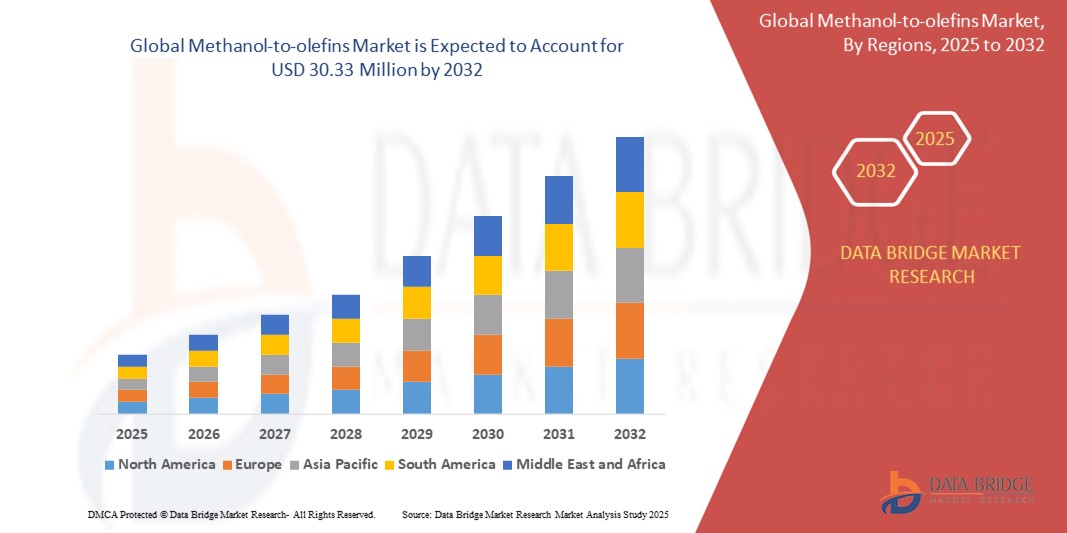
- The global methanol-to-olefins market was valued at USD 18.89 million in 2024 and is expected to reach USD 30.33 million by 2032
- During the forecast period of 2025 to 2032 the market is likely to grow at a CAGR of 6.1%, primarily driven by increasing investments in chemical manufacturing and alternative feedstock utilization
- This growth is fueled by factors such as abundant methanol supply, rising demand for olefins in packaging and automotive industries, and advancements in MTO process efficiency
Methanol-to-olefins Market Analysis
- Methanol-to-olefins (MTO) technology is a key process in the chemical industry, converting methanol—often derived from natural gas or coal—into essential olefins such as ethylene and propylene. These olefins serve as foundational building blocks for plastics, synthetic rubber, and other chemical products
- The demand for MTO is significantly driven by the growing global demand for lightweight plastics, particularly in packaging, automotive, and consumer goods. Additionally, regions with limited access to crude oil are increasingly adopting MTO as a viable alternative feedstock route
- The Asia-Pacific region dominates the MTO market, led by China, due to large-scale capacity additions, favorable government policies, and abundant coal and methanol resources
- For instance, China has invested heavily in MTO plants to reduce reliance on imported naphtha-based olefins. These facilities are now integral to its petrochemical self-sufficiency strategy and are supported by long-term national energy plans
- Globally, the MTO process is recognized as a strategic alternative to traditional petrochemical methods, offering cost-competitive, scalable, and increasingly efficient production routes for essential olefins, particularly in markets focused on diversification of energy sources
Report Scope and Methanol-to-olefins Market Segmentation
|
Attributes |
Methanol-to-olefins Key Market Insights |
|
Segments Covered |
|
|
Countries Covered |
North America
Europe
Asia-Pacific
Middle East and Africa
South America
|
|
Key Market Players |
|
|
Market Opportunities |
|
|
Value Added Data Infosets |
In addition to the insights on market scenarios such as market value, growth rate, segmentation, geographical coverage, and major players, the market reports curated by the Data Bridge Market Research also include import export analysis, production capacity overview, production consumption analysis, price trend analysis, climate change scenario, supply chain analysis, value chain analysis, raw material/consumables overview, vendor selection criteria, PESTLE Analysis, Porter Analysis, and regulatory framework. |
Methanol-to-olefins Market Trends
“Shift Towards Sustainable Feedstock and Cleaner Production Technologies”
- One prominent trend in the global MTO market is the increasing focus on sustainable feedstock and cleaner production technologies
- These advancements are critical for reducing environmental impact and improving the efficiency of the MTO process, particularly as governments and industries seek to lower their carbon footprints
- For instance, companies are exploring the use of renewable methanol derived from biomass or CO2 capture, which can help reduce the reliance on fossil fuels and enhance the sustainability of olefin production
- Cleaner production technologies, such as energy-efficient MTO catalysts and optimized process designs, are also gaining traction to improve yield while reducing energy consumption and emissions
- This trend is transforming the MTO industry, driving innovation, increasing environmental compliance, and offering companies a competitive edge as they align with global sustainability goals
Methanol-to-olefins Market Dynamics
Driver
“Growing Demand for Olefins in the Petrochemical Industry”
- The global methanol-to-olefins (MTO) market is witnessing significant growth due to the increasing demand for olefins such as ethylene and propylene, which serve as essential building blocks in the production of plastics, synthetic rubbers, and other industrial chemicals
- With the rising consumption of plastic products in packaging, automotive, construction, and consumer goods, the need for reliable and cost-effective olefin production methods is increasing
- MTO technology offers a flexible and efficient alternative to traditional naphtha cracking, particularly in regions where natural gas or coal-based methanol is more economically viable
- Governments and manufacturers in regions such as Asia-Pacific are heavily investing in MTO plants to secure a steady supply of olefins amid fluctuating crude oil prices and feedstock availability
- The environmental advantages of MTO, especially when using methanol derived from renewable sources, also contribute to its growing adoption, supporting global sustainability goals and reducing dependency on oil-based feedstocks
For instance,
- In November 2021, according to an article published by the International Energy Agency (IEA), global ethylene demand was expected to reach over 200 million metric tons by 2030, driven by growing use in packaging and durable consumer goods, thereby increasing the need for alternative olefin production technologies like MTO
- In June 2022, according to the China Petroleum and Chemical Industry Federation, China, which holds the largest number of MTO plants globally, expanded its MTO production capacity to meet the rising demand for downstream petrochemical products and reduce reliance on imported naphtha
- As a result of the growing demand for olefins in the petrochemical sector and the need for cost-efficient, scalable, and cleaner production methods, the global methanol-to-olefins market is experiencing a strong upward trend
Opportunity
“Emerging Opportunity in Renewable Methanol Utilization”
- The increasing global emphasis on sustainability and carbon neutrality presents a significant opportunity for the methanol-to-olefins (MTO) market through the adoption of renewable methanol
- Renewable methanol, produced from biomass, municipal waste, or captured CO₂, can serve as an environmentally friendly feedstock for MTO processes, reducing the carbon footprint of olefin production
- As governments and industries intensify efforts to transition to greener chemical production, the use of renewable methanol in MTO processes is expected to gain traction, especially in regions committed to net-zero emissions goals
- Several companies and research institutions are actively exploring the development of MTO technologies that can efficiently utilize renewable methanol, unlocking new possibilities for low-emission olefin manufacturing
- The potential to produce “green olefins” using renewable methanol not only supports decarbonization strategies but also opens doors to regulatory incentives and favorable policies across various markets
For instance,
- In October 2023, according to the International Renewable Energy Agency (IRENA), the global production of renewable methanol is expected to grow exponentially by 2030, driven by increased investment in green technologies and supportive government policies aimed at reducing greenhouse gas emissions
- In December 2022, the European Union launched initiatives under its Green Deal Industrial Plan to promote low-carbon feedstocks in petrochemical production. This includes encouraging the use of renewable methanol in MTO processes as part of broader efforts to achieve climate targets
- With growing environmental concerns and regulatory pressure to cut emissions, the utilization of renewable methanol in the MTO process represents a compelling market opportunity. It enables producers to align with sustainability goals while meeting the surging global demand for olefins in an eco-friendlier manner
Restraint/Challenge
“High Capital Investment and Operational Costs Limiting Market Adoption”
- The methanol-to-olefins (MTO) process requires significant capital investment for setting up large-scale production facilities equipped with advanced catalysts, reactors, and separation systems
- The high initial setup costs, coupled with ongoing operational expenses such as energy consumption and maintenance, present a major barrier to entry—especially for small and mid-sized chemical producers
- MTO plants are also highly complex, requiring precise process controls and skilled personnel to ensure efficient and safe operation, which can further increase the cost burden and slow down adoption
- Additionally, fluctuations in methanol prices—particularly when derived from fossil fuels—can affect the profitability and economic viability of MTO projects, discouraging investment during periods of feedstock price volatility
For instance,
- In March 2023, according to a report by the International Energy Forum (IEF), MTO projects in several developing countries were either delayed or scaled back due to escalating construction costs and uncertainty in methanol price dynamics, making it harder for investors to justify long-term capital allocation
- In July 2022, as noted in an article by Chemical Engineering World, the high energy consumption and technical complexity of MTO units were identified as key concerns for producers, especially in regions lacking adequate infrastructure or facing high electricity costs
- As a result, the high capital and operational expenditures associated with MTO plants pose a significant restraint to market growth, particularly in regions with limited financial resources or unstable feedstock supply chains
Methanol-to-olefins Market Scope
The market is segmented on the basis of product, end user, technology, and process
|
Segmentation |
Sub-Segmentation |
|
By Product |
|
|
By End User |
|
|
By Technology |
|
|
By Process |
|
Methanol-to-olefins Market Regional Analysis
“Asia-Pacific is the Dominant Region in the Methanol-to-Olefins (MTO) Market”
- Asia-Pacific holds the largest share of the global methanol-to-olefins (MTO) market, driven by robust industrialization, growing demand for petrochemicals, and the region’s increasing focus on alternative olefin production technologies
- China is the dominant player in the region, with several large-scale MTO plants and a substantial demand for olefins used in manufacturing plastics, synthetic fibers, and other petrochemical products
- The region’s abundance of affordable natural gas and coal resources makes methanol production highly cost-effective, boosting the adoption of MTO technology as an efficient alternative to traditional naphtha cracking
- Governments in countries like China and India continue to support the development of MTO technologies through favorable policies, subsidies, and investments in infrastructure, which further strengthens the market in Asia-Pacific
- The rapid growth of the automotive and construction industries in the region, coupled with increased consumer demand for packaging materials, is driving the need for olefins, consequently driving the MTO market expansion
“ North America is Projected to Register the Highest Growth Rate”
- North America is expected to see steady growth in the MTO market, led by the U.S., which is focused on enhancing its petrochemical production capacity with advanced, energy-efficient technologies
- The availability of abundant shale gas resources has lowered methanol production costs in the U.S., creating favorable conditions for MTO adoption as a means to reduce dependency on naphtha and boost olefin production
- The presence of key industry players and increased investment in renewable energy solutions is spurring the development of more sustainable MTO processes in the region
- Moreover, the rising demand for olefins in the North American automotive, consumer goods, and construction sectors is expected to support long-term market growth
- Canada is also contributing to the market’s growth through investments in infrastructure and renewable methanol production, in line with the country's sustainability goals
Methanol-to-olefins Market Share
The market competitive landscape provides details by competitor. Details included are company overview, company financials, revenue generated, market potential, investment in research and development, new market initiatives, global presence, production sites and facilities, production capacities, company strengths and weaknesses, product launch, product width and breadth, application dominance. The above data points provided are only related to the companies' focus related to market.
The Major Market Leaders Operating in the Market Are:
- SABIC (Saudi Arabia)
- Methanex Corporation (Canada)
- Sasol Limited (South Africa)
- Brunei Methanol Company (Brunei)
- Ineos Group (U.K.)
- Zagros Petrochemical Company (Iran)
- China National Petroleum Corporation (China)
- China Petroleum & Chemical Corporation (Sinopec) (China)
- Reliance Industries Limited (India)
- LyondellBasell Industries (Netherlands)
- Mitsubishi Chemical Corporation (Japan)
- Formosa Plastics Corporation (Taiwan)
- LG Chem (South Korea)
- ExxonMobil Chemical Company (U.S.)
- Chevron Phillips Chemical Company (U.S.)
- Dow Chemical Company (U.S.)
- BASF SE (Germany)
- TotalEnergies (France)
- INEOS Styrolution (Germany)
- PTT Global Chemical (Thailand)
Latest Developments in Global Methanol-to-olefins Market
- In March 2024, Uzbekistan commenced the construction of a state-of-the-art petrochemical plant aimed at producing over one million tonnes per year (tpy) of plastic. The Gas Chemical Complex MTO (Methanol-to-Olefins) Central Asia Karakul Complex, located near the historic Silk Road city of Bukhara, stands as a prominent symbol of the ongoing "New Uzbekistan" transformation. This project not only underscores Uzbekistan’s commitment to diversifying its industrial base but also positions the country as a key player in the global Methanol-to-Olefins (MTO) market, which is experiencing rapid growth
- In May 2024, the President of Uzbekistan, Shavkat Mirziyoyev, officially launched the Gas Chemical Complex (GCC) based on Methanol-to-Olefins (MTO) technology, situated in the Karakul Free Economic Zone. This advanced facility, utilizing cutting-edge MTO technology, is set to become the cornerstone of Uzbekistan’s gas chemical cluster. The complex will produce 1,100,000 tons of high-quality polymer raw materials annually, including 350,000 tons of polypropylene, 300,000 tons of polyethylene terephthalate, 100,000 tons of ethylene vinyl acetate, 80,000 tons of low-density polyethylene, and 280,000 tons of high-density polyethylene. The launch of this project not only reinforces Uzbekistan's industrial development but also positions the country as a significant contributor to the global Methanol-to-Olefins (MTO) market, which is experiencing increasing demand for olefins in the petrochemical sector
- In July 2024, China’s methanol production facilities saw significant expansions, with several companies increasing their capacity to meet both domestic and global demand. The versatility of methanol as a key chemical feedstock and clean fuel is a major driver behind this growth. This expansion is not only essential to supporting China’s growing industrial needs but also holds considerable relevance to the global Methanol-to-Olefins (MTO) market, where methanol is a crucial raw material
- In October 2024, the inaugural demonstration phase of a green methanol production initiative, with a capacity of 100,000 tons, was officially launched in Alxa. This project, located in Inner Mongolia, represents China’s first venture into large-scale green methanol production, with an ultimate target capacity of 500,000 tons. The process involves synthesizing green methanol by utilizing wind and solar energy for water electrolysis to generate hydrogen, which is then combined with carbon dioxide captured from industrial processes. This innovative initiative not only supports China’s efforts to transition to cleaner energy sources but also has significant implications for the global Methanol-to-Olefins (MTO) market
- In November 2024, Vast Renewables, a company specializing in concentrated solar thermal power (CSP) systems that generate zero-carbon energy, entered into a development services agreement with GGS Energy, an energy transition development company. The collaboration aims to explore methanol production in the Southwestern region of the United States (U.S.). This partnership is particularly relevant to the global Methanol-to-Olefins (MTO) market, as it aligns with the growing trend toward sustainable methanol production

- Interactive Data Analysis Dashboard
- Company Analysis Dashboard for high growth potential opportunities
- Research Analyst Access for customization & queries
- Competitor Analysis with Interactive dashboard
- Latest News, Updates & Trend analysis
- Harness the Power of Benchmark Analysis for Comprehensive Competitor Tracking
Global Methanol To Olefins Market, Supply Chain Analysis and Ecosystem Framework
To support market growth and help clients navigate the impact of geopolitical shifts, DBMR has integrated in-depth supply chain analysis into its Global Methanol To Olefins Market research reports. This addition empowers clients to respond effectively to global changes affecting their industries. The supply chain analysis section includes detailed insights such as Global Methanol To Olefins Market consumption and production by country, price trend analysis, the impact of tariffs and geopolitical developments, and import and export trends by country and HSN code. It also highlights major suppliers with data on production capacity and company profiles, as well as key importers and exporters. In addition to research, DBMR offers specialized supply chain consulting services backed by over a decade of experience, providing solutions like supplier discovery, supplier risk assessment, price trend analysis, impact evaluation of inflation and trade route changes, and comprehensive market trend analysis.
Data collection and base year analysis are done using data collection modules with large sample sizes. The stage includes obtaining market information or related data through various sources and strategies. It includes examining and planning all the data acquired from the past in advance. It likewise envelops the examination of information inconsistencies seen across different information sources. The market data is analysed and estimated using market statistical and coherent models. Also, market share analysis and key trend analysis are the major success factors in the market report. To know more, please request an analyst call or drop down your inquiry.
The key research methodology used by DBMR research team is data triangulation which involves data mining, analysis of the impact of data variables on the market and primary (industry expert) validation. Data models include Vendor Positioning Grid, Market Time Line Analysis, Market Overview and Guide, Company Positioning Grid, Patent Analysis, Pricing Analysis, Company Market Share Analysis, Standards of Measurement, Global versus Regional and Vendor Share Analysis. To know more about the research methodology, drop in an inquiry to speak to our industry experts.
Data Bridge Market Research is a leader in advanced formative research. We take pride in servicing our existing and new customers with data and analysis that match and suits their goal. The report can be customized to include price trend analysis of target brands understanding the market for additional countries (ask for the list of countries), clinical trial results data, literature review, refurbished market and product base analysis. Market analysis of target competitors can be analyzed from technology-based analysis to market portfolio strategies. We can add as many competitors that you require data about in the format and data style you are looking for. Our team of analysts can also provide you data in crude raw excel files pivot tables (Fact book) or can assist you in creating presentations from the data sets available in the report.













