


Microplate Reader Market Size
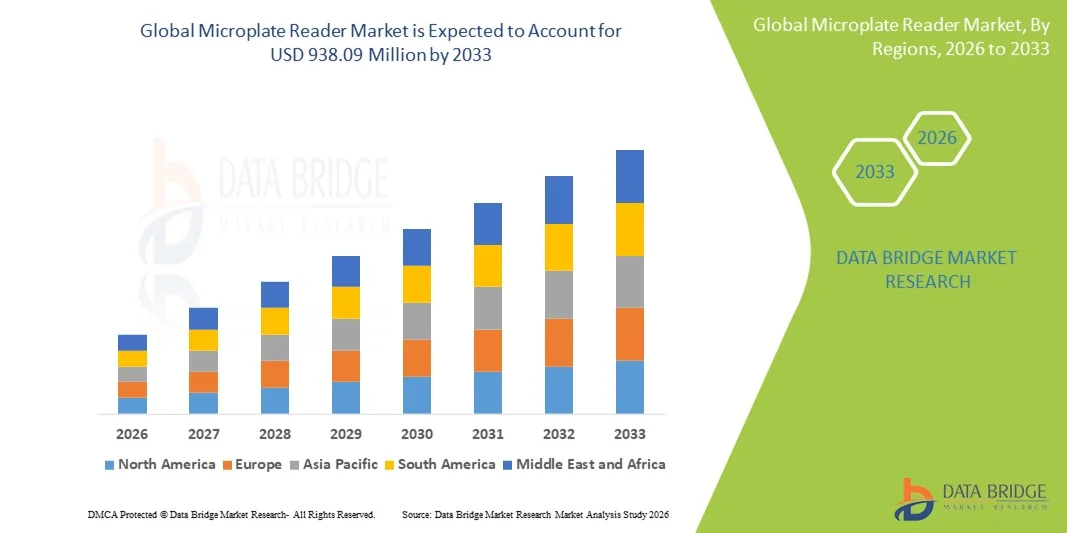
- The global microplate reader market size was valued at USD 680.21 Million in 2025 and is expected to reach USD 938.09 Million by 2033, at a CAGR of 4.10% during the forecast period
- The market growth is largely fueled by the increasing adoption of high-throughput screening and automation in life sciences and pharmaceutical research, driving demand for efficient and accurate microplate reader solutions
- Furthermore, rising investment in drug discovery, diagnostics, and molecular biology research, coupled with the need for rapid and reliable detection of proteins, nucleic acids, and other biomolecules, is establishing microplate readers as essential tools in laboratories. These converging factors are accelerating the uptake of microplate reader solutions, thereby significantly boosting the industry's growth
Microplate Reader Market Analysis
- Microplate readers, offering high-throughput and multi-mode detection capabilities, are increasingly vital components of modern laboratories in both research and clinical settings due to their enhanced accuracy, automation compatibility, and rapid data acquisition
- The escalating demand for microplate readers is primarily fueled by the widespread adoption of laboratory automation technologies, growing emphasis on precise diagnostics and drug discovery, and a rising need for efficient, reliable, and reproducible assay results
- North America dominated the microplate reader market with the largest revenue share of 42.5% in 2025, characterized by well-established healthcare and research infrastructure, high R&D expenditure, and a strong presence of key industry players, with the U.S. experiencing substantial growth in Microplate Reader installations across hospitals, research institutes, and pharmaceutical companies, driven by innovations in high-throughput, multi-mode, and energy-efficient models
- Asia-Pacific is expected to be the fastest growing region in the microplate reader market during the forecast period due to increasing healthcare infrastructure, rising laboratory setups, growing pharmaceutical and biotechnology research activities, and rising disposable incomes in countries such as China, India, and Japan
- The protein and nucleic acid detection segment dominated the market with a revenue share of 48.1% in 2025, driven by the widespread use of microplate readers in genomics, proteomics, and molecular biology research
Report Scope and Microplate Reader Market Segmentation
|
Attributes |
Microplate Reader Key Market Insights |
|
Segments Covered |
|
|
Countries Covered |
North America
Europe
Asia-Pacific
Middle East and Africa
South America
|
|
Key Market Players |
• BioTek Instruments (U.S.) |
|
Market Opportunities |
|
|
Value Added Data Infosets |
In addition to the insights on market scenarios such as market value, growth rate, segmentation, geographical coverage, and major players, the market reports curated by the Data Bridge Market Research also include in-depth expert analysis, patient epidemiology, pipeline analysis, pricing analysis, and regulatory framework. |
Microplate Reader Market Trends
Enhanced Efficiency Through Automation and High-Throughput Capabilities
- A significant and accelerating trend in the global microplate reader market is the growing adoption of automated and high-throughput platforms. These systems allow laboratories to process multiple samples simultaneously, reducing manual intervention, minimizing human error, and improving reproducibility
- For instance, in March 2024, BioTek Instruments launched its Cytation 7 Microplate Reader, a high-throughput system capable of performing both fluorescence and luminescence measurements across hundreds of samples in a single run, significantly improving lab productivity
- Automation in microplate readers enables integrated workflows with liquid handling systems and robotic platforms, facilitating large-scale drug screening, biomarker discovery, and enzyme kinetics studies. This integration allows researchers to efficiently manage time-intensive protocols and focus on analytical interpretation
- The trend towards miniaturization of assays, coupled with multiplexing capabilities, is further driving the adoption of advanced microplate readers in both academic and industrial research laboratories
- Modern microplate readers now offer real-time data acquisition, multi-mode detection, and flexible assay protocols, enabling laboratories to increase throughput without compromising accuracy. Through enhanced integration with laboratory information management systems (LIMS) and data analytics software, researchers can streamline data processing, traceability, and compliance with regulatory standards
- The trend towards high-throughput, automated microplate readers is reshaping laboratory workflows, creating demand for faster, more accurate, and versatile systems across diagnostics, pharmaceutical, and biotechnology applications. Companies such as Agilent Technologies and Tecan Group are investing in advanced microplate readers with modular design, allowing customization for specific assay requirements
- Increasing adoption in proteomics, genomics, and cell-based assays is further expanding the application scope. The availability of microplate readers that support multiple detection modes (absorbance, fluorescence, luminescence, and time-resolved fluorescence) strengthens their versatility
- High reproducibility, scalability, and reduced assay turnaround time are major drivers of preference among research institutes and pharmaceutical companies. The ongoing shift toward automated, integrated laboratory workflows is expected to maintain strong growth momentum in the market
Microplate Reader Market Dynamics
Driver
Rising Demand from Pharmaceutical, Biotech, and Academic Research
- The increasing need for accurate, high-throughput screening in drug discovery, biomarker research, and clinical diagnostics is a major driver for the Microplate Reader market
- For instance, in June 2023, Molecular Devices introduced the SpectraMax iD5, an automated microplate reader designed for multiplexed assays in drug discovery labs, supporting rapid screening of thousands of compounds
- High demand is fueled by the expansion of pharmaceutical and biotech R&D activities worldwide, particularly in North America and Europe
- Academic and government research initiatives are also increasing the adoption of microplate readers for proteomics, genomics, and cell biology studies
- Multiplexing and high-throughput capabilities allow cost-effective analysis of multiple targets in parallel, reducing assay time and improving efficiency. The growing prevalence of chronic diseases and emerging infectious diseases has boosted research investments, thereby driving demand for advanced detection systems
- Integration with laboratory automation platforms enhances workflow efficiency and reproducibility. Continuous technological advancements, including miniaturization, multi-mode detection, and improved sensitivity, are making microplate readers indispensable in modern laboratories
- Rising focus on personalized medicine and precision diagnostics is further propelling market expansion. Pharmaceutical companies increasingly rely on microplate readers for high-content screening and preclinical testing, fueling consistent market growth
- Expansion of contract research organizations (CROs) and shared laboratory facilities is creating additional demand for high-throughput microplate readers. Overall, the need for efficiency, reliability, and accuracy in experimental workflows is sustaining market growth during the forecast period
Restraint/Challenge
High Initial Investment and Maintenance Costs
- The relatively high cost of advanced microplate readers, especially multi-mode and automated high-throughput systems, can hinder adoption in smaller laboratories or low-budget research facilities
- For instance, in November 2022, reports highlighted that while the Tecan Spark 10M microplate reader offered extensive features, the high upfront cost limited its acquisition by smaller academic labs
- Maintenance and calibration requirements, along with costs associated with software licenses and consumables, further add to the operational expenses. Smaller laboratories may also face challenges integrating these systems into existing workflows, requiring additional staff training and infrastructure modifications
- The complexity of multi-mode detection systems can increase the learning curve for laboratory personnel, delaying optimal utilization. Limited standardization across platforms can affect assay reproducibility when switching between models or brands
- Dependency on high-quality consumables and reagents is critical to maintain measurement accuracy and sensitivity. High-end microplate readers often require specialized service contracts, adding to the total cost of ownership
- Budget constraints in developing regions may slow adoption despite growing research needs. Addressing these barriers through cost-effective product variants, scalable models, and enhanced after-sales support is critical for wider market penetration.
- Strategic partnerships between manufacturers and research institutes can help reduce barriers and promote adoption. Ongoing innovations aimed at balancing performance and affordability are expected to support long-term growth of the microplate reader market
Microplate Reader Market Scope
The market is segmented on the basis of well system, product type, application, end user, and distribution channel.
- By Well System
On the basis of well system, the Microplate Reader market is segmented into 96 wells, 384 wells, 1536 wells, and others. The 96-well segment dominated the market with the largest revenue share of 42.6% in 2025, owing to its widespread adoption in routine laboratory assays and clinical diagnostics. These systems are preferred for standard ELISA tests, protein quantification, and nucleic acid detection due to their cost-effectiveness and ease of operation. The availability of compatible consumables and reagents further supports their continued use in diagnostic and academic labs. Laboratories with moderate sample throughput find 96-well systems sufficient for daily workflows, ensuring reliability and reproducibility. Their simpler design reduces maintenance requirements and training time for laboratory personnel. Additionally, strong integration with automated pipetting and data acquisition platforms has reinforced their market leadership. Research institutions and contract research organizations rely heavily on 96-well plates for screening, assay development, and biomarker studies. Established vendors continue to focus on enhancing sensitivity and detection modes in 96-well systems, expanding their application scope. In terms of regulatory compliance, 96-well systems are widely validated, supporting clinical and research-grade usage. The segment’s consistent adoption in emerging markets also contributes to stable revenue growth. Overall, the 96-well system remains a backbone for standard laboratory assays globally.
The 384-well segment is expected to witness the fastest CAGR of 11.9% from 2026 to 2033, driven by the need for higher throughput in pharmaceutical and biotechnology research. These systems allow simultaneous processing of a larger number of samples, reducing assay time and increasing efficiency. High-throughput drug screening, genomics, and proteomics studies benefit significantly from 384-well configurations. The compact plate format enables better automation and integration with robotic handling systems. Rising adoption in contract research organizations (CROs) and biopharmaceutical R&D labs is fueling growth. Moreover, 384-well plates reduce reagent consumption per assay, offering cost-efficiency for large-scale studies. Innovations in detection technologies, including multiplex fluorescence and luminescence, are enhancing the analytical capabilities of 384-well systems. Vendors are introducing customizable software and modular platforms tailored for these plates. Academic and industrial labs focusing on biomarker discovery increasingly prefer 384-well formats for parallel sample processing. The combination of scalability, accuracy, and reduced turnaround time positions this segment for rapid expansion during the forecast period.
- By Product Type
On the basis of product type, the Microplate Reader market is segmented into multi-mode microplate readers, automated ELISA systems, automated nucleic acid purification systems, and single-mode microplate readers. The multi-mode microplate reader segment accounted for the largest revenue share of 45.2% in 2025, owing to its versatility in performing absorbance, fluorescence, luminescence, and time-resolved assays within a single platform. These systems are widely adopted in pharmaceutical and biotechnology labs due to their flexibility and ability to handle diverse assay types. Multi-mode readers reduce the need for multiple instruments, saving laboratory space and cost. Their compatibility with high-throughput screening workflows and integration with automation systems further reinforces market dominance. Regulatory compliance, robust data analysis software, and strong customer support from established vendors enhance their appeal. Multi-mode readers are particularly important in genomics, proteomics, and enzyme kinetics studies. Academic institutions also leverage their multi-functional capabilities for research and educational purposes. The high sensitivity, reproducibility, and scalability of these systems make them indispensable in modern laboratories. Continuous product enhancements, including advanced detection modes and increased throughput, support long-term adoption. Overall, multi-mode microplate readers remain the preferred choice for laboratories requiring comprehensive assay flexibility.
The automated ELISA systems segment is projected to register the fastest CAGR of 12.4% from 2026 to 2033, driven by the increasing demand for high-throughput immunoassays in clinical diagnostics and pharmaceutical testing. Automated ELISA platforms reduce manual errors, improve reproducibility, and accelerate sample processing. Growing prevalence of infectious and chronic diseases has intensified the adoption of ELISA-based testing. Hospitals, diagnostic laboratories, and CROs are increasingly investing in these systems to enhance efficiency. Integration with data management and LIMS platforms allows streamlined workflow and compliance with regulatory requirements. Rising focus on early disease detection and large-scale screening programs further fuels growth. Technological advancements in reagent stability and assay multiplexing enhance assay versatility. Automation reduces labor costs and turnaround times, making ELISA systems attractive for high-volume laboratories. Continuous R&D efforts by key players expand assay capabilities and throughput. Automated ELISA systems are also gaining traction in emerging markets where demand for rapid, reliable diagnostics is growing.
- By Application
On the basis of application, the Microplate Reader market is segmented into protein and nucleic acid detection, enzyme-linked immunosorbent assay (ELISA), and others. The protein and nucleic acid detection segment dominated the market with a revenue share of 48.1% in 2025, driven by the widespread use of microplate readers in genomics, proteomics, and molecular biology research. These assays are critical in drug discovery, biomarker analysis, and molecular diagnostics. The demand is further supported by the increasing prevalence of chronic and infectious diseases requiring accurate molecular-level analysis. Multi-mode detection systems enhance throughput and sensitivity for protein and nucleic acid assays. Universities, CROs, and biopharmaceutical companies rely heavily on these applications for assay development, validation, and research studies. Integration with robotic pipetting and data acquisition systems improves workflow efficiency and reproducibility. High assay reliability and regulatory compliance make these applications suitable for both clinical and research laboratories. Continuous innovation in detection technologies, including fluorescence, chemiluminescence, and luminescence, drives adoption. Academic and industrial laboratories also benefit from reduced sample volumes and multiplexing capabilities. Overall, protein and nucleic acid detection remains the largest application segment due to its critical role in research and diagnostics.
The ELISA segment is expected to witness the fastest CAGR of 12.1% from 2026 to 2033, driven by increasing adoption of high-throughput automated immunoassays in hospitals, diagnostic centers, and research labs. Growing prevalence of autoimmune, infectious, and chronic diseases is expanding the clinical need for ELISA-based diagnostics. Automated ELISA platforms offer high reproducibility, reduced assay time, and minimal operator intervention. Integration with LIMS and data analytics enhances workflow efficiency. Pharmaceutical and biotechnology companies use ELISA for drug screening, pharmacokinetics studies, and biomarker discovery. Rising investment in clinical trials and laboratory infrastructure supports segment growth. Multiplex ELISA assays allow simultaneous detection of multiple analytes, improving efficiency. Training and ease of operation also promote adoption in mid-size laboratories. Continuous technological advancements, including miniaturization and enhanced sensitivity, further drive market expansion.
- By End User
Based on end user, the Microplate Reader market is segmented into biotechnology and pharmaceutical companies, contract research organizations (CROs), diagnostic laboratories, hospitals, research and academic institutes, and others. The biotechnology and pharmaceutical companies segment held the largest revenue share of 44.7% in 2025, due to the high demand for high-throughput screening, drug discovery, and preclinical research. These companies require accurate and reproducible results for assay development and regulatory compliance. Integration of microplate readers into automated workflows enhances efficiency and reduces turnaround time. Rising investment in R&D and expansion of molecular biology and proteomics research pipelines further drives demand. Multi-mode readers are particularly favored for their versatility in drug discovery applications. Partnerships with leading instrument manufacturers ensure access to cutting-edge technologies. High assay reproducibility, sensitivity, and scalability are key factors in segment leadership. Growing use of biomarker detection and molecular assays reinforces adoption. Technological upgrades and advanced data analytics support decision-making and experimental planning. Regulatory compliance and adherence to GLP/GMP standards further encourage adoption by pharmaceutical companies.
The contract research organizations (CROs) segment is expected to witness the fastest CAGR of 11.8% from 2026 to 2033, fueled by the rising outsourcing of R&D, drug discovery, and diagnostic testing services. CROs handle large-scale sample processing for multiple clients, necessitating high-throughput, automated microplate readers. Growing pharmaceutical collaborations and clinical trial expansions contribute to segment growth. Demand for flexible, multi-mode detection systems enables CROs to offer a wider range of services. Adoption of automation reduces labor costs, increases assay throughput, and enhances reproducibility. Integration with data management platforms and LIMS supports regulatory compliance. Increasing focus on personalized medicine and biomarker discovery expands the scope for CRO services. Emerging markets are investing in CRO infrastructure, accelerating regional adoption. The availability of advanced consumables and reagents also supports high-throughput assay workflows. Overall, CROs are emerging as critical end users, driving rapid market expansion.
- By Distribution Channel
On the basis of distribution channel, the Microplate Reader market is segmented into direct tenders and retail sales. The direct tenders segment accounted for the largest revenue share of 46.2% in 2025, driven by bulk procurement by hospitals, academic research institutes, and large pharmaceutical companies. Direct procurement ensures cost efficiency, long-term supply contracts, and consistent product availability. Manufacturers benefit from stable demand while buyers gain better pricing, reliable after-sales support, and access to latest technology. Institutional contracts often include service agreements and training, enhancing operational efficiency. Large-scale laboratories prefer direct tenders for customized solutions and integration with existing laboratory workflows. Strategic partnerships with key vendors facilitate quick delivery and installation. Regulatory compliance and calibration support are more readily available through direct channels. The segment ensures secure sourcing of critical laboratory equipment. Strong relationships between manufacturers and end users further reinforce market dominance.
The retail sales segment is projected to witness the fastest CAGR of 11.5% from 2026 to 2033, fueled by increasing demand from small laboratories, diagnostic centers, and emerging biotech startups. Retail channels provide flexible purchasing options for labs with smaller budgets or urgent requirements. Vendors offer online platforms, direct shipping, and local distributors to enhance accessibility. Growing laboratory automation in emerging regions supports retail adoption. Retail availability of multi-mode, single-mode, and automated ELISA systems ensures rapid market penetration. Ease of ordering, quick delivery, and occasional bundled service agreements make retail channels attractive for smaller institutions. Expansion of e-commerce platforms and partnerships with distributors further facilitate growth. Educational institutions and training labs also increasingly purchase microplate readers through retail channels. Retail adoption reduces lead time for installation and minimizes dependence on large institutional procurement.
Microplate Reader Market Regional Analysis
- North America dominated the microplate reader market with the largest revenue share of 42.5% in 2025
- Characterized by well-established healthcare and research infrastructure, high R&D expenditure, and a strong presence of key industry players
- The region’s focus on innovation and technological advancement has significantly contributed to market growth
U.S. Microplate Reader Market Insight
The U.S. microplate reader market captured the largest revenue share within North America in 2025, driven by the rapid expansion of hospitals, research institutes, and pharmaceutical companies. The growing adoption of high-throughput, multi-mode, and energy-efficient microplate readers, coupled with increasing investments in drug discovery and diagnostic laboratories, has fueled demand. Technological innovations in automated ELISA systems and nucleic acid purification systems are further strengthening the market, supporting both clinical and research applications.
Europe Microplate Reader Market Insight
The Europe microplate reader market is expected to grow steadily during the forecast period, driven by increasing laboratory and diagnostic infrastructure, government initiatives to support biomedical research, and growing pharmaceutical and biotechnology activities. Rising awareness about accurate and high-throughput testing solutions is encouraging laboratories and research institutes across Europe to adopt advanced microplate readers.
U.K. Microplate Reader Market Insight
The U.K. microplate reader market is anticipated to expand at a noteworthy CAGR due to the rising emphasis on research and development in pharmaceuticals and diagnostics. Investments in modern laboratory setups and advanced research institutes are creating demand for multi-mode and automated microplate readers. The country’s strong healthcare and academic infrastructure supports the adoption of technologically advanced systems.
Germany Microplate Reader Market Insight
The Germany microplate reader market is expected to grow at a significant CAGR, supported by the country’s robust research and development ecosystem, well-established pharmaceutical industry, and rising focus on automation in laboratories. Demand for high-precision, energy-efficient, and multi-mode microplate readers is increasing in research institutes, diagnostic labs, and pharmaceutical companies, with Germany emerging as a hub for innovative laboratory technologies.
Asia-Pacific Microplate Reader Market Insight
The Asia-Pacific microplate reader market is expected to be the fastest-growing region, with a CAGR during the forecast period. Growth is driven by expanding healthcare infrastructure, rising laboratory setups, and growing pharmaceutical and biotechnology research activities in countries such as China, India, and Japan. Increasing disposable incomes and government support for research initiatives are accelerating the adoption of advanced microplate readers, while the region’s emergence as a manufacturing hub for laboratory equipment is improving accessibility and affordability.
Japan Microplate Reader Market Insight
The Japan microplate reader market is gaining traction due to the country’s strong research focus, advanced healthcare infrastructure, and technological innovations. The demand for high-throughput and automated microplate readers is rising in pharmaceutical companies, academic research institutes, and diagnostic laboratories, supported by government initiatives for scientific research and precision medicine.
China Microplate Reader Market Insight
The China microplate reader market accounted for the largest market share in Asia-Pacific in 2025. Rapid urbanization, rising investments in healthcare and biotechnology research, and a growing number of laboratories and diagnostic centers are fueling demand. The government’s focus on improving research capabilities and the availability of locally manufactured, cost-effective microplate readers further contribute to the market’s growth.
Microplate Reader Market Share
The Microplate Reader industry is primarily led by well-established companies, including:
• BioTek Instruments (U.S.)
• Thermo Fisher Scientific (U.S.)
• Hamilton Company (Switzerland)
• PerkinElmer (U.S.)
• Molecular Devices (U.S.)
• Tecan Group (Switzerland)
• Agilent Technologies (U.S.)
• Beckman Coulter (U.S.)
• Sartorius AG (Germany)
• Promega Corporation (U.S.)
• Analytik Jena (Germany)
• Infinite Biotech (China)
• Corning Incorporated (U.S.)
• Bio-Rad Laboratories (U.S.)
• Labcyte (U.S.)
• Bruker Corporation (U.S.)
• Biotek Instruments (China)
• Microgen (U.K.)
• Siemens Healthineers (Germany)
• PerkinElmer (China)
Latest Developments in Global Microplate Reader Market
- In April 2024, Agilent Technologies launched its next-generation Cary Eclipse Multimode Microplate Reader, featuring enhanced fluorescence and luminescence detection to support high-sensitivity assays in pharmaceutical and life sciences research. This launch underscores Agilent’s focus on improving assay performance and throughput for research laboratories globally
- In August 2025, BMG LABTECH introduced its CLARIOstar Plus microplate reader, integrating advanced LVF (laser-driven virtual filter) monochromator technology for flexible wavelength selection and improved detection sensitivity. The product aims to enhance precision and efficiency in protein and nucleic acid analysis

- Interactive Data Analysis Dashboard
- Company Analysis Dashboard for high growth potential opportunities
- Research Analyst Access for customization & queries
- Competitor Analysis with Interactive dashboard
- Latest News, Updates & Trend analysis
- Harness the Power of Benchmark Analysis for Comprehensive Competitor Tracking
Data collection and base year analysis are done using data collection modules with large sample sizes. The stage includes obtaining market information or related data through various sources and strategies. It includes examining and planning all the data acquired from the past in advance. It likewise envelops the examination of information inconsistencies seen across different information sources. The market data is analysed and estimated using market statistical and coherent models. Also, market share analysis and key trend analysis are the major success factors in the market report. To know more, please request an analyst call or drop down your inquiry.
The key research methodology used by DBMR research team is data triangulation which involves data mining, analysis of the impact of data variables on the market and primary (industry expert) validation. Data models include Vendor Positioning Grid, Market Time Line Analysis, Market Overview and Guide, Company Positioning Grid, Patent Analysis, Pricing Analysis, Company Market Share Analysis, Standards of Measurement, Global versus Regional and Vendor Share Analysis. To know more about the research methodology, drop in an inquiry to speak to our industry experts.
Data Bridge Market Research is a leader in advanced formative research. We take pride in servicing our existing and new customers with data and analysis that match and suits their goal. The report can be customized to include price trend analysis of target brands understanding the market for additional countries (ask for the list of countries), clinical trial results data, literature review, refurbished market and product base analysis. Market analysis of target competitors can be analyzed from technology-based analysis to market portfolio strategies. We can add as many competitors that you require data about in the format and data style you are looking for. Our team of analysts can also provide you data in crude raw excel files pivot tables (Fact book) or can assist you in creating presentations from the data sets available in the report.













