


Microvascular Angiopathy Treatment Market Size
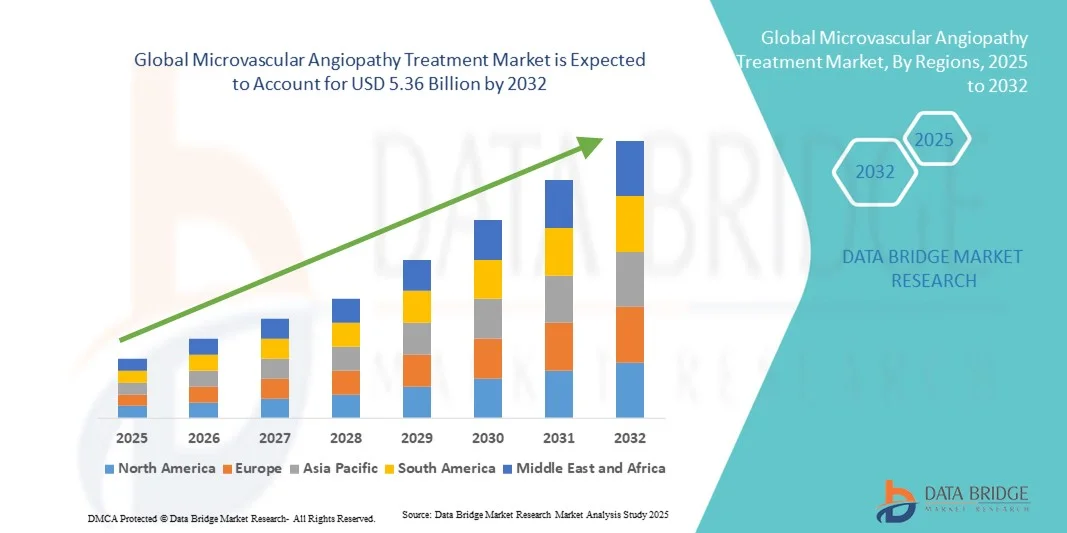
- The global microvascular angiopathy treatment market size was valued at USD 3.52 billion in 2024 and is expected to reach USD 5.36 billion by 2032, at a CAGR of 5.40% during the forecast period
- The market growth is primarily driven by the rising prevalence of microvascular complications associated with diabetes, hypertension, and cardiovascular disorders, coupled with advancements in diagnostic imaging and targeted drug therapies
- Moreover, increasing healthcare expenditure, greater clinical focus on vascular endothelial dysfunction, and ongoing R&D initiatives aimed at improving microcirculatory function are fostering significant growth opportunities for this market globally
Microvascular Angiopathy Treatment Market Analysis
- Microvascular angiopathy treatments, designed to improve microcirculatory blood flow and prevent endothelial damage, play a critical role in managing chronic conditions such as diabetes, hypertension, and ischemic heart disease. These therapies target vascular inflammation and oxidative stress to preserve organ function and reduce disease progression
- The increasing prevalence of microvascular complications, coupled with growing awareness of early intervention and the development of advanced vasoprotective drugs, is propelling market demand. Progress in angiogenesis-modulating therapies, clinical research on endothelial biomarkers, and integration of precision medicine approaches further contribute to market growth
- North America dominated the microvascular angiopathy treatment market with the largest revenue share of 38.6% in 2024, driven by high disease incidence, robust healthcare systems, and continuous pharmaceutical innovation across the U.S. and Canada. Favorable reimbursement policies and extensive R&D efforts toward vascular-targeted drugs are strengthening regional leadership
- Asia-Pacific is expected to be the fastest-growing region during the forecast period, fueled by rising cases of diabetes and hypertension, expanding access to advanced therapeutics, and growing healthcare investments in China, India, and Japan
- Angiotensin-Converting Enzyme (ACE) inhibitors segment dominated the market with a share of 27.9% in 2024, attributed to their established efficacy in improving endothelial function and reducing microvascular damage
Report Scope and Microvascular Angiopathy Treatment Market Segmentation
|
Attributes |
Microvascular Angiopathy Treatment Key Market Insights |
|
Segments Covered |
|
|
Countries Covered |
North America
Europe
Asia-Pacific
Middle East and Africa
South America
|
|
Key Market Players |
|
|
Market Opportunities |
|
|
Value Added Data Infosets |
In addition to the insights on market scenarios such as market value, growth rate, segmentation, geographical coverage, and major players, the market reports curated by the Data Bridge Market Research also include in-depth expert analysis, patient epidemiology, pipeline analysis, pricing analysis, and regulatory framework |
Microvascular Angiopathy Treatment Market Trends
Advancements in Regenerative and Endothelial Repair Therapies
- A significant and accelerating trend in the global microvascular angiopathy treatment market is the increasing focus on regenerative medicine and endothelial repair therapies aimed at restoring vascular function and preventing microcirculatory damage in chronic conditions such as diabetes and hypertension
- For instance, researchers are developing novel endothelial progenitor cell (EPC)-based treatments and gene therapies that promote vascular regeneration and tissue perfusion, offering new hope for patients with severe microvascular complications
- The adoption of biologics and peptide-based therapies that target vascular inflammation and oxidative stress is also rising, with several pharmaceutical companies investing in precision vascular therapeutics designed to protect endothelial integrity and improve oxygen delivery to tissues
- Furthermore, AI-enabled diagnostics and molecular imaging techniques are being integrated into clinical practice to detect microvascular dysfunction at earlier stages, enabling more targeted and timely therapeutic intervention
- The growing synergy between regenerative biology, pharmacology, and medical imaging is transforming disease management approaches, allowing for earlier diagnosis, improved patient outcomes, and the development of personalized treatment protocols
- This trend toward advanced endothelial repair solutions is expected to redefine therapeutic standards, encouraging companies and research institutions to invest in next-generation regenerative and nanomedicine platforms for microvascular restoration
Microvascular Angiopathy Treatment Market Dynamics
Driver
Rising Disease Burden and Advancements in Targeted Vascular Therapies
- The increasing global incidence of diabetes, hypertension, and cardiovascular diseases, all of which contribute to microvascular dysfunction, is a key driver for the growing demand for microvascular angiopathy treatments
- For instance, in March 2024, AstraZeneca announced new clinical progress in its vascular protection research under its CVRM program, emphasizing drug candidates targeting endothelial inflammation and oxidative stress, which directly address microvascular injury
- As healthcare systems worldwide emphasize preventive and precision medicine, demand for pharmacological agents such as ACE inhibitors, ARBs, and statins continues to rise due to their proven efficacy in improving endothelial health and reducing microvascular complications
- Furthermore, continuous innovation in drug discovery platforms and biomarker identification is enabling pharmaceutical developers to design more effective, mechanism-based therapies for restoring microcirculatory function
- The growing availability of advanced diagnostic tools for microvascular assessment and the expansion of clinical trials evaluating novel therapeutic targets are further supporting sustained market growth. The integration of digital health technologies into vascular monitoring also enhances treatment adherence and outcome tracking
- The expanding prevalence of lifestyle-related vascular disorders, along with the rising global focus on cardiovascular health, continues to stimulate investments and collaborations within the pharmaceutical and biotechnology sectors
Restraint/Challenge
High Treatment Costs and Complex Regulatory Pathways
- The high cost associated with developing and administering advanced vascular therapies, including biologics and regenerative medicines, poses a significant challenge to broader accessibility and adoption in the microvascular angiopathy treatment market
- For instance, many promising endothelial repair and cell-based therapies involve complex production processes and extended clinical evaluations, resulting in increased development timelines and elevated treatment costs for patients
- In addition, navigating stringent regulatory requirements for new vascular therapeutics—especially those involving gene or stem cell technologies can delay commercialization and limit rapid clinical adoption
- Furthermore, the lack of standardized diagnostic criteria and limited awareness among clinicians about early-stage microvascular dysfunction hinder timely treatment initiation and patient identification
- High variability in patient response to vascular drugs and the need for long-term administration increase the economic burden on healthcare systems, particularly in low- and middle-income regions
- Overcoming these barriers through strategic partnerships, regulatory harmonization, cost-effective drug development, and education initiatives will be critical for achieving wider market acceptance and improving patient accessibility to advanced vascular care
Microvascular Angiopathy Treatment Market Scope
The market is segmented on the basis of drug class, mode of administration, distribution channel, and end user.
- By Drug Class
On the basis of drug class, the microvascular angiopathy treatment market is segmented into nitroglycerin, beta blockers, calcium channel blockers, statins, angiotensin-converting enzyme (ACE) inhibitors, angiotensin II receptor blockers (ARBs), ranolazine (Ranexa), aspirin, and others. The ACE inhibitors segment dominated the market with the largest revenue share of 27.9% in 2024, attributed to their proven efficacy in improving endothelial function, reducing oxidative stress, and minimizing microvascular damage. ACE inhibitors are widely prescribed for managing hypertension and diabetes-related microangiopathies due to their ability to regulate vascular tone and decrease angiotensin II activity. The growing clinical adoption of ACE inhibitors is supported by robust evidence demonstrating their role in preventing end-organ damage and improving microcirculatory flow. The segment’s dominance is further reinforced by their widespread availability, favorable reimbursement status, and integration into global cardiovascular treatment guidelines.
The statins segment is anticipated to witness the fastest growth rate from 2025 to 2032, driven by their emerging role in reducing vascular inflammation and improving endothelial repair beyond cholesterol control. Statins’ pleiotropic effects, including the enhancement of nitric oxide bioavailability and reduction in oxidative stress, make them increasingly valuable in microvascular protection. For instance, recent clinical studies have highlighted statins’ benefits in diabetic microangiopathy and retinopathy management. Their broad therapeutic potential, safety profile, and growing inclusion in vascular disease management protocols are expected to significantly boost segment expansion over the forecast period.
- By Mode of Administration
On the basis of mode of administration, the microvascular angiopathy treatment market is segmented into injectable, oral, and others. The oral segment dominated the market in 2024, accounting for the highest revenue share due to its convenience, patient compliance, and cost-effectiveness. Oral administration is the preferred route for chronic therapy regimens, especially for long-term management of conditions such as diabetic and hypertensive microangiopathy. The availability of multiple oral formulations, including ACE inhibitors, beta blockers, and statins, enhances treatment flexibility and accessibility across both developed and emerging regions. The widespread use of oral medications in outpatient settings, along with advancements in controlled-release drug delivery systems, further strengthens the dominance of this segment.
The injectable segment is projected to register the fastest CAGR from 2025 to 2032, fueled by the introduction of biologics, peptide-based agents, and regenerative therapies targeting endothelial dysfunction. Injectable formulations enable rapid systemic absorption and are increasingly utilized in hospital settings for acute or advanced microvascular complications. For instance, novel parenteral vasodilators and angiogenesis-promoting biologics are gaining clinical attention for their ability to directly restore microvascular integrity. The segment’s growth is further supported by ongoing innovation in nanoparticle-based injectable drug delivery systems and the expansion of hospital infrastructure in emerging economies.
- By Distribution Channel
On the basis of distribution channel, the microvascular angiopathy treatment market is segmented into hospital pharmacies, retail pharmacies, and online pharmacies. The hospital pharmacies segment held the dominant share in 2024, driven by the high demand for prescription-based medications administered under medical supervision. Hospital pharmacies play a vital role in ensuring the availability of critical vascular drugs, biologics, and injectables used in acute care and inpatient treatments. The segment’s growth is reinforced by the increasing number of hospital admissions for cardiovascular and diabetic complications requiring close monitoring. Furthermore, the presence of trained healthcare professionals and adherence to stringent quality control standards make hospital pharmacies the preferred distribution channel for advanced vascular treatments.
The online pharmacies segment is projected to exhibit the fastest growth from 2025 to 2032, supported by the expanding digital healthcare infrastructure and the rising adoption of e-prescription services. Online platforms provide patients with convenient access to medications, particularly in chronic disease management where regular refills are required. For instance, the surge in telemedicine and digital prescription systems has enhanced medication accessibility in remote and underserved areas. The convenience of home delivery, competitive pricing, and integration with health monitoring apps are key factors accelerating the shift toward online pharmaceutical channels.
- By End User
On the basis of end user, the microvascular angiopathy treatment market is segmented into hospitals, homecare, specialty clinics, and others. The hospital segment dominated the market with the largest revenue share in 2024, owing to the concentration of advanced diagnostic equipment, specialized vascular care units, and skilled medical personnel. Hospitals serve as the primary centers for diagnosis, treatment, and management of microvascular complications, especially in patients with comorbid conditions such as diabetes or cardiovascular disorders. The segment’s growth is further supported by the availability of multidisciplinary care and integration of imaging and laboratory facilities that facilitate comprehensive vascular assessment. The high patient inflow, presence of tertiary care institutions, and government initiatives to improve cardiovascular care infrastructure reinforce hospital leadership in this market.
The specialty clinics segment is anticipated to grow at the fastest rate from 2025 to 2032, driven by the rising establishment of dedicated vascular and metabolic clinics focused on early-stage diagnosis and disease-specific management. Specialty clinics offer personalized treatment approaches and shorter patient waiting times, enhancing the overall care experience. For instance, clinics specializing in diabetic angiopathy and endothelial dysfunction are adopting advanced diagnostic modalities such as laser Doppler flowmetry and microvascular imaging. The segment’s expansion is also supported by the growing number of collaborative partnerships between private healthcare providers and research institutions to advance targeted vascular therapies.
Microvascular Angiopathy Treatment Market Regional Analysis
- North America dominated the microvascular angiopathy treatment market with the largest revenue share of 38.6% in 2024, driven by high disease incidence, robust healthcare systems, and continuous pharmaceutical innovation across the U.S. and Canada. Favorable reimbursement policies and extensive R&D efforts toward vascular-targeted drugs are strengthening regional leadership
- Patients in the region increasingly benefit from the availability of innovative drugs, biologics, and diagnostic imaging technologies that enable early detection and effective management of microvascular complications
- This regional leadership is further supported by robust R&D investments, favorable reimbursement policies, and the presence of major pharmaceutical and biotechnology companies actively developing next-generation endothelial and regenerative therapies, positioning North America as a key hub for market innovation and growth
U.S. Microvascular Angiopathy Treatment Market Insight
The U.S. microvascular angiopathy treatment market captured the largest revenue share of 79% in 2024 within North America, driven by a rising prevalence of diabetes, hypertension, and cardiovascular disorders. Increased patient awareness and access to advanced diagnostic imaging and precision medicine approaches are fueling the market. Growing investments in R&D, alongside FDA approvals for new vascular protective and endothelial-targeting therapies, are further propelling market expansion. Moreover, the widespread adoption of telemedicine and digital health platforms is enhancing early diagnosis and management of microvascular complications across healthcare systems.
Europe Microvascular Angiopathy Treatment Market Insight
The Europe microvascular angiopathy treatment market is projected to expand at a steady CAGR throughout the forecast period, primarily supported by an aging population and the rising incidence of chronic diseases such as diabetes and obesity. Strong regulatory support for novel drug development and high adoption of evidence-based treatment protocols are driving growth. The region’s robust healthcare infrastructure and early adoption of personalized medicine are enhancing clinical outcomes, particularly in managing diabetic and cardiac microvascular complications across hospitals and specialty clinics.
U.K. Microvascular Angiopathy Treatment Market Insight
The U.K. microvascular angiopathy treatment market is expected to witness significant growth during the forecast period, fueled by advancements in vascular diagnostics, expanding clinical research initiatives, and increased NHS investments in cardiovascular care. Rising awareness about diabetic microangiopathy and improved access to innovative therapies are enhancing patient management. Furthermore, the integration of AI-based diagnostic tools in healthcare settings is expected to support early detection and precision-based treatment, boosting the market outlook in the U.K.
Germany Microvascular Angiopathy Treatment Market Insight
The Germany microvascular angiopathy treatment market is anticipated to grow at a substantial CAGR during the forecast period, driven by the country’s strong focus on healthcare innovation and biomedical research. Growing prevalence of metabolic and cardiac disorders, along with increased government funding for vascular health programs, is supporting demand for advanced therapeutics. Germany’s commitment to precision medicine, combined with collaborations between research institutes and pharmaceutical companies, is accelerating the development of next-generation endothelial and vascular repair therapies.
Asia-Pacific Microvascular Angiopathy Treatment Market Insight
The Asia-Pacific microvascular angiopathy treatment market is poised to grow at the fastest CAGR of 6.8% during 2025–2032, driven by the rapid increase in diabetes and cardiovascular diseases across China, Japan, and India. Expanding healthcare access, rising awareness of early diagnosis, and improving pharmaceutical manufacturing capabilities are fueling market penetration. Government-led initiatives promoting chronic disease management and healthcare infrastructure development are further enhancing the adoption of advanced drug therapies and diagnostics in the region.
Japan Microvascular Angiopathy Treatment Market Insight
The Japan microvascular angiopathy treatment market is gaining momentum owing to its aging population and high incidence of diabetes-related microvascular complications. The country’s advanced medical research ecosystem and early adoption of innovative therapies such as regenerative and cell-based treatments are driving growth. In addition, the strong focus on patient-centered care and integration of digital monitoring tools in chronic disease management are expanding treatment reach and clinical effectiveness across hospitals and clinics.
India Microvascular Angiopathy Treatment Market Insight
The India microvascular angiopathy treatment market accounted for a significant revenue share within Asia-Pacific in 2024, driven by the increasing burden of diabetes, hypertension, and lifestyle-related disorders. Rapid urbanization, government-led healthcare reforms, and the rise of local pharmaceutical manufacturers are contributing to market expansion. The growing adoption of cost-effective oral and injectable therapies, coupled with improved diagnostic infrastructure and awareness campaigns, is further strengthening India’s position as one of the most promising markets in the region.
Microvascular Angiopathy Treatment Market Share
The Microvascular Angiopathy Treatment industry is primarily led by well-established companies, including:
- F. Hoffmann-La Roche Ltd (Switzerland)
- Novartis AG (Switzerland)
- Regeneron Pharmaceuticals Inc. (U.S.)
- Bayer AG (Germany)
- Boehringer Ingelheim International GmbH. (Germany)
- Sanofi (France)
- Pfizer Inc. (U.S.)
- Merck & Co., Inc. (U.S.)
- AstraZeneca (U.K.)
- Bristol-Myers Squibb Company (U.S.)
- Eli Lilly and Company (U.S.)
- Novo Nordisk A/S (Denmark)
- GSK plc (U.K.)
- Takeda Pharmaceutical Company Limited (Japan)
- Amgen Inc. (U.S.)
- Alcon Inc. (Switzerland)
- Santen Pharmaceutical Co., Ltd. (Japan)
- Oxurion NV (Belgium)
- AbbVie Inc. (U.S.)
What are the Recent Developments in Global Microvascular Angiopathy Treatment Market?
- In July 2025, a review article on endothelial dysfunction in microvascular disease highlighted the therapies targeting the endothelium (e.g., vasodilators, anti-inflammatory agents) are emerging as promising interventions in small-vessel and microvascular angiopathic disorders
- In December 2024, the National Institutes of Health (NIH) awarded a USD 7.5 million grant to a multi-site team at Washington University School of Medicine to investigate early warning signs and therapeutic targets for Cerebral small vessel disease including biomarkers and imaging of microvessel injury
- In February 2024, a research study revealed that chronic adult stress causes microvascular dysfunction in animal models, linking microvascular injury directly to brain and systemic outcomes reinforcing the importance of microvascular angiopathy treatment approaches
- In January 2024, a systematic review and meta-analysis reported that the anti-anginal agent ranolazine was associated with improvements in coronary microvascular function specifically increased coronary flow reserve (CFR) and myocardial perfusion reserve index (MPRI) in patients with non-obstructive coronary artery disease, pointing to potential benefit for microvascular angiopathy
- In June 2023, an expert panel published a discussion on the state of clinical care for “covert” cerebral small vessel disease (cSVD), recommending that earlier detection of microvascular injury and intervention with drugs such as ACE inhibitors or ARBs may improve outcomes

- Interactive Data Analysis Dashboard
- Company Analysis Dashboard for high growth potential opportunities
- Research Analyst Access for customization & queries
- Competitor Analysis with Interactive dashboard
- Latest News, Updates & Trend analysis
- Harness the Power of Benchmark Analysis for Comprehensive Competitor Tracking
Data collection and base year analysis are done using data collection modules with large sample sizes. The stage includes obtaining market information or related data through various sources and strategies. It includes examining and planning all the data acquired from the past in advance. It likewise envelops the examination of information inconsistencies seen across different information sources. The market data is analysed and estimated using market statistical and coherent models. Also, market share analysis and key trend analysis are the major success factors in the market report. To know more, please request an analyst call or drop down your inquiry.
The key research methodology used by DBMR research team is data triangulation which involves data mining, analysis of the impact of data variables on the market and primary (industry expert) validation. Data models include Vendor Positioning Grid, Market Time Line Analysis, Market Overview and Guide, Company Positioning Grid, Patent Analysis, Pricing Analysis, Company Market Share Analysis, Standards of Measurement, Global versus Regional and Vendor Share Analysis. To know more about the research methodology, drop in an inquiry to speak to our industry experts.
Data Bridge Market Research is a leader in advanced formative research. We take pride in servicing our existing and new customers with data and analysis that match and suits their goal. The report can be customized to include price trend analysis of target brands understanding the market for additional countries (ask for the list of countries), clinical trial results data, literature review, refurbished market and product base analysis. Market analysis of target competitors can be analyzed from technology-based analysis to market portfolio strategies. We can add as many competitors that you require data about in the format and data style you are looking for. Our team of analysts can also provide you data in crude raw excel files pivot tables (Fact book) or can assist you in creating presentations from the data sets available in the report.












