


Middle East Respiratory Syndrome (MERS) Market Size
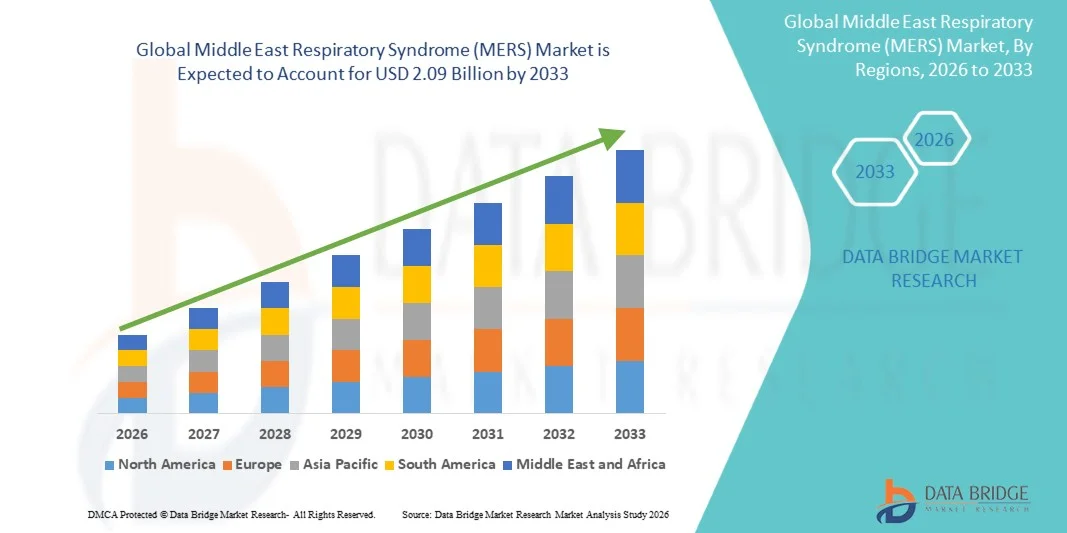
- The global Middle East Respiratory Syndrome (MERS) market size was valued at USD 1.20 billion in 2025 and is expected to reach USD 2.09 billion by 2033, at a CAGR of 7.2% during the forecast period
- The market growth is largely driven by the increasing focus on infectious disease surveillance, rising healthcare preparedness initiatives, and ongoing research efforts aimed at improving diagnostics, therapeutics, and preventive strategies for MERS-CoV infections across affected regions
- Furthermore, growing investments in public health infrastructure, coupled with heightened awareness among healthcare providers and governments regarding emerging zoonotic diseases, are strengthening early detection and response capabilities. These converging factors are accelerating the adoption of advanced diagnostic tools and treatment protocols, thereby supporting the overall expansion of the MERS market
Middle East Respiratory Syndrome (MERS) Market Analysis
- The Middle East Respiratory Syndrome (MERS) market, encompassing investigational therapeutics and vaccine candidates, is primarily focused on the development of targeted biologics and preventive solutions such as REGN3048, REGN3051, GLS-5300, and other pipeline products aimed at neutralizing the MERS-CoV virus and reducing disease severity and transmission risk
- The escalating demand for MERS-related solutions is primarily driven by increasing R&D investments in monoclonal antibodies and DNA vaccine platforms, rising government and institutional funding for emerging infectious diseases, and ongoing clinical evaluations of candidate therapies to address unmet medical needs in outbreak-prone regions
- North America dominated the Middle East Respiratory Syndrome (MERS) market with the largest revenue share of 40% in 2025, supported by strong R&D infrastructure, advanced biotechnology capabilities, and active participation in clinical trials
- Asia-Pacific is expected to witness the fastest growth in the Middle East Respiratory Syndrome (MERS) market during the forecast period due to expanding biopharmaceutical research capabilities, increasing collaborations with global research organizations, and growing preparedness initiatives to manage potential infectious disease outbreaks
- The parenteral segment dominated the Middle East Respiratory Syndrome (MERS) market in 2025 with a share of 70.2%, attributed to the predominance of injectable monoclonal antibodies and vaccine candidates that require intravenous or intramuscular delivery for optimal bioavailability, rapid systemic action, and effective immune response generation
Report Scope and Middle East Respiratory Syndrome (MERS) Market Segmentation
|
Attributes |
Middle East Respiratory Syndrome (MERS) Key Market Insights |
|
Segments Covered |
|
|
Countries Covered |
North America
Europe
Asia-Pacific
Middle East and Africa
South America
|
|
Key Market Players |
|
|
Market Opportunities |
|
|
Value Added Data Infosets |
In addition to the insights on market scenarios such as market value, growth rate, segmentation, geographical coverage, and major players, the market reports curated by the Data Bridge Market Research also include in-depth expert analysis, patient epidemiology, pipeline analysis, pricing analysis, and regulatory framework |
Middle East Respiratory Syndrome (MERS) Market Trends
“Advancements in Vaccine Development and Monoclonal Antibody Research”
- A significant and accelerating trend in the global MERS market is the ongoing development of advanced vaccine platforms and monoclonal antibody therapies targeting MERS-CoV, aimed at improving prevention and treatment outcomes in high-risk populations
- For instance, candidates such as GLS-5300 and REGN3048/REGN3051 are being evaluated for their ability to induce immune responses and neutralize the virus, highlighting progress in biologics and DNA vaccine technologies
- Increasing application of next-generation sequencing and molecular diagnostics is enhancing the ability to rapidly identify viral strains and track mutations, supporting more effective outbreak response strategies. Furthermore, integration of advanced immunological profiling tools is enabling researchers to better understand immune responses and optimize therapeutic design
- The expansion of global collaboration between research institutes, governments, and pharmaceutical companies is facilitating data sharing, clinical trials, and accelerated development timelines, creating a more coordinated approach to combating MERS. Through centralized research initiatives, stakeholders are working toward improving preparedness and response capabilities
- Growing adoption of AI and bioinformatics tools in drug discovery is helping accelerate the identification of potential therapeutic targets and streamline candidate screening processes, reducing early-stage development timelines
- This trend toward innovative biologics, improved diagnostics, and collaborative research ecosystems is fundamentally reshaping how MERS is addressed, with companies and organizations increasingly investing in scalable and targeted solutions to mitigate future outbreak risks
- The demand for advanced vaccines and antibody-based therapies is growing steadily across research-driven healthcare systems, as stakeholders prioritize long-term preventive strategies and rapid response mechanisms to control potential MERS outbreaks
Middle East Respiratory Syndrome (MERS) Market Dynamics
Driver
“Rising Focus on Infectious Disease Preparedness and Surveillance Programs”
- The increasing global emphasis on infectious disease preparedness, coupled with heightened surveillance initiatives by governments and international health organizations, is a significant driver for the growth of the MERS market
- For instance, enhanced monitoring systems and early warning frameworks established in Middle Eastern countries have improved case detection and response times, supporting demand for advanced diagnostics and therapeutic solutions
- As healthcare systems strengthen their ability to manage emerging infectious diseases, MERS-related diagnostics and investigational treatments are gaining importance in clinical and research settings. Furthermore, increased funding for pandemic preparedness is accelerating innovation in vaccines and antiviral therapies
- The growing awareness among healthcare providers regarding zoonotic diseases and cross-border transmission risks is encouraging the adoption of rapid diagnostic tools and preventive strategies. Through improved training programs and infrastructure development, countries are enhancing their capacity to manage potential outbreaks
- Rising collaboration between public health agencies and private biotechnology firms is further accelerating innovation, enabling faster development and deployment of diagnostic kits and therapeutic candidates
- Increasing international travel and trade activities are also driving the need for robust screening and monitoring systems at points of entry, thereby supporting demand for MERS detection and prevention solutions
- The need for rapid diagnosis, effective treatment options, and coordinated public health responses is propelling investments in MERS-related technologies across both developed and emerging economies. The integration of advanced laboratory networks further supports timely identification and containment of infections
Restraint/Challenge
“Limited Approved Therapies and High Development Uncertainty”
- The limited availability of approved and widely commercialized therapies for MERS, combined with the sporadic nature of outbreaks, poses a significant challenge to sustained market growth and large-scale investment
- For instance, most MERS treatments remain in investigational stages, with no fully established standardized therapeutic protocol, which creates uncertainty for pharmaceutical companies and investors
- The rarity and geographically concentrated occurrence of MERS cases make it difficult to conduct large-scale clinical trials, slowing down the development and regulatory approval of new drugs and vaccines. Furthermore, fluctuating case numbers reduce the commercial attractiveness of developing dedicated treatments
- Regulatory complexities and stringent approval requirements for infectious disease therapeutics add additional barriers, as developers must demonstrate both safety and efficacy under limited patient availability. Through prolonged development timelines and high R&D costs, market entry becomes challenging for new players
- Limited awareness and inconsistent healthcare infrastructure in certain regions further hinder early diagnosis and reporting, impacting the overall effectiveness of treatment strategies and market expansion
- Dependence on government and institutional funding for research also creates uncertainty, as funding levels may fluctuate based on shifting public health priorities and outbreak severity
- Addressing these challenges requires sustained funding, global collaboration, and adaptive clinical trial designs to ensure progress in therapy and vaccine development, while also balancing economic feasibility and public health priorities
Middle East Respiratory Syndrome (MERS) Market Scope
The market is segmented on the basis of product, route of administration, end-users, and distribution
- By Product
On the basis of product, the MERS market is segmented into REGN3048, REGN3051, GLS-5300, and others. The Others segment dominated the market with the largest market revenue share in 2025, driven by the presence of a broader range of investigational therapies, supportive care treatments, and emerging pipeline candidates beyond the leading named products. These include alternative monoclonal antibodies, antiviral compounds, and adjunct therapies that are being explored in research and clinical settings. The dominance of this segment is also supported by the limited commercialization of specific branded candidates, resulting in a diversified portfolio of experimental and supportive solutions being utilized across regions. In addition, ongoing research collaborations and government-funded programs continue to expand the scope of this segment, making it the most widely represented category in the current MERS landscape.
The GLS-5300 segment is anticipated to witness the fastest growth rate during the forecast period, fueled by increasing interest in DNA vaccine platforms and their potential to induce strong and durable immune responses. GLS-5300 has gained attention due to its vaccine-based approach, which is particularly relevant for long-term prevention strategies in high-risk populations. Growing investments in vaccine development, along with successful preclinical and early-stage clinical evaluations, are supporting its growth trajectory. Furthermore, rising emphasis on pandemic preparedness and preventive healthcare is accelerating adoption of vaccine candidates over therapeutic-only approaches.
- By Route of Administration
On the basis of route of administration, the MERS market is segmented into oral, parenteral, and others. The parenteral segment dominated the market with the largest share of 70.2% in 2025, driven by the widespread use of injectable biologics such as monoclonal antibodies and vaccine candidates that require intravenous or intramuscular delivery. Parenteral administration ensures rapid bioavailability and direct systemic action, which is critical in managing severe viral infections like MERS. Many investigational therapies are designed for parenteral delivery due to their molecular structure and need for controlled dosing. In addition, healthcare professionals prefer injectable routes in clinical and hospital settings for precise administration and immediate therapeutic response. The dominance of this segment is further supported by ongoing clinical trials focusing on biologics that are inherently suited for parenteral use.
The oral segment is expected to witness the fastest growth rate during the forecast period, driven by increasing research into small-molecule antivirals that can be administered orally for ease of use and patient compliance. Oral therapies offer significant advantages in outpatient and homecare settings, reducing the need for hospital visits and specialized administration. Growing demand for non-invasive treatment options, along with advancements in drug formulation technologies, is encouraging the development of oral antiviral candidates. Furthermore, oral medications are particularly attractive for large-scale distribution during outbreaks due to their convenience, scalability, and cost-effectiveness.
- By End-Users
On the basis of end-users, the MERS market is segmented into hospitals, homecare, specialty clinics, and others. The hospitals segment dominated the market with the largest share in 2025, driven by the critical need for specialized care, isolation facilities, and advanced diagnostic infrastructure required for managing MERS patients. Hospitals serve as the primary centers for diagnosis, treatment, and containment of infectious diseases, making them the central point of care for MERS cases. The availability of intensive care units, trained healthcare professionals, and advanced laboratory equipment supports effective disease management in hospital settings. In addition, hospitals play a key role in conducting clinical trials and implementing government-led infectious disease response programs.
The homecare segment is expected to witness the fastest growth rate during the forecast period, driven by increasing adoption of remote monitoring solutions and mild case management outside hospital settings. Advances in telemedicine, home-based diagnostic kits, and portable monitoring devices are enabling patients to receive care in non-clinical environments. Rising healthcare costs and the need to reduce hospital burden during outbreaks are also encouraging home-based care models. Furthermore, improved awareness and availability of supportive care options at home are contributing to the growth of this segment, particularly for patients with mild or recovering conditions.
- By Distribution Channel
On the basis of distribution channel, the MERS market is segmented into hospital pharmacy, retail pharmacy, and online pharmacy. The hospital pharmacy segment dominated the market with the largest share in 2025, as most MERS-related treatments, diagnostics, and investigational drugs are administered within hospital settings. Hospital pharmacies are directly linked to inpatient care units, ensuring timely availability of critical medications and biologics required for acute treatment. They also play an essential role in managing controlled distribution of investigational drugs used in clinical trials. The centralized procurement and strict regulatory oversight in hospitals further reinforce the dominance of this segment in the MERS market.
The online pharmacy segment is expected to witness the fastest growth rate during the forecast period, driven by increasing digitalization in healthcare and the growing adoption of e-commerce platforms for pharmaceutical distribution. Online pharmacies provide convenience, wider accessibility, and efficient delivery of supportive medications, particularly in regions with limited physical pharmacy access. The integration of digital health platforms, along with rising consumer preference for contactless services, is accelerating the growth of this segment. In addition, advancements in logistics and regulatory frameworks supporting online pharmaceutical sales are further contributing to its rapid expansion.
Middle East Respiratory Syndrome (MERS) Market Regional Analysis
- North America dominated the Middle East Respiratory Syndrome (MERS) market with the largest revenue share of 40% in 2025, supported by strong R&D infrastructure, advanced biotechnology capabilities, and active participation in clinical trials
- Healthcare systems and governments in the region place strong emphasis on rapid diagnostics, outbreak containment, and epidemiological tracking, which supports the demand for advanced testing solutions, investigational therapeutics, and preventive measures
- This widespread focus is further supported by ongoing investments in healthcare infrastructure, cross-border disease monitoring initiatives, and collaborations with international health organizations, establishing the Middle East as the primary hub for MERS-related research, surveillance, and response activities
U.S. Middle East Respiratory Syndrome (MERS) Market Insight
The U.S. MERS market accounted for a significant share in 2025, driven by strong research and development capabilities, advanced healthcare infrastructure, and active participation in infectious disease surveillance and preparedness programs. The region benefits from substantial investments by government agencies and biotechnology companies in the development of diagnostic assays, monoclonal antibodies, and vaccine candidates targeting MERS-CoV. Furthermore, the presence of leading pharmaceutical firms and academic research institutions fosters innovation and accelerates clinical trials, while robust regulatory frameworks ensure the safety and efficacy of emerging solutions. High adoption of advanced molecular diagnostics and bioinformatics tools further strengthens the region’s position in the global MERS market.
Europe Middle East Respiratory Syndrome (MERS) Market Insight
The Europe MERS market is projected to grow at a steady CAGR during the forecast period, primarily driven by stringent public health policies, strong infectious disease monitoring systems, and well-established healthcare infrastructure. European countries emphasize early detection and containment of infectious diseases through coordinated efforts between national health agencies and research organizations. Increasing funding for pandemic preparedness and cross-border collaboration initiatives is supporting the development of advanced diagnostic technologies and therapeutic solutions. In addition, rising awareness of zoonotic diseases and the integration of digital health systems are encouraging the adoption of rapid testing methods and improved patient management strategies across hospitals and laboratories.
U.K. Middle East Respiratory Syndrome (MERS) Market Insight
The United Kingdom MERS market is anticipated to grow at a notable CAGR during the forecast period, supported by strong public health infrastructure, active surveillance programs, and the country’s emphasis on infectious disease preparedness. Institutions such as the National Health Service (NHS) play a crucial role in implementing diagnostic protocols, outbreak response strategies, and patient management frameworks for emerging infections. The U.K.’s participation in global research collaborations and clinical studies further supports innovation in MERS diagnostics and therapeutics. In addition, increasing investments in biomedical research and growing awareness among healthcare professionals contribute to improved detection and response capabilities within the country.
Germany Middle East Respiratory Syndrome (MERS) Market Insight
The Germany MERS market is expected to expand at a considerable CAGR during the forecast period, driven by the country’s advanced healthcare system, strong emphasis on research and innovation, and well-developed laboratory infrastructure. Germany’s focus on precision medicine and high-quality diagnostic solutions supports the adoption of molecular testing technologies for infectious diseases. Collaborative efforts between academic institutions, government agencies, and biotechnology companies are fostering the development of novel therapeutic approaches and diagnostic platforms. Furthermore, the country’s commitment to healthcare digitization and data-driven decision-making enhances its ability to monitor and respond to potential outbreaks effectively.
Asia Pacific Middle East Respiratory Syndrome (MERS) Market Insight
The Asia-Pacific MERS market is poised to grow at the fastest CAGR during the forecast period, driven by rapid urbanization, expanding healthcare infrastructure, and increasing government initiatives to strengthen infectious disease preparedness. Countries such as China, Japan, and India are investing heavily in surveillance systems, laboratory networks, and research collaborations to enhance early detection and response capabilities. The region is also witnessing growing participation in global clinical trials and research programs focused on vaccine and therapeutic development. In addition, rising awareness of zoonotic diseases, coupled with improvements in diagnostic accessibility, is supporting the expansion of the MERS market across both developed and emerging economies.
Japan Middle East Respiratory Syndrome (MERS) Market Insight
The Japan MERS market is gaining momentum due to the country’s technologically advanced healthcare system, strong focus on infection control, and high level of preparedness for emerging infectious diseases. Japan’s integration of molecular diagnostics, digital health technologies, and automated laboratory systems enhances its ability to detect and manage MERS cases efficiently. The country’s aging population further drives demand for effective diagnostic tools and supportive care solutions in both hospital and homecare settings. Moreover, Japan’s active participation in international research collaborations contributes to advancements in vaccine development and therapeutic research targeting MERS-CoV.
India Middle East Respiratory Syndrome (MERS) Market Insight
The India MERS market accounted for a notable share in Asia-Pacific in 2025, driven by rapid healthcare infrastructure development, increasing awareness of infectious diseases, and growing adoption of advanced diagnostic technologies. Government initiatives aimed at strengthening disease surveillance systems and improving public health preparedness are playing a key role in market expansion. India’s large population base, coupled with rising healthcare expenditure and increasing participation of domestic biotechnology firms, supports the development and accessibility of diagnostic and therapeutic solutions. In addition, the country’s growing network of laboratories and expansion of healthcare services in urban and semi-urban areas are enhancing its capability to detect and manage infectious diseases effectively.
Middle East Respiratory Syndrome (MERS) Market Share
The Middle East Respiratory Syndrome (MERS) industry is primarily led by well-established companies, including:
- INOVIO Pharmaceuticals (U.S.)
- GeneOne Life Science Inc. (South Korea)
- International Vaccine Institute (South Korea)
- Coalition for Epidemic Preparedness Innovations (International)
- Walter Reed Army Institute of Research (U.S.)
- Samsung Life Public Welfare Foundation (South Korea)
- VGXI, Inc. (U.S.)
- National Institutes of Health (U.S.)
- National Institute of Allergy and Infectious Diseases (U.S.)
- University of Pennsylvania (U.S.)
- The Wistar Institute (U.S.)
- DARPA (U.S.)
- Korea National Institute of Health (South Korea)
- Beijing Advaccine Biotechnology Co., Ltd. (China)
- Centers for Disease Control and Prevention (U.S.)
- World Health Organization (International)
- Korea Basic Science Institute (South Korea)
- Korea Research Institute of Bioscience and Biotechnology (South Korea)
- GSK (U.K.)
- Pfizer Inc. (U.S.)
What are the Recent Developments in Global Middle East Respiratory Syndrome (MERS) Market?
- In January 2026, results from human Phase 1 trials of MERS-CoV vaccine candidates (including MVA-MERS-S and others) demonstrated safety and immunogenicity, marking progress toward potential prophylactic solutions against MERS-CoV
- In December 2025, WHO announced that a MERS-CoV virus isolate was added to the WHO BioHub System, enabling broader research access and strengthening global preparedness and collaborative research efforts against coronaviruses
- In July 2025, research published on multivalent virus-like particle (VLP) vaccines displaying MERS-CoV and related merbecovirus antigens showed cross-reactive antibody responses in preclinical models, indicating advancements in broad-spectrum coronavirus vaccine design
- In May 2025, the Kingdom of Saudi Arabia’s Ministry of Health reported nine laboratory-confirmed MERS-CoV infections, including a cluster of cases among healthcare workers, underscoring ongoing transmission risks and the importance of infection prevention and control measures
- In March 2025, WHO published a bi-annual update noting four additional confirmed MERS-CoV cases (with two deaths) reported in Saudi Arabia between late 2024 and early 2025, highlighting that MERS-CoV continues to circulate and pose a public health threat

- Interactive Data Analysis Dashboard
- Company Analysis Dashboard for high growth potential opportunities
- Research Analyst Access for customization & queries
- Competitor Analysis with Interactive dashboard
- Latest News, Updates & Trend analysis
- Harness the Power of Benchmark Analysis for Comprehensive Competitor Tracking
Data collection and base year analysis are done using data collection modules with large sample sizes. The stage includes obtaining market information or related data through various sources and strategies. It includes examining and planning all the data acquired from the past in advance. It likewise envelops the examination of information inconsistencies seen across different information sources. The market data is analysed and estimated using market statistical and coherent models. Also, market share analysis and key trend analysis are the major success factors in the market report. To know more, please request an analyst call or drop down your inquiry.
The key research methodology used by DBMR research team is data triangulation which involves data mining, analysis of the impact of data variables on the market and primary (industry expert) validation. Data models include Vendor Positioning Grid, Market Time Line Analysis, Market Overview and Guide, Company Positioning Grid, Patent Analysis, Pricing Analysis, Company Market Share Analysis, Standards of Measurement, Global versus Regional and Vendor Share Analysis. To know more about the research methodology, drop in an inquiry to speak to our industry experts.
Data Bridge Market Research is a leader in advanced formative research. We take pride in servicing our existing and new customers with data and analysis that match and suits their goal. The report can be customized to include price trend analysis of target brands understanding the market for additional countries (ask for the list of countries), clinical trial results data, literature review, refurbished market and product base analysis. Market analysis of target competitors can be analyzed from technology-based analysis to market portfolio strategies. We can add as many competitors that you require data about in the format and data style you are looking for. Our team of analysts can also provide you data in crude raw excel files pivot tables (Fact book) or can assist you in creating presentations from the data sets available in the report.












