


Milk Protein Concentrates Market Size
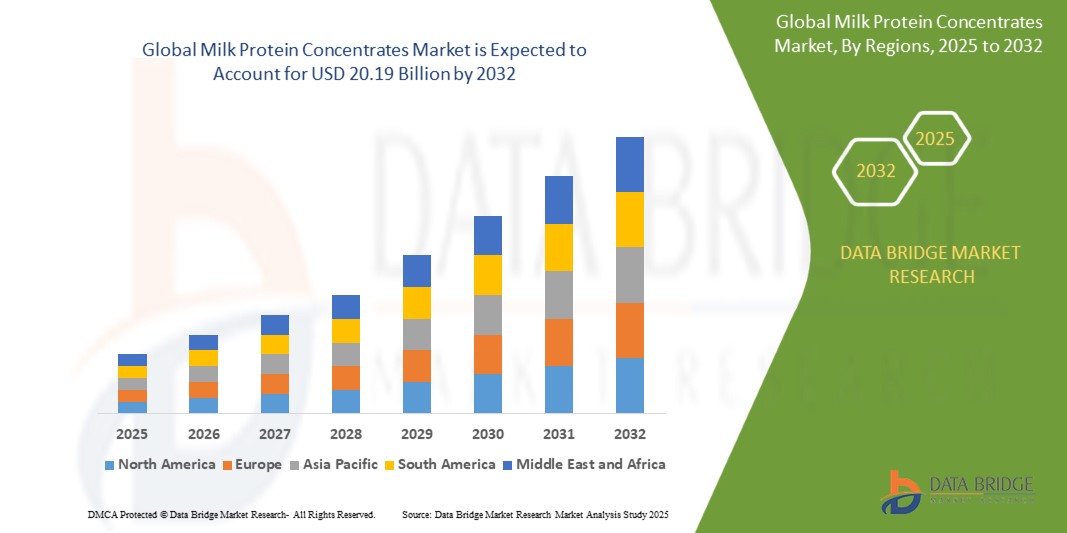
- The global milk protein concentrates market was valued at USD 13.67 billion in 2024 and is expected to reach USD 20.19 billion by 2032
- During the forecast period of 2025 to 2032 the market is likely to grow at a CAGR of 5.00%, primarily driven by rising health and wellness trends
- This growth is driven by factors such as high-protein diets, lactose sensitivity, and clean label preference
Milk Protein Concentrates Market Analysis
- Milk protein concentrates are dairy ingredients rich in proteins with low lactose content, known for their high nutritional value, functional versatility, and balanced amino acid profile, widely used in sports nutrition, dairy products, infant formula, and functional foods across health, wellness, and food processing industries
- Market growth is driven by increasing consumer demand for high-protein, clean-label, and functional foods, rising health and wellness awareness, and expanding use of milk protein concentrates in sports and clinical nutrition
- The market is evolving with advancements in processing technologies such as ultra-filtration and co-precipitation, enabling the production of high-protein concentrates with improved solubility, taste, and functional properties
- For instance, dairy ingredient manufacturers are developing customized milk protein concentrate blends with optimized protein content and enhanced digestibility to cater to specific nutritional applications such as elderly nutrition and sports recovery products
- The milk protein concentrates market is expected to witness consistent growth, supported by growing interest in protein-enriched diets, increased use in specialized nutrition sectors, and innovations in clean-label and sustainable dairy solutions
Report Scope and Milk Protein Concentrates Market Segmentation
|
Attributes |
Milk Protein Concentrates Key Market Insights |
|
Segments Covered |
|
|
Countries Covered |
North America
Europe
Asia-Pacific
Middle East and Africa
South America
|
|
Key Market Players |
|
|
Market Opportunities |
|
|
Value Added Data Infosets |
In addition to the insights on market scenarios such as market value, growth rate, segmentation, geographical coverage, and major players, the market reports curated by the Data Bridge Market Research also include in-depth expert analysis, pricing analysis, brand share analysis, consumer survey, demography analysis, supply chain analysis, value chain analysis, raw material/consumables overview, vendor selection criteria, PESTLE Analysis, Porter Analysis, and regulatory framework. |
Milk Protein Concentrates Market Trends
“Rising Number of Health-Conscious Consumers”
- One prominent trend in the global milk protein concentrates market is the rising number of health-conscious consumers
- This trend is driven by the growing awareness of the benefits of high-protein, nutrient-rich diets, the rise of fitness and wellness trends, and increasing demand for clean-label, functional food ingredients
- For instance, companies such as Abbott and Nestlé are investing in protein-enriched products to cater to the growing segment of health-focused consumers seeking protein-based solutions for weight management, muscle health, and overall wellness
- As consumers become more aware of the importance of protein in their daily diets, the demand for milk protein concentrates is increasing across a range of applications such as sports nutrition, weight management, and functional foods
- With the continuous rise in health awareness, along with the increasing preference for natural, protein-rich food ingredients, milk protein concentrates are expected to play a significant role in shaping future food innovation and market trends within the health and wellness sector
Milk Protein Concentrates Market Dynamics
Driver
“Expansion in Sports and Clinical Nutrition”
- The growing demand for functional, high-protein ingredients in sports and clinical nutrition is a major driver of growth in the milk protein concentrates market
- This shift is particularly noticeable in the development of sports nutrition supplements, meal replacement drinks, and clinical nutrition formulas, where consumers and healthcare providers are seeking high-quality, bioavailable protein sources to support muscle recovery, weight management, and overall health
- With the rise of fitness culture, health-conscious consumers, and an aging population, the use of milk protein concentrates in specialized nutritional products continues to expand, supporting personalized health solutions
- Key benefits such as high protein content, complete amino acid profiles, and low lactose content are shaping preferences in the sports and clinical nutrition sectors, alongside a growing focus on digestibility and bioavailability of protein
- Manufacturers are responding by developing milk protein concentrate formulations that are tailored to specific dietary needs, with a focus on improving solubility, taste, and functional properties
For instance,
- Nestlé has also introduced high-protein meal replacement shakes and bars, utilizing milk protein concentrates to provide sustained energy and muscle recovery for fitness enthusiasts
- Danone has expanded its sports nutrition line by incorporating milk protein concentrates into its protein-based yogurt products aimed at athletes looking for easily digestible, high-protein snacks
- As the demand for specialized nutrition continues to rise and consumers prioritize functional and high-quality ingredients, milk protein concentrates are expected to play a key role in shaping future innovations and product offerings in the sports and clinical nutrition markets
Opportunity
“Rising Trend of Consuming Plant Derived Protein Diet”
- The growing interest in plant-based diets presents a significant opportunity in the milk protein concentrates market. While consumers are increasingly adopting plant-based protein sources, the demand for animal-derived proteins such as milk protein concentrates continues to remain strong due to their high bioavailability and complete amino acid profile
- As plant-based protein consumption rises, there is a growing demand for hybrid products that combine the benefits of both plant and animal proteins, allowing for improved nutritional balance and digestibility
- Manufacturers are capitalizing on this trend by developing innovative formulations that blend milk protein concentrates with plant-derived proteins, creating products that appeal to consumers seeking a more balanced protein intake without fully eliminating animal-based ingredients
For instance,
- Companies such as Arla Foods and Fonterra are exploring the development of hybrid protein products, combining milk proteins with pea or rice proteins to cater to the growing market of flexitarians and health-conscious consumers
- The Vital Proteins brand has introduced a new line of blended protein powders, combining milk protein concentrates with plant-based protein sources such as hemp and pea protein, offering consumers a blend that meets both their nutritional and dietary preferences
- As the demand for plant-based diets continues to rise, the opportunity for milk protein concentrates lies in developing hybrid products that combine the nutritional benefits of both animal and plant proteins, catering to the growing segment of health-conscious and flexitarian consumers seeking balanced and sustainable protein sources
Restraint/Challenge
“Increasing Substitution of the Product”
- The rising substitution of milk protein concentrates by alternative protein sources presents a significant challenge in the market. As consumers and manufacturers explore various protein options, the popularity of plant-based proteins and other animal-derived proteins, such as whey and casein, is intensifying
- These alternative proteins, often perceived as more sustainable, cost-effective, or catering to dietary preferences, are gaining traction across food and beverage applications, particularly in sports nutrition, plant-based products, and meal replacements
- Increased consumer interest in plant-based diets and the availability of diverse plant proteins, such as pea, soy, and hemp protein, make it challenging for milk protein concentrates to maintain a dominant position in the market
For instance,
- Companies such as Beyond Meat and Impossible Foods are rapidly expanding their plant-based offerings, creating alternatives that appeal to health-conscious and environmentally aware consumers
- The increasing substitution of milk protein concentrates by plant-based and alternative proteins poses a significant challenge, as manufacturers must innovate and differentiate their products to maintain market share amidst rising consumer demand for sustainable and diverse protein sources
Milk Protein Concentrates Market Scope
The market is segmented on the basis of ingredient type, preparation method, nature, form, content, application, end use, and distribution channel.
|
Segmentation |
Sub-Segmentation |
|
By Ingredient Type |
|
|
By Preparation Method |
|
|
By Nature |
|
|
By Form
|
|
|
By Content |
|
|
By Application |
|
|
By End Use |
|
|
By Distribution Channel |
|
Milk Protein Concentrates Market Regional Analysis
“North America is the Dominant Region in the Milk Protein Concentrates Market”
- North America dominates the milk protein concentrates market, driven by the rising health consciousness and a surge in fitness activities that spur demand for sports nutrition and protein-rich supplements
- U.S. holds a significant share due to a well-established health and wellness industry, advanced retail infrastructure, and significant investments in product innovation
- Robust investments in research and development, along with a strong focus on product innovation, have enabled market players to offer high-quality milk protein concentrates that meet evolving dietary preferences
- Furthermore, the increasing emphasis on clean-label and naturally sourced ingredients aligns well with consumer demand in North America, reinforcing the market’s dominant position
“Europe is Projected to Register the Highest Growth Rate”
- Europe is expected to witness the highest growth rate in the milk protein concentrates market driven by increasing demand for nutritional supplements, functional foods, and government-backed initiatives to support maternal and infant nutrition
- Germany is emerging as a key growth market within the region, with active investments aimed at enhancing the nutritional health of infants and pregnant women, along with a strong dairy industry supporting innovation in protein-based formulations
- The rising trend of functional foods and dietary supplements among European consumers is further increasing the demand for milk protein concentrates
- In addition, industry collaborations and innovations in formulation strategies are expected to boost market growth, positioning Europe as the fastest-growing regional segment from 2025 to 2032
Milk Protein Concentrates Market Share
The market competitive landscape provides details by competitor. Details included are company overview, company financials, revenue generated, market potential, investment in research and development, new market initiatives, global presence, production sites and facilities, production capacities, company strengths and weaknesses, product launch, product width and breadth, application dominance. The above data points provided are only related to the companies' focus related to market.
The Major Market Leaders Operating in the Market Are:
- Fonterra Co-operative Group Limited (New Zealand)
- Glanbia plc (Ireland)
- Arla Foods amb (Denmark)
- Westland Milk Products (New Zealand)
- Idaho Milk Products (U.S.)
- AMCO Proteins (U.S.)
- Nutrinnovate Australia (Australia)
- Hoogwegt (Netherlands)
- LACTALIS Ingredients (France)
- Tatura Milk Industries Pty. Ltd. (Australia)
- Grassland Dairy products (U.S.)
Latest Developments in Global Milk Protein Concentrates Market
- In November 2023, leading Finnish dairy company Valio introduced its new milk protein concentrate, Valio Eila MPC 65, strengthening its position in the global milk protein concentrates market. With Valio’s advanced expertise in lactose-free milk protein development, this launch is expected to support rising consumer demand for healthier, better-tasting, and high-protein products, giving the company a competitive edge and contributing to overall market growth through innovation in functional and specialty dairy ingredients
- In January 2023, Molvest Group expanded its production capabilities by launching new facilities at its Kalach plant in the Voronezh Region for the intensive processing of milk into milk protein concentrate, with an investment of approximately 2 billion rubles, according to the regional government's press center. This strategic expansion is expected to boost the company’s production capacity, strengthen its foothold in the milk protein concentrates market, and support the growing regional and international demand for high-quality dairy protein ingredients

- Interactive Data Analysis Dashboard
- Company Analysis Dashboard for high growth potential opportunities
- Research Analyst Access for customization & queries
- Competitor Analysis with Interactive dashboard
- Latest News, Updates & Trend analysis
- Harness the Power of Benchmark Analysis for Comprehensive Competitor Tracking
Global Milk Protein Concentrates Market, Supply Chain Analysis and Ecosystem Framework
To support market growth and help clients navigate the impact of geopolitical shifts, DBMR has integrated in-depth supply chain analysis into its Global Milk Protein Concentrates Market research reports. This addition empowers clients to respond effectively to global changes affecting their industries. The supply chain analysis section includes detailed insights such as Global Milk Protein Concentrates Market consumption and production by country, price trend analysis, the impact of tariffs and geopolitical developments, and import and export trends by country and HSN code. It also highlights major suppliers with data on production capacity and company profiles, as well as key importers and exporters. In addition to research, DBMR offers specialized supply chain consulting services backed by over a decade of experience, providing solutions like supplier discovery, supplier risk assessment, price trend analysis, impact evaluation of inflation and trade route changes, and comprehensive market trend analysis.
Data collection and base year analysis are done using data collection modules with large sample sizes. The stage includes obtaining market information or related data through various sources and strategies. It includes examining and planning all the data acquired from the past in advance. It likewise envelops the examination of information inconsistencies seen across different information sources. The market data is analysed and estimated using market statistical and coherent models. Also, market share analysis and key trend analysis are the major success factors in the market report. To know more, please request an analyst call or drop down your inquiry.
The key research methodology used by DBMR research team is data triangulation which involves data mining, analysis of the impact of data variables on the market and primary (industry expert) validation. Data models include Vendor Positioning Grid, Market Time Line Analysis, Market Overview and Guide, Company Positioning Grid, Patent Analysis, Pricing Analysis, Company Market Share Analysis, Standards of Measurement, Global versus Regional and Vendor Share Analysis. To know more about the research methodology, drop in an inquiry to speak to our industry experts.
Data Bridge Market Research is a leader in advanced formative research. We take pride in servicing our existing and new customers with data and analysis that match and suits their goal. The report can be customized to include price trend analysis of target brands understanding the market for additional countries (ask for the list of countries), clinical trial results data, literature review, refurbished market and product base analysis. Market analysis of target competitors can be analyzed from technology-based analysis to market portfolio strategies. We can add as many competitors that you require data about in the format and data style you are looking for. Our team of analysts can also provide you data in crude raw excel files pivot tables (Fact book) or can assist you in creating presentations from the data sets available in the report.













