


Minimally Invasive Neurosurgery Market Size
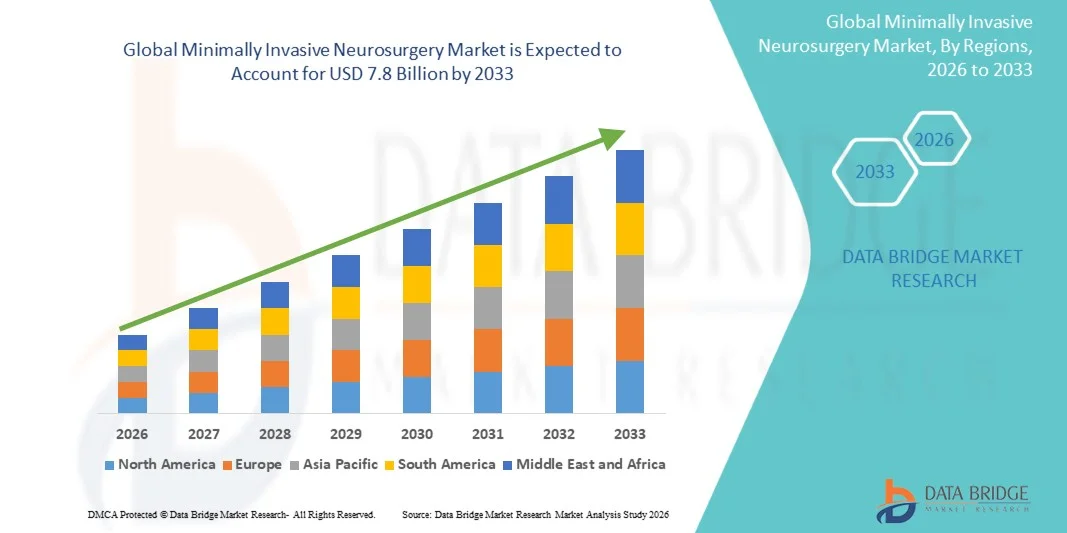
- The global Minimally Invasive Neurosurgery market size was valued at USD 3.2 billion in 2025 and is expected to reach USD 7.8 billion by 2033, at a CAGR of 8% during the forecast period.
- Market growth is primarily driven by rising prevalence of neurological disorders such as brain tumors, spinal cord injuries, epilepsy, and Parkinson's disease, increasing adoption of advanced surgical tools such as neuroendoscopes and robotic-assisted surgical platforms, and growing demand for procedures that minimize patient recovery time, post-operative complications, and hospital stays.
- Additionally, growing investments in neurotechnology and medical robotics, expansion of healthcare infrastructure in emerging economies, increasing geriatric population susceptible to neurological conditions, and rising awareness among surgeons and patients about the clinical benefits of minimally invasive approaches are supporting strong global market expansion.
Minimally Invasive Neurosurgery Market Analysis
- Minimally invasive neurosurgery, encompassing techniques such as neuroendoscopy, stereotactic radiosurgery, laser interstitial thermal therapy (LITT), and robotic-assisted surgery, enables surgeons to perform complex intracranial and spinal procedures with reduced tissue damage, lower infection risk, and faster patient recovery compared to traditional open surgery.
- The growing demand for minimally invasive neurosurgery is driven by increasing incidence of brain and spine disorders globally, rapid technological advancement in imaging guidance (intraoperative MRI and CT), growing adoption of neuronavigation systems, and surging use of robotic platforms such as the Mazor X and ROSA Brain in complex neurosurgical procedures.
- North America dominated the Minimally Invasive Neurosurgery market with a share of 40.2% in 2025, supported by a mature healthcare infrastructure, high surgical volume for neurological conditions, presence of leading medical device manufacturers, strong reimbursement frameworks, and high adoption rates of advanced neurosurgical platforms in the United States.
- Asia-Pacific is expected to be the fastest-growing region with a cagr of 13.5%, driven by rapidly expanding healthcare access in China, India, Japan, and South Korea, growing neurological disease burden, increasing medical tourism, and rising investment in advanced surgical robotics and neurology centers.
- The Neurostimulation Devices segment dominated the market with a share of 31.4%, due to its precision, shorter learning curves for surgeons, reduced complication rates, and strong backing from clinical evidence supporting outcomes in spinal and cranial procedures.
Report Scope and Minimally Invasive Neurosurgery Market Segmentation
|
Attributes |
Minimally Invasive Neurosurgery Key Market Insights |
|
Segments Covered |
· By Product Type: Neuroendoscopes, Neurostimulation Devices, Robotic Systems, Surgical Navigation Systems, Other Instruments · By Application: Brain Tumor Surgery, Spinal Disorder Surgery, Epilepsy Treatment, Parkinson's Disease Treatment, Other Neurological Applications · By End User: Hospitals, Ambulatory Surgical Centers (ASCs), Specialty Neurology Clinics, Academic & Research Institutes · By Technique: Neuroendoscopy, Stereotactic Radiosurgery, Laser Interstitial Thermal Therapy (LITT), Robotic-Assisted Surgery, Other Techniques |
|
Countries Covered |
North America: · US · Canada · Mexico Europe: · Germany · France · UK · Netherlands · Switzerland · Italy · Spain · Rest of Europe Asia-Pacific: · China · Japan · India · South Korea · Singapore · Australia · Rest of Asia-Pacific Middle East & Africa: · Saudi Arabia · UAE · South Africa · Rest of MEA South America: · Brazil · Argentina · Rest of South America |
|
Key Market Players |
· Medtronic plc (Ireland) · Stryker Corporation (US) · Zimmer Biomet Holdings (US) · Integra LifeSciences (US) · Boston Scientific Corporation (US) · Brainlab AG (Germany) · Synaptive Medical (Canada) · CONMED Corporation (US) · NuVasive Inc (US) · Karl Storz GmbH (Germany) · Globus Medical (US) · Microbot Medical (Israel) |
|
Market Opportunities |
· Growing adoption of AI-powered intraoperative imaging and neuronavigation is enhancing surgical precision and safety. · Rising demand for outpatient and same-day neurosurgical procedures is driving expansion of ASC-based minimally invasive programs. · Increasing use of robotics in spine surgery is creating significant opportunities for next-generation robotic neurosurgical platforms. |
|
Value Added Data Infosets |
In addition to the insights on market scenarios such as market value, growth rate, segmentation, geographical coverage, and major players, the market reports curated by the Data Bridge Market Research also include in-depth expert analysis, patient epidemiology, pipeline analysis, pricing analysis, and regulatory framework |
Minimally Invasive Neurosurgery Market Trends
"Growing adoption of robotic-assisted neurosurgery is transforming surgical outcomes and driving market expansion"
- Growing adoption of robotic-assisted neurosurgical platforms is creating significant opportunities in the global minimally invasive neurosurgery market by enhancing procedural precision, reducing human error, and enabling surgeons to perform complex intracranial and spinal operations through smaller incisions.
- These systems allow real-time 3D visualization, tremor filtration, and sub-millimeter accuracy, significantly improving patient outcomes in delicate neurosurgical procedures.
- Increasing implementation in brain tumor resection, spinal deformity correction, deep brain stimulation (DBS), and minimally invasive spinal fusion is supporting reduced blood loss, shorter ICU stays, and faster return-to-function for patients.
- Rising focus on reducing post-operative complications, hospital readmissions, and total episode costs is accelerating hospital investment in robotic surgical infrastructure.
- Advancements in haptic feedback, AI-integrated surgical planning, and cloud-based data sharing are expanding robotic platform capabilities and clinical applicability.
- Growing interest from neurosurgeons in adopting robotic systems to manage high-complexity case volumes and improve reproducibility of outcomes is further fueling market growth.
- Expansion of surgical robotics training programs and increasing FDA approvals for new neurosurgical robotic indications are further driving integration of robotic solutions globally.
- Overall, robotic-assisted neurosurgery is transforming neurosurgical practice toward a more precise, efficient, and patient-centric care model.
Minimally Invasive Neurosurgery Market Dynamics
Driver
"Rising prevalence of neurological disorders and increasing demand for advanced surgical solutions is driving market growth"
- Rising global prevalence of neurological disorders including brain tumors, spinal stenosis, Parkinson's disease, epilepsy, and cerebrovascular diseases is a key driver of the minimally invasive neurosurgery market, creating sustained demand for innovative surgical interventions.
- According to the World Health Organization (WHO), neurological conditions are among the leading causes of disability and death worldwide, intensifying demand for effective and minimally disruptive surgical solutions.
- Increasing surgical volumes for intracranial and spinal procedures are propelling adoption of neuroendoscopes, navigation platforms, and robotic systems in leading neurosurgical centers.
- Growth in aging populations globally, who are disproportionately susceptible to degenerative spinal conditions, movement disorders, and brain tumors, is significantly expanding the patient pool for neurosurgical intervention.
- Rising awareness among both surgeons and patients about superior clinical outcomes associated with minimally invasive techniques including reduced pain, shorter hospital stays, and lower complication rates is further boosting adoption.
- Increasing insurance and reimbursement coverage for minimally invasive neurosurgical procedures in developed markets is reducing financial barriers and supporting procedure volume growth.
- Expanding neurosurgery departments in hospitals and the proliferation of dedicated neuroscience institutes are creating favorable environments for rapid technology adoption and market expansion.
Restraint / Challenge
"High capital costs of advanced neurosurgical systems and limited skilled surgeon availability are limiting market penetration"
- High acquisition and maintenance costs of robotic surgical platforms, intraoperative imaging systems, and neuronavigation infrastructure present a significant restraint for market expansion, particularly in cost-sensitive healthcare systems and emerging markets.
- Robotic neurosurgical systems such as the Mazor X and ROSA Brain require multimillion-dollar investments alongside substantial training programs, creating adoption barriers for mid-tier and community hospitals.
- Steep learning curves associated with advanced minimally invasive neurosurgical techniques, combined with limited availability of formally trained neurosurgeons in certain regions, are slowing broader market adoption.
- Inadequate reimbursement structures in several developing economies for minimally invasive neurosurgery procedures restrict volume growth and return-on-investment for hospital investments.
- Risk of technical malfunctions in complex robotic systems and limited long-term safety data for newer technologies may slow clinician confidence and delay institutional adoption decisions.
- Regulatory approval timelines for novel neurosurgical devices and platforms, particularly in highly regulated markets like the U.S. and EU, further delay technology commercialization.
- These combined factors collectively create cost, access, and skill barriers that act as key restraints in the global minimally invasive neurosurgery market.
Minimally Invasive Neurosurgery Market Scope
The market is segmented on the basis of product type, application, end user, and technique.
By Product Type
On the basis of Product Type, the global Minimally Invasive Neurosurgery market is segmented into Neuroendoscopes, Neurostimulation Devices, Robotic Systems, Surgical Navigation Systems, and Other Instruments.
The Neurostimulation Devices segment dominated the market with the largest revenue share of 31.4% in 2025, driven by widespread adoption in managing Parkinson's disease, essential tremor, epilepsy, and chronic pain through deep brain stimulation (DBS) and spinal cord stimulation (SCS) systems. Strong clinical evidence supporting neurostimulation outcomes and growing indications for its use across multiple neurological conditions are reinforcing segment leadership.
The Robotic Systems segment is expected to witness the fastest growth of 14.7% during the forecast period, fueled by rising demand for surgical precision and reproducibility in complex intracranial and spinal procedures. Increasing FDA approvals for new robotic indications, growing hospital capital expenditure on robotic infrastructure, and strong clinical adoption among academic medical centers are significantly driving segment expansion.
By Application
On the basis of Application, the global Minimally Invasive Neurosurgery market is segmented into Brain Tumor Surgery, Spinal Disorder Surgery, Epilepsy Treatment, Parkinson's Disease Treatment, and Other Neurological Applications.
The Brain Tumor Surgery segment dominated the market with a share of 34.8% in 2025, driven by the rising global prevalence of primary and metastatic brain tumors, increasing demand for minimally invasive surgical procedures, and continuous advancements in neuronavigation, neuroendoscopy, intraoperative imaging, and robotic-assisted surgical technologies. Growing preference for procedures associated with smaller incisions, reduced hospital stays, faster recovery times, and lower postoperative complications has accelerated the adoption of minimally invasive brain tumor surgeries across hospitals and specialized neurosurgical centers.
The Parkinson's Disease Treatment segment is expected to witness the fastest growth of 13.2% during the forecast period, fueled by the rising global prevalence of Parkinson’s disease, increasing geriatric population, and growing demand for advanced minimally invasive neurosurgical procedures such as deep brain stimulation (DBS). Continuous technological advancements in neurostimulation devices, robotic-assisted neurosurgery, and image-guided surgical systems are improving treatment precision and patient outcomes, thereby accelerating market adoption.
By End User
On the basis of End User, the global Minimally Invasive Neurosurgery market is segmented into Hospitals, Ambulatory Surgical Centers (ASCs), Specialty Neurology Clinics, and Academic & Research Institutes.
The Hospitals segment dominated the market with a share of 58.6% in 2025, driven by the high complexity and volume of neurosurgical procedures performed in tertiary care and teaching hospitals, strong infrastructure for advanced imaging and neuromonitoring, and availability of multidisciplinary neurosurgical teams for complex case management.
The Ambulatory Surgical Centers (ASCs) segment is expected to witness the fastest growth with a cagr of 12.9% during the forecast period, fueled by rising trend toward outpatient and same-day neurosurgical procedures, growing preference for cost-efficient care settings, increasing payer support for ASC-based minimally invasive spine and cranial procedures, and expansion of ASC networks in the U.S. and Europe.
By Technique
On the basis of Technique, the global Minimally Invasive Neurosurgery market is segmented into Neuroendoscopy, Stereotactic Radiosurgery, Laser Interstitial Thermal Therapy (LITT), Robotic-Assisted Surgery, and Other Techniques.
The Neuroendoscopy segment dominated the market with a share of 29.3% in 2025, driven by its broad application across ventricular surgery, endoscopic skull base procedures, cyst fenestration, and hydrocephalus management, supported by widespread availability of neuroendoscopic systems and strong surgeon familiarity with the technique across global neurosurgical centers.
The Laser Interstitial Thermal Therapy (LITT) segment is expected to witness the fastest growth of 15.8% during the forecast period, fueled by increasing demand for minimally invasive neurosurgical procedures, rising prevalence of brain tumors and drug-resistant epilepsy, and continuous advancements in MRI-guided laser ablation technologies. The growing preference for treatments associated with reduced surgical trauma, shorter hospital stays, faster recovery, and improved precision is accelerating the adoption of LITT across neurosurgical centers worldwide.
Minimally Invasive Neurosurgery Market Regional Analysis
-
North America dominated the Minimally Invasive Neurosurgery market with the largest revenue share in 2025, supported by high prevalence of neurological disorders, advanced neurosurgical infrastructure, significant hospital capital investment in robotic and navigation systems, and a strong regulatory environment that enables rapid device approvals. The presence of leading market players such as Medtronic, Stryker, and Boston Scientific further strengthens the region's leadership position.
-
Industries across the region place strong emphasis on clinical outcomes-based care, precision surgical intervention, and value-based healthcare delivery, driving widespread adoption of minimally invasive neurosurgical techniques across major neuroscience centers. Increasing reimbursement support for robotic-assisted and image-guided procedures from CMS and private insurers is further accelerating procedure volume growth.
-
This strong market position is further supported by high neurosurgical subspecialty training infrastructure, robust clinical trial ecosystem, strong integration of intraoperative imaging and neuronavigation in routine surgical workflows, and expanding adoption of robotic platforms in both academic and community hospital settings across North America.
U.S. Minimally Invasive Neurosurgery Market Insight
The U.S. Minimally Invasive Neurosurgery market holds a dominant position globally, driven by the highest neurosurgical procedure volumes, extensive presence of dedicated neurosurgical centers of excellence, leading robotics adoption, and robust reimbursement coverage. Widespread use of intraoperative MRI, neuronavigation, laser ablation (LITT), and deep brain stimulation across major U.S. academic medical centers is significantly supporting market growth. Additionally, strong investment in neurotechnology startups, growing clinical evidence for robotic-assisted techniques, and expanding indications for minimally invasive approaches in pediatric and adult neurosurgery are further strengthening market expansion.
Europe Minimally Invasive Neurosurgery Market Insight
The Europe Minimally Invasive Neurosurgery market is witnessing steady growth, driven by strong demand from Germany, France, the U.K., and the Netherlands, where advanced neurosurgical capabilities, well-funded public healthcare systems, and increasing clinical adoption of robotic and endoscopic platforms are supporting market development. Rising patient volumes for spinal disorders, growing use of stereotactic radiosurgery (Gamma Knife, CyberKnife), and increasing EU-level investments in medical robotics research are further accelerating market growth across the region.
U.K. Minimally Invasive Neurosurgery Market Insight
The U.K. Minimally Invasive Neurosurgery market is experiencing steady growth, driven by NHS investment in advanced neurosurgical technologies, increasing adoption of neuroendoscopy and robotic spine systems, and expanding clinical programs at major neuroscience centers. Growing use of deep brain stimulation for movement disorders, rising epilepsy surgery volumes, and increasing research into MRI-guided focused ultrasound (MRgFUS) are further supporting market development across the country.
Germany Minimally Invasive Neurosurgery Market Insight
The Germany Minimally Invasive Neurosurgery market is expected to grow steadily during the forecast period, driven by Germany's advanced medical device ecosystem, strong neurosurgical training programs, and increasing adoption of robotic and image-guided neurosurgical systems across university hospitals and private clinics. Rising incidence of spinal disorders, growing demand for stereotactic neurosurgery, and strong collaboration between medical device manufacturers and academic neurosurgical centers are contributing to sustained market expansion.
Japan Minimally Invasive Neurosurgery Market Insight
The Japan Minimally Invasive Neurosurgery market is witnessing steady growth, driven by its aging population with high neurological disease burden, advanced healthcare infrastructure, strong government support for robotics in medicine, and increasing adoption of endoscopic and robotic-assisted techniques in leading Japanese neurosurgery hospitals. Japan's focus on precision medicine and technological innovation is further supporting adoption of next-generation minimally invasive neurosurgical platforms.
India Minimally Invasive Neurosurgery Market Insight
The India Minimally Invasive Neurosurgery market is experiencing strong growth, driven by rapidly expanding healthcare infrastructure, rising neurological disease burden, increasing number of trained neurosurgeons, and growing medical tourism for complex brain and spine surgeries. Government initiatives to modernize healthcare facilities, increasing private hospital investment in robotic and endoscopic neurosurgical systems, and growing patient awareness of minimally invasive surgical options are further strengthening market growth across the country.
Minimally Invasive Neurosurgery Market Share
The Minimally Invasive Neurosurgery industry is primarily led by well-established companies, including:
- Medtronic plc (Ireland)
- Stryker Corporation (U.S.)
- Zimmer Biomet Holdings (U.S.)
- Integra LifeSciences Corporation (U.S.)
- Boston Scientific Corporation (U.S.)
- Brainlab AG (Germany)
- Synaptive Medical (Canada)
- CONMED Corporation (U.S.)
- NuVasive Inc. (U.S.)
- Karl Storz GmbH & Co. KG (Germany)
- Globus Medical Inc. (U.S.)
- Microbot Medical Inc. (Israel)
Latest Developments in Global Neurointerventional Surgery Market
- In March 2026, CereVasc, Inc. reported positive clinical outcomes for its eShunt System, demonstrating sustained intracranial pressure reduction through a minimally invasive endovascular approach, highlighting advancements in non-surgical neurosurgical interventions.
- In 2026, Zimmer Biomet continued advancement of robotic-assisted platforms such as ROSA ONE Brain, enhancing precision and enabling complex minimally invasive neurosurgical procedures with improved outcomes.
- In March 2026, A next-generation non-invasive neurosurgical platform (ZAP-X Gyroscopic Neuro-Radiosurgery) was introduced in India, enabling incision-free brain tumor treatment with same-day patient discharge, highlighting the shift toward outpatient minimally invasive procedures.
- In November 2025: India introduced a hybrid neurosurgical operating theatre integrating minimally invasive and open surgical procedures, improving surgical precision, reducing procedure time, and enhancing patient outcomes.

- Interactive Data Analysis Dashboard
- Company Analysis Dashboard for high growth potential opportunities
- Research Analyst Access for customization & queries
- Competitor Analysis with Interactive dashboard
- Latest News, Updates & Trend analysis
- Harness the Power of Benchmark Analysis for Comprehensive Competitor Tracking
Data collection and base year analysis are done using data collection modules with large sample sizes. The stage includes obtaining market information or related data through various sources and strategies. It includes examining and planning all the data acquired from the past in advance. It likewise envelops the examination of information inconsistencies seen across different information sources. The market data is analysed and estimated using market statistical and coherent models. Also, market share analysis and key trend analysis are the major success factors in the market report. To know more, please request an analyst call or drop down your inquiry.
The key research methodology used by DBMR research team is data triangulation which involves data mining, analysis of the impact of data variables on the market and primary (industry expert) validation. Data models include Vendor Positioning Grid, Market Time Line Analysis, Market Overview and Guide, Company Positioning Grid, Patent Analysis, Pricing Analysis, Company Market Share Analysis, Standards of Measurement, Global versus Regional and Vendor Share Analysis. To know more about the research methodology, drop in an inquiry to speak to our industry experts.
Data Bridge Market Research is a leader in advanced formative research. We take pride in servicing our existing and new customers with data and analysis that match and suits their goal. The report can be customized to include price trend analysis of target brands understanding the market for additional countries (ask for the list of countries), clinical trial results data, literature review, refurbished market and product base analysis. Market analysis of target competitors can be analyzed from technology-based analysis to market portfolio strategies. We can add as many competitors that you require data about in the format and data style you are looking for. Our team of analysts can also provide you data in crude raw excel files pivot tables (Fact book) or can assist you in creating presentations from the data sets available in the report.













