


Mirtazapine Drug Market Size
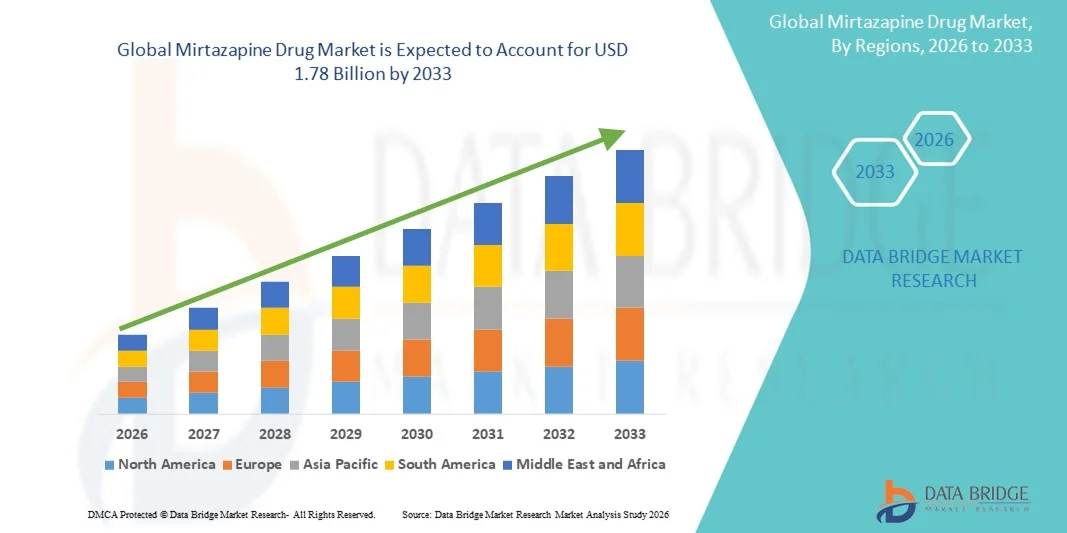
- The global mirtazapine drug market size was valued at USD 1.21 billion in 2025 and is expected to reach USD 1.78 billion by 2033, at a CAGR of 5.00% during the forecast period
- The market growth is largely fueled by the increasing prevalence of depression, anxiety disorders, and insomnia worldwide, leading to a surge in demand for effective antidepressant and mood-stabilizing medications such as Mirtazapine. The growing awareness about mental health, combined with improved diagnostic rates and greater access to psychiatric care, has significantly contributed to the market expansion across both developed and emerging economies
- Furthermore, rising prescription rates due to the drug’s dual-action mechanism—enhancing both serotonin and norepinephrine activity—make Mirtazapine a preferred treatment option among healthcare professionals for major depressive disorder and generalized anxiety disorder. These converging factors are accelerating the uptake of Mirtazapine Drug solutions, thereby significantly boosting the industry's growth
Mirtazapine Drug Market Analysis
- Mirtazapine, a tetracyclic antidepressant, is increasingly being prescribed for the treatment of major depressive disorder (MDD), generalized anxiety disorder (GAD), and insomnia associated with depression. Its dual mechanism of action—enhancing noradrenergic and serotonergic activity—makes it highly effective for patients who are resistant to selective serotonin reuptake inhibitors (SSRIs). The drug’s additional benefits, such as improved sleep quality and appetite stimulation, have further increased its clinical preference among psychiatrists and healthcare providers
- The escalating demand for Mirtazapine is primarily fueled by the growing global prevalence of mental health disorders, lifestyle-induced stress, and rising awareness about the importance of early psychiatric intervention. Furthermore, the increasing availability of generic formulations and expanding distribution through online and retail pharmacies are boosting accessibility and affordability, thereby driving market growth
- North America dominated the mirtazapine drug market with the largest revenue share of 41.22% in 2025, driven by advanced healthcare infrastructure, strong presence of leading pharmaceutical companies, and high diagnosis rates for depressive and anxiety disorders. The U.S. remains the key contributor to the regional market, supported by favorable reimbursement policies, increasing prescription volumes, and rising adoption of combination therapies for mood stabilization and sleep improvement
- Asia-Pacific is expected to be the fastest-growing region in the mirtazapine drug market during the forecast period, projected to expand at a CAGR from 2026 to 2033, owing to increasing mental health awareness, expanding healthcare access, and government initiatives promoting psychiatric well-being. Countries such as India, China, and Japan are witnessing significant demand due to growing stress-related disorders among working populations and the integration of mental health services in primary healthcare systems
- The Adult segment dominated the market with the largest revenue share of 71.2% in 2025, owing to high prevalence of depressive and anxiety disorders among working-age populations
Report Scope and Mirtazapine Drug Market Segmentation
|
Attributes |
Mirtazapine Drug Key Market Insights |
|
Segments Covered |
|
|
Countries Covered |
North America
Europe
Asia-Pacific
Middle East and Africa
South America
|
|
Key Market Players |
|
|
Market Opportunities |
|
|
Value Added Data Infosets |
In addition to the insights on market scenarios such as market value, growth rate, segmentation, geographical coverage, and major players, the market reports curated by the Data Bridge Market Research also include in-depth expert analysis, patient epidemiology, pipeline analysis, pricing analysis, and regulatory framework. |
Mirtazapine Drug Market Trends
Advancements in AI-Based Drug Discovery and Personalized Treatment Approaches
- A significant and accelerating trend in the global mirtazapine drug market is the deepening integration of artificial intelligence (AI) and machine learning (ML) technologies in drug discovery, clinical trial optimization, and personalized medicine. This transformation is enhancing precision, reducing development timelines, and improving treatment outcomes for patients suffering from major depressive disorder (MDD), anxiety, and insomnia
- For instance, leading pharmaceutical firms are utilizing AI-powered platforms to analyze genomic and clinical data, enabling the identification of patient subgroups that respond most effectively to Mirtazapine. This allows for targeted therapeutic regimens that minimize adverse effects and improve efficacy
- AI integration also assists in predicting drug-drug interactions, optimizing dosage levels, and identifying biomarkers associated with Mirtazapine responsiveness. Furthermore, the rise of digital health tools and mobile applications allows real-time monitoring of depressive symptom patterns, helping clinicians adjust treatment more accurately
- The integration of digital therapeutics with pharmacological treatment has given rise to hybrid therapy models, where Mirtazapine usage is complemented with data-driven behavioral insights to improve mental health management. This trend is revolutionizing the antidepressant therapy landscape
- Pharmaceutical companies are also investing in AI-based pharmacovigilance systems that can detect rare side effects early through big data analysis, improving drug safety and post-marketing surveillance
- This growing trend toward more intelligent, predictive, and patient-centric treatment development is fundamentally reshaping the Mirtazapine Drug market. Consequently, companies such as Pfizer, Organon, and Teva are increasingly focusing on AI partnerships and advanced analytics to enhance R&D efficiency and expand therapeutic applications of Mirtazapine in neurological and mood disorders
- The demand for innovative, digitally supported antidepressant solutions is increasing rapidly across healthcare sectors, as patients and providers seek more effective, personalized, and safe treatments for depression, anxiety, and related psychiatric disorders
Mirtazapine Drug Market Dynamics
Driver
Rising Prevalence of Depression and Anxiety Disorders Worldwide
- The global surge in depression, anxiety, and sleep-related disorders is a major driver for the increasing demand for Mirtazapine drugs. Rising stress levels, lifestyle changes, and the lingering psychological effects of the COVID-19 pandemic have significantly increased the need for effective antidepressant treatments
- For instance, in February 2024, the World Health Organization reported that mental health conditions affect over 970 million people globally, underscoring the growing clinical need for safe and well-tolerated antidepressants such as Mirtazapine
- Mirtazapine is widely recognized for its dual mechanism of action, combining noradrenergic and serotonergic activity with a favorable side-effect profile compared to traditional SSRIs and tricyclic antidepressants
- Increasing prescription rates across psychiatric and general practice settings are also driven by its efficacy in addressing both depression and comorbid anxiety or insomnia, offering a broad therapeutic scope
- Moreover, expanding awareness campaigns and mental health initiatives by governments and NGOs are promoting early diagnosis and pharmacological intervention, fueling the market’s expansion
- The growing elderly population, which is particularly susceptible to depression linked to chronic illness and isolation, is also boosting the use of Mirtazapine due to its tolerability in geriatric patients
- Rising R&D investments by pharmaceutical companies in next-generation formulations—such as extended-release tablets and orally disintegrating versions—further contribute to sustained market demand
- The combination of strong clinical efficacy, multi-symptom relief, and global mental health awareness is driving robust growth in the Mirtazapine Drug market
Restraint/Challenge
Side Effects, Patent Expirations, and Generic Competition
- Despite its therapeutic success, the Mirtazapine Drug market faces challenges associated with adverse effects such as weight gain, sedation, and dizziness, which may limit patient adherence in long-term treatment plans
- In addition, the expiration of key patents and increasing availability of low-cost generics have intensified pricing pressures, reducing profit margins for branded formulations
- For instance, after the patent expiration of Remeron (originally by Organon), multiple generic manufacturers entered the market, heightening competition and driving down overall revenues for established players
- Regulatory hurdles in gaining approval for new formulations and regional differences in healthcare reimbursement also act as barriers to market penetration
- Moreover, concerns about antidepressant overprescription and dependency risks are prompting some clinicians to adopt cautious prescribing patterns, particularly in adolescent and geriatric populations
- Growing consumer preference for alternative therapies such as herbal and nutraceutical antidepressants (e.g., St. John’s Wort or S-adenosylmethionine) further presents competition
- Pharmaceutical firms are now focusing on mitigating these restraints through strategic pricing, expanding in emerging markets, and launching improved delivery systems with fewer side effects
- Overcoming these challenges through continued clinical innovation, regulatory compliance, and patient education initiatives will be vital for the sustained growth of the global Mirtazapine Drug market
Mirtazapine Drug Market Scope
The market is segmented on the basis of type, dosage, application, demographic, end-user, and distribution channel.
- By Type
On the basis of type, the Mirtazapine Drug market is segmented into 15mg Tablet, 30mg Tablet, and 45mg Tablet. The 30mg tablet segment dominated the market with the largest revenue share of 47.6% in 2025, primarily due to its optimal dosage effectiveness and balanced safety profile for treating moderate to severe depression. It is widely prescribed as a first-line therapy in psychiatric practice, offering faster symptom relief and fewer side effects compared to other antidepressants. The segment’s strong performance is also supported by its use across adult and geriatric populations, along with the availability of multiple generic brands globally. Pharmaceutical companies continue to expand their 30mg product portfolios, enhancing accessibility in both developed and emerging markets through improved formulations such as orally disintegrating tablets. The 30mg dosage’s proven efficacy and affordability reinforce its role as a preferred treatment option for major depressive disorder and anxiety-related conditions.
The 45mg tablet segment is anticipated to witness the fastest CAGR of 8.6% from 2026 to 2033, driven by growing clinical adoption in severe and treatment-resistant depression cases. Physicians increasingly prefer this higher-dose formulation for patients who exhibit inadequate response to lower doses. Moreover, ongoing studies suggest enhanced efficacy of 45mg Mirtazapine in improving sleep patterns, mood stability, and anxiety reduction. Pharmaceutical firms are focusing on reformulated high-dose options with extended-release properties to minimize side effects and improve compliance. Rising prevalence of major depressive disorder (MDD) and clinical emphasis on individualized dosing strategies are further propelling the uptake of 45mg tablets globally.
- By Dosage
On the basis of dosage, the Mirtazapine Drug market is segmented into Oral Immediate-release Tablet and Orally Disintegrating Tablet (ODT). The Oral Immediate-release Tablet segment held the largest market share of 59.4% in 2025, driven by widespread clinical use, easy availability, and cost-effectiveness. It remains the standard dosage form prescribed by psychiatrists due to its predictable pharmacokinetics and convenience for adult patients. Hospitals and clinics prefer this form for its stable absorption and proven therapeutic outcomes. In addition, the segment benefits from consistent insurance coverage and broad inclusion in mental health treatment protocols. Its accessibility across hospital pharmacies and retail stores contributes to strong market retention.
The Orally Disintegrating Tablet (ODT) segment is projected to grow at the fastest CAGR of 9.3% from 2026 to 2033, owing to increasing demand among elderly and pediatric populations with difficulty swallowing conventional tablets. ODTs dissolve quickly without water, enhancing patient compliance and comfort. Rising consumer preference for portable, easy-to-administer dosage forms, along with pharmaceutical innovation in flavor-masked and fast-dissolving formulations, are driving growth. Furthermore, telehealth expansion and e-pharmacy channels are increasing global access to ODT versions, particularly in remote regions.
- By Application
On the basis of application, the Mirtazapine Drug market is segmented into Depression, Obsessive Compulsive Disorder (OCD), Anxiety Disorders, and Others. The Depression segment dominated the market with a revenue share of 64.8% in 2025, driven by the rising global burden of major depressive disorder (MDD) and the proven clinical efficacy of Mirtazapine in improving mood, appetite, and sleep. It is widely recommended as a first-line treatment by psychiatric associations due to its favorable side-effect profile and dual mechanism of action on serotonergic and noradrenergic pathways. The segment is further supported by expanding healthcare access, mental health awareness campaigns, and strong physician confidence in its use for both acute and maintenance therapy.
The Anxiety Disorders segment is projected to record the fastest CAGR of 8.9% from 2026 to 2033, propelled by increasing diagnosis rates of generalized anxiety disorder (GAD) and social anxiety, especially in developed nations. Mirtazapine’s effectiveness in managing anxiety symptoms with fewer sexual or gastrointestinal side effects compared to SSRIs makes it an appealing choice. Pharmaceutical studies highlighting its rapid anxiolytic effect and improved sleep outcomes further encourage prescribing trends. Expanding clinical trials exploring Mirtazapine’s role in post-traumatic stress disorder (PTSD) and panic disorders are also strengthening this segment.
- By Demographic
On the basis of demographic, the Mirtazapine Drug market is segmented into Adult and Geriatric. The Adult segment dominated the market with the largest revenue share of 71.2% in 2025, owing to high prevalence of depressive and anxiety disorders among working-age populations. Stressful lifestyles, work pressure, and post-pandemic mental health impacts are contributing to rising prescription volumes. Mirtazapine’s favorable tolerability, quick onset of action, and availability in multiple dosage forms make it a preferred antidepressant among adults. Increasing corporate wellness initiatives and government programs promoting mental health screening further sustain demand.
The Geriatric segment is anticipated to witness the fastest CAGR of 8.5% from 2026 to 2033, driven by the growing elderly population and higher incidence of late-life depression and insomnia. Mirtazapine is particularly suited for geriatric use due to its minimal anticholinergic effects, reduced risk of hyponatremia, and appetite-stimulating benefits. The rise of home-based elderly care and hospital outreach programs for mental wellness are further supporting this segment’s growth. In addition, increasing physician preference for Mirtazapine in treating comorbid anxiety and sleep disturbances in older adults is propelling demand. Moreover, the expansion of geriatric-focused healthcare infrastructure and telepsychiatry services is enhancing accessibility and compliance rates among elderly patients.
- By End-Users
On the basis of end-users, the Mirtazapine Drug market is segmented into Clinic, Hospital, and Others. The Hospital segment held the largest market share of 54.5% in 2025, attributed to the increasing rate of inpatient treatment for severe depression, suicidal ideation, and anxiety-related disorders. Hospitals remain the primary setting for drug administration due to monitoring requirements and multidisciplinary care. The segment also benefits from government-funded mental health infrastructure and inclusion of Mirtazapine in hospital formularies globally. Furthermore, advanced diagnostic facilities and physician-guided treatment plans strengthen its dominance.
The Clinic segment is projected to grow at the fastest CAGR of 8.8% from 2026 to 2033, driven by the growing preference for outpatient treatments and community-based mental healthcare. The increasing number of specialized psychiatric and behavioral health clinics offering personalized therapy plans contributes significantly to segment growth. Accessibility, shorter waiting times, and the integration of telemedicine and digital scheduling systems are further improving patient experience, boosting this segment’s adoption rate worldwide. Additionally, the expansion of mental health awareness and rising affordability of consultation-based care are expected to propel the clinic segment’s rapid expansion.
- By Distribution Channel
On the basis of distribution channel, the Mirtazapine Drug market is segmented into Hospital Pharmacy, Retail Pharmacy, and Online Pharmacy. The Retail Pharmacy segment dominated the market with a revenue share of 48.3% in 2025, driven by widespread availability, consumer trust, and convenience. Pharmacists play an active role in medication guidance, and retail chains ensure consistent supply across urban and semi-urban regions. Increased insurance coverage and prescription-based sales have solidified the dominance of retail channels, especially in North America and Europe.
The Online Pharmacy segment is expected to record the fastest CAGR of 9.6% from 2026 to 2033, owing to the rapid digitalization of the pharmaceutical sector and rising preference for home-delivered medications. The COVID-19 pandemic accelerated e-pharmacy adoption, and this momentum continues with telepsychiatry growth and the availability of online prescription renewals. Affordable pricing, privacy assurance, and 24/7 accessibility are making online platforms a vital growth driver for Mirtazapine distribution. In addition, strategic collaborations between pharmaceutical companies and digital health platforms are further expanding access to Mirtazapine across emerging markets
Mirtazapine Drug Market Regional Analysis
- North America dominated the mirtazapine drug market with the largest revenue share of 41.22% in 2025, driven by advanced healthcare infrastructure, strong presence of leading pharmaceutical companies, and high diagnosis rates for depressive and anxiety disorders
- The region’s focus on personalized mental health care, along with the adoption of evidence-based pharmacological treatments, continues to boost the market
- Rising awareness about the benefits of early diagnosis, coupled with favorable insurance coverage and reimbursement policies, further propels the demand for Mirtazapine formulations across both outpatient and hospital settings
U.S. Mirtazapine Drug Market Insight
The U.S. mirtazapine drug market captured the largest regional share in 2025, primarily driven by the growing prevalence of major depressive disorder (MDD), insomnia, and anxiety-related conditions. The country benefits from a well-established psychiatric care framework, high medication adherence rates, and robust research and development by key pharmaceutical players. Increased prescription of Mirtazapine for off-label uses such as appetite stimulation and anxiety reduction further supports market expansion. The strong presence of branded and generic variants, combined with ongoing clinical research into novel formulations like extended-release and orally disintegrating tablets, enhances the market’s competitiveness.
Europe Mirtazapine Drug Market Insight
The Europe mirtazapine drug market is projected to expand at a substantial CAGR during the forecast period, driven by increasing awareness of mental health issues and the adoption of standardized treatment protocols across healthcare systems. Favorable government policies supporting mental health initiatives, along with the availability of cost-effective generic versions of Mirtazapine, contribute to the region’s steady market growth. Additionally, the rise in geriatric populations suffering from depression and sleep disorders has led to higher prescription rates. Countries such as Germany, the U.K., and France are at the forefront due to their advanced pharmaceutical distribution networks and growing emphasis on patient-centric care.
U.K. Mirtazapine Drug Market Insight
The U.K. mirtazapine drug market is expected to grow at a noteworthy CAGR during the forecast period, supported by a growing number of mental health awareness campaigns and national programs encouraging early diagnosis and treatment of depression. The National Health Service (NHS) plays a critical role in improving accessibility to antidepressants, while private healthcare providers are expanding telepsychiatry services. Increasing use of Mirtazapine among elderly patients due to its sedative properties and minimal drug-drug interactions further supports market expansion.
Germany Mirtazapine Drug Market Insight
The Germany mirtazapine drug market is poised for strong growth during the forecast period, fueled by increasing demand for advanced antidepressant therapies and a robust healthcare reimbursement framework. The country’s focus on pharmaceutical innovation, clinical trials, and availability of generic alternatives has strengthened its market position. Moreover, the high prevalence of depression linked to work-related stress and lifestyle changes continues to drive demand for Mirtazapine, particularly among adults and geriatric populations.
Asia-Pacific Mirtazapine Drug Market Insight
The Asia-Pacific mirtazapine drug market is projected to grow at the fastest CAGR from 2026 to 2033, attributed to rising mental health awareness, expanding healthcare infrastructure, and increasing diagnosis of mood disorders. Governments across the region are prioritizing mental health integration into public health programs, while local pharmaceutical manufacturers are improving drug availability through cost-effective production. The growing urban population, along with higher stress levels in the workforce, has led to an upsurge in antidepressant demand, particularly in developing economies.
Japan Mirtazapine Drug Market Insight
The Japan mirtazapine drug market is gaining momentum due to a rising prevalence of depression and sleep-related disorders, particularly among the aging population. Strong government support for mental health programs, combined with high patient awareness and advanced healthcare access, continues to drive prescription growth. Japanese clinicians increasingly favor Mirtazapine due to its dual-action mechanism and favorable safety profile, leading to its wide application in both major depression and anxiety treatment.
China Mirtazapine Drug Market Insight
The China Mirtazapine Drug Market accounted for the largest revenue share in the Asia-Pacific region in 2025, driven by a growing middle class, expanded healthcare insurance coverage, and rising acceptance of mental health treatments. The market benefits from government-led initiatives addressing psychiatric care gaps, as well as an expanding network of hospitals and online pharmacies improving access to antidepressant medications. Increasing investments by domestic pharmaceutical companies in the production of cost-effective Mirtazapine generics are further propelling market growth.
Mirtazapine Drug Market Share
The Mirtazapine Drug industry is primarily led by well-established companies, including:
- Pfizer Inc. (U.S.)
- Teva Pharmaceutical Industries Ltd. (Israel)
- Apotex Inc. (Canada)
- Sun Pharmaceutical Industries Ltd. (India)
- Takeda Pharmaceutical Company Limited (Japan)
- Dr. Reddy’s Laboratories Ltd. (India)
- Aurobindo Pharma Ltd. (India)
- Accord Healthcare Ltd. (U.K.)
- Sandoz International GmbH (Germany)
- Cipla Ltd. (India)
- Lupin Limited (India)
- Glenmark Pharmaceuticals Ltd. (India)
- Hikma Pharmaceuticals PLC (U.K.)
Latest Developments in Global Mirtazapine Drug Market
- In October 2024, the BETTER-B international phase-3 trial published in The Lancet Respiratory Medicine reported that mirtazapine (15–45 mg daily) did not improve severe breathlessness in patients with COPD or interstitial lung disease and was associated with more adverse reactions; the authors concluded mirtazapine should not be recommended for this indication
- In March 2025, a randomized controlled trial published in Age and Ageing found that mirtazapine reduced chronic insomnia symptoms in older adults, but benefit was tempered by clinically relevant adverse events—highlighting growing interest (and scrutiny) in mirtazapine’s off-label use for sleep in geriatric patients

- Interactive Data Analysis Dashboard
- Company Analysis Dashboard for high growth potential opportunities
- Research Analyst Access for customization & queries
- Competitor Analysis with Interactive dashboard
- Latest News, Updates & Trend analysis
- Harness the Power of Benchmark Analysis for Comprehensive Competitor Tracking
Data collection and base year analysis are done using data collection modules with large sample sizes. The stage includes obtaining market information or related data through various sources and strategies. It includes examining and planning all the data acquired from the past in advance. It likewise envelops the examination of information inconsistencies seen across different information sources. The market data is analysed and estimated using market statistical and coherent models. Also, market share analysis and key trend analysis are the major success factors in the market report. To know more, please request an analyst call or drop down your inquiry.
The key research methodology used by DBMR research team is data triangulation which involves data mining, analysis of the impact of data variables on the market and primary (industry expert) validation. Data models include Vendor Positioning Grid, Market Time Line Analysis, Market Overview and Guide, Company Positioning Grid, Patent Analysis, Pricing Analysis, Company Market Share Analysis, Standards of Measurement, Global versus Regional and Vendor Share Analysis. To know more about the research methodology, drop in an inquiry to speak to our industry experts.
Data Bridge Market Research is a leader in advanced formative research. We take pride in servicing our existing and new customers with data and analysis that match and suits their goal. The report can be customized to include price trend analysis of target brands understanding the market for additional countries (ask for the list of countries), clinical trial results data, literature review, refurbished market and product base analysis. Market analysis of target competitors can be analyzed from technology-based analysis to market portfolio strategies. We can add as many competitors that you require data about in the format and data style you are looking for. Our team of analysts can also provide you data in crude raw excel files pivot tables (Fact book) or can assist you in creating presentations from the data sets available in the report.












