


Moebius Syndrome Market Size
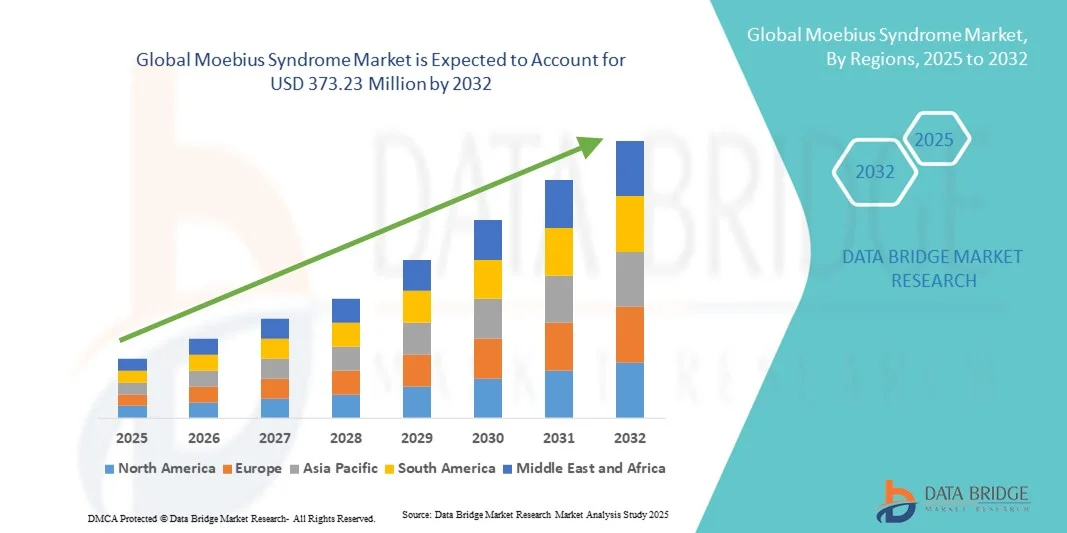
- The global Moebius Syndrome market size was valued at USD 220.50 million in 2024 and is expected to reach USD 373.23 million by 2032, at a CAGR of 6.80% during the forecast period
- The market growth is largely fueled by advancements in diagnostic methods, increased awareness of the disorder, and the development of specialized treatments, leading to improved early detection and therapeutic outcomes in both pediatric and adult patient populations
- Furthermore, rising demand for personalized treatment approaches, supportive care, and innovative therapies is establishing Moebius Syndrome management as a critical focus within rare neurological disorder care. These converging factors are accelerating the adoption of advanced treatment solutions, thereby significantly boosting the industry's growth
Moebius Syndrome Market Analysis
- Moebius Syndrome, a rare congenital neurological disorder characterized by facial paralysis and impaired eye movement, is increasingly recognized as a significant focus within rare disease management due to its complex clinical manifestations and lifelong care needs in both pediatric and adult patients
- The escalating attention toward Moebius Syndrome is primarily fueled by advancements in diagnostic methods, growing awareness among healthcare professionals and caregivers, and a rising emphasis on personalized treatment approaches, including surgical interventions and supportive therapies
- North America dominated the Moebius Syndrome market with the largest revenue share of 45.1% in 2024, driven by advanced healthcare infrastructure, high research and development activity, and the presence of key specialized treatment centers, with the U.S. experiencing significant progress in early diagnosis and multidisciplinary management of affected patients
- Asia-Pacific is expected to be the fastest-growing region in the Moebius Syndrome market during the forecast period due to increasing healthcare investment, rising awareness programs, and improving access to specialized medical care in emerging economies
- Diagnosis and treatment segment dominated the Moebius Syndrome market in 2024 with a market share of 42.6%, driven by the growing need for early and accurate diagnosis along with effective therapeutic interventions
Report Scope and Moebius Syndrome Market Segmentation
|
Attributes |
Moebius Syndrome Key Market Insights |
|
Segments Covered |
|
|
Countries Covered |
North America
Europe
Asia-Pacific
Middle East and Africa
South America
|
|
Key Market Players |
|
|
Market Opportunities |
|
|
Value Added Data Infosets |
In addition to the insights on market scenarios such as market value, growth rate, segmentation, geographical coverage, and major players, the market reports curated by the Data Bridge Market Research also include in-depth expert analysis, patient epidemiology, pipeline analysis, pricing analysis, and regulatory framework |
Moebius Syndrome Market Trends
Advancements in Multidisciplinary and Personalized Care
- A significant and accelerating trend in the global Moebius Syndrome market is the growing adoption of multidisciplinary treatment approaches that combine surgical, supportive, and rehabilitative therapies, improving patient outcomes and quality of life
- For instance, specialized centers now offer integrated care plans where craniofacial surgeons, neurologists, and speech therapists coordinate to provide holistic treatment for patients with Moebius Syndrome
- Personalized care strategies, including customized surgical interventions and targeted therapies, are increasingly being developed to address the unique needs of each patient, optimizing functional and aesthetic outcomes
- The integration of telemedicine and digital patient monitoring tools is facilitating continuous care and long-term follow-up, particularly for pediatric patients in remote or underserved areas
- This trend toward comprehensive, patient-centric treatment models is fundamentally reshaping expectations for rare neurological disorder management
- The demand for multidisciplinary and personalized treatment solutions is growing rapidly across both pediatric and adult populations, as healthcare providers prioritize tailored therapeutic interventions
Moebius Syndrome Market Dynamics
Driver
Rising Awareness and Early Diagnosis Initiatives
- The increasing awareness of Moebius Syndrome among healthcare professionals and caregivers, along with enhanced diagnostic capabilities, is a key driver for market growth
- For instance, awareness campaigns by rare disease foundations are encouraging early clinical evaluations, leading to timely interventions and improved outcomes
- The adoption of advanced imaging and genetic testing is helping clinicians detect the disorder at an earlier stage, enabling more effective management strategies
- Growing patient advocacy and education programs are facilitating greater understanding of treatment options, driving demand for specialized care centers
- Early diagnosis and proactive intervention strategies are increasingly recognized as essential for improving long-term patient quality of life
- Consequently, the rising focus on awareness and early detection initiatives is significantly accelerating the adoption of Moebius Syndrome therapies and management services
Restraint/Challenge
Limited Treatment Options and High Cost of Care
- The rarity of Moebius Syndrome and the limited availability of specialized treatment options pose significant challenges to market expansion
- For instance, complex surgical interventions require highly skilled professionals and specialized infrastructure, which are not universally accessible
- The high cost of surgical procedures, supportive therapies, and ongoing multidisciplinary care can be a barrier for patients, particularly in developing regions
- Limited insurance coverage for rare congenital disorders further restricts access to comprehensive treatment, impacting patient uptake
- While research and clinical advancements are gradually improving treatment availability, many patients still face delays in receiving optimal care
- Overcoming these challenges through wider access to specialized centers, funding support, and affordable care models will be critical for sustained market growth
Moebius Syndrome Market Scope
The market is segmented on the basis of type, related disorders, end users, and distribution channel.
- By Type
On the basis of type, the Moebius Syndrome market is segmented into diagnosis and treatment. The diagnosis segment dominated the market with the largest revenue share of 42.6% in 2024, driven by the growing need for early and accurate detection to enable timely intervention. Advanced imaging techniques, genetic testing, and clinical evaluations are key tools contributing to the segment’s dominance. Healthcare providers increasingly prioritize early diagnosis to plan appropriate surgical or supportive therapies, improving patient outcomes. Diagnostic services are widely utilized in hospitals and specialty clinics, ensuring comprehensive patient evaluation. The rising awareness programs by rare disease organizations further propel demand for diagnostic services. Overall, accurate and early diagnosis remains a critical factor in shaping the Moebius Syndrome market.
The treatment segment is anticipated to witness the fastest growth rate of 9.1% from 2025 to 2035, fueled by increasing adoption of surgical interventions, rehabilitative therapies, and personalized care programs. Surgical procedures such as facial reanimation and corrective interventions are becoming more accessible through specialized centers. Supportive therapies including speech, occupational, and physical therapy are gaining traction to improve functional outcomes and quality of life. Growing awareness of personalized treatment plans among healthcare providers and caregivers is driving market adoption. The introduction of innovative treatment techniques and minimally invasive surgeries is also contributing to market growth. As patient demand for effective management rises, treatment solutions are expected to expand rapidly across regions.
- By Related Disorders
On the basis of related disorders, the market is segmented into hereditary congenital facial palsy, human HOXA1 syndromes, Poland syndrome, and others. The hereditary congenital facial palsy segment dominated the market in 2024, accounting for the largest share due to its strong correlation with Moebius Syndrome and the need for comprehensive diagnostic and therapeutic interventions. Patients with this disorder often require early intervention and long-term multidisciplinary management, driving revenue growth. Awareness among healthcare professionals about associated syndromes ensures consistent referrals for both diagnosis and treatment. Advanced genetic and clinical diagnostic tools are frequently used for this group, enhancing market adoption. Hospitals and specialty clinics often prioritize these patients due to the complexity of care required. In addition, rising research into the underlying genetic causes further reinforces the demand for targeted management strategies.
The Poland syndrome segment is expected to witness the fastest growth during the forecast period, driven by increasing recognition of comorbid conditions and the need for integrated treatment approaches. Patients with overlapping features often seek reconstructive and supportive therapies, creating demand for innovative management solutions. Enhanced screening and early diagnosis programs are contributing to market expansion. Growing patient advocacy and awareness programs highlight the importance of timely intervention for related syndromes. Technological advances in corrective and supportive therapies further stimulate growth. As healthcare providers increasingly adopt personalized care approaches, the segment is poised for rapid expansion.
- By End Users
On the basis of end users, the market is segmented into hospitals, specialty clinics, and others. The hospitals segment dominated the market with a share of 55% in 2024, driven by their ability to provide comprehensive care including diagnostic, surgical, and rehabilitative services. Hospitals offer multidisciplinary teams capable of managing complex cases, making them the preferred choice for Moebius Syndrome patients. The availability of advanced imaging and surgical infrastructure further strengthens market dominance. Hospitals also serve as primary centers for clinical research and trials, enhancing treatment access. Rising collaborations between hospitals and rare disease foundations promote patient awareness and referrals. The growing number of hospital-based specialized care units ensures steady demand for diagnostic and therapeutic services.
The specialty clinics segment is anticipated to witness the fastest growth rate of 10% from 2025 to 2035, fueled by their focus on rare neurological disorders and personalized care programs. Specialty clinics often provide targeted therapies, surgical consultations, and follow-up care in a patient-centric environment. Their expertise in managing rare syndromes attracts a growing number of patients seeking specialized services. Integration of telemedicine and remote patient monitoring enhances accessibility and continuity of care. Clinics are increasingly collaborating with research institutions to adopt innovative treatment approaches. Rising awareness among caregivers and healthcare providers about specialized clinic offerings is expected to drive growth in this segment.
- By Distribution Channel
On the basis of distribution channel, the market is segmented into direct tender, hospital pharmacy, retail pharmacy, online pharmacy, and others. The direct tender segment dominated the market in 2024, accounting for the largest share due to hospitals and specialty clinics procuring diagnostic kits and treatment-related products directly from manufacturers for reliability and bulk purchasing. Direct procurement ensures timely availability of specialized equipment and therapies for rare disorders such as Moebius Syndrome. Long-term supply agreements with manufacturers strengthen the segment’s dominance. Hospitals prefer direct tender channels for cost efficiency and guaranteed product quality. Government and private healthcare tenders also contribute significantly to the segment’s revenue. Rising institutional adoption of advanced diagnostic and therapeutic solutions reinforces this trend.
The online pharmacy segment is expected to witness the fastest growth rate during the forecast period, fueled by increasing digital adoption, convenience, and rising demand for home delivery of medications and supportive care products. Patients and caregivers are increasingly using online platforms to access rare disorder medications, supplements, and therapy aids. Telehealth consultations integrated with online pharmacy services facilitate continuous treatment adherence. Improved logistics and payment systems enhance accessibility in remote regions. Growing awareness and patient empowerment via online channels support rapid adoption. The convenience of discreet ordering and doorstep delivery further drives the segment’s growth.
Moebius Syndrome Market Regional Analysis
- North America dominated the Moebius Syndrome market with the largest revenue share of 45.1% in 2024, driven by advanced healthcare infrastructure, high research and development activity, and the presence of key specialized treatment centers
- Patients and healthcare providers in the region prioritize access to comprehensive care, including surgical interventions, rehabilitative therapies, and multidisciplinary management programs, contributing to robust market adoption
- This widespread uptake is further supported by strong research and development capabilities, government and private funding for rare diseases, and growing awareness among clinicians and caregivers, establishing North America as a key hub for Moebius Syndrome diagnosis and treatment services
U.S. Moebius Syndrome Market Insight
The U.S. Moebius Syndrome market captured the largest revenue share of approximately 50% in 2024 within North America, fueled by advanced healthcare infrastructure and a high concentration of specialized treatment centers. Patients and caregivers increasingly prioritize early diagnosis, multidisciplinary management, and access to innovative surgical and supportive therapies. Growing awareness programs, research initiatives, and rare disease foundations further propel market adoption. The availability of telemedicine and remote monitoring tools enhances continuity of care, particularly for pediatric patients. Moreover, collaborations between hospitals, specialty clinics, and academic institutions are significantly contributing to the expansion of treatment services in the U.S.
Europe Moebius Syndrome Market Insight
The Europe Moebius Syndrome market is projected to expand at a substantial CAGR throughout the forecast period, primarily driven by increased awareness, early diagnosis initiatives, and the availability of specialized treatment centers. Rising government and private funding for rare diseases is fostering the adoption of diagnostic and therapeutic services. European patients benefit from well-established healthcare infrastructure and multidisciplinary care programs, improving access to surgical and supportive therapies. The region is experiencing growth across hospitals and specialty clinics, with integrated care approaches gaining popularity. Furthermore, public health campaigns and rare disease networks are facilitating timely interventions and patient education.
U.K. Moebius Syndrome Market Insight
The U.K. Moebius Syndrome market is anticipated to grow at a noteworthy CAGR during the forecast period, driven by increasing awareness of rare neurological disorders and demand for early diagnosis and specialized treatment. Concerns regarding long-term patient outcomes are encouraging healthcare providers and caregivers to adopt comprehensive management approaches. The U.K.’s well-developed healthcare system, combined with government support for rare disease initiatives, is expected to continue to stimulate market growth. In addition, the availability of multidisciplinary care programs and access to clinical research studies enhances the adoption of advanced treatment options.
Germany Moebius Syndrome Market Insight
The Germany Moebius Syndrome market is expected to expand at a considerable CAGR during the forecast period, fueled by the country’s strong focus on healthcare innovation and rare disease research. Germany’s advanced medical infrastructure and emphasis on early detection and personalized care promote the adoption of diagnostic and therapeutic solutions. The integration of multidisciplinary teams, including surgeons, neurologists, and therapists, is becoming increasingly prevalent in patient management. Strong patient advocacy and awareness programs are further supporting market expansion. Moreover, collaborations between hospitals and research institutions are driving the development of innovative treatment strategies.
Asia-Pacific Moebius Syndrome Market Insight
The Asia-Pacific Moebius Syndrome market is poised to grow at the fastest CAGR during the forecast period, driven by increasing healthcare investment, rising awareness programs, and improving access to specialized medical care in countries such as China, Japan, and India. Growing government initiatives to support rare disease diagnosis and treatment are expanding the availability of services. The region’s rising middle-class population and increasing healthcare infrastructure are contributing to greater adoption of specialized care centers. Telemedicine and digital health solutions are further improving access for remote or underserved areas. Furthermore, collaborations with international rare disease organizations are facilitating knowledge transfer and advanced treatment adoption.
Japan Moebius Syndrome Market Insight
The Japan Moebius Syndrome market is gaining momentum due to the country’s advanced healthcare system, technological adoption, and focus on rare disease management. Early diagnosis programs and multidisciplinary treatment approaches are driving market growth. Integration of telehealth services and patient monitoring tools enhances continuous care and follow-up. Japan’s aging population is such asly to spur demand for accessible, specialized care solutions in both pediatric and adult patients. In addition, public awareness campaigns and active research initiatives support the adoption of innovative surgical and supportive therapies.
India Moebius Syndrome Market Insight
The India Moebius Syndrome market accounted for the largest market revenue share in Asia-Pacific in 2024, attributed to increasing healthcare awareness, rising urbanization, and expanding access to specialized care centers. India is witnessing growing adoption of diagnostic and therapeutic services for rare neurological disorders. Government initiatives for rare disease support, coupled with partnerships between hospitals and specialty clinics, are key factors propelling the market. Telemedicine and digital health solutions are improving patient reach, especially in remote areas. Moreover, growing caregiver awareness and educational programs are enhancing early diagnosis and treatment uptake.
Moebius Syndrome Market Share
The Moebius Syndrome industry is primarily led by well-established companies, including:
- Moebius Syndrome Foundation (U.S.)
- Moebius Medical (Israel)
- Mobius Therapeutics, (U.S.)
- Sun Pharmaceutical Industries Ltd. (India)
- Novartis AG (Switzerland)
- Pfizer Inc. (U.S.)
- Bayer AG (Germany)
- Eli Lilly and Company (U.S.)
- Bristol-Myers Squibb Company (U.S.)
- AstraZeneca (U.K.)
- Sanofi (France)
- GSK plc (U.K.)
- AbbVie Inc. (U.S.)
- Johnson & Johnson Services, Inc. (U.S.)
- Merck & Co., Inc. (U.S.)
- Amgen Inc. (U.S.)
- F. Hoffmann-La Roche Ltd (Switzerland)
- Teva Pharmaceutical Industries Ltd. (Israel)
What are the Recent Developments in Global Moebius Syndrome Market?
- In October 2025, the Moebius Syndrome Foundation announced the launch of its Research Registry in partnership with the National Organization for Rare Disorders (NORD). This initiative aims to collect data on the course of Moebius syndrome through electronic surveys, enhancing research efforts and understanding of the condition
- In July 2025, a comprehensive 10-year genetic study on Moebius syndrome was published in Genetics in Medicine Open. The study provides valuable insights into the genetic underpinnings of the condition, contributing to the broader scientific understanding of Moebius syndrome
- In November 2024, the Moebius Syndrome Foundation introduced the Medical Travel Reimbursement Program to assist U.S. families and individuals with Moebius syndrome. The program offers reimbursement of up to USD 2,000 to help offset the financial burden of travel expenses for medical appointments or procedures. Eligible members can apply for reimbursement up to two times for domestic travel
- In June 2024, a study published in Facial Plastic Surgery & Aesthetic Medicine highlighted advancements in facial reanimation surgery techniques for individuals with Moebius syndrome. The study discusses the evolution of surgical methods aimed at restoring facial movement and improving quality of life for patients
- In March 2024, the Moebius Syndrome Foundation awarded Community Empowerment Grants to individuals aiming to raise awareness and provide support for those affected by Moebius syndrome. Recipients included Lisa Smant, who developed a career mentoring program, and Valeria Garcia, who initiated an anti-bullying campaign for children with facial differences

- Interactive Data Analysis Dashboard
- Company Analysis Dashboard for high growth potential opportunities
- Research Analyst Access for customization & queries
- Competitor Analysis with Interactive dashboard
- Latest News, Updates & Trend analysis
- Harness the Power of Benchmark Analysis for Comprehensive Competitor Tracking
Data collection and base year analysis are done using data collection modules with large sample sizes. The stage includes obtaining market information or related data through various sources and strategies. It includes examining and planning all the data acquired from the past in advance. It likewise envelops the examination of information inconsistencies seen across different information sources. The market data is analysed and estimated using market statistical and coherent models. Also, market share analysis and key trend analysis are the major success factors in the market report. To know more, please request an analyst call or drop down your inquiry.
The key research methodology used by DBMR research team is data triangulation which involves data mining, analysis of the impact of data variables on the market and primary (industry expert) validation. Data models include Vendor Positioning Grid, Market Time Line Analysis, Market Overview and Guide, Company Positioning Grid, Patent Analysis, Pricing Analysis, Company Market Share Analysis, Standards of Measurement, Global versus Regional and Vendor Share Analysis. To know more about the research methodology, drop in an inquiry to speak to our industry experts.
Data Bridge Market Research is a leader in advanced formative research. We take pride in servicing our existing and new customers with data and analysis that match and suits their goal. The report can be customized to include price trend analysis of target brands understanding the market for additional countries (ask for the list of countries), clinical trial results data, literature review, refurbished market and product base analysis. Market analysis of target competitors can be analyzed from technology-based analysis to market portfolio strategies. We can add as many competitors that you require data about in the format and data style you are looking for. Our team of analysts can also provide you data in crude raw excel files pivot tables (Fact book) or can assist you in creating presentations from the data sets available in the report.












