


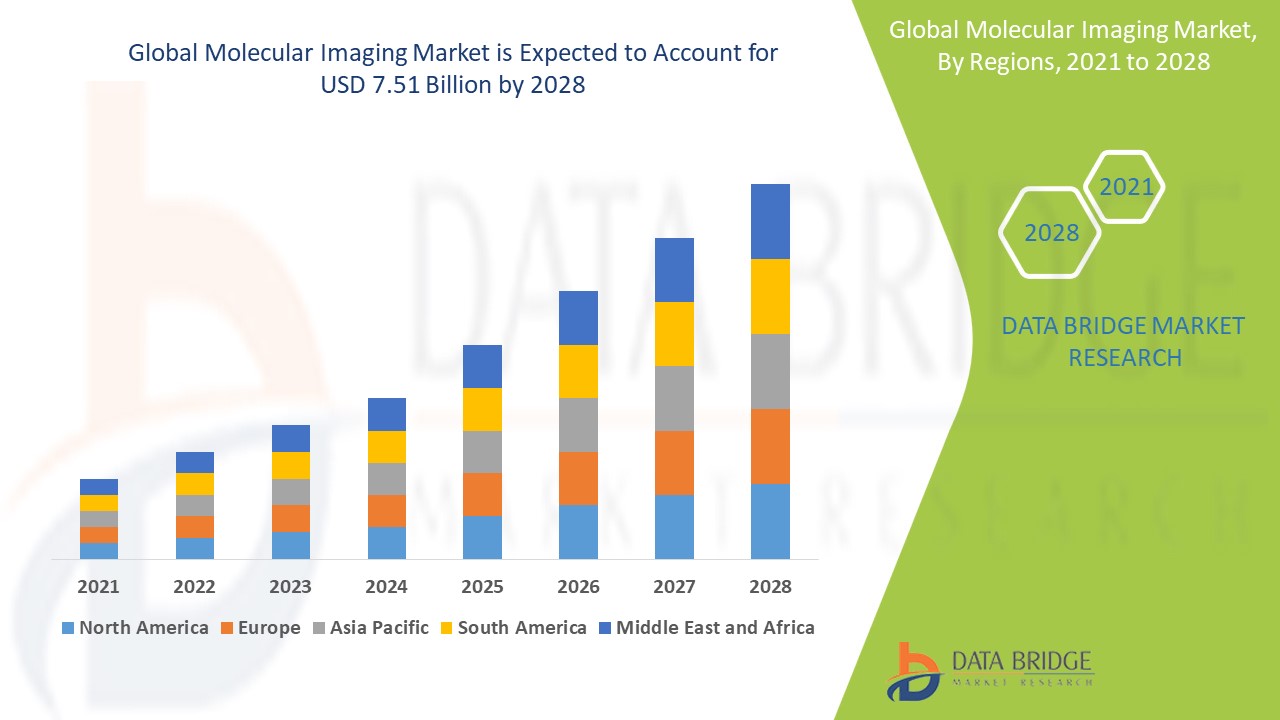
Molecular Imaging Market Analysis
The molecular imaging market is experiencing significant growth due to its increasing application in the medical field, particularly for diagnosis and treatment monitoring. This technology enables the visualization of molecular processes in living organisms, making it invaluable in the detection of diseases such as cancer, cardiovascular conditions, and neurological disorders. The market has seen advancements with new imaging technologies and techniques, leading to improved precision in detecting diseases at earlier stages.
The market is characterized by the introduction of innovative molecular imaging devices and the integration of advanced technologies such as positron emission tomography, magnetic resonance imaging, and single-photon emission computed tomography. These innovations are enhancing the capabilities of molecular imaging, making it more effective in both clinical and research settings.
Furthermore, the growing demand for personalized medicine has played a role in boosting the adoption of molecular imaging. As the market expands, there is an increasing emphasis on combining molecular imaging with other diagnostic tools for comprehensive patient care. The rising healthcare expenditures, along with an aging population and the shift towards non-invasive diagnostic techniques, are likely to contribute further to the market’s growth.
With continuous advancements, the molecular imaging market is expected to evolve, offering improved diagnostic capabilities and more effective treatment monitoring.
Molecular Imaging Market Size
The molecular imaging market size was valued at USD 8.98 billion in 2024 and is projected to reach USD 14.75 billion by 2032, with a CAGR of 6.39% during the forecast period of 2025 to 2032. In addition to the insights on market scenarios such as market value, growth rate, segmentation, geographical coverage, and major players, the market reports curated by the Data Bridge Market Research also include depth expert analysis, patient epidemiology, pipeline analysis, pricing analysis, and regulatory framework.
Molecular Imaging Market Trends
“Rising demand for advanced imaging in early disease detection and monitoring”
The growing demand for advanced imaging technologies that enable early diagnosis and precise monitoring of diseases is a defining trend in the molecular imaging market. As medical science continues to evolve, the ability to detect diseases at their earliest stages is becoming increasingly vital. Early detection allows for more effective treatment options, improving patient outcomes and reducing healthcare costs.
Advanced imaging technologies, such as positron emission tomography, magnetic resonance imaging, and single-photon emission computed tomography, are at the forefront of this trend. These technologies allow healthcare providers to visualize molecular and cellular activities within the body, helping to identify abnormalities long before symptoms manifest. For instance, in cancer detection, molecular imaging can pinpoint tumors at a very small size, enabling earlier intervention and more targeted therapies.
Furthermore, these technologies are crucial in monitoring the progression of diseases and assessing the effectiveness of treatments. With more precise imaging capabilities, doctors can track how well a patient is responding to medication or therapy in real time. This trend is not only improving the quality of care but also empowering patients to be more involved in their treatment decisions, contributing to the growing demand for advanced imaging solutions in healthcare. As these technologies continue to evolve, their role in personalized medicine is expected to expand, allowing for more customized and effective treatment strategies.
Report Scope Molecular Imaging Market Segmentation
|
Attributes |
Molecular Imaging Key Market Insights |
|
Segments Covered |
|
|
Countries Covered |
U.S., Canada and Mexico in North America, Germany, France, U.K., Netherlands, Switzerland, Belgium, Russia, Italy, Spain, Turkey, Rest of Europe in Europe, China, Japan, India, South Korea, Singapore, Malaysia, Australia, Thailand, Indonesia, Philippines, Rest of Asia-Pacific (APAC) in the Asia-Pacific (APAC), Saudi Arabia, U.A.E, South Africa, Egypt, Israel, Rest of Middle East and Africa (MEA) as a part of Middle East and Africa (MEA), Brazil, Argentina and Rest of South America as part of South America |
|
Key Market Players |
General Electric Company (U.S.), Koninklijke Philips N.V. (Netherlands), Siemens Healthineers AG (Germany), CANON MEDICAL SYSTEMS CORPORATION (Japan), Hitachi, Ltd (Japan), BC Technical, Inc. (U.S.), Bracco (Italy), SAMSUNG (South Korea), FUJIFILM Corporation (Japan), Medtronic (U.S.), Shimadzu Corporation (Japan), Esaote SPA (Italy), PerkinElmer (U.S.), Guerbet (France), Boston Scientific Corporation (U.S.), Hamamatsu Photonics K.K. (Japan), Neusoft Corporation (China), TTG Imaging Solutions (U.S.), Carestream Health (U.S.). |
|
Market Opportunities |
|
|
Value Added Data Infosets |
In addition to the insights on market scenarios such as market value, growth rate, segmentation, geographical coverage, and major players, the market reports curated by the Data Bridge Market Research also include depth expert analysis, patient epidemiology, pipeline analysis, pricing analysis, and regulatory framework. |
Molecular Imaging Market Definition
Molecular imaging is a medical imaging technique that enables the visualization and analysis of biological processes at the molecular and cellular levels within living organisms. This approach provides detailed images of the distribution and activity of specific molecules, aiding in the early detection, diagnosis, and treatment of various diseases, such as cancer, neurological disorders, and cardiovascular conditions. By using radiopharmaceuticals or other contrast agents, molecular imaging allows for precise monitoring of disease progression and therapy response, offering critical insights for personalized medicine.
Molecular Imaging Market Dynamics
Drivers
- Growing Prevalence of Chronic Diseases
The increasing prevalence of chronic diseases, including cancer, neurological disorders, and cardiovascular diseases, is driving the demand for molecular imaging. As the global population ages, the incidence of these conditions rises, requiring advanced diagnostic techniques for early detection and treatment. Molecular imaging plays a crucial role in identifying diseases at the molecular level, enabling early diagnosis, which is essential for effective treatment and improving patient outcomes. This growing need for precision medicine and non-invasive diagnostic methods is fuelling the expansion of the molecular imaging market.
- Technological Advancements in Imaging Modalities
Continuous advancements in imaging technologies are another significant driver of the molecular imaging market. The development of more advanced techniques such as positron emission tomography (PET), magnetic resonance imaging (MRI), and single-photon emission computed tomography (SPECT) has enhanced the accuracy and resolution of molecular imaging. These technologies provide better sensitivity, specificity, and non-invasive monitoring of biological processes, which have broadened their application across various medical fields. As these technologies become more refined and accessible, the demand for molecular imaging is expected to grow, further driving market expansion.
Opportunities
- Integration of Molecular Imaging with Personalized Medicine
Personalized medicine, which tailors’ treatment to individual patient characteristics, is an emerging trend in healthcare. Molecular imaging plays a pivotal role in this approach by providing real-time data on the molecular and cellular activities of diseases, allowing healthcare providers to design customized treatment plans. The integration of molecular imaging with personalized medicine presents a significant opportunity for market growth. By enhancing the ability to assess treatment response and disease progression on a personalized level, molecular imaging can help in selecting the most effective therapies, improving patient outcomes and reducing unnecessary treatments.
- Expanding Applications in Drug Development
Molecular imaging is increasingly being used in drug development to assess the efficacy of new therapies before clinical trials. It allows researchers to visualize how a drug interacts with the body at a molecular level, accelerating the development of new treatments and reducing the time and cost of bringing drugs to market. This growing application in pharmaceutical research and development provides substantial opportunities for the molecular imaging market. As drug developers seek more effective and efficient ways to test new compounds, the demand for molecular imaging solutions is expected to increase, contributing to market growth.
Restraints/Challenges
- High Cost of Equipment and Procedures
The high cost of molecular imaging equipment and the procedures involved are a significant restraint on the market. Technologies such as positron emission tomography (PET) and magnetic resonance imaging (MRI) require expensive machinery, maintenance, and specialized personnel to operate, which can limit their availability in some regions, especially in developing countries. In addition, the cost of radiopharmaceuticals used in molecular imaging further adds to the financial burden for healthcare providers and patients. This high cost could hinder widespread adoption and limit access to advanced molecular imaging technologies, restraining market growth.
- Regulatory and Safety Concerns
The use of radioactive materials in some molecular imaging techniques, such as positron emission tomography (PET), presents regulatory and safety challenges. The production and handling of radiopharmaceuticals are strictly regulated due to the potential health risks associated with radiation exposure. Ensuring patient safety while complying with these regulatory standards requires stringent protocols, which can be complex and time-consuming. Moreover, regulatory hurdles may delay the approval and commercialization of new molecular imaging technologies, posing a challenge to market growth. Addressing these concerns while ensuring the safety and efficacy of molecular imaging procedures is essential for the continued development of the market.
This market report provides details of new recent developments, trade regulations, import-export analysis, production analysis, value chain optimization, market share, impact of domestic and localized market players, analyses opportunities in terms of emerging revenue pockets, changes in market regulations, strategic market growth analysis, market size, category market growths, application niches and dominance, product approvals, product launches, geographic expansions, technological innovations in the market. To gain more info on the market contact Data Bridge Market Research for an Analyst Brief, our team will help you take an informed market decision to achieve market growth.
Molecular Imaging Market Scope
The market is segmented on the basis of technology, device type, application, and end-user growth amongst these segments will help you analyze meagre growth segments in the industries and provide the users with a valuable market overview and market insights to help them make strategic decisions for identifying core market applications.
Technology
- Magnetic Resonance Spectroscopy
- Optical Imaging
- Molecular Ultrasound Imaging
Device Type
- Positron Emission Tomography (PET) Scanner
- Single Photon Emission Computed Tomography (SPECT) Scanner
- Gamma Camera
- Nuclear Magnetic Resonance (NMR) Spectrometer
- Others
Application
- Cardiovascular
- Neurology
- Respiratory
- Oncology
- Others
End User
- Hospital
- Diagnostic Imaging Centers
- Ambulatory Surgical Centers
- Others
Molecular Imaging Market Regional Analysis
The market is analysed and market size insights and trends are provided by country, technology, device type, application, and end-user as referenced above.
The countries covered in the market report are U.S., Canada, Mexico in North America, Germany, Sweden, Poland, Denmark, Italy, U.K., France, Spain, Netherland, Belgium, Switzerland, Turkey, Russia, Rest of Europe in Europe, Japan, China, India, South Korea, New Zealand, Vietnam, Australia, Singapore, Malaysia, Thailand, Indonesia, Philippines, Rest of Asia-Pacific (APAC) in Asia-Pacific (APAC), Brazil, Argentina, Rest of South America as a part of South America, U.A.E, Saudi Arabia, Oman, Qatar, Kuwait, South Africa, Rest of Middle East and Africa (MEA) as a part of Middle East and Africa (MEA).
North America is the dominating region in the molecular imaging market. The region's strong healthcare infrastructure, coupled with substantial investments in research and development, drives its leading position in the market. The adoption of advanced imaging technologies in healthcare facilities, as well as high healthcare expenditures, plays a significant role in the widespread availability of molecular imaging systems. In addition, the presence of key market players in the U.S. contributes to North America's dominance in the market.
Asia Pacific region is the fastest-growing market for molecular imaging. Rapid advancements in healthcare infrastructure, along with increasing investments in medical technology, contribute to the region's swift growth. The rising awareness of advanced diagnostic techniques, coupled with a growing patient population, further fuels demand for molecular imaging technologies. As emerging economies in the region continue to invest in healthcare modernization, Asia Pacific is expected to see continued growth in the molecular imaging market.
The country section of the report also provides individual market impacting factors and changes in regulation in the market domestically that impacts the current and future trends of the market. Data points such as down-stream and upstream value chain analysis, technical trends and porter's five forces analysis, case studies are some of the pointers used to forecast the market scenario for individual countries. Also, the presence and availability of global brands and their challenges faced due to large or scarce competition from local and domestic brands, impact of domestic tariffs and trade routes are considered while providing forecast analysis of the country data.
Molecular Imaging Market Share
The market competitive landscape provides details by competitor. Details included are company overview, company financials, revenue generated, market potential, investment in research and development, new market initiatives, global presence, production sites and facilities, production capacities, company strengths and weaknesses, product launch, product width and breadth, application dominance. The above data points provided are only related to the companies' focus related to market.
Molecular Imaging Market Leaders Operating in the Market Are:
- General Electric Company (U.S.)
- Koninklijke Philips N.V. (Netherlands)
- Siemens Healthineers AG (Germany)
- CANON MEDICAL SYSTEMS CORPORATION (Japan)
- Hitachi, Ltd (Japan)
- BC Technical, Inc. (U.S.)
- Bracco (Italy)
- SAMSUNG (South Korea)
- FUJIFILM Corporation (Japan)
- Medtronic (U.S.)
- Shimadzu Corporation (Japan)
- Esaote SPA (Italy)
- PerkinElmer (U.S.)
- Guerbet (France)
- Boston Scientific Corporation (U.S.)
- Hamamatsu Photonics K.K. (Japan)
- Neusoft Corporation (China)
- TTG Imaging Solutions (U.S.)
- Carestream Health (U.S.)
Latest Developments in Molecular Imaging Market
- In January 2025, Lantheus Holdings announced its acquisition of Life Molecular Imaging for USD 350 million, aimed at advancing its position in the Alzheimer's disease radiodiagnostic market. The deal will enhance Lantheus' capabilities with Neuraceq, an FDA-approved PET imaging agent for detecting beta-amyloid plaques in patients with cognitive impairment. This acquisition will expand their research and development capacity, commercial infrastructure, and global presence, facilitating growth in Alzheimer's diagnostics. The transaction is expected to boost Lantheus' revenue and impact patient care globally, especially for those with Alzheimer's and related cognitive conditions
- In August 2024, Siemens Healthineers received FDA clearance for the Biograph Trinion PET/CT scanner. This advanced scanner enhances diagnostic capabilities by providing high spatial resolution and ultrafast time-of-flight performance. It enables rapid examinations with minimal radiation exposure, improving patient safety and comfort. The scanner’s energy-efficient design and scalable features help reduce energy consumption, making it both sustainable and cost-effective for healthcare providers. The integration of AI technology further streamlines workflows, allowing for more consistent and accurate results, benefiting both clinicians and patients by enhancing diagnostic efficiency and accessibility
- In June 2024, Positron Corporation announced the sale of its Attrius PET system to a prominent cardiovascular practice in Michigan. The Attrius is a 2D quantitative PET scanner designed for nuclear cardiology, offering high-resolution imaging and robust blood flow data for accurate coronary flow reserve measurements. This system is expected to enhance advanced cardiac diagnostics. Positron will install the system by Q4 2024, offering a Lease to Own Program, which allows practices to acquire the PET scanner without upfront capital expenditure. This model aims to make cardiac PET imaging more accessible to nuclear imaging practices
- In October 2022, Spectrum Dynamics announced a significant development in digital nuclear medicine imaging with the introduction of the capability to image high-energy isotopes using solid-state detector technology. This feature is part of the new VERITON-CT 400 Series Digital SPECT/CT scanners, which offer enhanced imaging for a wide range of applications, including total body, brain, and heart imaging. The 360°-CZT-based configuration provides improved precision and broader imaging coverage, enhancing diagnostic capabilities. This innovation promises to streamline nuclear medicine workflows and improve diagnostic accuracy in various clinical settings

- Interactive Data Analysis Dashboard
- Company Analysis Dashboard for high growth potential opportunities
- Research Analyst Access for customization & queries
- Competitor Analysis with Interactive dashboard
- Latest News, Updates & Trend analysis
- Harness the Power of Benchmark Analysis for Comprehensive Competitor Tracking
Data collection and base year analysis are done using data collection modules with large sample sizes. The stage includes obtaining market information or related data through various sources and strategies. It includes examining and planning all the data acquired from the past in advance. It likewise envelops the examination of information inconsistencies seen across different information sources. The market data is analysed and estimated using market statistical and coherent models. Also, market share analysis and key trend analysis are the major success factors in the market report. To know more, please request an analyst call or drop down your inquiry.
The key research methodology used by DBMR research team is data triangulation which involves data mining, analysis of the impact of data variables on the market and primary (industry expert) validation. Data models include Vendor Positioning Grid, Market Time Line Analysis, Market Overview and Guide, Company Positioning Grid, Patent Analysis, Pricing Analysis, Company Market Share Analysis, Standards of Measurement, Global versus Regional and Vendor Share Analysis. To know more about the research methodology, drop in an inquiry to speak to our industry experts.
Data Bridge Market Research is a leader in advanced formative research. We take pride in servicing our existing and new customers with data and analysis that match and suits their goal. The report can be customized to include price trend analysis of target brands understanding the market for additional countries (ask for the list of countries), clinical trial results data, literature review, refurbished market and product base analysis. Market analysis of target competitors can be analyzed from technology-based analysis to market portfolio strategies. We can add as many competitors that you require data about in the format and data style you are looking for. Our team of analysts can also provide you data in crude raw excel files pivot tables (Fact book) or can assist you in creating presentations from the data sets available in the report.













