


What is the Global Monk Fruit Sweetener Market Size and Growth Rate?
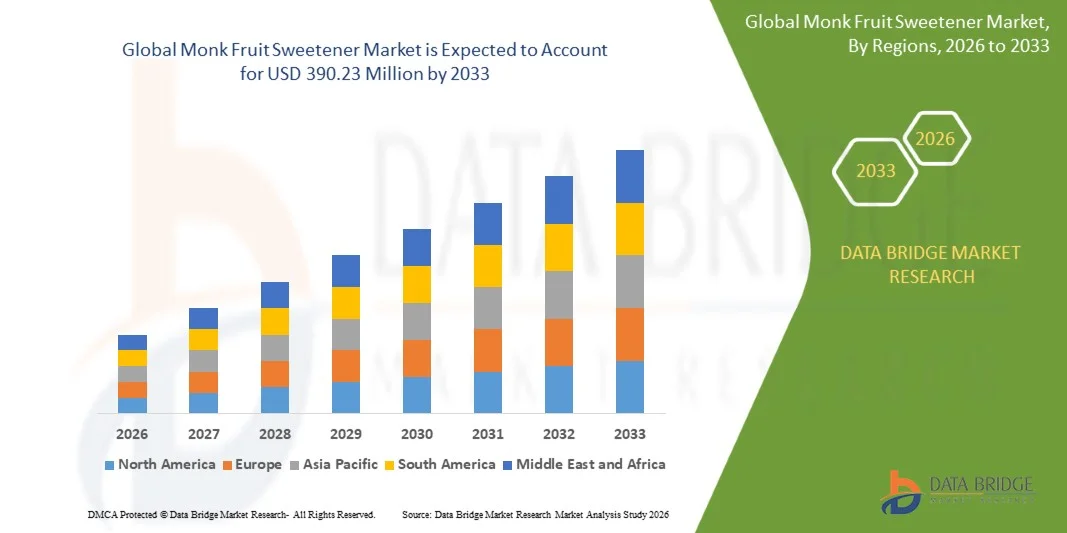
- The global monk fruit sweetener market size was valued at USD 256.21 million in 2025 and is expected to reach USD 390.23 million by 2033, at a CAGR of 5.40% during the forecast period
- The increasing demand for the sweetener as sugar alternative from manufacturers who make low-calorie products and consumers acts as one of the major factors driving the monk fruit sweetener market. The rise in prevalence of diabetes across the globe, growing health consciousness of consumers and rising demand for naturally derived sweeteners substitutes accelerate the monk fruit sweetener market growth
- The growing popularity of the monk fruit sweetener owning to its functional properties anti-microbial, anti-inflammatory and anti-carcinogenic, consumer inclination towards the organic and natural products and rise in awareness regarding negative health effects of sugar such as obesity and diabetes further influences the monk fruit sweetener market
What are the Major Takeaways of Monk Fruit Sweetener Market?
- growth in awareness regarding the health benefits of the product, change in consumer preference and surge in the disposable income positively affects the monk fruit sweetener market. Furthermore, innovations with new product formulations extend profitable opportunities to the monk fruit sweetener market players
- High price associated with the monk fruit sweeteners when compared to monk fruit sweeteners and presence of a large number of artificial sweeteners are the factors expected to obstruct the monk fruit sweetener market growth. Lack of awareness regarding the product among consumers is projected to challenge the monk fruit sweetener market
- North America dominated the monk fruit sweetener market with a 41.2% revenue share in 2025, supported by strong consumer demand for natural, low-calorie, and clean-label sweeteners across the U.S. and Canada
- Asia-Pacific is projected to register the fastest CAGR of 9.1% from 2026 to 2033, driven by growing adoption of natural sweeteners in China, Japan, India, and South Korea
- The Dry segment dominated the market with a revenue share of 62.4% in 2025, driven by its high stability, long shelf life, and broad application in bakery, confectionery, beverages, and tabletop sweeteners
Report Scope and Monk Fruit Sweetener Market Segmentation
|
Attributes |
Monk Fruit Sweetener Key Market Insights |
|
Segments Covered |
|
|
Countries Covered |
North America
Europe
Asia-Pacific
Middle East and Africa
South America
|
|
Key Market Players |
|
|
Market Opportunities |
|
|
Value Added Data Infosets |
In addition to the insights on market scenarios such as market value, growth rate, segmentation, geographical coverage, and major players, the market reports curated by the Data Bridge Market Research also include in-depth expert analysis, pricing analysis, brand share analysis, consumer survey, demography analysis, supply chain analysis, value chain analysis, raw material/consumables overview, vendor selection criteria, PESTLE Analysis, Porter Analysis, and regulatory framework. |
What is the Key Trend in the Monk Fruit Sweetener Market?
“Rising Demand for Nutrient-Enriched and Multi-Monk Fruit Sweetener”
- The monk fruit sweetener market is witnessing strong growth toward nutrient-enriched, multifunctional, and clean-label sweetener formulations, including blends with prebiotics, dietary fibers, and plant-based ingredients to enhance taste, texture, and nutritional value
- Manufacturers are introducing multi-purpose sweetener systems that support sugar reduction, calorie control, glycemic management, and broader functional applications in beverages, bakery, dairy, and nutraceutical products
- Consumers are increasingly choosing natural, safe, and low-calorie sweeteners to replace artificial sugar substitutes, supporting demand across food, drink, and wellness categories
- For instance, companies such as ADM, Tate & Lyle, Layn Corp, and NOW Foods have expanded their Monk Fruit-based portfolios by introducing fortified blends used in sports nutrition, functional beverages, and low-sugar snacks
- Growing awareness of health management, weight control, diabetes prevention, and clean-label consumption is accelerating global market adoption
- As consumers continue seeking natural, multifunctional, and health-focused sweetener options, Monk Fruit Sweeteners are expected to remain central to innovation within the global low-calorie sweeteners market
What are the Key Drivers of Monk Fruit Sweetener Market?
- Rising consumer preference for low-calorie, natural, plant-based, and functionally enhanced sweeteners is driving strong adoption of Monk Fruit Sweetener globally
- For instance, in 2025, ADM, Tate & Lyle, and Layn Corp expanded their Monk Fruit ingredient lines used in energy drinks, fortified juices, ketogenic snacks, and diabetic-friendly foods
- Growing global awareness of sugar reduction, obesity management, and low-glycemic diets is boosting demand across the U.S., Europe, and Asia-Pacific
- Advancements in extraction technologies, flavor modulation, and blending techniques have improved sweetness stability, taste uniformity, and application versatility
- Rising demand for organic, vegan, clean-label, and non-GMO food products is further contributing to market expansion, supported by consumer preference for sustainable and ethical ingredients
- With ongoing investments in R&D, new product launches, partnership expansions, and global distribution, the Monk Fruit Sweetener market is expected to maintain strong growth in the coming years
Which Factor is Challenging the Growth of the Monk Fruit Sweetener Market?
- High production, purification, and processing costs associated with monk fruit extracts and premium natural sweetener blends limit affordability in price-sensitive regions
- For instance, during 2024–2025, fluctuations in monk fruit supply, agricultural output, and extraction reagent costs affected production volumes for several manufacturers
- Strict regulatory standards for ingredient classification, food safety compliance, and clean-label certification increase operational complexities
- Limited consumer awareness in emerging markets about natural sweetener benefits and glycemic advantages restricts widespread adoption
- Strong competition from stevia, allulose, erythritol, and other low-cost plant-based alternatives creates pressure on pricing and product differentiation
- To overcome these challenges, companies are focusing on scalable sourcing, cost-efficient extraction, regulatory alignment, and consumer education to expand global adoption of high-quality Monk Fruit Sweeteners
How is the Monk Fruit Sweetener Market Segmented?
The market is segmented on the basis of form, nature, and distribution channel.
• By Form
On the basis of form, the monk fruit sweetener market is segmented into Liquid and Dry. The Dry segment dominated the market with a revenue share of 62.4% in 2025, driven by its high stability, long shelf life, and broad application in bakery, confectionery, beverages, and tabletop sweeteners. Dry monk fruit extracts and powders are widely preferred by manufacturers due to easy blending, accurate dosage control, and compatibility with dietary products such as keto snacks, protein bars, and health supplements. Their convenience in storage, transport, and large-scale production further accelerates adoption across the food and nutraceutical industries.
The Liquid segment is projected to grow at the fastest CAGR from 2026 to 2033, supported by rising usage in ready-to-drink beverages, smoothies, syrups, flavor drops, and functional drinks. Increasing consumer preference for easy-dispense formats and sugar-free liquid sweeteners is boosting demand globally.
• By Nature
On the basis of nature, the monk fruit sweetener market is segmented into Organic and Conventional. The Conventional segment dominated the market with a revenue share of 64.1% in 2025, driven by wider availability, cost-effective production, and strong demand from mainstream food & beverage manufacturers. Conventional monk fruit extracts are more accessible across retail, wholesale, and industrial categories, supporting high-volume consumption in bakery, dairy, sauces, and processed food applications. Their affordability and consistent supply chain make them a preferred choice for mass-market formulations.
The Organic segment is projected to grow at the fastest CAGR from 2026 to 2033, fueled by rising consumer preference for chemical-free, clean-label, non-GMO, and sustainably sourced sweeteners. Increasing adoption of organic monk fruit in infant nutrition, premium beverages, dietary supplements, and diabetic-friendly foods is driving rapid growth across North America, Europe, and Asia-Pacific.
• By Distribution Channel
On the basis of distribution channel, the monk fruit sweetener market is segmented into Supermarkets/Hypermarkets, Convenience Stores, Online Channels, and Others. The Supermarkets/Hypermarkets segment dominated the market with a revenue share of 48.6% in 2025, supported by wide product availability, strong brand visibility, and consumer trust in organized retail. These stores offer diverse monk fruit-based products, from tabletop sweeteners to baking mixes and low-calorie snacks, ensuring high-volume sales across urban and suburban regions.
The Online Channels segment is projected to grow at the fastest CAGR from 2026 to 2033, driven by increasing e-commerce penetration, home-delivery convenience, digital promotions, and subscription-based purchases. Platforms such as Amazon, Walmart Online, and brand-owned websites are expanding the reach of monk fruit products, especially premium, organic, and specialty blends. Growing consumer preference for online comparison, discounts, and bulk-buying options is accelerating the shift toward digital retail.
Which Region Holds the Largest Share of the Monk Fruit Sweetener Market?
- North America dominated the monk fruit sweetener market with a 41.2% revenue share in 2025, supported by strong consumer demand for natural, low-calorie, and clean-label sweeteners across the U.S. and Canada. Rising awareness of sugar reduction, diabetic-friendly diets, and functional food trends drives widespread adoption in beverages, bakery, dairy alternatives, nutritional supplements, and ready-to-eat products
- Leading players are expanding Monk Fruit-based formulations through innovations in extraction, flavor modulation, and blending with stevia, allulose, and erythritol to improve taste and stability. Regulatory support for clean-label claims, non-GMO certifications, and natural ingredient safety further strengthens market leadership
- High disposable incomes, urbanization, and rising preference for natural sweeteners over artificial alternatives fuel strong regional growth
U.S. Monk Fruit Sweetener Market Insight
The U.S. is the largest contributor in North America, driven by high demand for sugar substitutes in beverages, bakery products, protein snacks, and functional foods. Manufacturers are investing in advanced extraction technologies, organic-certified monk fruit, and blended sweetener systems to enhance taste and nutritional benefits. Strong retail and e-commerce penetration, combined with growing consumer focus on low-glycemic and clean-label diets, continues to support market expansion.
Canada Monk Fruit Sweetener Market Insight
Canada contributes significantly to regional growth, supported by rising demand for natural, organic, and diabetes-friendly sweetener alternatives. Food manufacturers and health-food brands are expanding product portfolios featuring monk fruit-based syrups, powders, and ready-to-use blends. Increasing awareness of obesity reduction, sugar taxes, and healthy lifestyle choices is driving adoption across retail and specialty food channels.
Asia-Pacific Monk Fruit Sweetener Market Insight
Asia-Pacific is projected to register the fastest CAGR of 9.1% from 2026 to 2033, driven by growing adoption of natural sweeteners in China, Japan, India, and South Korea. Rising disposable incomes, health consciousness, and preference for plant-based ingredients are accelerating consumption in beverages, confectionery, and low-calorie traditional foods. Rapid expansion of e-commerce, digital marketing, and subscription-based wellness products enhances accessibility.
China Monk Fruit Sweetener Market Insight
China is the largest contributor to Asia-Pacific, supported by strong monk fruit cultivation and processing infrastructure. Demand is rising across beverages, baked goods, and nutritional foods due to growing awareness of natural sweetener benefits. Manufacturers are investing heavily in R&D, vertical farming, and eco-friendly extraction processes, strengthening both domestic consumption and export capacity.
Japan Monk Fruit Sweetener Market Insight
Japan shows steady growth, driven by high consumer preference for low-calorie, natural sweeteners in functional beverages, traditional foods, and premium health products. Innovation in taste improvement, purity levels, and blending techniques continues to attract health-conscious consumers. Strong retail networks and regulatory support further drive adoption.
India Monk Fruit Sweetener Market Insight
India is emerging as a key growth market, fueled by rising awareness of diabetes management, obesity reduction, and natural food ingredients. Increasing demand for monk fruit in beverages, packaged foods, and home cooking is boosting market penetration. Expansion of e-commerce platforms and growing preference for clean-label products support rapid adoption.
South Korea Monk Fruit Sweetener Market Insight
South Korea contributes significantly due to increasing interest in natural sweeteners within functional beverages, bakery products, and diet foods. Influences from wellness trends, K-food exports, and social media are driving consumer preference for plant-based, zero-calorie sweeteners. Innovation in product formats and premium packaging enhances market expansion.
Which are the Top Companies in Monk Fruit Sweetener Market?
The monk fruit sweetener industry is primarily led by well-established companies, including:
- Monk Fruit Corp. (China)
- ADM (Archer Daniels Midland) (U.S.)
- Tate & Lyle (U.K.)
- GLG Life Tech Corp. (Canada)
- Steviva Brands, Inc. (U.S.)
- Layn Corp (China)
- Firmenich SA (Switzerland)
- NOW Foods (U.S.)
- BioVittoria Co. (New Zealand)
- LAKANTO (U.S.)
- Whole Earth Sweetener Co., LLC (U.S.)
- Matakana Superfoods (New Zealand)
- Bulk Barn Foods Limited (Canada)
- Apura Ingredients (U.K.)
- Imperial Sugar (U.S.)
- GroupKrisda Stevia Canada Inc (Canada)
- Health Garden USA (U.S.)
What are the Recent Developments in Global Monk Fruit Sweetener Market?
- In January 2025, Red Bull unveiled its “Red Bull Zero” energy drink in the U.S., incorporating monk fruit extract along with other sweeteners to create a completely zero-sugar formulation, strengthening the brand’s presence in the health-focused beverage category
- In January 2024, Elo Life Systems secured USD 20.5 Mn in Series A2 funding, led by Novo Holdings and DCVC Bio, to accelerate the planned 2026 launch of a natural, plant-based monk fruit-derived sweetener, marking a major step in expanding clean-label ingredient innovation
- In October 2023, Lakanto introduced a new addition to its monk fruit sweetener range, the Monkfruit Sweetener with Allulose, blending monk fruit’s natural sweetness with the unique characteristics of allulose to broaden consumer choices for natural sugar alternatives, reinforcing the company’s product diversification strategy.
- In April 2023, SweetLeaf partnered with the American Diabetes Association to promote its natural, sugar-free monk fruit sweetener as a diabetes-friendly option, participating in ADA programs such as the Tour de Cure event in Arizona, enhancing the brand’s credibility within the diabetic and wellness community

- Interactive Data Analysis Dashboard
- Company Analysis Dashboard for high growth potential opportunities
- Research Analyst Access for customization & queries
- Competitor Analysis with Interactive dashboard
- Latest News, Updates & Trend analysis
- Harness the Power of Benchmark Analysis for Comprehensive Competitor Tracking
Global Monk Fruit Sweetener Market, Supply Chain Analysis and Ecosystem Framework
To support market growth and help clients navigate the impact of geopolitical shifts, DBMR has integrated in-depth supply chain analysis into its Global Monk Fruit Sweetener Market research reports. This addition empowers clients to respond effectively to global changes affecting their industries. The supply chain analysis section includes detailed insights such as Global Monk Fruit Sweetener Market consumption and production by country, price trend analysis, the impact of tariffs and geopolitical developments, and import and export trends by country and HSN code. It also highlights major suppliers with data on production capacity and company profiles, as well as key importers and exporters. In addition to research, DBMR offers specialized supply chain consulting services backed by over a decade of experience, providing solutions like supplier discovery, supplier risk assessment, price trend analysis, impact evaluation of inflation and trade route changes, and comprehensive market trend analysis.
Data collection and base year analysis are done using data collection modules with large sample sizes. The stage includes obtaining market information or related data through various sources and strategies. It includes examining and planning all the data acquired from the past in advance. It likewise envelops the examination of information inconsistencies seen across different information sources. The market data is analysed and estimated using market statistical and coherent models. Also, market share analysis and key trend analysis are the major success factors in the market report. To know more, please request an analyst call or drop down your inquiry.
The key research methodology used by DBMR research team is data triangulation which involves data mining, analysis of the impact of data variables on the market and primary (industry expert) validation. Data models include Vendor Positioning Grid, Market Time Line Analysis, Market Overview and Guide, Company Positioning Grid, Patent Analysis, Pricing Analysis, Company Market Share Analysis, Standards of Measurement, Global versus Regional and Vendor Share Analysis. To know more about the research methodology, drop in an inquiry to speak to our industry experts.
Data Bridge Market Research is a leader in advanced formative research. We take pride in servicing our existing and new customers with data and analysis that match and suits their goal. The report can be customized to include price trend analysis of target brands understanding the market for additional countries (ask for the list of countries), clinical trial results data, literature review, refurbished market and product base analysis. Market analysis of target competitors can be analyzed from technology-based analysis to market portfolio strategies. We can add as many competitors that you require data about in the format and data style you are looking for. Our team of analysts can also provide you data in crude raw excel files pivot tables (Fact book) or can assist you in creating presentations from the data sets available in the report.













