


Mulberry Silk Market Size
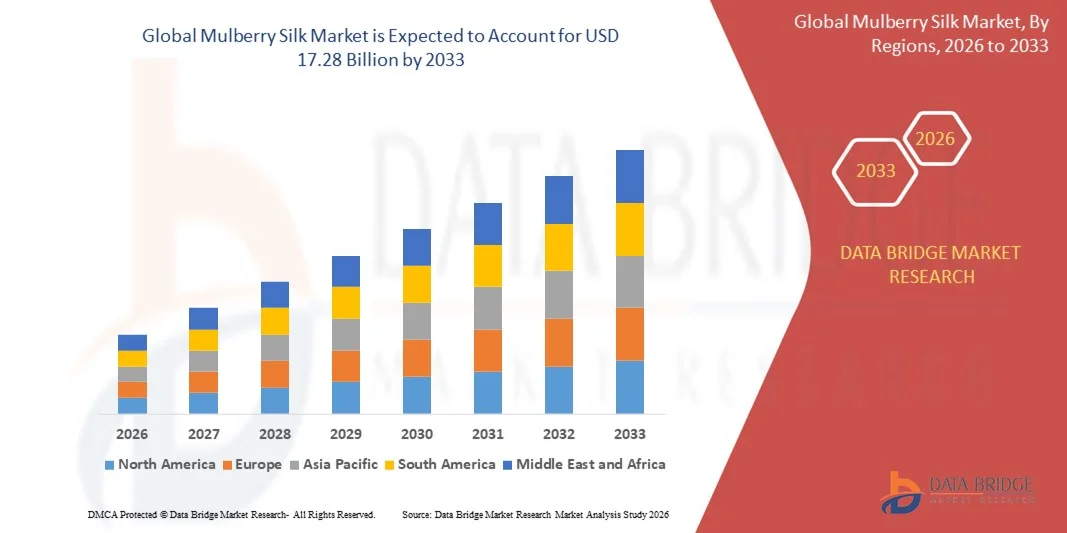
- The global mulberry silk market size was valued at USD 7.67 billion in 2025 and is expected to reach USD 17.28 billion by 2033, at a CAGR of 10.69% during the forecast period
- The market growth is largely fueled by the increasing global demand for luxury and premium textiles, particularly in apparel, high-end fashion, and home décor, which is driving consistent consumption of Mulberry silk
- Furthermore, rising consumer preference for natural, sustainable, and skin-friendly fabrics is establishing Mulberry silk as a preferred material in both fashion and lifestyle segments. These converging factors are accelerating the adoption of Mulberry silk products, thereby significantly boosting the industry’s growth
Mulberry Silk Market Analysis
- Mulberry silk, produced from the cocoons of Bombyx mori silkworms, is increasingly recognized as a vital material in luxury apparel, high-end fashion, and premium home textiles due to its smooth texture, natural sheen, hypoallergenic properties, and superior comfort
- The escalating demand for Mulberry silk is primarily fueled by rising disposable incomes, expanding fashion and luxury markets, growing exports from key silk-producing countries, and increasing consumer awareness of sustainable and eco-friendly textile alternatives
- Asia-Pacific dominated the mulberry silk market with a share of around 60% in 2025, due to strong textile manufacturing hubs, increasing demand for luxury apparel, and growing exports of silk products
- North America is expected to be the fastest growing region in the mulberry silk market during the forecast period due to rising demand for premium and sustainable silk products in fashion, home décor, and lifestyle applications
- Mulberry silk fabric segment dominated the market with a market share of 62.5% in 2025, due to its wide adoption in high-end apparel and home textiles. Consumers and manufacturers prefer Mulberry silk fabric for its smooth texture, luster, and durability, which provide a premium feel in garments and luxury products. The fabric form allows designers to create intricate patterns and blends with other materials, enhancing both aesthetic appeal and functional performance
Report Scope and Mulberry Silk Market Segmentation
|
Attributes |
Mulberry Silk Key Market Insights |
|
Segments Covered |
|
|
Countries Covered |
North America
Europe
Asia-Pacific
Middle East and Africa
South America
|
|
Key Market Players |
|
|
Market Opportunities |
|
|
Value Added Data Infosets |
In addition to the insights on market scenarios such as market value, growth rate, segmentation, geographical coverage, and major players, the market reports curated by the Data Bridge Market Research also include import export analysis, production capacity overview, production consumption analysis, price trend analysis, climate change scenario, supply chain analysis, value chain analysis, raw material/consumables overview, vendor selection criteria, PESTLE Analysis, Porter Analysis, and regulatory framework. |
Mulberry Silk Market Trends
Growing Demand for Sustainable and Luxury Textiles
- A significant trend in the mulberry silk market is the increasing demand for sustainable and luxury textiles, driven by rising consumer preference for eco-friendly fabrics and premium quality apparel. This trend is elevating mulberry silk as a preferred material for high-end fashion, home textiles, and lifestyle products that require softness, durability, and a natural sheen
- For instance, LUXURY SILK Co. and KOHINOOR SILK supply ethically sourced mulberry silk that is widely used in designer garments and luxury bedding collections. These products meet the growing consumer demand for sustainable production practices while maintaining superior fabric quality
- The integration of mulberry silk in high-fashion collections is increasing as designers use the material for exclusive clothing lines, scarves, and accessories. This adoption is positioning mulberry silk as a key differentiator in the competitive fashion industry that targets affluent consumers
- Home textile manufacturers are incorporating mulberry silk in premium bedding, curtains, and upholstery, driven by its natural hypoallergenic properties and luxurious texture. This trend is fostering innovation in premium home décor and wellness-focused textile products
- The demand for mulberry silk in emerging markets is rising due to growing awareness of its health and skin benefits, creating opportunities for companies to expand distribution and product offerings. This is accelerating regional market growth and enhancing the global footprint of silk-based products
- Sustainable fashion initiatives by brands are reinforcing the prominence of mulberry silk, where consumers are increasingly considering environmental impact alongside product quality. This dual focus on luxury and sustainability is shaping long-term industry trends and consumer preferences
Mulberry Silk Market Dynamics
Driver
Rising Adoption of Mulberry Silk in Apparel and High-End Fashion
- The growing use of mulberry silk in apparel and luxury fashion is driving market growth, fueled by designers and brands seeking high-quality, elegant, and sustainable materials. Mulberry silk’s smooth texture, durability, and natural sheen make it a preferred choice for premium garments and accessories
- For instance, brands such as Hermès and Armani incorporate mulberry silk in their haute couture collections and limited-edition scarves. These applications enhance brand value while meeting consumer demand for soft, luxurious fabrics
- The expansion of online luxury retail platforms is boosting mulberry silk adoption by providing broader access to premium textiles and fashion items. This is enabling smaller silk producers to reach affluent customers globally and scale business operations
- Rising consumer awareness about ethical and sustainable sourcing practices is promoting the use of mulberry silk over synthetic alternatives. This trend is strengthening demand for certified and traceable silk products, particularly in high-income markets
- Collaborations between silk producers and fashion houses are increasing, driving innovation in textile finishing techniques and product designs. This synergy enhances market competitiveness and ensures a continuous pipeline of premium silk offerings
Restraint/Challenge
High Production Costs and Limited Raw Material Supply
- The mulberry silk market faces challenges due to the high cost of sericulture, labor-intensive harvesting, and specialized processing techniques. These factors contribute to elevated pricing and limited scalability for manufacturers
- For instance, KOHINOOR SILK highlights that mulberry silk production requires controlled cultivation of silkworms and extensive quality checks, which increase operational expenses. These conditions restrict the ability of smaller producers to compete on cost and volume
- Limited availability of high-quality mulberry leaves and silkworms creates supply-side constraints, affecting consistent production of premium silk. This scarcity influences pricing stability and can restrict the growth of high-end product lines
- The market also encounters challenges related to processing and dyeing, where advanced techniques are required to maintain the silk’s natural luster and durability. These processes demand skilled labor and specialized equipment, further raising costs
- Maintaining a balance between sustainable practices and commercial viability remains a key challenge, as eco-friendly production often involves slower growth and higher investments. This continues to influence manufacturers’ strategies and product pricing across global markets
Mulberry Silk Market Scope
The market is segmented on the basis of product type, application, distribution channel, end-user, and quality grade.
- By Product Type
On the basis of product type, the Mulberry Silk market is segmented into raw Mulberry silk and Mulberry silk fabric. The Mulberry silk fabric segment dominated the market with the largest revenue share of 62.5% in 2025, driven by its wide adoption in high-end apparel and home textiles. Consumers and manufacturers prefer Mulberry silk fabric for its smooth texture, luster, and durability, which provide a premium feel in garments and luxury products. The fabric form allows designers to create intricate patterns and blends with other materials, enhancing both aesthetic appeal and functional performance. Its compatibility with dyeing and printing processes further fuels demand across fashion and interior applications. The availability of ready-to-use silk fabric also reduces processing time for manufacturers, making it a preferred choice over raw silk.
The raw Mulberry silk segment is anticipated to witness the fastest growth from 2026 to 2033, driven by increasing investments in textile manufacturing and artisanal silk production. For instance, companies such as Vardhman Textiles are focusing on expanding their raw silk supply chains to cater to growing demand from luxury apparel brands. Raw silk offers flexibility for customized fabric production and higher control over quality, which appeals to premium fabric manufacturers. Rising interest in eco-friendly and natural fibers also supports raw silk adoption. Its growth is particularly strong in regions emphasizing handloom and bespoke textile production.
- By Application
On the basis of application, the Mulberry Silk market is segmented into apparel and high-end fashion. The apparel segment dominated the market in 2025, driven by the increasing use of silk in shirts, dresses, scarves, and sleepwear. Mulberry silk’s natural softness, hypoallergenic properties, and moisture-wicking ability make it highly preferred among individual consumers for comfort and luxury. The segment also benefits from expanding e-commerce platforms offering designer silk apparel directly to consumers. High consumer awareness regarding the premium nature of silk garments further supports its strong market presence. In addition, partnerships between fashion brands and silk producers enhance availability and variety, fueling adoption across global apparel markets.
The high-end fashion segment is expected to witness the fastest growth from 2026 to 2033, driven by demand for luxury couture and designer collections. For instance, Hermès has increasingly incorporated Mulberry silk into its runway collections, boosting market visibility. This segment thrives on the exclusivity, elegance, and visual appeal of silk in premium fashion items. Consumers increasingly prefer limited-edition and bespoke silk garments, enhancing demand. The growth is supported by rising disposable incomes and the expanding luxury fashion market across Europe and Asia-Pacific regions.
- By Distribution Channel
On the basis of distribution channel, the Mulberry Silk market is segmented into online retail and e-commerce platforms. The e-commerce segment dominated the market in 2025, fueled by the convenience of online shopping, broader product variety, and direct access to premium silk products. Online channels allow brands to reach niche and international consumers efficiently, reducing the need for intermediaries. Consumers increasingly value detailed product information, reviews, and easy return policies offered by e-commerce platforms. The integration of secure payment gateways and fast delivery services further strengthens adoption. In addition, digital marketing campaigns and social media engagement have enhanced consumer awareness and preference for online silk purchases.
The online retail segment is projected to witness the fastest growth from 2026 to 2033, driven by the rise of fashion-focused online stores and direct-to-consumer platforms. For instance, Net-a-Porter has expanded its premium silk product offerings, tapping into the growing digital consumer base. This segment benefits from personalized shopping experiences, curated collections, and global accessibility. Increasing smartphone penetration and improved logistics networks further fuel growth. Consumers also prefer subscription and bundle options available through online retail platforms, which enhances repeat purchases.
- By End-User
On the basis of end-user, the Mulberry Silk market is segmented into individual consumers and fashion designers. Individual consumers dominated the market in 2025, driven by rising preference for luxury sleepwear, scarves, and premium clothing. Mulberry silk’s skin-friendly and breathable properties appeal to consumers seeking both comfort and elegance. The segment also benefits from expanding awareness of silk as a natural, sustainable alternative to synthetic fabrics. Retail promotions and collaborations between silk brands and fashion influencers enhance consumer engagement. In addition, the availability of diverse silk products online and in stores encourages repeat purchases and brand loyalty.
The fashion designers segment is expected to witness the fastest growth from 2026 to 2033, driven by increasing demand for bespoke collections and custom silk garments. For instance, Ralph Lauren uses Mulberry silk extensively in couture lines, supporting premium product development. Designers leverage raw and finished silk to create high-quality, innovative patterns, enhancing creative freedom. The growth is supported by fashion weeks, exhibitions, and international collaborations that promote silk’s premium image. This segment also benefits from expanding designer-focused e-commerce platforms, enabling global reach and new market opportunities.
- By Quality Grade
On the basis of quality grade, the Mulberry Silk market is segmented into Grade A (Premium Quality), Grade B (Standard Quality), and Grade C (Economical Quality). The Grade A segment dominated the market in 2025, driven by rising demand for luxurious apparel, high-end fashion, and premium home textiles. Consumers and manufacturers highly value the superior softness, uniformity, and sheen of Grade A silk, which ensures excellent drape and durability. Its dominance is reinforced by luxury fashion brands that rely on top-grade silk to maintain brand image. In addition, increasing awareness about authenticity and quality has encouraged preference for premium-grade silk. The segment also benefits from consistent quality control in production and processing, ensuring reliability for high-value applications.
The Grade B segment is anticipated to witness the fastest growth from 2026 to 2033, driven by expanding mid-tier apparel and fashion segments seeking premium yet cost-effective silk options. For instance, FabIndia sources Grade B Mulberry silk to balance quality and affordability for its consumer base. This segment appeals to price-conscious consumers and emerging fashion brands looking for sustainable materials. Growth is further supported by the increasing use of Grade B silk in blends and semi-luxury products. Its adoption is particularly strong in emerging markets with rising disposable income and fashion awareness.
Mulberry Silk Market Regional Analysis
- Asia-Pacific dominated the mulberry silk market with the largest revenue share of around 60% in 2025, driven by strong textile manufacturing hubs, increasing demand for luxury apparel, and growing exports of silk products
- The region’s cost-effective manufacturing landscape, abundant raw silk production, and expanding fashion and home textile industries are accelerating market expansion
- The availability of skilled labor, supportive government policies, and rising investments in silk processing and high-end textile exports are contributing to increased consumption of Mulberry silk across apparel and fashion segments
China Mulberry Silk Market Insight
China held the largest share in the Asia-Pacific Mulberry silk market in 2025, owing to its leadership in silk production, well-established textile manufacturing base, and extensive export capabilities. The country’s focus on high-quality silk processing, investment in luxury fabric production, and government support for the textile sector are major growth drivers. Rising domestic demand for premium silk apparel and home textiles also strengthens market presence.
India Mulberry Silk Market Insight
India is witnessing the fastest growth in the Asia-Pacific region, fueled by expanding silk rearing, increasing investments in silk weaving and textile infrastructure, and growing demand for high-end silk products. For instance, initiatives promoting silk production in Karnataka and Tamil Nadu, along with rising exports to luxury fashion brands, are strengthening market growth. Increasing awareness of sustainable and natural fabrics is further boosting Mulberry silk consumption.
Europe Mulberry Silk Market Insight
The Europe Mulberry silk market is expanding steadily, supported by high demand for premium silk apparel, strong fashion and luxury brands, and emphasis on sustainable and ethically sourced textiles. Countries in the region focus on quality control, certifications, and advanced textile processing technologies. The growing use of silk in haute couture, accessories, and interior textiles is further enhancing market growth.
Germany Mulberry Silk Market Insight
Germany’s Mulberry silk market is driven by a mature fashion industry, strong textile R&D, and demand for high-quality luxury fabrics. The country emphasizes premium sourcing, sustainable textile practices, and collaboration between designers and textile manufacturers. Demand is particularly strong for use in designer apparel, scarves, and luxury home textiles.
U.K. Mulberry Silk Market Insight
The U.K. market is supported by its established luxury fashion sector, rising consumer preference for natural fabrics, and increased focus on ethically sourced silk. Growing collaborations between fashion designers and silk suppliers, along with investments in boutique and high-end textile production, are fueling market growth. In addition, e-commerce and direct-to-consumer channels enhance accessibility of premium silk products.
North America Mulberry Silk Market Insight
North America is projected to grow at the fastest CAGR from 2026 to 2033, driven by rising demand for premium and sustainable silk products in fashion, home décor, and lifestyle applications. A strong focus on luxury apparel, designer collaborations, and e-commerce expansion are boosting market adoption. In addition, increasing consumer awareness of ethical sourcing and natural fabrics is supporting market growth.
U.S. Mulberry Silk Market Insight
The U.S. accounted for the largest share in the North America market in 2025, underpinned by its mature luxury fashion industry, strong designer community, and high consumer spending on premium fabrics. The country’s focus on sustainability, ethical sourcing, and innovation in textile applications encourages the use of Mulberry silk across apparel, accessories, and home décor. Presence of leading fashion brands and an organized distribution network further solidify the U.S.'s leading position in the region.
Mulberry Silk Market Share
The mulberry silk industry is primarily led by well-established companies, including:
- Anhui Silk (China)
- Wujiang First Textile (China)
- Zhejiang Jiaxin Silk (China)
- Sichuan Nanchong Liuhe (Group) Corp (China)
- Shengkun Silk Manufacturing (China)
- Jiangsu Sutong Cocoon & Silk (China)
- Incengjiang Xinxing Cocoon Silk (China)
- Wensli Group (China)
- Entogenetics, Inc (U.S.)
- Bolt Threads Inc (U.S.)
- Spiber Technologies (Japan)
- AMSilk GmbH (Germany)
- Kraig Biocraft Laboratories (U.S.)
Latest Developments in Global Mulberry Silk Market
- In January 2026, bioengineered silk protein yarns developed by AMSilk were commercially introduced through garments in Balenciaga’s Spring 2026 collection, marking the first transition of biotech‑derived silk from research to high-end consumer fashion. This development is significant for the Mulberry silk market as it demonstrates that sustainable, lab-engineered silk can meet luxury standards for texture, sheen, and durability. It opens opportunities for fashion brands to diversify materials, reduces dependency on traditional silk supply chains, and positions the market to adopt innovative silk alternatives that appeal to eco-conscious and tech-savvy consumers, potentially expanding the luxury apparel segment
- In August 2025, Mayfairsilk expanded its pure Mulberry silk pillowcase offerings with new designer-patterned 25 momme silk pillowcases, targeting consumers seeking both luxury and aesthetic appeal. This product launch enhances market diversity by providing premium decorative options that go beyond traditional plain designs, attracting fashion-forward and lifestyle-conscious buyers. It encourages higher-value purchases, strengthens brand positioning in the luxury bedding segment, and supports the premiumization of silk products. The introduction of designer patterns also underscores the market’s potential for combining functionality with creativity, stimulating innovation in luxury silk textiles for home and personal use
- In June 2025, Slip launched its Silk Travel Sleep Set, a bundled luxury product including a pillowcase, eye mask, and travel accessories designed for frequent travellers. This product introduction diversifies the Mulberry silk market beyond traditional home use, creating a niche in mobile and lifestyle-focused segments. It drives incremental revenue by catering to consumers seeking both convenience and luxury, elevates brand positioning in the travel accessory category, and enhances market awareness of the multifunctional applications of silk. This launch also demonstrates that premium silk products can meet evolving consumer lifestyles, which may stimulate further innovation in travel-oriented silk offerings
- In March 2025, Brooklinen formed a strategic partnership with ZIMASILK to co-develop and co-brand a premium silk pillowcase line, combining Brooklinen’s global retail presence with ZIMASILK’s expertise in silk sourcing. This collaboration strengthens the Mulberry silk market by increasing product availability in North America and Europe, accelerating brand visibility, and expanding reach to new consumer segments seeking luxury home textiles. The partnership also supports scale production, reinforces supply chain efficiency, and sets a model for cross-brand collaborations that can drive broader adoption and premiumization within the silk bedding sector
- In March 2025, Mulberry Park Silks partnered with a sustainable packaging company to introduce fully compostable packaging for its silk pillowcases and related products. This initiative highlights the growing importance of sustainability within the Mulberry silk market and positions silk brands to meet eco-conscious consumer expectations. It strengthens brand reputation, differentiates products in a competitive market, and encourages responsible consumption patterns. In addition, the move signals a broader trend toward environmentally friendly practices in luxury textiles, which could influence industry standards and drive further adoption of sustainable Mulberry silk products across fashion and home décor segments

- Interactive Data Analysis Dashboard
- Company Analysis Dashboard for high growth potential opportunities
- Research Analyst Access for customization & queries
- Competitor Analysis with Interactive dashboard
- Latest News, Updates & Trend analysis
- Harness the Power of Benchmark Analysis for Comprehensive Competitor Tracking
Global Mulberry Silk Market, Supply Chain Analysis and Ecosystem Framework
To support market growth and help clients navigate the impact of geopolitical shifts, DBMR has integrated in-depth supply chain analysis into its Global Mulberry Silk Market research reports. This addition empowers clients to respond effectively to global changes affecting their industries. The supply chain analysis section includes detailed insights such as Global Mulberry Silk Market consumption and production by country, price trend analysis, the impact of tariffs and geopolitical developments, and import and export trends by country and HSN code. It also highlights major suppliers with data on production capacity and company profiles, as well as key importers and exporters. In addition to research, DBMR offers specialized supply chain consulting services backed by over a decade of experience, providing solutions like supplier discovery, supplier risk assessment, price trend analysis, impact evaluation of inflation and trade route changes, and comprehensive market trend analysis.
Data collection and base year analysis are done using data collection modules with large sample sizes. The stage includes obtaining market information or related data through various sources and strategies. It includes examining and planning all the data acquired from the past in advance. It likewise envelops the examination of information inconsistencies seen across different information sources. The market data is analysed and estimated using market statistical and coherent models. Also, market share analysis and key trend analysis are the major success factors in the market report. To know more, please request an analyst call or drop down your inquiry.
The key research methodology used by DBMR research team is data triangulation which involves data mining, analysis of the impact of data variables on the market and primary (industry expert) validation. Data models include Vendor Positioning Grid, Market Time Line Analysis, Market Overview and Guide, Company Positioning Grid, Patent Analysis, Pricing Analysis, Company Market Share Analysis, Standards of Measurement, Global versus Regional and Vendor Share Analysis. To know more about the research methodology, drop in an inquiry to speak to our industry experts.
Data Bridge Market Research is a leader in advanced formative research. We take pride in servicing our existing and new customers with data and analysis that match and suits their goal. The report can be customized to include price trend analysis of target brands understanding the market for additional countries (ask for the list of countries), clinical trial results data, literature review, refurbished market and product base analysis. Market analysis of target competitors can be analyzed from technology-based analysis to market portfolio strategies. We can add as many competitors that you require data about in the format and data style you are looking for. Our team of analysts can also provide you data in crude raw excel files pivot tables (Fact book) or can assist you in creating presentations from the data sets available in the report.













