


Mushroom Fermenter Market Size
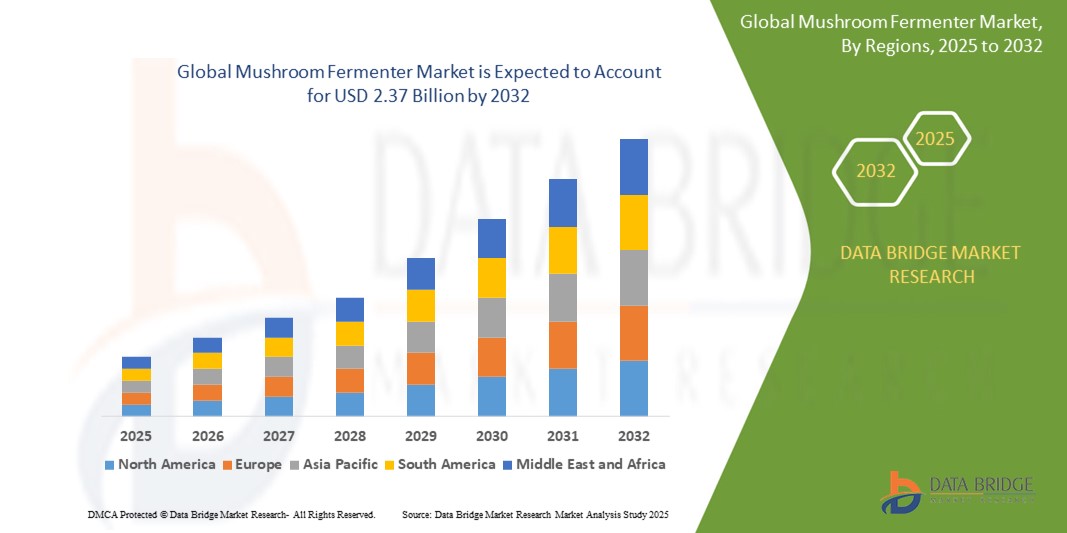
- The global mushroom fermenter market size was valued at USD 1.55 billion in 2024 and is expected to reach USD 2.37 billion by 2032, at a CAGR of 5.40% during the forecast period
- The market growth is largely fuelled by the increasing demand for functional and plant-based food ingredients, expanding applications of mycelium in nutraceuticals and alternative proteins, and advancements in biotechnological fermentation processes
- Rising investments in food tech startups and sustainable fermentation technologies are further boosting the adoption of mushroom fermenters across food, pharma, and cosmetic industries
Mushroom Fermenter Market Analysis
- Growing consumer awareness regarding the nutritional benefits of fermented mushrooms and the rising popularity of clean-label and sustainable food sources are propelling market expansion
- Increasing research and development efforts in fungal biotechnology, alongside investments in large-scale fermentation facilities, are creating new growth avenues for both food and pharmaceutical-grade applications
- Asia-Pacific dominated the mushroom fermenter market with the largest revenue share of 39.86% in 2024, driven by increasing demand for functional foods, rapid expansion of the food and pharmaceutical industries, and rising investments in fermentation-based production
- Europe region is expected to witness the highest growth rate in the global mushroom fermenter market, driven by a growing shift toward eco-friendly fermentation practices, heightened demand for functional foods, and regulatory support for biotech-based food innovations
- The mechanical type segment dominated the market with the largest market revenue share in 2024, primarily due to its efficient mixing capabilities and widespread industrial adoption. These fermenters offer enhanced control over parameters such as temperature, pH, and oxygen levels, making them ideal for large-scale mushroom cultivation. The consistent output and scalability of mechanical fermenters are key drivers behind their preference in commercial applications such as food and pharmaceuticals
Report Scope and Mushroom Fermenter Market Segmentation
|
Attributes |
Mushroom Fermenter Key Market Insights |
|
Segments Covered |
|
|
Countries Covered |
North America
Europe
Asia-Pacific
Middle East and Africa
South America
|
|
Key Market Players |
|
|
Market Opportunities |
• Growing Demand for Mycelium-Based Alternative Proteins • Expansion of Fermentation Applications in Nutraceuticals and Cosmetics |
|
Value Added Data Infosets |
In addition to the insights on market scenarios such as market value, growth rate, segmentation, geographical coverage, and major players, the market reports curated by the Data Bridge Market Research also include in-depth expert analysis, pricing analysis, brand share analysis, consumer survey, demography analysis, supply chain analysis, value chain analysis, raw material/consumables overview, vendor selection criteria, PESTLE Analysis, Porter Analysis, and regulatory framework. |
Mushroom Fermenter Market Trends
“Rising Integration of Fermented Mushrooms in Functional Food and Beverage Products”
- The food and beverage industry is increasingly incorporating fermented mushrooms into functional products to meet growing consumer demand for immunity-boosting and nutrient-dense options. These mushrooms offer enhanced bioavailability, gut health support, and adaptogenic benefits. The trend is pushing manufacturers to scale fermentation operations for consistent output and diversified formulations
- Innovations in fermentation techniques allow food developers to create non-dairy drinks, supplements, and snacks with better taste profiles and longer shelf life. This makes mushrooms more accessible in everyday diets and enhances their appeal in mainstream retail. As product differentiation becomes critical, fermentation adds functional and clean-label value
- Fermented mushrooms are gaining recognition in the nutraceutical segment, with blends targeting stress relief, energy, and digestion. As the wellness industry shifts toward holistic and natural solutions, mushrooms stand out for their versatility and medicinal potential. They are increasingly formulated into capsules, powders, and ready-to-drink formats
- For instance, U.S.-based Four Sigmatic has launched mushroom-based beverages and supplements using fermented reishi and chaga mushrooms that appeal to wellness-focused consumers seeking convenient, adaptogenic nutrition. The success of such offerings shows how mushroom fermentation is becoming a strategic innovation tool
- The trend toward wellness and personalized nutrition is accelerating the inclusion of fermented mushrooms across product categories. This integration is reshaping consumer expectations around clean label, multifunctional ingredients and driving consistent growth in the mushroom fermenter market
Mushroom Fermenter Market Dynamics
Driver
“Rising Demand for Sustainable and Alternative Protein Sources”
- The global shift toward sustainable food production is boosting interest in fermented mushroom mycelium as a low-footprint protein source. Mycelium offers high protein yield, low water use, and reduced land dependency compared to traditional meat production. This eco-efficiency is making mushroom fermentation attractive to food innovators
- As consumers prioritize health and sustainability, plant-based food alternatives with clean ingredients are gaining popularity. Fermented mushroom proteins mimic the texture and flavor of meat while delivering essential nutrients. This is pushing brands to explore mushroom fermentation as a central technology
- Food security concerns and resource constraints are encouraging investment in scalable, fermentation-based food production platforms. Controlled environment fermentation enables year-round output and predictable supply chains, helping address both sustainability and nutrition challenges
- For instance, MyForest Foods leverages large-scale mushroom fermenters to produce mycelium-based meat alternatives that meet the rising consumer demand for ethical and healthy protein. The brand demonstrates how fermentation is bridging the gap between innovation and sustainability
- Mushroom fermenters are playing a critical role in meeting global protein demands sustainably. As more consumers and businesses recognize the environmental and nutritional advantages, adoption is expected to accelerate across the food and biotech sectors
Restraint/Challenge
“High Initial Capital Investment and Complex Regulatory Landscape”
- Setting up advanced mushroom fermenter systems involves significant capital expenditure in bioreactors, clean-room facilities, and automation equipment. This cost barrier limits entry for small and medium enterprises, particularly in developing economies. Funding gaps can delay commercialization timelines and technology adoption
- Compliance with food safety, biotechnology, and health regulations adds complexity to market entry for fermented mushroom products. Navigating global regulatory frameworks requires legal expertise and extensive product testing. This slows down innovation cycles and increases development costs
- Operational challenges such as strain selection, contamination control, and nutrient optimization demand highly skilled personnel. The technical intricacy of fermentation processes can result in inconsistencies, impacting scalability and product quality
- For instance, many early-stage startups in Asia and Latin America struggle to scale mushroom fermentation operations due to high setup costs and the lack of regulatory clarity for novel food products. This hinders global market expansion and innovation diffusion
- While the mushroom fermenter market holds strong potential, regulatory hurdles and high investment requirements may slow early adoption. Strategic partnerships and supportive policy frameworks will be essential to overcome these limitations and ensure sustainable growth
Mushroom Fermenter Market Scope
The market is segmented on the basis of type and application.
- By Type
On the basis of type, the mushroom fermenter market is segmented into non-mechanical agitation and mechanical type. The mechanical type segment dominated the market with the largest market revenue share in 2024, primarily due to its efficient mixing capabilities and widespread industrial adoption. These fermenters offer enhanced control over parameters such as temperature, pH, and oxygen levels, making them ideal for large-scale mushroom cultivation. The consistent output and scalability of mechanical fermenters are key drivers behind their preference in commercial applications such as food and pharmaceuticals.
The non-mechanical agitation segment is expected to witness the fastest growth rate from 2025 to 2032, owing to its lower energy consumption and suitability for delicate fungal strains. These fermenters utilize natural convection or gas sparging to achieve homogenous mixing, reducing mechanical stress on the biomass. The rising demand for sustainable, low-shear fermentation systems in biotechnology and specialty food sectors is contributing to the segment’s projected expansion.
- By Applications
On the basis of applications, the mushroom fermenter market is segmented into chemical, food, pharmaceutical, and cosmetics and personal care. The food segment held the largest market share in 2024, driven by growing consumer interest in functional and fermented mushroom-based products. Fermentation enhances the bioavailability of nutrients, allowing manufacturers to produce high-value food ingredients such as mushroom protein, extracts, and flavor enhancers. The surge in demand for plant-based and clean-label food products further supports this segment’s dominance.
The pharmaceutical segment is expected to witness the fastest growth rate from 2025 to 2032, fuelled by increasing use of fermented mushrooms in immunity-boosting supplements, anti-inflammatory compounds, and adaptogenic formulations. Mushroom fermentation is being explored for its potential in drug development and therapeutic applications, with active investments from biotech firms. This trend is expected to strengthen the adoption of fermenters tailored for pharmaceutical-grade precision and compliance.
Mushroom Fermenter Market Regional Analysis
- • Asia-Pacific dominated the mushroom fermenter market with the largest revenue share of 39.86% in 2024, driven by increasing demand for functional foods, rapid expansion of the food and pharmaceutical industries, and rising investments in fermentation-based production
- • Countries in the region are actively embracing biotechnological advancements and investing in precision fermentation facilities to meet rising nutritional and medicinal demands
- • The combination of population growth, evolving dietary preferences, and supportive regulatory frameworks is fostering significant adoption of mushroom fermenters across key application areas including food supplements and natural ingredients
China Mushroom Fermenter Market Insight
The China mushroom fermenter market captured the largest revenue share in Asia-Pacific in 2024, attributed to robust domestic production capabilities and government-backed initiatives to scale up biomanufacturing. The country is experiencing rising demand for fermented mushroom-based compounds in both pharmaceuticals and functional beverages. Investments in fermentation technology and infrastructure are further accelerating China’s leadership in this space.
Japan Mushroom Fermenter Market Insight
The Japan mushroom fermenter market is expected to witness the fastest growth rate from 2025 to 2032, supported by the country’s long-standing tradition of fermentation and its growing focus on functional health foods. With a mature biotechnology sector and high consumer demand for wellness-driven and umami-rich ingredients, Japan is investing in advanced fermentation processes for food, pharmaceuticals, and cosmetics. The market is also benefiting from increased R&D into mycelium-based proteins and adaptogenic mushroom extracts, making Japan a key player in the development of next-generation mushroom-based solutions.
North America Mushroom Fermenter Market Insight
The North America mushroom fermenter market is expected to witness the fastest growth rate from 2025 to 2032, supported by growing health awareness and increased adoption of plant-based and fermented nutrition. The presence of advanced food processing technology and rising R&D activities in biopharmaceuticals are boosting the demand for efficient fermenters. Market participants are focusing on product innovation and clean-label formulations to address evolving consumer expectations.
U.S. Mushroom Fermenter Market Insight
The U.S. mushroom fermenter market is expected to witness the fastest growth rate from 2025 to 2032, driven by rising use of fermented mushroom extracts in cosmetics, dietary supplements, and personal care products. A growing shift toward sustainable production processes and strong consumer interest in functional ingredients are driving innovation. Companies in the U.S. are also investing in scaling precision fermentation technologies for commercial application.
Europe Mushroom Fermenter Market Insight
The Europe mushroom fermenter market is expected to witness the fastest growth rate from 2025 to 2032, led by stringent regulatory emphasis on sustainable and safe food and pharmaceutical production. The region is witnessing increasing demand for naturally derived bioactive compounds, and mushroom fermentation is becoming a preferred solution in nutraceutical and wellness sectors. Collaborative research efforts and supportive funding mechanisms further enhance market growth.
Germany Mushroom Fermenter Market Insight
The Germany mushroom fermenter market is expected to witness the fastest growth rate from 2025 to 2032, due to the country’s emphasis on eco-friendly technologies and advanced biotechnology research infrastructure. Demand for organic and clean-label products is encouraging the use of mushroom fermentation in food and pharmaceuticals. Local players are also exploring partnerships to innovate fermentation processes that reduce waste and carbon emissions while enhancing product yield.
U.K. Mushroom Fermenter Market Insight
The U.K. mushroom fermenter market is expected to witness the fastest growth rate from 2025 to 2032, supported by increasing health consciousness, demand for organic ingredients, and the rise of plant-based dietary trends. U.K. companies are integrating fermentation into clean-label product development, especially within the functional food and personal care segments. In addition, research institutions and public-private collaborations are advancing precision fermentation technologies, contributing to innovation and scalability across the market.
Mushroom Fermenter Market Share
The mushroom fermenter industry is primarily led by well-established companies, including:
- Bioengineering AG (Switzerland)
- Eppendorf AG (Germany)
- DCI-Biolafitte (France)
- Sartorius AG (Germany)
- Infors AG (Switzerland)
- MARUBISHI I&E (M) SDN. BHD. (Malaysia)
- Tongling Bio (China)
- Zhenjiang Ritai (China)
- GS Bio (China)
- Yongxiang Machinery (China)
- Hangzhou Huihe Equipment Co., Ltd. (China)
- Bonduelle (France)
- Costa Group (Australia)
- The Green Yard (Norway)
- Monaghan Group (Ireland)
- OKECHAMP SA (Poland)
- Shanghai Fengke Biology Technology Stock Co., Ltd. (China)
Latest Developments in Global Mushroom Fermenter Market
- In February 2024, 70/30 Food Tech, a Shanghai-based company focused on plant, fungi, and mycelium-based ingredients, announced the completion of a seed-extension funding round. As part of this development, the company plans to establish the 70/30 Mycelium Research Lab in Bangalore, India, within a leading biotech startup incubator. The lab will focus on creating affordable fungi-based biomass ingredients for alternative meats, aiming to scale sustainable food innovation. This initiative is expected to boost regional R&D capabilities and accelerate the adoption of mycelium-based protein alternatives in emerging markets
- In October 2023, MycoTechnology, a specialist in mushroom mycelial fermentation, launched its Fermentation as a Service (FaaS) platform for bioproduct companies. This new service is designed to address the limited availability of fermentation infrastructure by offering shared access to advanced facilities. The FaaS model is set to enhance scalability and reduce entry barriers for biotech startups, promoting faster innovation and commercialization within the bio-based product industry

- Interactive Data Analysis Dashboard
- Company Analysis Dashboard for high growth potential opportunities
- Research Analyst Access for customization & queries
- Competitor Analysis with Interactive dashboard
- Latest News, Updates & Trend analysis
- Harness the Power of Benchmark Analysis for Comprehensive Competitor Tracking
Global Mushroom Fermenter Market, Supply Chain Analysis and Ecosystem Framework
To support market growth and help clients navigate the impact of geopolitical shifts, DBMR has integrated in-depth supply chain analysis into its Global Mushroom Fermenter Market research reports. This addition empowers clients to respond effectively to global changes affecting their industries. The supply chain analysis section includes detailed insights such as Global Mushroom Fermenter Market consumption and production by country, price trend analysis, the impact of tariffs and geopolitical developments, and import and export trends by country and HSN code. It also highlights major suppliers with data on production capacity and company profiles, as well as key importers and exporters. In addition to research, DBMR offers specialized supply chain consulting services backed by over a decade of experience, providing solutions like supplier discovery, supplier risk assessment, price trend analysis, impact evaluation of inflation and trade route changes, and comprehensive market trend analysis.
Data collection and base year analysis are done using data collection modules with large sample sizes. The stage includes obtaining market information or related data through various sources and strategies. It includes examining and planning all the data acquired from the past in advance. It likewise envelops the examination of information inconsistencies seen across different information sources. The market data is analysed and estimated using market statistical and coherent models. Also, market share analysis and key trend analysis are the major success factors in the market report. To know more, please request an analyst call or drop down your inquiry.
The key research methodology used by DBMR research team is data triangulation which involves data mining, analysis of the impact of data variables on the market and primary (industry expert) validation. Data models include Vendor Positioning Grid, Market Time Line Analysis, Market Overview and Guide, Company Positioning Grid, Patent Analysis, Pricing Analysis, Company Market Share Analysis, Standards of Measurement, Global versus Regional and Vendor Share Analysis. To know more about the research methodology, drop in an inquiry to speak to our industry experts.
Data Bridge Market Research is a leader in advanced formative research. We take pride in servicing our existing and new customers with data and analysis that match and suits their goal. The report can be customized to include price trend analysis of target brands understanding the market for additional countries (ask for the list of countries), clinical trial results data, literature review, refurbished market and product base analysis. Market analysis of target competitors can be analyzed from technology-based analysis to market portfolio strategies. We can add as many competitors that you require data about in the format and data style you are looking for. Our team of analysts can also provide you data in crude raw excel files pivot tables (Fact book) or can assist you in creating presentations from the data sets available in the report.













