


Mycoses Treatment Market Size
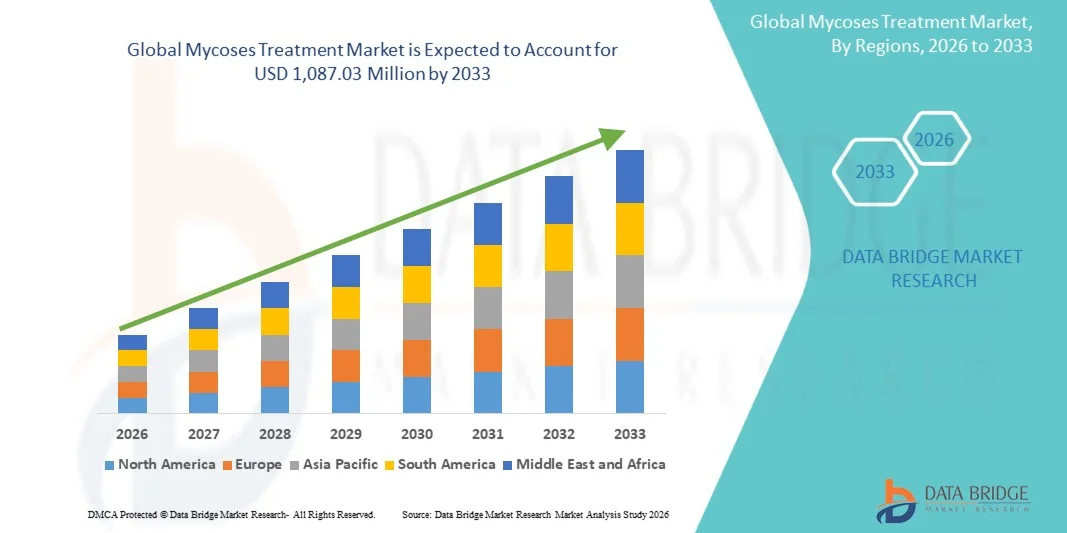
- The global mycoses treatment market size was valued at USD 587.29 million in 2025and is expected to reach USD 1,087.03 million by 2033, at a CAGR of 8.00% during the forecast period
- The market growth is largely driven by the increasing prevalence of fungal infections, rising incidence of immunocompromised conditions, and growing awareness regarding early diagnosis and treatment of mycoses across healthcare systems worldwide
- Furthermore, continuous advancements in antifungal therapies, expanding access to healthcare services, and increasing investments in infectious disease management are positioning mycoses treatment as a critical component of modern healthcare. These combined factors are accelerating the adoption of effective antifungal treatment solutions, thereby significantly boosting the industry's growth
Mycoses Treatment Market Analysis
- Mycoses treatment, encompassing antifungal medications and therapeutic approaches used to manage superficial, systemic, and opportunistic fungal infections, has become an essential part of infectious disease management due to the rising burden of fungal diseases and increasing vulnerability among immunocompromised patient populations worldwide
- The growing demand for mycoses treatment is primarily driven by the increasing prevalence of fungal infections, rising awareness regarding early diagnosis and treatment, and the expanding incidence of chronic diseases and immune disorders that heighten susceptibility to mycotic infections
- North America dominated the mycoses treatment market with the largest revenue share of 39.8% in 2025, characterized by advanced healthcare infrastructure, strong access to antifungal therapies, and growing incidence of hospital-acquired fungal infections, with the U.S. witnessing significant growth in antifungal drug utilization supported by ongoing research activities and the presence of major pharmaceutical companies focused on infectious disease therapeutics
- Asia-Pacific is expected to be the fastest growing region in the mycoses treatment market during the forecast period due to improving healthcare access, rising awareness regarding fungal infections, and increasing investments in healthcare infrastructure across emerging economies
- Azoles segment dominated the mycoses treatment market with a market share of 41.5% in 2025, driven by their broad-spectrum antifungal activity, widespread clinical usage, and effectiveness in treating a wide range of superficial and systemic fungal infections
Report Scope and Mycoses Treatment Market Segmentation
|
Attributes |
Mycoses Treatment Key Market Insights |
|
Segments Covered |
|
|
Countries Covered |
North America · U.S. · Canada · Mexico Europe · Germany · France · U.K. · Netherlands · Switzerland · Belgium · Russia · Italy · Spain · Turkey · Rest of Europe Asia-Pacific · China · Japan · India · South Korea · Singapore · Malaysia · Australia · Thailand · Indonesia · Philippines · Rest of Asia-Pacific Middle East and Africa · Saudi Arabia · U.A.E. · South Africa · Egypt · Israel · Rest of Middle East and Africa South America · Brazil · Argentina · Rest of South America |
|
Key Market Players |
|
|
Market Opportunities |
· The growing development of novel antifungal agents targeting drug-resistant fungal strains · Increasing adoption of rapid fungal diagnostic technologies in hospitals and clinical laboratories |
|
Value Added Data Infosets |
In addition to the insights on market scenarios such as market value, growth rate, segmentation, geographical coverage, and major players, the market reports curated by the Data Bridge Market Research also include in-depth expert analysis, patient epidemiology, pipeline analysis, pricing analysis, and regulatory framework |
Mycoses Treatment Market Trends
“Rising Adoption of Advanced Antifungal Therapies and Rapid Diagnostic Technologies”
- A significant and accelerating trend in the global mycoses treatment market is the increasing adoption of advanced antifungal therapies alongside rapid fungal diagnostic technologies across healthcare systems worldwide. This integration of innovative treatment and diagnostic approaches is significantly improving the management and outcomes of fungal infections
- For instance, antifungal agents such as Cresemba by Basilea Pharmaceutica and Vfend by Pfizer are increasingly utilized for the treatment of invasive fungal infections, while rapid molecular diagnostic platforms are enabling earlier and more accurate detection of pathogenic fungi in clinical settings. Similarly, healthcare institutions are adopting automated fungal testing systems to enhance treatment precision and reduce diagnostic delays
- Technological advancements in mycoses treatment are enabling features such as targeted antifungal therapy, improved drug efficacy, and reduced toxicity profiles for patients undergoing long-term treatment. For instance, some next-generation antifungal therapies are designed to combat resistant fungal strains more effectively and can support personalized treatment strategies based on pathogen identification. Furthermore, rapid diagnostic capabilities offer healthcare professionals the ability to initiate timely treatment interventions through faster detection of invasive fungal infections
- The seamless integration of antifungal therapies with advanced diagnostic and monitoring systems facilitates improved disease management across hospitals and specialty clinics. Through a coordinated healthcare approach, physicians can monitor treatment responses alongside laboratory diagnostics and infection surveillance systems, creating a more efficient and patient-focused treatment environment
- This trend towards more precise, efficient, and technologically advanced fungal infection management is fundamentally reshaping treatment expectations within infectious disease care. Consequently, companies such as Gilead Sciences
- are developing advanced antifungal treatment solutions with enhanced efficacy against invasive fungal pathogens and improved safety profiles for immunocompromised patients
- The demand for mycoses treatment solutions that offer improved therapeutic outcomes and rapid diagnostic integration is growing rapidly across hospitals and specialty healthcare centers, as healthcare providers increasingly prioritize effective infection management and early intervention strategies
Mycoses Treatment Market Dynamics
Driver
“Growing Need Due to Rising Incidence of Fungal Infections and Expanding Immunocompromised Population”
- The increasing prevalence of fungal infections among immunocompromised individuals, coupled with the growing burden of chronic diseases and hospital-acquired infections, is a significant driver for the heightened demand for mycoses treatment
- For instance, in March 2025, Astellas Pharma Inc. announced continued advancements in antifungal research programs focused on improving treatment outcomes for invasive fungal infections. Such strategies by key companies are expected to drive the mycoses treatment industry growth in the forecast period
- As healthcare providers become more focused on managing severe fungal infections in vulnerable patient populations, mycoses treatment solutions offer advanced therapeutic benefits such as broad-spectrum antifungal activity, improved survival outcomes, and reduced infection-related complications, providing a compelling advancement over conventional treatment approaches
- Furthermore, the growing awareness regarding early diagnosis and treatment of fungal infections and the increasing integration of antifungal stewardship programs are making mycoses treatment an essential component of modern infectious disease management, offering seamless coordination with hospital care and laboratory diagnostics
- Increasing collaborations between pharmaceutical companies and research institutions for the development of next-generation antifungal therapies are creating new growth opportunities within the global mycoses treatment market
- The availability of advanced antifungal medications, improved access to healthcare services for high-risk patients, and the ability to manage infections through targeted therapeutic approaches are key factors propelling the adoption of mycoses treatment solutions in hospitals and specialty care centers. The trend towards personalized infectious disease treatment and the increasing availability of innovative antifungal agents further contribute to market growth
Restraint/Challenge
“Drug Resistance Concerns and Regulatory Approval Challenges”
- Concerns surrounding the growing resistance of fungal pathogens to existing antifungal medications pose a significant challenge to broader market expansion. As fungal organisms evolve resistance mechanisms against commonly used therapies, treatment effectiveness may decline, raising concerns among healthcare professionals regarding long-term infection management and patient outcomes
- For instance, increasing reports of antifungal-resistant Candida auris infections in healthcare settings have made clinicians more cautious regarding treatment selection and infection control strategies within hospitals and intensive care units
- Addressing these resistance-related concerns through the development of novel antifungal agents, combination therapies, and enhanced surveillance programs is crucial for improving treatment effectiveness. Companies such as Merck & Co., Inc. and Pfizer emphasize ongoing antifungal research initiatives and advanced therapeutic pipelines to strengthen their infectious disease portfolios. In addition, the stringent regulatory approval processes associated with antifungal drug development can be a barrier to market entry for emerging pharmaceutical companies, particularly due to the complexity of clinical trials and safety evaluation requirements. While newer antifungal therapies continue to enter development pipelines, obtaining regulatory clearance often requires extensive investment and long-term clinical validation
- While advancements in antifungal treatment technologies are steadily improving therapeutic outcomes, the high development costs and lengthy approval timelines can still hinder widespread commercialization, especially for smaller biotechnology firms seeking market expansion opportunities
- Overcoming these challenges through continued investment in antifungal innovation, stronger resistance monitoring programs, and streamlined regulatory pathways will be vital for sustained market growth
Mycoses Treatment Market Scope
The market is segmented on the basis of drug class, fungi type, route of administration, end-users, and distribution channel.
- By Drug Class
On the basis of drug class, the mycoses treatment market is segmented into azoles, echinocandins, polyenes, allylamines, and others. The azoles segment dominated the market with the largest market revenue share of 41.5% in 2025, driven by their broad-spectrum antifungal activity and extensive clinical usage in the treatment of superficial and systemic fungal infections. Azole antifungals are widely prescribed due to their effectiveness against a wide range of fungal pathogens and their availability in oral and topical formulations. The segment also benefits from strong physician familiarity, improved patient compliance, and the increasing prevalence of candidiasis and aspergillosis infections worldwide. In addition, the affordability and accessibility of several generic azole medications continue to strengthen their adoption across both developed and emerging healthcare markets. The growing burden of immunocompromised patients requiring long-term antifungal therapy further contributes to the segment’s dominant market position.
The echinocandins segment is anticipated to witness the fastest growth rate from 2026 to 2033, fueled by their increasing effectiveness against drug-resistant fungal infections and favorable safety profile. Echinocandins are increasingly utilized in hospitals for the treatment of invasive candidiasis and severe fungal infections among critically ill patients. Their targeted mechanism of action and lower toxicity compared to certain conventional antifungal therapies are supporting wider clinical adoption. Rising incidences of antifungal resistance and hospital-acquired fungal infections are also accelerating demand for advanced echinocandin therapies. Furthermore, ongoing research and development activities focused on novel antifungal agents are expected to strengthen the future growth of this segment across global healthcare systems.
- By Fungi Type
On the basis of fungi type, the mycoses treatment market is segmented into dermatophytes, yeasts, molds, and others. The yeasts segment dominated the market with the largest market revenue share in 2025, driven by the high prevalence of Candida infections and increasing incidence of opportunistic fungal diseases among immunocompromised populations. Yeast-related fungal infections are commonly observed in hospitals, long-term care facilities, and outpatient healthcare settings, resulting in consistent treatment demand. The widespread occurrence of candidiasis infections among patients undergoing chemotherapy, organ transplantation, or intensive antibiotic therapy is significantly supporting segment growth. In addition, growing awareness regarding early fungal infection diagnosis and expanding access to antifungal medications continue to strengthen market penetration. The availability of multiple therapeutic options for yeast infections further reinforces the segment’s leading market position.
The molds segment is expected to witness the fastest CAGR from 2026 to 2033, driven by the increasing incidence of invasive mold infections such as aspergillosis and mucormycosis. Rising numbers of immunocompromised patients and growing concerns regarding severe respiratory fungal infections are accelerating the need for effective mold-targeted antifungal therapies. Hospitals and specialty clinics are increasingly adopting advanced antifungal medications and rapid diagnostic technologies to improve treatment outcomes for invasive mold infections. Furthermore, the emergence of drug-resistant mold pathogens and the growing complexity of fungal disease management are encouraging pharmaceutical companies to invest in innovative treatment solutions. Expanding research efforts focused on rare and life-threatening fungal infections are also expected to support the long-term growth of this segment.
- By Route of Administration
On the basis of route of administration, the mycoses treatment market is segmented into oral, topical, and others. The oral segment dominated the market with the largest market revenue share in 2025, driven by the convenience, accessibility, and widespread use of oral antifungal medications in the treatment of common fungal infections. Oral therapies are frequently prescribed for both superficial and systemic mycoses due to their ease of administration and ability to provide effective long-term treatment. The segment also benefits from high patient compliance and the availability of multiple oral antifungal formulations across retail and hospital pharmacies. Increasing prevalence of fungal skin infections, candidiasis, and nail infections continues to strengthen demand for oral treatment options worldwide. In addition, expanding healthcare awareness and improved access to prescription medications are supporting the continued dominance of this segment.
The topical segment is anticipated to witness the fastest growth rate from 2026 to 2033, fueled by the increasing demand for localized fungal infection treatment with reduced systemic side effects. Topical antifungal products are widely preferred for the management of dermatophytic infections, athlete’s foot, and superficial skin conditions due to their targeted therapeutic action. Rising consumer awareness regarding personal hygiene and skin health is further driving adoption of topical antifungal therapies. Furthermore, the growing availability of over-the-counter antifungal creams, sprays, and ointments is improving product accessibility across pharmacies and online distribution channels. Pharmaceutical companies are also focusing on the development of advanced topical formulations with enhanced absorption and faster treatment outcomes, contributing to the segment’s rapid growth trajectory.
- By End-Users
On the basis of end-users, the mycoses treatment market is segmented into hospitals, homecare, specialty clinics, and others. The hospitals segment dominated the market with the largest market revenue share in 2025, driven by the increasing hospitalization rates associated with severe fungal infections and the availability of advanced diagnostic and treatment infrastructure. Hospitals remain the primary centers for the management of invasive fungal infections, particularly among critically ill and immunocompromised patients. The segment also benefits from the growing adoption of antifungal stewardship programs and rapid fungal diagnostic technologies within hospital settings. Increasing incidences of hospital-acquired fungal infections and rising demand for intravenous antifungal therapies are further supporting segment growth. In addition, strong access to specialized infectious disease professionals and intensive care facilities continues to reinforce the dominance of hospitals in the global mycoses treatment market.
The specialty clinics segment is expected to witness the fastest CAGR from 2026 to 2033, driven by the increasing preference for specialized fungal infection diagnosis and outpatient treatment services. Specialty clinics provide focused care for dermatological, respiratory, and infectious fungal diseases, enabling improved patient monitoring and personalized treatment approaches. The growing availability of skilled healthcare professionals and advanced fungal diagnostic capabilities in specialty care settings is further enhancing segment expansion. Rising awareness regarding early fungal infection management and the increasing demand for minimally invasive treatment options are also contributing to market growth. Furthermore, expanding investments in specialty healthcare infrastructure across emerging economies are expected to accelerate the development of this segment during the forecast period.
- By Distribution Channel
On the basis of distribution channel, the mycoses treatment market is segmented into hospital pharmacy, online pharmacy, and retail pharmacy. The hospital pharmacy segment dominated the market with the largest market revenue share in 2025, driven by the high volume of antifungal prescriptions dispensed within hospitals and inpatient care settings. Hospital pharmacies play a critical role in managing severe and invasive fungal infections by ensuring timely access to specialized antifungal medications. The segment also benefits from increasing hospitalization rates among immunocompromised patients and growing demand for intravenous antifungal therapies. Furthermore, strong coordination between hospital pharmacists, infectious disease specialists, and diagnostic laboratories enhances treatment efficiency and medication management. The availability of advanced antifungal therapies and supportive healthcare reimbursement systems further contribute to the dominance of this segment.
The online pharmacy segment is anticipated to witness the fastest growth rate from 2026 to 2033, fueled by increasing digitalization in healthcare services and rising consumer preference for convenient medication purchasing platforms. Online pharmacies offer patients easy access to antifungal medications, home delivery services, and competitive pricing structures, improving overall treatment accessibility. The growing penetration of e-commerce healthcare platforms and expanding internet connectivity across emerging economies are further supporting segment growth. In addition, increasing awareness regarding self-care and non-hospital treatment options for superficial fungal infections is accelerating online medication purchases. Pharmaceutical companies and digital healthcare providers are also investing in secure and user-friendly online pharmacy platforms, contributing to the rapid expansion of this distribution channel worldwide.
Mycoses Treatment Market Regional Analysis
- North America dominated the mycoses treatment market with the largest revenue share of 39.8% in 2025, characterized by advanced healthcare infrastructure, strong access to antifungal therapies, and growing incidence of hospital-acquired fungal infections
- Healthcare providers in the region highly prioritize advanced antifungal therapies, rapid diagnostic technologies, and effective infection management strategies for immunocompromised and critically ill patients suffering from fungal diseases
- This widespread adoption is further supported by high healthcare expenditure, strong presence of leading pharmaceutical companies, and the growing focus on infectious disease management, establishing mycoses treatment as an essential component of modern healthcare systems across both hospital and specialty care settings
U.S. Mycoses Treatment Market Insight
The U.S. mycoses treatment market captured the largest revenue share in 2025 within North America, fueled by the rising prevalence of fungal infections and the increasing burden of immunocompromised patient populations. Healthcare providers are increasingly prioritizing advanced antifungal therapies and rapid diagnostic technologies to improve treatment outcomes for invasive and opportunistic fungal diseases. The growing incidence of hospital-acquired fungal infections, combined with robust pharmaceutical research activities and strong healthcare spending, further propels the mycoses treatment industry. Moreover, the increasing availability of innovative antifungal drugs and expanding awareness regarding early fungal infection diagnosis are significantly contributing to the market's expansion.
Europe Mycoses Treatment Market Insight
The Europe mycoses treatment market is projected to expand at a substantial CAGR throughout the forecast period, primarily driven by increasing awareness regarding fungal disease management and the rising incidence of chronic and immunosuppressive health conditions. The increase in healthcare investments, coupled with the demand for advanced antifungal therapies, is fostering the adoption of mycoses treatment solutions. European healthcare providers are also focused on improving infectious disease management and reducing hospital-acquired fungal infections through advanced diagnostic and therapeutic approaches. The region is experiencing significant growth across hospitals, specialty clinics, and outpatient care settings, with antifungal therapies being increasingly incorporated into comprehensive infectious disease treatment programs.
U.K. Mycoses Treatment Market Insight
The U.K. mycoses treatment market is anticipated to grow at a noteworthy CAGR during the forecast period, driven by the increasing prevalence of fungal infections and the growing focus on advanced infectious disease management. In addition, concerns regarding antifungal resistance and severe hospital-acquired fungal infections are encouraging healthcare institutions to adopt more effective treatment solutions. The U.K.’s strong healthcare infrastructure, alongside its emphasis on pharmaceutical innovation and clinical research, is expected to continue to stimulate market growth.
Germany Mycoses Treatment Market Insight
The Germany mycoses treatment market is expected to expand at a considerable CAGR during the forecast period, fueled by increasing awareness regarding fungal infection diagnosis and the demand for technologically advanced antifungal therapies. Germany’s well-developed healthcare infrastructure, combined with its strong emphasis on medical innovation and research activities, promotes the adoption of mycoses treatment solutions, particularly in hospitals and specialty healthcare centers. The integration of advanced fungal diagnostic technologies with antifungal treatment protocols is also becoming increasingly prevalent, with a strong preference for efficient and patient-focused infectious disease management strategies aligning with local healthcare priorities.
Asia-Pacific Mycoses Treatment Market Insight
The Asia-Pacific mycoses treatment market is poised to grow at the fastest CAGR during the forecast period of 2026 to 2033, driven by increasing healthcare awareness, rising incidence of fungal infections, and improving access to healthcare services in countries such as China, Japan, and India. The region's growing focus on infectious disease management, supported by healthcare infrastructure development and government healthcare initiatives, is driving the adoption of antifungal treatment solutions. Furthermore, as Asia-Pacific continues to strengthen its pharmaceutical manufacturing capabilities and healthcare accessibility, the affordability and availability of antifungal medications are expanding to a wider patient population.
Japan Mycoses Treatment Market Insight
The Japan mycoses treatment market is gaining momentum due to the country’s advanced healthcare system, aging population, and increasing focus on infectious disease prevention and management. The Japanese healthcare sector places a significant emphasis on early diagnosis and effective treatment of fungal infections, and the adoption of advanced antifungal therapies is driven by the growing number of immunocompromised and elderly patients. The integration of rapid fungal diagnostic technologies with hospital treatment systems is fueling growth. Moreover, Japan's strong pharmaceutical research environment is likely to spur demand for innovative and safer antifungal treatment solutions across both hospital and specialty care settings.
India Mycoses Treatment Market Insight
The India mycoses treatment market accounted for the largest market revenue share in Asia Pacific in 2025, attributed to the country's expanding healthcare infrastructure, rising awareness regarding fungal infections, and growing prevalence of chronic diseases requiring antifungal treatment. India stands as one of the fastest-growing markets for infectious disease therapeutics, and mycoses treatment solutions are becoming increasingly utilized across hospitals, specialty clinics, and outpatient healthcare facilities. The push towards improved healthcare accessibility and the availability of affordable antifungal medications, alongside strong domestic pharmaceutical manufacturing capabilities, are key factors propelling the market in India.
Mycoses Treatment Market Share
The Mycoses Treatment industry is primarily led by well-established companies, including:
- Merck & Co., Inc. (U.S.)
- Pfizer Inc. (U.S.)
- Astellas Pharma Inc. (Japan)
- Bayer AG (Germany)
- GSK plc (U.K.)
- Novartis AG (Switzerland)
- Abbott (U.S.)
- Bausch Health (Canada)
- Janssen Pharmaceuticals, Inc. (U.S.)
- Glenmark Pharmaceuticals Ltd. (India)
- SCYNEXIS, Inc. (U.S.)
- Cidara Therapeutics, Inc. (U.S.)
- F2G Ltd. (U.K.)
- Basilea Pharmaceutica Ltd (Switzerland)
- Mayne Pharma Group Limited (Australia)
- ADVANZ PHARMA (U.K.)
- AdvaCare Pharma (U.S.)
- Biosergen AB (Sweden)
- Entod Pharmaceuticals Ltd. (India)
- Biocidium Biopharmaceuticals Inc. (U.S.)
What are the Recent Developments in Global Mycoses Treatment Market?
- In April 2025, the World Health Organization (WHO) published its first global review of antifungal agents in development, identifying 43 antifungal products in clinical and preclinical pipelines aimed at addressing rising fungal infections and antifungal resistance. The initiative highlighted growing global efforts to strengthen innovation in mycoses treatment, particularly against drug-resistant pathogens such as Candida auris and invasive aspergillosis
- In September 2024, F2G Ltd. secured USD 100 million in funding to advance the late-stage clinical development of olorofim, a novel antifungal therapy targeting invasive fungal infections resistant to existing treatments. The funding supports global Phase III trials and reflects increasing investment toward innovative therapies for difficult-to-treat mycoses infections
- In December 2023, Cidara Therapeutics announced European Commission approval of REZZAYO (rezafungin) for the treatment of invasive candidiasis in adults. REZZAYO became the first new antifungal treatment option approved in Europe for invasive candidiasis in over 15 years, strengthening treatment options for severe fungal infections
- In March 2023, Cidara Therapeutics and Melinta Therapeutics received U.S. FDA approval for REZZAYO (rezafungin for injection) for the treatment of candidemia and invasive candidiasis in adults with limited treatment alternatives. The once-weekly echinocandin therapy represented the first newly approved antifungal treatment in its class in more than a decade
- In December 2022, SCYNEXIS, Inc. announced U.S. FDA approval of BREXAFEMME (ibrexafungerp tablets) for reducing recurrent vulvovaginal candidiasis (RVVC). The oral non-azole antifungal became the first and only FDA-approved therapy indicated for both treatment and prevention of recurrent yeast infections, expanding therapeutic options in women’s fungal healthcare management

- Interactive Data Analysis Dashboard
- Company Analysis Dashboard for high growth potential opportunities
- Research Analyst Access for customization & queries
- Competitor Analysis with Interactive dashboard
- Latest News, Updates & Trend analysis
- Harness the Power of Benchmark Analysis for Comprehensive Competitor Tracking
Data collection and base year analysis are done using data collection modules with large sample sizes. The stage includes obtaining market information or related data through various sources and strategies. It includes examining and planning all the data acquired from the past in advance. It likewise envelops the examination of information inconsistencies seen across different information sources. The market data is analysed and estimated using market statistical and coherent models. Also, market share analysis and key trend analysis are the major success factors in the market report. To know more, please request an analyst call or drop down your inquiry.
The key research methodology used by DBMR research team is data triangulation which involves data mining, analysis of the impact of data variables on the market and primary (industry expert) validation. Data models include Vendor Positioning Grid, Market Time Line Analysis, Market Overview and Guide, Company Positioning Grid, Patent Analysis, Pricing Analysis, Company Market Share Analysis, Standards of Measurement, Global versus Regional and Vendor Share Analysis. To know more about the research methodology, drop in an inquiry to speak to our industry experts.
Data Bridge Market Research is a leader in advanced formative research. We take pride in servicing our existing and new customers with data and analysis that match and suits their goal. The report can be customized to include price trend analysis of target brands understanding the market for additional countries (ask for the list of countries), clinical trial results data, literature review, refurbished market and product base analysis. Market analysis of target competitors can be analyzed from technology-based analysis to market portfolio strategies. We can add as many competitors that you require data about in the format and data style you are looking for. Our team of analysts can also provide you data in crude raw excel files pivot tables (Fact book) or can assist you in creating presentations from the data sets available in the report.












