


What is the Name System Firewall Market Size and Growth Rate ?
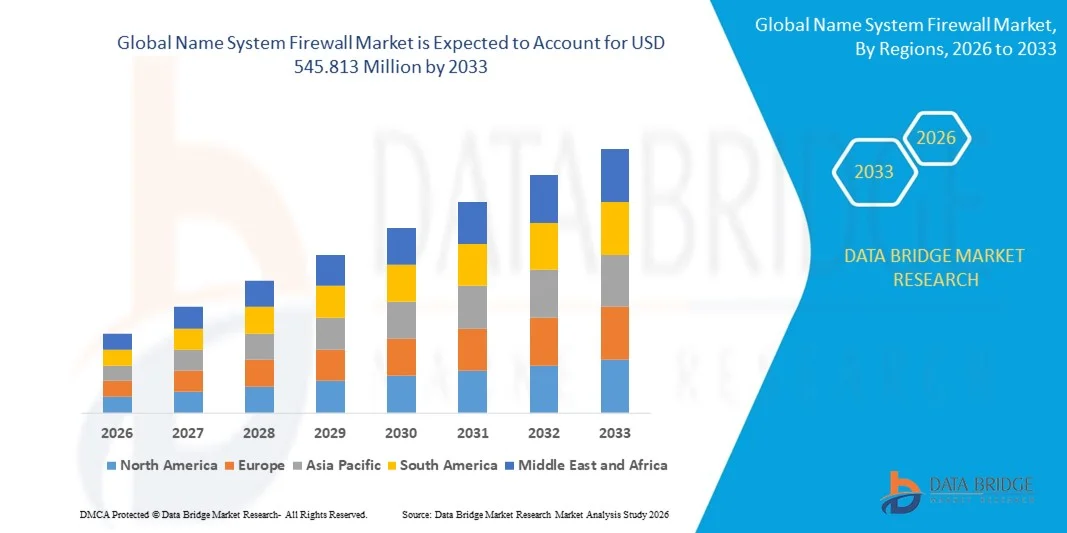
- As per Data Bridge Market Research Analysis the Global name system firewall market size was valued at USD 218.87 million in 2025 and is expected to reach USD 545.813 million by 2033, at a CAGR of 12.10% during the forecast period
- The market growth is largely fuelled by the increasing frequency and sophistication of DNS-based cyberattacks, prompting organizations to deploy advanced DNS security solutions to protect critical network infrastructure
- The growing adoption of cloud services and connected devices has increased the need for enhanced network visibility and threat detection, accelerating the demand for name system firewall solutions
Market Size & Forecast
- Global Market Value (2025): USD 218.87 Billion
- Expected Market Value (2033): USD 545.813 Billion
- Forecast CAGR (2026–2033): 12.10%
Name System Firewall Market Analysis
- The market is witnessing steady growth driven by the increasing reliance on DNS infrastructure for digital operations and the need to secure it from threats such as DNS spoofing, tunneling, and distributed denial-of-service attacks
- Organizations are increasingly integrating name system firewall solutions with broader cybersecurity frameworks to improve threat intelligence, strengthen network security, and ensure uninterrupted business operations
- North America dominated the name system firewall market with the largest revenue share in 2025, driven by the increasing frequency of DNS-based cyber threats and the strong presence of advanced cybersecurity infrastructure across the region
- Asia-Pacific region is expected to witness the highest growth rate in the global name system firewall market, driven by expanding IT infrastructure, increasing number of cyberattacks, rising government initiatives for cybersecurity, and strong growth in digital and cloud-based services across emerging economies such as China, India, and Japan
- The Cloud segment held the largest market revenue share in 2025 driven by the increasing adoption of cloud computing and the growing need for scalable and flexible security solutions. Cloud-based name system firewalls offer centralized management, real-time threat intelligence updates, and seamless integration with cloud environments, making them a preferred choice for organizations adopting hybrid and cloud-native infrastructures
Report Scope and Name System Firewall Market Segmentation
|
Attributes |
Name System Firewall Key Market Insights |
|
Segments Covered |
|
|
Countries Covered |
North America
Europe
Asia-Pacific
Middle East and Africa
South America
|
|
Key Market Players |
|
|
Market Opportunities |
|
|
Value Added Data Infosets |
In addition to the insights on market scenarios such as market value, growth rate, segmentation, geographical coverage, and major players, the market reports curated by the Data Bridge Market Research also include in-depth expert analysis, geographically represented company-wise production and capacity, network layouts of distributors and partners, detailed and updated price trend analysis and deficit analysis of supply chain and demand. |
What is the Key Trend in Name System Firewall Market ?
Rising Need for Advanced DNS Security and Threat Intelligence
- The growing frequency and sophistication of DNS-based cyber threats is significantly shaping the name system firewall market, as organizations increasingly prioritize securing DNS infrastructure against attacks such as DNS spoofing, tunneling, and distributed denial-of-service. Name system firewalls are gaining traction due to their ability to monitor, filter, and block malicious DNS traffic while ensuring uninterrupted network performance. This trend strengthens their adoption across enterprises, cloud providers, and government organizations, encouraging security vendors to enhance their DNS protection capabilities
- Increasing reliance on cloud services, remote work environments, and connected digital platforms has accelerated the demand for robust DNS security solutions. Organizations are actively seeking name system firewalls to enhance network visibility, detect anomalies, and prevent data breaches. This shift has also led to collaborations between cybersecurity providers and enterprises to develop scalable and integrated DNS security frameworks that align with modern hybrid and cloud-native environments
- Cybersecurity and regulatory compliance trends are influencing purchasing decisions, with organizations emphasizing proactive threat detection, real-time monitoring, and automated response capabilities. These factors are helping enterprises strengthen their overall security posture and ensure business continuity, while also driving investments in integrated cybersecurity platforms. Companies are increasingly highlighting advanced DNS protection features in their product offerings to improve customer confidence and competitive positioning
- For instance, in 2024, Cisco Systems and Palo Alto Networks expanded their DNS security portfolios by introducing enhanced name system firewall capabilities integrated with threat intelligence and cloud security platforms. These solutions were launched to help organizations detect and mitigate DNS-layer attacks more effectively. The offerings were also positioned as critical components of enterprise cybersecurity strategies, improving customer adoption and retention
- While demand for name system firewall solutions is increasing, sustained market growth depends on continuous innovation, scalability, and integration with evolving IT infrastructure. Vendors are focusing on enhancing automation, improving detection accuracy, and ensuring seamless deployment to support broader adoption across diverse organizational environments
Name System Firewall Market Dynamics
Driver
Increasing Frequency of DNS-Based Cyberattacks
- The rising number of DNS-based cyber threats is a major driver for the name system firewall market. Organizations are increasingly deploying DNS firewall solutions to prevent unauthorized access, data exfiltration, and network disruptions. This trend is also encouraging cybersecurity providers to develop advanced threat intelligence and automated security solutions to address evolving attack methods
- Expanding adoption of cloud computing, IoT devices, and digital platforms is influencing market growth. Name system firewalls help secure DNS communication, ensuring safe and reliable connectivity across distributed environments. This enables organizations to protect critical infrastructure while supporting digital transformation and cloud migration initiatives
- Cybersecurity vendors and enterprises are actively promoting DNS firewall solutions through product innovation, strategic partnerships, and integrated security offerings. These efforts are supported by growing awareness of cybersecurity risks and increasing regulatory requirements for data protection. This also encourages collaboration between security providers and enterprises to strengthen overall network defense strategies
- For instance, in 2023, IBM and Fortinet introduced advanced DNS security and firewall enhancements within their cybersecurity platforms. This expansion was driven by rising enterprise demand for improved DNS-layer protection and proactive threat mitigation. Both companies emphasized automated threat detection and integrated security capabilities to enhance customer trust and operational resilience
- Although increasing cybersecurity threats support market growth, long-term expansion depends on improving affordability, enhancing system integration, and ensuring ease of deployment. Continuous investment in advanced threat intelligence and automation will be essential to meet evolving enterprise security requirements
Restraint/Challenge
Complex Deployment and High Implementation Costs
- The complexity of deploying and managing name system firewall solutions remains a key challenge, particularly for organizations with limited cybersecurity expertise. Integration with existing IT infrastructure and configuration of DNS policies require specialized knowledge and resources. This increases deployment time and operational complexity for enterprises
- High implementation and maintenance costs also restrict adoption, especially among small and medium-sized organizations. Expenses associated with hardware, software, training, and ongoing monitoring contribute to higher total cost of ownership. Budget constraints may lead some organizations to delay or limit investment in advanced DNS security solutions
- Limited awareness and understanding of DNS-layer security risks also impact market adoption in certain sectors. Some organizations continue to rely on traditional security measures, underestimating the importance of DNS protection. This creates gaps in cybersecurity strategies and increases vulnerability to advanced threats
- For instance, in 2024, Check Point Software Technologies and Infoblox reported challenges among customers related to deployment complexity, integration issues, and cost concerns associated with advanced DNS firewall solutions. These factors affected adoption rates and required additional investment in training and support services
- Overcoming these challenges will require simplified deployment models, cost-effective solutions, and increased awareness of DNS security importance. Collaboration between cybersecurity vendors, enterprises, and regulatory bodies can help strengthen adoption. Furthermore, improving user-friendly interfaces, automation, and scalability will be essential for expanding the global name system firewall market
Name System Firewall Market Scope
The market is segmented on the basis of deployment type, end users, and industry vertical.
- By Deployment Type
On the basis of deployment type, the name system firewall market is segmented into Cloud, On-Premises, and Virtual Appliance. The Cloud segment held the largest market revenue share in 2025 driven by the increasing adoption of cloud computing and the growing need for scalable and flexible security solutions. Cloud-based name system firewalls offer centralized management, real-time threat intelligence updates, and seamless integration with cloud environments, making them a preferred choice for organizations adopting hybrid and cloud-native infrastructures.
The Virtual Appliance segment is expected to witness the fastest growth rate from 2026 to 2033, driven by its flexibility, cost efficiency, and ease of deployment across virtualized environments. Virtual appliances enable organizations to secure DNS traffic without requiring dedicated hardware, making them suitable for dynamic IT environments and supporting rapid scalability and efficient network protection.
- By End Users
On the basis of end users, the name system firewall market is segmented into DNS Providers, Domain Name Registrars, Enterprises, Website Hosts, and Service Providers. The Enterprises segment held the largest market revenue share in 2025 driven by the increasing need to protect corporate networks from DNS-based cyber threats and ensure secure business operations. Enterprises deploy name system firewalls to enhance network security, prevent data breaches, and maintain uninterrupted access to digital services.
The DNS Providers segment is expected to witness the fastest growth rate from 2026 to 2033, driven by the rising demand for secure and reliable DNS infrastructure. DNS providers are increasingly implementing name system firewalls to enhance service reliability, protect users from malicious domains, and strengthen overall DNS security.
- By Industry Vertical
On the basis of industry vertical, the name system firewall market is segmented into Banking, Financial Services, and Insurance (BFSI), Telecom and IT, Media and Entertainment, Retail and E-Commerce, Healthcare, Government, Education, and Others. The Telecom and IT segment held the largest market revenue share in 2025 driven by the critical need to secure network infrastructure and protect large volumes of DNS traffic. Telecom and IT organizations rely on name system firewalls to ensure service availability, prevent cyberattacks, and maintain network integrity.
The BFSI segment is expected to witness the fastest growth rate from 2026 to 2033, driven by the increasing focus on protecting sensitive financial data and preventing cyber threats. Financial institutions are adopting advanced DNS security solutions to ensure secure online transactions, maintain customer trust, and comply with regulatory requirements.
Name System Firewall Market Regional Analysis
- North America dominated the name system firewall market with the largest revenue share in 2025, driven by the increasing frequency of DNS-based cyber threats and the strong presence of advanced cybersecurity infrastructure across the region
- Organizations in the region highly prioritize network security, real-time threat detection, and advanced protection systems, encouraging widespread adoption of name system firewall solutions to safeguard critical digital assets
- This widespread adoption is further supported by high cybersecurity spending, early adoption of cloud technologies, and the growing focus on protecting enterprise networks and sensitive data, establishing name system firewalls as an essential component of modern security strategies
U.S. Name System Firewall Market Insight
The U.S. name system firewall market captured the largest revenue share in 2025 within North America, fueled by the rapid adoption of cloud computing, digital services, and connected technologies. Organizations are increasingly focusing on strengthening DNS security to prevent cyberattacks and ensure uninterrupted business operations. The growing presence of major cybersecurity providers, combined with strong investment in advanced threat intelligence and automation, further drives the market. Moreover, the rising frequency of ransomware and DNS-based attacks is significantly contributing to the increased deployment of name system firewall solutions.
Europe Name System Firewall Market Insight
The Europe name system firewall market is expected to witness the fastest growth rate from 2026 to 2033, primarily driven by strict data protection regulations and the growing need for advanced cybersecurity solutions. The increasing adoption of digital platforms and cloud-based services is encouraging organizations to enhance DNS security. European enterprises are also emphasizing secure network infrastructure to comply with regulatory standards and prevent data breaches. The region is experiencing growing adoption across multiple sectors, with name system firewall solutions becoming a key part of enterprise cybersecurity frameworks.
U.K. Name System Firewall Market Insight
The U.K. name system firewall market is expected to witness the fastest growth rate from 2026 to 2033, driven by rising cyber threats and increasing investment in cybersecurity technologies. Organizations are prioritizing advanced DNS protection to safeguard sensitive information and maintain operational continuity. In addition, the rapid shift toward cloud computing and remote work environments is accelerating the need for secure DNS infrastructure. The country’s strong digital ecosystem and focus on cyber resilience continue to support market expansion.
Germany Name System Firewall Market Insight
The Germany name system firewall market is expected to witness the fastest growth rate from 2026 to 2033, fueled by the country’s strong industrial base and increasing focus on cybersecurity. German enterprises are actively implementing advanced DNS security solutions to protect critical infrastructure and ensure secure digital operations. The growing adoption of Industry 4.0 and connected systems is also driving demand for name system firewalls. In addition, Germany’s emphasis on data privacy and secure communication further supports market growth.
Asia-Pacific Name System Firewall Market Insight
The Asia-Pacific name system firewall market is expected to witness the fastest growth rate from 2026 to 2033, driven by rapid digital transformation, increasing internet penetration, and growing cybersecurity awareness. Organizations across the region are investing in advanced DNS protection solutions to secure expanding digital ecosystems. Government initiatives supporting cybersecurity and the increasing adoption of cloud services are also contributing to market growth. Furthermore, the rising number of cyberattacks is encouraging enterprises to strengthen their DNS security infrastructure.
Japan Name System Firewall Market Insight
The Japan name system firewall market is expected to witness the fastest growth rate from 2026 to 2033 due to increasing adoption of advanced cybersecurity technologies and growing reliance on digital platforms. Japanese organizations place strong emphasis on protecting network infrastructure and ensuring secure data transmission. The integration of cloud computing, IoT, and connected systems is further driving demand for DNS security solutions. Moreover, the country’s focus on technological innovation and cyber protection is supporting continued market expansion.
China Name System Firewall Market Insight
The China name system firewall market accounted for the largest market revenue share in Asia Pacific in 2025, attributed to rapid digitalization, increasing internet usage, and growing cybersecurity concerns. China has a large number of enterprises and internet users, creating strong demand for advanced DNS security solutions. The expansion of cloud computing and digital services is also accelerating adoption. In addition, government focus on strengthening cybersecurity and protecting digital infrastructure is playing a key role in driving the market.
Name System Firewall Market Share
The Name System Firewall industry is primarily led by well-established companies, including:
- IBM (U.S.)
- Cisco (U.S.)
- Infoblox (U.S.)
- VeriSign, Inc. (U.S.)
- BlueCat (Canada)
- Akamai Technologies (U.S.)
- Cloudflare, Inc. (U.S.)
- eSentire, Inc. (Canada)
- Nintendo (Japan)
- Efficient IP (France)
- EonScope Inc. (U.S.)
- F5, Inc. (U.S.)
- ThreatSTOP, Inc. (U.S.)
- Constellix (U.S.)
- Verigio Communications (U.K.)
- INSIGHT (U.S.)
- Allied Telesis, Inc. (Japan)
- Comodo Security Solutions, Inc. (U.S.)

- Interactive Data Analysis Dashboard
- Company Analysis Dashboard for high growth potential opportunities
- Research Analyst Access for customization & queries
- Competitor Analysis with Interactive dashboard
- Latest News, Updates & Trend analysis
- Harness the Power of Benchmark Analysis for Comprehensive Competitor Tracking
Global Name System Firewall Market, Supply Chain Analysis and Ecosystem Framework
To support market growth and help clients navigate the impact of geopolitical shifts, DBMR has integrated in-depth supply chain analysis into its Global Name System Firewall Market research reports. This addition empowers clients to respond effectively to global changes affecting their industries. The supply chain analysis section includes detailed insights such as Global Name System Firewall Market consumption and production by country, price trend analysis, the impact of tariffs and geopolitical developments, and import and export trends by country and HSN code. It also highlights major suppliers with data on production capacity and company profiles, as well as key importers and exporters. In addition to research, DBMR offers specialized supply chain consulting services backed by over a decade of experience, providing solutions like supplier discovery, supplier risk assessment, price trend analysis, impact evaluation of inflation and trade route changes, and comprehensive market trend analysis.
Data collection and base year analysis are done using data collection modules with large sample sizes. The stage includes obtaining market information or related data through various sources and strategies. It includes examining and planning all the data acquired from the past in advance. It likewise envelops the examination of information inconsistencies seen across different information sources. The market data is analysed and estimated using market statistical and coherent models. Also, market share analysis and key trend analysis are the major success factors in the market report. To know more, please request an analyst call or drop down your inquiry.
The key research methodology used by DBMR research team is data triangulation which involves data mining, analysis of the impact of data variables on the market and primary (industry expert) validation. Data models include Vendor Positioning Grid, Market Time Line Analysis, Market Overview and Guide, Company Positioning Grid, Patent Analysis, Pricing Analysis, Company Market Share Analysis, Standards of Measurement, Global versus Regional and Vendor Share Analysis. To know more about the research methodology, drop in an inquiry to speak to our industry experts.
Data Bridge Market Research is a leader in advanced formative research. We take pride in servicing our existing and new customers with data and analysis that match and suits their goal. The report can be customized to include price trend analysis of target brands understanding the market for additional countries (ask for the list of countries), clinical trial results data, literature review, refurbished market and product base analysis. Market analysis of target competitors can be analyzed from technology-based analysis to market portfolio strategies. We can add as many competitors that you require data about in the format and data style you are looking for. Our team of analysts can also provide you data in crude raw excel files pivot tables (Fact book) or can assist you in creating presentations from the data sets available in the report.













