


Nanocoatings in Medical Industry Market Overview
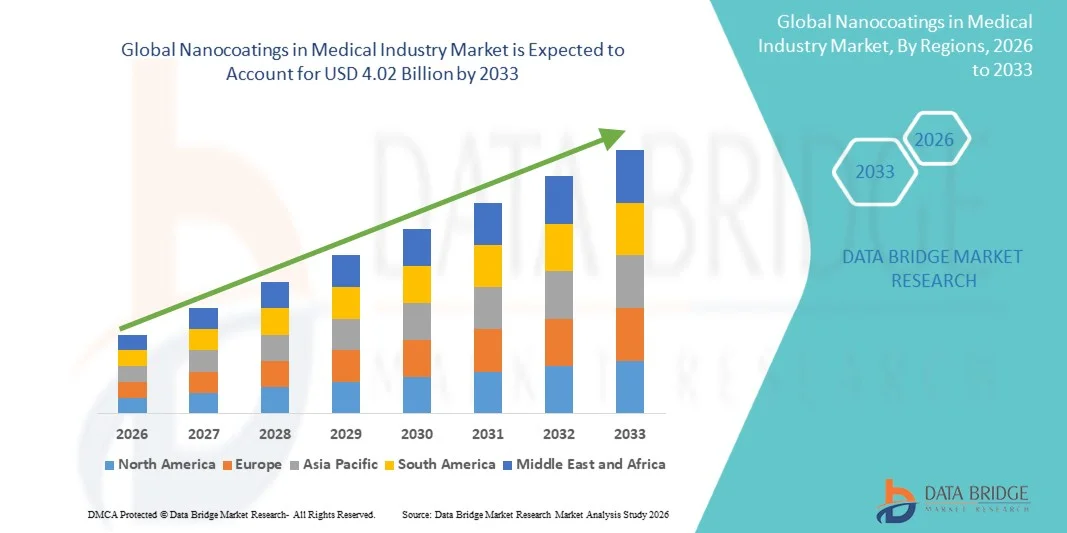
The Nanocoatings in Medical Industry Market was valued at USD 1.96 billion in 2025 and is projected to reach USD 4.02 billion by 2033, growing at a CAGR of 9.40% from 2026 to 2033. Market growth is driven by escalating demand for infection control solutions across healthcare settings, rising adoption of advanced wound care products, and increasing utilization of nanocoatings in medical textiles and air filtration systems. The superior anti-microbial, self-cleaning, and anti-corrosion properties of nanocoatings are transforming medical device surfaces, surgical instruments, hospital infrastructure, and personal protective equipment.
Growing emphasis on hospital-acquired infection (HAI) prevention, stringent regulatory standards for medical device sterilization, and expanding healthcare infrastructure in emerging economies are creating significant opportunities for market stakeholders. In addition, ongoing research into biocompatible nanocoating formulations and sustainable manufacturing processes is expected to further accelerate market expansion over the forecast period.
Key Market Trends & Insights
- North America dominated the Nanocoatings in Medical Industry Market with the largest revenue share of 39.25% in 2025, supported by advanced healthcare infrastructure, high HAI awareness, and strong adoption of innovative medical technologies.
- Asia-Pacific is expected to be the fastest-growing region at a CAGR of 12.15% from 2026 to 2033, driven by expanding healthcare facilities, increasing medical device manufacturing, and growing awareness of infection control measures.
- The Anti-microbial segment led the market with a 47.3% market share in 2025, reflecting the critical importance of infection prevention in healthcare environments and widespread application across medical devices and surfaces.
- The Medical Textiles segment dominated the application category with a 42.5% market share in 2025, supported by rising demand for antimicrobial scrubs, gowns, bed linens, and protective equipment in hospitals and clinics.
- The Wound Dressings segment is anticipated to be the fastest-growing application category, driven by increasing prevalence of chronic wounds, diabetic ulcers, and burn injuries requiring advanced antimicrobial wound care solutions.
- The Self-cleaning segment is expected to witness strong growth during 2026–2033, driven by increasing adoption in hospital surfaces, surgical instruments, and diagnostic equipment to reduce contamination and maintenance costs.
Market Size & Forecast
- Global Market Value (2025): USD 1.96 Billion
- Expected Market Value (2033): USD 4.02 Billion
- Forecast CAGR (2026–2033): 9.40%
- Leading Region in 2025: North America
- Fastest Growing Region: Asia-Pacific
Report Scope and Nanocoatings in Medical Industry Market Segmentation
|
Attributes |
Nanocoatings in Medical Industry Key Market Insights |
|
Segments Covered |
|
|
Countries Covered |
North America · U.S. · Canada · Mexico Europe · Germany · France · U.K. · Netherlands · Switzerland · Belgium · Russia · Italy · Spain · Turkey · Rest of Europe Asia-Pacific · China · Japan · India · South Korea · Singapore · Malaysia · Australia · Thailand · Indonesia · Philippines · Rest of Asia-Pacific Middle East and Africa · Saudi Arabia · U.A.E. · South Africa · Egypt · Israel · Rest of Middle East and Africa South America · Brazil · Argentina · Rest of South America |
|
Key Market Players |
· Nanofilm Technologies International Limited (Singapore) · Bio-Gate AG (Germany) · Buhler AG (Switzerland) · Nanovere Technologies LLC (U.S.) · P2i Ltd. (U.K.) · Integran Technologies Inc. (Canada) · Nanosol AG (Germany) · Nanophase Technologies Corporation (U.S.) · Tesla NanoCoatings, Inc. (U.S.) · Inframat Corporation (U.S.) · Surfix BV (Netherlands) · Applied Nanotech Holdings, Inc. (U.S.) · HZO, Inc. (U.S.) · Cleancorp (Australia) · CG2 NanoCoatings Inc. (Canada) |
|
Market Opportunities |
· Expansion of antimicrobial nanocoating applications in hospital infrastructure, surgical suites, and diagnostic equipment · Development of biocompatible and sustainable nanocoating formulations for implantable medical devices |
|
Value Added Data Infosets |
In addition to the insights on market scenarios such as market value, growth rate, segmentation, geographical coverage, and major players, the market reports curated by the Data Bridge Market Research also include depth expert analysis, patient epidemiology, pipeline analysis, pricing analysis, and regulatory framework. |
Nanocoatings in Medical Industry Market Trends
Trend: Rising Integration of Anti-microbial Nanocoatings in Healthcare Infection Control
Healthcare facilities are increasingly adopting anti-microbial nanocoatings on high-touch surfaces, medical devices, and hospital textiles to combat hospital-acquired infections. The COVID-19 pandemic has accelerated awareness and implementation of surface protection technologies, with nanocoatings demonstrating sustained antimicrobial efficacy against bacteria, viruses, and fungi. Hospitals and clinics are integrating these coatings into ventilation systems, surgical instruments, and patient care equipment to enhance infection control protocols and patient safety.
For instance,
Recent clinical implementations have demonstrated that silver-based and copper-based antimicrobial nanocoatings on hospital bed rails, door handles, and medical equipment surfaces can reduce microbial contamination by up to 99%, supporting infection prevention and control programs in intensive care units and surgical wards.
In addition, regulatory bodies and healthcare accreditation organizations are increasingly recognizing antimicrobial surface treatments as part of comprehensive infection prevention strategies, encouraging broader adoption across healthcare facilities worldwide.
Nanocoatings in Medical Industry Market Dynamics
Key Market Driver: Increasing Prevalence of Hospital-Acquired Infections and Infection Control Mandates
The rising burden of hospital-acquired infections (HAIs) globally is a primary driver for nanocoatings adoption in the medical industry. According to the World Health Organization, hundreds of millions of patients are affected by HAIs annually, leading to significant morbidity, mortality, and healthcare costs. Antimicrobial nanocoatings on medical devices, surfaces, and textiles offer a proactive approach to reducing pathogen transmission and biofilm formation.
For instance,
The U.S. Centers for Disease Control and Prevention has emphasized the importance of environmental infection control, with antimicrobial surface technologies increasingly recognized as complementary to traditional disinfection protocols in reducing HAI rates in acute care settings. The increasing adoption of antimicrobial nanocoatings is expected to significantly reduce infection risks, enhance patient safety, and drive widespread integration of advanced surface technologies across healthcare environments globally.
Key Restraint/Challenge: High Production Costs and Regulatory Complexity
The manufacturing of medical-grade nanocoatings involves sophisticated processes and stringent quality control, resulting in higher production costs compared to conventional coatings. Additionally, regulatory approval pathways for nanocoatings on medical devices and healthcare surfaces vary across regions, requiring extensive biocompatibility testing, toxicological assessments, and compliance documentation.
For instance,
Regulatory agencies including the U.S. FDA and European Medicines Agency require comprehensive safety data for nanocoatings in medical applications, with approval timelines and testing requirements adding to development costs and market entry barriers for manufacturers. These regulatory complexities and high production costs may slow commercialization, limit small manufacturer participation, and challenge widespread adoption of nanocoatings in cost-sensitive healthcare markets despite their clinical benefits.
Key Market Opportunity: Expansion into Emerging Healthcare Markets and Wearable Medical Devices
Rapid healthcare infrastructure development in Asia-Pacific, Latin America, and the Middle East is creating significant opportunities for nanocoatings adoption. Additionally, the growing wearable medical device sector presents new application areas for antimicrobial and self-cleaning nanocoatings on biosensors, continuous glucose monitors, and wearable drug delivery systems.
For instance,
Leading medical device manufacturers are partnering with nanocoating specialists to develop antimicrobial-coated wearable devices that maintain sterility and reduce skin irritation during extended wear, addressing both patient safety and comfort requirements. These expanding applications and regional healthcare investments are expected to accelerate nanocoatings adoption, supporting innovation, improving device performance, and driving sustained global market growth across medical and wearable technologies.
Nanocoatings in Medical Industry Market Scope
The nanocoatings in medical industry market is segmented on the basis of type and application.
- By Type
On the basis of type, the Nanocoatings in Medical Industry Market is segmented into anti-microbial, self-cleaning, anti-fingerprint, anti-corrosion, and others. The anti-microbial segment dominated the market with a 47.3% market share in 2025, supported by the critical importance of infection prevention across healthcare environments, including hospitals, clinics, and long-term care facilities. Strong demand for antimicrobial coatings on surgical instruments, implantable devices, catheters, and hospital surfaces has driven segment leadership. Silver nanoparticle-based, copper-based, and zinc oxide-based antimicrobial coatings are widely adopted due to their broad-spectrum efficacy against bacteria, viruses, and fungi.
The self-cleaning segment is expected to witness the fastest growth from 2026 to 2033, driven by increasing adoption on hospital surfaces, diagnostic equipment displays, and surgical suite components. Self-cleaning nanocoatings utilizing photocatalytic titanium dioxide and hydrophobic formulations reduce maintenance requirements and enhance hygiene standards in high-traffic healthcare areas.
- By Application
On the basis of application, the Nanocoatings in Medical Industry Market is segmented into medical textiles, wound dressings, air filtration, and others. The medical textiles segment dominated the market with a 42.5% market share in 2025, driven by rising demand for antimicrobial-coated surgical gowns, scrubs, bed linens, curtains, and personal protective equipment in hospitals and healthcare facilities. The COVID-19 pandemic significantly accelerated adoption of nanocoated medical textiles with enhanced antimicrobial and antiviral properties, while growing awareness of healthcare worker safety continues to sustain demand.
The wound dressings segment is expected to witness the fastest growth from 2026 to 2033, driven by increasing prevalence of chronic wounds, diabetic foot ulcers, pressure ulcers, and burn injuries requiring advanced antimicrobial wound care solutions. Silver nanoparticle-based wound dressings demonstrating sustained antimicrobial release and improved healing outcomes are gaining significant traction across acute and home healthcare settings.
Nanocoatings in Medical Industry Market Regional Analysis
North America dominated the nanocoatings in medical industry market with a revenue share of 39.25% in 2025, supported by advanced healthcare infrastructure, high hospital-acquired infection awareness, robust medical device manufacturing, and strong adoption of innovative infection control technologies. Favorable reimbursement policies and regulatory pathways for antimicrobial medical devices support continued market leadership.
U.S. Nanocoatings in Medical Industry Market Insight
The U.S. nanocoatings in medical industry market benefits from the largest hospital network globally, stringent infection control mandates from the Centers for Disease Control and Prevention, and significant investment in medical device innovation. Leading healthcare systems are increasingly specifying antimicrobial nanocoatings for high-touch surfaces, surgical instruments, and hospital textiles as part of comprehensive HAI prevention programs.
Europe Nanocoatings in Medical Industry Market Insight
The Europe nanocoatings in medical industry market remains a major contributor, with strong regulatory frameworks, established medical device manufacturing capabilities, and growing emphasis on sustainable healthcare solutions. The European Union's medical device regulations and increasing focus on environmental infection control are driving adoption of advanced nanocoating technologies across healthcare facilities.
U.K. Nanocoatings in Medical Industry Market Insight
The U.K. nanocoatings in medical industry market benefits from National Health Service initiatives targeting hospital-acquired infection reduction, with antimicrobial surface treatments increasingly integrated into hospital renovation and new construction projects. Strong academic-industry collaboration supports ongoing nanocoating research and clinical validation.
Germany Nanocoatings in Medical Industry Market Insight
The Germany nanocoatings in medical industry market's robust medical device manufacturing sector and advanced healthcare infrastructure support significant adoption of antimicrobial and self-cleaning nanocoatings. German precision engineering expertise and strong regulatory compliance capabilities position domestic manufacturers as leading suppliers to European and global healthcare markets.
Asia-Pacific Nanocoatings in Medical Industry Market Insight
The Asia-Pacific nanocoatings in medical industry market is poised for rapid growth with a CAGR of 12.15% during the forecast period, driven by expanding healthcare infrastructure, increasing medical device manufacturing in China and India, and growing awareness of infection control measures. Rising healthcare expenditure, government initiatives to improve hospital standards, and increasing prevalence of chronic diseases are accelerating nanocoating adoption.
Japan Nanocoatings in Medical Industry Market Insight
The Japan nanocoatings in medical industry market benefits from advanced medical technology adoption, aging population demographics driving healthcare demand, and strong domestic nanocoating research capabilities. Japanese manufacturers are leading in developing biocompatible and sustainable nanocoating formulations for medical applications.
China Nanocoatings in Medical Industry Market Insight
The China nanocoatings in medical industry market is experiencing rapid expansion driven by massive healthcare infrastructure investment, growing domestic medical device manufacturing, and increasing focus on hospital infection control. Government healthcare reform initiatives and expanding private hospital networks are creating significant demand for advanced antimicrobial surface technologies.
Nanocoatings in Medical Industry Market Share
The nanocoatings in medical industry is primarily led by well-established companies, including:
- Nanofilm Technologies International Limited (Singapore)
- Bio-Gate AG (Germany)
- Buhler AG (Switzerland)
- Nanovere Technologies LLC (U.S.)
- P2i Ltd. (U.K.)
- Integran Technologies Inc. (Canada)
- Nanosol AG (Germany)
- Nanophase Technologies Corporation (U.S.)
- Tesla NanoCoatings, Inc. (U.S.)
- Inframat Corporation (U.S.)
- Surfix BV (Netherlands)
- Applied Nanotech Holdings, Inc. (U.S.)
- HZO, Inc. (U.S.)
- Cleancorp (Australia)
- CG2 NanoCoatings Inc. (Canada)
Latest Developments in Nanocoatings in Medical Industry Market
- In March 2025, researchers and industry partners advancing “antimicrobial nano-thin film coatings” for medical devices reported expanded clinical validation of silver- and copper-based nanocoatings for catheters and surgical implants. These coatings demonstrated significant reductions in biofilm formation and hospital-acquired infection risk, supporting broader commercial translation of nanocoating technologies in healthcare settings.
- In October 2024, BioInteractions Ltd. announced continued expansion of its surface modification technologies for cardiovascular and orthopedic medical devices, including heparin and antimicrobial nanocoating platforms designed to reduce thrombogenicity and infection risks in implantable devices. The development supports increasing adoption of advanced nanocoatings in long-term implant applications.
- In June 2024, Hydromer Inc. expanded its portfolio of hydrophilic and antimicrobial coating technologies used in catheters, guidewires, and diagnostic devices. The company highlighted increased demand for nanostructured surface coatings to improve device lubricity, reduce infection risk, and enhance biocompatibility in minimally invasive procedures.
- In August 2023, Surmodics Inc. advanced commercialization of its Preserve and Serene surface modification technologies, enabling drug-delivery and hemocompatible nanocoatings for vascular and neurovascular medical devices. These coatings improve device performance while reducing complications such as thrombosis and restenosis.
- In April 2023, Covestro and academic partners expanded research into antimicrobial polyurethane coatings using nanostructured additives designed for hospital surfaces and medical equipment. The initiative aimed to reduce pathogen transmission in clinical environments through durable, long-lasting antimicrobial surface technologies.

- Interactive Data Analysis Dashboard
- Company Analysis Dashboard for high growth potential opportunities
- Research Analyst Access for customization & queries
- Competitor Analysis with Interactive dashboard
- Latest News, Updates & Trend analysis
- Harness the Power of Benchmark Analysis for Comprehensive Competitor Tracking
Data collection and base year analysis are done using data collection modules with large sample sizes. The stage includes obtaining market information or related data through various sources and strategies. It includes examining and planning all the data acquired from the past in advance. It likewise envelops the examination of information inconsistencies seen across different information sources. The market data is analysed and estimated using market statistical and coherent models. Also, market share analysis and key trend analysis are the major success factors in the market report. To know more, please request an analyst call or drop down your inquiry.
The key research methodology used by DBMR research team is data triangulation which involves data mining, analysis of the impact of data variables on the market and primary (industry expert) validation. Data models include Vendor Positioning Grid, Market Time Line Analysis, Market Overview and Guide, Company Positioning Grid, Patent Analysis, Pricing Analysis, Company Market Share Analysis, Standards of Measurement, Global versus Regional and Vendor Share Analysis. To know more about the research methodology, drop in an inquiry to speak to our industry experts.
Data Bridge Market Research is a leader in advanced formative research. We take pride in servicing our existing and new customers with data and analysis that match and suits their goal. The report can be customized to include price trend analysis of target brands understanding the market for additional countries (ask for the list of countries), clinical trial results data, literature review, refurbished market and product base analysis. Market analysis of target competitors can be analyzed from technology-based analysis to market portfolio strategies. We can add as many competitors that you require data about in the format and data style you are looking for. Our team of analysts can also provide you data in crude raw excel files pivot tables (Fact book) or can assist you in creating presentations from the data sets available in the report.













