


Nasal Spray Vaccine Market Overview
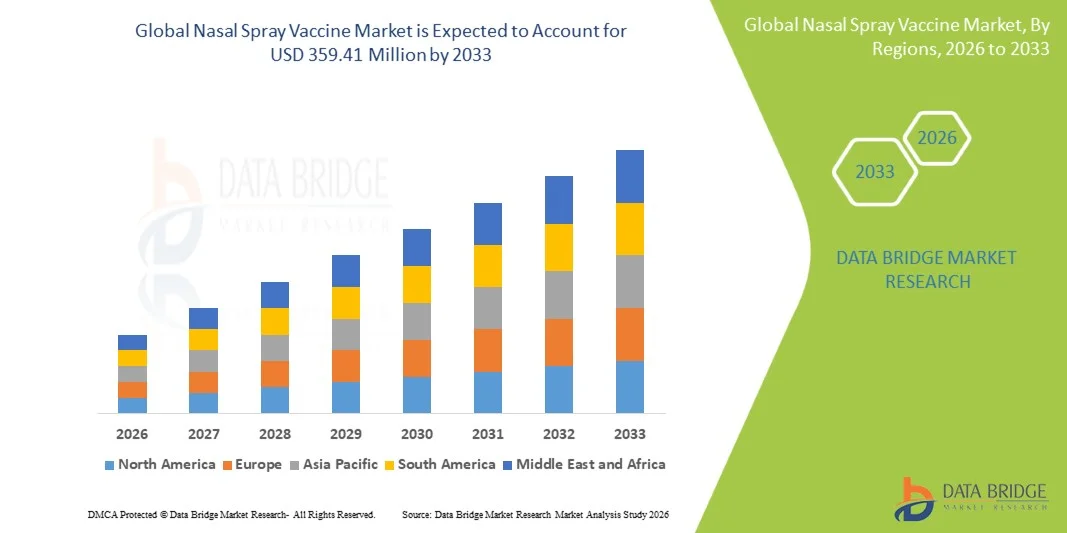
The Nasal Spray Vaccine Market was valued at USD 175.17 million in 2025 and is projected to reach USD 359.41 million by 2033, growing at a CAGR of 9.40% from 2026 to 2033. The market is witnessing steady expansion driven by increasing demand for needle-free immunization solutions, rising focus on improving vaccination compliance, and ongoing advancements in mucosal immunology and intranasal drug delivery technologies. Growing interest in painless, easy-to-administer vaccines is further supporting adoption across both pediatric and adult immunization programs.
The increasing prevalence of respiratory infectious diseases, along with heightened preparedness for future pandemics, is encouraging governments and healthcare organizations to invest in innovative vaccine delivery platforms. Nasal spray vaccines offer the advantage of stimulating mucosal immunity at the primary entry point of pathogens, making them particularly effective for respiratory viruses. In addition, pharmaceutical companies and research institutions are accelerating clinical trials and pipeline development, while regulatory agencies are progressively supporting non-invasive vaccine formats to enhance mass immunization strategies and improve global public health outcomes.
Key Market Trends & Insights
- North America dominated the Nasal Spray Vaccine Market with the largest revenue share of 34.12% in 2025, supported by strong R&D investment, early regulatory approvals, and the presence of leading vaccine manufacturers and biotechnology firms.
- The Adult segment led the market with a 63.4% share in 2025, driven by higher exposure to respiratory infections and widespread inclusion in national immunization programs targeting influenza, COVID-19 boosters, and other airborne diseases
- Asia-Pacific is expected to be the fastest-growing region at a CAGR of 7.4% from 2026 to 2033, fueled by rising government immunization initiatives, expanding healthcare infrastructure, and increasing adoption of needle-free vaccine delivery systems in China, India, and Japan.
- Child are the fastest-growing type, projected to register a CAGR of 7.6%, reflecting the surge in demand for preference for needle-free vaccination methods in pediatric healthcare.
- The Pump Bottles segment dominated the container design category with a 58.7% revenue share in 2025, led by ease of use, accurate dose control, and widespread adoption in commercial vaccine distribution systems
- Polypropylene (PP) accounted for 52.3% of the market, preferred by its excellent chemical resistance, durability, and compatibility with pharmaceutical-grade sterilization processes
- The Polyethylene Terephthalate (PET) segment is the fastest-growing material category, with a CAGR of 7.5%, driven by increasing demand for sustainable and recyclable pharmaceutical packaging.
Market Size & Forecast
- Global Market Value (2025): USD 175.17 Million
- Expected Market Value (2033): USD 359.41 Million
- Forecast CAGR (2026–2033): 9.40%
- Leading Region in 2025: North America
- Fastest Growing Region: Asia Pacific
Report Scope and Nasal Spray Vaccine Market Segmentation
|
Attributes |
Nasal Spray Vaccine Key Market Insights |
|
Segments Covered |
|
|
Countries Covered |
North America · U.S. · Canada · Mexico Europe · Germany · France · U.K. · Netherlands · Switzerland · Belgium · Russia · Italy · Spain · Turkey · Rest of Europe Asia-Pacific · China · Japan · India · South Korea · Singapore · Malaysia · Australia · Thailand · Indonesia · Philippines · Rest of Asia-Pacific Middle East and Africa · Saudi Arabia · U.A.E. · South Africa · Egypt · Israel · Rest of Middle East and Africa South America · Brazil · Argentina · Rest of South America |
|
Key Market Players |
· AstraZeneca (U.K.) · Bharat Biotech International Limited (India) · Serum Institute of India Pvt. Ltd. (India) · Codagenix Inc. (U.S.) · Ocugen, Inc. (U.S.) · CanSino Biologics Inc. (China) · Beijing Wantai Biological Pharmacy Enterprise Co., Ltd. (China) · Sinovac Biotech Ltd. (China) · CyanVac LLC (U.S.) · Vaxart, Inc. (U.S.) · Blue Lake Biotechnology, Inc. (U.S.) · Meissa Vaccines, Inc. (U.S.) · Altimmune, Inc. (U.S.) · CastleVax, Inc. (U.S.) · Precision Virologics, Inc. (U.S.) · Akston Biosciences Corporation (U.S.) · Bavarian Nordic A/S (Denmark) · Pfizer Inc. (U.S.) · Sanofi (France) |
|
Market Opportunities |
· Expanding development of mucosal immunity–focused vaccines · Rising global demand for needle-free, self-administered immunization solutions · Increasing investment in next-generation intranasal platforms |
|
Value Added Data Infosets |
In addition to the insights on market scenarios such as market value, growth rate, segmentation, geographical coverage, and major players, the market reports curated by the Data Bridge Market Research also include in-depth expert analysis, patient epidemiology, pipeline analysis, pricing analysis, and regulatory framework. |
Nasal Spray Vaccine Market Trends
Trend: Expansion of Needle-Free Immunization & Mucosal Delivery Platforms
Pharmaceutical companies are increasingly focusing on nasal spray vaccines as a next-generation needle-free immunization approach that enhances patient compliance and simplifies mass vaccination campaigns. These vaccines stimulate mucosal immunity directly at the respiratory entry point, improving protection against airborne pathogens. Advances in formulation science and intranasal delivery systems are enabling more stable, effective, and temperature-resilient vaccine products. For instance, live attenuated influenza nasal vaccines have demonstrated improved uptake in pediatric and elderly populations in several immunization programs.
Nasal Spray Vaccine Market Dynamics
Key Market Driver: Rising Demand for Painless and Rapid-Response Vaccination Solutions
The growing need for needle-free, easily administrable vaccines is significantly driving adoption of nasal spray vaccine platforms across public health systems and emergency immunization programs. Increasing prevalence of respiratory infections and pandemic preparedness initiatives are accelerating investment in scalable delivery formats that reduce administration time and improve coverage rates. Governments and healthcare organizations are prioritizing technologies that enable mass immunization with minimal trained personnel. For instance, intranasal influenza vaccination campaigns have shown higher patient acceptance compared to injectable alternatives in multiple regional immunization studies.
Key Restraint/Challenge: Limited Clinical Standardization and Cold Chain Sensitivity
A major restraint in the nasal spray vaccine market is the limited availability of standardized formulations and the stringent stability requirements associated with biological intranasal products. Many nasal vaccines require controlled storage conditions and have complex regulatory pathways, which can delay commercialization and limit accessibility in low-resource regions. In addition, variability in mucosal absorption and immune response remains a scientific challenge for consistent efficacy across populations. For instance, certain investigational intranasal COVID-19 vaccine candidates have faced delays due to stability and dosage consistency concerns during clinical evaluation.
Key Market Opportunity: Advancement of Next-Generation Intranasal Vaccine Technologies
The integration of advanced platforms such as mRNA, viral vectors, and recombinant protein technologies into nasal spray vaccines presents a significant growth opportunity for enhanced immune response and broader disease coverage. These innovations enable rapid vaccine redesign, improved scalability, and stronger mucosal and systemic immunity against respiratory pathogens. Increasing collaboration between biotech firms and research institutions is accelerating pipeline development and clinical trials globally. For instance, experimental intranasal mRNA vaccine candidates for influenza and COVID-19 have shown promising early-stage immune response results in preclinical studies.
Nasal Spray Vaccine Market Scope
The nasal spray vaccine market is segmented on the basis of type, container design, capacity, material, end-users, and distribution channel.
- By Type
On the basis of type, the Nasal Spray Vaccine Market is segmented into child and adult. The Adult segment dominated the market with a share of 63.4% in 2025, owing to higher exposure to respiratory infections and widespread inclusion in national immunization programs targeting influenza, COVID-19 boosters, and other airborne diseases. Adults represent the primary vaccinated population in workplace, travel, and hospital-based immunization campaigns. Strong adoption is also supported by higher acceptance of intranasal delivery compared to pediatric groups in many developed regions. Pharmaceutical companies prioritize adult formulations due to faster regulatory approvals and larger immediate demand potential. Continuous expansion of seasonal vaccination programs further reinforces dominance. Increasing focus on respiratory disease prevention in aging populations is also strengthening this segment.
The Child segment is expected to register the fastest growth at a CAGR of 7.6% from 2026 to 2033, driven by rising preference for needle-free vaccination methods in pediatric healthcare. Parents and healthcare providers increasingly favor nasal spray vaccines due to reduced pain, anxiety, and improved compliance among children. Governments are integrating intranasal vaccines into school-based immunization programs to improve coverage rates. Advances in safety profiling and dosage precision are enabling wider pediatric approvals. Pediatric respiratory infection burden, especially influenza, is further accelerating adoption. Expanding awareness campaigns on vaccine hesitancy reduction is also supporting growth. Increasing clinical trials targeting pediatric nasal formulations further boosts this segment’s expansion.
- By Container Design
On the basis of container design, the market is segmented into pressurized containers and pump bottles. The Pump Bottles segment dominated the market with a share of 58.7% in 2025, owing to ease of use, accurate dose control, and widespread adoption in commercial vaccine distribution systems. Pump bottles ensure consistent intranasal delivery with minimal training requirements, making them suitable for mass immunization programs. They are also cost-effective and highly compatible with standard vaccine formulations. Hospitals and public health agencies prefer pump systems for their operational simplicity and reliability. Their portability and scalability further enhance adoption in global vaccination campaigns. Strong regulatory acceptance also supports their dominance in established healthcare systems.
The Pressurized Containers segment is expected to witness the fastest growth at a CAGR of 7.3% from 2026 to 2033, driven by demand for advanced aerosol-based delivery systems that improve mucosal absorption. These containers enable fine particle dispersion, enhancing immune response effectiveness. Pharmaceutical companies are increasingly adopting pressurized systems for next-generation vaccine development. Technological improvements in safety valves and stabilization mechanisms are supporting wider clinical use. They are particularly suitable for complex formulations such as mRNA and vector-based intranasal vaccines. Rising focus on improved bioavailability is further driving adoption. Increasing use in clinical trials for respiratory vaccines also supports strong growth momentum.
- By Capacity
On the basis of capacity, the market is segmented into 5ml–10ml, 11ml–20ml, 21ml–30ml, and above 30ml. The 5ml–10ml segment dominated the market with a share of 46.9% in 2025, owing to its suitability for single-dose intranasal vaccine delivery and efficient packaging requirements. This capacity range is widely used in influenza and respiratory vaccines due to its compact design and cost efficiency. It ensures precise dosing and minimizes wastage in large-scale immunization programs. Manufacturers prefer this range for streamlined production and distribution. Its compatibility with standard pump systems also strengthens adoption. High utilization in government vaccination campaigns further supports its dominance globally.
The 11ml–20ml segment is expected to register the fastest growth at a CAGR of 7.2% from 2026 to 2033, driven by increasing development of multi-dose and combination intranasal vaccine formulations. Larger capacity formats support booster doses and extended immunization schedules. Pharmaceutical R&D is focusing on flexible dosing strategies for broader respiratory protection. These formats are also being explored for multi-antigen vaccine platforms targeting multiple pathogens. Advancements in packaging technology are improving stability and shelf life for larger volumes. Increasing pandemic preparedness initiatives are further accelerating demand. Expanding clinical trials for next-generation vaccines also supports this segment’s growth.
- By Material
On the basis of material, the market is segmented into polyethylene (PE), polypropylene (PP), polyethylene terephthalate (PET), and others. The Polypropylene (PP) segment dominated the market with a share of 52.3% in 2025, due to its excellent chemical resistance, durability, and compatibility with pharmaceutical-grade sterilization processes. PP is widely used in nasal spray containers and delivery components due to its stability and cost-effectiveness. It provides strong barrier protection against contamination and moisture. Its high manufacturability makes it suitable for large-scale vaccine production. Regulatory acceptance and established supply chains further strengthen its dominance. Its widespread use in medical packaging reinforces its leadership position.
The Polyethylene Terephthalate (PET) segment is expected to witness the fastest growth at a CAGR of 7.5% from 2026 to 2033, driven by increasing demand for sustainable and recyclable pharmaceutical packaging. PET offers lightweight properties, transparency, and improved environmental compatibility. Growing regulatory pressure on plastic waste reduction is encouraging adoption of PET-based vaccine containers. It also supports advanced molding techniques for precision packaging designs. Pharmaceutical companies are increasingly investing in eco-friendly packaging solutions. Its ability to enhance product visibility improves patient trust. Expanding sustainability initiatives in healthcare packaging further accelerate growth.
- By End-Users
On the basis of end-users, the market is segmented into hospitals, specialty clinics, homecare, and others. The Hospitals segment dominated the market with a share of 57.8% in 2025, owing to their central role in vaccine administration, storage, and immunization programs. Hospitals have advanced infrastructure for handling large-scale vaccination drives and maintaining cold chain requirements. They are primary centers for government-led immunization campaigns. Availability of trained healthcare professionals ensures safe and efficient vaccine delivery. Hospitals also manage high-risk patient populations requiring respiratory protection. Strong integration with public health systems further supports dominance. Continuous expansion of hospital networks globally reinforces this segment.
The Homecare segment is expected to register the fastest growth at a CAGR of 7.9% from 2026 to 2033, driven by rising demand for self-administered and needle-free vaccines. Nasal spray vaccines are well-suited for home use due to their simple administration process. Increasing telemedicine adoption supports remote vaccination guidance and monitoring. Aging populations and mobility-limited patients are key growth drivers. Pharmaceutical companies are designing user-friendly packaging for home administration. Growing healthcare decentralization is further boosting adoption. Pilot programs for at-home influenza vaccination are also supporting expansion.
- By Distribution Channel
On the basis of distribution channel, the market is segmented into hospital pharmacy, retail pharmacy, online pharmacy, and others. The Hospital Pharmacy segment dominated the market with a share of 60.2% in 2025, due to its direct integration with immunization programs and clinical vaccine administration workflows. Hospital pharmacies ensure proper storage, handling, and immediate availability of nasal spray vaccines. They are central to government vaccination campaigns and emergency response programs. Strong cold chain infrastructure supports vaccine stability and compliance. Physicians rely on hospital pharmacies for controlled distribution and administration. High patient inflow in hospital settings further strengthens dominance. Their established healthcare integration ensures sustained leadership.
The Online Pharmacy segment is expected to register the fastest growth at a CAGR of 8.1% from 2026 to 2033, driven by rising digital healthcare adoption and increasing demand for convenient vaccine access. Online platforms enable easy ordering and home delivery of medical products. Expansion of telehealth services is supporting remote prescription-based vaccination distribution. Regulatory advancements are enabling safer e-pharmacy operations. Increasing consumer preference for at-home healthcare solutions is further boosting demand. Growing awareness of preventive healthcare is also driving adoption. Pilot programs enabling digital vaccine booking are supporting long-term growth potential.
Nasal Spray Vaccine Market Regional Analysis
North America dominated the Nasal Spray Vaccine Market with the largest revenue share of 34.12% in 2025, supported by strong R&D investment, early regulatory approvals, and the presence of leading vaccine manufacturers and biotechnology firms. The region benefits from advanced healthcare infrastructure, high immunization awareness, and well-established seasonal vaccination programs targeting influenza, COVID-19 boosters, and other respiratory diseases. Increasing adoption of needle-free vaccine delivery systems, along with strong government funding for next-generation vaccine platforms, continues to accelerate market growth. Rising focus on mucosal immunity research and pandemic preparedness further strengthens North America’s leadership position in the global market.
U.S. Nasal Spray Vaccine Market Insight
The U.S. nasal spray vaccine market is witnessing strong growth due to rising investments in advanced vaccine research, increasing adoption of needle-free immunization solutions, and strong government support for respiratory disease prevention programs. The country’s well-established biotechnology ecosystem, along with early regulatory approvals for intranasal vaccine candidates, is driving demand across hospitals, research institutes, and public health campaigns. In addition, growing emphasis on pandemic preparedness, mucosal immunity research, and large-scale seasonal influenza vaccination programs is accelerating the adoption of nasal spray vaccines across the healthcare system.
Europe Nasal Spray Vaccine Market Insight
The Europe nasal spray vaccine market remains a major contributor to global revenue, driven by strong government-led immunization initiatives, advanced healthcare infrastructure, and increasing focus on non-invasive vaccine delivery systems. The widespread use of innovative vaccination approaches in influenza prevention and respiratory disease control is supporting market expansion across the region. Increasing investments in next-generation vaccine platforms, coupled with stringent public health policies and high vaccine acceptance rates, continue to enhance adoption of nasal spray vaccines throughout Europe.
U.K. Nasal Spray Vaccine Market Insight
The U.K. nasal spray vaccine market is experiencing steady growth, supported by rising adoption of intranasal influenza vaccines in public immunization programs and increasing demand for needle-free pediatric vaccination solutions. Strong healthcare system integration and government-backed vaccination campaigns are contributing to market expansion. Furthermore, growing investment in vaccine innovation, clinical research, and advanced delivery technologies such as mucosal immunization platforms is improving accessibility and effectiveness, positioning the U.K. as a key contributor to regional market growth.
Germany Nasal Spray Vaccine Market Insight
The Germany nasal spray vaccine market is expanding steadily due to strong pharmaceutical manufacturing capabilities, advanced biomedical research infrastructure, and increasing adoption of innovative vaccine delivery technologies. Hospitals, research institutes, and public health agencies are increasingly focusing on intranasal vaccines for respiratory disease prevention and mass immunization programs. Continuous advancements in vaccine formulation science, combined with strong regulatory support for innovation and a high emphasis on public health safety, are further driving market growth in Germany.
Asia-Pacific Nasal Spray Vaccine Market Insight
The Asia-Pacific nasal spray vaccine market is expected to witness rapid growth, driven by increasing population density, rising burden of respiratory infections, and expanding government immunization programs across countries such as China, India, and Japan. Growing awareness of needle-free vaccination benefits, along with increasing healthcare infrastructure investments and expanding pharmaceutical manufacturing capabilities, is supporting regional market expansion. In addition, rising focus on pandemic preparedness and adoption of advanced vaccine technologies is accelerating demand across both urban and semi-urban populations.
Japan Nasal Spray Vaccine Market Insight
The Japan nasal spray vaccine market is witnessing consistent growth due to rising investments in advanced vaccine technologies, strong focus on respiratory disease prevention, and high adoption of innovative healthcare solutions. Pharmaceutical companies and research institutes are increasingly developing intranasal vaccines for influenza and emerging respiratory pathogens. Moreover, Japan’s aging population, combined with its emphasis on painless and efficient vaccination methods, is further supporting demand for nasal spray vaccine platforms across healthcare and public health systems.
China Nasal Spray Vaccine Market Insight
The China nasal spray vaccine market is growing rapidly, driven by expanding healthcare infrastructure, increasing government focus on infectious disease control, and rising adoption of advanced vaccine delivery technologies. Strong investments in biotechnology, coupled with growing clinical research activities in intranasal and mucosal vaccines, are significantly boosting market development. In addition, increasing awareness of preventive healthcare, large-scale immunization initiatives, and rapid urbanization are positioning China as one of the fastest-growing markets for nasal spray vaccines globally.
Nasal Spray Vaccine Market Share
The nasal spray vaccine industry is primarily led by well-established companies, including:
- AstraZeneca (U.K.)
- Bharat Biotech International Limited (India)
- Serum Institute of India Pvt. Ltd. (India)
- Codagenix Inc. (U.S.)
- Ocugen, Inc. (U.S.)
- CanSino Biologics Inc. (China)
- Beijing Wantai Biological Pharmacy Enterprise Co., Ltd. (China)
- Sinovac Biotech Ltd. (China)
- CyanVac LLC (U.S.)
- Vaxart, Inc. (U.S.)
- Blue Lake Biotechnology, Inc. (U.S.)
- Meissa Vaccines, Inc. (U.S.)
- Altimmune, Inc. (U.S.)
- CastleVax, Inc. (U.S.)
- Precision Virologics, Inc. (U.S.)
- Akston Biosciences Corporation (U.S.)
- Bavarian Nordic A/S (Denmark)
- Pfizer Inc. (U.S.)
- Sanofi (France)
Latest Developments in Nasal Spray Vaccine Market
- In November 2025, the U.S. Centers for Disease Control and Prevention (CDC) reaffirmed its recommendation for FluMist nasal influenza vaccine for eligible individuals aged 2–49 years, reinforcing its role in national immunization programs. The guidance highlights its continued use in seasonal flu prevention while outlining safety considerations for specific patient groups. This update supports the sustained integration of intranasal vaccines into routine public health strategies
- In August 2025, AstraZeneca expanded its FluMist program with the launch of FluMist Home in the United States, allowing users to order and self-administer the nasal spray vaccine via online pharmacy platforms. The service includes digital eligibility screening and direct-to-home delivery, supporting a fully consumer-driven vaccination approach. This development strengthens the trend toward e-health-enabled immunization and reduces dependency on healthcare facility visits
- In February 2025, Ocugen advanced its intranasal COVID-19 vaccine candidate into FDA-regulated clinical development in the United States, reflecting growing interest in mucosal immunity-based vaccine platforms. The program focuses on adenoviral vector technology designed for nasal delivery to enhance respiratory immune response. This development underscores increasing investment in next-generation nasal vaccine pipelines for respiratory disease prevention
- In September 2024, the U.S. FDA approved AstraZeneca’s FluMist nasal spray influenza vaccine for at-home self-administration, marking a major regulatory milestone in needle-free immunization. This approval enabled eligible individuals to receive and administer the vaccine outside clinical settings, significantly improving access and convenience for seasonal flu prevention. It represents a shift toward decentralized vaccination models and is expected to enhance overall immunization coverage in the United States
- In December 2022, India’s drug regulator DCGI approved Bharat Biotech’s iNCOVACC (BBV154) as the world’s first intranasal COVID-19 vaccine, authorized for booster use in adults. The vaccine is designed to induce mucosal immunity in the respiratory tract, offering a needle-free alternative to injectable COVID-19 vaccines. This approval positioned India as a global leader in nasal vaccine innovation and marked a significant advancement in pandemic-era vaccine technology

- Interactive Data Analysis Dashboard
- Company Analysis Dashboard for high growth potential opportunities
- Research Analyst Access for customization & queries
- Competitor Analysis with Interactive dashboard
- Latest News, Updates & Trend analysis
- Harness the Power of Benchmark Analysis for Comprehensive Competitor Tracking
Data collection and base year analysis are done using data collection modules with large sample sizes. The stage includes obtaining market information or related data through various sources and strategies. It includes examining and planning all the data acquired from the past in advance. It likewise envelops the examination of information inconsistencies seen across different information sources. The market data is analysed and estimated using market statistical and coherent models. Also, market share analysis and key trend analysis are the major success factors in the market report. To know more, please request an analyst call or drop down your inquiry.
The key research methodology used by DBMR research team is data triangulation which involves data mining, analysis of the impact of data variables on the market and primary (industry expert) validation. Data models include Vendor Positioning Grid, Market Time Line Analysis, Market Overview and Guide, Company Positioning Grid, Patent Analysis, Pricing Analysis, Company Market Share Analysis, Standards of Measurement, Global versus Regional and Vendor Share Analysis. To know more about the research methodology, drop in an inquiry to speak to our industry experts.
Data Bridge Market Research is a leader in advanced formative research. We take pride in servicing our existing and new customers with data and analysis that match and suits their goal. The report can be customized to include price trend analysis of target brands understanding the market for additional countries (ask for the list of countries), clinical trial results data, literature review, refurbished market and product base analysis. Market analysis of target competitors can be analyzed from technology-based analysis to market portfolio strategies. We can add as many competitors that you require data about in the format and data style you are looking for. Our team of analysts can also provide you data in crude raw excel files pivot tables (Fact book) or can assist you in creating presentations from the data sets available in the report.












