


What is the Natural Vitamin E Market Size and Growth Rate?
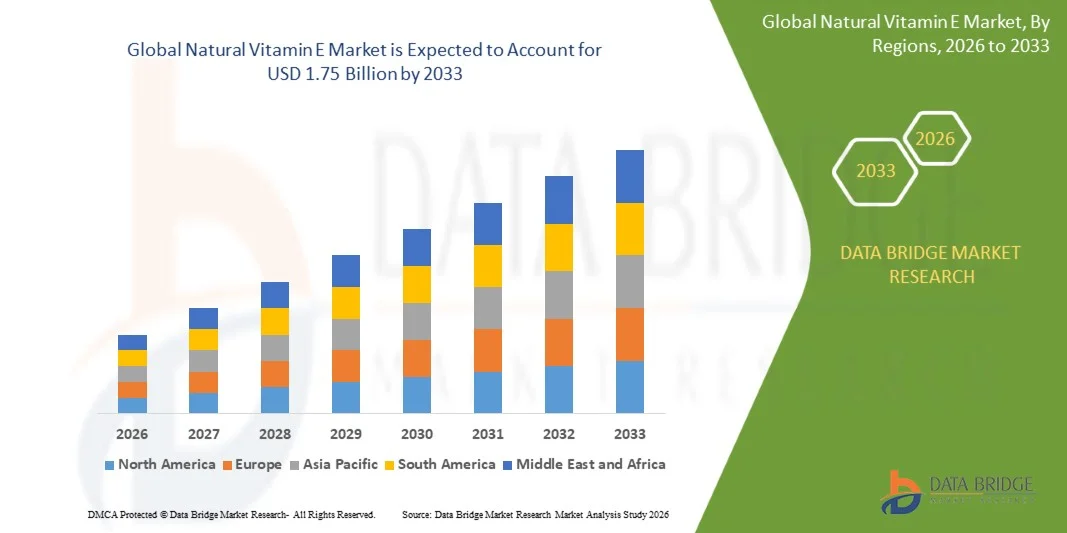
- As per Data Bridge Market Research analysis the natural vitamin E market was valued at USD 1.03 billion in 2025 and is projected to reach USD 1.75 billion by 2033, growing at a CAGR of 6.80% from 2026 to 2033.
- The market is experiencing consistent growth driven by rising consumer health consciousness, increasing demand for natural antioxidants in functional foods and dietary supplements, and expanding applications in cosmetics and personal care. Natural vitamin E is preferred over synthetic forms due to its higher bioavailability and efficacy, supporting its adoption across multiple sectors.
- The growing prevalence of lifestyle diseases, coupled with increasing awareness of the benefits of clean-label and natural ingredients, is compelling food manufacturers, nutraceutical companies, and cosmetic brands to incorporate natural vitamin E into their product formulations. Regulatory endorsements, such as the FDA's GRAS status and EFSA's health claim validations, continue to support market expansion.
Market Size & Forecast
- Market Value (2025): USD 1.03 Billion
- Expected Market Value (2033): USD 1.75 Billion
- Forecast CAGR (2026–2033): 6.80%
- Leading Region in 2025: North America
- Fastest Growing Region: Asia-Pacific
What are the Major Takeaways of the Natural Vitamin E Market?
- North America dominated the natural vitamin E market and accounted for the largest revenue share in 2025, supported by strong demand for natural dietary supplements, functional foods, clean-label products, and premium personal care formulations.
- Asia-Pacific natural vitamin E market is expected to witness the fastest growth rate from 2026 to 2033, supported by increasing disposable incomes, growing health awareness, and expanding demand for nutritional supplements and functional foods across countries such as China, Japan, and India.
- The tocopherols segment dominated the market with the largest revenue share in 2025, owing to its widespread use in dietary supplements, functional foods, pharmaceuticals, and cosmetics. Its well-established antioxidant properties, extensive clinical validation, and broad regulatory acceptance have made tocopherols the preferred form of natural vitamin E across multiple industries.
- The tocotrienol segment is projected to register the fastest growth from 2026 to 2033, driven by increasing research highlighting its superior antioxidant activity and potential cardiovascular, neurological, and anti-inflammatory benefits. Rising consumer awareness of preventive healthcare and growing demand for premium nutraceutical ingredients are accelerating segment expansion.
- The dietary supplements segment accounted for the largest market share in 2025, owing to growing consumer awareness regarding immunity, healthy aging, and preventive healthcare. Increasing consumption of nutritional supplements and the rising prevalence of lifestyle-related disorders continue to strengthen the segment's market leadership.
- The cosmetics segment is anticipated to witness the fastest CAGR from 2026 to 2033, driven by increasing demand for natural skincare and personal care products. The growing preference for clean-label cosmetics and plant-derived active ingredients is further supporting market growth.
Report Scope and Natural Vitamin E Market Segmentation
|
Attributes |
Natural Vitamin E Key Market Insights |
|
Segments Covered |
|
|
Countries Covered |
North America
Europe
Asia-Pacific
Middle East and Africa
South America
|
|
Key Market Players |
|
|
Market Opportunities |
|
|
Value Added Data Infosets |
In addition to the insights on market scenarios such as market value, growth rate, segmentation, geographical coverage, and major players, the market reports curated by the Data Bridge Market Research also include in-depth expert analysis, pricing analysis, brand share analysis, consumer survey, demography analysis, supply chain analysis, value chain analysis, raw material/consumables overview, vendor selection criteria, PESTLE Analysis, Porter Analysis, and regulatory framework. |
What is the Key Trend in the Natural Vitamin E Market?
- Rising consumer preference for plant-based, naturally sourced, and clean-label vitamin E ingredients is accelerating demand for natural mixed tocopherols and tocotrienols across dietary supplements, functional foods, cosmetics, and personal care products.
- For instance, in March 2025, Louis Dreyfus Company (LDC) introduced a new portfolio of plant-based vitamin E ingredients, including mixed tocopherols, vitamin E acetate, and vitamin E succinate, at Food Ingredients China (FIC) 2025, expanding its value-added nutrition ingredients business to meet growing demand for sustainable antioxidant solutions.
- Food, nutraceutical, and beauty manufacturers are increasingly replacing synthetic antioxidants with naturally derived vitamin E to support clean-label formulations and extend product shelf life.
- Manufacturers are also investing in sunflower- and soybean-derived tocopherol production to strengthen sustainable sourcing and improve ingredient traceability.
- As consumers continue prioritizing natural nutrition, sustainability, and clean-label products, demand for naturally sourced vitamin E is expected to accelerate, reinforcing its importance across functional nutrition, food preservation, and personal care applications.
What are the Key Drivers of the Natural Vitamin E Market?
- The growing consumer focus on preventive healthcare, immunity support, and antioxidant-rich nutrition is significantly increasing demand for natural vitamin E in dietary supplements, fortified foods, and functional beverages.
- In September 2025, BASF completed the sale of its Food and Health Performance Ingredients business to Louis Dreyfus Company. The acquisition expands LDC's capabilities in health ingredients and strengthens its position in the fast-growing plant-based nutrition and specialty ingredients market, reflecting increasing demand for natural nutrition ingredients.
- Increasing adoption of clean-label ingredients by food and beverage manufacturers is driving the use of natural tocopherols as effective antioxidants that improve product stability while replacing synthetic additives.
- With regulatory preference for natural ingredients and rising consumer demand for health-focused products, natural vitamin E will continue to experience strong adoption across dietary supplements, functional foods, cosmetics, and pharmaceutical formulations.
Which Factors are Challenging the Growth of the Natural Vitamin E Market?
- The natural vitamin E market faces raw material availability constraints and supply chain disruptions, as production depends heavily on vegetable oil deodorizer distillates obtained from soybean and sunflower oil processing.
- Limited availability of these feedstocks, together with production disruptions and changing refining economics, increases procurement costs and creates supply uncertainty for manufacturers.
- For instance, Cargill discontinued production of all natural tocopherols in July 2026, following its previously announced exit from the category, requiring downstream customers to qualify alternative suppliers and adjust sourcing strategies.
- Supply volatility has also been intensified by production interruptions among major vitamin manufacturers and evolving environmental regulations affecting global vitamin production capacity.
- The dependence on limited raw material sources, coupled with supplier consolidation and production disruptions, continues to challenge consistent availability and pricing of natural vitamin E, particularly for food, nutraceutical, and cosmetic manufacturers seeking long-term supply security.
How is the Natural Vitamin E Market Segmented?
- By Product
On the basis of product, the natural vitamin E market is segmented into tocopherols and tocotrienol. The tocopherols segment dominated the market with the largest revenue share in 2025, owing to its widespread use in dietary supplements, functional foods, pharmaceuticals, and cosmetics. Its well-established antioxidant properties, extensive clinical validation, and broad regulatory acceptance have made tocopherols the preferred form of natural vitamin E across multiple industries.
The tocotrienol segment is projected to register the fastest growth from 2026 to 2033, driven by increasing research highlighting its superior antioxidant activity and potential cardiovascular, neurological, and anti-inflammatory benefits. Rising consumer awareness of preventive healthcare and growing demand for premium nutraceutical ingredients are accelerating segment expansion.
- By Application
On the basis of application, the natural vitamin E market is segmented into dietary supplements, food and beverages, cosmetics, and others. The dietary supplements segment accounted for the largest market share in 2025, owing to growing consumer awareness regarding immunity, healthy aging, and preventive healthcare. Increasing consumption of nutritional supplements and the rising prevalence of lifestyle-related disorders continue to strengthen the segment's market leadership.
The cosmetics segment is anticipated to witness the fastest CAGR from 2026 to 2033, driven by increasing demand for natural skincare and personal care products. The growing preference for clean-label cosmetics and plant-derived active ingredients is further supporting market growth.
- By Type
On the basis of type, the natural vitamin E market is segmented into Bacteria and Yeast. The yeast segment dominated the market in 2025, supported by its high production efficiency, cost-effectiveness, and widespread application in natural ingredient manufacturing and biotechnology processes. Advances in microbial fermentation technologies continue to support the segment's dominance.
The bacteria segment is expected to witness the fastest growth from 2026 to 2033, driven by ongoing developments in microbial biotechnology, increasing investments in sustainable production methods, and rising demand for naturally derived vitamin E ingredients.
- By Form
On the basis of form, the natural vitamin E market is segmented into powder, oil, dry probiotic, and liquid probiotic. The oil segment held the largest market share in 2025, owing to its extensive use in dietary supplements, food fortification, pharmaceuticals, and cosmetic formulations. Its excellent bioavailability and ease of formulation continue to drive widespread adoption.
The powder segment is projected to register the fastest growth from 2026 to 2033, driven by increasing demand for functional food ingredients, nutraceutical formulations, and convenient dry-blend supplement products. Improved stability and ease of transportation further support segment expansion.
- By Function
On the basis of function, the natural vitamin E market is segmented into Preventive Healthcare and Therapeutics. The preventive healthcare segment dominated the market with the largest revenue share in 2025 due to increasing consumer focus on wellness, immunity enhancement, and disease prevention. Rising demand for nutritional supplements and functional foods continues to support the segment's strong market position.
The therapeutics segment is anticipated to witness the fastest growth from 2026 to 2033, driven by expanding research into the role of natural vitamin E in cardiovascular health, neurological disorders, inflammation management, and chronic disease treatment.
- By End User
On the basis of end user, the natural vitamin E market is segmented into human probiotics and animal probiotics. The human probiotics segment accounted for the largest market share in 2025, supported by increasing consumption of dietary supplements, fortified foods, and functional nutrition products. Growing awareness regarding digestive health, immunity, and overall wellness continues to drive demand.
The animal probiotics segment is expected to witness the fastest growth from 2026 to 2033, driven by increasing demand for high-quality animal nutrition, improved livestock productivity, and the growing adoption of natural feed additives in the animal health industry.
- By Source
On the basis of source, the natural vitamin E market is segmented into soybean oil, rapeseed/canola oil, sunflower oil, and others. The soybean oil segment dominated the market with the largest revenue share in 2025, owing to its abundant availability, high tocopherol content, and cost-effective extraction process. Its widespread cultivation and established supply chain continue to support its leadership in natural vitamin E production.
The sunflower oil segment is projected to witness the fastest growth from 2026 to 2033, driven by increasing consumer preference for non-GMO and naturally sourced ingredients, higher alpha-tocopherol content, and growing demand for premium nutritional and cosmetic products.
Which Region Holds the Largest Share of the Natural Vitamin E Market?
- North America dominated the natural vitamin E market and accounted for the largest revenue share in 2025, supported by strong demand for natural dietary supplements, functional foods, clean-label products, and premium personal care formulations. The region also benefits from high consumer awareness of preventive healthcare, well-established nutraceutical and cosmetics industries, and the widespread adoption of naturally sourced ingredients.
- The region further benefits from the presence of leading supplement and food manufacturers, increasing preference for plant-derived antioxidants over synthetic alternatives, and continuous product innovation in health and wellness products. Rising demand for natural ingredients across pharmaceuticals, food & beverages, cosmetics, and animal nutrition applications continues to strengthen North America's leadership position in the natural vitamin E market.
U.S. Natural Vitamin E Market Insight
U.S. natural vitamin E market captured the largest revenue share in 2025 within North America, fueled by increasing consumer demand for dietary supplements and naturally sourced functional ingredients. Growing awareness of the antioxidant and immune-supporting benefits of natural vitamin E has accelerated its use in nutritional supplements, fortified foods, and cosmetic formulations. The expanding clean-label movement, combined with strong demand for plant-based wellness products and advanced skincare solutions, continues to support market expansion. Moreover, ongoing product innovation and widespread availability through retail and e-commerce channels are further contributing to the market's growth.
Europe Natural Vitamin E Market Insight
Europe natural vitamin E market is expected to witness the fastest growth rate from 2026 to 2033, primarily driven by rising consumer preference for natural food additives, sustainable ingredients, and clean-label cosmetic products. Increasing regulatory emphasis on naturally derived ingredients, along with growing health consciousness, is encouraging manufacturers to replace synthetic alternatives with natural vitamin E. The expanding nutraceutical, pharmaceutical, and personal care industries are further supporting market growth. In addition, increasing demand for organic and plant-based products is fostering wider adoption across multiple end-use sectors.
U.K. Natural Vitamin E Market Insight
U.K. natural vitamin E market is expected to witness the fastest growth rate from 2026 to 2033, driven by growing demand for premium dietary supplements, clean-label foods, and naturally formulated skincare products. Consumers are increasingly seeking plant-derived antioxidants to support overall wellness and healthy aging. The country's well-developed health and beauty industry, combined with increasing awareness of preventive healthcare and sustainable consumer preferences, is expected to continue stimulating market growth.
Germany Natural Vitamin E Market Insight
Germany natural vitamin E market is expected to witness the fastest growth rate from 2026 to 2033, fueled by rising demand for high-quality natural ingredients across food, pharmaceutical, and cosmetic applications. Germany's strong nutraceutical manufacturing base, together with increasing consumer preference for organic and environmentally sustainable products, is promoting market expansion. Furthermore, the country's emphasis on product quality, regulatory compliance, and innovation continues to encourage the adoption of naturally sourced vitamin E in a wide range of consumer products.
Asia-Pacific Natural Vitamin E Market Insight
Asia-Pacific natural vitamin E market is expected to witness the fastest growth rate from 2026 to 2033, supported by increasing disposable incomes, growing health awareness, and expanding demand for nutritional supplements and functional foods across countries such as China, Japan, and India. Rising consumption of natural personal care products, coupled with rapid growth in the food processing and nutraceutical industries, is driving market adoption. Furthermore, increasing investments in healthcare, favorable demographic trends, and expanding manufacturing capabilities are making natural vitamin E products more accessible throughout the region.
Japan Natural Vitamin E Market Insight
Japan natural vitamin E market is expected to witness the fastest growth rate from 2026 to 2033 due to the country's aging population, strong focus on preventive healthcare, and growing demand for premium nutritional supplements. Japanese consumers increasingly prefer naturally sourced functional ingredients that support healthy aging, skin health, and immune function. The widespread use of natural vitamin E in cosmetics, functional foods, and pharmaceutical formulations, along with continuous innovation in wellness products, is expected to support sustained market growth.
China Natural Vitamin E Market Insight
China natural vitamin E market accounted for the largest market revenue share in Asia-Pacific in 2025, attributed to rapid urbanization, increasing disposable incomes, and rising consumer awareness regarding nutrition and preventive healthcare. China represents one of the largest markets for dietary supplements and functional food ingredients, with natural vitamin E witnessing growing demand across food, cosmetics, pharmaceuticals, and animal nutrition applications. The country's expanding manufacturing capabilities, abundant vegetable oil feedstocks, and increasing preference for naturally derived ingredients are key factors propelling market growth.
Which are the Top Companies in Natural Vitamin E Market?
The natural vitamin E industry is primarily led by well-established companies, including:
- DSM-Firmenich AG (Switzerland)
- BASF SE (Germany)
- Kensing LLC (U.S.)
- Wilmar International Limited (Singapore)
- Archer Daniels Midland Company (U.S.)
- Cargill, Incorporated (U.S.)
- KLK OLEO (Malaysia)
- BTSA Biotecnologías Aplicadas S.L. (Spain)
- Vitae Naturals (Spain)
- ExcelVite Sdn. Bhd. (Malaysia)
- American River Nutrition, LLC (U.S.)
- Davos Life Science Pte. Ltd. (Singapore)
- Zhejiang Worldbestve Biotechnology Co., Ltd. (China)
What are Latest Developments in Natural Vitamin E Market?
- In July 2026, Cargill ceased the production of all natural tocopherols as part of its previously announced strategy to exit the category. The decision prompted downstream manufacturers to diversify sourcing strategies and qualify alternative suppliers capable of providing natural vitamin E ingredients with comparable quality and specifications.
- In August 2025, BASF removed the force majeure on several vitamin products, including DL-alpha-tocopherol and Vitamin E Acetate 98%, following the resolution of earlier supply constraints. The move improved supply availability and helped stabilize procurement activities for manufacturers using both natural and synthetic vitamin E in their formulations.
- In April 2024, Kensing introduced Sun E, an upcycled, non-GMO natural vitamin E ingredient produced from sunflower seed by-products, following its acquisition of Advanced Organic Materials. The product launch expanded the company's natural vitamin E portfolio while supporting sustainable sourcing, traceability, and the growing demand for clean-label ingredients.

- Interactive Data Analysis Dashboard
- Company Analysis Dashboard for high growth potential opportunities
- Research Analyst Access for customization & queries
- Competitor Analysis with Interactive dashboard
- Latest News, Updates & Trend analysis
- Harness the Power of Benchmark Analysis for Comprehensive Competitor Tracking
Global Natural Vitamin E Market, Supply Chain Analysis and Ecosystem Framework
To support market growth and help clients navigate the impact of geopolitical shifts, DBMR has integrated in-depth supply chain analysis into its Global Natural Vitamin E Market research reports. This addition empowers clients to respond effectively to global changes affecting their industries. The supply chain analysis section includes detailed insights such as Global Natural Vitamin E Market consumption and production by country, price trend analysis, the impact of tariffs and geopolitical developments, and import and export trends by country and HSN code. It also highlights major suppliers with data on production capacity and company profiles, as well as key importers and exporters. In addition to research, DBMR offers specialized supply chain consulting services backed by over a decade of experience, providing solutions like supplier discovery, supplier risk assessment, price trend analysis, impact evaluation of inflation and trade route changes, and comprehensive market trend analysis.
Data collection and base year analysis are done using data collection modules with large sample sizes. The stage includes obtaining market information or related data through various sources and strategies. It includes examining and planning all the data acquired from the past in advance. It likewise envelops the examination of information inconsistencies seen across different information sources. The market data is analysed and estimated using market statistical and coherent models. Also, market share analysis and key trend analysis are the major success factors in the market report. To know more, please request an analyst call or drop down your inquiry.
The key research methodology used by DBMR research team is data triangulation which involves data mining, analysis of the impact of data variables on the market and primary (industry expert) validation. Data models include Vendor Positioning Grid, Market Time Line Analysis, Market Overview and Guide, Company Positioning Grid, Patent Analysis, Pricing Analysis, Company Market Share Analysis, Standards of Measurement, Global versus Regional and Vendor Share Analysis. To know more about the research methodology, drop in an inquiry to speak to our industry experts.
Data Bridge Market Research is a leader in advanced formative research. We take pride in servicing our existing and new customers with data and analysis that match and suits their goal. The report can be customized to include price trend analysis of target brands understanding the market for additional countries (ask for the list of countries), clinical trial results data, literature review, refurbished market and product base analysis. Market analysis of target competitors can be analyzed from technology-based analysis to market portfolio strategies. We can add as many competitors that you require data about in the format and data style you are looking for. Our team of analysts can also provide you data in crude raw excel files pivot tables (Fact book) or can assist you in creating presentations from the data sets available in the report.













