


What is the Necrotizing Fasciitis Market Size and Growth Rate?
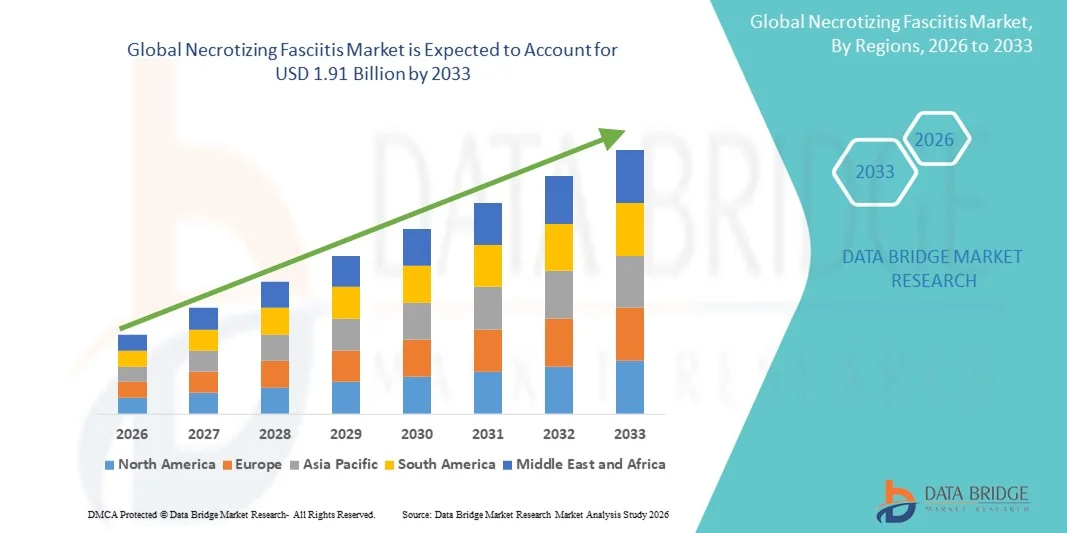
- As per Data Bridge Market Research Analysis the global necrotizing fasciitis market size was valued at USD 1.21 billion in 2025 and is expected to reach USD 1.91 billion by 2033, at a CAGR of 5.90% during the forecast period
- The market growth is largely fueled by increasing prevalence of severe bacterial infections, rising awareness of early diagnosis, and growing adoption of advanced therapeutic interventions in both hospital and clinical settings. Early detection and prompt treatment of necrotizing fasciitis are critical, and healthcare providers are increasingly adopting innovative surgical, antibiotic, and supportive care protocols to improve patient outcomes
- Furthermore, rising investment in research and development of novel therapeutics, coupled with advancements in diagnostic technologies such as rapid pathogen identification and imaging techniques, is driving the demand for necrotizing fasciitis treatments. Increasing awareness campaigns, physician education programs, and government initiatives aimed at reducing morbidity and mortality rates associated with necrotizing fasciitis are also significantly boosting market growth. The convergence of early diagnosis, effective treatment modalities, and expanding clinical infrastructure is accelerating the uptake of Necrotizing Fasciitis solutions, thereby enhancing the overall market expansion
Market Size & Forecast
- Global Market Value (2025): USD 1.21 Billion
- Expected Market Value (2033): USD 1.91 Billion
- Forecast CAGR (2026–2033): 5.90%
What are the Major Takeaways of Necrotizing Fasciitis Market?
- Necrotizing Fasciitis treatments, including advanced surgical interventions and antibiotic therapies, are increasingly vital components of modern infectious disease management in both hospital and clinical settings due to their critical role in improving patient outcomes, reducing mortality, and preventing rapid infection progression
- The escalating demand for necrotizing fasciitis therapies is primarily fueled by the rising prevalence of severe bacterial infections, growing awareness of early diagnosis, and increasing adoption of evidence-based treatment protocols by healthcare providers
- North America dominated the necrotizing fasciitis market with the largest revenue share of 42.5% in 2025, characterized by well-established healthcare infrastructure, advanced clinical research capabilities, and strong presence of key pharmaceutical and biotech companies, with the U.S. experiencing substantial growth in treatment adoption due to early implementation of innovative surgical and antimicrobial protocols
- Asia-Pacific is expected to be the fastest-growing region in the necrotizing fasciitis market during the forecast period, with a CAGR of 23.8% from 2026 to 2033, driven by increasing healthcare investments, rising prevalence of severe infections, expanding clinical research initiatives, and improving hospital infrastructure across emerging economies such as China, India, and Japan
- The intravenous antibiotics segment dominated the market, accounting for 50.2% of revenue in 2025, driven by its critical role as the first-line therapy for necrotizing fasciitis and broad applicability across Type I, II, and III infections
Report Scope and Necrotizing Fasciitis Market Segmentation
|
Attributes |
Necrotizing Fasciitis Key Market Insights |
|
Segments Covered |
|
|
Countries Covered |
North America
Europe
Asia-Pacific
Middle East and Africa
South America
|
|
Key Market Players |
|
|
Market Opportunities |
|
|
Value Added Data Infosets |
In addition to the insights on market scenarios such as market value, growth rate, segmentation, geographical coverage, and major players, the market reports curated by the Data Bridge Market Research also include in-depth expert analysis, patient epidemiology, pipeline analysis, pricing analysis, and regulatory framework. |
What is the Key Trend in the Necrotizing Fasciitis Market?
Enhanced Diagnostics and Early Intervention
- A significant and accelerating trend in the global necrotizing fasciitis market is the increasing adoption of advanced diagnostic tools and rapid detection technologies, which are significantly enhancing early identification and clinical intervention for patients
- For instance, the use of molecular diagnostic assays and real-time PCR testing allows clinicians to detect causative pathogens such as Streptococcus pyogenes and Staphylococcus aureus more accurately and quickly, improving treatment outcomes
- Integration of imaging technologies such as MRI and CT scans with clinical diagnostic protocols enables faster assessment of tissue necrosis, guiding surgical intervention and reducing mortality rates
- Point-of-care testing devices and bedside biomarker analyses facilitate immediate clinical decisions, allowing healthcare providers to prioritize urgent debridement and antibiotic administration
- This trend towards more precise, timely, and integrated diagnostics is fundamentally reshaping clinical expectations for Necrotizing Fasciitis management. Consequently, hospitals and research institutes are increasingly adopting AI-assisted diagnostic platforms that help predict disease progression and optimize patient care
- The demand for advanced diagnostic solutions and early intervention strategies is growing rapidly across both tertiary care and specialized clinical centers, as clinicians increasingly prioritize rapid detection and improved patient survival rates
Necrotizing Fasciitis Market Dynamics
Driver
Growing Need Due to Rising Incidence and Awareness
- The increasing prevalence of Necrotizing Fasciitis, coupled with heightened awareness among healthcare professionals and patients, is a significant driver for the growing demand for advanced diagnostic and therapeutic interventions
- For instance, in 2025, several leading hospitals in North America and Europe adopted rapid molecular diagnostic kits for early detection of Necrotizing Fasciitis pathogens, facilitating faster clinical response
- As healthcare providers become more aware of the aggressive nature of Necrotizing Fasciitis, timely intervention with targeted antibiotics, supportive care, and surgical debridement is increasingly emphasized, driving the adoption of advanced clinical protocols
- Furthermore, the growing focus on hospital preparedness and infection control measures is making advanced Necrotizing Fasciitis management an integral component of healthcare systems
- The combination of increasing incidence rates, improved diagnostic awareness, and integration of multidisciplinary treatment protocols is driving market growth across both developed and emerging regions
Restraint/Challenge
Concerns Regarding High Treatment Costs and Limited Access to Advanced Care
- The high cost of advanced diagnostics, surgical interventions, and prolonged hospital stays presents a significant challenge to broader market penetration, especially in developing regions
- For instance, access to rapid molecular diagnostics or MRI/CT imaging remains limited in rural or resource-constrained areas, delaying detection and treatment of Necrotizing Fasciitis
- Addressing these challenges through the development of cost-effective diagnostic kits, mobile health units, and telemedicine-based consultation is crucial for improving patient access and clinical outcomes
- In addition, the complexity of managing Necrotizing Fasciitis, requiring multidisciplinary teams and specialized surgical expertise, can be a barrier in hospitals with limited trained personnel
- While awareness campaigns and government healthcare initiatives are gradually improving early intervention rates, the high cost and limited availability of advanced treatment facilities can still hinder optimal care delivery
- Overcoming these challenges through investment in training, wider distribution of diagnostic technologies, and public health education will be vital for sustained market growth
How is the Necrotizing Fasciitis Market Segmented?
The market is segmented on the basis of type, treatment, symptoms, diagnosis, risk factors, end-users, and distribution channel.
- By Type
On the basis of type, the Necrotizing Fasciitis market is segmented into Type I, Type II, and Type III. The Type I segment dominated the market with a revenue share of 45.6% in 2025, primarily driven by its higher prevalence in polymicrobial infections and frequent occurrence in postoperative or trauma-related cases. Hospitals and clinics often report higher incidences of Type I cases, fueling diagnostic testing and early therapeutic intervention. The market growth is supported by the increasing awareness among healthcare professionals regarding rapid treatment initiation for polymicrobial infections. Additionally, Type I infections often require combined treatment approaches, such as intravenous antibiotics and surgical debridement, which contributes to higher revenue generation for treatment services and pharmaceutical use. The segment benefits from advanced diagnostic methods, including CT and MRI scans, which improve early detection rates. Government initiatives and hospital protocols aimed at reducing postoperative infections also enhance the prominence of Type I infections in clinical settings. Public health campaigns and medical education programs further raise awareness about Type I necrotizing fasciitis. The increasing adoption of hyperbaric oxygen therapy for Type I infections adds to the market momentum. Hospital-based therapeutic regimens and insurance reimbursements for complex cases further strengthen its revenue position. The segment’s dominance is expected to continue due to sustained clinical focus and high treatment complexity, which drives overall market expenditure.
The Type II segment is expected to witness the fastest CAGR of 18.9% from 2026 to 2033, largely driven by its association with Streptococcus pyogenes infections, which have high mortality risks and require rapid surgical intervention. Type II infections are increasingly reported in previously healthy individuals, raising clinical urgency and awareness. The adoption of early diagnostic tools like laboratory tests and frozen section biopsy accelerates treatment timelines and boosts hospital revenue. Type II infections frequently involve limb amputation or extensive surgical procedures, which increases treatment costs and drives market expansion. Emerging research on rapid detection kits and targeted antibiotic protocols further enhances market adoption. The segment benefits from growing physician awareness and educational campaigns highlighting early identification of Type II cases. Increasing investment in emergency surgical centers also supports the segment’s rapid growth. Clinical guidelines emphasizing aggressive treatment for Type II infections improve patient outcomes and drive hospital utilization. Rising incidences of community-acquired necrotizing fasciitis globally support the faster growth of this segment. Hospitals and specialty clinics are increasingly equipped to handle Type II cases efficiently, which further drives adoption. Additionally, Type II infections often require combination therapies, including intravenous antibiotics and hyperbaric oxygen therapy, boosting associated pharmaceutical and service revenue. The segment’s growth trajectory is underpinned by the need for prompt medical intervention and high clinical attention.
- By Treatment
On the basis of treatment, the market is segmented into intravenous antibiotics, surgery, and hyperbaric oxygen treatment. The intravenous antibiotics segment dominated the market, accounting for 50.2% of revenue in 2025, driven by its critical role as the first-line therapy for necrotizing fasciitis and broad applicability across Type I, II, and III infections. Hospitals rely heavily on IV antibiotic regimens to stabilize patients and prevent systemic spread, making this segment a significant contributor to market revenue. The development of new broad-spectrum antibiotics and combination therapy protocols further supports segment dominance. Clinical guidelines recommend immediate IV antibiotic therapy upon suspicion of necrotizing fasciitis, reinforcing its widespread use. Hospitals and diagnostic centers procure antibiotics in large volumes due to recurring need in severe infections. Rising antibiotic resistance has prompted research into next-generation antibiotics, enhancing market opportunities. Training and awareness programs for healthcare professionals ensure adherence to IV antibiotic protocols. Hospital formularies prioritize availability of IV antibiotics, strengthening its market share. The segment also benefits from reimbursement policies covering essential hospital-administered treatments. Pharmaceutical companies continuously innovate formulations to improve efficacy and reduce adverse effects. Early initiation of IV therapy is linked to reduced mortality, driving physician preference and adoption rates. Hospital pharmacy chains and centralized purchasing agreements ensure sustained supply and revenue growth.
The surgery segment is anticipated to witness the fastest CAGR of 17.6% from 2026 to 2033, driven by the increasing incidence of rapidly progressing necrotizing infections requiring immediate debridement. Surgical interventions, including extensive tissue excision, are critical for patient survival, leading to high revenue for hospitals and surgical centers. Advances in minimally invasive and reconstructive surgical techniques are further supporting segment growth. Hospitals and specialty surgical centers increasingly invest in advanced operative tools and training, enhancing adoption. Rising awareness about early surgical intervention through medical campaigns and continuing education programs also fuels growth. The segment is supported by favorable insurance reimbursement policies for operative treatments. Increasing prevalence of comorbidities such as diabetes and obesity raises the surgical demand, as severe infections progress more quickly in these populations. Hospitals focus on multidisciplinary surgical approaches, combining antibiotics and hyperbaric oxygen therapy with surgery. Medical research continues to optimize surgical protocols, driving adoption among healthcare providers. Telemedicine and early diagnostic support help hospitals plan surgical interventions efficiently. The segment benefits from the integration of surgical management with intensive care support, enhancing outcomes and market value. Public-private partnerships promoting surgical treatment accessibility further contribute to the CAGR.
- By Symptoms
On the basis of symptoms, the market is segmented into fever, nausea, blisters, gangrene, unconsciousness, severe drop in blood pressure, and others. The gangrene segment dominated the market, representing 38.5% revenue in 2025, due to its high visibility, severity, and strong correlation with advanced necrotizing infections requiring immediate medical attention. Gangrene cases often drive emergency hospital admissions and surgical interventions, boosting associated market revenue. Early recognition and treatment protocols for gangrene are widely established across hospitals, increasing segment adoption. Gangrene occurrence necessitates combination therapy including IV antibiotics and surgery, raising market expenditure. Awareness programs among healthcare providers emphasize rapid detection, improving diagnosis and management. Rising incidences among diabetic and immunocompromised populations fuel the segment’s dominance. Hospitals and clinics invest in advanced wound care technologies to manage gangrene effectively. Government and insurance support for high-risk patients reinforces adoption. Educational campaigns for post-surgical monitoring also contribute to timely detection and treatment. The segment’s prominence is further enhanced by the high mortality risk associated with gangrene, ensuring sustained focus from healthcare providers.
The severe drop in blood pressure segment is expected to witness the fastest CAGR of 16.9% from 2026 to 2033, as hypotension is a critical early symptom of systemic infection and septic shock. Rapid intervention in hypotensive patients is required, leading to increased utilization of intensive care units, IV antibiotics, and vasopressors, driving market growth. Hospitals and emergency centers adopt standardized sepsis protocols, further promoting segment growth. Awareness among physicians regarding early recognition of hypotension in necrotizing fasciitis accelerates adoption. The segment is particularly relevant in community-acquired Type II infections, where early intervention can be lifesaving. Rising prevalence of comorbidities amplifies incidence of hypotension in infected patients, further boosting market share. Advanced monitoring equipment and automated ICU protocols contribute to faster diagnosis and treatment. Continuous education for critical care teams enhances rapid intervention. Early hypotension detection drives adoption of combination therapies, including antibiotics and surgery. Insurance and government support for critical care reinforce segment growth. Telehealth and remote monitoring facilitate early identification in high-risk patients, promoting faster response. Rising clinical awareness and adoption of evidence-based protocols underpin the segment’s high CAGR.
- By Diagnosis
On the basis of diagnosis, the market is segmented into CT scan, MRI, Ultrasound, Laboratory tests, and Frozen section biopsy. The CT scan segment dominated the market, with 41.3% revenue share in 2025, owing to its ability to rapidly detect gas formation, fascial thickening, and fluid collections, providing accurate diagnosis for timely intervention. Hospitals rely on CT imaging for emergency decision-making in suspected necrotizing fasciitis. CT imaging integration into hospital radiology workflows improves patient outcomes. The segment benefits from ongoing technological advancements enhancing image clarity and diagnostic speed. CT scans are widely accessible in developed regions, facilitating high adoption. The use of CT scans reduces unnecessary exploratory surgery, lowering costs and improving patient safety. Hospitals conduct routine training for radiologists to detect necrotizing infections accurately. Public awareness campaigns encourage early diagnosis, increasing patient inflow for CT imaging. Hospitals’ capital expenditure on CT machines strengthens segment dominance. Insurance coverage for imaging services promotes utilization. Technological upgrades such as low-dose CT scans further drive adoption. High demand in emergency departments supports the segment’s market leadership.
The Laboratory tests segment is expected to witness the fastest CAGR of 18.2% from 2026 to 2033, as rapid identification of bacterial pathogens is crucial for targeted antibiotic therapy. Advancements in PCR-based and point-of-care testing accelerate diagnosis, reducing treatment delays. Hospital laboratories increasingly adopt automated systems for faster turnaround. The segment benefits from increased focus on microbiological identification of polymicrobial infections. Training programs for laboratory staff improve accuracy and efficiency. Laboratory tests are essential for confirming diagnosis in atypical or early-stage cases, increasing adoption. Rising prevalence of diabetes and immunocompromised patients enhances test utilization. Research and clinical trials drive development of novel diagnostics, supporting CAGR growth. Government initiatives promoting early pathogen detection strengthen adoption. Integration with electronic medical records improves workflow efficiency. Rapid laboratory diagnostics complement surgical and antibiotic treatments, boosting overall market expenditure. Increased awareness among physicians drives consistent laboratory utilization, sustaining segment growth.
- By Risk Factors
On the basis of risk factors, the market is segmented into diabetes, cancer, obesity, intravenous drug use, alcoholism, and peripheral vascular disease. The diabetes segment dominated the market, representing 44.1% of revenue in 2025, due to its strong correlation with increased susceptibility to infections and delayed wound healing, making patients more prone to severe necrotizing fasciitis. The segment benefits from hospital programs targeting high-risk diabetic patients and preventive care protocols. Diabetes prevalence continues to rise globally, reinforcing segment dominance. Hospitals and clinics prioritize early diagnosis and management in diabetic patients. Government initiatives for diabetic patient care enhance awareness and treatment adoption. Hospitals adopt combination therapy protocols to manage necrotizing infections in diabetics. Clinical studies highlight high mortality and morbidity rates in diabetic patients, prompting focused interventions. The segment is further supported by insurance coverage for treatment of high-risk patients. Public health campaigns for diabetes management indirectly support infection control. The segment receives additional attention due to comorbidity management strategies. The rising diabetic population in both developed and emerging markets sustains market revenue growth.
The obesity segment is expected to witness the fastest CAGR of 17.5% from 2026 to 2033, as obesity-related immunosuppression and wound-healing challenges increase infection risk. Rising obesity prevalence globally drives the number of susceptible patients. Hospitals are investing in early intervention protocols for obese patients with soft tissue infections. Obesity-related complications in necrotizing infections require prolonged hospitalization, increasing market expenditure. Awareness campaigns and clinical guidelines emphasize obesity as a high-risk factor. Healthcare providers prioritize aggressive management of obese patients to prevent disease progression. Insurance reimbursement for extended care in obese patients supports market growth. Training programs for hospital staff enhance detection and management. Advanced imaging and laboratory diagnostics aid in rapid diagnosis for obese patients. Research focuses on risk mitigation and treatment optimization, supporting CAGR. Early intervention reduces mortality, encouraging adoption. Obesity-associated infections increasingly contribute to hospital market revenue. Public health programs targeting obesity indirectly influence segment growth.
- By End-Users
On the basis of end-users, the market is segmented into clinics, hospitals, diagnostic centres, surgical centres, and others. The hospitals segment dominated the market, accounting for 52.5% of revenue in 2025, owing to the high requirement of emergency treatment facilities, surgical theatres, and intensive care units. Hospitals provide comprehensive services including diagnosis, surgery, and post-operative care, which drives revenue. Advanced hospital infrastructure and availability of trained personnel enhance patient outcomes. Hospitals adopt combination therapies involving IV antibiotics, surgery, and hyperbaric oxygen, boosting expenditure. Hospitals’ investment in rapid diagnostic imaging and laboratory tests strengthens market dominance. Government healthcare programs and insurance coverage favor hospital treatments, further promoting adoption. Hospitals serve as central hubs for critical care and high-risk patient management. The prevalence of complex infections requiring multidisciplinary care increases hospital utilization. Specialized hospital departments ensure effective management of necrotizing fasciitis. Rising public awareness about prompt hospital treatment enhances patient inflow. Hospitals’ technological upgrades and facility expansions drive revenue growth. Hospitals’ dominance is sustained by their ability to manage all severity levels of infections.
The diagnostic centres segment is expected to witness the fastest CAGR of 19.1% from 2026 to 2033, driven by the increasing need for rapid and accurate diagnostic solutions in necrotizing fasciitis. Diagnostic centres provide advanced imaging, laboratory testing, and early detection services. Growing collaborations between hospitals and diagnostic centres facilitate patient referrals and increase utilization. Emerging adoption of point-of-care diagnostic technologies accelerates market expansion. Diagnostic centres cater to both pre-hospital assessment and outpatient testing, offering convenience. Investment in modern diagnostic equipment enhances service offerings. Awareness programs among clinicians emphasize early testing at diagnostic facilities. Diagnostic centres’ role in early intervention reduces hospitalization costs. Reimbursement policies for diagnostic testing promote adoption. Expanding diagnostic networks in urban and semi-urban areas support growth. Technological advancements in imaging and laboratory tests enhance detection accuracy. The convenience of outpatient services attracts patients, boosting revenue. Diagnostic centres are increasingly integrated into the clinical workflow, ensuring faster diagnosis and treatment.
- By Distribution Channel
On the basis of distribution channel, the market is segmented into hospital pharmacy, retail pharmacy, and online pharmacy. The hospital pharmacy segment dominated the market, with 46.7% revenue share in 2025, due to direct availability of antibiotics and other medications required for necrotizing fasciitis treatment. Hospital pharmacies ensure timely provision of essential drugs during critical emergencies. Bulk procurement agreements and hospital inventory management support the segment. Availability of combination therapies and high-cost medications in hospital pharmacies further enhances revenue. Hospitals’ reliance on internal pharmacies for critical patient care ensures continuity of treatment. Policies ensuring drug availability for high-risk patients boost adoption. Training and workflow integration for pharmacy staff improve medication management. Partnerships with pharmaceutical companies ensure a consistent supply of critical drugs. Hospital pharmacies’ role in emergency protocols reinforces dominance. Insurance coverage for hospital-dispensed drugs supports revenue growth. Hospitals’ controlled distribution enhances patient safety and treatment adherence. Advanced hospital pharmacy systems ensure efficient drug tracking and replenishment. Hospital pharmacies’ integration with clinical teams maintains high-quality patient care.
The online pharmacy segment is expected to witness the fastest CAGR of 20.2% from 2026 to 2033, driven by the rising preference for convenient home delivery of prescribed medications. Online platforms provide access to rare and high-cost drugs not readily available in retail stores. The segment benefits from growing e-prescription adoption and telehealth consultations. Patient awareness and convenience accelerate market growth. Digital platforms integrate with hospital and clinic systems to streamline order fulfillment. Online pharmacies provide a broader geographic reach, particularly in semi-urban and rural areas. Subscription models and repeat order facilities support patient adherence. Advanced logistics and cold-chain management improve drug safety. Online pharmacies are increasingly trusted for timely delivery of antibiotics and supportive care medications. Partnerships with diagnostic centres and clinics expand market penetration. The segment’s adoption is fueled by growing smartphone and internet penetration. Online pharmacies facilitate patient education and counseling, enhancing adherence and outcomes. Regulatory frameworks are gradually supporting online sales of prescription drugs.
Which Region Holds the Largest Share of the Necrotizing Fasciitis Market?
- North America dominated the necrotizing fasciitis market with the largest revenue share of 42.5% in 2025, characterized by well-established healthcare infrastructure, advanced clinical research capabilities, and strong presence of key pharmaceutical and biotech companies
- The market experienced substantial growth in treatment adoption due to early implementation of innovative surgical protocols
- Also use of advanced antimicrobial therapies, and increased awareness among healthcare providers regarding early diagnosis and rapid intervention strategies
U.S. Necrotizing Fasciitis Market Insight
The U.S. necrotizing fasciitis market captured the largest revenue share in 2025 within North America, driven by increasing adoption of advanced diagnostics, rapid response treatment protocols, and the presence of top-tier hospitals and specialized care centers. Enhanced clinical research, proactive infection management programs, and rising incidence of severe bacterial infections are fueling market expansion.
Europe Necrotizing Fasciitis Market Insight
The Europe necrotizing fasciitis market is projected to expand at a substantial CAGR throughout the forecast period, driven by well-established healthcare systems, stringent infection control regulations, and the growing need for rapid diagnosis and effective surgical management. Increased awareness among clinicians and investments in hospital infrastructure are further supporting the market growth.
U.K. Necrotizing Fasciitis Market Insight
The U.K. necrotizing fasciitis market is anticipated to grow at a noteworthy CAGR during the forecast period, supported by rising clinical research initiatives, advanced hospital facilities, and increasing focus on early-stage diagnosis and intervention. Healthcare provider training programs and enhanced surgical protocols are contributing to market expansion.
Germany Necrotizing Fasciitis Market Insight
The Germany necrotizing fasciitis market is expected to expand at a considerable CAGR during the forecast period, driven by advanced clinical research, growing healthcare infrastructure, and the adoption of evidence-based surgical and antimicrobial strategies. Hospitals’ emphasis on rapid diagnosis and multidisciplinary management is fueling market growth.
Asia-Pacific Necrotizing Fasciitis Market Insight
The Asia-Pacific necrotizing fasciitis market is expected to be the fastest-growing region during the forecast period, with a CAGR of 23.8% from 2026 to 2033. Growth is driven by increasing healthcare investments, rising prevalence of severe bacterial infections, expansion of clinical research initiatives, and improving hospital infrastructure across emerging economies such as China, India, and Japan.
Japan Necrotizing Fasciitis Market Insight
The Japan necrotizing fasciitis market is witnessing growth due to rising healthcare expenditure, advanced hospital infrastructure, and increasing awareness among healthcare professionals. The country’s strong clinical research ecosystem and proactive infection management strategies are driving adoption of advanced treatment protocols.
China Necrotizing Fasciitis Market Insight
The China necrotizing fasciitis market accounted for the largest market revenue share in Asia-Pacific in 2025. Growth is supported by rising healthcare investments, increasing number of well-equipped hospitals, higher awareness about early intervention, and a growing prevalence of severe bacterial infections. Rapid urbanization and expansion of clinical research initiatives are further fueling market adoption.
Which are the Top Companies in Necrotizing Fasciitis Market?
The Necrotizing Fasciitis industry is primarily led by well-established companies, including:
- Pfizer Inc. (U.S.)
- Johnson & Johnson (U.S.)
- Novartis AG (Switzerland)
- GlaxoSmithKline plc (U.K.)
- Sanofi (France)
- Merck & Co., Inc. (U.S.)
- Roche Holding AG (Switzerland)
- Bayer AG (Germany)
- AstraZeneca plc (U.K.)
- Gilead Sciences, Inc. (U.S.)
- AbbVie Inc. (U.S.)
- Takeda Pharmaceutical Company Ltd. (Japan)
- Eli Lilly and Company (U.S.)
- F. Hoffmann-La Roche Ltd. (Switzerland)
- Bristol-Myers Squibb Company (U.S.)
- Amgen Inc. (U.S.)
- Boehringer Ingelheim GmbH (Germany)
- Astellas Pharma Inc. (Japan)
- Teva Pharmaceutical Industries Ltd. (Israel)
- Cipla Limited (India)
What are Latest Developments in Necrotizing Fasciitis Market?
- In March 2023, a systematic review and meta‑analysis published in the World Journal of Emergency Surgery highlighted that hyperbaric oxygen therapy (HBO) significantly reduced mortality in patients with necrotizing soft tissue infections compared to standard care
- In August 2022, a retrospective 10‑year single-centre study reported that patients with necrotizing fasciitis and Fournier’s gangrene treated with adjunctive HBO therapy had lower in-hospital mortality rates than those who did not receive HBO
- In January 2025, a genomic study published in BMC Medical Genomics revealed that septic patients with necrotizing fasciitis treated with hyperbaric oxygen displayed distinct gene expression patterns compared to patients receiving standard treatment, suggesting potential immune‑modulatory benefits of HBO therapy
- In July 2025, a Scandinavian multicenter, prospective observational cohort study confirmed that the use of hyperbaric oxygen in patients with necrotizing soft tissue infections is associated with improved survival, providing strong real‑world evidence for HBO as an adjunct therapy
- In September 2025, a new randomized clinical trial was registered to evaluate whether adding HBO therapy to standard care reduces mortality and complications in necrotizing fasciitis. The trial plans to enroll 160 adults to compare outcomes between standard care and standard care plus HBO

- Interactive Data Analysis Dashboard
- Company Analysis Dashboard for high growth potential opportunities
- Research Analyst Access for customization & queries
- Competitor Analysis with Interactive dashboard
- Latest News, Updates & Trend analysis
- Harness the Power of Benchmark Analysis for Comprehensive Competitor Tracking
Data collection and base year analysis are done using data collection modules with large sample sizes. The stage includes obtaining market information or related data through various sources and strategies. It includes examining and planning all the data acquired from the past in advance. It likewise envelops the examination of information inconsistencies seen across different information sources. The market data is analysed and estimated using market statistical and coherent models. Also, market share analysis and key trend analysis are the major success factors in the market report. To know more, please request an analyst call or drop down your inquiry.
The key research methodology used by DBMR research team is data triangulation which involves data mining, analysis of the impact of data variables on the market and primary (industry expert) validation. Data models include Vendor Positioning Grid, Market Time Line Analysis, Market Overview and Guide, Company Positioning Grid, Patent Analysis, Pricing Analysis, Company Market Share Analysis, Standards of Measurement, Global versus Regional and Vendor Share Analysis. To know more about the research methodology, drop in an inquiry to speak to our industry experts.
Data Bridge Market Research is a leader in advanced formative research. We take pride in servicing our existing and new customers with data and analysis that match and suits their goal. The report can be customized to include price trend analysis of target brands understanding the market for additional countries (ask for the list of countries), clinical trial results data, literature review, refurbished market and product base analysis. Market analysis of target competitors can be analyzed from technology-based analysis to market portfolio strategies. We can add as many competitors that you require data about in the format and data style you are looking for. Our team of analysts can also provide you data in crude raw excel files pivot tables (Fact book) or can assist you in creating presentations from the data sets available in the report.












