


Needle Free Injection Systems Market Size
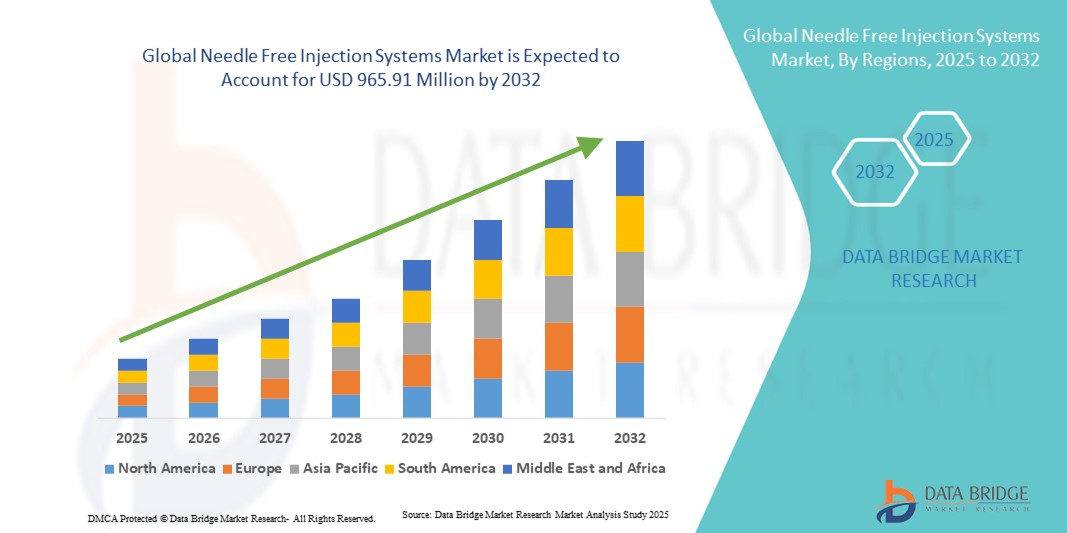
- The global needle free injection systems market size was valued at USD 224.64 million in 2024 and is expected to reach USD 965.91 million by 2032, at a CAGR of 20.00% during the forecast period
- The market growth is largely fueled by the increasing demand for minimally invasive drug delivery methods and the need to reduce needle-related injuries and infections. Advancements in needle-free injection technologies are enhancing patient comfort, compliance, and safety across various therapeutic areas
- Furthermore, rising awareness among healthcare providers and patients about pain-free, efficient, and precise drug administration is driving the adoption of needle-free injection systems. These factors, combined with the development of portable, easy-to-use, and high-precision devices, are significantly boosting the growth of the Needle Free Injection Systems market
Needle Free Injection Systems Market Analysis
- Needle free injection systems, offering advanced drug and vaccine delivery without the use of traditional needles, are increasingly vital components of modern healthcare and vaccination programs in both hospital and clinical settings due to their enhanced patient compliance, reduced risk of needle-stick injuries, and improved efficiency in mass immunization campaigns
- The escalating demand for needle free injection systems is primarily fueled by the growing prevalence of chronic and infectious diseases, increasing immunization initiatives, rising patient awareness of pain-free injection options, and the healthcare sector’s focus on innovative drug delivery technologies
- North America dominated the needle free injection systems market with the largest revenue share of 45.6% in 2024, driven by advanced healthcare infrastructure, high adoption of vaccine and biologic delivery systems, and a strong presence of key medical device manufacturers, with the U.S. experiencing substantial growth in needle-free injection system installations, particularly in hospitals, clinics, and vaccination centers
- Asia-Pacific is expected to be the fastest-growing region in the needle free injection systems market during the forecast period, with a CAGR of 22.8% from 2025 to 2032, fueled by increasing healthcare investments, rising prevalence of chronic and infectious diseases, expanding immunization programs, and growing adoption of advanced drug delivery technologies in countries such as China, India, and Japan
- The disposable needle-free injectors segment dominated the needle free injection systems market with a share of 54.2% in 2024, driven by strong emphasis on infection control, compliance with healthcare regulations, and convenience in single-use hospital and clinical applications
Report Scope and Needle Free Injection Systems Market Segmentation
|
Attributes |
Needle Free Injection Systems Key Market Insights |
|
Segments Covered |
|
|
Countries Covered |
North America
Europe
Asia-Pacific
Middle East and Africa
South America
|
|
Key Market Players |
|
|
Market Opportunities |
|
|
Value Added Data Infosets |
In addition to the insights on market scenarios such as market value, growth rate, segmentation, geographical coverage, and major players, the market reports curated by the Data Bridge Market Research also include in-depth expert analysis, pricing analysis, brand share analysis, consumer survey, demography analysis, supply chain analysis, value chain analysis, raw material/consumables overview, vendor selection criteria, PESTLE Analysis, Porter Analysis, and regulatory framework. |
Needle Free Injection Systems Market Trends
Enhanced Technological Advancements in Needle Free Injection Systems
- A significant and accelerating trend in the global needle free injection Systems market is the continuous development and adoption of innovative drug delivery technologies, which enhance precision, patient comfort, and compliance
- For instance, companies are advancing jet injector systems capable of delivering vaccines and therapeutics without conventional needles, reducing pain, needle-stick injuries, and medical waste
- Integration with automated and programmable dosing mechanisms enables more accurate and consistent drug administration, improving treatment outcomes across both adult and pediatric populations
- The development of compact, portable, and user-friendly devices facilitates administration in clinical, home, and remote settings, expanding access to essential therapies and vaccinations
- Companies are increasingly focusing on improving device ergonomics, reliability, and maintenance ease, making needle free injection systems more appealing for healthcare providers and patients alike
- Research collaborations and strategic partnerships are driving the introduction of combination devices and modular systems, allowing compatibility with multiple drug formulations and delivery requirements
- The rising emphasis on minimally invasive drug delivery solutions and enhanced patient-centric care is fundamentally shaping market expectations, prompting manufacturers to innovate in safety, usability, and therapeutic efficiency
- Overall, the growing demand for needle free delivery methods, combined with technological enhancements and broader adoption in clinical and home care settings, is propelling the Needle Free Injection Systems market forward
Needle Free Injection Systems Market Dynamics
Driver
Growing Need Due to Rising Demand for Painless and Efficient Drug Delivery
- The increasing prevalence of needle-related anxiety among patients, coupled with the growing emphasis on painless and safe drug administration, is a significant driver for the heightened demand for needle-free injection systems.
- For instance, in April 2024, PharmaJet, Inc. announced the launch of its advanced needle-free injector for influenza vaccines, designed to enhance patient comfort and improve vaccination compliance. Such strategies by key companies are expected to drive the Needle Free Injection Systems industry growth in the forecast period
- As patients and healthcare providers seek safer, more convenient, and hygienic alternatives to traditional needles, needle-free injection systems offer precise drug delivery, reduced risk of infections, and minimal pain, providing a compelling upgrade over conventional syringes
- Furthermore, the growing popularity of self-administration and home healthcare solutions is making needle-free injectors an integral component of modern drug delivery systems, offering seamless integration with vaccines, insulin, and biologics
- The convenience of rapid administration, reduced medical waste, and the ability to deliver consistent doses are key factors propelling the adoption of needle-free injection systems in both clinical and home care settings. The trend towards patient-centric care and the increasing availability of user-friendly Needle Free Injection Systems options further contribute to market growth
Restraint/Challenge
Concerns Regarding High Initial Costs and Device Acceptance
- Concerns surrounding the relatively high upfront cost of advanced needle-free injection systems pose a significant challenge to broader market penetration. While these devices reduce long-term costs associated with needle use and disposal, the initial investment can be a barrier for budget-conscious healthcare facilities and patients
- For instance, some healthcare providers in developing regions remain hesitant to adopt needle-free injectors due to budget limitations and lack of familiarity with the technology
- Addressing these concerns through cost-effective device designs, education on long-term benefits, and awareness campaigns is crucial for building acceptance
- Companies such as PharmaJet and Bioject emphasize training programs and demonstration initiatives to familiarize users with needle-free technologies. In addition, ensuring device reliability, regulatory approvals, and compatibility with multiple drug formulations is vital for wider adoption
- While prices are gradually decreasing, the perceived premium for advanced needle-free injection systems can still hinder widespread acceptance, particularly in emerging markets
- Overcoming these challenges through affordable solutions, comprehensive user training, and robust post-market support will be vital for sustained market growth
Needle Free Injection Systems Market Scope
The market is segmented on the basis of type, product, technology, usability, site of delivery, application, and end user.
- By Type
On the basis of type, the needle free injection systems market is segmented into liquid-based needle-free injectors, projectile/depot-based needle-free injectors, and powder-based needle free injectors. The liquid-based needle-free injectors segment dominated the market with a revenue share of 45.6% in 2024, driven by its extensive use in vaccination programs, chronic disease management, and hospital-based therapies. These injectors are preferred for their precise dosing, minimal discomfort to patients, and high efficiency in mass immunization campaigns. The ease of administration, adaptability to a wide range of liquid formulations, and reduced risk of contamination make them the standard choice for healthcare providers. In addition, their reliability in both adult and pediatric populations supports consistent clinical outcomes and operational efficiency in medical settings.
The projectile/depot-based needle-free injectors segment is expected to witness the fastest CAGR of 22.8% from 2025 to 2032, fueled by its capacity for higher dose delivery, suitability for multiple therapeutic applications, and effectiveness in both adult and pediatric treatments. These systems are designed to enhance patient compliance, reduce needle-stick injuries, and enable precise, uniform drug distribution. Their adoption is increasing in therapeutic areas requiring targeted or high-volume dosing, such as oncology, pain management, and chronic disease treatment. The versatility, safety, and ability to improve treatment adherence are key drivers for the rapid growth of this segment.
- By Product
On the basis of product, the needle free injection systems market is segmented into fillable needle-free injectors and prefilled needle-free injectors. The prefilled needle-free injectors segment dominated the market with a share of 52.3% in 2024, primarily due to its ready-to-use convenience, ease of handling, and enhanced safety in clinical environments. Prefilled systems reduce preparation errors, minimize contamination risk, and save time for healthcare professionals, making them ideal for large-scale immunization campaigns and routine clinical use. Their widespread use in vaccines and biologics ensures accurate dosing and operational efficiency, particularly in hospitals, clinics, and public health programs. The reliability and user-friendliness of prefilled injectors further drive adoption across diverse healthcare applications.
The fillable needle-free injectors segment is projected to register the fastest CAGR of 21.9% from 2025 to 2032, as healthcare providers increasingly require flexible, customizable solutions for emerging therapies and diverse formulations. Fillable injectors allow for rapid response to new medical conditions, personalized dosing, and multi-dose administration, which is especially beneficial in research laboratories and clinical trials. Their reusable nature, cost-effectiveness, and adaptability across multiple therapeutic areas make them a compelling choice for healthcare providers seeking efficiency without compromising safety or precision.
- By Technology
On the basis of technology, the needle free injection systems market is segmented into jet-based needle-free injectors, spring-based needle-free injectors, laser-powered needle-free injectors, and vibration-based needle-free injectors. The jet-based needle-free injectors segment dominated the market with a revenue share of 48.7% in 2024, owing to its high accuracy, reliability, and proven performance in vaccine and therapeutic deliveries. Jet-based injectors provide consistent penetration, precise dosing, and minimal patient discomfort, making them highly preferred in hospital settings and mass immunization initiatives. Their ability to administer drugs efficiently across different tissue types, coupled with ease of use and safety, reinforces their dominance in the market.
The spring-based needle-free injectors segment is expected to witness the fastest CAGR of 20.7% from 2025 to 2032, driven by its mechanical simplicity, portability, and independence from electricity. Spring-based injectors are ideal for field vaccinations, home care environments, and regions with limited infrastructure. Their durability, low maintenance requirements, and cost-effectiveness make them an attractive option for large-scale deployment and remote healthcare programs. The rapid adoption of spring-based systems is further supported by their ease of operation, safety features, and growing use in outpatient and home-based therapy programs.
- By Usability
On the basis of usability, the needle free injection systems market is segmented into disposable needle-free injectors and reusable needle-free injectors. The disposable needle-free injectors segment dominated the market with a share of 54.2% in 2024, driven by strong emphasis on infection control, compliance with healthcare regulations, and convenience in single-use hospital and clinical applications. These injectors minimize the risk of cross-contamination, provide a straightforward workflow for healthcare professionals, and are widely used in large-scale immunization programs. The ready-to-use nature of disposable systems allows rapid deployment in outpatient care and emergency settings. Their adoption is reinforced by ease of disposal, safety, and the ability to maintain sterile conditions, making them an essential choice for modern healthcare facilities.
The reusable needle-free injectors segment is projected to witness the fastest CAGR of 23.1% from 2025 to 2032, fueled by growing demand for cost-effective, sustainable solutions in high-volume healthcare settings. These injectors allow multiple uses while maintaining dosing accuracy and reliability, reducing long-term medical waste and operational costs. Reusable injectors are particularly suitable for chronic therapy regimens, multi-dose treatments, and research applications where flexibility and efficiency are key. Their durability, ability to support different drug formulations, and minimal maintenance requirements further drive rapid adoption across hospitals and clinical centers worldwide.
- By Site of Delivery
On the basis of site of delivery, the needle free injection systems market is segmented into subcutaneous injectors, intramuscular injectors, and intradermal injectors. The subcutaneous injectors segment dominated the market with a revenue share of 47.5% in 2024, owing to its ease of use, compatibility with insulin and biologics, and broad applicability across patient populations. Subcutaneous delivery ensures rapid absorption, reduced patient discomfort, and improved adherence to treatment schedules. These injectors are widely implemented in hospital, clinic, and home care settings for both acute and chronic therapy. Their precision, safety, and operational efficiency make them a preferred choice among healthcare professionals.
The intradermal injectors segment is expected to register the fastest CAGR of 24.0% from 2025 to 2032, driven by benefits such as dose-sparing in vaccines, enhanced immunogenic response, and applicability in preventive healthcare and allergy testing. Intradermal delivery allows efficient use of limited vaccine doses, improving cost-effectiveness in public health programs. Regulatory approvals, increasing awareness of minimally invasive techniques, and adoption in global immunization campaigns further propel growth in this subsegment. The convenience, accuracy, and safety of intradermal injectors are attracting healthcare providers and governments alike.
- By Application
On the basis of application, the needle free injection systems market is segmented into vaccine delivery, insulin delivery, oncology, pain management, and other. The vaccine delivery segment dominated the market with a share of 51.8% in 2024, driven by global immunization initiatives, government-led vaccination programs, and widespread deployment in hospitals and clinics. Vaccine delivery systems offer safe, precise, and minimally invasive alternatives to traditional needles, reducing patient discomfort and improving compliance. Their adoption is reinforced by operational efficiency, ease of use, and suitability for mass immunization campaigns across diverse populations. The effectiveness and reliability of these injectors make them critical tools in public health infrastructure worldwide.
The oncology segment is expected to witness the fastest CAGR of 22.5% from 2025 to 2032, fueled by rising cancer prevalence, increasing demand for targeted therapies, and the need for patient-friendly outpatient delivery systems. Needle-free injectors enhance precision in chemotherapy administration, minimize injection-related complications, and improve patient adherence to treatment schedules. Their use in oncology provides comfort, reduces anxiety for patients, and facilitates home-based therapy or clinic visits with minimal disruption. The segment’s growth is also supported by increasing research, adoption in specialized oncology centers, and the development of tailored drug delivery solutions.
- By End User
On the basis of end user, the needle free injection systems market is segmented into hospitals and clinics, home care settings, research laboratories, pharmaceutical and biotechnological companies, and other. The hospitals and clinics segment dominated the market with a revenue share of 49.6% in 2024, due to high patient throughput, mass vaccination programs, and established infrastructure for needle-free delivery systems. Hospitals benefit from the accuracy, safety, and reduced training requirements offered by these injectors, which improve efficiency and patient satisfaction. Widespread use in both routine and emergency care, along with regulatory compliance and clinical effectiveness, further reinforces adoption in healthcare institutions globally.
The Home Care Settings segment is expected to register the fastest CAGR of 23.4% from 2025 to 2032, driven by the growing preference for self-administration, telehealth integration, and patient convenience. Minimally invasive injectors empower patients to manage chronic diseases, insulin therapy, and routine vaccinations at home, reducing the need for hospital visits. Increasing availability of user-friendly devices, rising awareness about home healthcare, and emphasis on personalized care accelerate adoption in this subsegment. The integration of these injectors with remote monitoring and patient support programs further supports growth in home care applications.
Needle Free Injection Systems Market Regional Analysis
- North America dominated the needle free injection systems market with the largest revenue share of 45.6% in 2024, driven by advanced healthcare infrastructure, high adoption of vaccine and biologic delivery systems, and a strong presence of key medical device manufacturers
- The U.S. experienced substantial growth in needle-free injection system installations, particularly in hospitals, clinics, and vaccination centers
- The region's market growth is supported by increasing demand for painless, safe, and efficient drug delivery solutions, coupled with strong regulatory support for innovative medical devices. Healthcare providers are increasingly investing in needle-free technologies to improve patient compliance, reduce needle-stick injuries, and streamline immunization programs
U.S. Needle Free Injection Systems Market Insight
The U.S. needle free injection systems market captured the largest revenue share within North America in 2024, fueled by rising demand for biologic therapies, vaccines, and insulin delivery. Hospitals, clinics, and vaccination centers are rapidly adopting needle-free systems to enhance patient safety, reduce medical waste, and improve administration efficiency. Continuous innovations by leading medical device companies, coupled with favorable reimbursement policies and awareness campaigns, are further accelerating market expansion.
Europe Needle Free Injection Systems Market Insight
The Europe needle free injection systems market is projected to grow steadily throughout the forecast period, driven by increasing demand for efficient drug delivery solutions and supportive regulatory frameworks. Rising prevalence of chronic and infectious diseases, combined with well-established healthcare infrastructure, is encouraging the adoption of needle-free injection systems across hospitals, clinics, and vaccination programs. Countries such as Germany, France, and the U.K. are witnessing robust growth in both commercial and public health applications.
U.K. Needle Free Injection Systems Market Insight
The U.K. needle free injection systems market is anticipated to expand at a notable CAGR during the forecast period, driven by growing emphasis on patient safety, comfort, and vaccination compliance. The government’s push for immunization programs, coupled with increasing awareness among healthcare providers about needle-stick injuries and infection risks, is boosting demand. Hospitals and clinics are increasingly incorporating needle-free injectors into routine vaccination and biologic therapy practices.
Germany Needle Free Injection Systems Market Insight
The Germany needle free injection systems market is expected to grow at a substantial CAGR, fueled by advanced healthcare infrastructure, high adoption of biologics, and strong R&D activities in drug delivery systems. German hospitals and clinics are investing in needle-free technologies to improve patient compliance and optimize immunization workflows. The integration of these systems in both public health and private healthcare settings is supporting steady market growth.
Asia-Pacific Needle Free Injection Systems Market Insight
The Asia-Pacific needle free injection systems market is poised to grow at the fastest CAGR of 22.8% from 2025 to 2032, driven by increasing healthcare investments, rising prevalence of chronic and infectious diseases, and expanding immunization programs. Countries such as China, India, and Japan are witnessing rapid adoption of advanced drug delivery technologies, supported by government initiatives, growing healthcare infrastructure, and rising awareness about the benefits of needle-free systems.
Japan Needle Free Injection Systems Market Insight
The Japan needle free injection systems market is gaining momentum due to rising adoption of painless drug delivery solutions, increasing biologics consumption, and strong healthcare infrastructure. Hospitals and clinics are integrating needle-free systems to improve patient compliance, reduce medical waste, and ensure safe and efficient administration of vaccines and therapeutic drugs. Continuous technological innovations and government support for advanced medical devices further drive growth.
China Needle Free Injection Systems Market Insight
The China needle free injection systems market accounted for the largest revenue share in Asia-Pacific in 2024, supported by the country’s expanding healthcare infrastructure, rapid urbanization, and rising adoption of advanced drug delivery technologies. Strong government initiatives promoting immunization programs, increasing prevalence of chronic and infectious diseases, and the presence of local manufacturers offering affordable needle-free solutions are key factors propelling the market. Hospitals, clinics, and vaccination centers are the primary end users driving adoption in both public and private healthcare settings.
Needle Free Injection Systems Market Share
The Needle Free Injection Systems industry is primarily led by well-established companies, including:
- PharmaJet (U.S.)
- Portal Instruments, Inc. (U.S.)
- Medical International Technology, Inc (Canada)
- NuGen Medical Devices (Canada)
- Crossject (U.S.)
- 3M (U.S.)
- INVIO Pharmaceutical (U.S.)
- SOTAX (U.S.)
- Endo, Inc.
- Vaxxas (Australia)
- Kindeva (U.S.)
- West Pharmaceutical Services, Inc. (U.S.)
Latest Developments in Global Needle Free Injection Systems Market
- In August 2025, NuGen Medical Devices Inc., a leader in needle-free subcutaneous drug-delivery technology, announced the development of a next-generation needle-free injection system featuring internal cartridge technology. This innovation integrates a sterile internal insulin cartridge into NuGen's proprietary needle-free autoinjector, eliminating the need for external connectors and manual filling. The design aims to provide a safer, more intuitive experience for patients, reducing the risk of dosing errors and contamination. NuGen plans to commence full tooling investment in early 2026, with commercialization to follow thereafter
- In January 2025, FlowBeams, a Netherlands-based company, showcased its BoldJet needle-free injection technology at CES 2025. The device utilizes a laser to heat the liquid medication, creating a bubble that expands and propels the medication through the skin at high speed. This approach aims to provide a needle-free solution for delivering vaccines, insulin, and other treatments, potentially reducing the risk of needlestick injuries and enhancing patient comfort. The BoldJet technology was recognized as a CES 2025 Innovation Awards honoree
- In August 2024, the U.S. Food and Drug Administration (FDA) approved Neffy, a needle-free nasal spray alternative to the EpiPen for treating anaphylaxis. Manufactured by ARS Pharmaceuticals, Neffy delivers epinephrine through the nasal cavity, offering a user-friendly option for individuals with severe allergies. The approval provides a convenient, needle-free solution for millions with life-threatening allergies, easing the burden of carrying traditional epinephrine auto-injectors
- In May 2022, Pulse NeedleFree, a leading manufacturer of needle-free delivery technologies, launched its first disposable needle-free injector. The primary focus of this injector system is livestock vaccination, aiming to provide a safe and efficient method for administering vaccines without the use of needles. This development aligns with the growing demand for needle-free solutions in various sectors, including veterinary medicine

- Interactive Data Analysis Dashboard
- Company Analysis Dashboard for high growth potential opportunities
- Research Analyst Access for customization & queries
- Competitor Analysis with Interactive dashboard
- Latest News, Updates & Trend analysis
- Harness the Power of Benchmark Analysis for Comprehensive Competitor Tracking
Data collection and base year analysis are done using data collection modules with large sample sizes. The stage includes obtaining market information or related data through various sources and strategies. It includes examining and planning all the data acquired from the past in advance. It likewise envelops the examination of information inconsistencies seen across different information sources. The market data is analysed and estimated using market statistical and coherent models. Also, market share analysis and key trend analysis are the major success factors in the market report. To know more, please request an analyst call or drop down your inquiry.
The key research methodology used by DBMR research team is data triangulation which involves data mining, analysis of the impact of data variables on the market and primary (industry expert) validation. Data models include Vendor Positioning Grid, Market Time Line Analysis, Market Overview and Guide, Company Positioning Grid, Patent Analysis, Pricing Analysis, Company Market Share Analysis, Standards of Measurement, Global versus Regional and Vendor Share Analysis. To know more about the research methodology, drop in an inquiry to speak to our industry experts.
Data Bridge Market Research is a leader in advanced formative research. We take pride in servicing our existing and new customers with data and analysis that match and suits their goal. The report can be customized to include price trend analysis of target brands understanding the market for additional countries (ask for the list of countries), clinical trial results data, literature review, refurbished market and product base analysis. Market analysis of target competitors can be analyzed from technology-based analysis to market portfolio strategies. We can add as many competitors that you require data about in the format and data style you are looking for. Our team of analysts can also provide you data in crude raw excel files pivot tables (Fact book) or can assist you in creating presentations from the data sets available in the report.













