


Neonatal Hypoxic-Ischemic Encephalopathy Market Size
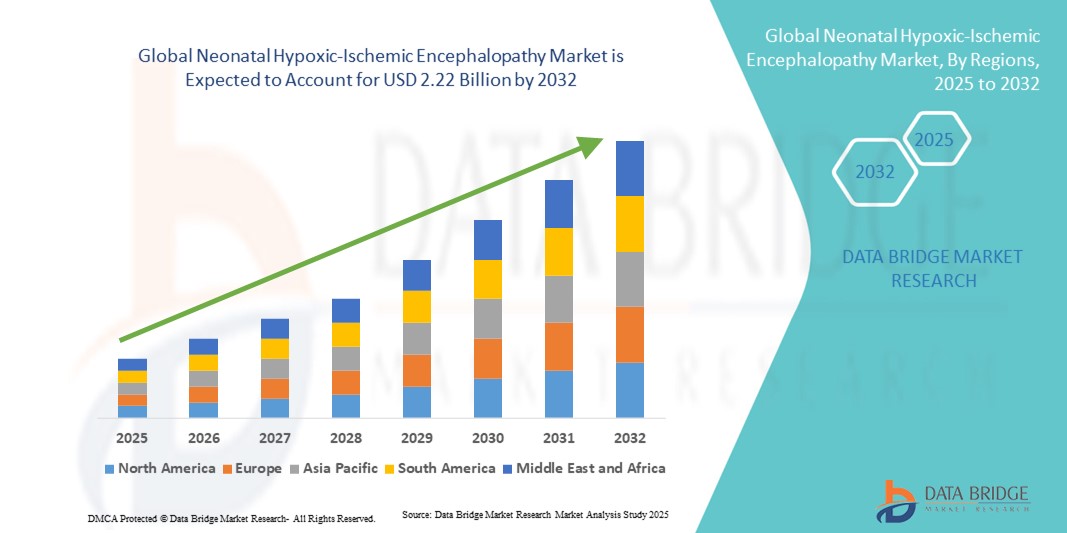
- The global neonatal hypoxic-ischemic encephalopathy market size was valued at USD 1.21 billion in 2024 and is expected to reach USD 2.22 billion by 2032, at a CAGR of 7.90% during the forecast period
- The market growth is largely fueled by the increasing prevalence of neonatal hypoxic-ischemic encephalopathy (HIE) and the rising demand for advanced diagnostic and therapeutic solutions in neonatal care, driving the need for early detection and effective management
- Furthermore, advancements in medical technology, including hypothermia therapy, neuroprotective agents, and real-time monitoring systems, are enhancing patient outcomes and improving survival rates. These converging factors are accelerating the adoption of neonatal hypoxic-ischemic encephalopathy solutions, thereby significantly boosting the industry's growth
Neonatal Hypoxic-Ischemic Encephalopathy Market Analysis
- Neonatal Hypoxic-Ischemic Encephalopathy (HIE) management solutions, including therapeutic hypothermia devices, neuroprotective interventions, and neonatal monitoring systems, are increasingly vital components of modern neonatal care in hospitals and neonatal intensive care units due to their ability to improve early diagnosis, treatment outcomes, and long-term neurodevelopmental health
- The rising prevalence of neonatal complications, particularly HIE, and increasing awareness about early diagnosis and treatment are driving the growth of the neonatal hypoxic-ischemic encephalopathy market globally
- North America dominated the neonatal hypoxic-ischemic encephalopathy market with the largest revenue share of 45.5% in 2024, supported by advanced neonatal care infrastructure, early adoption of innovative treatment technologies, and strong presence of key medical device and pharmaceutical companies. The U.S. witnessed significant growth in HIE management installations, particularly in hospitals and neonatal intensive care units, driven by ongoing research, clinical trials, and healthcare collaborations
- Asia-Pacific is expected to be the fastest-growing region in the neonatal hypoxic-ischemic encephalopathy market during the forecast period due to increasing healthcare investments, growing awareness about neonatal care, expansion of hospital networks, and rising adoption of advanced diagnostic and therapeutic solutions in countries such as China, India, and Japan
- The Injectable segment dominated the neonatal hypoxic-ischemic encephalopathy market with the largest market revenue share of 51.4% in 2024, as it provides rapid and precise delivery of neuroprotective drugs directly into the bloodstream, essential for critically ill neonates. Injectable administration ensures predictable pharmacokinetics, immediate therapeutic effects, and suitability for acute HIE interventions in NICU settings
Report Scope and Neonatal Hypoxic-Ischemic Encephalopathy Market Segmentation
|
Attributes |
Neonatal Hypoxic-Ischemic Encephalopathy Key Market Insights |
|
Segments Covered |
|
|
Countries Covered |
North America
Europe
Asia-Pacific
Middle East and Africa
South America
|
|
Key Market Players |
|
|
Market Opportunities |
|
|
Value Added Data Infosets |
In addition to the insights on market scenarios such as market value, growth rate, segmentation, geographical coverage, and major players, the market reports curated by the Data Bridge Market Research also include in-depth expert analysis, pricing analysis, brand share analysis, consumer survey, demography analysis, supply chain analysis, value chain analysis, raw material/consumables overview, vendor selection criteria, PESTLE Analysis, Porter Analysis, and regulatory framework. |
Neonatal Hypoxic-Ischemic Encephalopathy Market Trends
Advancements in AI-Enabled Monitoring and Predictive Care
- A significant and accelerating trend in the global neonatal hypoxic-ischemic encephalopathy (HIE) market is the integration of artificial intelligence (AI) and machine learning (ML) algorithms into neonatal monitoring and predictive care systems. These technologies enhance early detection of neurological impairment, optimize intervention timing, and improve patient outcomes
- For instance, AI-powered monitoring platforms can continuously analyze vital signs, oxygen saturation levels, and cerebral oxygenation patterns, allowing clinicians to detect subtle signs of hypoxia or ischemia in real time. This proactive approach facilitates timely therapeutic hypothermia or pharmacological intervention
- AI integration enables predictive modeling of patient-specific risk factors, assisting neonatologists in customizing treatment plans based on the severity and progression of HIE. Such tools can prioritize high-risk infants, allocate medical resources efficiently, and improve clinical decision-making
- The seamless integration of AI with neonatal intensive care unit (NICU) systems allows centralized monitoring of multiple infants simultaneously, ensuring consistent surveillance and reducing human error. Advanced analytics can provide automated alerts for critical deviations in patient status
- This trend towards intelligent, data-driven monitoring and predictive care is transforming standard HIE management protocols. Companies such as BrainCool and Neuroprotect are investing in AI-enabled HIE solutions capable of optimizing therapeutic interventions and supporting clinicians in evidence-based decision-making
- The demand for AI-driven HIE monitoring solutions is growing rapidly across hospitals and specialty clinics, as healthcare providers seek to reduce long-term neurological complications and improve survival rates among affected neonates
Neonatal Hypoxic-Ischemic Encephalopathy Market Dynamics
Driver
Growing Need Due to Rising Incidence and Awareness of Neonatal Hypoxic-Ischemic Encephalopathy
- The increasing prevalence of neonatal hypoxic-ischemic encephalopathy, coupled with rising awareness among healthcare providers and parents about early diagnosis and timely intervention, is a significant driver for the heightened demand for advanced HIE management solutions
- For instance, in April 2024, several hospitals in the U.S. expanded their neonatal intensive care units (NICUs) with advanced therapeutic hypothermia systems to enhance HIE treatment outcomes. Such initiatives by leading healthcare institutions are expected to drive Neonatal Hypoxic-Ischemic Encephalopathy market growth during the forecast period
- As clinicians become more aware of the long-term neurological risks associated with untreated HIE, hospitals are increasingly adopting integrated monitoring systems, neuroprotective interventions, and advanced neonatal care technologies to improve patient outcomes
- Furthermore, the growing focus on early intervention programs and the adoption of clinical guidelines for HIE management are making neonatal hospitals prioritize advanced devices for monitoring, diagnosis, and treatment of HIE
- The convenience of rapid deployment, integration with NICU protocols, and compatibility with existing neonatal monitoring systems are key factors propelling the adoption of advanced Neonatal Hypoxic-Ischemic Encephalopathy management solutions. The trend towards more proactive neonatal care, combined with increasing investments in NICU infrastructure, further contributes to market growth
Restraint/Challenge
Concerns Regarding High Treatment Costs and Limited Access in Emerging Regions
- The relatively high initial investment required for advanced HIE management systems, including therapeutic hypothermia devices and neuroprotective monitoring equipment, poses a significant challenge to broader adoption, particularly in emerging and low-resource regions
- For instance, limited availability of HIE diagnostic and therapeutic solutions in rural healthcare facilities can delay timely intervention, impacting adoption rates in these regions
- Addressing these challenges through cost-effective device offerings, training programs for clinicians, and public-private healthcare partnerships is crucial for expanding market reach. Companies and hospitals are increasingly focusing on scalable solutions and collaborations to make HIE management more accessible
- In addition, variations in reimbursement policies across regions and countries may restrict the adoption of advanced HIE therapies and monitoring systems, particularly for hospitals with budget constraints
- While prices of certain devices are gradually decreasing and more portable systems are being developed, the overall cost barrier can still hinder widespread adoption in regions where neonatal healthcare infrastructure is underdeveloped
- Overcoming these challenges through affordability initiatives, clinician education, and the development of user-friendly and efficient HIE management solutions will be vital for sustained growth in the Neonatal Hypoxic-Ischemic Encephalopathy market
Neonatal Hypoxic-Ischemic Encephalopathy Market Scope
The market is segmented on the basis of symptoms, treatment, mode of administration, distribution channel, and end-user.
- By Symptoms
On the basis of symptoms, the neonatal hypoxic-ischemic encephalopathy market is segmented into breathing problems, feeding problems, missing reflexes, seizures, low apgar scores, low or high muscle tone, and altered level of consciousness. The seizures segment dominated the largest market revenue share of 38.5% in 2024, driven by the high prevalence of neonatal seizure events associated with hypoxic-ischemic brain injury. Seizures serve as an urgent clinical indicator for HIE, prompting immediate intervention and comprehensive monitoring to prevent long-term neurological deficits. Advanced EEG monitoring systems and AI-enabled seizure detection technologies are being increasingly adopted in NICUs, enabling real-time observation and precise treatment adjustments. The segment benefits from heightened awareness among healthcare professionals and parents regarding the critical need for early seizure management, driving widespread adoption of specialized therapeutic solutions and monitoring equipment.
The breathing problems segment is expected to witness the fastest CAGR of 15.6% from 2025 to 2032, due to increasing recognition of respiratory distress as an early warning symptom of HIE. Timely identification of irregular breathing patterns allows clinicians to administer oxygen therapy, ventilatory support, and other interventions promptly, minimizing secondary brain injury. Innovations in neonatal respiratory monitoring systems, integration with predictive analytics, and real-time patient data tracking are further accelerating adoption across NICUs. Moreover, growing investments in neonatal care infrastructure and focused training on early respiratory interventions are driving the segment’s growth globally, supporting improved clinical outcomes for affected neonates.
- By Treatment
On the basis of treatment, the neonatal hypoxic-ischemic encephalopathy market is segmented into therapeutic hypothermia, drugs, and others. The therapeutic hypothermia segment dominated the largest market revenue share of 46.2% in 2024, remaining the standard of care for moderate to severe HIE cases. Cooling therapies effectively reduce cerebral metabolic demand, limit neuronal injury, and significantly improve survival and neurodevelopmental outcomes. Hospitals and specialized neonatal centers are increasingly employing whole-body and selective head cooling devices, guided by robust clinical protocols and randomized trial evidence. The availability of specialized equipment, trained personnel, and standardized treatment guidelines continues to enhance adoption. Furthermore, rising awareness among caregivers and healthcare professionals regarding the benefits of therapeutic hypothermia is reinforcing the segment’s dominance in HIE management.
The drugs segment is projected to witness the fastest CAGR of 14.8% from 2025 to 2032, fueled by the development of neuroprotective agents, anti-seizure medications, and adjunct pharmacological therapies. Emerging drug interventions target oxidative stress, inflammation, and excitotoxicity in the neonatal brain, aiming to improve long-term neurological outcomes. The increasing number of clinical trials, investments in pediatric therapeutics, and regulatory approvals are expanding the availability and adoption of these medications. Combination therapies integrating pharmacological agents with standard hypothermia protocols are gaining traction, further driving market growth in hospitals and specialized neonatal centers globally.
- By Mode of Administration
On the basis of mode of administration, the neonatal hypoxic-ischemic encephalopathy market is segmented into injectable, oral, and others. The Injectable segment dominated the largest market revenue share of 51.4% in 2024, as it provides rapid and precise delivery of neuroprotective drugs directly into the bloodstream, essential for critically ill neonates. Injectable administration ensures predictable pharmacokinetics, immediate therapeutic effects, and suitability for acute HIE interventions in NICU settings. Hospitals and neonatal care units rely heavily on injectables for timely and effective treatment, supported by ongoing technological advancements in micro-needle and needle-free injectable systems that enhance safety and efficacy.
The oral segment is expected to witness the fastest CAGR of 13.7% from 2025 to 2032, driven by the development of pediatric-friendly oral neuroprotective formulations and adjunct therapies for less severe HIE cases or post-discharge care. Oral administration simplifies dosing, improves compliance, and reduces the need for invasive procedures, making it particularly suitable for outpatient and follow-up treatment. Innovations in oral drug delivery, alongside rising investments in pediatric formulations, are accelerating the adoption of this segment globally.
- By Distribution Channel
On the basis of distribution channel, the neonatal hypoxic-ischemic encephalopathy market is segmented into hospital pharmacies, retail pharmacies, and online pharmacies. The hospital pharmacies segment dominated the largest market revenue share of 62.3% in 2024, as most HIE treatments, including therapeutic hypothermia and injectable drugs, are administered under strict medical supervision in NICUs. Hospitals provide access to specialized equipment, trained staff, and critical care monitoring, ensuring effective and timely therapy. Expanding hospital infrastructure and increasing establishment of neonatal intensive care units are further enhancing the adoption of hospital-based distribution channels.
The online pharmacies segment is expected to witness the fastest CAGR of 12.5% from 2025 to 2032, driven by the increasing digitalization of healthcare and the convenience of accessing follow-up medications and supportive therapies for neonates post-discharge. Online platforms provide parents and caregivers with a safe and efficient means to obtain medications and therapies, promoting treatment adherence. In addition, the growth of telemedicine and e-commerce-based healthcare services is fueling the adoption of online pharmacy channels globally.
- By End-User
On the basis of end-user, the neonatal hypoxic-ischemic encephalopathy market is segmented into hospitals, homecare, specialty clinics, and others. The hospitals segment dominated the largest market revenue share of 71.6% in 2024, due to the concentration of NICUs, specialized monitoring systems, and dedicated neonatal care teams essential for HIE management. Hospitals serve as the primary point of care, offering comprehensive diagnostic, therapeutic, and monitoring services. Increasing investments in hospital infrastructure, advanced NICUs, and specialized neonatal programs are driving growth in this segment, particularly in developed regions.
The homecare segment is expected to witness the fastest CAGR of 11.9% from 2025 to 2032, supported by post-discharge monitoring, telemedicine integration, and the growing adoption of home-based supportive care solutions for affected neonates. Homecare enables continuity of treatment, early detection of complications, and reduced hospital readmissions. Rising parental awareness, availability of portable monitoring devices, and advancements in remote patient management are contributing to rapid segment growth, allowing neonates to receive ongoing care in a safe home environment.
Neonatal Hypoxic-Ischemic Encephalopathy Market Regional Analysis
- North America dominated the neonatal hypoxic-ischemic encephalopathy market with the largest revenue share of 45.5% in 2024, driven by advanced neonatal care infrastructure, early adoption of innovative treatment technologies, and the strong presence of key medical device and pharmaceutical companies
- The region has witnessed substantial growth in HIE management installations, particularly in hospitals and neonatal intensive care units (NICUs), where ongoing research, clinical trials, and healthcare collaborations are fostering the adoption of advanced monitoring and therapeutic solutions
- High awareness among healthcare professionals, supportive reimbursement frameworks, and the emphasis on improving neonatal outcomes are further strengthening market growth
U.S. Neonatal Hypoxic-Ischemic Encephalopathy Market Insight
The U.S. neonatal hypoxic-ischemic encephalopathy market captured the largest revenue share in 2024 within North America, fueled by rapid integration of cutting-edge HIE management systems and widespread expansion of NICU capabilities. Hospitals are prioritizing early diagnosis, neuroprotective therapies, and advanced patient monitoring to enhance treatment outcomes. The market growth is further supported by continuous innovation, clinical research collaborations, and rising awareness among neonatologists regarding long-term neurological benefits of timely HIE intervention.
Europe Neonatal Hypoxic-Ischemic Encephalopathy Market Insight
The Europe neonatal hypoxic-ischemic encephalopathy market is projected to expand at a substantial CAGR throughout the forecast period, driven by the increasing adoption of standardized neonatal care protocols, rising healthcare expenditure, and growing demand for early intervention solutions. Countries are focusing on advanced diagnostic and therapeutic systems, improving access to NICUs, and implementing clinical guidelines to manage HIE effectively. The expansion of hospital networks and government initiatives promoting neonatal health are expected to boost market growth across residential, commercial, and multi-hospital setups.
U.K. Neonatal Hypoxic-Ischemic Encephalopathy Market Insight
The U.K. neonatal hypoxic-ischemic encephalopathy market is anticipated to grow at a noteworthy CAGR during the forecast period, supported by increasing awareness about neonatal care, adoption of evidence-based clinical practices, and investments in NICU infrastructure. The focus on early intervention and enhanced neuroprotective therapies for newborns is driving demand in both public and private healthcare sectors. In addition, the U.K.'s robust healthcare system and strong research initiatives further support market expansion in neonatal HIE management.
Germany Neonatal Hypoxic-Ischemic Encephalopathy Market Insight
The Germany neonatal hypoxic-ischemic encephalopathy market is expected to expand at a considerable CAGR during the forecast period, fueled by rising awareness regarding neonatal brain health, adoption of advanced monitoring and therapeutic devices, and strong government support for neonatal care programs. Hospitals and specialized neonatal centers are increasingly integrating evidence-based interventions to improve clinical outcomes. Emphasis on technological innovation and sustainability in healthcare infrastructure further accelerates the adoption of HIE management solutions.
Asia-Pacific Neonatal Hypoxic-Ischemic Encephalopathy Market Insight
The Asia-Pacific neonatal hypoxic-ischemic encephalopathy market is poised to grow at the fastest CAGR during the forecast period of 2025 to 2032, driven by increasing healthcare investments, growing awareness of neonatal care, expansion of hospital networks, and rising adoption of advanced diagnostic and therapeutic solutions in countries such as China, India, and Japan. The region is witnessing a rise in NICU capacity, improved access to high-quality neonatal care, and growing government initiatives aimed at reducing neonatal morbidity and mortality.
Japan Neonatal Hypoxic-Ischemic Encephalopathy Market Insight
The Japan neonatal hypoxic-ischemic encephalopathy market is gaining momentum due to a technologically advanced healthcare infrastructure, focus on neonatal neuroprotection, and increasing prevalence of preterm and high-risk births. Hospitals and NICUs are adopting advanced HIE monitoring and therapeutic technologies to improve outcomes. Ongoing research, government initiatives, and clinical awareness programs contribute to market growth in both urban and semi-urban healthcare centers.
China Neonatal Hypoxic-Ischemic Encephalopathy Market Insight
The China neonatal hypoxic-ischemic encephalopathy market accounted for the largest revenue share in Asia-Pacific in 2024, attributed to the country’s rapid expansion of hospital networks, high investments in neonatal care, and increasing awareness of early HIE diagnosis and treatment. The growing availability of advanced therapeutic and monitoring systems in urban and semi-urban healthcare facilities, coupled with government initiatives to improve neonatal outcomes, is propelling market growth. Increasing focus on training and adoption of evidence-based interventions is further supporting the development of the HIE management ecosystem in China.
Neonatal Hypoxic-Ischemic Encephalopathy Market Share
The neonatal hypoxic-ischemic encephalopathy industry is primarily led by well-established companies, including:
- Eisai Co. Ltd. (Japan)
- Pfizer, Inc. (U.S.)
- Sanofi (France)
- Teva Pharmaceuticals Industries Ltd. (Israel)
- Novartis AG (Switzerland)
- Merz Pharma (Germany)
- Johnson & Johnson and its affiliates (U.S.)
- F. Hoffmann-La Roche Ltd (Switzerland)
- Bristol-Myers Squibb Company (U.S.)
- AbbVie Inc. (U.S.)
- Lilly USA, LLC (U.S.)
- Takeda Pharmaceutical Company Limited (Japan)
- Bayer AG (Germany)
- Biogen (U.S.)
- AstraZeneca (U.K.)
- VTV Therapeutics (U.S.)
- H. Lundbeck A/S (Denmark)
- TauRx Pharmaceuticals Ltd (U.K.)
- DAIICHI SANKYO COMPANY, LIMITED (Japan)
Latest Developments in Global Neonatal Hypoxic-Ischemic Encephalopathy Market
- In May 2025, a phase 1/2 randomized trial was published in Scientific Reports, evaluating the combined use of mesenchymal stem cells (MSCs) and therapeutic hypothermia in treating neonatal HIE. The study found that the combination therapy showed comparable efficacy to hypothermia alone, with no significant safety concerns, suggesting potential for improved outcomes in neonates with HIE
- In March 2025, researchers introduced an active dry-contact electrode-based continuous EEG monitoring system with seizure detection capabilities for neonates. This low-cost, adjustable headset, coupled with an explainable deep learning model, aims to enhance early detection of neonatal seizures, which are critical in diagnosing and managing HIE

- Interactive Data Analysis Dashboard
- Company Analysis Dashboard for high growth potential opportunities
- Research Analyst Access for customization & queries
- Competitor Analysis with Interactive dashboard
- Latest News, Updates & Trend analysis
- Harness the Power of Benchmark Analysis for Comprehensive Competitor Tracking
Data collection and base year analysis are done using data collection modules with large sample sizes. The stage includes obtaining market information or related data through various sources and strategies. It includes examining and planning all the data acquired from the past in advance. It likewise envelops the examination of information inconsistencies seen across different information sources. The market data is analysed and estimated using market statistical and coherent models. Also, market share analysis and key trend analysis are the major success factors in the market report. To know more, please request an analyst call or drop down your inquiry.
The key research methodology used by DBMR research team is data triangulation which involves data mining, analysis of the impact of data variables on the market and primary (industry expert) validation. Data models include Vendor Positioning Grid, Market Time Line Analysis, Market Overview and Guide, Company Positioning Grid, Patent Analysis, Pricing Analysis, Company Market Share Analysis, Standards of Measurement, Global versus Regional and Vendor Share Analysis. To know more about the research methodology, drop in an inquiry to speak to our industry experts.
Data Bridge Market Research is a leader in advanced formative research. We take pride in servicing our existing and new customers with data and analysis that match and suits their goal. The report can be customized to include price trend analysis of target brands understanding the market for additional countries (ask for the list of countries), clinical trial results data, literature review, refurbished market and product base analysis. Market analysis of target competitors can be analyzed from technology-based analysis to market portfolio strategies. We can add as many competitors that you require data about in the format and data style you are looking for. Our team of analysts can also provide you data in crude raw excel files pivot tables (Fact book) or can assist you in creating presentations from the data sets available in the report.












