


What is the Nephritis Market Size and Overview?
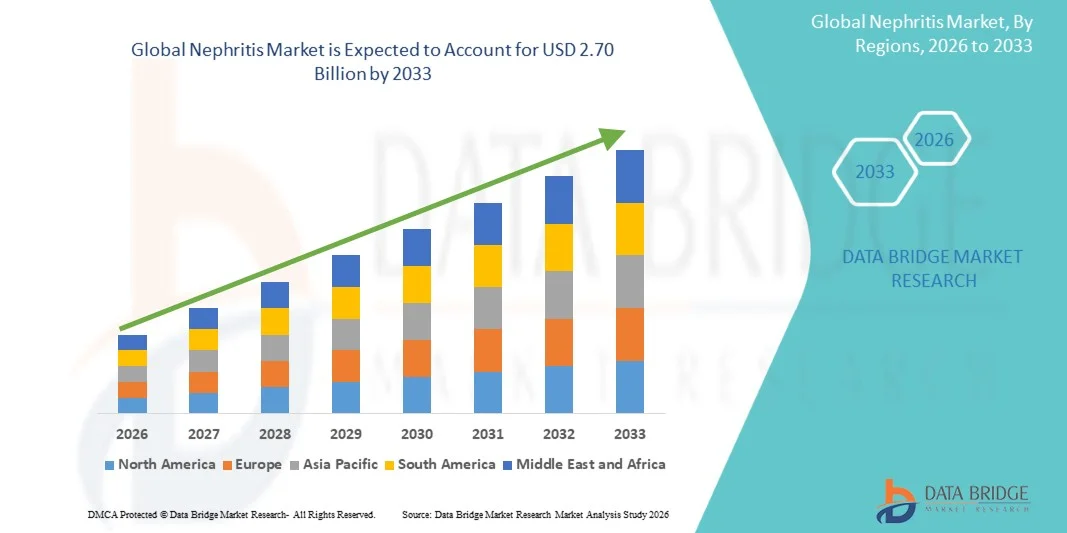
The Nephritis Market was valued at USD 1.80 billion in 2025 and is projected to reach USD 2.70 billion by 2033, growing at a CAGR of 5.2% from 2026 to 2033. The market is witnessing steady growth due to the rising prevalence of kidney-related inflammatory disorders, increasing awareness regarding early diagnosis and treatment, and continuous advancements in immunosuppressive and biologic therapies. Growing healthcare expenditure and expanding access to nephrology care are further supporting market expansion across both developed and emerging economies.
The increasing burden of autoimmune diseases, infections, and chronic kidney disorders is significantly contributing to the demand for effective nephritis treatment solutions. Governments and healthcare organizations are strengthening initiatives focused on chronic kidney disease management and early renal screening programs, encouraging timely intervention and improved patient outcomes. In addition, advancements in precision medicine, targeted therapeutics, and renal diagnostic technologies are improving treatment efficiency and supporting the adoption of personalized care approaches in nephritis management.
Market Size & Forecast
- Global Market Value (2025): USD 1.80 Billion
- Expected Market Value (2033): USD 2.70 Billion
- Forecast CAGR (2026–2033): 5.2%
- Leading Region in 2025: North America
- Fastest Growing Region: Asia Pacific
Key Market Trends & Insights
- North America dominated the Nephritis Market with the largest revenue share of 38.42% in 2025, supported by advanced healthcare infrastructure, high diagnosis rates, and strong availability of biologic and immunosuppressive therapies.
- The Glomerulonephritis segment led the market with a 43.26% share in 2025, driven by the increasing prevalence of autoimmune kidney disorders and rising cases of chronic glomerular inflammation worldwide.
- Asia-Pacific is expected to be the fastest-growing region at a CAGR of 6.1% from 2026 to 2033, fueled by rising chronic kidney disease cases, improving healthcare access, and increasing awareness programs in China, India, and Japan.
- Goodpasture Syndrome are the fastest-growing type, projected to register a CAGR of 6.3%, reflecting the surge in increasing awareness of rare autoimmune renal disorders and improving access to specialized nephrology treatment.
- The Corticosteroids segment dominated the treatment category with a 39.84% revenue share in 2025, led by heir widespread use as first-line therapy for reducing kidney inflammation and controlling immune-mediated renal damage.
- Oral accounted for 61.47% of the market, preferred by its convenience, higher patient compliance, and extensive use in long-term nephritis treatment regimens.
- The Immunosuppressive Therapy segment is the fastest-growing treatment category, with a CAGR of 6.5%, driven by growing demand for targeted treatment approaches and long-term renal disease management solutions.
Report Scope and Nephritis Market Segmentation
|
Attributes |
Nephritis Key Market Insights |
|
Segments Covered |
|
|
Countries Covered |
North America
Europe
Asia-Pacific
Middle East and Africa
South America
|
|
Key Market Players |
|
|
Market Opportunities |
|
|
Value Added Data Infosets |
In addition to the insights on market scenarios such as market value, growth rate, segmentation, geographical coverage, and major players, the market reports curated by the Data Bridge Market Research also include in-depth expert analysis, patient epidemiology, pipeline analysis, pricing analysis, and regulatory framework. |
What is the Key Trend in the Nephritis Market?
Trend: Rising Adoption of Precision Medicine and Biologic Therapies
Healthcare providers are increasingly adopting precision medicine and biologic therapies to improve nephritis treatment outcomes, reduce long-term kidney damage, and minimize adverse effects associated with conventional corticosteroid-based therapies. Advances in biomarker profiling, genetic testing, and targeted immunomodulatory drugs are enabling physicians to develop personalized treatment plans tailored to specific nephritis subtypes and patient risk profiles. Hospitals and specialty nephrology centers are similarly integrating digital monitoring platforms and AI-supported renal assessment tools to enhance disease tracking, while next-generation biologics continue to improve therapeutic response rates and patient quality of life. For instance, in December 2023, the U.S. FDA approved AstraZeneca’s Fabhalta for immunoglobulin A nephropathy, expanding targeted treatment options for chronic kidney inflammation disorders.
Nephritis Market Dynamics
Key Market Driver: Increasing Prevalence of Chronic Kidney and Autoimmune Disorders
The growing prevalence of chronic kidney diseases, autoimmune conditions, and renal inflammatory disorders has created substantial demand for advanced nephritis diagnostics and targeted treatment therapies across global healthcare systems. Hospitals, specialty clinics, and pharmaceutical companies are expanding nephrology-focused treatment programs to improve early diagnosis, reduce renal failure risks, and enhance long-term patient management outcomes. Rising awareness regarding kidney health, combined with increasing healthcare expenditure and supportive reimbursement policies, is accelerating the adoption of biologics, immunosuppressants, and precision-based nephritis treatment approaches worldwide. For instance, in January 2024, Novartis reported positive late-stage clinical trial results for iptacopan in IgA nephropathy treatment, highlighting growing innovation in targeted renal disease therapeutics.
Key Restraint/Challenge: High Cost of Advanced Biologic and Immunosuppressive Therapies
A significant restraint in the Nephritis Market is the high treatment cost associated with advanced biologic drugs, immunosuppressive therapies, and long-term renal disease management protocols across healthcare settings. Modern nephritis therapies often require continuous monitoring, repeated laboratory testing, hospitalization support, and prolonged medication use, creating substantial financial burdens for patients and healthcare providers. The total cost of treatment further extends to specialist consultations, diagnostic imaging, and post-treatment monitoring, limiting accessibility in low-income and resource-constrained regions where healthcare infrastructure remains underdeveloped.
For instance, in March 2024, reports highlighting the rising annual treatment expenditure for lupus nephritis biologics in the United States reflected ongoing affordability challenges affecting broader patient adoption.
Key Market Opportunity: Expansion of Biomarker-Based Diagnostics and Personalized Renal Care
The expansion of biomarker-based diagnostics and personalized renal care presents a significant market opportunity. Advanced diagnostic platforms can support early nephritis detection, enable risk stratification, and improve treatment response monitoring for patients with complex renal inflammatory disorders. The development of AI-assisted diagnostic systems and next-generation renal biomarkers is further improving clinical decision-making capabilities, opening growth opportunities across emerging healthcare markets in Asia-Pacific, Latin America, and the Middle East. For instance, in February 2024, researchers from leading nephrology institutes introduced new urinary biomarker panels designed to improve early-stage lupus nephritis detection and personalized treatment planning.
How is the Nephritis Market Segmented?
The nephritis market is segmented on the basis of type, treatment, route of administration, end-users, and distribution channel.
- By Type
On the basis of type, the Nephritis Market is segmented into glomerulonephritis, nephropathy, Goodpasture syndrome, and others. The Glomerulonephritis segment dominated the market with a 43.26% share in 2025, driven by the increasing prevalence of autoimmune kidney disorders and rising cases of chronic glomerular inflammation worldwide. This condition represents one of the most commonly diagnosed forms of nephritis requiring long-term therapeutic management and monitoring. Growing awareness regarding early renal disease diagnosis is further supporting segment expansion across developed healthcare systems. Hospitals and nephrology centers are increasingly adopting advanced diagnostic biomarkers and imaging technologies to improve treatment outcomes. Rising healthcare expenditure and greater accessibility to immunosuppressive therapies are also strengthening market penetration. The segment continues to benefit from continuous advancements in biologic therapies and personalized renal care approaches.
The Goodpasture Syndrome segment is projected to register the fastest growth at a CAGR of 6.3% from 2026 to 2033, driven by increasing awareness of rare autoimmune renal disorders and improving access to specialized nephrology treatment. Advances in immunotherapy and targeted biologic drugs are significantly improving disease management outcomes for affected patients. Growing investments in rare disease research and precision medicine are accelerating the development of innovative treatment options. Increased adoption of plasma exchange therapy and combination immunosuppressive regimens is further supporting clinical demand. Expanding diagnostic capabilities and early screening initiatives are also contributing to faster detection rates globally. The segment is In addition benefiting from rising government support programs focused on orphan disease treatment and research activities.
- By Treatment
On the basis of treatment, the Nephritis Market is segmented into corticosteroids, ACE inhibitors, immunosuppressive therapy, and others. The Corticosteroids segment dominated the market with a 39.84% share in 2025 owing to their widespread use as first-line therapy for reducing kidney inflammation and controlling immune-mediated renal damage. These drugs remain highly preferred due to their rapid anti-inflammatory action and broad clinical applicability across multiple nephritis conditions. Hospitals and specialty clinics continue to rely heavily on corticosteroid-based treatment protocols because of their established therapeutic effectiveness and cost efficiency. Increasing patient diagnosis rates and improved healthcare access are further driving prescription volumes globally. Combination therapies involving corticosteroids and immunosuppressants are also strengthening treatment outcomes in severe nephritis cases. Their widespread availability and inclusion in standard nephrology treatment guidelines continue to support segment dominance worldwide.
The Immunosuppressive Therapy segment is anticipated to witness the fastest growth at a CAGR of 6.5% during the forecast period, fueled by growing demand for targeted treatment approaches and long-term renal disease management solutions. These therapies are increasingly used to reduce immune system activity and prevent progressive kidney damage in autoimmune nephritis patients. Continuous innovation in biologic immunosuppressants and monoclonal antibody therapies is improving safety profiles and therapeutic response rates. Rising adoption of personalized medicine strategies is further accelerating segment growth across advanced healthcare markets. Pharmaceutical companies are actively investing in clinical trials focused on next-generation renal immunotherapies and precision treatment platforms. Increasing physician preference for steroid-sparing therapies with fewer long-term side effects is also contributing to expanding market demand globally.
- By Route of Administration
On the basis of route of administration, the Nephritis Market is segmented into oral and parenteral. The Oral segment accounted for the largest market share of 61.47% in 2025 due to its convenience, higher patient compliance, and extensive use in long-term nephritis treatment regimens. Oral medications are widely prescribed for maintenance therapy and chronic disease management because they offer ease of administration outside hospital settings. The growing availability of oral corticosteroids, ACE inhibitors, and immunosuppressive agents is supporting strong segment growth worldwide. Patients undergoing long-term renal therapy generally prefer oral formulations because of improved comfort and reduced hospitalization requirements. Expanding retail pharmacy networks and improved drug accessibility are also contributing to increased oral drug adoption. Continuous advancements in controlled-release formulations and combination therapies are further strengthening the segment’s market position.
The Parenteral segment is expected to register the fastest growth at a CAGR of 6.1% from 2026 to 2033, driven by rising demand for rapid therapeutic response in severe and acute nephritis conditions. Injectable biologics and advanced immunotherapy drugs are increasingly administered through parenteral routes to improve treatment efficiency and bioavailability. Hospitals and specialty nephrology centers are adopting intravenous therapies for critically ill patients requiring intensive renal care and continuous monitoring. Growing use of monoclonal antibodies and infusion-based therapies is significantly accelerating segment expansion. Increasing prevalence of severe autoimmune nephritis cases requiring immediate intervention is also supporting demand. The segment is further benefiting from advancements in infusion technologies and hospital-based biologic treatment programs globally.
- By End-Users
On the basis of end-users, the Nephritis Market is segmented into hospitals, homecare, specialty clinics, and others. The Hospitals segment dominated the market with a 44.92% share in 2025 owing to the high volume of nephritis patient admissions and the availability of specialized nephrology treatment infrastructure. Hospitals remain the primary centers for diagnosis, intensive care management, biologic therapy administration, and renal monitoring procedures. Increasing hospitalization rates related to chronic kidney diseases and autoimmune disorders are significantly driving demand within this segment. Advanced diagnostic imaging systems, laboratory testing facilities, and multidisciplinary care teams further strengthen hospital-based nephritis treatment adoption. Government healthcare investments and expansion of tertiary care infrastructure are also contributing to segment growth globally. The segment continues to benefit from strong reimbursement frameworks and improved access to advanced renal treatment technologies.
The Homecare segment is projected to witness the fastest growth at a CAGR of 6.4% during the forecast period, supported by rising preference for remote patient monitoring and long-term disease management outside traditional clinical settings. Patients with stable nephritis conditions are increasingly adopting home-based treatment solutions to reduce hospitalization costs and improve quality of life. Advancements in telemedicine platforms, digital renal monitoring tools, and portable infusion devices are enabling more effective homecare management. Growing elderly populations and increasing chronic kidney disease prevalence are further supporting demand for home-based renal care services. Healthcare providers are also focusing on decentralized treatment models to reduce healthcare system burdens and improve patient convenience. The segment is In addition benefiting from increasing awareness regarding self-care management and supportive reimbursement initiatives in several countries.
- By Distribution Channel
On the basis of distribution channel, the Nephritis Market is segmented into hospital pharmacy, online pharmacy, and retail pharmacy. The Hospital Pharmacy segment led the market with a 48.36% share in 2025 due to the high dispensing volume of prescription nephritis medications and biologic therapies within hospital settings. Hospital pharmacies play a critical role in managing complex renal treatment regimens requiring specialist supervision and controlled drug administration. Increasing patient admissions for severe nephritis conditions and autoimmune kidney disorders are significantly driving segment growth. Availability of advanced biologics, infusion therapies, and emergency renal medications further strengthens hospital pharmacy dominance. Strong coordination between nephrologists, pharmacists, and inpatient care teams improves treatment efficiency and patient monitoring outcomes. Expanding hospital infrastructure and rising investments in specialty renal care services continue to support segment leadership globally.
The Online Pharmacy segment is expected to register the fastest growth at a CAGR of 6.7% from 2026 to 2033, driven by increasing digital healthcare adoption and rising consumer preference for convenient medication purchasing platforms. Online pharmacies provide improved accessibility to long-term nephritis medications, especially for patients in remote and underserved regions. Growing smartphone penetration, expanding e-commerce healthcare ecosystems, and improved digital payment systems are significantly supporting segment expansion. Patients increasingly prefer online channels for recurring prescription refills, home delivery services, and discounted medication pricing. Regulatory improvements supporting e-pharmacy operations in emerging economies are further accelerating market penetration. The segment is also benefiting from advancements in telehealth integration and digital prescription management technologies worldwide.
Nephritis Market Regional Analysis
North America dominated the Nephritis Market with the largest revenue share of 38.42% in 2025, supported by advanced healthcare infrastructure, high diagnosis rates, and strong availability of biologic and immunosuppressive therapies. The region also benefits from significant investments in renal disease research, favorable reimbursement policies, and the presence of leading pharmaceutical and biotechnology companies. Increasing prevalence of chronic kidney diseases, rising adoption of precision medicine, and growing use of advanced diagnostic technologies across hospitals and specialty nephrology centers continue to drive market expansion. Continuous innovation in targeted renal therapeutics and expanding awareness regarding early kidney disease management further strengthen North America’s leadership position in the global market.
U.S. Nephritis Market Insight
The U.S. nephritis market is witnessing strong growth due to rising prevalence of chronic kidney diseases, increasing incidence of autoimmune disorders, and growing adoption of advanced biologic therapies. The country’s well-established healthcare infrastructure, along with expanding investments in renal research and precision medicine technologies, is driving demand across hospitals, specialty clinics, and nephrology centers. In addition, growing awareness regarding early kidney disease diagnosis and increasing availability of targeted immunosuppressive treatments are accelerating nephritis treatment adoption across the United States.
Europe Nephritis Market Insight
The Europe nephritis market remains a major contributor to global revenue, driven by strong healthcare infrastructure, growing government support for chronic kidney disease management, and high demand for advanced renal treatment solutions. The widespread availability of biologics, immunosuppressive therapies, and specialized nephrology services is supporting market expansion across the region. Increasing investments in precision medicine, coupled with rising awareness regarding autoimmune kidney disorders and supportive reimbursement frameworks, continue to enhance nephritis treatment adoption throughout Europe.
U.K. Nephritis Market Insight
The U.K. nephritis market is experiencing steady growth, supported by rising adoption of advanced renal therapies, increasing healthcare expenditure, and growing awareness regarding chronic kidney disease management. Increasing investments in nephrology research infrastructure and expanding access to biologic and immunosuppressive treatments are contributing to market growth. Furthermore, integration of precision diagnostics, biomarker-based screening technologies, and digital healthcare platforms is improving treatment efficiency and patient monitoring, positioning the U.K. as a key innovation hub in the nephritis treatment industry.
Germany Nephritis Market Insight
The Germany nephritis market is expanding steadily due to the country’s advanced healthcare system, strong pharmaceutical industry presence, and increasing adoption of innovative renal treatment technologies. Hospitals, specialty nephrology centers, and research institutes are increasingly utilizing advanced diagnostic platforms and biologic therapies for kidney inflammation management and chronic renal disease treatment. Continuous advancements in precision medicine, biomarker diagnostics, and immunotherapy development, along with strong government focus on healthcare innovation and chronic disease management, are further driving market growth in Germany.
Asia-Pacific Nephritis Market Insight
The Asia-Pacific nephritis market is expected to witness rapid growth, driven by increasing prevalence of chronic kidney disorders, improving healthcare infrastructure, and rising investments in nephrology care across countries such as China, India, and Japan. Growing awareness regarding kidney health, rising adoption of advanced diagnostic technologies, and increasing demand for cost-effective treatment solutions are supporting regional market expansion. In addition, the expanding presence of pharmaceutical manufacturers and growing healthcare access in emerging economies are accelerating nephritis treatment adoption across hospitals and specialty clinics.
Japan Nephritis Market Insight
The Japan nephritis market is witnessing consistent growth due to rising investments in advanced renal treatment technologies, increasing prevalence of autoimmune kidney disorders, and strong focus on chronic disease management. Pharmaceutical companies, hospitals, and research institutes are increasingly adopting targeted biologic therapies and precision diagnostic solutions for improved nephritis treatment outcomes. Moreover, increasing integration of digital healthcare technologies and the country’s emphasis on early disease detection and patient-centered care are further contributing to market growth.
China Nephritis Market Insight
The China nephritis market is growing rapidly, driven by increasing chronic kidney disease cases, expanding healthcare infrastructure, and rising government focus on improving renal disease management programs. Growing adoption of biologic therapies, advanced diagnostic technologies, and AI-supported healthcare platforms across hospitals and specialty clinics is significantly boosting market demand. In addition, rising healthcare expenditure, increasing awareness regarding kidney health, and rapid pharmaceutical innovation are positioning China as one of the fastest-growing markets for nephritis treatment globally.
Which are the Top Companies in Nephritis Market?
The nephritis industry is primarily led by well-established companies, including:
- Hoffmann-La Roche Ltd (Switzerland)
- Novartis AG (Switzerland)
- AstraZeneca (U.K.)
- Eli Lilly and Company (U.S.)
- Pfizer Inc. (U.S.)
- Bristol Myers Squibb (U.S.)
- GSK plc (U.K.)
- Johnson & Johnson Services, Inc. (U.S.)
- Sanofi (France)
- AbbVie Inc. (U.S.)
- Amgen Inc. (U.S.)
- Biogen (U.S.)
- Takeda Pharmaceutical Company Limited (Japan)
- Otsuka Pharmaceutical Co., Ltd. (Japan)
- Vertex Pharmaceuticals Incorporated (U.S.)
- Aurinia Pharmaceuticals Inc. (Canada)
- Calliditas Therapeutics AB (Sweden)
- Baxter (U.S.)
- Teva Pharmaceutical Industries Ltd. (Israel)
- CSL Limited (Australia)
What are the Recent Developments in Nephritis Market?
- In November 2025, Otsuka Pharmaceutical received U.S. FDA approval for Voyxact, an injectable monoclonal antibody treatment for primary immunoglobulin A nephropathy (IgAN), a serious kidney inflammation disease. The therapy demonstrated strong proteinuria reduction results in late-stage clinical trials and introduced a convenient at-home administration option for patients. This approval strengthened innovation in targeted nephritis treatment solutions globally
- In October 2025, Genentech announced that the U.S. FDA approved Gazyva (obinutuzumab) for adult patients with active lupus nephritis receiving standard therapy. The approval was based on positive phase II NOBILITY and phase III REGENCY clinical trial data showing significant renal response improvement. The approval expanded the availability of advanced anti-CD20 monoclonal antibody therapies for nephritis treatment
- In October 2025, the European Medicines Agency’s Committee for Medicinal Products for Human Use (CHMP) recommended approval of Roche Gazyva/Gazyvaro in combination with mycophenolate mofetil for active lupus nephritis treatment. The recommendation was supported by phase III REGENCY study results demonstrating superior complete renal response benefits compared to standard therapy alone. The development highlighted increasing regulatory support for next-generation nephritis biologic therapies across
- In March 2025, Roche announced that the U.S. FDA accepted its supplemental Biologics License Application (sBLA) for Gazyva/Gazyvaro (obinutuzumab) for the treatment of lupus nephritis. The application was supported by positive phase III REGENCY study data demonstrating improved complete renal response rates when combined with standard therapy. The development marked a major advancement in targeted biologic treatment options for autoimmune kidney inflammation disorders
- In February 2025, researchers published findings on a deep learning-based diagnostic platform designed to improve chronicity assessment in lupus nephritis patients. The AI-powered system demonstrated strong accuracy in evaluating renal pathology slides and improving prognostic prediction capabilities. The technology is expected to support nephrologists and pathologists in enhancing precision diagnostics and personalized renal disease management

- Interactive Data Analysis Dashboard
- Company Analysis Dashboard for high growth potential opportunities
- Research Analyst Access for customization & queries
- Competitor Analysis with Interactive dashboard
- Latest News, Updates & Trend analysis
- Harness the Power of Benchmark Analysis for Comprehensive Competitor Tracking
Data collection and base year analysis are done using data collection modules with large sample sizes. The stage includes obtaining market information or related data through various sources and strategies. It includes examining and planning all the data acquired from the past in advance. It likewise envelops the examination of information inconsistencies seen across different information sources. The market data is analysed and estimated using market statistical and coherent models. Also, market share analysis and key trend analysis are the major success factors in the market report. To know more, please request an analyst call or drop down your inquiry.
The key research methodology used by DBMR research team is data triangulation which involves data mining, analysis of the impact of data variables on the market and primary (industry expert) validation. Data models include Vendor Positioning Grid, Market Time Line Analysis, Market Overview and Guide, Company Positioning Grid, Patent Analysis, Pricing Analysis, Company Market Share Analysis, Standards of Measurement, Global versus Regional and Vendor Share Analysis. To know more about the research methodology, drop in an inquiry to speak to our industry experts.
Data Bridge Market Research is a leader in advanced formative research. We take pride in servicing our existing and new customers with data and analysis that match and suits their goal. The report can be customized to include price trend analysis of target brands understanding the market for additional countries (ask for the list of countries), clinical trial results data, literature review, refurbished market and product base analysis. Market analysis of target competitors can be analyzed from technology-based analysis to market portfolio strategies. We can add as many competitors that you require data about in the format and data style you are looking for. Our team of analysts can also provide you data in crude raw excel files pivot tables (Fact book) or can assist you in creating presentations from the data sets available in the report.












