


Neuro-Behçet’s Disease Treatment Market Size
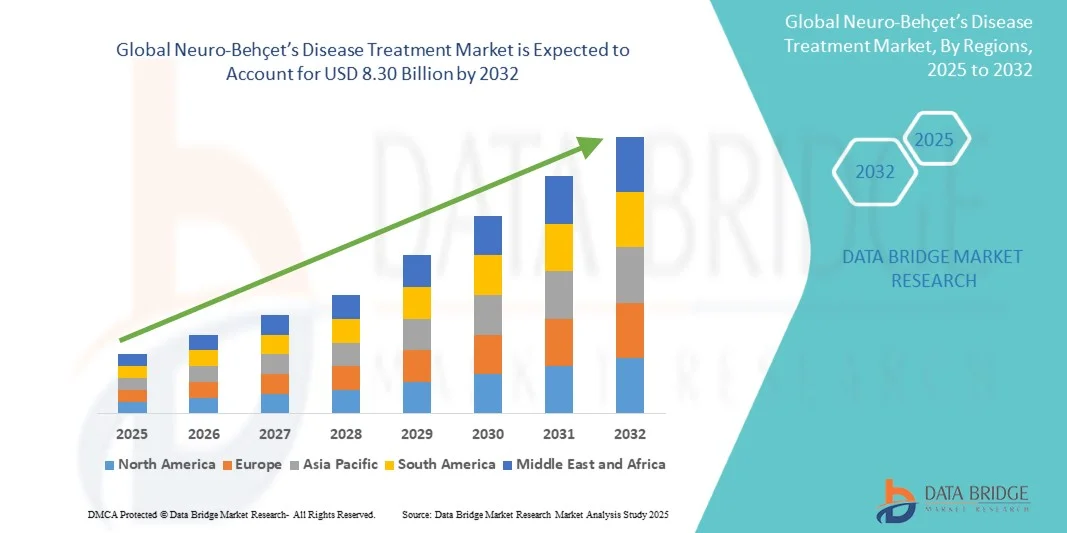
- The global Neuro-Behçet’s disease treatment market size was valued at USD 6.16 billion in 2024 and is expected to reach USD 8.30 billion by 2032, at a CAGR of 3.80% during the forecast period
- The market growth is largely fueled by the growing adoption of advanced therapeutic options and technological progress within healthcare delivery systems, leading to increased diagnosis and treatment accessibility in both developed and developing regions
- Furthermore, rising patient demand for effective, safe, and user-friendly treatment approaches for complex autoimmune and inflammatory conditions is establishing novel therapies as the preferred solutions of choice. These converging factors are accelerating the uptake of Neuro-Behçet’s Disease Treatment solutions, thereby significantly boosting the industry's growth
Neuro-Behçet’s Disease Treatment Market Analysis
- Neuro-Behçet’s Disease Treatment, involving advanced therapeutic approaches such as immunosuppressive agents, biologics, and corticosteroids, is becoming increasingly important for managing the multisystem inflammatory condition. The growing focus on early diagnosis and personalized medicine is driving demand for effective treatment solutions across healthcare settings
- The escalating demand for Neuro-Behçet’s Disease Treatment is primarily fueled by rising awareness of rare autoimmune and inflammatory disorders, growing research and development activities in biologics, and the expansion of specialized treatment centers in developed and emerging markets
- North America dominated the Neuro-Behçet’s disease treatment market with the largest revenue share of 44.00% in 2024, supported by advanced healthcare infrastructure, early adoption of novel therapies, high healthcare expenditure, and strong presence of key pharmaceutical and biotech players. The U.S. experienced substantial growth due to the availability of clinical trials, novel biologics, and increasing patient access through specialty clinics and hospitals
- Asia-Pacific is expected to be the fastest-growing region in the Neuro-Behçet’s disease treatment market during the forecast period, driven by improving healthcare access, rising disposable incomes, and government initiatives to strengthen rare disease management programs in countries such as China, Japan, and India
- The Parenchymal form held the largest market share of 61% in 2024, primarily due to its high prevalence and severe impact on patients’ neurological functions. These cases include brainstem, meningoencephalitic, and myelopathic presentations, all of which require intensive, hospital-based care and are prioritized in clinical protocols
Report Scope and Neuro-Behçet’s Disease Treatment Market Segmentation
|
Attributes |
Neuro-Behçet’s Disease Treatment Key Market Insights |
|
Segments Covered |
|
|
Countries Covered |
North America
Europe
Asia-Pacific
Middle East and Africa
South America
|
|
Key Market Players |
|
|
Market Opportunities |
|
|
Value Added Data Infosets |
In addition to the insights on market scenarios such as market value, growth rate, segmentation, geographical coverage, and major players, the market reports curated by the Data Bridge Market Research also include in-depth expert analysis, pricing analysis, brand share analysis, consumer survey, demography analysis, supply chain analysis, value chain analysis, raw material/consumables overview, vendor selection criteria, PESTLE Analysis, Porter Analysis, and regulatory framework. |
Neuro-Behçet’s Disease Treatment Market Trends
“Advancements in Targeted Therapies and Personalized Medicine”
- A significant and accelerating trend in the global Neuro-Behçet’s disease treatment market is the growing focus on targeted biologics and personalized medicine approaches. With the complex, multisystem nature of the disease, clinicians are increasingly prioritizing treatments that can precisely address inflammatory pathways and reduce the frequency of relapses
- For instance, several pharmaceutical companies are advancing research in monoclonal antibodies and TNF inhibitors, aiming to provide more effective and long-lasting relief for patients who do not respond well to conventional immunosuppressants. Ongoing clinical trials and regulatory approvals for novel biologics are expected to reshape treatment protocols in the coming years
- The integration of biomarker-driven diagnostics is also enabling a more tailored approach, where therapies can be selected based on individual patient profiles. This not only improves treatment efficacy but also minimizes adverse effects by avoiding a one-size-fits-all strategy
- Furthermore, innovations in drug delivery systems, such as sustained-release formulations and advanced injectables, are enhancing patient compliance and convenience. These approaches are particularly beneficial for long-term management of chronic conditions like Neuro-Behçet’s Disease.
- The trend towards more targeted, personalized, and patient-friendly treatment options is fundamentally reshaping clinical practices. Pharmaceutical and biotech companies are actively investing in research collaborations and strategic partnerships to bring next-generation therapies to market
- The demand for biologics and advanced therapies that offer improved safety, efficacy, and long-term disease control is growing rapidly across both developed and emerging markets, as patients and healthcare providers increasingly seek solutions that go beyond traditional corticosteroid and immunosuppressive regimens
Neuro-Behçet’s Disease Treatment Market Dynamics
Driver
“Growing Need Due to Rising Prevalence and Unmet Medical Needs”
- The increasing prevalence of Neuro-Behçet’s Disease globally, coupled with the limited availability of effective curative treatments, is a significant driver for the heightened demand in this market. The chronic, relapsing nature of the condition necessitates long-term management, which is fueling the adoption of novel therapeutic options
- For instance, in recent years, advancements in immunosuppressive drugs and biologics targeting inflammatory pathways have gained momentum, providing hope for patients with severe neurological involvement. Such strategic developments by key pharmaceutical companies are expected to drive the Neuro-Behçet’s Disease Treatment industry growth in the forecast period
- As patients and healthcare providers become more aware of the risks of delayed diagnosis and inadequate treatment, there is a growing preference for advanced therapies that can prevent relapses, reduce neurological damage, and improve long-term quality of life. This awareness is strengthening demand for better diagnostic tools and access to specialized care
- Furthermore, the growing emphasis on precision medicine and the integration of biomarker-based diagnostics are shaping treatment pathways, offering personalized therapeutic regimens tailored to individual patient profiles. This shift is helping clinicians optimize patient outcomes and reduce the trial-and-error approach traditionally associated with managing rare autoimmune diseases
- The increasing research collaborations between academic institutes, clinical centers, and pharmaceutical companies, alongside the rising demand for treatment options suitable for both pediatric and adult patients, are further contributing to the market’s expansion. Clinical trials evaluating new biologics and advanced formulations are also creating opportunities for wider adoption across global healthcare systems
Restraint/Challenge
“High Treatment Costs and Limited Accessibility”
- The relatively high cost of advanced therapies, particularly biologics and immunomodulatory drugs, poses a significant challenge to broader market penetration. Patients in developing and low-income countries often face financial constraints, making affordability a major barrier to effective treatment
- Limited access to specialized healthcare centers and neurologists experienced in managing Neuro-Behçet’s Disease can delay diagnosis and treatment initiation. This lack of expertise and infrastructure is more pronounced in emerging markets, leading to disparities in treatment outcomes
- In addition, logistical challenges related to the storage, distribution, and administration of biologics—many of which require controlled conditions and professional oversight—further complicate accessibility in regions with underdeveloped healthcare systems
- Even in developed regions, gaps in insurance coverage or restrictive reimbursement policies for high-cost biologics discourage widespread adoption, forcing some patients to rely on less effective, conventional treatments
- While initiatives such as patient assistance programs, government subsidies, and expansion of telemedicine are gradually improving access, the combination of high expenses, complex administration requirements, and limited awareness continues to restrain the overall market
- Overcoming these barriers through stronger healthcare funding, collaborations between public and private stakeholders, and development of cost-effective alternatives will be critical to ensuring broader patient access and sustained market growth in the Neuro-Behçet’s Disease Treatment sector
Neuro-Behçet’s Disease Treatment Market Scope
The market is segmented on the basis of symptoms, forms, treatment, route of administration, and end use
• By Symptoms
On the basis of symptoms, the Neuro-Behçet’s Disease Treatment market is segmented into Brainstem Syndrome, Multiple-Sclerosis like Presentations, Movement Disorders, Meningoencephalitic Syndrome, Myelopathic Syndrome, Cerebral Venous Sinus Thrombosis (CVST), and Intracranial Hypertension. The Brainstem Syndrome segment dominated the market with a revenue share of 32% in 2024, owing to its higher frequency among neurological complications and its severe clinical course that often demands urgent medical attention. Brainstem involvement is linked with significant morbidity, pushing hospitals and clinicians to rely on aggressive treatment regimens such as high-dose corticosteroids and immunosuppressants. Advanced neuroimaging techniques, established diagnostic protocols, and its inclusion in international treatment guidelines have further cemented its leading role. The complexity of managing brainstem-related complications ensures that hospitals and specialty clinics prioritize this segment in patient management, reinforcing its overall dominance.
The Cerebral Venous Sinus Thrombosis (CVST) segment is projected to grow at the fastest CAGR of 21.5% from 2025 to 2032, driven by the rising availability of MRI and CT venography for early detection and increasing physician awareness of vascular manifestations. Growing patient education programs, collaborations between neurologists and vascular specialists, and wider use of anticoagulation therapies contribute to the rapid growth of this segment. Biologic therapies targeting vascular inflammation are also under active research, further accelerating demand. The strengthening of referral networks and tertiary hospital capabilities in emerging economies is expected to support the high growth trajectory of CVST treatments.
• By Forms
On the basis of forms, the Neuro-Behçet’s Disease Treatment market is segmented into Parenchymal and Non-Parenchymal. The Parenchymal form held the largest market share of 61% in 2024, primarily due to its high prevalence and severe impact on patients’ neurological functions. These cases include brainstem, meningoencephalitic, and myelopathic presentations, all of which require intensive, hospital-based care and are prioritized in clinical protocols. The heavy reliance on corticosteroids, immunosuppressants, and biologics for treatment has reinforced the dominance of this segment. Its frequent association with long-term disability makes it a focus of ongoing clinical research, ensuring sustained attention from healthcare providers and pharmaceutical companies.
The Non-Parenchymal form is forecasted to witness the fastest CAGR of 20.2% between 2025 and 2032, supported by the increasing detection of vascular complications such as CVST and intracranial hypertension. Rising use of advanced diagnostic tools in both developed and emerging economies has boosted early diagnosis of these cases. Anticoagulant therapies, immunomodulators, and targeted biologic treatments are gaining ground for managing non-parenchymal disease, which is contributing to rapid adoption. Expanding rare disease centers, along with international collaboration for clinical research, is expected to further propel growth in this segment.
• By Treatment
On the basis of treatment, the Neuro-Behçet’s Disease Treatment market is segmented into Corticosteroids, Immunosuppressive Agents, Immunomodulators, Phosphodiesterase 4 (PDE4) Inhibitor, Interleukin-1β blocker, and Others. The Corticosteroids segment dominated with a market revenue share of 45% in 2024, reflecting their status as the first-line therapy for acute neuro-Behçet’s disease. Their ability to deliver rapid anti-inflammatory effects, low cost, wide global availability, and established inclusion in treatment guidelines underpin their leadership. Hospitals and clinics rely extensively on corticosteroids for initial management, particularly in severe neurological flares. The role of corticosteroids in bridging patients toward long-term therapies further secures their strong market presence.
The Interleukin-1β blocker segment is expected to expand at the fastest CAGR of 23.4% from 2025 to 2032, driven by their targeted mechanism of action and favorable safety profile. These biologics are increasingly being tested and adopted for refractory or severe neuro-Behçet’s cases where traditional therapies are inadequate. Rising R&D investments, growing regulatory approvals in Europe and Asia, and expanding patient advocacy for biologic access are contributing to strong growth. The growing trust among neurologists and immunologists in biologic approaches, combined with increased funding for rare disease treatment, further strengthens the growth outlook for this segment.
• By Route of Administration
On the basis of route of administration, the Neuro-Behçet’s Disease Treatment market is segmented into Oral and Injectable. The Injectable route accounted for 58% of the total market share in 2024, largely because intravenous corticosteroids, immunosuppressants, and biologics remain the standard of care for acute and severe cases. Hospitals prefer injectable therapies as they enable rapid action, precise dosage, and careful monitoring of side effects, all of which are critical in complex neurological conditions. Well-established hospital infrastructure, physician familiarity, and insurance reimbursement further consolidate the injectable segment’s dominance.
The Oral route is anticipated to grow at the fastest CAGR of 22.1% from 2025 to 2032, propelled by increasing research into oral immunomodulators and PDE4 inhibitors. Patients prefer oral drugs because they improve treatment adherence, reduce dependency on hospital visits, and offer greater flexibility for homecare. The growing role of telemedicine and digital monitoring tools supports the safe adoption of oral therapies. Regulatory bodies are also providing accelerated approvals for innovative oral drugs, particularly in the rare disease space, which will continue to boost this segment’s rapid expansion.
• By End Use
On the basis of end use, the Neuro-Behçet’s Disease Treatment market is segmented into Hospitals, Homecare, Specialty Clinics, and Others. The Hospitals segment dominated the market with a share of 65% in 2024, reflecting their role as the central hubs for diagnosis, acute management, and multidisciplinary care of neuro-Behçet’s patients. Hospitals provide access to advanced imaging facilities, infusion therapy setups, and specialist teams including neurologists, rheumatologists, and ophthalmologists. Insurance coverage and government funding for rare diseases further strengthen hospital dominance. Patient reliance on hospital care during relapses and emergencies underscores their importance in sustaining market leadership.
The Specialty Clinics segment is forecasted to record the fastest CAGR of 20.8% from 2025 to 2032, supported by the expansion of rare disease centers and neuro-immunology clinics across urban and semi-urban areas. Specialty clinics offer tailored patient management, faster access to novel biologics, and closer follow-up compared to large hospitals. Increasing collaborations with academic research institutions, telehealth integration, and patient education initiatives are fueling growth in this segment. Their ability to deliver personalized care in a cost-effective setting is expected to drive widespread adoption in the years ahead.
Neuro-Behçet’s Disease Treatment Market Regional Analysis
- North America dominated the Neuro-Behçet’s disease treatment market with the largest revenue share of 44.00% in 2024
- Supported by advanced healthcare infrastructure, early adoption of novel therapies, high healthcare expenditure, and the strong presence of key pharmaceutical and biotech players
- The region benefits from specialized treatment centers, growing awareness campaigns on rare autoimmune conditions, and the availability of biologics and immunosuppressive therapies
U.S. Neuro-Behçet’s Disease Treatment Market Insight
The U.S. Neuro-Behçet’s disease treatment market captured the largest revenue share in 2024 within North America, fueled by the availability of clinical trials, access to novel biologics, and increasing patient enrollment in specialty care programs. Strong investment in research and development, coupled with rapid regulatory approvals for orphan drugs, is driving growth. Furthermore, the presence of experienced neurologists and rheumatologists, along with high patient access to tertiary hospitals and specialty clinics, reinforces the country’s leading position in this market.
Europe Neuro-Behçet’s Disease Treatment Market Insight
The Europe Neuro-Behçet’s disease treatment market is projected to expand at a substantial CAGR throughout the forecast period, primarily driven by rising awareness of rare autoimmune disorders, improved diagnostic capabilities, and government support for orphan drug development. The region also benefits from collaborative research networks and cross-border clinical trials, enhancing access to innovative treatment approaches.
U.K. Neuro-Behçet’s Disease Treatment Market Insight
The U.K. Neuro-Behçet’s disease treatment market is anticipated to grow at a noteworthy CAGR during the forecast period, driven by strong healthcare policies supporting rare disease treatment and increased participation in clinical research. In addition, the U.K.’s National Health Service (NHS) initiatives and early access programs are ensuring patient availability to advanced biologics and immunomodulatory drugs.
Germany Neuro-Behçet’s Disease Treatment Market Insight
The Germany Neuro-Behçet’s disease treatment market is expected to expand at a considerable CAGR during the forecast period, supported by the country’s robust healthcare infrastructure, significant pharmaceutical R&D investment, and strong patient support organizations. Germany’s emphasis on personalized medicine and biomarker-based treatment strategies is also shaping adoption trends in this rare disease segment.
Asia-Pacific Neuro-Behçet’s Disease Treatment Market Insight
The Asia-Pacific Neuro-Behçet’s disease treatment market is poised to grow at the fastest CAGR during the forecast period of 2025 to 2032, driven by improving healthcare access, rising disposable incomes, and government initiatives to strengthen rare disease management programs in countries such as China, Japan, and India. The region is also witnessing expanding clinical trial activities and collaborations between local and global pharmaceutical companies.
Japan Neuro-Behçet’s Disease Treatment Market Insight
The Japan Neuro-Behçet’s disease treatment market is gaining momentum due to the country’s advanced healthcare system, high awareness of autoimmune conditions, and active participation in clinical research. The strong focus on biologics, coupled with government reimbursement support for rare disease therapies, is accelerating adoption. Japan’s aging population and growing need for long-term neurological care further contribute to market expansion.
China Neuro-Behçet’s Disease Treatment Market Insight
The China Neuro-Behçet’s disease treatment market accounted for the largest revenue share in Asia Pacific in 2024, attributed to its expanding healthcare infrastructure, government-led rare disease programs, and rising adoption of advanced treatment regimens. China’s large patient base, combined with growing clinical research partnerships and domestic drug manufacturing, is propelling growth. In addition, increasing affordability of therapies and inclusion of select biologics in reimbursement schemes are driving broader accessibility across urban and semi-urban regions.
Neuro-Behçet’s Disease Treatment Market Share
The Neuro-Behçet’s Disease Treatment industry is primarily led by well-established companies, including:
- Novartis AG (Switzerland)
- F. Hoffmann-La Roche Ltd (Switzerland)
- Pfizer Inc. (U.S.)
- AbbVie Inc. (U.S.)
- Soligenix (U.S.)
- Mitsubishi Tanabe Pharma Corporation (Japan)
- Amgen Inc. (U.S.)
- Eisai Co., Ltd. (Japan)
Latest Developments in Global Neuro-Behçet’s Disease Treatment Market
- In June 2025, Japanese researchers developed a novel severity classification system for acute neuro-Behçet’s disease (ANB). This system, based on MRI findings and treatment intensity scores, aims to guide clinicians in determining appropriate treatment strategies and predicting patient outcomes. The study involved 61 patients and was published in Internal Medicine
- In 2025, a systematic review of case reports and series on Neuro-Behçet’s disease was published, highlighting the diverse neurological manifestations and treatment responses in patients. The review emphasized the need for personalized treatment approaches and further research to improve patient outcomes
- In 2024, a comprehensive review article discussed the pathogenesis, clinical features, and treatment approaches for Behçet’s disease, including its neurological manifestations. The review highlighted the role of biological therapies targeting specific immune pathways in managing the disease
- In 2023, an article in ScienceDirect reviewed the therapeutic approaches to central nervous system involvement in Behçet’s disease, providing insights into treatment algorithms and the use of various therapeutic agents
- In 2023, a publication in StatPearls provided an updated overview of Behçet’s disease, including its neurological complications and management strategies. The article emphasized the importance of early diagnosis and tailored treatment plans

- Interactive Data Analysis Dashboard
- Company Analysis Dashboard for high growth potential opportunities
- Research Analyst Access for customization & queries
- Competitor Analysis with Interactive dashboard
- Latest News, Updates & Trend analysis
- Harness the Power of Benchmark Analysis for Comprehensive Competitor Tracking
Data collection and base year analysis are done using data collection modules with large sample sizes. The stage includes obtaining market information or related data through various sources and strategies. It includes examining and planning all the data acquired from the past in advance. It likewise envelops the examination of information inconsistencies seen across different information sources. The market data is analysed and estimated using market statistical and coherent models. Also, market share analysis and key trend analysis are the major success factors in the market report. To know more, please request an analyst call or drop down your inquiry.
The key research methodology used by DBMR research team is data triangulation which involves data mining, analysis of the impact of data variables on the market and primary (industry expert) validation. Data models include Vendor Positioning Grid, Market Time Line Analysis, Market Overview and Guide, Company Positioning Grid, Patent Analysis, Pricing Analysis, Company Market Share Analysis, Standards of Measurement, Global versus Regional and Vendor Share Analysis. To know more about the research methodology, drop in an inquiry to speak to our industry experts.
Data Bridge Market Research is a leader in advanced formative research. We take pride in servicing our existing and new customers with data and analysis that match and suits their goal. The report can be customized to include price trend analysis of target brands understanding the market for additional countries (ask for the list of countries), clinical trial results data, literature review, refurbished market and product base analysis. Market analysis of target competitors can be analyzed from technology-based analysis to market portfolio strategies. We can add as many competitors that you require data about in the format and data style you are looking for. Our team of analysts can also provide you data in crude raw excel files pivot tables (Fact book) or can assist you in creating presentations from the data sets available in the report.












