


Neurodiagnostics Market Overview
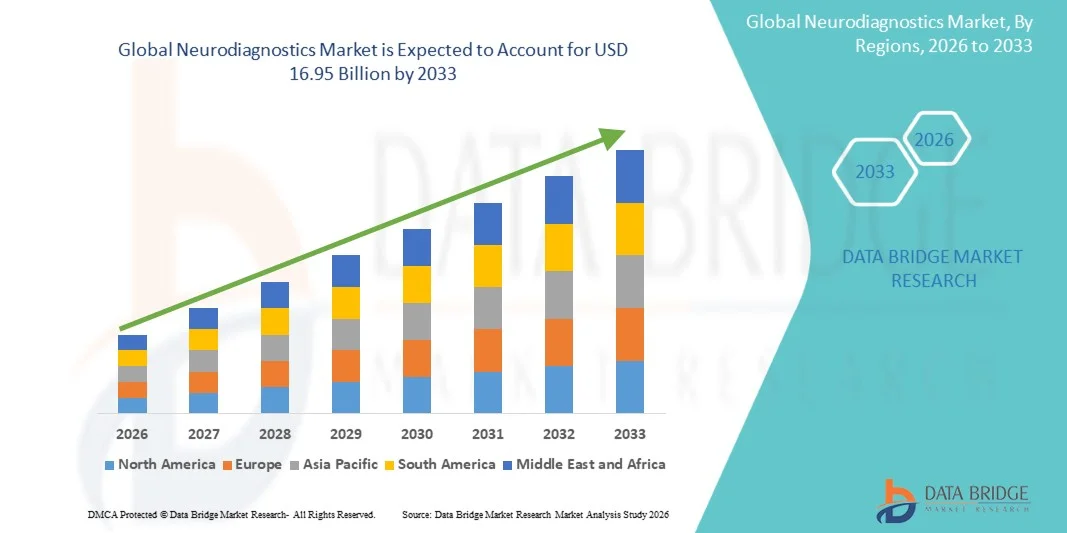
The Neurodiagnostics Market was valued at USD 9.65 billion in 2025 and is projected to reach USD 16.95 billion by 2033, growing at a CAGR of 7.30% from 2026 to 2033. The market is experiencing consistent growth driven by rising demand for advanced neurological disease diagnosis, increasing prevalence of neurological disorders, rapid advancements in neuroimaging and diagnostic technologies, and expanding applications across hospitals, research institutions, and specialized neurology centers.
The growing burden of neurological conditions such as epilepsy, Alzheimer’s disease, Parkinson’s disease, stroke, and brain tumors, combined with increasing healthcare investments and the need for early and accurate diagnosis, is compelling healthcare providers to adopt advanced neurodiagnostic solutions. Technologies such as electroencephalography (EEG), magnetic resonance imaging (MRI), computed tomography (CT), and artificial intelligence-enabled diagnostic platforms are improving disease detection, monitoring, and treatment planning. Increasing adoption of minimally invasive diagnostic approaches, digital neurology platforms, and AI-driven analysis tools is further accelerating market growth by enabling faster, more precise, and personalized neurological care.
Key Market Trends & Insights
- North America dominated the Neurodiagnostics Market with the largest revenue share of 36.5% in 2025, supported by advanced healthcare infrastructure, high adoption of neurological diagnostic technologies, strong presence of leading medical device companies, and increasing demand for early detection of neurological disorders. The region benefits from widespread availability of advanced diagnostic platforms such as electroencephalography (EEG), magnetic resonance imaging (MRI), computed tomography (CT), and neuroimaging solutions across hospitals and specialty care centers. Increasing prevalence of neurological conditions, including epilepsy, Alzheimer’s disease, Parkinson’s disease, and stroke, along with rising healthcare expenditure and investments in precision diagnostics, continue to strengthen North America’s leading position in the Neurodiagnostics Market.
- The neurodegenerative diseases segment dominated the market with a 35.6% revenue share in 2025, supported by the increasing global burden of Alzheimer’s disease, Parkinson’s disease, dementia, and other progressive neurological disorders
- Asia-Pacific is expected to be the fastest-growing region at a CAGR of 8.7% from 2026 to 2033, fueled by increasing healthcare investments, expanding neurological care infrastructure, rising prevalence of neurological disorders, and growing adoption of advanced diagnostic technologies across countries such as China, India, Japan, and South Korea. The region is witnessing increased demand for early diagnosis and monitoring solutions due to aging populations, improving healthcare access, and government initiatives focused on strengthening medical infrastructure. In addition, the expansion of specialty hospitals, diagnostic centers, and adoption of AI-enabled neurodiagnostic platforms are accelerating regional market growth.
- AI-enabled neurodiagnostic solutions are the fastest-growing technology segment, projected to register a CAGR of 9.2% from 2026 to 2033, reflecting increasing adoption of artificial intelligence and machine learning algorithms for automated image analysis, brain signal interpretation, and predictive neurological assessments. AI-powered platforms are helping healthcare providers improve diagnostic speed, detect subtle neurological abnormalities, and support personalized treatment decisions. Growing investments in digital healthcare, integration of AI with neuroimaging systems, and increasing demand for precision medicine approaches are driving rapid expansion of this segment.
- The hospitals segment dominates the end-user category with a 48.6% revenue share in 2025, supported by the availability of advanced diagnostic infrastructure, specialized neurology departments, skilled healthcare professionals, and higher patient preference for hospital-based neurological evaluations. Hospitals are increasingly adopting advanced neurodiagnostic systems to manage rising cases of epilepsy, stroke, dementia, and other neurological disorders. Increasing healthcare expenditure, expansion of specialty care facilities, and integration of advanced imaging and monitoring technologies are reinforcing the leading position of hospitals in the global market.
Market Size & Forecast
- Global Market Value (2025): USD 9.65 Billion
- Expected Market Value (2033): USD 16.95 Billion
- Forecast CAGR (2026–2033): 7.30%
- Leading Region in 2025: North America
- Fastest Growing Region: Asia-Pacific
Report Scope and Neurodiagnostics Market Segmentation
|
Attributes |
Neurodiagnostics Key Market Insights |
|
Segments Covered |
|
|
Countries Covered |
North America · U.S. · Canada · Mexico Europe · Germany · France · U.K. · Netherlands · Switzerland · Belgium · Russia · Italy · Spain · Turkey · Rest of Europe Asia-Pacific · China · Japan · India · South Korea · Singapore · Malaysia · Australia · Thailand · Indonesia · Philippines · Rest of Asia-Pacific Middle East and Africa · Saudi Arabia · U.A.E. · South Africa · Egypt · Israel · Rest of Middle East and Africa South America · Brazil · Argentina · Rest of South America |
|
Key Market Players |
• GE HealthCare Technologies Inc. (U.S.) |
|
Market Opportunities |
· Integration of Artificial Intelligence and Machine Learning in Neurodiagnostic Solutions · Growing Adoption of Portable and Point-of-Care Neurodiagnostic Devices · Expansion of Neurodiagnostics in Personalized Medicine and Digital Neurology |
|
Value Added Data Infosets |
In addition to the insights on market scenarios such as market value, growth rate, segmentation, geographical coverage, and major players, the market reports curated by the Data Bridge Market Research also include in-depth expert analysis, geographically represented company-wise production and capacity, network layouts of distributors and partners, detailed and updated price trend analysis and deficit analysis of supply chain and demand. |
Neurodiagnostics Market Trends
Trend: Increasing Adoption of AI-Enabled Neurodiagnostics and Advanced Brain Monitoring Technologies
The Neurodiagnostics Market is witnessing significant transformation due to the growing adoption of artificial intelligence (AI), advanced imaging technologies, and digital neurological assessment solutions aimed at improving early detection and management of neurological disorders. Hospitals, diagnostic centers, and research institutions are increasingly adopting AI-integrated neurodiagnostic platforms to enhance interpretation of complex brain signals, automate image analysis, and improve diagnostic accuracy for conditions such as epilepsy, stroke, Alzheimer’s disease, Parkinson’s disease, and brain tumors. The integration of AI with technologies such as electroencephalography (EEG), magnetic resonance imaging (MRI), and computed tomography (CT) is enabling faster diagnosis and personalized treatment planning. For instance, AI-based neuroimaging solutions are being developed to analyze large volumes of brain imaging data and identify subtle neurological abnormalities that may be difficult to detect through conventional methods. In addition, the increasing adoption of portable EEG devices, remote monitoring solutions, and digital neurology platforms is supporting decentralized diagnosis and improving access to neurological care globally.
Neurodiagnostics Market Dynamics
Key Market Driver: Rising Prevalence of Neurological Disorders and Growing Demand for Early Diagnosis
The increasing burden of neurological disorders is a major driver for the Neurodiagnostics Market. The rising prevalence of conditions including epilepsy, dementia, Parkinson’s disease, stroke, and traumatic brain injuries is creating strong demand for accurate and timely diagnostic solutions. According to global health trends, neurological disorders represent a significant cause of disability worldwide, increasing the need for advanced diagnostic technologies that support early intervention and improved patient outcomes. Healthcare providers are increasingly adopting EEG, MRI, CT, and molecular neurodiagnostic technologies to improve disease detection, monitor progression, and support treatment decisions. In addition, the growing aging population, increasing healthcare expenditure, and expansion of specialized neurology centers are accelerating adoption of neurodiagnostic systems. For example, hospitals are increasingly integrating advanced MRI and AI-assisted diagnostic platforms to improve detection of brain abnormalities and optimize neurological care pathways. Furthermore, increasing awareness regarding early diagnosis and preventive neurological healthcare is strengthening market growth across developed and emerging economies.
Key Restraint/Challenge: High Cost and Limited Accessibility of Advanced Neurodiagnostic Technologies
A significant challenge in the Neurodiagnostics Market is the high cost associated with advanced diagnostic equipment, infrastructure requirements, and specialized expertise. Technologies such as high-resolution MRI systems, advanced EEG monitoring platforms, and AI-enabled diagnostic solutions require substantial investment in procurement, installation, maintenance, and skilled personnel training. These cost barriers can limit adoption among smaller hospitals, diagnostic centers, and healthcare facilities in developing regions. In addition, limited availability of trained neurologists, uneven healthcare infrastructure, and restricted access to advanced neurological testing facilities may slow market penetration. Advanced neurodiagnostic systems also require regular software updates, calibration, and technical support, increasing operational costs for healthcare providers. For instance, rural and underserved regions often face challenges in accessing specialized neurological diagnostic services due to limited availability of advanced imaging centers and trained medical professionals.
Key Market Opportunity: Integration of AI, Tele-Neurology, and Digital Health Platform
The integration of artificial intelligence, telemedicine, and digital healthcare technologies presents significant growth opportunities for the Neurodiagnostics Market. AI-powered diagnostic platforms are enabling automated analysis of brain scans, EEG signals, and neurological data, helping clinicians improve diagnostic efficiency and reduce interpretation time. Tele-neurology solutions are expanding access to specialist consultations by enabling remote monitoring, digital data sharing, and virtual neurological assessments, particularly in regions with limited specialist availability. In addition, cloud-based neurodiagnostic platforms are supporting centralized data management, real-time collaboration, and remote patient monitoring. Emerging markets across Asia-Pacific, Latin America, and the Middle East represent significant opportunities due to increasing healthcare investments, expanding diagnostic infrastructure, and growing adoption of digital health technologies. Furthermore, continued innovation in wearable neurological monitoring devices, AI-based disease prediction models, and personalized medicine approaches is expected to further accelerate adoption of advanced neurodiagnostic solutions globally.
Neurodiagnostics Market Scope
The Neurodiagnostics market is segmented on the basis of product, condition, and end user.
- By Product
On the basis of product, the Neurodiagnostics Market is segmented into diagnostic imaging systems, clinical diagnostic instruments, and reagents & consumables. the diagnostic imaging systems segment dominated the market with a 42.3% revenue share in 2025, owing to increasing adoption of advanced neuroimaging technologies such as MRI, CT, PET, and other brain imaging systems for accurate diagnosis and monitoring of neurological disorders. The rising prevalence of neurodegenerative diseases, stroke, epilepsy, and brain tumors is increasing demand for high-resolution imaging solutions across hospitals and specialized neurological centers. Furthermore, continuous advancements in artificial intelligence-based image analysis, automated diagnostic interpretation, and improved imaging accuracy are enhancing the efficiency of neurodiagnostic procedures. Increasing healthcare investments, expansion of specialty neurology departments, and growing adoption of digital imaging platforms are further supporting market growth.
The reagents & consumables segment is expected to witness the fastest growth at a CAGR of 9.8% from 2026 to 2033, driven by increasing demand for molecular diagnostics, biomarker-based testing, and laboratory-based neurological disease detection. Growing adoption of in-vitro diagnostic techniques, genetic testing, and advanced assay technologies is supporting segment expansion. The increasing focus on early diagnosis of neurological conditions such as Alzheimer’s disease, Parkinson’s disease, and multiple sclerosis is creating strong demand for specialized reagents and testing kits. In addition, rising clinical research activities, increasing diagnostic testing volumes, and development of innovative biomarker detection solutions are expected to accelerate growth of this segment.
- By Condition
On the basis of condition, the Neurodiagnostics Market is segmented into Neurodegenerative diseases, stroke, epilepsy, headache disorders, sleep disorders, neuroimaging technologies, in vitro diagnostics, and neuroinformatics. The Neurodegenerative Diseases segment dominated the market with a 35.6% revenue share in 2025, supported by the increasing global burden of Alzheimer’s disease, Parkinson’s disease, dementia, and other progressive neurological disorders. The growing aging population and rising demand for early disease detection are increasing the adoption of neurodiagnostic technologies for monitoring disease progression and treatment effectiveness. Advanced imaging systems, biomarker analysis, and neurological assessment tools are being increasingly used to improve diagnostic accuracy. In addition, rising investments in neuroscience research, drug discovery, and personalized medicine approaches are strengthening demand for neurodiagnostic solutions targeting neurodegenerative disorders.
The neuroinformatics segment is projected to register the fastest growth at a CAGR of 11.2% from 2026 to 2033, driven by increasing integration of artificial intelligence, machine learning, and big data analytics in neurological diagnosis and research. Neuroinformatics platforms enable efficient management, storage, and interpretation of complex neurological datasets generated through imaging systems, genetic testing, and clinical assessments. Growing adoption of cloud-based healthcare analytics, digital neuroscience platforms, and AI-powered decision-support tools is improving diagnostic efficiency and clinical outcomes. Furthermore, increasing collaboration between technology companies, healthcare providers, and research institutions is accelerating development of advanced neuroinformatics solutions.
- By End User
On the basis of end user, the Neurodiagnostics Market is segmented into hospitals and surgical centers, diagnostic laboratories and imaging centers, neurology centers, ambulatory care centers, and research laboratories and academic institutes. The hospitals and surgical centers segment dominated the market with a 38.7% revenue share in 2025, due to the availability of advanced diagnostic infrastructure, increasing number of neurological procedures, and growing demand for comprehensive neurological evaluation. Hospitals are increasingly adopting MRI, CT, EEG, EMG, and AI-enabled diagnostic systems to improve disease detection and patient management. Rising healthcare expenditure, expansion of specialized neurology departments, and increasing focus on early diagnosis of neurological disorders are supporting segment growth. In addition, government initiatives aimed at improving healthcare infrastructure and digital transformation are further strengthening adoption of neurodiagnostic technologies in hospital settings.
The diagnostic laboratories and imaging centers segment is expected to witness the fastest growth at a CAGR of 10.4% from 2026 to 2033, driven by increasing demand for specialized diagnostic testing services and rising outsourcing of neurological diagnostic procedures. Expansion of independent imaging centers and advanced diagnostic laboratories is improving accessibility to neurodiagnostic services across developed and emerging markets. Increasing adoption of automated diagnostic platforms, molecular testing solutions, and AI-assisted image analysis is enhancing testing efficiency and accuracy. Furthermore, growing prevalence of neurological disorders, increasing healthcare awareness, and rising demand for early detection solutions are expected to create significant growth opportunities for diagnostic laboratories and imaging centers.
Neurodiagnostics Market Regional Analysis
North America dominated the Neurodiagnostics Market and accounted for the largest revenue share of 36.5% in 2025, supported by advanced healthcare infrastructure, high adoption of neurological diagnostic technologies, strong presence of leading medical device manufacturers, and increasing demand for early detection of neurological disorders. The region benefits from widespread availability of advanced diagnostic platforms, including electroencephalography (EEG), magnetic resonance imaging (MRI), computed tomography (CT), and other neuroimaging solutions across hospitals, specialty neurology centers, and diagnostic laboratories. Increasing prevalence of neurological conditions such as epilepsy, Alzheimer’s disease, Parkinson’s disease, and stroke is driving demand for advanced diagnostic and monitoring solutions. In addition, rising healthcare expenditure, growing adoption of AI-enabled diagnostic systems, and continuous investments in precision neurology and digital healthcare technologies are strengthening North America’s leading position in the Neurodiagnostics Market.
U.S. Neurodiagnostics Market Insight
The U.S. neurodiagnostics market is witnessing strong growth due to increasing prevalence of neurological disorders, rising healthcare spending, and growing adoption of advanced diagnostic technologies across hospitals, research institutions, and specialty care centers. The country’s strong healthcare ecosystem, presence of major medical technology companies, and availability of advanced imaging and monitoring infrastructure are accelerating market expansion. Increasing adoption of AI-powered neuroimaging analysis, automated EEG interpretation systems, and digital neurology platforms is improving diagnostic accuracy and workflow efficiency. Furthermore, growing investments in neurological research, clinical trials, and personalized medicine approaches are supporting the development and adoption of next-generation neurodiagnostic solutions across the country.
Europe Neurodiagnostics Market Insight
The Europe neurodiagnostics market remains a significant contributor to global revenue, driven by strong healthcare systems, increasing burden of neurological diseases, and growing adoption of advanced diagnostic technologies. Countries across the region are investing in modern neuroimaging systems, EEG monitoring technologies, and AI-assisted diagnostic platforms to improve early detection and patient management. The rising aging population and increasing incidence of disorders such as dementia, epilepsy, and Parkinson’s disease are creating strong demand for neurological diagnostic solutions. In addition, government initiatives focused on improving healthcare accessibility, digital transformation of medical services, and expansion of specialized neurology centers are supporting market growth throughout Europe.
U.K. Neurodiagnostics Market Insight
The U.K. neurodiagnostics market is experiencing steady growth, supported by increasing demand for early neurological disease diagnosis, expansion of specialized healthcare facilities, and adoption of advanced diagnostic technologies. Hospitals and research institutions are increasingly integrating EEG, MRI, and AI-based diagnostic solutions to improve neurological assessment and patient care. Growing focus on reducing healthcare burden associated with neurological disorders, along with investments in digital healthcare and remote monitoring technologies, is supporting market development. Furthermore, collaborations between healthcare organizations, research institutes, and technology providers are encouraging innovation in neurodiagnostic platforms and improving access to advanced neurological testing solutions.
Germany Neurodiagnostics Market Insight
The Germany neurodiagnostics market is expanding steadily due to the country’s advanced healthcare infrastructure, strong medical technology industry, and increasing adoption of innovative neurological diagnostic solutions. Hospitals and research centers are increasingly utilizing advanced neuroimaging systems, EEG technologies, and AI-supported diagnostic platforms for improved disease detection and monitoring. Germany’s strong focus on healthcare innovation, medical research, and precision diagnostics is contributing to the adoption of next-generation neurodiagnostic technologies. In addition, rising cases of neurological disorders among the aging population and increasing investments in healthcare digitalization are further supporting market growth.
Asia-Pacific Neurodiagnostics Market Insight
The Asia-Pacific neurodiagnostics market is expected to witness rapid growth at a CAGR of 8.7% from 2026 to 2033, driven by increasing healthcare investments, expanding neurological care infrastructure, rising prevalence of neurological disorders, and growing adoption of advanced diagnostic technologies across China, India, Japan, and South Korea. The region is experiencing increasing demand for early diagnosis and monitoring solutions due to aging populations, improving healthcare access, and rising awareness regarding neurological health. Expansion of specialty hospitals, diagnostic laboratories, and medical imaging facilities is improving availability of neurodiagnostic services. In addition, growing adoption of AI-enabled neurodiagnostic platforms, tele-neurology solutions, and digital healthcare technologies is accelerating market growth across emerging economies.
Japan Neurodiagnostics Market Insight
The Japan neurodiagnostics market is witnessing consistent growth due to rising demand for advanced neurological diagnostics, aging population, and increasing healthcare technology adoption. The country’s strong medical research ecosystem and advanced healthcare infrastructure are supporting the implementation of EEG, MRI, CT, and AI-based diagnostic solutions. Growing prevalence of age-related neurological disorders, including dementia and Parkinson’s disease, is increasing demand for early detection and continuous monitoring technologies. Furthermore, Japan’s focus on healthcare innovation, robotics, artificial intelligence, and digital medicine is contributing to the development and adoption of advanced neurodiagnostic solutions.
China Neurodiagnostics Market Insight
The China neurodiagnostics market is growing rapidly, supported by increasing healthcare expenditure, expanding hospital infrastructure, rising neurological disease burden, and government initiatives aimed at strengthening diagnostic capabilities. The growing prevalence of neurological disorders, increasing awareness regarding early diagnosis, and rising demand for advanced medical imaging technologies are driving market expansion. China is witnessing increased adoption of AI-powered neurodiagnostic systems, automated imaging analysis platforms, and digital healthcare solutions to improve diagnostic efficiency. In addition, investments in specialty hospitals, research institutions, and healthcare technology development are positioning China as one of the fastest-growing markets for Neurodiagnostics globally.
Neurodiagnostics Market Share
The neurodiagnostics industry is primarily led by well-established companies, including:
- GE HealthCare Technologies Inc. (U.S.)
- Siemens Healthineers AG (Germany)
- Royal Philips N.V. (Netherlands)
- Fujifilm Holdings Corporation (Japan)
- Canon Medical Systems Corporation (Japan)
- Neurosoft Ltd. (Russia)
- Natus Medical Incorporated (U.S.)
- Compumedics Limited (Australia)
- Cadwell Industries Inc. (U.S.)
- BrainScope Company Inc. (U.S.)
- Advanced Brain Monitoring Inc. (U.S.)
- NeuroWave Systems Inc. (U.S.)
- Masimo Corporation (U.S.)
- Micromed S.p.A. (Italy)
- EB Neuro S.p.A. (Italy)
- Medtronic PLC (Ireland)
- Boston Scientific Corporation (U.S.)
- Bio-Rad Laboratories Inc. (U.S.)
- Koninklijke DSM N.V. (Netherlands)
- Thermo Fisher Scientific Inc. (U.S.)
- F. Hoffmann-La Roche Ltd. (Switzerland)
- Abbott Laboratories (U.S.)
- Johnson & Johnson MedTech (U.S.)
- Elekta AB (Sweden)
- Brain Scientific Inc. (U.S.)
- Neuroelectrics Inc. (U.S.)
- MagVenture A/S (Denmark)
- ANT Neuro (Netherlands)
- Compumedics Neuroscan (Australia)
- Neurosoft Europe (Germany)
- EMS Biomedical (Austria)
- Integra LifeSciences Holdings Corporation (U.S.)
- Stryker Corporation (U.S.)
- Mediso Ltd. (Hungary)
- MIM Software Inc. (U.S.)
Latest Developments in Neurodiagnostics Market
- In August 2024, Natus Medical Incorporated announced the launch of autoSCORE, an AI-powered clinical EEG interpretation solution designed to improve neurological diagnostics through automated analysis of EEG studies. The solution uses artificial intelligence to support expert-level interpretation of clinical EEG recordings, helping neurologists improve efficiency in diagnosing conditions such as epilepsy and other neurological disorders. The launch highlights the growing integration of AI-based analytics into neurodiagnostic workflows, addressing the increasing demand for faster, accurate, and scalable neurological assessment solutions
- In July 2023, Beacon Biosignals completed the acquisition of Dreem’s research and development business to expand its AI-driven EEG analytics and at-home neurodiagnostic capabilities. The acquisition combined Dreem’s clinically validated sleep monitoring technology with Beacon Biosignals’ computational EEG platform to support scalable clinical trial assessments and digital neuroscience applications. This development reflects the growing adoption of wearable neurodiagnostic devices and remote monitoring solutions for neurological and sleep-related disorders
- In May 2025, Natus Medical Incorporated announced the launch of BrainWatch, an AI-driven point-of-care EEG solution designed for critical care environments such as emergency rooms and intensive care units. The system enables rapid EEG deployment, supports remote neurologist collaboration, and integrates with the company’s NeuroWorks EEG platform to improve accessibility to neurological monitoring. BrainWatch reflects the industry shift toward portable, decentralized neurodiagnostic solutions that enable faster clinical decision-making and improved patient management
- In February 2025, Subtle Medical announced FDA clearance for SubtleHD, an AI-powered MRI enhancement technology designed to improve brain imaging quality and reduce scan times. The technology is part of the Subtle-ELITE AI imaging suite, which combines image enhancement, synthetic imaging, and workflow automation capabilities. This advancement supports the increasing adoption of AI-assisted neuroimaging technologies to improve diagnostic accuracy, optimize imaging workflows, and enhance access to neurological assessments
- In June 2025, Hyperfine announced FDA clearance of the next-generation SwoopSystem powered by Optive AI software, representing a major advancement in portable brain MRI technology. The upgraded AI-enabled portable MRI platform delivers improved image quality and enhanced usability, supporting brain imaging across multiple care settings, including emergency departments and intensive care environments. This development demonstrates the growing role of AI-powered portable imaging solutions in expanding access to neurodiagnostic technologies
- In July 2025, Hyperfine announced the first commercial sales of its next-generation Swoop System powered by Optive AI software to leading hospitals in the United States. The commercial adoption marked an important step toward broader clinical implementation of portable AI-enabled brain MRI systems, enabling healthcare providers to perform advanced neurological imaging closer to the point of care. The milestone reflects increasing demand for flexible neuroimaging solutions that improve diagnostic accessibility and workflow efficiency

- Interactive Data Analysis Dashboard
- Company Analysis Dashboard for high growth potential opportunities
- Research Analyst Access for customization & queries
- Competitor Analysis with Interactive dashboard
- Latest News, Updates & Trend analysis
- Harness the Power of Benchmark Analysis for Comprehensive Competitor Tracking
Data collection and base year analysis are done using data collection modules with large sample sizes. The stage includes obtaining market information or related data through various sources and strategies. It includes examining and planning all the data acquired from the past in advance. It likewise envelops the examination of information inconsistencies seen across different information sources. The market data is analysed and estimated using market statistical and coherent models. Also, market share analysis and key trend analysis are the major success factors in the market report. To know more, please request an analyst call or drop down your inquiry.
The key research methodology used by DBMR research team is data triangulation which involves data mining, analysis of the impact of data variables on the market and primary (industry expert) validation. Data models include Vendor Positioning Grid, Market Time Line Analysis, Market Overview and Guide, Company Positioning Grid, Patent Analysis, Pricing Analysis, Company Market Share Analysis, Standards of Measurement, Global versus Regional and Vendor Share Analysis. To know more about the research methodology, drop in an inquiry to speak to our industry experts.
Data Bridge Market Research is a leader in advanced formative research. We take pride in servicing our existing and new customers with data and analysis that match and suits their goal. The report can be customized to include price trend analysis of target brands understanding the market for additional countries (ask for the list of countries), clinical trial results data, literature review, refurbished market and product base analysis. Market analysis of target competitors can be analyzed from technology-based analysis to market portfolio strategies. We can add as many competitors that you require data about in the format and data style you are looking for. Our team of analysts can also provide you data in crude raw excel files pivot tables (Fact book) or can assist you in creating presentations from the data sets available in the report.













