


Neurofibromatosis Market Size
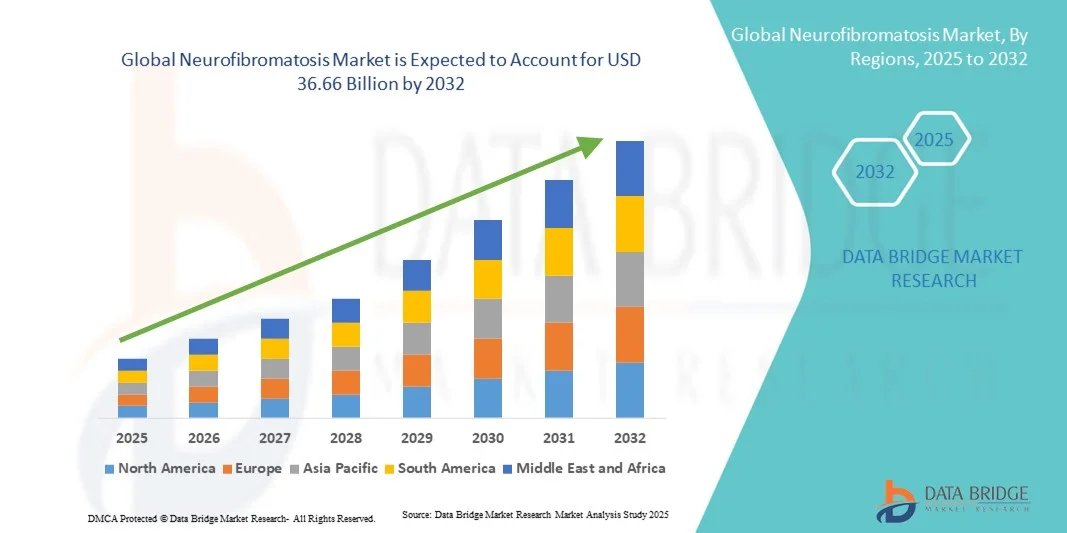
- The global neurofibromatosis market size was valued at USD 14.60 billion in 2024 and is expected to reach USD 36.66 billion by 2032, at a CAGR of 12.20% during the forecast period
- The market growth is largely fueled by the increasing prevalence of genetic disorders and rare diseases, driving demand for effective neurofibromatosis therapies and management solutions
- Furthermore, advancements in targeted therapies, growing investments in research and development, and rising awareness among patients and healthcare providers are accelerating the uptake of neurofibromatosis solutions, thereby significantly boosting the industry's growth
Neurofibromatosis Market Analysis
- The Neurofibromatosis market is witnessing steady growth due to rising awareness about genetic disorders, advancements in diagnostic technologies, and increasing availability of targeted therapies. Enhanced research activities, coupled with growing patient support programs, are driving market expansion globally
- The market is experiencing rising investments in genetic research, improved accessibility of diagnostic tools, and the introduction of innovative targeted therapies, which collectively enhance early detection and treatment outcomes for patients worldwide
- North America dominated the neurofibromatosis market with the largest revenue share of 41.33% in 2024, driven by advanced healthcare infrastructure, early adoption of genetic testing, and strong R&D investments by key players. The U.S. shows significant growth in Neurofibromatosis diagnosis and treatment, supported by initiatives to enhance early detection and patient management programs
- Asia-Pacific is expected to be the fastest growing region in the neurofibromatosis market during the forecast period, with a CAGR of 9.6%, fueled by increasing healthcare investments, rising awareness of genetic disorders, and expanding access to modern therapies. Countries like India and China are witnessing accelerated adoption of advanced diagnostic tools and specialty clinics, supporting market growth
- The NF1 segment dominated the largest market revenue share of 44.6% in 2024, driven by its higher prevalence compared to other subtypes and increased awareness among healthcare professionals and patients
Report Scope and Neurofibromatosis Market Segmentation
|
Attributes |
Neurofibromatosis Key Market Insights |
|
Segments Covered |
|
|
Countries Covered |
North America
Europe
Asia-Pacific
Middle East and Africa
South America
|
|
Key Market Players |
|
|
Market Opportunities |
|
|
Value Added Data Infosets |
In addition to the insights on market scenarios such as market value, growth rate, segmentation, geographical coverage, and major players, the market reports curated by the Data Bridge Market Research also include in-depth expert analysis, pricing analysis, brand share analysis, consumer survey, demography analysis, supply chain analysis, value chain analysis, raw material/consumables overview, vendor selection criteria, PESTLE Analysis, Porter Analysis, and regulatory framework. |
Neurofibromatosis Market Trends
Growing Focus on Targeted Therapies and Personalized Medicine
- A significant trend in the global neurofibromatosis market is the increasing focus on targeted therapies and personalized treatment approaches. This includes the development of MEK inhibitors, gene therapy strategies, and other precision medicine solutions tailored to specific patient mutations
- For instance, in March 2023, pharmaceutical companies expanded clinical trials for selumetinib, a MEK inhibitor, to evaluate its efficacy in treating plexiform neurofibromas in pediatric patients. Such initiatives reflect a growing emphasis on treatments that address underlying molecular mechanisms rather than only managing symptoms
- The trend also includes leveraging advanced diagnostic tools and genetic testing to enable early identification of patients at risk, which supports timely intervention and better clinical outcomes
- Furthermore, collaborations between biotech companies, research institutions, and healthcare providers are fostering innovative treatment pipelines, improving patient access to cutting-edge therapies
- Patient-centric approaches, including individualized dosing regimens and monitoring of treatment response, are becoming increasingly integral to the market, enhancing both efficacy and patient adherence
Neurofibromatosis Market Dynamics
Driver
Growing Need Due to Rising Disease Awareness and Expanding Treatment Options
- The increasing prevalence of neurofibromatosis, coupled with greater awareness among patients and healthcare professionals, is a significant driver for the heightened demand for effective therapies
- For instance, in April 2024, announced an advancement in patient-focused treatment programs, looking forward to integrating novel therapies and monitoring solutions. Such strategies by key companies are expected to drive the Neurofibromatosis industry growth in the forecast period
- As patients and caregivers become more informed about the disorder, demand for comprehensive care, early diagnosis, and personalized treatment plans is growing, providing a compelling opportunity for pharmaceutical and biotech companies
- Furthermore, increasing clinical research initiatives, coupled with the development of innovative drug therapies and supportive care options, are expanding treatment accessibility and effectiveness
- The convenience of home-based care, patient assistance programs, and access to specialized medical centers are key factors propelling the adoption of neurofibromatosis therapies across both pediatric and adult populations. The trend towards expanding clinical awareness and the availability of user-friendly treatment options further contributes to market growth
Restraint/Challenge
Concerns Regarding High Treatment Costs and Limited Access to Specialized Care
- High treatment costs and limited availability of specialized care centers pose a significant challenge to broader market penetration. As advanced therapies often require long-term management and monitoring, affordability and access remain critical concerns for patients, particularly in developing regions
- For instance, reports highlighting disparities in access to specialized neurofibromatosis care have made some patients hesitant to pursue advanced treatment options
- Addressing these challenges through patient assistance programs, healthcare policy support, and expanded treatment centers is crucial for improving access and adherence. Companies such as Novartis and Pfizer emphasize patient support initiatives and financial assistance programs to enhance therapy accessibility and build trust among potential patients
- In addition, the relatively high cost of certain advanced treatment regimens compared to conventional care can be a barrier for budget-conscious patients, although generic and biosimilar options are gradually improving affordability
- While treatment affordability is gradually improving, the perceived premium for advanced therapies can still hinder widespread adoption, especially in regions with limited healthcare infrastructure
- Overcoming these challenges through improved healthcare access, patient education on treatment protocols, and the development of cost-effective therapeutic options will be vital for sustained market growth
Neurofibromatosis Market Scope
The market is segmented on the basis of type, communication protocol, unlocking mechanism, and application.
- By Disease Type
On the basis of disease type, the Neurofibromatosis market is segmented into Neurofibromatosis 1 (NF1), Neurofibromatosis 2 (NF2), and Schwannomatosis. The NF1 segment dominated the largest market revenue share of 44.6% in 2024, driven by its higher prevalence compared to other subtypes and increased awareness among healthcare professionals and patients. The availability of diagnostic tests, genetic counseling programs, and targeted therapies strengthens the segment’s dominance. Clinical trials focusing on NF1-specific drugs and supportive care strategies contribute to better patient outcomes. Patient advocacy groups and awareness campaigns enhance early detection and management. Hospitals and specialty clinics prioritize NF1 cases due to its complex presentation and treatment requirements. Ongoing R&D investments by key pharmaceutical companies further boost market growth. Improved access to advanced imaging and genetic testing aids timely diagnosis. The integration of NF1 management into multidisciplinary care programs ensures holistic treatment. Government healthcare initiatives and funding for rare diseases support segment expansion. Insurance coverage for targeted therapies enhances patient adoption. Collaborative research and patient registries facilitate continuous monitoring and therapy optimization.
The Schwannomatosis segment is expected to witness the fastest CAGR of 11.3% from 2025 to 2032, driven by rising investments in rare disease research and improved diagnostic accuracy. Advancements in genetic testing and MRI imaging facilitate early detection, enhancing treatment adoption. Clinicians are increasingly aware of Schwannomatosis-specific therapeutic options, improving patient outcomes. Emerging pharmacological treatments targeting molecular pathways drive demand. Growth is also supported by patient advocacy programs raising disease awareness. Expansion of rare disease centers across Europe, North America, and Asia-Pacific ensures wider access. Telemedicine and remote monitoring improve patient follow-up. Regulatory approvals of new therapies further accelerate growth. Increasing reimbursement for specialty drugs enhances affordability. Hospital and specialty clinic networks support treatment dissemination. Research collaborations for rare disease drug development strengthen innovation. Public-private partnerships encourage clinical trial participation. Awareness campaigns and online resources increase patient and caregiver engagement.
- By Treatment
On the basis of treatment, the Neurofibromatosis market is segmented into Drug Therapy, Surgery, Radiation Therapy, and Chemotherapy. The Drug Therapy segment held the largest market revenue share of 42.1% in 2024, supported by growing adoption of targeted therapeutics like MEK inhibitors and other small molecules. Integration into outpatient and hospital care improves treatment reach. Favorable reimbursement policies and insurance coverage increase patient access. Research initiatives focus on developing novel drugs specific to NF1 and NF2. Clinical trials provide evidence of safety and efficacy, boosting physician confidence. Patient support programs and education enhance adherence. Collaboration with specialty pharmacies ensures steady drug availability. The rise in pediatric and adult NF patients drives consistent demand. Pharmaceutical companies continue to expand portfolios with combination therapies. Telemedicine integration for chronic disease management improves compliance. Awareness campaigns by patient advocacy groups promote early drug intervention. Government funding for orphan drugs supports segment growth. Multidisciplinary clinics enhance the overall patient care experience.
The Surgery segment is expected to witness the fastest CAGR of 10.7% from 2025 to 2032, fueled by increasing adoption of minimally invasive surgical techniques and robotic-assisted interventions. Surgeons are performing procedures to manage tumor growth and neurological complications effectively. Expansion of ambulatory surgical centers and hospital surgical departments supports access. Rising patient preference for surgical solutions over prolonged medical therapy encourages adoption. Surgical innovations reduce procedure times and enhance recovery. Awareness campaigns highlight the benefits of timely surgical intervention. Training programs for specialized NF surgery improve outcomes. Technological improvements in imaging and intraoperative guidance enhance safety. Collaboration between hospitals and research institutes fosters surgical advancements. Insurance coverage for procedures drives patient uptake. Telemedicine consultations pre- and post-surgery improve follow-up compliance. Clinical evidence from surgery outcomes strengthens physician recommendation. Urban and semi-urban healthcare expansion further drives surgical adoption.
- By End User
On the basis of end user, the Neurofibromatosis market is segmented into Hospitals, Specialty Clinics, Ambulatory Surgical Centers, and Others. The Hospitals segment dominated the largest market revenue share of 45.8% in 2024, supported by direct access to patients, advanced diagnostic facilities, and comprehensive treatment programs. Hospitals manage NF1, NF2, and Schwannomatosis through multidisciplinary teams, ensuring optimal patient outcomes. Referral networks and integrated care pathways strengthen dominance. Hospital pharmacies maintain steady drug supply for targeted therapies. Advanced imaging and genetic testing are more accessible in hospital settings. Hospitals participate in clinical trials for novel therapeutics. Insurance coverage and reimbursement favor hospital-administered care. Awareness campaigns and patient registries are implemented through hospital networks. Training programs for NF specialists enhance treatment quality. Collaboration with pharmaceutical companies ensures therapy availability. Hospitals provide counseling, follow-ups, and rehabilitation support. Government healthcare initiatives favor hospital-based NF care.
The Ambulatory Surgical Centers segment is expected to witness the fastest CAGR of 10.9% from 2025 to 2032, driven by increasing outpatient surgeries, minimally invasive procedures, and cost-effective care delivery. Expansion of ambulatory centers in urban and semi-urban regions improves accessibility. Patients prefer shorter recovery times and reduced hospital stays. Adoption of advanced surgical tools supports precise tumor removal. Awareness of ambulatory options among patients and physicians drives adoption. Telemedicine follow-ups improve post-operative compliance. Increased investment in ambulatory infrastructure accelerates growth. Collaboration with specialty clinics ensures patient referrals. Cost advantages over hospital inpatient care encourage patient preference. Partnerships with pharmaceutical companies enhance drug administration support. Integration with genetic counseling services boosts care efficiency. Awareness campaigns highlight convenience and efficacy of outpatient care. Patient-centric services and personalized care further encourage adoption.
- By Distribution Channel
On the basis of distribution channel, the Neurofibromatosis market is segmented into Hospital Pharmacy, Retail Pharmacy, and Online Pharmacy. The Hospital Pharmacy segment held the largest market revenue share of 46.2% in 2024, driven by direct access for inpatient and outpatient treatments, specialized medications, and regulatory oversight. Hospitals ensure proper dispensing, adherence monitoring, and patient counseling. Strong supply chain collaborations with pharmaceutical companies strengthen dominance. Hospital pharmacies provide continuity of care through integrated patient management. Advanced storage and cold-chain facilities maintain drug stability. Prescription management ensures proper dosing and therapy adherence. Insurance coverage and reimbursement are more streamlined in hospital pharmacies. Hospitals participate in clinical trials, boosting access to novel therapies. Pharmacist-led patient education improves compliance. Coordination with specialty clinics enhances therapy delivery. Early access programs and compassionate use programs support patient treatment. Multidisciplinary coordination ensures optimized care pathways.
The Online Pharmacy segment is expected to witness the fastest CAGR of 11.1% from 2025 to 2032, supported by rising e-commerce adoption, growing telemedicine consultations, and the convenience of home delivery. Expansion in rural and semi-urban regions ensures wider access. Regulatory approvals for online prescription delivery increase confidence. Both branded and generic NF therapies are increasingly available online. Integration with digital health platforms improves adherence monitoring. Telepharmacy services provide counseling and follow-ups. Rapid urbanization supports online adoption. Strategic partnerships with pharmaceutical companies enhance inventory management. Home delivery improves convenience for chronic therapy patients. Awareness campaigns by patient groups promote online channels. E-prescriptions simplify access and reduce delays. Convenience and privacy considerations drive adoption. Technology-enabled patient support ensures proper therapy use.
Neurofibromatosis Market Regional Analysis
- North America dominated the neurofibromatosis market with the largest revenue share of 41.33% in 2024, driven by advanced healthcare infrastructure, early adoption of genetic testing, and strong R&D investments by key players
- The market shows significant growth in neurofibromatosis diagnosis and treatment, supported by initiatives to enhance early detection, patient management programs, and the widespread availability of targeted therapies
- Increasing collaborations between research institutions and pharmaceutical companies are further contributing to market expansion in both pediatric and adult populations
U.S. Neurofibromatosis Market Insight
The U.S. neurofibromatosis market captured the largest revenue share within North America in 2024, fueled by growing utilization of genetic testing, specialized clinical programs, and advanced therapeutic options. Robust investments in clinical research, coupled with high awareness of neurofibromatosis among healthcare professionals and patients, have spurred significant demand. The introduction of novel targeted therapies and supportive care measures has also enhanced treatment accessibility and improved patient outcomes.
Europe Neurofibromatosis Market Insight
The Europe neurofibromatosis market is projected to expand at a substantial CAGR throughout the forecast period, driven by increasing awareness of genetic disorders, strong healthcare infrastructure, and the presence of leading pharmaceutical companies. Rising urbanization, combined with government initiatives supporting rare disease management and research, is fostering market growth. The region is witnessing steady adoption of advanced diagnostics, personalized therapies, and multidisciplinary care approaches across major countries, including the U.K. and Germany.
U.K. Neurofibromatosis Market Insight
The U.K. neurofibromatosis market is anticipated to grow at a noteworthy CAGR during the forecast period, supported by rising patient awareness, growing healthcare expenditure, and the presence of specialized clinics offering genetic testing and targeted therapies. Public health initiatives promoting early diagnosis and improved patient management programs are further driving market growth.
Germany Neurofibromatosis Market Insight
The Germany neurofibromatosis market is expected to expand at a considerable CAGR during the forecast period, fueled by advanced dermatology and genetic testing facilities, strong research infrastructure, and high healthcare spending. Increasing awareness about neurofibromatosis among healthcare providers and patients, coupled with the availability of innovative therapies, supports the widespread adoption of effective treatment options.
Asia-Pacific Neurofibromatosis Market Insight
The Asia-Pacific neurofibromatosis market is poised to grow at the fastest CAGR of 9.6% during the forecast period, driven by increasing healthcare investments, rising awareness of genetic disorders, and expanding access to modern therapies. Countries like India and China are witnessing accelerated adoption of advanced diagnostic tools, targeted therapies, and specialty clinics, supporting robust market growth. Rapid urbanization, rising disposable incomes, and government initiatives promoting rare disease management are also contributing to the region’s expansion.
China Neurofibromatosis Market Insight
The China neurofibromatosis market accounted for the largest market revenue share in Asia-Pacific in 2024, attributed to the country’s expanding healthcare infrastructure, growing patient population, and increasing adoption of advanced diagnostics and therapeutic options. Strong domestic pharmaceutical presence and large-scale clinical programs further support market growth.
India Neurofibromatosis Market Insight
The India neurofibromatosis market is expected to be the fastest growing in the region during the forecast period, with a CAGR of 11.2%, fueled by rising awareness about genetic disorders, expanding specialty clinics, improved healthcare access, and increasing adoption of advanced diagnostic tools and therapies. Public and private initiatives to enhance rare disease diagnosis and treatment are also accelerating market growth.
Neurofibromatosis Market Share
The Neurofibromatosis industry is primarily led by well-established companies, including:
- Novartis AG (Switzerland)
- Genentech, Inc. (U.S.)
- Merck & Co., Inc. (U.S.)
- Pfizer Inc. (U.S.)
- Astellas Pharma Inc. (Japan)
- GSK plc (U.K.)
- Bayer AG (Germany)
- Roche Holding AG (Switzerland)
- Amgen Inc. (U.S.)
- Syros Pharmaceuticals, Inc. (U.S.)
Latest Developments in Global Neurofibromatosis Market
- In February 2025, the U.S. FDA approved mirdametinib (Gomekli) for the treatment of symptomatic plexiform neurofibromas in adults and children aged 2 years and older with neurofibromatosis type 1. This approval introduced a new oral MEK inhibitor for patients with inoperable tumors, providing an effective targeted therapy
- In September 2025, the FDA expanded the approval of Koselugo (selumetinib) to include children aged 1 year and older with neurofibromatosis type 1 and plexiform neurofibromas, allowing earlier intervention for pediatric patients
- In February 2025, SpringWorks Therapeutics announced the commercial launch of Gomekli in the U.S., making the newly approved MEK inhibitor accessible to patients with neurofibromatosis type 1 and symptomatic plexiform neurofibromas
- In March 2024, Merck & Co. initiated a Phase III clinical trial for a novel MEK inhibitor aimed at reducing plexiform neurofibroma tumor size in children and adults, highlighting continued innovation in NF1 therapies
- In July 2023, AstraZeneca partnered with patient advocacy groups to expand access to clinical programs for neurofibromatosis, focusing on increasing enrollment in trials for advanced targeted therapies and raising awareness about early diagnosis and management

- Interactive Data Analysis Dashboard
- Company Analysis Dashboard for high growth potential opportunities
- Research Analyst Access for customization & queries
- Competitor Analysis with Interactive dashboard
- Latest News, Updates & Trend analysis
- Harness the Power of Benchmark Analysis for Comprehensive Competitor Tracking
Data collection and base year analysis are done using data collection modules with large sample sizes. The stage includes obtaining market information or related data through various sources and strategies. It includes examining and planning all the data acquired from the past in advance. It likewise envelops the examination of information inconsistencies seen across different information sources. The market data is analysed and estimated using market statistical and coherent models. Also, market share analysis and key trend analysis are the major success factors in the market report. To know more, please request an analyst call or drop down your inquiry.
The key research methodology used by DBMR research team is data triangulation which involves data mining, analysis of the impact of data variables on the market and primary (industry expert) validation. Data models include Vendor Positioning Grid, Market Time Line Analysis, Market Overview and Guide, Company Positioning Grid, Patent Analysis, Pricing Analysis, Company Market Share Analysis, Standards of Measurement, Global versus Regional and Vendor Share Analysis. To know more about the research methodology, drop in an inquiry to speak to our industry experts.
Data Bridge Market Research is a leader in advanced formative research. We take pride in servicing our existing and new customers with data and analysis that match and suits their goal. The report can be customized to include price trend analysis of target brands understanding the market for additional countries (ask for the list of countries), clinical trial results data, literature review, refurbished market and product base analysis. Market analysis of target competitors can be analyzed from technology-based analysis to market portfolio strategies. We can add as many competitors that you require data about in the format and data style you are looking for. Our team of analysts can also provide you data in crude raw excel files pivot tables (Fact book) or can assist you in creating presentations from the data sets available in the report.












