Global Neurogenic Bladder Infections Market
Market Size in USD Billion
CAGR :
% 
 USD
3.90 Billion
USD
4.82 Billion
2025
2033
USD
3.90 Billion
USD
4.82 Billion
2025
2033
 Forecast Period Forecast Period |
2026 –2033 |
 Market Size (Base Year) Market Size (Base Year) |
USD 3.90 Billion |
 Market Size (Forecast Year) Market Size (Forecast Year) |
USD 4.82 Billion |
 CAGR CAGR |
% |
| Major Markets Players |
|
Neurogenic Bladder Infections Market Size
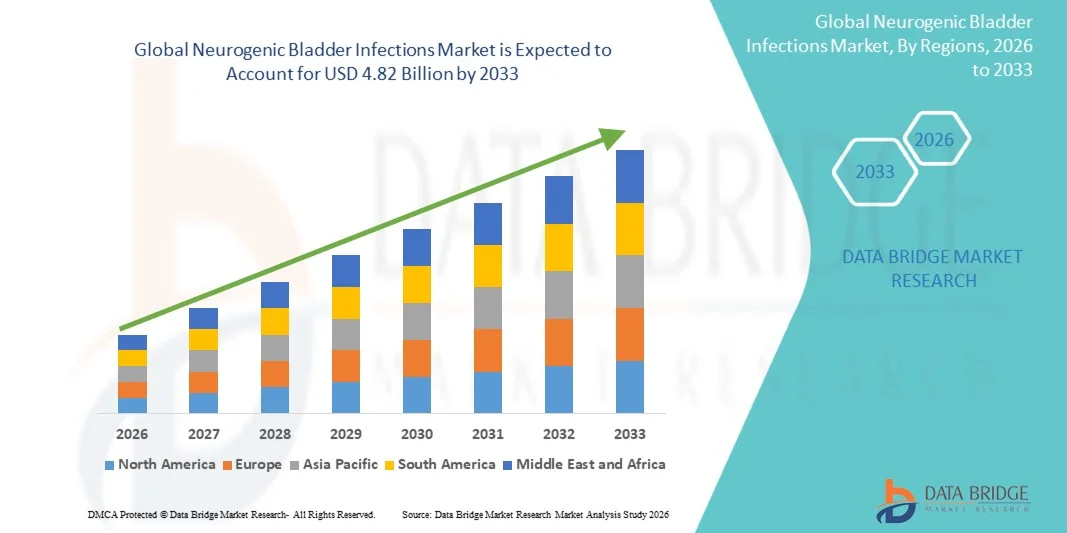
- The global neurogenic bladder infections market size was valued at USD 3.90 billion in 2025 and is expected to reach USD 4.82 billion by 2033, at a CAGR of 2.70% during the forecast period
- The market growth is largely fueled by the rising prevalence of neurological disorders increasing incidence of urinary tract complications related to neurogenic bladder dysfunction, and ongoing advancements in catheter technologies, diagnostic solutions, and targeted antimicrobial therapies that improve infection management and patient outcomes
- Furthermore, growing emphasis on preventive care, rising adoption of home healthcare for long‑term catheterization guidance, integration of telemedicine for infection monitoring, and heightened awareness among patients and clinicians for proactive bladder infection management are strengthening demand for comprehensive neurogenic bladder infection solutions. These converging factors are accelerating the uptake of innovative treatment and care approaches, thereby significantly boosting the industry’s growth
Neurogenic Bladder Infections Market Analysis
- Neurogenic bladder infections, resulting from impaired bladder function due to neurological disorders, are increasingly recognized as critical conditions in both hospital and home healthcare settings due to their association with recurrent urinary tract infections, kidney complications, and reduced quality of life
- The escalating demand for neurogenic bladder infection management is primarily fueled by the rising prevalence of neurological disorders such as spinal cord injuries, multiple sclerosis, and Parkinson’s disease, growing awareness of infection prevention strategies, and increasing adoption of advanced drug therapies and diagnostic testing for effective infection control
- North America dominated the global neurogenic bladder infections market with the largest revenue share of 42.5% in 2025, characterized by advanced healthcare infrastructure, high patient awareness, and a strong presence of key medical device and pharmaceutical players, with the U.S. experiencing substantial growth in specialized treatment adoption, particularly in long-term catheterization, antimicrobial therapies, and proactive infection monitoring
- Asia-Pacific is expected to be the fastest growing region in the neurogenic bladder infections market during the forecast period due to increasing healthcare investments, rising incidence of neurological disorders, expanding access to modern diagnostic services, and growing demand for effective antimicrobial therapies
- Overactive segment dominated the market with a share of 55% in 2025, driven by higher clinical recognition and frequent symptomatic infections
Report Scope and Neurogenic Bladder Infections Market Segmentation
|
Attributes |
Neurogenic Bladder Infections Key Market Insights |
|
Segments Covered |
|
|
Countries Covered |
North America
Europe
Asia-Pacific
Middle East and Africa
South America
|
|
Key Market Players |
|
|
Market Opportunities |
|
|
Value Added Data Infosets |
In addition to the insights on market scenarios such as market value, growth rate, segmentation, geographical coverage, and major players, the market reports curated by the Data Bridge Market Research also include in-depth expert analysis, patient epidemiology, pipeline analysis, pricing analysis, and regulatory framework |
Neurogenic Bladder Infections Market Trends
“Advancements in Diagnostic Testing and Personalized Therapy”
- A significant and accelerating trend in the global neurogenic bladder infections market is the adoption of advanced diagnostic tests such as flow cytometric and biochemical urinary tract infection testing, enabling more accurate detection and monitoring of infections
- For instance, hospitals are increasingly implementing flow cytometry-based UTI testing to rapidly identify pathogens and reduce treatment delays
- Personalized therapy approaches, including targeted antibiotic regimens based on patient-specific infection profiles, are gaining traction, allowing more effective management of recurrent infections and minimizing antimicrobial resistance
- Integration of diagnostics with electronic health records and telemedicine platforms allows clinicians to track infection history and tailor therapy regimens remotely, improving patient compliance and outcomes
- Growing research into catheter coatings and antimicrobial materials is emerging as a trend to prevent biofilm formation and reduce infection rates in long-term catheterized patients
- Development of mobile health apps and remote monitoring devices that track urinary parameters and early infection signs is increasing, enabling timely interventions
- This trend towards rapid, precise, and patient-specific infection management is reshaping clinical practices and raising expectations for proactive urological care
- The demand for solutions that combine advanced testing and personalized antimicrobial therapy is growing rapidly across both hospital and home healthcare sectors, as providers aim to reduce complications and improve quality of life
Neurogenic Bladder Infections Market Dynamics
Driver
“Rising Prevalence of Neurological Disorders and UTI Risk”
- The increasing incidence of neurological conditions such as spinal cord injuries, multiple sclerosis, and Parkinson’s disease, which elevate the risk of bladder dysfunction and infections, is a key driver for market growth
- For instance, in 2025, specialized urology centers reported increased utilization of long-term catheterization combined with prophylactic antimicrobial regimens to prevent recurrent infections
- Growing awareness among clinicians and patients regarding infection prevention and proactive bladder management is encouraging adoption of advanced diagnostic and treatment solutions
- Furthermore, expanding home healthcare services and telemedicine adoption allow continuous monitoring and timely intervention, reducing hospitalization rates for neurogenic bladder infections
- The convenience of integrated care plans, remote monitoring, and targeted therapy is driving uptake across hospitals, outpatient clinics, and home healthcare settings
- Rising investments by pharmaceutical companies in developing novel antibiotics and combination therapies are further boosting market growth
- Increasing collaboration between urology device manufacturers and healthcare providers for smart catheterization solutions is enhancing patient outcomes and expanding market opportunities
Restraint/Challenge
“Antimicrobial Resistance and Treatment Compliance Issues”
- The emergence of antimicrobial-resistant pathogens in neurogenic bladder infections presents a significant challenge, limiting the effectiveness of commonly used antibiotics and increasing treatment complexity
- For instance, studies have reported rising resistance in E. coli and Klebsiella strains among patients requiring long-term catheterization, complicating therapy selection
- Addressing resistance through novel antibiotic development, judicious prescribing practices, and continuous patient education is crucial to maintain treatment efficacy
- In addition, patient adherence to complex multi-drug regimens and catheter hygiene protocols can be inconsistent, affecting treatment outcomes and increasing recurrence rates
- While improved drug formulations and monitoring devices exist, lack of awareness and high treatment costs in certain regions can hinder widespread adoption of best practices
- Limited availability of specialized urology care in developing regions can delay diagnosis and effective treatment, restricting market penetration
- Regulatory challenges and stringent approval processes for new antimicrobial drugs and diagnostic tests can slow product launches and market growth
- Overcoming these challenges through enhanced antimicrobial stewardship, patient education, and accessible healthcare interventions is vital for sustained market growth
Neurogenic Bladder Infections Market Scope
The market is segmented on the basis of type, drug type, test type, and distribution channel.
- By Type
On the basis of type, the neurogenic bladder infections market is segmented into overactive and underactive. The overactive neurogenic bladder segment dominated the market with the largest share of 55% in 2025, driven by its higher clinical recognition and frequent symptomatic infections. Patients with overactive bladder experience frequent urination, urgency, and incontinence, which often leads to recurrent urinary tract infections requiring continuous medical attention. The higher prevalence and visibility of overactive bladder cases in both hospital and outpatient settings contribute to strong demand for diagnostics and therapeutics. Advanced treatment options, including targeted antimicrobial therapy and catheterization, are widely adopted for managing overactive bladder infections. Clinicians prefer early intervention in overactive cases due to the potential for kidney damage and reduced quality of life. This segment also benefits from greater patient awareness and proactive management strategies compared to underactive bladder cases.
The underactive neurogenic bladder segment is anticipated to witness the fastest growth rate from 2026 to 2033, driven by increasing recognition of underdiagnosed cases, especially in aging populations. Underactive bladder leads to incomplete voiding and higher residual urine, increasing infection susceptibility. Growing awareness among urologists and advancements in diagnostic tools are driving adoption of effective treatment solutions. In addition, the expanding geriatric population and rising incidence of neurological disorders in developing regions are creating new opportunities. Technological innovations such as smart catheter monitoring and telemedicine follow-ups are enhancing management of underactive bladder infections. The segment’s growth is further supported by rising investments in patient education and preventive care initiatives targeting this less visible but clinically significant condition.
- By Drug Type
On the basis of drug type, the market is segmented into sulphonamides, azoles and amphotericin B, tetracycline, nitrofurans, aminoglycoside antibiotics, cephalosporin, quinolones, penicillin and combinations. The quinolones and cephalosporins segment dominated the market with a combined share of 47% in 2025, due to their broad-spectrum activity and clinical preference for treating urinary tract infections associated with neurogenic bladder. These antibiotics are highly effective against common pathogens such as E. coli and Klebsiella species, making them a first-line choice in hospital and outpatient settings. Established clinical guidelines recommend these classes for both prophylactic and therapeutic purposes. Their widespread availability and relatively predictable pharmacokinetics contribute to clinician confidence. Quinolones and cephalosporins are often integrated with catheterization protocols to prevent recurrent infections. Their dominance is also supported by robust supply chains and acceptance across developed and emerging markets.
The sulphonamides segment is expected to witness the fastest growth during the forecast period, driven by rising resistance to conventional antibiotics and the need for alternative treatment options. Sulphonamides are increasingly being adopted for patients with mild-to-moderate infections and in combination therapies to enhance efficacy. The growth is also supported by research into new formulations and lower-cost accessibility in developing regions. Patient adherence is improving due to simplified dosing regimens. Healthcare providers are expanding sulphonamide use in outpatient care, long-term catheter management, and telemedicine-guided therapy. The segment benefits from the increasing focus on antimicrobial stewardship and customized treatment protocols.
- By Test Type
On the basis of test type, the market is segmented into biochemical urinary tract infection, microscopic urinary tract infection, and flow cytometric urinary tract infection. The biochemical UTI testing segment dominated the market with a 51% share in 2025, due to its rapid results, cost-effectiveness, and reliability for routine clinical use. Biochemical tests are widely available in hospitals, outpatient clinics, and diagnostic laboratories. They allow early detection of infection and guide timely initiation of antimicrobial therapy. Clinicians prefer biochemical testing for overactive and recurrent bladder infection patients. Its adoption is also supported by integration with electronic health records for tracking infection patterns. The technique’s efficiency in both inpatient and home care settings reinforces its dominance.
The flow cytometric UTI testing segment is expected to witness the fastest growth from 2026 to 2033, driven by its high sensitivity, rapid pathogen identification, and ability to reduce diagnostic errors. Flow cytometry provides automated and precise quantification of bacteria and white blood cells, enabling earlier clinical decisions. The method is increasingly adopted in advanced hospital laboratories and specialized urology centers. Technological advancements are making flow cytometry more accessible and user-friendly. Integration with telemedicine platforms allows remote monitoring of high-risk patients. Increasing investments in diagnostic innovations and rising patient awareness about rapid testing contribute to the segment’s robust growth.
- By Distribution Channel
On the basis of distribution channel, the market is segmented into hospital pharmacies, gynecology and urology clinics, drug stores, retail pharmacies, and online drug stores. The hospital pharmacies segment dominated the market with a 48% share in 2025, due to the preference for dispensing prescription antibiotics and specialized therapy directly under clinical supervision. Hospitals are primary points of care for neurogenic bladder patients, offering integrated diagnostic and therapeutic services. Hospital pharmacies ensure adherence to treatment protocols and provide guidance on catheter hygiene and follow-up care. Their dominance is also driven by high patient volume, access to advanced antibiotics, and support for complex care regimens. Collaboration with urology departments and telemedicine services further strengthens the segment.
The online drug stores segment is expected to witness the fastest growth during the forecast period, driven by increasing digital adoption and convenience for chronic patients requiring long-term antimicrobial therapy. Online platforms provide access to both prescription and over-the-counter medications, home delivery, and discreet purchasing options. Telemedicine integration allows doctors to prescribe and monitor therapy remotely. Growth is fueled by rising internet penetration, mobile health app adoption, and awareness of infection management at home. The segment’s scalability and cost-effectiveness make it a rapidly expanding channel in both urban and semi-urban regions.
Neurogenic Bladder Infections Market Regional Analysis
- North America dominated the global neurogenic bladder infections market with the largest revenue share of 42.5% in 2025, characterized by advanced healthcare infrastructure, high patient awareness, and a strong presence of key medical device and pharmaceutical players
- Patients and clinicians in the region highly value the availability of specialized diagnostic testing, targeted antimicrobial therapies, and comprehensive catheterization protocols, which improve infection management and patient outcomes
- This widespread adoption is further supported by high healthcare expenditure, proactive awareness programs, and the presence of key pharmaceutical and medical device companies, establishing North America as the leading region for neurogenic bladder infection treatment across hospitals, outpatient clinics, and home healthcare settings
U.S. Neurogenic Bladder Infections Market Insight
The U.S. neurogenic bladder infections market captured the largest revenue share of 81% in North America in 2025, fueled by the rising prevalence of neurological disorders and advanced healthcare infrastructure. Patients and clinicians are increasingly prioritizing early detection and effective management of bladder infections through targeted antimicrobial therapies and specialized catheterization. The growing adoption of telemedicine, home healthcare services, and remote monitoring technologies further propels market growth. Moreover, increasing patient awareness of infection prevention, coupled with proactive urology care, is significantly contributing to the expansion of the market.
Europe Neurogenic Bladder Infections Market Insight
The Europe neurogenic bladder infections market is projected to expand at a substantial CAGR during the forecast period, primarily driven by well-developed healthcare systems, stringent infection control protocols, and rising awareness of urinary tract complications among neurological patients. Increasing urbanization, combined with the demand for advanced diagnostic testing and antimicrobial therapies, is fostering market adoption. European healthcare providers are emphasizing proactive bladder management, and hospitals are integrating modern catheterization and monitoring solutions. The market is also seeing growth across both inpatient and outpatient care settings.
U.K. Neurogenic Bladder Infections Market Insight
The U.K. neurogenic bladder infections market is anticipated to grow at a noteworthy CAGR during the forecast period, driven by rising neurological disease prevalence, increasing focus on preventive care, and demand for convenient, patient-friendly treatment solutions. In addition, concerns regarding recurrent urinary tract infections are encouraging hospitals, clinics, and home healthcare providers to adopt advanced diagnostics and antimicrobial therapy. The U.K.’s well-structured healthcare system, coupled with growing awareness of early intervention and patient monitoring, is expected to continue stimulating market growth.
Germany Neurogenic Bladder Infections Market Insight
The Germany neurogenic bladder infections market is expected to expand at a considerable CAGR during the forecast period, fueled by increasing awareness of urinary tract infection prevention and the availability of technologically advanced catheterization solutions. Germany’s robust healthcare infrastructure, combined with a focus on innovation and quality care, promotes the adoption of advanced diagnostics and antimicrobial treatments. Hospitals and specialty urology clinics are increasingly integrating evidence-based treatment protocols. The emphasis on patient-centric care and high-quality monitoring systems aligns with local expectations for infection management.
Asia-Pacific Neurogenic Bladder Infections Market Insight
The Asia-Pacific neurogenic bladder infections market is poised to grow at the fastest CAGR of 24% during 2026 to 2033, driven by increasing neurological disorder incidence, rising healthcare investments, and expanding access to modern diagnostics in countries such as China, Japan, and India. The region’s growing emphasis on preventive care, coupled with telemedicine adoption and home healthcare expansion, is driving demand for early infection detection and treatment. Furthermore, APAC’s increasing focus on affordable healthcare solutions is making antimicrobial therapies and catheterization devices accessible to a wider patient population.
Japan Neurogenic Bladder Infections Market Insight
The Japan neurogenic bladder infections market is gaining momentum due to the country’s advanced healthcare system, high patient awareness, and growing demand for convenient, safe, and effective treatment solutions. Hospitals and specialized urology clinics are emphasizing early infection detection and personalized therapy. The integration of monitoring technologies and telemedicine services is supporting better patient management. Moreover, Japan’s aging population is likely to spur demand for easy-to-use and reliable infection management solutions across both residential and hospital care settings.
India Neurogenic Bladder Infections Market Insight
The India neurogenic bladder infections market accounted for the largest market revenue share in Asia-Pacific in 2025, attributed to the country’s rising prevalence of neurological disorders, expanding healthcare infrastructure, and growing patient awareness. India is seeing increased adoption of advanced diagnostics, targeted antimicrobial therapy, and home healthcare services. The push towards telemedicine, government healthcare initiatives, and rising access to affordable treatment solutions are key factors propelling the market in India. Urbanization and a growing middle class are further driving demand for proactive bladder infection management across hospitals, clinics, and home settings.
Neurogenic Bladder Infections Market Share
The Neurogenic Bladder Infections industry is primarily led by well-established companies, including:
- AstraZeneca (U.K.)
- Merck & Co., Inc. (U.S.)
- Pfizer Inc. (U.S.)
- Abbott (U.S.)
- Novartis AG (Switzerland)
- F. Hoffmann La Roche Ltd. (Switzerland)
- Johnson & Johnson Services, Inc. (U.S.)
- GSK plc (U.K.)
- Takeda Pharmaceutical Company Limited (Japan)
- Cipla Inc. (India)
- Sun Pharmaceutical Industries Ltd. (India)
- DAIICHI SANKYO COMPANY, LIMITED (Japan)
- Lupin. (India)
- Hollister Incorporated (U.S.)
- Coloplast A/S (Denmark)
- Medtronic (Ireland)
- B. Braun SE (Germany)
- Teleflex Incorporated (U.S.)
- Fresenius Kabi (Germany)
- AKRON, Inc. (U.S.)
What are the Recent Developments in Global Neurogenic Bladder Infections Market?
- In August 2025, a clinical study from Hospital Universitari i Politécnic La Fe in Spain reported progress on autovaccine immunoprophylaxis using personalized inactivated bacterial strains to prevent recurrent UTIs in patients with neurogenic bladder, showing potential for tailored infection prevention beyond antibiotics
- In March 2025, researchers at the University of Colorado Anschutz Medical Campus demonstrated a promising new nanogel antibiotic delivery system that significantly improved the effectiveness of gentamicin against urinary tract infections in animal models, suggesting future applications for recurrent UTI treatment in neurogenic bladder patients by delivering high drug concentrations directly to bladder tissue
- In March 2025, advanced bladder research highlighted new imaging techniques to better study neurogenic and overactive bladder conditions, aiming to improve diagnosis and understanding of mechanisms underlying recurrent infections and bladder dysfunction
- In September 2023, clinical findings recommended that early clean intermittent catheterization (CIC) can significantly reduce recurrent febrile UTIs in children with neurogenic bladder, emphasizing improved catheter protocols to lower infection risk
- In May 2023, clinical data on the Uromune vaccine (MV‑140) showed sustained efficacy in preventing recurrent urinary tract infections, with ongoing investigation into its application for complicated cases, including individuals with catheter dependence or neurogenic bladder, highlighting an emerging immunoprophylaxis strategy
SKU-
Get online access to the report on the World's First Market Intelligence Cloud

- Interactive Data Analysis Dashboard
- Company Analysis Dashboard for high growth potential opportunities
- Research Analyst Access for customization & queries
- Competitor Analysis with Interactive dashboard
- Latest News, Updates & Trend analysis
- Harness the Power of Benchmark Analysis for Comprehensive Competitor Tracking
Research Methodology
Data collection and base year analysis are done using data collection modules with large sample sizes. The stage includes obtaining market information or related data through various sources and strategies. It includes examining and planning all the data acquired from the past in advance. It likewise envelops the examination of information inconsistencies seen across different information sources. The market data is analysed and estimated using market statistical and coherent models. Also, market share analysis and key trend analysis are the major success factors in the market report. To know more, please request an analyst call or drop down your inquiry.
The key research methodology used by DBMR research team is data triangulation which involves data mining, analysis of the impact of data variables on the market and primary (industry expert) validation. Data models include Vendor Positioning Grid, Market Time Line Analysis, Market Overview and Guide, Company Positioning Grid, Patent Analysis, Pricing Analysis, Company Market Share Analysis, Standards of Measurement, Global versus Regional and Vendor Share Analysis. To know more about the research methodology, drop in an inquiry to speak to our industry experts.
Customization Available
Data Bridge Market Research is a leader in advanced formative research. We take pride in servicing our existing and new customers with data and analysis that match and suits their goal. The report can be customized to include price trend analysis of target brands understanding the market for additional countries (ask for the list of countries), clinical trial results data, literature review, refurbished market and product base analysis. Market analysis of target competitors can be analyzed from technology-based analysis to market portfolio strategies. We can add as many competitors that you require data about in the format and data style you are looking for. Our team of analysts can also provide you data in crude raw excel files pivot tables (Fact book) or can assist you in creating presentations from the data sets available in the report.