


Neurological Monitoring Wearables Market Size
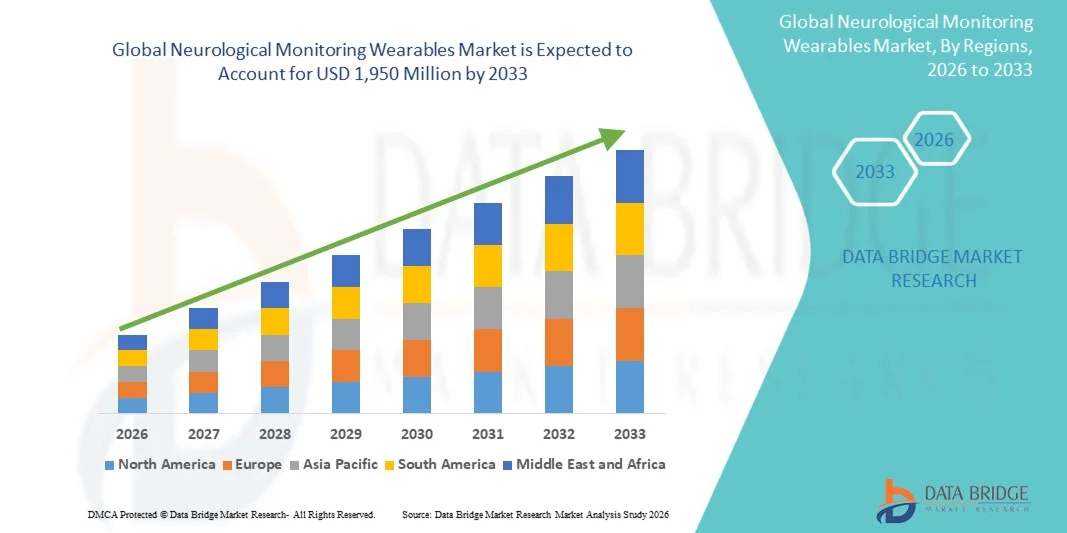
- The global neurological monitoring wearables market size was valued at USD 700 Million in 2025and is expected to reach USD 1,950 Million by 2033, at a CAGR of 13% during the forecast period
- Market growth is primarily driven by the rising prevalence of neurological disorders such as epilepsy, Parkinson’s disease, Alzheimer’s disease, sleep disorders, and stroke-related complications, alongside increasing demand for continuous brain activity monitoring outside clinical settings
- Additionally, advancements in wearable biosensors, brain-computer interface technologies, and AI-powered neurodata analytics are significantly enhancing real-time neurological assessment, thereby accelerating adoption across both clinical and consumer healthcare ecosystems
Neurological Monitoring Wearables Market Analysis
- Neurological monitoring wearables, designed to continuously track brain activity, neural signals, sleep patterns, and cognitive function, are becoming increasingly important in modern neurology due to their ability to enable early diagnosis, continuous monitoring, and personalized treatment strategies
- The growing shift toward remote patient monitoring, home-based neurological care, and preventive healthcare is a key factor driving adoption of wearable neurotechnologies across developed and emerging healthcare systems
- Increasing incidence of stress-related disorders, sleep disturbances, and age-related neurodegenerative diseases is further fueling demand for non-invasive and real-time brain monitoring solutions
- North America holds a dominant position in the market due to advanced healthcare infrastructure, strong adoption of digital health technologies, and the presence of leading neurotechnology and medical device companies, accounting for the largest market share of 38.5% in 2025
- Asia-Pacific is expected to emerge as the fastest-growing region, supported by expanding healthcare access, rising neurological disease burden, increasing digital health adoption, and growing investment in healthcare innovation, registering a CAGR of around 15.8% during the forecast period
- EEG-based wearables currently dominate the market due to their strong clinical utility in epilepsy monitoring, sleep studies, and brain activity assessment, while hybrid neuro-wearables are gaining rapid traction for combining multiple sensing modalities
Report Scope and Neurological Monitoring Wearables Market Segmentation
|
Attributes |
Neurological Monitoring Wearables Key Market Insights |
|
Segments Covered |
|
|
Countries Covered |
North America · U.S. · Canada · Mexico Europe · Germany · France · U.K. · Netherlands · Switzerland · Belgium · Russia · Italy · Spain · Turkey · Rest of Europe Asia-Pacific · China · Japan · India · South Korea · Singapore · Malaysia · Australia · Thailand · Indonesia · Philippines · Rest of Asia-Pacific Middle East and Africa · Saudi Arabia · U.A.E. · South Africa · Egypt · Israel · Rest of Middle East and Africa South America · Brazil · Argentina · Rest of South America |
|
Key Market Players |
|
|
Market Opportunities |
· Expansion of AI-enabled brain monitoring and predictive neurological diagnostics · Rising adoption of home-based neuro-monitoring and remote patient care systems |
|
Value Added Data Infosets |
In addition to the insights on market scenarios such as market value, growth rate, segmentation, geographical coverage, and major players, the market reports curated by the Data Bridge Market Research also include in-depth expert analysis, patient epidemiology, pipeline analysis, pricing analysis, and regulatory framework |
Neurological Monitoring Wearables Market Trends
“Shift Toward AI-Driven, Continuous, and Non-Invasive Brain Monitoring”
- A key trend shaping the neurological wearables market is the rapid shift toward AI-enabled, real-time brain monitoring devices that allow continuous neurological assessment outside traditional hospital environments
- For instance, modern EEG-based headbands and wearable neural sensors are increasingly being integrated with mobile applications to track sleep cycles, cognitive performance, and stress levels in real time
- Advancements in miniaturized sensors and wireless neurotechnology are enabling more comfortable, long-duration usage, improving patient compliance and data accuracy
- The growing adoption of hybrid neuro-wearables that combine EEG, motion sensing, and physiological monitoring is enhancing multi-dimensional brain health analysis
- Increasing consumer interest in cognitive enhancement, mental wellness tracking, and sleep optimization is further accelerating adoption in non-clinical settings
Neurological Monitoring Wearables Market Dynamics
Driver
“Rising Burden of Neurological Disorders and Growth of Remote Monitoring”
- The increasing prevalence of neurological diseases such as epilepsy, dementia, Parkinson’s disease, and sleep disorders is a major driver of market growth
- Growing demand for continuous monitoring and early detection of neurological abnormalities is boosting adoption of wearable neurodevices
- Expansion of tele-neurology and remote patient monitoring platforms is enabling long-term brain health tracking outside clinical environments
- Rising awareness regarding mental health, cognitive performance, and sleep quality is also contributing to market expansion
- Technological advancements in wearable EEG systems and neurostimulation devices are improving diagnostic accuracy and patient outcomes
Restraint/Challenge
“Data Accuracy, Privacy Concerns, and High Device Costs”
- Variability in signal accuracy and susceptibility to motion artifacts remain key technical challenges in wearable neurological monitoring devices
- Data privacy and cybersecurity concerns associated with continuous brain activity monitoring pose adoption barriers in some regions
- High costs of advanced neuro-wearable systems limit accessibility in low- and middle-income markets
- Limited clinical standardization and regulatory complexity for brain-computer interface devices may slow commercialization
- Lack of widespread clinical awareness and training on neuro-wearable integration can restrict optimal utilization
Neurological Monitoring Wearables Market Scope
The market is segmented on the basis of product, application, and end user.
- By Product
On the basis of product, the global neurological monitoring wearables market is segmented into EEG-Based Wearables, Neurostimulation Wearables, Sleep & Cognitive Monitoring Devices, and Hybrid Neuro-Wearables. The EEG-Based Wearables segment dominated the market with the largest revenue share of around 41.6% in 2025, driven by their widespread use in clinical neurodiagnostics such as epilepsy monitoring, sleep disorder analysis, and brain activity assessment. EEG-based devices are preferred due to their non-invasive nature, real-time signal tracking capabilities, and strong clinical validation across hospitals and neurology centers. Increasing adoption of portable EEG headsets and integration with AI-based analytics platforms further strengthens segment dominance. Continuous innovation in wireless EEG systems and improved signal accuracy are also supporting broader adoption in both clinical and research environments.
The Hybrid Neuro-Wearables segment is expected to witness the fastest growth during the forecast period, fueled by rising demand for multi-modal brain monitoring solutions that combine EEG, motion sensing, and physiological signal tracking. These devices enable more comprehensive neurological assessment and are increasingly used in advanced research, cognitive performance tracking, and digital therapeutics. Growing investment in brain-computer interface technologies and AI-enabled neuroanalytics is accelerating adoption of hybrid systems globally. Expanding applications in mental health monitoring, stress analysis, and neurorehabilitation are further boosting segment growth.
- By Application
On the basis of application, the market is segmented into Clinical Applications and Non-clinical applications. The Clinical Applications segment accounted for the largest market revenue share in 2025, driven by increasing utilization of wearable neurodevices in hospitals, neurology clinics, and diagnostic centers for disease detection and continuous patient monitoring. Rising prevalence of epilepsy, Alzheimer’s disease, Parkinson’s disease, and sleep disorders is significantly contributing to clinical demand. Integration of wearable neurotechnologies into diagnostic workflows and treatment monitoring protocols is further strengthening this segment. Strong clinical validation and physician preference for EEG-based monitoring systems continue to support dominance.
The Non-clinical segment is expected to register the fastest growth during the forecast period, supported by increasing consumer adoption of neuro-wearables for mental wellness, cognitive enhancement, stress monitoring, and sleep optimization. Rising awareness of brain health and productivity tracking is driving demand in fitness, wellness, and personal healthcare markets. Expansion of AI-powered mobile applications linked to wearable devices is further enhancing user engagement. Growing interest in preventive healthcare and self-monitoring solutions is accelerating adoption in non-medical environments.
- By End User
On the basis of end user, the market is segmented into Hospitals & Neurology Clinics, Diagnostic Centers, Ambulatory Surgical Centers, Home Healthcare / Remote Patient Monitoring, and Research Institutes & Neuroscience Labs. The Hospitals & Neurology Clinics segment dominated the market in 2025, supported by high patient inflow for neurological disorder diagnosis, epilepsy monitoring, and sleep studies. Hospitals serve as primary centers for clinical neurodiagnostics, driving consistent adoption of EEG-based and advanced wearable systems. Availability of skilled neurologists, advanced infrastructure, and strong reimbursement frameworks further reinforce segment leadership.
The Home Healthcare / Remote Patient Monitoring segment is expected to witness the fastest growth during the forecast period, driven by rising demand for continuous and non-invasive neurological monitoring outside clinical settings. Increasing adoption of telemedicine, aging population, and preference for home-based care are major growth drivers. Wearable neurodevices integrated with mobile platforms enable real-time monitoring and remote physician access, improving patient convenience and long-term disease management. Expanding digital health ecosystems and improved connectivity infrastructure are further accelerating segment expansion globally.
Neurological Monitoring Wearables Market Regional Analysis
- North America holds a dominant position in the market due to advanced healthcare infrastructure, strong adoption of digital health technologies, and the presence of leading neurotechnology and medical device companies, accounting for the largest market share of 38.5% in 2025
- The region benefits from early adoption of AI-powered neurological monitoring systems and widespread integration of wearable neurodevices in clinical workflows, which further strengthens market penetration
- High prevalence of neurological disorders such as epilepsy, Alzheimer’s disease, and Parkinson’s disease, along with strong reimbursement support and well-established telehealth networks, continues to drive sustained market demand
U.S. Neurological Monitoring Wearables Market Insight
The U.S. neurological monitoring wearables market captured the largest revenue share in 2025 within North America, driven by the high prevalence of neurological disorders such as epilepsy, Alzheimer’s disease, Parkinson’s disease, and sleep disorders, along with strong access to advanced neurodiagnostic infrastructure. Patients increasingly prioritize continuous brain activity monitoring through portable EEG-based wearables and AI-enabled cognitive tracking devices. The growing adoption of home-based neurological monitoring, supported by telehealth services and digital monitoring tools, continues to propel market growth. Moreover, strong reimbursement frameworks and the presence of leading neurotechnology and medical device manufacturers significantly contribute to sustained market expansion.
Europe Neurological Monitoring Wearables Market Insight
The Europe neurological monitoring wearables market is projected to expand at a steady CAGR throughout the forecast period, primarily driven by rising neurological disease burden and stringent clinical diagnostic guidelines. Increasing prevalence of Alzheimer’s disease, Parkinson’s disease, and sleep disorders, along with aging populations, is accelerating demand for long-term brain monitoring solutions. European healthcare systems emphasize early diagnosis and preventive care, fostering consistent adoption of neurological monitoring wearables. Growth is observed across hospital, outpatient, and homecare settings, supported by favorable reimbursement policies and widespread access to digital neurohealth technologies.
U.K. Neurological Monitoring Wearables Market Insight
The U.K. neurological monitoring wearables market is anticipated to grow at a notable CAGR during the forecast period, supported by strong national neurological disorder management programs and rising awareness of brain health monitoring. Increasing focus on early detection of epilepsy, dementia, and sleep disorders is driving demand across all age groups. The country’s well-established healthcare infrastructure and growing adoption of home-based monitoring solutions are further supporting market growth. In addition, strong digital health integration and expanding remote monitoring services enhance accessibility nationwide.
Germany Neurological Monitoring Wearables Market Insight
The Germany neurological monitoring wearables market is expected to expand at a considerable CAGR during the forecast period, driven by a strong focus on clinical efficiency and advanced neurodiagnostic technologies. High awareness of neurological health, coupled with early diagnosis practices, supports sustained demand for EEG-based and hybrid wearable systems. Germany’s emphasis on precision medicine and adherence to strict treatment protocols promotes widespread adoption of advanced brain monitoring solutions. The integration of innovative AI-enabled neurotechnologies aligns with the country’s preference for high-quality, regulated healthcare systems.
Asia-Pacific Neurological Monitoring Wearables Market Insight
The Asia-Pacific neurological monitoring wearables market is poised to grow at the fastest CAGR during the forecast period of 2026 to 2033, driven by rapid urbanization, rising neurological disorder prevalence, increasing stress-related conditions, and expanding healthcare expenditure in countries such as China, India, and Japan. Growing awareness of mental health and brain performance monitoring is accelerating adoption of wearable neurotechnologies. Government initiatives aimed at strengthening healthcare infrastructure and expanding digital health access further support market growth. In addition, the region’s expanding medical device manufacturing base is improving affordability and availability of neurological monitoring wearables.
Japan Neurological Monitoring Wearables Market Insight
The Japan neurological monitoring wearables market is gaining momentum due to the country’s aging population and high prevalence of neurodegenerative and sleep-related disorders. Strong emphasis on precision healthcare and continuous brain health monitoring is driving adoption of advanced EEG-based wearable technologies. The growing use of compact, non-invasive, and home-friendly neuro-monitoring devices supports long-term disease management, particularly among elderly patients. Integration of wearable neurotechnologies into homecare and assisted living environments continues to fuel market growth across clinical and residential settings.
India Neurological Monitoring Wearables Market Insight
The India neurological monitoring wearables market accounted for a significant revenue share in Asia-Pacific in 2025, attributed to rising neurological disorder prevalence, rapid urbanization, increasing stress-related conditions, and growing awareness of mental health monitoring. Expanding middle-class populations and improving access to digital healthcare services are driving higher diagnosis and adoption rates. Neurological monitoring wearables are increasingly used across hospitals, diagnostic centers, and homecare settings due to their affordability and ease of use. Government digital health initiatives and strong domestic medical technology manufacturing capabilities are key factors supporting sustained market expansion in India.
Neurological Monitoring Wearables Market Share
The Neurological monitoring wearables industry is primarily led by well-established companies, including:
- Medtronic (Ireland)
- NeuroPace (U.S.)
- Natus Medical Incorporated (U.S.)
- Koninklijke Philips N.V. (Netherlands)
- Masimo Corporation (U.S.)
- Emotiv Inc. (U.S.)
- Muse (Interaxon Inc.) (Canada)
- Kernel Flow (U.S.)
- OpenBCI (U.S.)
- Advanced Brain Monitoring Inc. (U.S.)
- Brain Products GmbH (Germany)
- Nihon Kohden Corporation (Japan)
- Compumedics Limited (Australia)
- Samsung Electronics Co., Ltd. (South Korea)
- Apple Inc. (U.S.)
- Fitbit (Google LLC) (U.S.)
- NeuroSky (U.S.)
What are the Recent Developments in Global Neurological Monitoring Wearables Market?
- In February 2025, Medtronic announced FDA approval of its BrainSense™ Adaptive Deep Brain Stimulation system, marking a major advancement in closed-loop neuromodulation technology that enables real-time adjustment of brain stimulation based on patient neural activity, strengthening its leadership in brain-computer interface–enabled therapeutic wearables
- In March 2025, Muse (Interaxon) launched Muse S Athena, an advanced EEG-based cognitive and sleep monitoring wearable that integrates functional near-infrared spectroscopy (fNIRS) and AI-driven brain analytics, enabling clinical-grade brain health insights from home environments
- In January 2025, Emotiv introduced its MW20 EEG active noise-cancelling neuro-wearable earphones, expanding consumer neurotechnology applications by combining brainwave tracking with cognitive performance analytics in a wearable audio device form factor
- In January 2025, brain-computer interface developer Pison announced expanded partnerships for neural sensor integration into smartwatch ecosystems, advancing scalable neurocognitive wearables designed for gesture control and brain signal-based interaction technologies

- Interactive Data Analysis Dashboard
- Company Analysis Dashboard for high growth potential opportunities
- Research Analyst Access for customization & queries
- Competitor Analysis with Interactive dashboard
- Latest News, Updates & Trend analysis
- Harness the Power of Benchmark Analysis for Comprehensive Competitor Tracking
Data collection and base year analysis are done using data collection modules with large sample sizes. The stage includes obtaining market information or related data through various sources and strategies. It includes examining and planning all the data acquired from the past in advance. It likewise envelops the examination of information inconsistencies seen across different information sources. The market data is analysed and estimated using market statistical and coherent models. Also, market share analysis and key trend analysis are the major success factors in the market report. To know more, please request an analyst call or drop down your inquiry.
The key research methodology used by DBMR research team is data triangulation which involves data mining, analysis of the impact of data variables on the market and primary (industry expert) validation. Data models include Vendor Positioning Grid, Market Time Line Analysis, Market Overview and Guide, Company Positioning Grid, Patent Analysis, Pricing Analysis, Company Market Share Analysis, Standards of Measurement, Global versus Regional and Vendor Share Analysis. To know more about the research methodology, drop in an inquiry to speak to our industry experts.
Data Bridge Market Research is a leader in advanced formative research. We take pride in servicing our existing and new customers with data and analysis that match and suits their goal. The report can be customized to include price trend analysis of target brands understanding the market for additional countries (ask for the list of countries), clinical trial results data, literature review, refurbished market and product base analysis. Market analysis of target competitors can be analyzed from technology-based analysis to market portfolio strategies. We can add as many competitors that you require data about in the format and data style you are looking for. Our team of analysts can also provide you data in crude raw excel files pivot tables (Fact book) or can assist you in creating presentations from the data sets available in the report.













