


Neuroprotective Drug Therapies Market Size
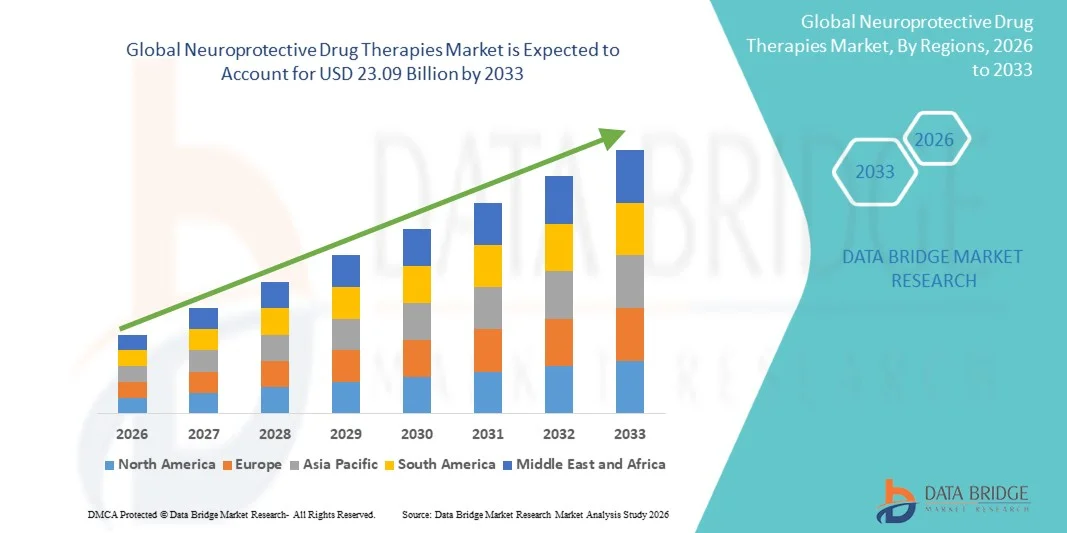
- The global neuroprotective drug therapies market size was valued at USD 8.21 billion in 2025 and is expected to reach USD 23.09 billion by 2033, at a CAGR of 13.80% during the forecast period
- The market growth is largely fueled by the increasing prevalence of neurodegenerative disorders and continuous advancements in neuroscience research and drug development, leading to greater adoption of targeted therapeutic interventions across healthcare systems
- Furthermore, rising demand for effective treatments that can slow disease progression, along with growing investments in biologics and precision medicine, is establishing neuroprotective therapies as a critical component of modern neurological care. These converging factors are accelerating the adoption of neuroprotective drugs, thereby significantly boosting the industry's growth
Neuroprotective Drug Therapies Market Analysis
- Neuroprotective drug therapies, designed to preserve neuronal structure and function while slowing or preventing the progression of neurological damage, are becoming increasingly vital in modern healthcare due to their potential to address both acute and chronic neurological conditions across diverse patient populations
- The escalating demand for neuroprotective therapies is primarily fueled by the rising global burden of neurodegenerative diseases, increasing aging population, and continuous advancements in drug discovery, including biologics and targeted treatment approaches
- North America dominated the neuroprotective drug therapies market with the largest revenue share of 41.5% in 2025, characterized by advanced healthcare infrastructure, strong research and development capabilities, and a high prevalence of neurological disorders, with the U.S. witnessing significant adoption driven by ongoing clinical trials and the presence of major pharmaceutical companies
- Asia-Pacific is expected to be the fastest growing region in the neuroprotective drug therapies market during the forecast period due to improving healthcare infrastructure, increasing awareness of neurological conditions, and rising healthcare expenditures across emerging economies
- Antioxidants segment dominated the neuroprotective drug therapies market with a combined market share of 30.9% in 2025, driven by their widespread use in managing oxidative stress and inflammation, which are key contributors to neuronal damage in various neurological disorders
Report Scope and Neuroprotective Drug Therapies Market Segmentation
|
Attributes |
Neuroprotective Drug Therapies Key Market Insights |
|
Segments Covered |
|
|
Countries Covered |
North America
Europe
Asia-Pacific
Middle East and Africa
South America
|
|
Key Market Players |
|
|
Market Opportunities |
|
|
Value Added Data Infosets |
In addition to the insights on market scenarios such as market value, growth rate, segmentation, geographical coverage, and major players, the market reports curated by the Data Bridge Market Research also include in-depth expert analysis, patient epidemiology, pipeline analysis, pricing analysis, and regulatory framework |
Neuroprotective Drug Therapies Market Trends
“Rising Focus on Disease-Modifying and Precision Neurology Approaches”
- A significant and accelerating trend in the global neuroprotective drug therapies market is the increasing shift toward disease-modifying treatments and precision medicine approaches supported by advanced biomarker identification and targeted drug development. This transformation is significantly improving therapeutic outcomes and long-term disease management
- For instance, emerging therapies targeting amyloid-beta and tau proteins in Alzheimer’s disease are being developed to slow disease progression rather than only managing symptoms. Similarly, biologics and gene-based therapies are gaining attention for conditions such as Parkinson’s disease and ALS, offering more targeted neuroprotection strategies
- Precision medicine integration in neuroprotective therapies enables patient-specific treatment plans based on genetic, molecular, and clinical profiles, improving treatment efficacy and reducing adverse effects. For instance, biomarker-driven drug development is helping identify patients most likely to benefit from specific neuroprotective interventions. Furthermore, advanced drug delivery technologies are enhancing the ability to cross the blood-brain barrier effectively
- The increasing collaboration between pharmaceutical companies, research institutions, and technology providers is facilitating the development of innovative neuroprotective solutions. Through integrated research platforms, stakeholders can accelerate clinical trials, improve drug discovery efficiency, and enhance patient outcomes across neurological conditions
- This trend towards more targeted, personalized, and disease-modifying therapies is fundamentally reshaping the neurological treatment landscape. Consequently, companies such as Biogen and Roche are focusing on developing next-generation neuroprotective drugs with improved efficacy and precision targeting mechanisms
- The demand for advanced neuroprotective therapies that offer long-term disease control and improved quality of life is growing rapidly across global healthcare systems, as providers increasingly prioritize early intervention and personalized treatment strategies
- Increasing adoption of digital health tools and AI-driven analytics in neurology is supporting better disease monitoring and treatment optimization, contributing to the evolution of neuroprotective therapy approaches
Neuroprotective Drug Therapies Market Dynamics
Driver
“Rising Neurological Disease Burden and Advancements in Drug Development”
- The increasing prevalence of neurodegenerative disorders worldwide, coupled with continuous advancements in neuroscience research and drug development, is a significant driver for the heightened demand for neuroprotective drug therapies
- For instance, in recent years, several pharmaceutical companies have accelerated clinical trials for neuroprotective agents targeting Alzheimer’s and Parkinson’s diseases, aiming to introduce more effective treatment options. Such strategies by key companies are expected to drive the neuroprotective drug therapies market growth in the forecast period
- As the global aging population expands and neurological disorders become more prevalent, there is a growing need for therapies that can slow or prevent neuronal damage, offering improved patient outcomes compared to traditional symptomatic treatments
- Furthermore, increasing healthcare expenditure and government initiatives supporting neurological research are encouraging the adoption of advanced therapies, while improving access to innovative treatment options across developed and emerging markets
- The availability of novel biologics, small molecules, and combination therapies, along with improvements in diagnostic capabilities, are key factors propelling the adoption of neuroprotective drugs across hospitals and specialty neurology centers. The trend toward early diagnosis and intervention further contributes to market growth
- Growing investments from pharmaceutical and biotechnology companies in neurodegenerative research pipelines are accelerating innovation and expanding the availability of potential neuroprotective treatment options
- Rising awareness among patients and healthcare providers regarding early-stage intervention and disease prevention is further boosting demand for neuroprotective therapies globally
Restraint/Challenge
“High Development Costs and Clinical Trial Complexity”
- Concerns surrounding the high cost of drug development and the complexity of clinical trials for neuroprotective therapies pose a significant challenge to broader market growth. As these therapies target complex neurological pathways, they often require long development timelines and substantial investment
- For instance, the high failure rate of clinical trials in neurodegenerative diseases has made pharmaceutical companies cautious about large-scale investments in neuroprotective drug development
- Addressing these challenges requires improved clinical trial designs, better biomarker validation, and enhanced understanding of disease mechanisms to increase success rates. Companies are increasingly investing in advanced research technologies and collaborative models to overcome these barriers. In addition, stringent regulatory requirements for safety and efficacy further increase the time and cost associated with bringing new therapies to market
- While advancements in research are ongoing, the limited success rate of disease-modifying therapies and uncertainties in long-term outcomes can hinder investor confidence and slow down innovation in the market
- Overcoming these challenges through regulatory support, improved research frameworks, and cost-effective drug development strategies will be essential for sustained growth in the neuroprotective drug therapies market
- Limited ability of many neuroprotective drugs to effectively cross the blood-brain barrier remains a major scientific and therapeutic challenge impacting treatment efficacy
- High treatment costs and limited reimbursement policies in several regions can restrict patient access and slow the widespread adoption of advanced neuroprotective therapies
Neuroprotective Drug Therapies Market Scope
The market is segmented on the basis of drug type, application, distribution channel, and end user.
- By Drug Type
On the basis of drug type, the neuroprotective drug therapies market is segmented into glutamate (NMDA) receptor antagonists, antioxidants, anti-inflammatory agents, neurotrophic factor modulators, ion channel modulators, apoptosis inhibitors, metal ion chelators, disease-modifying biologics, and others. The antioxidants segment dominated the market with the largest market revenue share of 30.9% in 2025, driven by their widespread use in reducing oxidative stress, which is a key contributor to neuronal damage in multiple neurological disorders. These therapies are extensively utilized across conditions such as Alzheimer’s disease and stroke due to their ability to neutralize free radicals and protect neuronal cells. The relatively lower cost, established clinical usage, and broad applicability further support their dominance. In addition, antioxidants are often included in combination therapies, increasing their adoption across treatment protocols. Growing research into oxidative stress pathways continues to reinforce their importance in neuroprotection strategies. The availability of both prescription and supplemental antioxidant therapies also contributes to their strong market penetration.
The disease-modifying biologics segment is anticipated to witness the fastest growth rate of 18.9% from 2026 to 2033, fueled by increasing focus on targeting underlying disease mechanisms rather than just managing symptoms. These biologics, including monoclonal antibodies and gene-based therapies, are gaining traction in treating complex neurodegenerative disorders such as Alzheimer’s and Parkinson’s disease. Advances in biotechnology and improved understanding of disease pathways are accelerating the development of these therapies. In addition, strong investment from pharmaceutical companies and favorable regulatory support for innovative treatments are driving segment growth. The potential for long-term disease control and improved patient outcomes makes biologics highly attractive. Increasing clinical trial activity and pipeline expansion are expected to further boost their adoption during the forecast period.
- By Application
On the basis of application, the neuroprotective drug therapies market is segmented into Alzheimer’s disease, Parkinson’s disease, Huntington’s disease, amyotrophic lateral sclerosis (ALS), stroke, traumatic brain injury (TBI), multiple sclerosis, epilepsy, neuropathies, and ocular degenerative diseases. The Alzheimer’s disease segment dominated the market with a revenue share of 34% in 2025, driven by the high global prevalence and significant unmet medical need associated with the disease. The increasing aging population is a major factor contributing to the rising number of Alzheimer’s cases worldwide. Neuroprotective therapies are widely used to slow disease progression and improve cognitive function in affected patients. Continuous research and development activities aimed at discovering effective treatments further strengthen this segment. In addition, growing awareness and early diagnosis initiatives are increasing treatment adoption rates. The presence of multiple pipeline drugs targeting Alzheimer’s disease also supports sustained market dominance.
The Parkinson’s disease segment is expected to witness the fastest growth rate of 17.6% from 2026 to 2033, driven by increasing incidence rates and advancements in targeted therapies. Neuroprotective drugs for Parkinson’s focus on preserving dopaminergic neurons and improving motor function. Ongoing research into disease-modifying treatments and novel drug delivery systems is enhancing therapeutic outcomes. Rising healthcare expenditure and improved access to treatment options in emerging markets are also contributing to segment growth. In addition, increasing awareness and early-stage diagnosis are encouraging timely intervention. The expanding pipeline of innovative therapies is expected to further accelerate growth in this segment.
- By Distribution Channel
On the basis of distribution channel, the neuroprotective drug therapies market is segmented into hospital pharmacies, retail pharmacies, online pharmacies, and specialty distribution. The hospital pharmacies segment dominated the market with a share of 48% in 2025, driven by the high volume of neurological treatments administered in hospital settings. Neuroprotective therapies often require specialized administration and monitoring, which are best supported in hospitals. The availability of advanced healthcare infrastructure and skilled professionals further supports this segment’s dominance. In addition, hospitals are primary centers for acute neurological conditions such as stroke and traumatic brain injury. Strong collaboration between hospitals and pharmaceutical companies also facilitates drug availability. The increasing number of hospital admissions related to neurological disorders continues to drive segment growth.
The online pharmacies segment is anticipated to witness the fastest growth rate of 20.3% from 2026 to 2033, fueled by the growing adoption of digital healthcare platforms and e-commerce. Patients are increasingly preferring online channels due to convenience, home delivery, and competitive pricing. The expansion of telemedicine services is also supporting the growth of online pharmaceutical distribution. Improved internet penetration and smartphone usage, particularly in emerging markets, are accelerating adoption. In addition, online pharmacies provide access to a wider range of medications, including specialty drugs. Regulatory improvements and enhanced digital security measures are expected to further boost this segment’s growth.
- By End User
On the basis of end user, the neuroprotective drug therapies market is segmented into hospitals & clinics, neurology specialty centers, home care settings, academic & research institutes, and contract research organizations (CROs). The hospitals & clinics segment dominated the market with a share of approximately 50–53% in 2025, driven by the high patient inflow and availability of comprehensive treatment facilities. These settings are the primary point of care for patients with neurological disorders requiring immediate and long-term management. The presence of skilled healthcare professionals and access to advanced diagnostic tools support effective treatment delivery. In addition, hospitals play a key role in clinical trials and adoption of new therapies. Increasing healthcare investments and infrastructure development further strengthen this segment. The growing burden of neurological diseases continues to drive demand in hospitals and clinics.
The neurology specialty centers segment is expected to witness the fastest growth rate of 19.4% from 2026 to 2033, driven by the increasing demand for specialized neurological care. These centers offer focused expertise, advanced diagnostic capabilities, and personalized treatment plans for complex neurological conditions. Patients are increasingly opting for specialty centers for better treatment outcomes and access to innovative therapies. The rise in outpatient care and specialized treatment services is further supporting growth. In addition, collaborations with research organizations enable access to cutting-edge treatments. The expansion of specialty healthcare infrastructure globally is expected to drive significant growth in this segment.
Neuroprotective Drug Therapies Market Regional Analysis
- North America dominated the neuroprotective drug therapies market with the largest revenue share of 41.5% in 2025, characterized by advanced healthcare infrastructure, strong research and development capabilities, and a high prevalence of neurological disorders
- Healthcare providers in the region highly prioritize advanced treatment options, early diagnosis, and the adoption of innovative neuroprotective therapies supported by well-established healthcare infrastructure and reimbursement systems
- This widespread adoption is further supported by high healthcare expenditure, a strong presence of leading pharmaceutical companies, and increasing clinical research activities, establishing neuroprotective drug therapies as a critical component in the management of neurological disorders across hospitals and specialty care settings
U.S. Neuroprotective Drug Therapies Market Insight
The U.S. neuroprotective drug therapies market captured the largest revenue share of 82% in 2025 within North America, fueled by the high prevalence of neurological disorders and strong investment in advanced drug development. Healthcare providers are increasingly prioritizing early diagnosis and innovative treatment approaches to manage neurodegenerative conditions. The growing focus on precision medicine, combined with robust demand for biologics and disease-modifying therapies, further propels the market. Moreover, the increasing integration of advanced diagnostics and biomarker-based research is significantly contributing to the market's expansion.
Europe Neuroprotective Drug Therapies Market Insight
The Europe neuroprotective drug therapies market is projected to expand at a substantial CAGR throughout the forecast period, primarily driven by increasing healthcare awareness and the rising burden of neurodegenerative diseases. The growth in aging population, coupled with strong government support for neurological research, is fostering the adoption of advanced therapies. European healthcare systems are also emphasizing early intervention and long-term disease management. The region is experiencing steady growth across hospitals and specialty centers, with neuroprotective drugs being increasingly incorporated into standard treatment protocols.
U.K. Neuroprotective Drug Therapies Market Insight
The U.K. neuroprotective drug therapies market is anticipated to grow at a noteworthy CAGR during the forecast period, driven by the rising incidence of neurological conditions and demand for effective treatment solutions. In addition, increasing focus on early-stage diagnosis and preventive care is encouraging healthcare providers to adopt advanced neuroprotective therapies. The country’s strong clinical research environment, alongside its well-established healthcare system, is expected to continue to stimulate market growth.
Germany Neuroprotective Drug Therapies Market Insight
The Germany neuroprotective drug therapies market is expected to expand at a considerable CAGR during the forecast period, fueled by increasing investment in pharmaceutical innovation and growing awareness of neurological health. Germany’s advanced healthcare infrastructure, combined with its focus on research and development, promotes the adoption of neuroprotective therapies. The integration of innovative treatment approaches with diagnostic advancements is also becoming increasingly prevalent, with a strong emphasis on effective and evidence-based care aligning with local healthcare standards.
Asia-Pacific Neuroprotective Drug Therapies Market Insight
The Asia-Pacific neuroprotective drug therapies market is poised to grow at the fastest CAGR of 22% during the forecast period of 2026 to 2033, driven by increasing aging population, rising healthcare expenditure, and improving access to neurological treatments in countries such as China, Japan, and India. The region's growing focus on healthcare infrastructure development, supported by government initiatives, is driving the adoption of neuroprotective therapies. Furthermore, as APAC emerges as a key region for clinical research and pharmaceutical manufacturing, the accessibility and availability of neuroprotective drugs are expanding to a wider patient population.
Japan Neuroprotective Drug Therapies Market Insight
The Japan neuroprotective drug therapies market is gaining momentum due to the country’s rapidly aging population, advanced healthcare system, and strong demand for effective neurological treatments. The Japanese market places significant emphasis on early diagnosis and disease management, and the adoption of neuroprotective therapies is driven by increasing cases of neurodegenerative disorders. The integration of advanced diagnostics with treatment solutions is fueling growth. Moreover, Japan's focus on innovation is likely to spur demand for targeted and efficient neuroprotective therapies in both clinical and research settings.
India Neuroprotective Drug Therapies Market Insight
The India neuroprotective drug therapies market accounted for a significant market share in Asia Pacific in 2025, attributed to the country’s large patient population, increasing awareness of neurological disorders, and improving healthcare infrastructure. India stands as one of the fastest-growing markets for advanced pharmaceutical treatments, and neuroprotective therapies are becoming increasingly adopted across hospitals and specialty centers. The push towards healthcare modernization and expanding access to affordable treatment options, alongside growing domestic pharmaceutical capabilities, are key factors propelling the market in India.
Neuroprotective Drug Therapies Market Share
The Neuroprotective Drug Therapies industry is primarily led by well-established companies, including:
- Biogen Inc. (U.S.)
- Eli Lilly and Company (U.S.)
- F. Hoffmann-La Roche Ltd (Switzerland)
- Novartis AG (Switzerland)
- Pfizer Inc. (U.S.)
- AbbVie Inc. (U.S.)
- Johnson & Johnson Services, Inc. (U.S.)
- Merck & Co., Inc. (U.S.)
- AstraZeneca (U.K.)
- Sanofi (France)
- Takeda Pharmaceutical Company Limited (Japan)
- UCB SA (Belgium)
- Eisai Co., Ltd. (Japan)
- Otsuka Pharmaceutical Co., Ltd. (Japan)
- Teva Pharmaceutical Industries Ltd. (Israel)
- H. Lundbeck A/S (Denmark)
- Neurocrine Biosciences, Inc. (U.S.)
- Denali Therapeutics Inc. (U.S.)
- AC Immune SA (Switzerland)
- Annovis Bio, Inc. (U.S.)
What are the Recent Developments in Global Neuroprotective Drug Therapies Market?
- In February 2026, researchers from Indiana University School of Medicine identified a new drug discovery pathway targeting enzymes such as IDOL for Alzheimer’s treatment, building on recent approvals of disease-modifying therapies such as lecanemab and donanemab. This breakthrough highlights the expanding focus on novel molecular targets and next-generation neuroprotective strategies aimed at improving long-term patient outcomes
- In December 2025, leading researchers at the Clinical Trials in Alzheimer’s Disease (CTAD) conference presented multiple advancements in neuroprotective drug development, including novel therapies such as trontinemab and blarcamesine showing promising results in slowing disease progression. These developments emphasize the growing pipeline of disease-modifying therapies and the increasing momentum in clinical research targeting neurodegenerative disorders
- In September 2025, Novo Nordisk A/S reported progress in its Phase 3 clinical trials evaluating semaglutide for Alzheimer’s disease, aiming to assess its neuroprotective effects in early-stage patients with mild cognitive impairment and dementia. This development highlights the rising trend of drug repurposing and expansion of existing therapies into neurodegenerative indications, potentially broadening treatment options in the market
- In January 2023, Eisai Co., Ltd. and Biogen Inc., leading pharmaceutical companies, announced the FDA approval of lecanemab (Leqembi), a novel neuroprotective therapy for early-stage Alzheimer’s disease, designed to target and reduce amyloid-beta plaques in the brain. The drug demonstrated the ability to slow cognitive decline in clinical trials, marking a significant advancement in disease-modifying treatments and highlighting a shift toward therapies that address underlying neurodegenerative mechanisms
- In June 2021, Biogen, in collaboration with Eisai, announced the FDA approval of aducanumab (Aduhelm), a monoclonal antibody therapy designed to reduce amyloid-beta plaques in the brain for Alzheimer’s disease treatment. This marked one of the first disease-modifying neuroprotective therapies targeting the underlying pathology of Alzheimer’s rather than just symptoms, representing a major milestone in neurodegenerative drug development despite ongoing debates about its clinical efficacy

- Interactive Data Analysis Dashboard
- Company Analysis Dashboard for high growth potential opportunities
- Research Analyst Access for customization & queries
- Competitor Analysis with Interactive dashboard
- Latest News, Updates & Trend analysis
- Harness the Power of Benchmark Analysis for Comprehensive Competitor Tracking
Data collection and base year analysis are done using data collection modules with large sample sizes. The stage includes obtaining market information or related data through various sources and strategies. It includes examining and planning all the data acquired from the past in advance. It likewise envelops the examination of information inconsistencies seen across different information sources. The market data is analysed and estimated using market statistical and coherent models. Also, market share analysis and key trend analysis are the major success factors in the market report. To know more, please request an analyst call or drop down your inquiry.
The key research methodology used by DBMR research team is data triangulation which involves data mining, analysis of the impact of data variables on the market and primary (industry expert) validation. Data models include Vendor Positioning Grid, Market Time Line Analysis, Market Overview and Guide, Company Positioning Grid, Patent Analysis, Pricing Analysis, Company Market Share Analysis, Standards of Measurement, Global versus Regional and Vendor Share Analysis. To know more about the research methodology, drop in an inquiry to speak to our industry experts.
Data Bridge Market Research is a leader in advanced formative research. We take pride in servicing our existing and new customers with data and analysis that match and suits their goal. The report can be customized to include price trend analysis of target brands understanding the market for additional countries (ask for the list of countries), clinical trial results data, literature review, refurbished market and product base analysis. Market analysis of target competitors can be analyzed from technology-based analysis to market portfolio strategies. We can add as many competitors that you require data about in the format and data style you are looking for. Our team of analysts can also provide you data in crude raw excel files pivot tables (Fact book) or can assist you in creating presentations from the data sets available in the report.












