


Neuroprotective Small Molecule Market Size
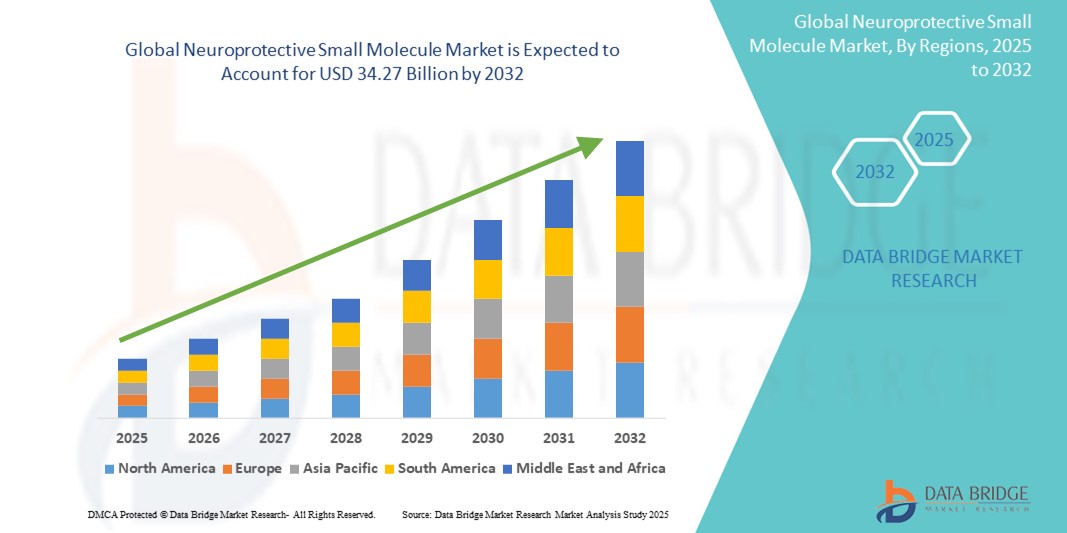
- The global neuroprotective small molecule market size was valued at USD 21.18 billion in 2024 and is expected to reach USD 34.27 billion by 2032, at a CAGR of 6.20% during the forecast period
- The market growth is primarily driven by the increasing prevalence of neurodegenerative diseases such as Alzheimer’s, Parkinson’s, and ALS, along with a rising geriatric population worldwide
- Moreover, advancements in molecular biology, drug discovery platforms, and the emergence of targeted small molecule therapies are accelerating innovation and pipeline expansion. These combined forces are propelling the adoption of neuroprotective small molecules, thus significantly enhancing the market's trajectory
Neuroprotective Small Molecule Market Analysis
- Neuroprotective small molecules, designed to preserve and protect neuronal structure and function, are becoming critical in the therapeutic landscape for treating neurodegenerative diseases and acute neural injuries, offering targeted intervention through mechanisms such as anti-inflammatory action, antioxidation, and inhibition of cell death pathways
- The rising incidence of neurological disorders, coupled with increased R&D investments and breakthroughs in drug delivery and molecular targeting, is significantly propelling demand for neuroprotective small molecule therapies across both developed and emerging healthcare markets
- North America dominated the neuroprotective small molecule market with the largest revenue share of 42.2% in 2024, driven by a high prevalence of neurological conditions, favorable regulatory frameworks, and the strong presence of leading pharmaceutical and biotech firms accelerating clinical advancements and commercial availability
- Asia-Pacific is expected to be the fastest growing region in the neuroprotective small molecule market during the forecast period due to rising healthcare awareness, improving diagnostic capabilities, and increasing government focus on neurodegenerative disease management
- Alzheimer’s disease segment dominated the neuroprotective small molecule market with a market share of 39% in 2024, supported by a growing aging population, increasing disease burden, and ongoing development of small molecule therapies targeting amyloid and tau pathologies
Report Scope and Neuroprotective Small Molecule Market Segmentation
|
Attributes |
Neuroprotective Small Molecule Key Market Insights |
|
Segments Covered |
|
|
Countries Covered |
North America
Europe
Asia-Pacific
Middle East and Africa
South America
|
|
Key Market Players |
|
|
Market Opportunities |
|
|
Value Added Data Infosets |
In addition to the insights on market scenarios such as market value, growth rate, segmentation, geographical coverage, and major players, the market reports curated by the Data Bridge Market Research also include in-depth expert analysis, pricing analysis, brand share analysis, consumer survey, demography analysis, supply chain analysis, value chain analysis, raw material/consumables overview, vendor selection criteria, PESTLE Analysis, Porter Analysis, and regulatory framework. |
Neuroprotective Small Molecule Market Trends
“Advances in Targeted Drug Delivery and Neurotrophin Modulation”
- A significant and accelerating trend in the global neuroprotective small molecule market is the advancement of targeted drug delivery systems and the emergence of small molecules that modulate neurotrophic signaling pathways such as BDNF and NGF. These innovations are enhancing therapeutic precision and offering new hope in treating complex neurodegenerative conditions
- For instance, novel compounds such as 7,8-Dihydroxyflavone act as TrkB agonists, mimicking BDNF activity to promote neuronal survival, while several clinical-stage molecules target apoptosis inhibition and oxidative stress with improved brain bioavailability
- The application of nanoparticle-based carriers, lipid nanoparticles, and prodrug strategies is helping small molecules overcome the blood-brain barrier (BBB), one of the major historical limitations in neurotherapeutic delivery. Enhanced CNS penetration is translating into more effective treatments and improved clinical outcomes
- Companies are also integrating AI and computational modeling into early-stage drug discovery to predict neurotoxicity and optimize molecular profiles for maximum target engagement with minimal off-target effects. This is accelerating the development of next-generation neuroprotective agents
- This trend toward more targeted, bioavailable, and neuro-selective small molecules is redefining the treatment paradigm for neurological disorders. As a result, companies such as Athira Pharma and Annovis Bio are developing novel neuroprotective compounds aimed at restoring synaptic function and reducing neuroinflammation in Alzheimer’s and Parkinson’s diseases
- The growing interest in disease-modifying therapies that address underlying neurodegeneration rather than just symptoms is fueling rapid advancements in small molecule innovation across both academic and commercial sectors
Neuroprotective Small Molecule Market Dynamics
Driver
“Increasing Neurological Disease Burden and Innovation in Molecular Therapeutics”
- The rising global incidence of neurological conditions, such as Alzheimer’s, Parkinson’s, stroke, and multiple sclerosis, is a major driver for the growing demand for neuroprotective small molecules
- For instance, in 2024, Athira Pharma expanded its clinical program for fosgonimeton, a small molecule therapeutic targeting the HGF/MET pathway, aiming to improve cognition and protect neuronal function in Alzheimer’s patients. Such pipeline developments by innovative biopharma firms are expected to drive the market in the coming years
- As the aging population increases and neurological diseases continue to account for a substantial share of global disability and mortality, there is a critical need for accessible and effective neuroprotective solutions
- Small molecules are particularly attractive due to their oral bioavailability, cost-effectiveness, and suitability for chronic administration attributes that make them scalable in both high-income and emerging healthcare markets
- Furthermore, increasing public and private investments in neuroscience research, coupled with faster regulatory pathways for orphan neurological indications, are creating a favorable environment for clinical advancement and commercialization of neuroprotective small molecules
Restraint/Challenge
“Blood-Brain Barrier Limitations and Clinical Trial Complexity”
- One of the most significant challenges in the neuroprotective small molecule market is the difficulty of achieving effective central nervous system (CNS) penetration due to the restrictive nature of the blood-brain barrier (BBB). This limits the efficacy of many promising compounds and slows down drug development timelines
- For instance, several small molecules have shown neuroprotective effects in preclinical models but failed in clinical trials due to insufficient brain bioavailability or unexpected neurotoxicity, highlighting the complexity of translating lab success into therapeutic benefit
- Addressing this requires the development of innovative delivery platforms and smarter molecular engineering to enhance CNS uptake without compromising safety. Companies are increasingly exploring lipid-soluble analogs, intranasal delivery, and BBB-modulating technologies to overcome this barrier
- In addition, the long and costly nature of clinical trials for neurodegenerative diseases—where measurable outcomes often take years—poses a significant hurdle, especially for smaller biotech firms. Regulatory uncertainties around surrogate endpoints and lack of clear biomarkers further complicate approval pathways
- Overcoming these barriers through collaborative R&D, improved translational models, and better-designed trials will be essential for unlocking the full commercial potential of neuroprotective small molecules
Neuroprotective Small Molecule Market Scope
The market is segmented on the basis of mechanism of action, indication, route of administration, and end user.
- By Mechanism of Action
On the basis of mechanism of action, the neuroprotective small molecule market is segmented into glutamate/NMDA receptor antagonists, anti-inflammatory agents, antioxidants, metal ion chelators, neurotrophic factor mimetics, apoptosis inhibitors, and radical-trapping agents. The glutamate/NMDA receptor antagonists segment dominated the market with the largest market revenue share in 2024, driven by their proven neuroprotective effect in conditions such as Alzheimer’s disease and stroke. These agents help mitigate excitotoxicity, a key pathological process in various neurological disorders, and have shown clinical efficacy and regulatory acceptance in targeted therapies.
The neurotrophic factor mimetics segment is anticipated to witness the fastest growth rate from 2025 to 2032, fueled by rising interest in disease-modifying mechanisms that promote neuronal repair and synaptic restoration. These agents mimic or enhance neurotrophic signaling, offering therapeutic potential across a broad range of neurodegenerative conditions, and are currently a focus of intensive R&D and clinical pipeline expansion.
- By Indication
On the basis of indication, the neuroprotective small molecule market is segmented into Alzheimer’s disease, Parkinson’s disease, multiple sclerosis, stroke, traumatic brain injury, Huntington’s disease, amyotrophic lateral sclerosis, neuropathies, ocular degenerative diseases, and others. The Alzheimer’s disease segment dominated the market with the largest market revenue share of 39% in 2024, owing to the high global prevalence and increasing aging population. The strong demand for innovative treatment options targeting amyloid and tau pathologies is driving continued research, development, and commercialization in this area.
The traumatic brain injury segment is expected to witness the fastest growth rate from 2025 to 2032, driven by the rising incidence of TBI globally due to sports injuries, road accidents, and military-related trauma. The urgent need for acute neuroprotective intervention and advancements in small molecule-based emergency treatments are propelling growth in this segment.
- By Route of Administration
On the basis of route of administration, the neuroprotective small molecule market is segmented into oral, intravenous, intrathecal, transdermal, and topical. The oral segment held the largest market revenue share in 2024, driven by its convenience, non-invasiveness, and high patient adherence for chronic conditions such as Alzheimer’s and Parkinson’s disease. Oral small molecules are favored due to their scalable manufacturing, cost-effectiveness, and ease of use in outpatient settings.
The intrathecal segment is anticipated to witness the fastest growth rate from 2025 to 2032, fueled by its direct delivery to the central nervous system, making it ideal for targeting severe or localized neurodegenerative diseases. Increased clinical interest in intrathecal formulations for spinal cord injury and ALS is expected to boost segment growth.
- By End User
On the basis of end user, the neuroprotective small molecule market is segmented into hospitals, clinics, retail pharmacies, online pharmacies, and academic & research institutes. The hospitals segment dominated the market with the largest market revenue share in 2024, driven by the high volume of neurological patients requiring specialized care and advanced neuroprotective therapies. Hospitals serve as key centers for diagnosis, acute management, and drug administration for complex neurodegenerative conditions.
The academic & research institutes segment is expected to witness the fastest growth rate from 2025 to 2032, supported by rising investments in neuroscience research and early-stage drug discovery. These institutions play a crucial role in developing new neuroprotective molecules, evaluating mechanisms of action, and collaborating with biotech firms to accelerate clinical translation.
Neuroprotective Small Molecule Market Regional Analysis
- North America dominated the neuroprotective small molecule market with the largest revenue share of 42.2% in 2024, driven by a high prevalence of neurological conditions, favorable regulatory frameworks, and the strong presence of leading pharmaceutical and biotech firms accelerating clinical advancements and commercial availability
- Patients and providers in the region place significant value on early access to innovative therapies, targeted treatment options, and advanced diagnostics, all of which contribute to the widespread adoption of neuroprotective small molecules across multiple indications
- This strong regional presence is further supported by increased R&D funding, the presence of leading pharmaceutical and biotech companies, and an aging population with a growing need for disease-modifying neurological treatments, positioning North America as a key hub for clinical trials and commercial uptake
U.S. Neuroprotective Small Molecule Market Insight
The U.S. neuroprotective small molecule market captured the largest revenue share of 78.3% in 2024 within North America, fueled by a high prevalence of neurodegenerative disorders and strong investment in pharmaceutical innovation. The presence of major industry players and robust clinical trial infrastructure supports rapid drug development and commercialization. In addition, early adoption of emerging therapeutics, availability of advanced diagnostic tools, and favorable reimbursement policies continue to drive market growth. Strategic collaborations between biotech firms and academic institutions are further accelerating innovation in disease-modifying small molecule therapies.
Europe Neuroprotective Small Molecule Market Insight
The Europe neuroprotective small molecule market is projected to expand at a substantial CAGR throughout the forecast period, primarily driven by increasing aging populations and a strong focus on neurological healthcare. Rising public awareness of conditions such as Alzheimer’s and Parkinson’s, along with funding support for CNS research, is fostering demand for innovative therapies. The adoption of advanced molecular treatment strategies is particularly evident across Western Europe, where countries are enhancing healthcare policies and neurorehabilitation programs, fueling the uptake of neuroprotective small molecule drugs.
U.K. Neuroprotective Small Molecule Market Insight
The U.K. neuroprotective small molecule market is anticipated to grow at a noteworthy CAGR during the forecast period, driven by the rising burden of neurological diseases and government-backed initiatives in neurodegenerative research. The National Health Service’s emphasis on early intervention and cost-effective treatment options has increased the focus on small molecules for cognitive and neuroprotective benefits. In addition, the U.K.’s dynamic biotech ecosystem and participation in multi-center clinical trials are enhancing market opportunities for novel CNS-targeted therapies.
Germany Neuroprotective Small Molecule Market Insight
The Germany neuroprotective small molecule market is expected to expand at a considerable CAGR during the forecast period, fueled by an aging population, innovation-driven pharmaceutical sector, and increased public funding for neuroscience research. German institutions are leading several international collaborations focused on neuroprotection and brain repair, fostering both clinical and commercial development. With a well-established regulatory and healthcare infrastructure, Germany presents a favorable environment for introducing advanced small molecule therapies targeting chronic and progressive neurodegenerative disorders.
Asia-Pacific Neuroprotective Small Molecule Market Insight
The Asia-Pacific neuroprotective small molecule market is poised to grow at the fastest CAGR of 23.6% during the forecast period of 2025 to 2032, driven by rising neurological disease incidence, growing healthcare investments, and improved access to advanced therapies in countries such as China, Japan, and India. Government support for neurodegenerative research, increasing clinical trial activity, and the expansion of domestic pharmaceutical manufacturing are supporting wider adoption of small molecule-based treatments across the region.
Japan Neuroprotective Small Molecule Market Insight
The Japan neuroprotective small molecule market is gaining momentum due to its rapidly aging population, high incidence of Alzheimer’s and Parkinson’s disease, and strong government support for dementia-related initiatives. Japan’s advanced healthcare infrastructure and focus on early intervention are driving clinical adoption of neuroprotective agents. The country’s leadership in pharmaceutical R&D and integration of digital health platforms are also contributing to the market’s expansion, especially in urban and long-term care settings.
India Neuroprotective Small Molecule Market Insight
The India neuroprotective small molecule market accounted for the largest market revenue share in Asia Pacific in 2024, attributed to increased healthcare awareness, growing incidence of stroke and traumatic brain injuries, and strong pharmaceutical production capacity. The government's focus on neurological disease prevention and early treatment, combined with the availability of cost-effective small molecule therapies, is promoting market growth. Moreover, domestic R&D investments and academic collaborations are expanding access to innovative neuroprotective solutions across urban and semi-urban healthcare settings.
Neuroprotective Small Molecule Market Share
The neuroprotective small molecule industry is primarily led by well-established companies, including:
- Athira Pharma, Inc. (U.S.)
- Annovis Bio, Inc. (U.S.)
- Biohaven Ltd. (U.S.)
- NMD Pharma A/S (Denmark)
- Gain Therapeutics, Inc. (Switzerland)
- Denali Therapeutics Inc. (U.S.)
- AC Immune SA (Switzerland)
- Lilly (U.S.)
- F. Hoffmann-La Roche Ltd (Switzerland)
- Takeda Pharmaceutical Company Limited (Japan)
- Novartis AG (Switzerland)
- Sanofi (France)
- Johnson & Johnson Services, Inc. (U.S.)
- Biogen Inc. (U.S.)
- AbbVie Inc. (U.S.)
- Oryzon Genomics S.A. (Spain)
- Lundbeck A/S (Denmark)
- Neurocrine Biosciences, Inc. (U.S.)
- Sunovion Pharmaceuticals Inc. (U.S.)
- UCB S.A. (Belgium)
What are the Recent Developments in Global Neuroprotective Small Molecule Market?
- In April 2023, Athira Pharma announced promising Phase 2 trial results for its lead small molecule candidate, fosgonimeton, targeting the HGF/MET neurotrophic pathway for Alzheimer’s disease. The results demonstrated improvements in cognitive function and synaptic health, positioning the therapy as a potential disease-modifying treatment. This development underscores Athira’s commitment to pioneering neuroprotective mechanisms that address core neurodegenerative processes and highlights growing momentum in small molecule innovation for chronic neurological conditions
- In March 2023, Annovis Bio expanded its clinical program for buntanetap, a novel oral small molecule designed to inhibit multiple neurotoxic proteins implicated in Alzheimer’s and Parkinson’s disease. The company announced the initiation of a new Phase 3 trial for Parkinson’s patients, aiming to validate early data showing cognitive and motor improvements. This move reflects the broader industry push toward multi-target small molecule approaches that address complex neurodegenerative pathologies
- In February 2023, Gain Therapeutics presented new preclinical data on its proprietary small molecules targeting misfolded protein stabilization in neurodegenerative diseases. The company’s lead candidate, GT-02287, demonstrated neuroprotective effects in Parkinson’s disease models by enhancing lysosomal function and reducing α-synuclein pathology. These findings further reinforce the potential of structurally targeted small molecules in addressing the root causes of neuronal degeneration
- In January 2023, the European Medicines Agency (EMA) granted Orphan Drug Designation to a novel small molecule developed by BioHaven Pharmaceuticals for the treatment of amyotrophic lateral sclerosis (ALS). The designation provides regulatory and commercial incentives, accelerating the path to market for promising neuroprotective therapies in rare neurodegenerative conditions. BioHaven’s advancement highlights the growing strategic focus on expanding small molecule pipelines into underserved neurological indications
- In January 2023, NMD Pharma, a Danish biotech company, raised additional Series B funding to advance its clinical development of ClC-1 chloride ion channel modulators—first-in-class small molecules aimed at enhancing neuromuscular function in conditions such as spinal muscular atrophy and myasthenia gravis. This funding milestone underscores investor confidence in targeted neuroprotective strategies and reflects the growing diversity of mechanisms being explored through small molecule approaches

- Interactive Data Analysis Dashboard
- Company Analysis Dashboard for high growth potential opportunities
- Research Analyst Access for customization & queries
- Competitor Analysis with Interactive dashboard
- Latest News, Updates & Trend analysis
- Harness the Power of Benchmark Analysis for Comprehensive Competitor Tracking
Data collection and base year analysis are done using data collection modules with large sample sizes. The stage includes obtaining market information or related data through various sources and strategies. It includes examining and planning all the data acquired from the past in advance. It likewise envelops the examination of information inconsistencies seen across different information sources. The market data is analysed and estimated using market statistical and coherent models. Also, market share analysis and key trend analysis are the major success factors in the market report. To know more, please request an analyst call or drop down your inquiry.
The key research methodology used by DBMR research team is data triangulation which involves data mining, analysis of the impact of data variables on the market and primary (industry expert) validation. Data models include Vendor Positioning Grid, Market Time Line Analysis, Market Overview and Guide, Company Positioning Grid, Patent Analysis, Pricing Analysis, Company Market Share Analysis, Standards of Measurement, Global versus Regional and Vendor Share Analysis. To know more about the research methodology, drop in an inquiry to speak to our industry experts.
Data Bridge Market Research is a leader in advanced formative research. We take pride in servicing our existing and new customers with data and analysis that match and suits their goal. The report can be customized to include price trend analysis of target brands understanding the market for additional countries (ask for the list of countries), clinical trial results data, literature review, refurbished market and product base analysis. Market analysis of target competitors can be analyzed from technology-based analysis to market portfolio strategies. We can add as many competitors that you require data about in the format and data style you are looking for. Our team of analysts can also provide you data in crude raw excel files pivot tables (Fact book) or can assist you in creating presentations from the data sets available in the report.












