


Neurorehabilitation Gaming Systems Market Size
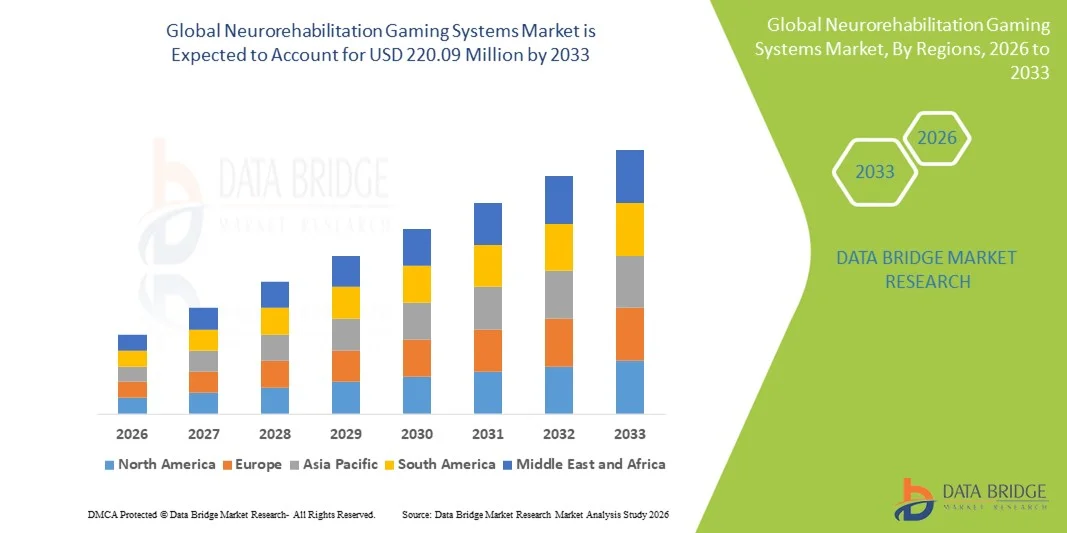
- The global neurorehabilitation gaming systems market size was valued at USD 79.02 million in 2025 and is expected to reach USD 220.09 million by 2033, at a CAGR of 13.66% during the forecast period
- The market growth is largely fueled by the increasing integration of advanced gaming technologies and virtual reality tools in therapeutic and rehabilitation programs, enhancing patient engagement and outcomes
- Furthermore, rising prevalence of neurological disorders, growing geriatric population, and increasing demand for personalized, home-based, and clinic-based rehabilitation solutions are positioning neurorehabilitation gaming systems as effective tools in modern therapy. These converging factors are accelerating the adoption of such systems, thereby significantly boosting the industry's growth
Neurorehabilitation Gaming Systems Market Analysis
- Neurorehabilitation gaming systems, providing interactive digital and virtual reality-based therapeutic exercises, are increasingly essential components of modern rehabilitation programs in both clinical and home-based settings due to their ability to enhance patient engagement, track progress, and deliver personalized therapy
- The rising demand for neurorehabilitation gaming systems is primarily driven by the growing prevalence of neurological disorders, increasing focus on patient-centric and home-based rehabilitation solutions, and advancements in VR and sensor-based gaming technologies
- North America dominated the neurorehabilitation gaming systems market with the largest revenue share of 39.2% in 2025, characterized by advanced healthcare infrastructure, high healthcare spending, and a strong presence of key technology and medical device companies, with the U.S. witnessing substantial adoption in hospitals, rehabilitation centers, and home-based therapy programs, driven by innovations in immersive VR and AI-assisted exercise modules
- Asia-Pacific is expected to be the fastest growing region in the neurorehabilitation gaming systems market during the forecast period due to increasing healthcare awareness, rising investments in digital health technologies, and expanding geriatric population requiring neurological care
- Rehabilitation gaming system segment dominated the neurorehabilitation gaming systems market with a market share of 42.8% in 2025, driven by its effectiveness in engaging patients, providing real-time feedback, and facilitating motor and cognitive recovery across a range of neurological conditions
Report Scope and Neurorehabilitation Gaming Systems Market Segmentation
|
Attributes |
Neurorehabilitation Gaming Systems Key Market Insights |
|
Segments Covered |
|
|
Countries Covered |
North America
Europe
Asia-Pacific
Middle East and Africa
South America
|
|
Key Market Players |
|
|
Market Opportunities |
|
|
Value Added Data Infosets |
In addition to the insights on market scenarios such as market value, growth rate, segmentation, geographical coverage, and major players, the market reports curated by the Data Bridge Market Research also include in-depth expert analysis, patient epidemiology, pipeline analysis, pricing analysis, and regulatory framework |
Neurorehabilitation Gaming Systems Market Trends
Increasing Adoption of Immersive VR and AI-Enabled Therapy
- A significant and accelerating trend in the global neurorehabilitation gaming systems market is the integration of virtual reality (VR) and AI-based adaptive algorithms to create highly engaging and personalized rehabilitation experiences
- For instance, the MindMotion PRO system combines immersive VR environments with real-time patient performance tracking, allowing therapists to adjust exercises dynamically based on patient progress
- AI integration enables the system to analyze movement patterns and provide tailored feedback, potentially accelerating recovery and improving patient adherence. For instance, some Jintronix solutions monitor patient exercises and modify difficulty levels automatically to optimize therapy outcomes
- The fusion of gaming, VR, and AI facilitates interactive rehabilitation programs that are more motivating for patients, encouraging repeated practice and measurable progress in motor and cognitive functions
- This trend towards intelligent, adaptive, and immersive rehabilitation experiences is fundamentally reshaping expectations in neurotherapy. For instance, companies such as BrightBrainer are developing AI-enabled neurorehabilitation games with customizable difficulty and real-time performance tracking
- The demand for VR and AI-enhanced neurorehabilitation systems is growing rapidly across clinics and home-based care, as patients and therapists increasingly prioritize engaging, measurable, and outcome-driven therapy
Neurorehabilitation Gaming Systems Market Dynamics
Driver
Rising Prevalence of Neurological Disorders and Need for Personalized Therapy
- The growing incidence of stroke, spinal cord injuries, Parkinson’s disease, and other neurological disorders, coupled with the rising demand for patient-centric rehabilitation, is a major driver for the adoption of neurorehabilitation gaming systems
- For instance, in March 2025, Motek Medical announced an expansion of its VR-based rehabilitation platform to integrate more adaptive AI modules, aimed at improving outcomes for post-stroke patients
- As patients and healthcare providers seek engaging and efficient rehabilitation tools, gaming-based neurorehabilitation systems offer interactive exercises that promote motor and cognitive recovery
- Furthermore, the increasing emphasis on home-based and outpatient therapy programs is driving the integration of portable gaming systems that provide real-time monitoring and feedback
- Personalized, gamified exercises that adapt to patient progress and provide measurable outcomes are key factors propelling the adoption of neurorehabilitation gaming systems in clinics and home environments
- The trend toward immersive, data-driven, and patient-specific therapy solutions, supported by technological advancements in VR and AI, is expected to sustain market growth
Restraint/Challenge
High Cost and Limited Accessibility in Developing Regions
- The relatively high cost of advanced neurorehabilitation gaming systems, including VR setups, motion sensors, and AI-enabled software, poses a significant barrier to adoption in price-sensitive markets
- For instance, reports indicate that clinics in developing regions struggle to implement high-end VR rehabilitation solutions due to budget constraints
- In addition, limited awareness and training among therapists regarding the effective use of gaming-based rehabilitation systems can hinder widespread adoption. For instance, some healthcare providers report difficulties in integrating systems such as NeuroRehab VR into conventional therapy routines
- Maintenance and technical support requirements for complex VR and AI systems also present challenges, particularly for home-based rehabilitation users without professional assistance
- Addressing these challenges through cost-effective, scalable solutions, therapist training programs, and simplified system designs will be crucial for expanding market penetration
- Companies that develop affordable, user-friendly, and easily deployable neurorehabilitation gaming systems are likely to gain a competitive edge in the global market
Neurorehabilitation Gaming Systems Market Scope
The market is segmented on the basis of product type, application, and modality.
- By Product Type
On the basis of product type, the neurorehabilitation gaming systems market is segmented into cortical simulation systems, neural reeducation systems, neurorobotic systems, rehabilitation gaming systems, software, and others. The rehabilitation gaming system segment dominated the market with the largest market revenue share of 42.8% in 2025, driven by its effectiveness in engaging patients through gamified exercises that enhance motor and cognitive recovery. Rehabilitation gaming systems are widely adopted in clinics and home-based therapy due to their interactive nature, real-time feedback, and adaptability to patient progress. They integrate with VR, AI, and motion tracking technologies to provide personalized rehabilitation plans. The popularity of these systems is further boosted by their ability to track performance metrics, improve patient motivation, and support tele-rehabilitation programs. Moreover, healthcare providers prefer these systems for their versatility across multiple neurological conditions and ease of integration into conventional therapy routines. Companies such as BrightBrainer and Jintronix are leading the adoption with systems designed for both clinical and home use.
The neurorobotic systems segment is anticipated to witness the fastest growth rate from 2026 to 2033, fueled by increasing adoption in advanced rehabilitation centers and hospitals. Neurorobotic systems provide precise, repeatable motion exercises and are particularly effective for severe motor impairments. They enable high-intensity, task-specific training that accelerates neuroplasticity and functional recovery. The integration of robotics with gaming and AI allows therapists to monitor patient performance remotely and adjust therapy intensity dynamically. The rising focus on robotic-assisted therapy in post-stroke and spinal cord injury rehabilitation is contributing to strong demand. These systems are also increasingly used in research and clinical trials to improve therapy outcomes. The high level of automation and measurable performance tracking offered by neurorobotics enhances patient adherence and satisfaction.
- By Application
On the basis of application, the market is segmented into stroke, spinal cord injury, traumatic brain injury, Parkinson’s disease, dystonia, schizophrenia, cerebral palsy, and others. The stroke segment dominated the market with the largest market revenue share of 40.8% in 2025, due to the high global prevalence of stroke and the critical need for effective motor and cognitive rehabilitation post-stroke. Stroke patients benefit from repetitive, task-specific, and gamified exercises that rehabilitation gaming systems provide, which help regain mobility, coordination, and functional independence. Clinics and home-based therapy programs extensively adopt gaming systems for stroke rehabilitation to improve patient engagement and compliance. The segment growth is supported by continuous innovations in VR and AI that allow exercises to be personalized and adjusted according to patient progress. Healthcare professionals prefer these systems for measurable outcomes, tracking improvement, and delivering engaging therapy sessions. The stroke segment continues to attract investment from key players developing advanced rehabilitation technologies tailored for post-stroke recovery.
The Parkinson’s disease segment is expected to witness the fastest growth rate from 2026 to 2033, driven by the increasing prevalence of Parkinson’s and the demand for interventions that maintain motor function and quality of life. Rehabilitation gaming systems provide cognitive and motor exercises tailored to Parkinson’s patients, helping manage symptoms such as tremors, balance issues, and slow movements. Gamified therapy encourages adherence through engaging tasks and real-time feedback. Advanced systems can adapt exercise difficulty based on patient performance, improving therapy effectiveness. The rising geriatric population and increased awareness of non-pharmacological interventions further support market growth. In addition, integration with wearable sensors and AI analytics enhances monitoring and therapy customization for Parkinson’s patients.
- By Modality
On the basis of modality, the market is segmented into PC and tablet/smartphone. The PC segment dominated the market with the largest revenue share of 51.2% in 2025, driven by the extensive use of desktop-based gaming systems in clinical rehabilitation centers and hospitals. PCs provide robust processing power and support for advanced VR, AI, and motion tracking technologies, enabling high-quality, immersive therapy experiences. Healthcare facilities prefer PC-based systems for multi-user setups, precise data analytics, and integration with hospital IT infrastructure. They also allow therapists to monitor multiple patients simultaneously and adjust therapy programs in real time. PC systems are widely used for structured, clinic-based rehabilitation programs and research applications, making them a cornerstone in neurorehabilitation gaming.
The tablet/smartphone segment is anticipated to witness the fastest growth rate from 2026 to 2033, fueled by the rising adoption of portable and home-based rehabilitation solutions. Tablets and smartphones offer convenience, mobility, and accessibility, allowing patients to continue therapy outside clinical settings. Gamified rehabilitation apps compatible with mobile devices provide interactive exercises, real-time feedback, and remote monitoring capabilities. The increasing use of tele-rehabilitation and home therapy programs is driving demand for tablet- and smartphone-based systems. Affordable mobile solutions also expand access in developing regions, supporting inclusive rehabilitation initiatives. Companies are focusing on developing user-friendly interfaces and adaptive exercises for mobile platforms, further accelerating adoption.
Neurorehabilitation Gaming Systems Market Regional Analysis
- North America dominated the neurorehabilitation gaming systems market with the largest revenue share of 39.2% in 2025, characterized by advanced healthcare infrastructure, high healthcare spending, and a strong presence of key technology and medical device companies
- Patients and healthcare providers in the region increasingly adopt interactive gaming-based and VR-assisted rehabilitation systems due to their effectiveness in improving motor and cognitive recovery for neurological conditions
- This widespread adoption is further supported by the presence of key technology and medical device companies, a well-established clinical research ecosystem, and growing awareness of home-based and tele-rehabilitation solutions, positioning neurorehabilitation gaming systems as preferred tools in hospitals, clinics, and home care programs
U.S. Neurorehabilitation Gaming Systems Market Insight
The U.S. neurorehabilitation gaming systems market captured the largest revenue share of 79% in 2025 within North America, driven by the advanced healthcare infrastructure and strong focus on innovative rehabilitation technologies. Patients and healthcare providers increasingly adopt VR- and AI-based gaming systems for motor and cognitive recovery following neurological disorders. The growing emphasis on home-based and tele-rehabilitation, combined with rising awareness of patient-centric therapy, further propels market growth. Moreover, the presence of key technology and medical device companies developing immersive and interactive rehabilitation platforms is significantly contributing to the market’s expansion.
Europe Neurorehabilitation Gaming Systems Market Insight
The Europe neurorehabilitation gaming systems market is projected to expand at a substantial CAGR during the forecast period, primarily driven by increasing prevalence of neurological disorders and supportive healthcare policies promoting innovative rehabilitation solutions. The rising adoption of connected and digital therapeutic devices in hospitals and clinics is fostering market growth. European healthcare providers are also attracted to the ability of gaming systems to improve patient engagement and deliver measurable therapy outcomes. The market is witnessing growth across rehabilitation centers, hospitals, and home-based therapy programs, with gaming systems being integrated into both new and existing rehabilitation protocols.
U.K. Neurorehabilitation Gaming Systems Market Insight
The U.K. neurorehabilitation gaming systems market is anticipated to grow at a noteworthy CAGR during the forecast period, driven by the rising trend of digital and home-based rehabilitation solutions and increasing patient demand for interactive therapy. In addition, the prevalence of stroke, Parkinson’s disease, and other neurological disorders is encouraging healthcare providers to adopt gaming-based rehabilitation. The U.K.’s focus on advanced healthcare technology adoption, robust hospital networks, and growing awareness of tele-rehabilitation is expected to continue stimulating market growth.
Germany Neurorehabilitation Gaming Systems Market Insight
The Germany neurorehabilitation gaming systems market is expected to expand at a considerable CAGR during the forecast period, fueled by growing awareness of advanced digital rehabilitation solutions and government support for innovative healthcare technologies. Germany’s well-established healthcare infrastructure and emphasis on precision therapy promote the adoption of gaming-based rehabilitation systems. Integration of neurorehabilitation gaming systems with hospital IT and home therapy programs is becoming increasingly common, supported by patient preference for engaging, outcome-focused therapy solutions.
Asia-Pacific Neurorehabilitation Gaming Systems Market Insight
The Asia-Pacific neurorehabilitation gaming systems market is poised to grow at the fastest CAGR during the forecast period of 2026 to 2033, driven by rising prevalence of neurological disorders, increasing healthcare awareness, and expanding adoption of digital rehabilitation technologies in countries such as China, Japan, and India. Government initiatives supporting digital health and rehabilitation programs are fostering the adoption of gaming-based solutions. Furthermore, the region’s growing geriatric population and expansion of rehabilitation facilities are contributing to the increased accessibility and demand for neurorehabilitation gaming systems.
Japan Neurorehabilitation Gaming Systems Market Insight
The Japan neurorehabilitation gaming systems market is gaining momentum due to the country’s advanced healthcare infrastructure, technology-driven culture, and emphasis on patient-centric therapy. The market growth is driven by increasing adoption of VR- and AI-based rehabilitation systems in hospitals and home care settings. Integration of gaming systems with wearable sensors and other digital health platforms is enhancing therapy effectiveness. In addition, Japan’s aging population and the rising prevalence of neurological disorders are likely to spur demand for interactive, outcome-focused rehabilitation solutions.
India Neurorehabilitation Gaming Systems Market Insight
The India neurorehabilitation gaming systems market accounted for the largest market revenue share in Asia-Pacific in 2025, attributed to the country’s expanding healthcare infrastructure, growing awareness of neurological rehabilitation, and rising adoption of digital health technologies. India’s large patient base and increasing government initiatives promoting accessible rehabilitation programs are key factors driving growth. The availability of affordable gaming-based rehabilitation solutions and rising interest in home-based therapy are further supporting market expansion across residential, clinical, and outpatient settings.
Neurorehabilitation Gaming Systems Market Share
The Neurorehabilitation Gaming Systems industry is primarily led by well-established companies, including:
- MindMaze Therapeutics (Switzerland)
- Neofect (South Korea)
- XRHealth (U.S.)
- Jintronix (Canada)
- Rehametrics (Spain)
- MIRA Rehab (U.K.)
- Neuro Rehab VR (U.S.)
- Motek Medical (Netherlands)
- Ekso Bionics (U.S.)
- ReWalk Robotics (Israel)
- Tyromotion GmbH (Austria)
- GestureTek Health (Canada)
- Motorika (Israel)
- Reflexion Health (U.S.)
- Saebo, Inc (U.S.)
- Bionik Laboratories (U.S.)
- Rehabtronics Inc (U.S.)
- Virtualware Group (Spain)
- Kinesix XR (Chile)
- NeuronUP (Spain)
What are the Recent Developments in Global Neurorehabilitation Gaming Systems Market?
- In September 2025, XRHealth introduced its mobile VR rehabilitation station “XR CareCart,” a plug‑and‑play virtual reality therapy platform designed for neurological and physical rehabilitation that does not require complex IT setup or Wi‑Fi access, enabling clinics and care settings to deliver immersive, gamified therapy more easily and expand access to VR‑based rehabilitation programs
- In April 2025, researchers at Sheffield Hallam University were awarded £75,000 funding from the National Institute for Health and Care Research Great Ormond Street Hospital Biomedical Research Centre to develop a new immersive VR game designed to support children’s neurorehabilitation following brain tumour treatment a breakthrough in combining engaging gameplay with targeted rehabilitation for balance, coordination, and motor function in pediatric patients
- In March 2025, UK‑based neurotech company Reneural announced a major collaboration with The Hillingdon Hospitals NHS Foundation Trust and Brunel University London to further develop its VR‑based stroke rehabilitation platform, aiming to enable therapists to remotely deliver and monitor personalised virtual rehabilitation for upper‑limb recovery, with funding awarded through NHS England’s New Hospital Programme to increase accessibility and enhance patient outcomes across hospital and community settings
- In March 2025, UK clinicians and innovators secured Phase 3 SBRI Healthcare funding aimed at accelerating innovations including digital rehabilitation technologies and VR‑based solutions to support early diagnosis and rehabilitation for stroke patients, reflecting growing governmental support for tech‑enabled neurorehabilitation tools that can improve access and outcomes in real‑world care environments
- In December 2024, Sheffield Hallam University’s Impact VR Lab was recognized with the Tech for Good award at the Prolific North Tech Awards for its work on immersive and interactive VR rehabilitation games that support neurological and musculoskeletal recovery, highlighting broader industry recognition of gaming‑based therapy’s real health impacts beyond traditional rehab approaches

- Interactive Data Analysis Dashboard
- Company Analysis Dashboard for high growth potential opportunities
- Research Analyst Access for customization & queries
- Competitor Analysis with Interactive dashboard
- Latest News, Updates & Trend analysis
- Harness the Power of Benchmark Analysis for Comprehensive Competitor Tracking
Data collection and base year analysis are done using data collection modules with large sample sizes. The stage includes obtaining market information or related data through various sources and strategies. It includes examining and planning all the data acquired from the past in advance. It likewise envelops the examination of information inconsistencies seen across different information sources. The market data is analysed and estimated using market statistical and coherent models. Also, market share analysis and key trend analysis are the major success factors in the market report. To know more, please request an analyst call or drop down your inquiry.
The key research methodology used by DBMR research team is data triangulation which involves data mining, analysis of the impact of data variables on the market and primary (industry expert) validation. Data models include Vendor Positioning Grid, Market Time Line Analysis, Market Overview and Guide, Company Positioning Grid, Patent Analysis, Pricing Analysis, Company Market Share Analysis, Standards of Measurement, Global versus Regional and Vendor Share Analysis. To know more about the research methodology, drop in an inquiry to speak to our industry experts.
Data Bridge Market Research is a leader in advanced formative research. We take pride in servicing our existing and new customers with data and analysis that match and suits their goal. The report can be customized to include price trend analysis of target brands understanding the market for additional countries (ask for the list of countries), clinical trial results data, literature review, refurbished market and product base analysis. Market analysis of target competitors can be analyzed from technology-based analysis to market portfolio strategies. We can add as many competitors that you require data about in the format and data style you are looking for. Our team of analysts can also provide you data in crude raw excel files pivot tables (Fact book) or can assist you in creating presentations from the data sets available in the report.













