


Neurosurgery Market Overview
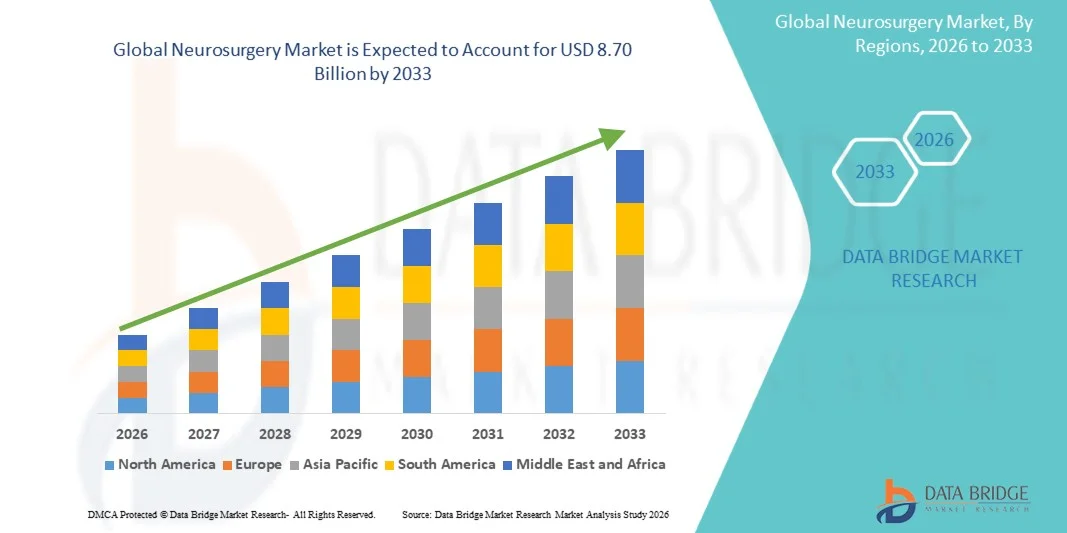
The Neurosurgery Market was valued at USD 5.80 billion in 2025 and is projected to reach USD 8.70 billion by 2033, growing at a CAGR of 5.20% from 2026 to 2033. The Neurosurgery Market is experiencing consistent growth driven by the rising prevalence of neurological disorders such as brain tumors, epilepsy, Parkinson’s disease, stroke, and traumatic brain injuries, along with increasing demand for advanced surgical interventions. Rapid advancements in neurosurgical technologies, including minimally invasive procedures, image-guided navigation systems, robotic-assisted surgery, and intraoperative imaging, are significantly improving surgical precision and patient outcomes. Expanding applications across hospitals, specialty neurology centers, and ambulatory surgical facilities are further supporting market adoption.
The increasing aging population globally, combined with rising incidence of neurodegenerative diseases and neurological complications, is compelling healthcare systems to adopt advanced neurosurgical solutions. Growing healthcare expenditure, improved access to specialized neurosurgical care, and continuous innovation in surgical instruments and neuro-navigation platforms are further accelerating market growth. In addition, the shift toward minimally invasive and precision-based neurosurgery is reducing recovery times, lowering complication rates, and driving higher adoption across both developed and emerging healthcare markets.
Key Market Trends & Insights
- North America dominated the Neurosurgery Market with the largest revenue share of 33.84% in 2025, supported by advanced healthcare infrastructure, strong government support for neurological research, high adoption of minimally invasive neurosurgical procedures, and the presence of leading hospitals and academic medical centers. The region also benefits from rapid integration of neuro-navigation systems, AI-assisted surgical tools, and robotic neurosurgery platforms, along with increasing prevalence of brain tumors, stroke, and neurodegenerative diseases. Expanding investments in hospital modernization and surgical training programs continue to strengthen Europe’s leadership position in the global market.
- The Adult segment dominated the market with a 62.14% share in 2025, due to higher prevalence of brain tumors, trauma cases, and neurological disorders among working-age populations.
- Asia-Pacific is expected to be the fastest-growing region at a CAGR of 9.3% from 2026 to 2033, fueled by rising incidence of neurological disorders, expanding healthcare infrastructure, increasing neurosurgery procedure volumes, and growing investments in advanced medical technologies across China, India, and Japan. Rising awareness of early diagnosis and treatment of brain and nerve disorders, along with improving access to specialized neurosurgical care, is further accelerating regional market growth.
- Neurosurgery Software is the fastest-growing segment, projected to register a CAGR of 8.6% from 2026 to 2033, driven by increasing adoption of AI-based surgical planning, 3D visualization tools, and real-time intraoperative guidance systems. Growing use of digital operating rooms and data-driven surgical workflows is improving procedural accuracy and outcomes. Continuous integration of imaging analytics, machine learning algorithms, and cloud-based surgical platforms is further accelerating segment expansion.
- The Brain Tumors segment dominates the application category with a 21.45% revenue share in 2025, due to rising global incidence rates, increasing need for surgical intervention, and strong demand for advanced treatment modalities such as microsurgery and stereotactic radiosurgery. Growing use of image-guided tumor resection systems and improved diagnostic imaging technologies is further strengthening segment dominance.
- The Geriatric population segment dominates the age group category with a 61.28% share in 2025, driven by higher prevalence of age-related neurological disorders such as stroke, Parkinson’s disease, Alzheimer’s disease, and brain tumors. Increasing life expectancy, rising burden of neurodegenerative diseases, and greater access to advanced neurosurgical care are further supporting market growth in this segment.
- Hospitals dominated the end-user segment with a 67.94% revenue share in 2025, supported by high patient inflow, availability of advanced neurosurgical infrastructure, and presence of skilled neurosurgeons. Increasing investments in neurosurgical operating rooms, robotic systems, and neuro-interventional suites continue to strengthen hospital dominance.
- Direct Tender dominated the distribution channel segment with a 54.36% share in 2025, driven by large-scale procurement of neurosurgical devices by government hospitals and private healthcare systems. Increasing demand for cost-effective bulk purchasing, long-term supplier contracts, and institutional procurement programs is further supporting segment leadership.
Market Size & Forecast
- Global Market Value (2025): USD 5.80 Billion
- Expected Market Value (2033): USD 8.70 Billion
- Forecast CAGR (2026–2033): 5.20%
- Leading Region in 2025: North America
- Fastest Growing Region: Asia-Pacific
Report Scope and Neurosurgery Market Segmentation
|
Attributes |
Neurosurgery Key Market Insights |
|
Segments Covered |
|
|
Countries Covered |
North America · U.S. · Canada · Mexico Europe · Germany · France · U.K. · Netherlands · Switzerland · Belgium · Russia · Italy · Spain · Turkey · Rest of Europe Asia-Pacific · China · Japan · India · South Korea · Singapore · Malaysia · Australia · Thailand · Indonesia · Philippines · Rest of Asia-Pacific Middle East and Africa · Saudi Arabia · U.A.E. · South Africa · Egypt · Israel · Rest of Middle East and Africa South America · Brazil · Argentina · Rest of South America |
|
Key Market Players |
• Medtronic plc (Ireland/U.S.) |
|
Market Opportunities |
· Rising Adoption of Robotic-Assisted and AI-Guided Neurosurgery Systems · Expansion of Minimally Invasive and Image-Guided Neurosurgical Procedures · Growth in Emerging Markets and Expansion of Neurosurgical Infrastructure |
|
Value Added Data Infosets |
In addition to the insights on market scenarios such as market value, growth rate, segmentation, geographical coverage, and major players, the market reports curated by the Data Bridge Market Research also include in-depth expert analysis, geographically represented company-wise production and capacity, network layouts of distributors and partners, detailed and updated price trend analysis and deficit analysis of supply chain and demand. |
Neurosurgery Market Trends
Trend: Rising Adoption of Minimally Invasive and Image-Guided Neurosurgery Techniques
The Neurosurgery Market is witnessing a strong shift toward minimally invasive and image-guided surgical procedures, driven by improved patient outcomes, reduced hospital stays, and lower postoperative complications. Technologies such as neuronavigation systems, intraoperative MRI (iMRI), and robotic-assisted neurosurgery are increasingly being integrated into operating rooms across advanced healthcare systems.
Hospitals in North America and Europe are widely adopting stereotactic and endoscopic neurosurgical techniques, particularly for brain tumor resections and epilepsy treatment, where precision is critical. For instance, the use of neuronavigation systems has been reported to improve surgical accuracy by up to 90–95% in complex cranial procedures. Similarly, robotic-assisted platforms are gaining traction for spinal and deep brain stimulation surgeries, enabling sub-millimeter precision and reducing surgeon fatigue during long procedures.
The integration of AI-powered imaging analysis and intraoperative visualization tools is further enhancing decision-making during surgery, allowing real-time tumor boundary detection and functional brain mapping.
Neurosurgery Market Dynamics
Key Market Driver: Rising Prevalence of Neurological Disorders and Aging Population
A major driver of the Neurosurgery Market is the increasing prevalence of neurological conditions such as brain tumors, epilepsy, Parkinson’s disease, Alzheimer’s disease, and stroke-related complications. According to global health estimates, neurological disorders affect over 1 billion people worldwide, making them one of the leading causes of disability and mortality.
The aging global population is further accelerating demand for neurosurgical interventions, as elderly individuals are more susceptible to conditions such as glioblastomas, intracranial hemorrhages, and degenerative spine disorders. For example, Parkinson’s disease cases are expected to surpass 12 million globally by 2040, significantly increasing demand for deep brain stimulation (DBS) procedures and functional neurosurgery.
In addition, expanding healthcare infrastructure in emerging economies such as India, China, and Brazil is improving access to advanced neurosurgical care, with increasing numbers of specialized neurosurgery centers and tertiary hospitals equipped with modern surgical systems.
Key Restraint/Challenge: High Cost and Limited Access to Advanced Neurosurgical Systems
Despite strong technological progress, the neurosurgery market faces a significant restraint due to the high cost of advanced surgical systems and infrastructure. Technologies such as intraoperative MRI suites, surgical robotics, and neuronavigation platforms require investments ranging from USD 1 million to over USD 10 million per installation, limiting adoption to large tertiary hospitals and specialized centers.
In addition to capital costs, ongoing expenses related to maintenance, consumables, and trained neurosurgical personnel further restrict widespread adoption, particularly in low- and middle-income countries. Many regions in Africa and parts of South Asia still lack access to advanced neurosurgical facilities, resulting in treatment delays and limited surgical intervention rates.
For instance, while high-income countries may have more than 5–8 neurosurgeons per 100,000 population, several developing regions have fewer than 1 neurosurgeon per 100,000 population, highlighting a major global disparity in access to care.
Key Market Opportunity: Expansion of AI, Robotics, and Image-Guided Surgical Platforms
The integration of artificial intelligence, robotics, and advanced imaging technologies presents a major growth opportunity in the Neurosurgery Market. AI-driven surgical planning tools are increasingly being used to analyze MRI and CT scans for tumor segmentation, hemorrhage detection, and surgical pathway optimization.
Robotic neurosurgery systems, such as those used in stereotactic brain biopsies and spinal procedures, are improving precision and reducing intraoperative risks. Meanwhile, augmented reality (AR) and virtual reality (VR)-based surgical planning platforms are enabling surgeons to simulate complex procedures before entering the operating room, improving success rates and reducing complications.
Cloud-based neurosurgical data platforms are also emerging, allowing real-time collaboration between neurosurgeons across institutions for complex cases. This is particularly impactful in regions with limited specialist availability, where remote consultation can significantly improve surgical outcomes and expand access to expert care.
Neurosurgery Market Scope
The Neurosurgery market is segmented on the basis of product type, application, age group, end user, and distribution channel.
- By Product Type
On the basis of product type, the Neurosurgery Market is segmented into neurosurgery devices, neurosurgery software, and consumables. The Neurosurgery Devices segment dominated the market with a 54.62% share in 2025, owing to widespread use of advanced surgical instruments, imaging systems, and minimally invasive neurosurgical tools. Increasing prevalence of brain tumors, epilepsy, and cerebrovascular disorders is driving strong demand for precision surgical devices. Hospitals and neurosurgery centers increasingly rely on high-accuracy devices to improve surgical outcomes and reduce procedural risks. Continuous technological advancements such as neuronavigation systems, robotic-assisted tools, and intraoperative imaging further strengthen segment leadership.
The Neurosurgery Software segment is projected to register the fastest growth at a CAGR of 8.9% from 2026 to 2033, driven by rising adoption of AI-based surgical planning, 3D visualization, and real-time imaging analytics. Growing integration of digital platforms in operating rooms is enhancing surgical precision and workflow efficiency. Increasing use of simulation-based neurosurgical training software is also supporting demand. Expanding application of cloud-based surgical data management systems and predictive analytics tools is accelerating market expansion. Rising investments in digital healthcare infrastructure further reinforce segment growth globally.
- By Application
On the basis of application, the Neurosurgery Market is segmented into aneurysms, AVM, brain tumors, carotid artery stenosis, cerebrovascular surgery, cortical mapping, epilepsy, functional neurosurgery, intraoperative angiography, Parkinson’s disease and tremors, peripheral nerve surgery, pituitary tumors, radiosurgery, skull base surgery, spine surgery, stereotactic neurosurgery, trauma surgery, trigeminal neuralgia, and others. The Brain Tumors segment dominated the market with a 28.46% share in 2025, driven by increasing incidence of primary and metastatic brain tumors worldwide. Rising demand for advanced surgical resection techniques and image-guided procedures is supporting segment growth. Expanding use of neuronavigation systems and intraoperative MRI is improving surgical accuracy and outcomes. Strong hospital focus on early diagnosis and treatment further strengthens this segment’s dominance.
The Functional Neurosurgery segment is expected to register the fastest growth at a CAGR of 9.3% from 2026 to 2033, driven by rising cases of Parkinson’s disease, epilepsy, and movement disorders. Increasing adoption of deep brain stimulation (DBS) procedures is significantly boosting demand. Technological advancements in neurostimulation devices and precision mapping systems are enhancing treatment effectiveness. Growing clinical acceptance of minimally invasive neuromodulation therapies is further supporting expansion. Rising geriatric population globally is also accelerating demand for functional neurosurgical interventions.
- By Age Group
On the basis of age group, the Neurosurgery Market is segmented into pediatric, adult, and geriatric. The Adult segment dominated the market with a 62.14% share in 2025, due to higher prevalence of brain tumors, trauma cases, and neurological disorders among working-age populations. Increased exposure to lifestyle-related risk factors such as hypertension, obesity, and stress contributes to higher neurosurgical interventions. Advanced healthcare access and higher treatment affordability in developed regions further support segment dominance. Hospitals also report higher surgical volumes in adult patient categories compared to other groups.
The Geriatric segment is expected to register the fastest growth at a CAGR of 8.6% from 2026 to 2033, driven by the rapidly aging global population. Older adults are more prone to neurological conditions such as Alzheimer’s disease, Parkinson’s disease, and brain tumors. Increasing life expectancy and improved diagnostic capabilities are contributing to higher surgical rates. Growing demand for minimally invasive neurosurgical procedures for elderly patients is accelerating adoption. Expanding geriatric healthcare infrastructure globally further supports market growth.
- By End User
On the basis of end user, the Neurosurgery Market is segmented into hospitals, neurosurgery centers, research centers, ambulatory surgical centers, and others. The Hospitals segment dominated the market with a 71.38% share in 2025, owing to availability of advanced neurosurgical infrastructure, skilled specialists, and high patient inflow. Hospitals are the primary centers for complex brain and spine surgeries requiring intensive care and post-operative monitoring. Strong reimbursement coverage and access to cutting-edge surgical technologies further support dominance. Increasing investments in hospital-based neuro care units reinforce segment leadership.
The Ambulatory Surgical Centers segment is expected to register the fastest growth at a CAGR of 9.1% from 2026 to 2033, driven by rising demand for minimally invasive and outpatient neurosurgical procedures. Lower treatment costs and shorter hospital stays are encouraging patient preference for ASCs. Advancements in surgical precision and safety are enabling more neurosurgeries to shift to outpatient settings. Expanding healthcare infrastructure in emerging economies is further supporting growth. Increasing focus on cost-effective care delivery models is accelerating adoption.
- By Distribution Channel
On the basis of distribution channel, the Neurosurgery Market is segmented into direct tender, third-party distributors, and others. The Direct Tender segment dominated the market with a 58.27% share in 2025, due to large-scale procurement by hospitals, government healthcare systems, and neurosurgical centers. Direct purchasing ensures better pricing control, standardized quality, and streamlined procurement processes. Strong manufacturer-hospital partnerships further support this channel. Increasing demand for high-value neurosurgical devices reinforces direct procurement dominance.
The Third-Party Distributors segment is expected to register the fastest growth at a CAGR of 7.8% from 2026 to 2033, driven by expanding access to neurosurgical products in emerging markets. Distributors help bridge supply chain gaps and improve product availability in remote regions. Growing penetration of global manufacturers into developing healthcare systems is supporting this channel. Increasing reliance on distributor networks for after-sales support and logistics is further driving growth. Rising demand for cost-efficient distribution models continues to strengthen this segment.
Neurosurgery Market Regional Analysis
North America dominated the Neurosurgery Market and accounted for the largest revenue share of 33.84% in 2025, supported by advanced healthcare infrastructure, strong government funding for neurological research, high adoption of minimally invasive neurosurgical procedures, and the presence of leading hospitals and academic medical centers. The region also benefits from rapid integration of neuro-navigation systems, AI-assisted surgical tools, robotic neurosurgery platforms, and intraoperative imaging technologies, along with a rising prevalence of neurological disorders such as brain tumors, stroke, epilepsy, and neurodegenerative diseases. Expanding investments in hospital modernization and neurosurgical training programs continue to strengthen the region’s leadership in the global market. In the United States, market growth is further driven by high healthcare expenditure, widespread use of advanced surgical technologies, and strong research activity in functional neurosurgery and neuro-oncology, particularly for procedures like deep brain stimulation and tumor resection.
U.S. Neurosurgery Market Insight
The U.S. Neurosurgery market is witnessing strong growth due to rising investments in advanced neurosurgical infrastructure, increasing prevalence of neurological disorders, and rapid adoption of AI-powered, robot-assisted, and image-guided surgical systems. The country’s mature healthcare ecosystem, supported by leading academic medical centers and specialized neurosurgery hospitals, is enabling high adoption of minimally invasive procedures and precision-based surgical techniques. In addition, strong funding for neurological research, clinical trials, and innovation in brain-computer interfaces and functional neurosurgery is further accelerating market expansion.
Europe Neurosurgery Market Insight
Europe remains a significant market, supported by robust healthcare systems, strong regulatory frameworks, and high adoption of advanced neurosurgical technologies across countries such as Germany, France, and the U.K., where neuronavigation, robotic-assisted surgery, and AI-based imaging are widely used to improve surgical precision and outcomes. The region’s focus on standardized clinical protocols and continuous medical innovation further supports steady market expansion. Asia-Pacific is expected to be the fastest-growing region at a CAGR of 9.3% from 2026 to 2033, driven by rising incidence of neurological disorders, expanding healthcare infrastructure, increasing neurosurgery procedure volumes, and growing investments in advanced medical technologies across China, India, and Japan. Improving access to specialized neurosurgical care, rising awareness of early diagnosis, and rapid adoption of AI-enabled diagnostic and surgical systems are further accelerating growth, positioning Asia-Pacific as a key emerging hub in the Neurosurgery Market.
U.K. Neurosurgery Market Insight
The U.K. Neurosurgery market is experiencing steady growth due to increasing demand for advanced neurological care and strong adoption of minimally invasive and image-guided neurosurgical procedures. The National Health Service (NHS) and leading private healthcare providers are expanding access to advanced treatments for brain tumors, epilepsy, stroke, and spinal disorders. The integration of AI-assisted imaging, neuronavigation systems, and robotic surgical platforms is improving surgical accuracy and outcomes, while strong academic research activity in neurology and neurosurgery is supporting innovation and clinical advancements.
Germany Neurosurgery Market Insight
The Germany Neurosurgery market is expanding steadily due to its advanced healthcare infrastructure, strong medical technology industry, and high adoption of precision-based neurosurgical systems. Hospitals and research institutions are increasingly utilizing robotic-assisted neurosurgery, intraoperative imaging, and AI-driven surgical planning to improve treatment outcomes for complex neurological conditions. The country’s strong focus on clinical excellence, medical innovation, and structured neurosurgical training programs, along with government support for healthcare R&D, continues to drive market growth.
Asia-Pacific Neurosurgery Market Insight
The Asia-Pacific Neurosurgery market is expected to witness the fastest growth at a CAGR of 9.3% from 2026 to 2033, driven by rising prevalence of neurological disorders, rapid expansion of healthcare infrastructure, and increasing neurosurgery procedure volumes across China, India, and Japan. Growing investments in tertiary care hospitals and specialized neuroscience centers are improving access to advanced surgical care, while raising awareness of early diagnosis and treatment is further boosting demand. The increasing adoption of AI-enabled diagnostics, neuronavigation systems, and minimally invasive neurosurgical techniques is accelerating market growth across both developed and emerging economies in the region.
Japan Neurosurgery Market Insight
The Japan Neurosurgery market is witnessing consistent growth due to its highly advanced healthcare system, aging population, and strong focus on medical technology innovation. Hospitals and research institutes are increasingly adopting robotic-assisted neurosurgery, high-precision imaging systems, and AI-powered surgical planning tools for complex neurological procedures. Rising cases of stroke, Parkinson’s disease, and brain tumors are further driving demand for advanced neurosurgical interventions, while strong collaboration between medical device companies and academic institutions continues to support innovation in surgical techniques.
China Neurosurgery Market Insight
The China Neurosurgery market is growing rapidly, supported by expanding healthcare infrastructure, rising burden of neurological diseases, and strong government investment in hospital modernization and specialized neurosurgical centers. Increasing adoption of AI-enabled diagnostics, robotic surgery platforms, and advanced neuroimaging technologies is significantly improving surgical capacity and outcomes. In addition, growing awareness of early diagnosis, rising healthcare expenditure, and rapid technological advancements are positioning China as one of the fastest-growing neurosurgery markets globally.
Neurosurgery Market Share
The Neurosurgery industry is primarily led by well-established companies, including:
- Medtronic plc (Ireland/U.S.)
- Stryker Corporation (U.S.)
- Johnson & Johnson MedTech (U.S.)
- B. Braun Melsungen AG (Germany)
- Brainlab AG (Germany)
- Integra LifeSciences Holdings Corporation (U.S.)
- Zimmer Biomet Holdings, Inc. (U.S.)
- Karl Storz SE & Co. KG (Germany)
- Elekta AB (Sweden)
- Varian Medical Systems (U.S.)
- Canon Medical Systems Corporation (Japan)
- Fujifilm Holdings Corporation (Japan)
- Olympus Corporation (Japan)
- Natus Medical Incorporated (U.S.)
- Nihon Kohden Corporation (Japan)
- Smith & Nephew plc (U.K.)
- Micromar (Brazil)
- Alcyone Lifesciences Inc. (U.S.)
- Renishaw plc (U.K.)
- Synaptive Medical (Canada)
- Blackrock Neurotech (U.S.)
- NeuroPace Inc. (U.S.)
- Abbott Laboratories (U.S.)
- Boston Scientific Corporation (U.S.)
- Penumbra Inc. (U.S.)
- Integra NeuroSciences (U.S.)
- Inomed Medizintechnik GmbH (Germany)
- Raumedic AG (Germany)
- IntraVu Medical (U.S.)
- Aleva Neurotherapeutics (Switzerland)
Latest Developments in Neurosurgery Market
- In April 2024, Medtronic announced the launch of its NeuroSmart Portable Micro Electrode Recording (MER) Navigation System in India, designed to enhance precision in deep brain stimulation (DBS) procedures for Parkinson’s disease. The system integrates advanced neuro-navigation capabilities with real-time electrophysiological mapping, enabling surgeons to improve targeting accuracy during functional neurosurgery and supporting broader adoption of minimally invasive brain surgery techniques in emerging markets
- In March 2025, Stryker Neuro and Brainlab entered into a strategic partnership to integrate Brainlab’s navigation technologies into Stryker’s neuro and spine systems. This collaboration aimed to strengthen surgical planning and intraoperative guidance by combining advanced imaging-based navigation with robotic-assisted neurosurgical workflows, improving precision in complex cranial and spinal procedures
- In September 2025, Brainlab received FDA 510(k) clearance and launched its Spine Mixed Reality Navigation platform in the United States, combining optical navigation with mixed reality visualization. The system allows surgeons to visualize anatomical structures and implant positioning directly within their field of view, improving surgical ergonomics and accuracy in spine and neurosurgical procedures
- In August 2025, the global stereotactic neuro-navigation system market report highlighted key expansion led by Medtronic, Brainlab, Stryker, and Orthofix, with the market valued at approximately USD 840.7 million in 2024 and projected to grow significantly through 2035, driven by increasing adoption in tumor resection, epilepsy treatment, and deep brain stimulation surgeries
- In February 2026 (late-stage development impacting 2025 market trajectory), Medtronic received FDA clearance for its Stealth AXiS surgical system, an integrated platform combining surgical planning, navigation, and robotics for spine surgery, later expanded to cranial and ENT procedures. The system uses AI-enabled brain mapping and real-time navigation, representing a major step toward fully integrated robotic-neurosurgical ecosystems
- In March 2026, the U.S. FDA further expanded approval of Medtronic’s Stealth AXiS system for cranial and ENT neurosurgical applications, enabling advanced AI-based brain mapping and improved visualization of neural pathways during complex neurosurgical procedures, reinforcing the shift toward AI-integrated operating rooms

- Interactive Data Analysis Dashboard
- Company Analysis Dashboard for high growth potential opportunities
- Research Analyst Access for customization & queries
- Competitor Analysis with Interactive dashboard
- Latest News, Updates & Trend analysis
- Harness the Power of Benchmark Analysis for Comprehensive Competitor Tracking
Data collection and base year analysis are done using data collection modules with large sample sizes. The stage includes obtaining market information or related data through various sources and strategies. It includes examining and planning all the data acquired from the past in advance. It likewise envelops the examination of information inconsistencies seen across different information sources. The market data is analysed and estimated using market statistical and coherent models. Also, market share analysis and key trend analysis are the major success factors in the market report. To know more, please request an analyst call or drop down your inquiry.
The key research methodology used by DBMR research team is data triangulation which involves data mining, analysis of the impact of data variables on the market and primary (industry expert) validation. Data models include Vendor Positioning Grid, Market Time Line Analysis, Market Overview and Guide, Company Positioning Grid, Patent Analysis, Pricing Analysis, Company Market Share Analysis, Standards of Measurement, Global versus Regional and Vendor Share Analysis. To know more about the research methodology, drop in an inquiry to speak to our industry experts.
Data Bridge Market Research is a leader in advanced formative research. We take pride in servicing our existing and new customers with data and analysis that match and suits their goal. The report can be customized to include price trend analysis of target brands understanding the market for additional countries (ask for the list of countries), clinical trial results data, literature review, refurbished market and product base analysis. Market analysis of target competitors can be analyzed from technology-based analysis to market portfolio strategies. We can add as many competitors that you require data about in the format and data style you are looking for. Our team of analysts can also provide you data in crude raw excel files pivot tables (Fact book) or can assist you in creating presentations from the data sets available in the report.













